Trupeer Blog
Summarise
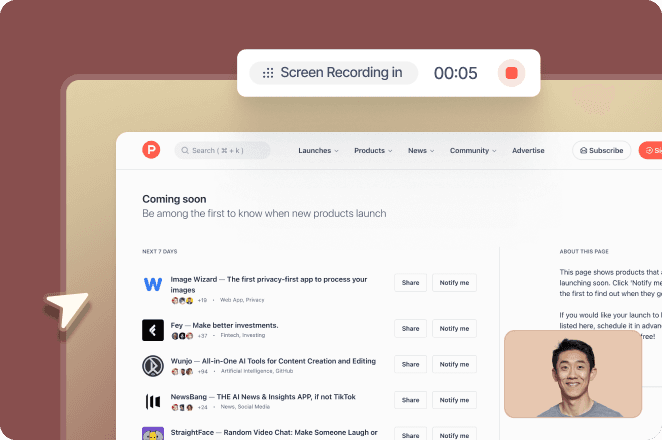
Your services team is likely inundated with repetitive tasks that could easily be handled by your customers themselves if they had access to the right resources. This is where a customer self-serve content hub becomes invaluable. By enabling your customers to find answers on their own, you free up your services team to focus on more complex issues that truly need their expertise. According to a recent industry report, companies that implemented a self-serve hub saw their support tickets drop by as much as 40%. Imagine the hours saved and the increased efficiency. For many businesses, especially those scaling rapidly, this isn't just beneficial; it's essential. If you're dealing with high call volumes and a backlog of support requests, a self-serve hub can drastically reduce these, boosting productivity across the board. This is particularly relevant if you're using tools like customer onboarding videos to simplify the process. But how do you set up such a hub effectively? This guide will walk you through the essentials of creating a customer self-serve content hub that meets both customer needs and business objectives.
Why does building a customer self-serve content hub matter?
Building a customer self-serve content hub matters because it significantly reduces the workload on your services team, allowing them to focus on more complex tasks that require direct intervention. This not only saves time but also boosts productivity and customer satisfaction. As businesses grow, the volume of customer inquiries can increase exponentially, making it unsustainable to handle all queries through direct communication. A self-serve hub provides a scalable solution, enabling customers to find answers quickly without waiting for a service representative.
Also, a self-serve hub is crucial for maintaining a competitive edge in customer service. Today's customers expect quick and easy access to information. If they can't find what they need on their own, they're likely to get frustrated and might even churn to a competitor offering better support options. By integrating a customer education use case into your strategy, you not only meet but exceed customer expectations. This leads to higher customer retention rates and improved brand reputation. In essence, a well-implemented self-serve hub is a win-win for both your customers and your business.
What are the benefits of building a customer self-serve content hub?
A customer self-serve content hub offers numerous advantages that can transform how your business operates.
Reduced Service Costs. By deflecting common inquiries, you lower the need for a large support team, which reduces payroll costs and boosts overall profitability. Companies that rank among the top customer onboarding software providers report significant cost savings.
Improved Customer Satisfaction. When customers can find answers quickly, their satisfaction increases. This leads to higher retention rates and positive reviews, crucial for long-term success.
Increased Efficiency. A self-serve hub allows your team to focus on complex issues rather than routine queries, enhancing productivity and allowing for more strategic focus.
Scalable Support. As your customer base grows, a self-serve hub scales easily without requiring an equivalent increase in support staff, ensuring consistent service levels.
Enhanced Customer Insights. Analyzing the data from your self-serve hub provides insights into customer behavior and needs, allowing you to tailor your offerings more precisely.
Consistent Messaging. By housing all information in one place, you maintain a consistent brand voice, reducing the risk of misinformation and enhancing your AI video platform capabilities.
Which Trupeer features help you build a customer self-serve content hub?
Trupeer offers a suite of features that are particularly effective in creating an efficient and comprehensive self-serve content hub.
AI Screen Recording with Auto-Zoom and Click Detection
This feature allows you to capture dynamic, interactive tutorials that guide users through your platform. By automatically zooming into areas of interest and detecting clicks, Trupeer ensures that the recordings are both engaging and informative. This is crucial for creating content that users can easily follow. You don't have to worry about missing important details, as the AI handles these nuances automatically. This makes it ideal for developing tutorials that are clear and concise, which is a cornerstone of any effective self-serve hub.
Silent Screen Recording with Automatic AI Narration
Creating content with minimal disruption is possible with this feature. It allows you to capture screen recordings silently and then add AI-generated narration that sounds natural and professional. This is particularly useful for environments where background noise might be an issue. The AI narration can be customized to match your brand's tone, making it versatile for various types of content. By using Trupeer’s silent screen recording, you can produce polished tutorials without needing a soundproof studio.
AI-Searchable Knowledge Base
An AI-searchable knowledge base is essential for any self-serve hub. Trupeer's tool indexes every recording with timestamp-level deep links, making it easy for users to find the specific information they need quickly. This feature enhances user experience by allowing them to skip directly to the relevant section of a video or document. It simplifies the search process, reducing time spent on finding answers and boosting user satisfaction. An accessible and efficient knowledge base is a critical component of successful self-service.
Automatic SOP Generation from Any Recording
With Trupeer's auto-generated documentation feature, you can effortlessly create standard operating procedures from any recording. This capability is invaluable for ensuring consistency and accuracy across your documentation. The generated SOPs are fully editable and can be exported in multiple formats, including HTML and PDF. This flexibility allows you to maintain up-to-date guides that are easily accessible to your customers, significantly enhancing your self-serve hub’s effectiveness.
Custom-Domain Hosting with SSO
Trupeer offers custom-domain hosting capabilities, allowing you to brand your self-serve hub consistently with your company identity. The integration of single sign-on (SSO) simplifies user access, enhancing security while reducing login friction. This feature is particularly useful for enterprises that require solid security protocols without sacrificing user convenience. By hosting your content hub on a custom domain, you reinforce brand trust and provide a smooth user experience, both of which are crucial for a successful self-serve initiative.
How do you build a customer self-serve content hub step by step with Trupeer?
Step 1: Record Your Tutorials
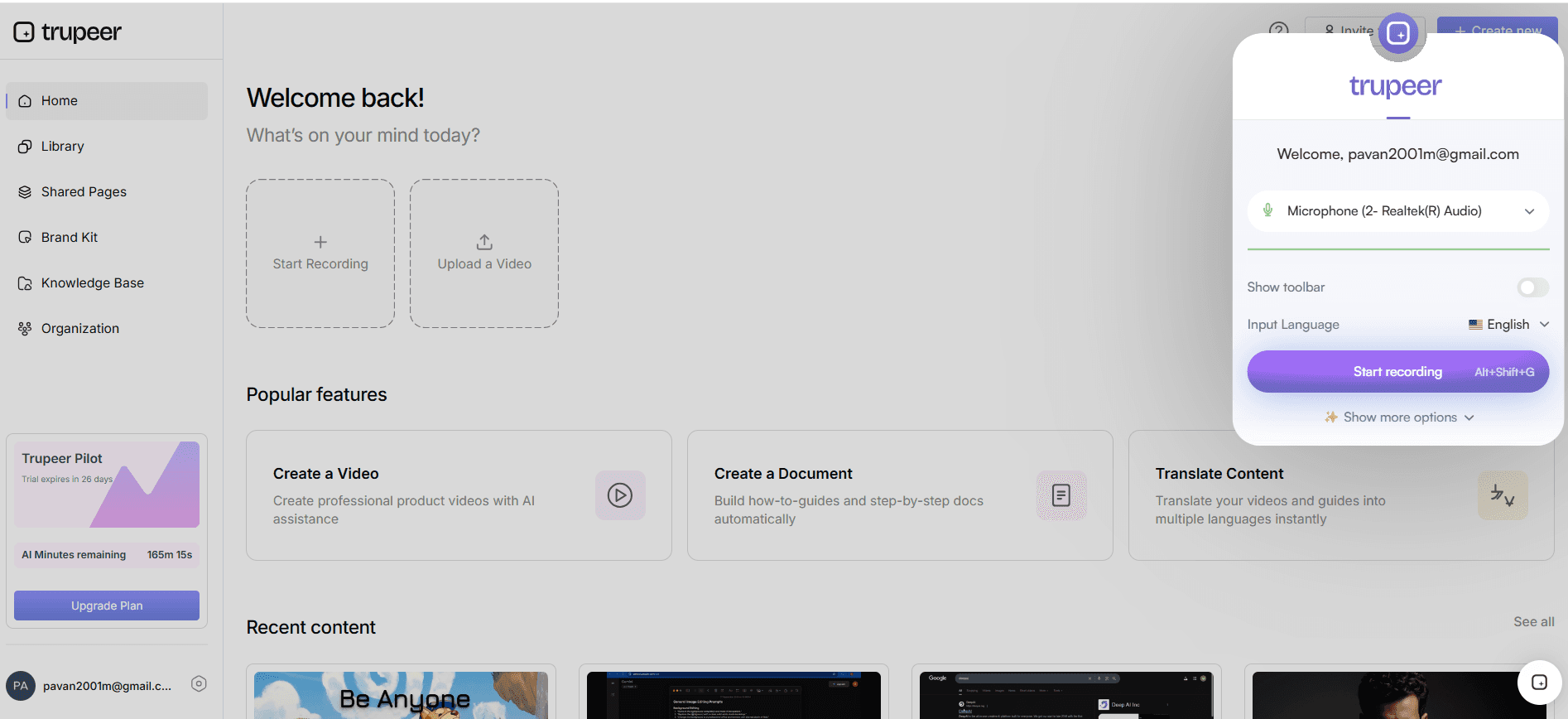
Start by using Trupeer's AI screen recording with auto-zoom and click detection to capture your tutorials. Navigate to the Trupeer dashboard and select "Start Recording." As you perform the actions on your screen, Trupeer will automatically zoom in on key areas and detect clicks to highlight them. This ensures that each tutorial is clear and focused, making it easier for users to follow along. The recording process is smooth, and typically, a 10-minute tutorial can be captured in real time, with the AI enhancing key points without any additional input needed from you.
Step 2: Add AI Narration
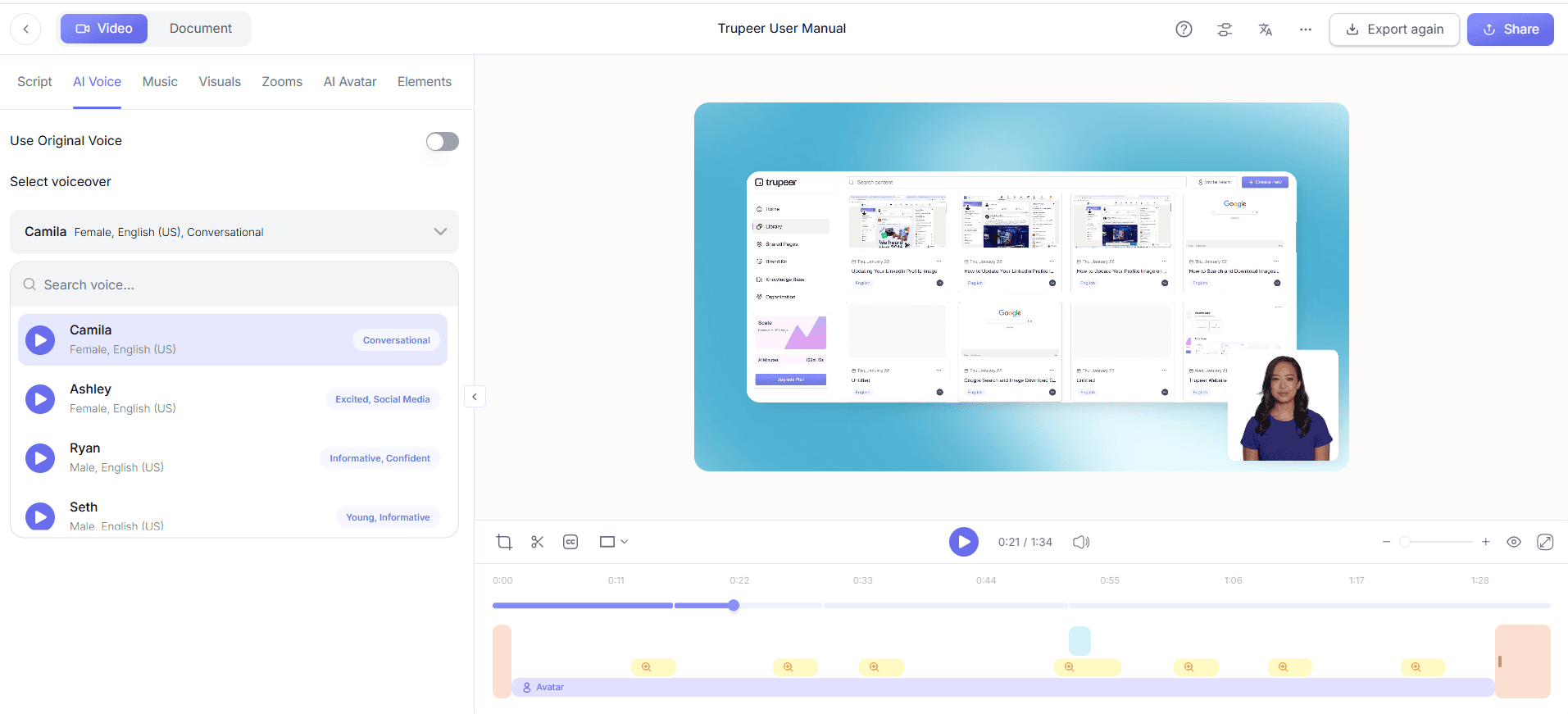
Once your recording is complete, enhance it with Trupeer's automatic AI narration. Click on "Add Narration" and choose from over 65+ natural voices. You can adjust the pace and tone to match your brand's style. This feature is particularly useful if you want to maintain a consistent voice across all your content. The AI generates the narration based on your screen actions, and you can preview it before finalizing. On average, adding AI narration to a 10-minute video takes about 5 minutes, ensuring a quick turnaround.
Step 3: Generate Documentation
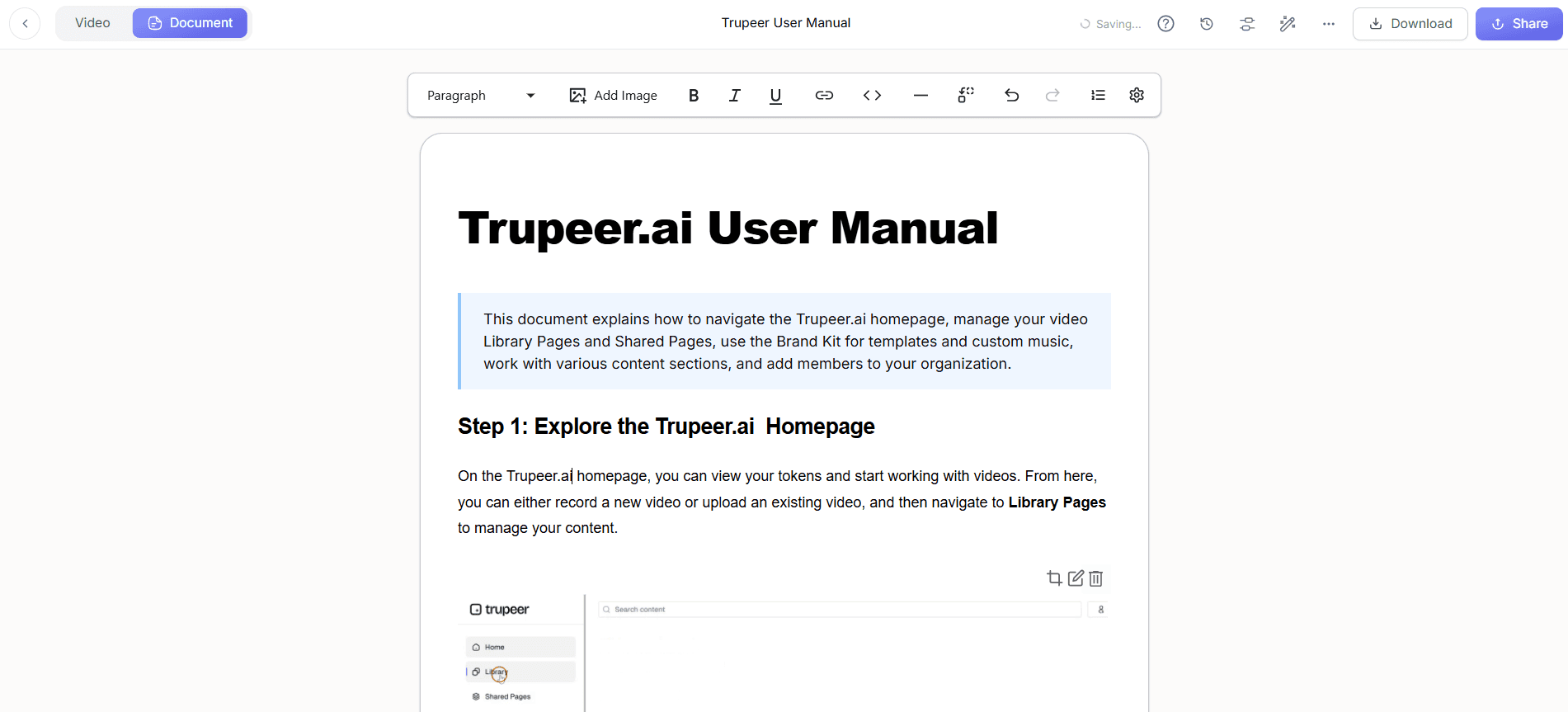
After enhancing your video, use Trupeer's automatic SOP generation to create accompanying documentation. Simply select "Generate SOP" from the video options, and Trupeer will convert your recording into a detailed, edit-ready SOP. The generated document can be exported in formats like PDF or HTML, making it versatile for various uses. This step usually takes less than 3 minutes and provides a structured document that is easily accessible and updatable, crucial for maintaining accurate and useful self-serve content.
Step 4: Build a Knowledge Base
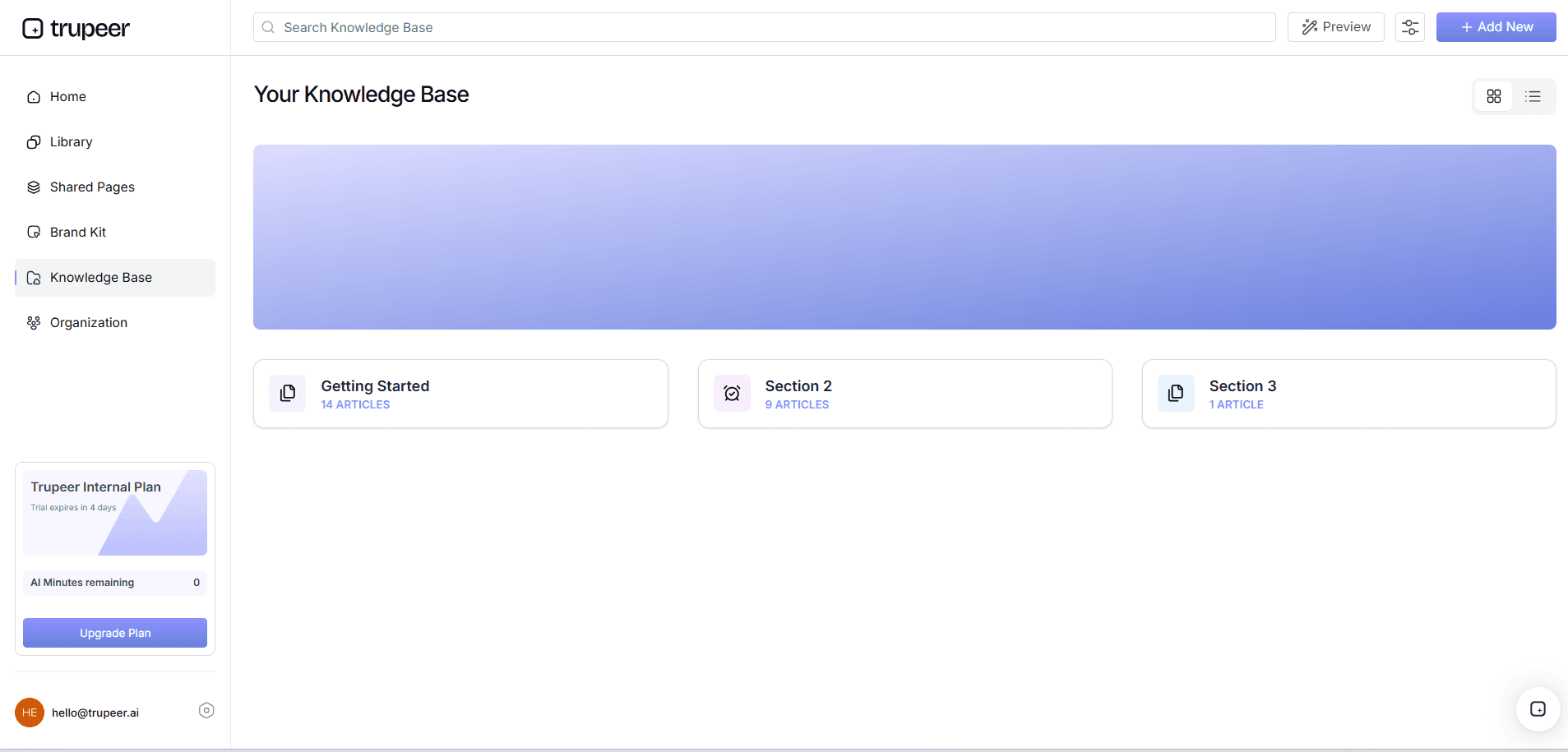
Next, integrate your content into an AI-searchable knowledge base. Navigate to the "Knowledge Base" section in Trupeer and upload your videos and documents. The AI will index them with timestamp-level deep links, making it easy for users to find specific information. This feature transforms your scattered resources into a coherent, searchable hub. Setup is straightforward and can be completed in under an hour, depending on the amount of content you have. This ensures your customers can quickly access the information they need. Trupeer also ships a client onboarding tool that handles this step without extra setup.
Step 5: Customize Your Hub
Brand your self-serve hub using Trupeer’s custom-domain hosting with SSO. Go to "Settings" and select "Custom Domain." Enter your domain details and configure the SSO settings to simplify user access. This not only reinforces your brand identity but also ensures a secure and smooth user experience. The customization process is intuitive, taking roughly 30 minutes to set up, after which your hub will reflect your corporate branding and provide ease of access for your users.
Step 6: Monitor and Improve
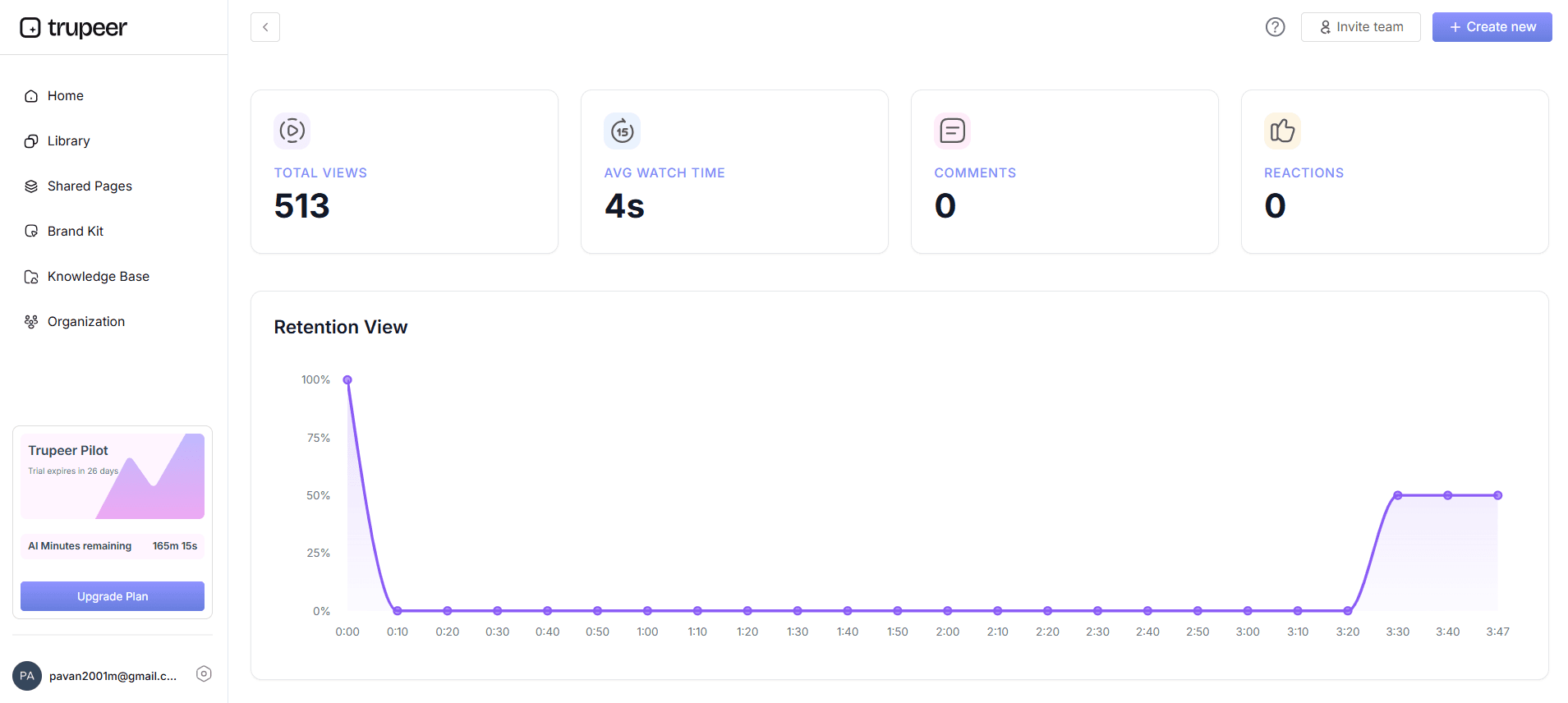
Finally, use Trupeer’s viewer engagement analytics and heatmaps to monitor how users interact with your content. Access the "Analytics" section to view detailed reports on user engagement, drop-off rates, and popular sections of your hub. These insights help you understand what content works well and what needs improvement. Regularly reviewing these metrics will enable you to make informed updates and maintain a hub that meets evolving customer needs. This ongoing process ensures that your self-serve hub remains effective and valuable. Teams weighing tools often start with a Loom alternatives comparison before standardizing on a workflow.
What tips help you build a customer self-serve content hub?
Creating a successful self-serve content hub doesn’t just happen overnight. It requires strategic planning and ongoing optimization. Here are some tips to guide you in building an effective hub that truly serves your customers while reducing your service team’s workload.
Keep Content Updated. Regularly review and update your resources to ensure they remain relevant. This can prevent customer frustration and reduce the number of redundant support queries.
Use Multimedia Resources. Incorporate videos, infographics, and text documents to cater to different learning styles. A variety of content types can enhance user engagement and information retention.
use Analytics. Analyze user data to refine your content strategy. Metrics on user engagement and drop-off points are invaluable for understanding how customers interact with your hub.
Ensure Easy Navigation. Design your hub with user-friendly navigation. Clear categories and a solid search feature make it easier for users to find what they need quickly.
Promote Self-Serve Resources. Make sure customers know about the hub. Use emails, in-app notifications, and social media to inform them of this valuable resource.
Incorporate AI Tools. Consider integrating a Scribe alternative comparison to automate content creation and updates, which saves time and ensures consistency.
Focus on User Feedback. Collect and act on user feedback to continuously improve your hub. This helps ensure that your resources remain aligned with customer needs.
Trupeer also ships a onboarding guide maker that handles this step without extra setup.
Frequently asked questions
How can I ensure my self-serve hub is user-friendly?
To make your self-serve hub user-friendly, focus on intuitive design and clear navigation. Use straightforward categories and a powerful search function to help users find information quickly. Regularly update your content to keep it relevant and accurate. also, incorporate multimedia elements like videos and infographics to cater to different learning preferences. By analyzing user interaction data, you can continuously refine the user experience. Implementing these strategies will significantly enhance the usability of your hub.
What types of content should be included in a self-serve hub?
Your self-serve hub should include a variety of content types to address different user needs. This can range from instructional videos and text-based guides to infographics and FAQs. Use Trupeer's capabilities to create engaging video tutorials and accompanying SOPs. Ensure that all content is up-to-date and relevant to current customer inquiries. By offering diverse content, you cater to different learning styles and improve the chances of customers finding the information they need.
Why is analytics important for a self-serve hub?
Analytics are crucial because they provide insights into how users interact with your hub, helping you identify what works and what doesn't. By monitoring metrics like engagement rates and drop-off points, you can pinpoint areas for improvement. This data-driven approach allows you to optimize content, ensuring it meets customer needs effectively. Regularly reviewing analytics helps maintain a hub that evolves with user preferences, ultimately enhancing customer satisfaction and reducing service team workload.
Can AI tools really make a difference in content creation?
Yes, AI tools can significantly simplify content creation by automating repetitive tasks and enhancing efficiency. Tools like Trupeer offer features such as AI voiceovers and automatic SOP generation, saving time and ensuring consistency. AI can also help localize content through AI video translation, making your hub accessible to a global audience. By using AI, you can focus on strategic content planning while maintaining high-quality output.
Does a self-serve hub reduce support ticket volume?
Absolutely, a well-implemented self-serve hub can drastically reduce support ticket volume by providing customers with the resources they need to solve common issues independently. This deflection allows your support team to focus on more complex inquiries that truly require human intervention. Many businesses report a reduction in support tickets by up to 40% after implementing a comprehensive self-serve hub, demonstrating its effectiveness in improving operational efficiency.
Related Blogs