Trupeer Blog
Summarise
Imagine a scenario where your organization's valuable video content is scattered across different platforms, inaccessible when needed most. This chaotic state not only hampers productivity but also increases operational costs. For IT and ops leaders, integrating a reliable enterprise video search architecture is crucial. A well-implemented system can significantly reduce search times, enhance collaboration, and improve decision-making. But the stakes are high. Selecting the wrong architecture can lead to increased latency, higher costs, and limited scalability, all of which can have a negative impact on your bottom line.
Consider this:
Enterprises can save up to 30% in time spent searching for video content by implementing an efficient video search system.
This statistic underscores the importance of choosing the right architecture that suits your enterprise's unique needs. Whether you're a small team or a large corporation, understanding the intricacies of enterprise video search architecture will enable you to make informed decisions. As you navigate these complexities, you'll find that a structured and strategic approach is essential for success. For a deeper understanding of the importance of such systems, explore knowledge base one to see how it can transform your operations.
Why does enterprise video search architecture matter?
In a landscape where video content is increasingly becoming a primary medium for communication and training, the ability to efficiently search and retrieve these assets is paramount. Ops and IT leaders need an architecture that not only supports current needs but also scales with organizational growth. A well-designed enterprise video search architecture directly impacts how quickly teams can access information, make informed decisions, and maintain competitive agility. Without a solid system, employees may spend valuable time searching for content rather than executing tasks, leading to inefficiencies and potential revenue loss.
Also, the right architecture supports a customer success use case by ensuring that customer-facing teams have quick access to relevant video content. This is crucial for training, support, and sales enablement. When customer success teams can swiftly find and use video resources, they enhance customer satisfaction and retention. For IT, the architecture must integrate smoothly with existing systems, ensuring data security and compliance with industry standards. It's not just about storing videos; it's about creating a cohesive ecosystem where video content is an accessible and integral part of your strategic arsenal.
What are the benefits of enterprise video search architecture?
Implementing an enterprise video search architecture offers numerous advantages that can transform your organization's efficiency and effectiveness.
Enhanced Search Efficiency. By deploying an enterprise video search system, teams can reduce time spent searching for video content by up to 30%. This means more time for productive work and less frustration.
Improved Collaboration. A centralized platform allows for smooth sharing and collaboration on video projects, eliminating silos and building teamwork. This alignment leads to better decision-making and faster project completion.
Scalability. As your organization grows, your video search architecture can scale with it. This flexibility ensures that you're not constantly overhauling your system to accommodate new content or users.
Cost Reduction. By minimizing the need for manual video searches and reducing redundant efforts, your organization can save on operational costs, enhancing profitability.
Data-Driven Insights. With the integration of analytics, you can gain insights into video engagement and usage patterns, informing future content strategies and improving resource allocation.
Enhanced Content Management. An AI video platform offers advanced content management features, allowing users to organize and retrieve content quickly, ensuring that the right resources are used at the right time.
For a deeper look, our guide on ai video editing covers the adjacent playbook.
Which Trupeer features help you deploy an enterprise video search architecture?
Trupeer offers a range of features designed to enhance your enterprise video search capabilities, ensuring that your organization operates efficiently and effectively.
AI-searchable knowledge base
Trupeer's AI-searchable knowledge base indexes every recording with timestamp-level deep links. This feature allows users to locate specific video segments quickly, minimizing search times and improving productivity. Whether for training or customer support, having an indexed video library ensures that teams can access the right information instantly. With Trupeer, your video content is not just stored but organized into a searchable format that enhances usability.
Automatic SOP generation from any recording
The documentation generator feature allows for the automatic creation of Standard Operating Procedures (SOPs) from any video recording. This capability ensures that your team can quickly produce and update SOPs as processes evolve. By transforming video content into structured documents, Trupeer helps maintain consistency in operations and training, reducing the time and effort required to develop comprehensive SOPs manually.
AI voiceover in 65+ natural voices
Trupeer's AI voiceover feature offers over 65+ natural voices that can be used to enhance video content. By providing adjustable pace and tone, this feature ensures that your videos are not only informative but also engaging. This capability is particularly useful for training and instructional videos, where clarity and engagement are critical. The ability to clone voices from a short sample further personalizes content, making it more relatable to your audience.
AI translation into 40+ languages with lip-sync
The AI translation feature allows your video content to reach a broader audience by translating it into over 40 languages. With lip-sync capabilities, this feature ensures that translated videos maintain their integrity and professionalism. For global enterprises, this feature is indispensable in providing consistent messaging across different markets. Trupeer's translation capabilities ensure that language is no barrier to your organization's growth and communication strategies. For more on this, see enterprise training video software.
Viewer engagement analytics, drop-off, and heatmaps
Understanding how your audience interacts with video content is crucial for refining your strategy. Trupeer provides detailed analytics on viewer engagement, including drop-off rates and heatmaps. These insights allow you to identify which parts of your videos are most engaging and which need improvement. By using these analytics, your organization can create more effective content that resonates with your audience, ultimately driving better results.
How do you deploy an enterprise video search architecture step by step with Trupeer?
Step 1: Capture Video Content
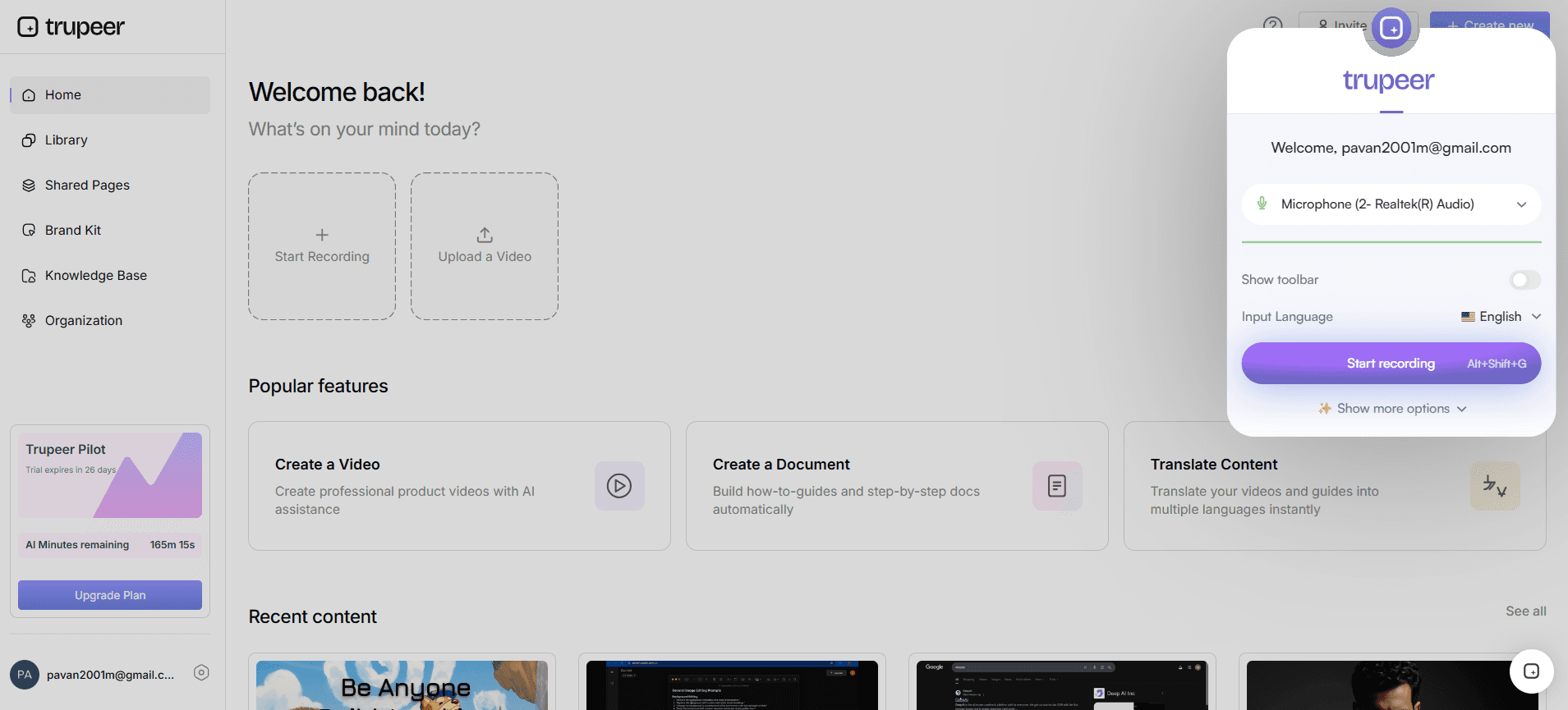
Begin by capturing video content using Trupeer's AI screen recording capabilities. You can choose between the browser-based recorder for quick captures or the desktop app for more comprehensive recordings. The AI automatically detects clicks and zooms, ensuring focus on key areas without manual adjustments. This process is smooth and efficient, typically taking just a few minutes to set up and start recording. In edge cases where system permissions are restricted, ensure the app is granted necessary access for smooth functioning. Once captured, your video is ready for further processing.
Step 2: Enhance Video with AI Features
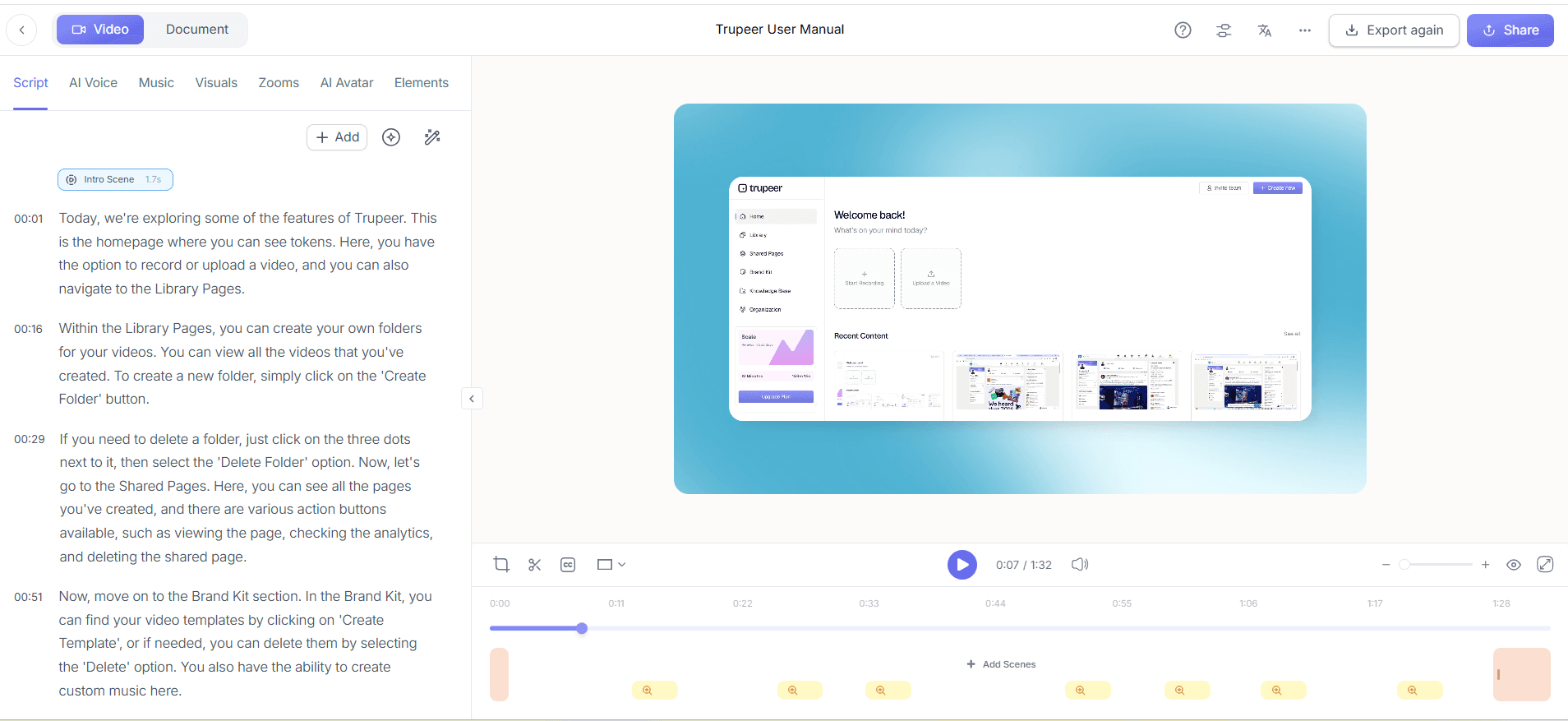
After capturing, enhance your video using Trupeer's AI editing tools. Remove filler words like "um" and "ah" with a single click, ensuring your content remains concise and professional. You can also add AI-generated voiceovers, choosing from 65+ natural voices to match your brand's style. Adjust the pace and tone as needed to ensure clarity and engagement. This step usually takes about 10-15 minutes, depending on the length of the video. If you require a custom voice, you can use Trupeer's AI voice cloning feature to create a unique voice profile.
Step 3: Generate Documentation and SOPs
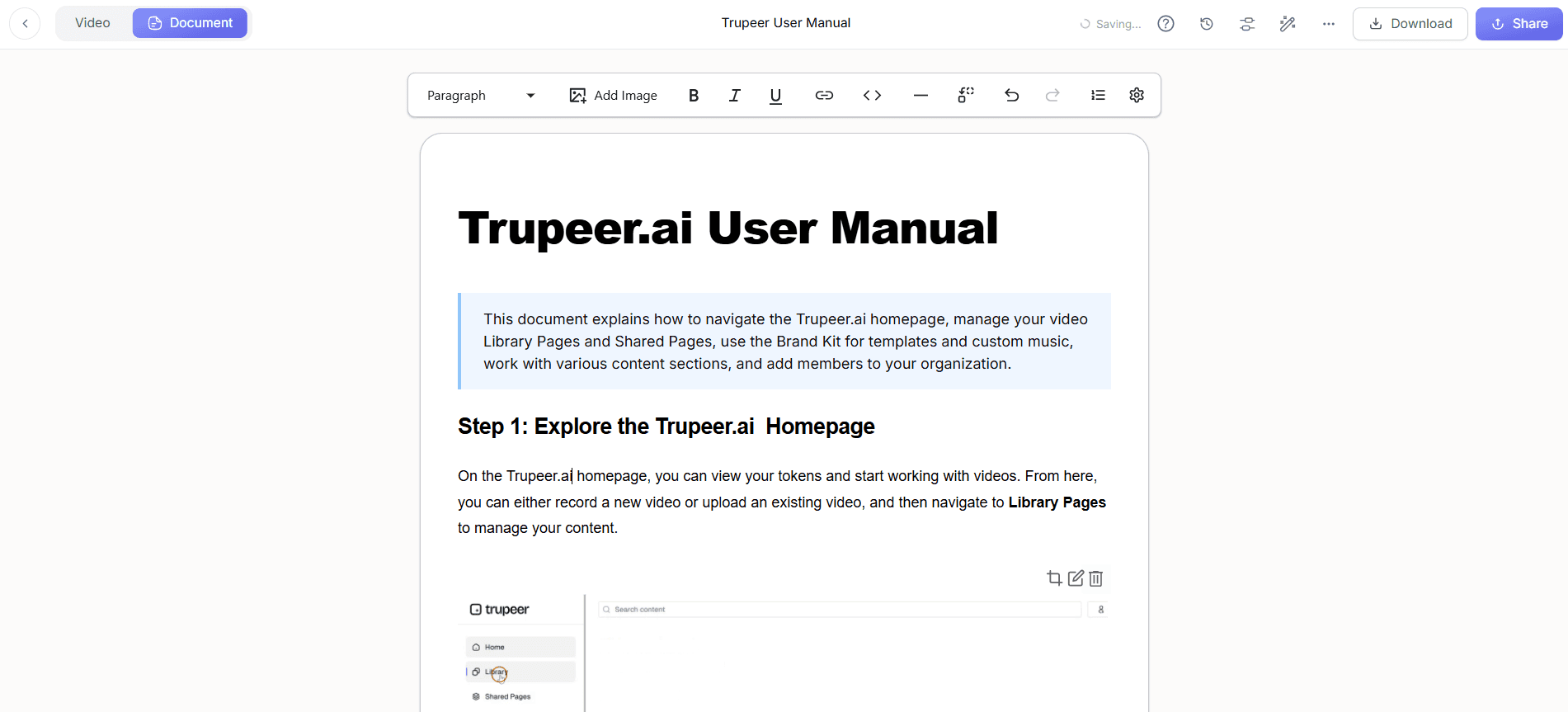
Trupeer's automatic SOP generation feature allows you to create detailed guides from your video content. Click on the "Generate SOP" option, and Trupeer will analyze the video to produce a written document that outlines the process step by step. This document is editable, ensuring you can tailor it to your specific needs. Typically, this process takes about 5 minutes per video. If your video covers complex processes, consider reviewing the document for accuracy and completeness before finalizing it. Teams weighing tools often start with a Loom alternatives comparison before standardizing on a workflow.
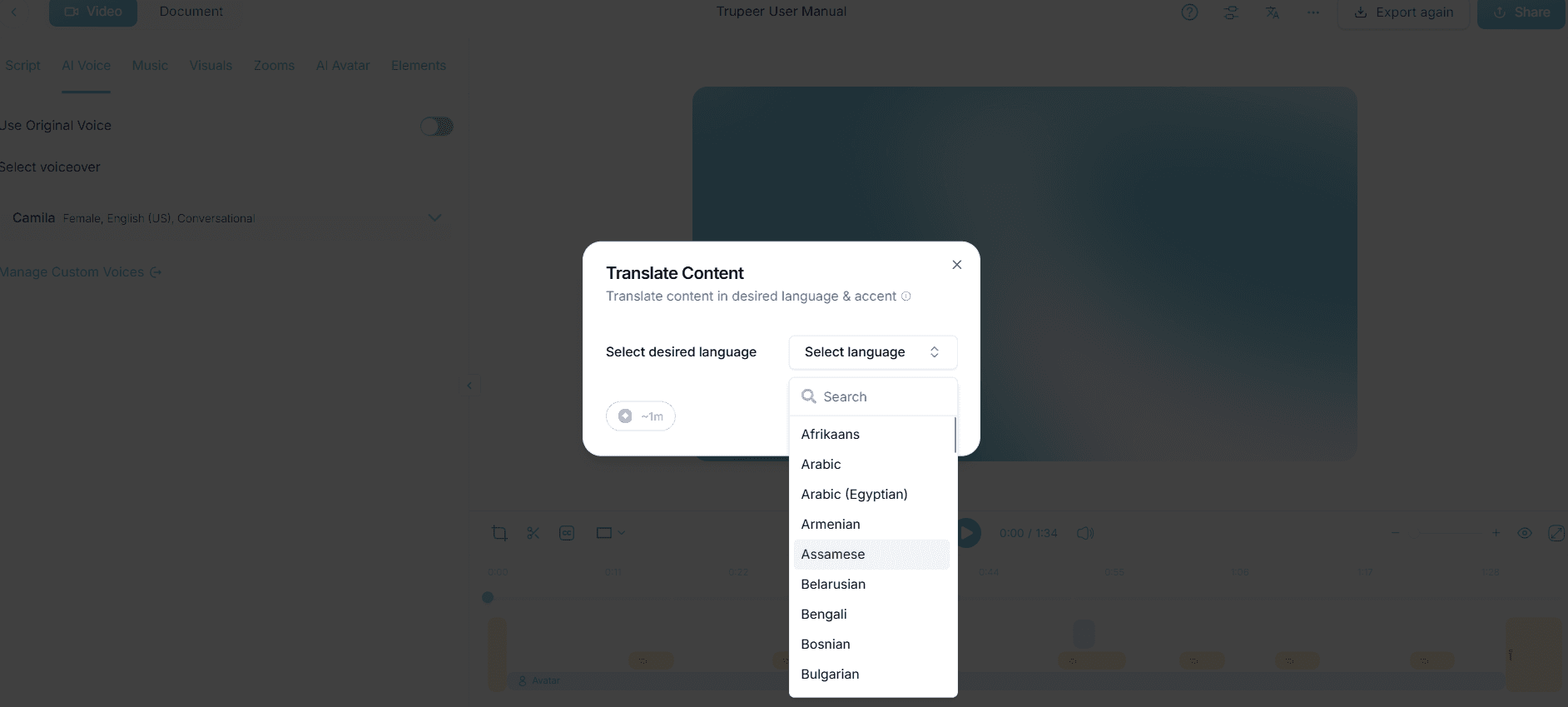
Step 4: Translate and Localize Content
For organizations with a global presence, Trupeer's AI translation and dubbing capabilities are invaluable. Select the "Translate" option and choose from over 40 languages. Trupeer will translate the audio and sync lip movements to ensure a natural presentation. This step generally takes a few minutes for shorter videos and slightly longer for more extensive content. Ensure that the translations align with regional dialects and terminologies for maximum effectiveness. The AI dubbing feature also allows for non-English audiences to access the same high-quality content.
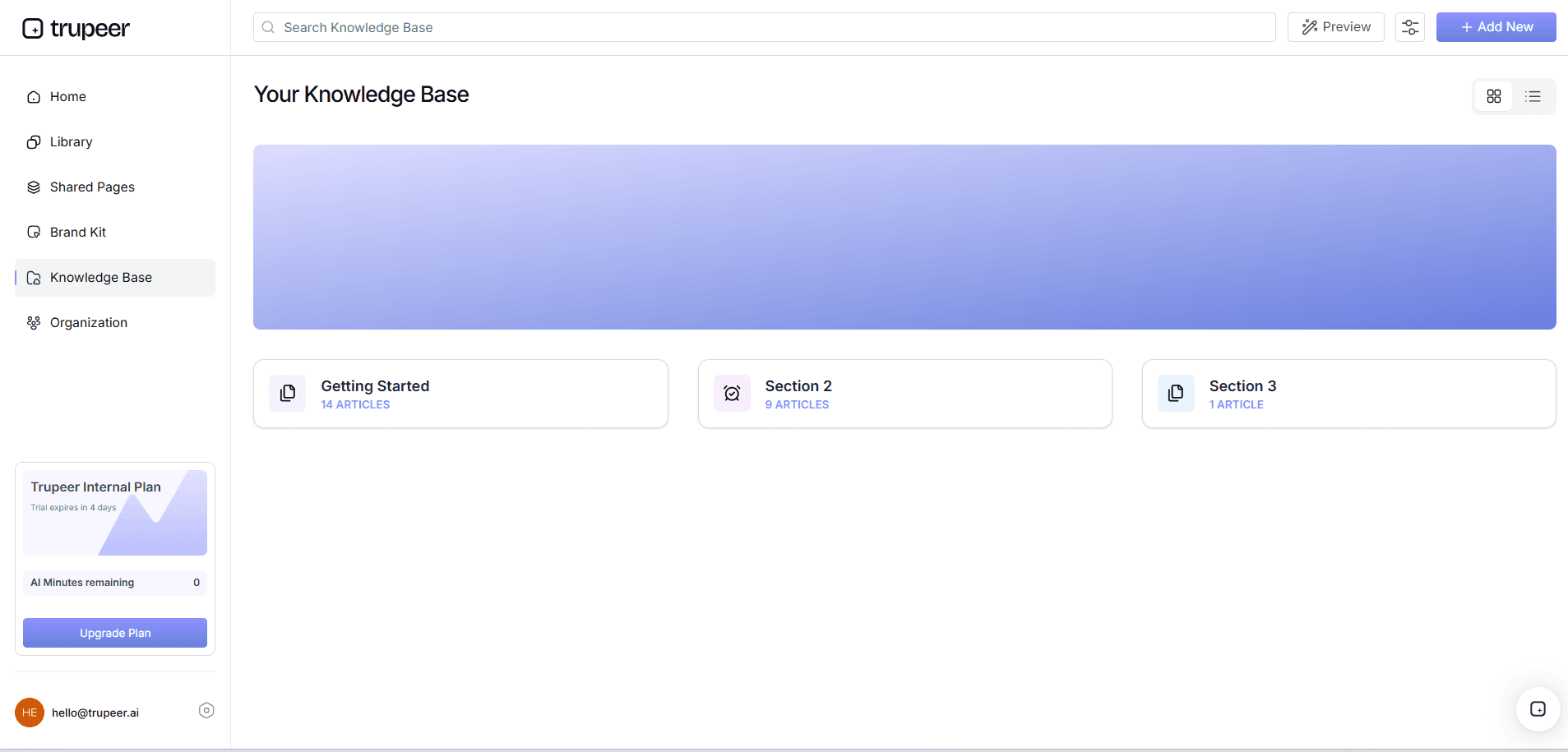
Step 5: Distribute Through Knowledge Base
With your video enhanced and localized, publish it to Trupeer's enterprise training video platform. Use the "Publish" button to add your video to the AI-searchable knowledge base, where it will be indexed with timestamp deep-links. This ensures that users can jump directly to relevant sections, enhancing accessibility and usability. The process is quick, usually taking under 5 minutes. For organizations with multiple departments, consider setting up custom domains and SSO for personalized access control.
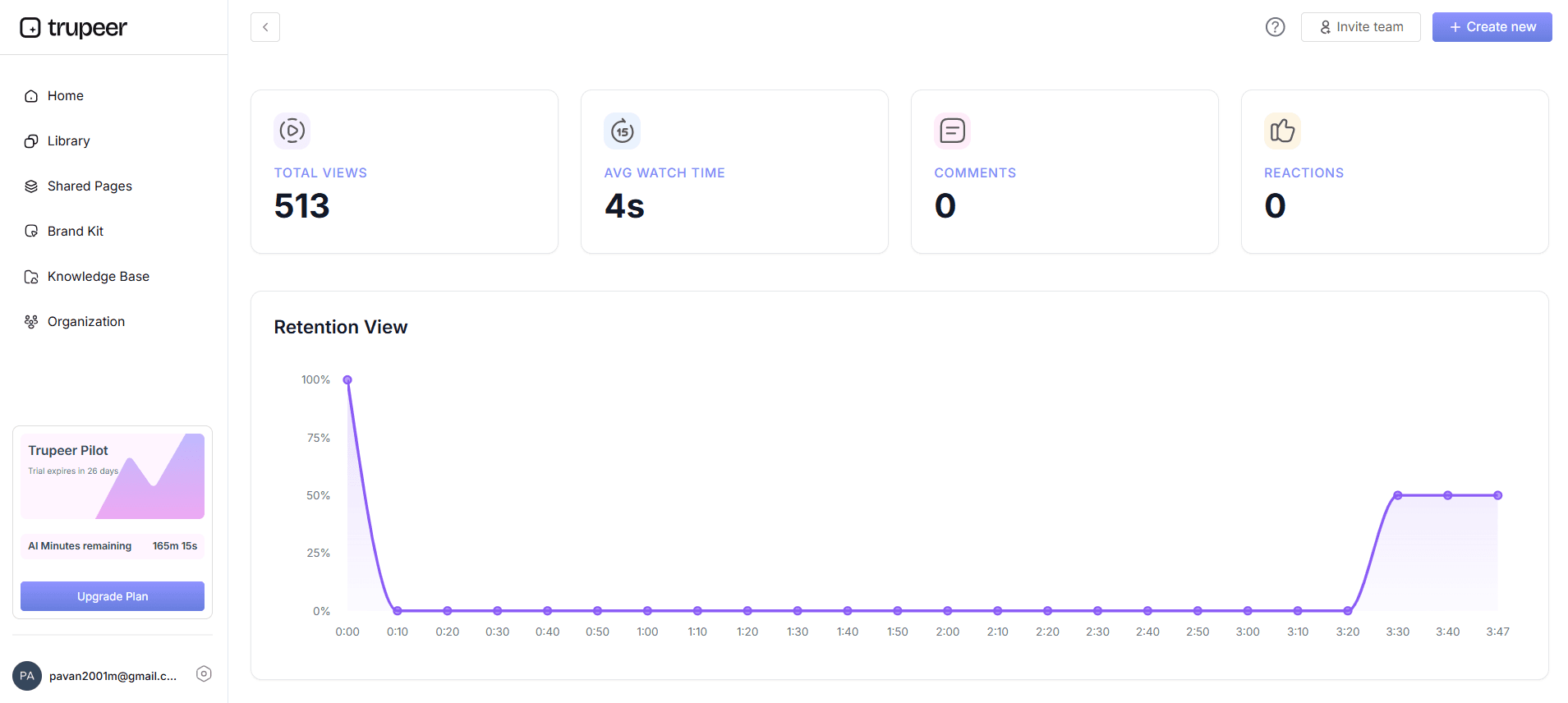
Step 6: Analyze Viewer Engagement
Finally, use Trupeer's analytics tools to assess how your audience interacts with the video. Access the "Analytics" dashboard to view metrics such as viewer engagement, drop-off rates, and heatmaps. This data helps refine your content strategy and identify areas for improvement. Reviewing these metrics regularly can reveal trends and insights that inform future content creation. If certain segments show high drop-off rates, consider revising that content for better engagement. This analysis typically takes place over a few days as data accumulates.
What tips help you deploy an enterprise video search architecture?
Implementing an effective enterprise video search architecture involves strategic planning and execution. Here are several tips to help you optimize the process and ensure success.
Standardize Video Formats. Use consistent formats across all video content to ensure compatibility and ease of access. This standardization simplifies indexing and retrieval.
use AI Editing Tools. Employ video trimmer tools to remove unnecessary content, enhancing video clarity and engagement.
Regularly Update Content. Ensure that all video content remains current and relevant. Schedule periodic reviews to update or replace outdated videos.
Implement Access Controls. Set up permissions and access controls to ensure that sensitive content is only available to authorized users, protecting your organization's data.
use Analytics. Regularly review analytics to understand user engagement and identify areas for improvement. This data-driven approach enhances content effectiveness.
simplify SOP Creation. Use Scribe alternatives for SOPs to quickly generate and maintain accurate procedural documents.
Ensure Cross-Departmental Collaboration. Encourage collaboration between departments to share insights and best practices, building a unified approach to video content management.
Frequently asked questions
How does enterprise video search improve operational efficiency?
Enterprise video search improves operational efficiency by reducing the time spent locating video content. With a solid search system, employees can quickly access relevant videos, which simplifies workflows and enhances productivity. This efficiency translates into substantial time savings, allowing teams to focus on critical tasks rather than searching for information. By integrating video content into a searchable platform, enterprises can also reduce redundancy and ensure that employees have access to the most up-to-date resources, leading to better-informed decision-making and improved operational outcomes.
What are the key components of a video search architecture?
The key components of a video search architecture include a solid indexing system, advanced search algorithms, and a user-friendly interface. Indexing ensures that each video is tagged with relevant metadata, making it easily searchable. Search algorithms must be sophisticated enough to handle complex queries and return accurate results. A user-friendly interface allows users to navigate the system effortlessly, ensuring that they can find the content they need quickly. also, analytics and reporting tools provide insights into video usage and engagement, further enhancing the architecture's effectiveness.
Why is AI important for video search systems?
AI is crucial for video search systems because it enhances search accuracy and efficiency. AI algorithms can process vast amounts of video data, identifying patterns and extracting relevant information quickly. This capability allows for more precise search results and reduces the time users spend sifting through irrelevant content. AI can also automate the indexing process, ensuring that metadata is consistently applied across all videos. also, AI-powered tools like AI video translation expand the system's functionality by enabling multilingual searches and localization, making content accessible to a global audience.
Can Trupeer integrate with existing IT infrastructure?
Yes, Trupeer is designed to integrate smoothly with existing IT infrastructure. It offers APIs and compatibility with common enterprise systems, ensuring that video search functionality aligns with your organization's current tools and workflows. This integration minimizes disruption and allows for a smooth transition to Trupeer's platform. By working within your existing environment, Trupeer can help enhance video management and accessibility without requiring significant changes to your IT setup, making it an ideal choice for organizations looking to improve their video search capabilities.
Does video search architecture support data security?
Yes, a well-designed video search architecture supports data security through several mechanisms. These include access controls, encryption, and secure data storage protocols. Access controls ensure that only authorized users can access sensitive content, while encryption protects data during transmission and storage. Secure data storage protocols prevent unauthorized access and ensure that data integrity is maintained. Organizations can also implement monitoring and auditing features to track access and usage, providing an additional layer of security. By incorporating these elements, video search architecture can effectively safeguard organizational data.
Related Blogs