Trupeer Blog
Imagine your tech support team is overwhelmed with repetitive inquiries, each one shaving precious minutes off their day. Your customers, frustrated with inconsistent responses, demand quicker solutions. A well-organized knowledge base can alleviate these pains, offering a centralized repository of information that's accessible and reliable. But what if your knowledge base could also reflect the professionalism and enterprise-level readiness of your business? A custom domain for your customer portal knowledge base does just that. It not only strengthens your brand but also provides a smooth user experience. Consider this:
Companies with branded customer portals report a 30% increase in customer satisfaction.
This guide is for customer support managers, tech leads, and business owners who want to enhance user engagement and satisfaction by setting up a custom domain knowledge base. Teams weighing tools often start with a Loom alternatives comparison before standardizing on a workflow.
Why does setting up a custom domain knowledge base for your customer portal matter?
In a world where customer satisfaction can make or break a business, having a reliable and accessible knowledge base is crucial. A custom domain knowledge base isn't just a repository of information; it's a reflection of your company's commitment to quality support. When customers encounter a branded domain, it exudes professionalism and builds trust. They're more likely to consult your resources first before reaching out for support, reducing the load on your customer service team. This leads to quicker resolution times and happier customers, which are key metrics in any customer success workflow.
Also, a custom domain enhances your brand's visibility and consistency. Every interaction with your knowledge base is an opportunity to reinforce your brand identity. When customers see your brand consistently across various touchpoints, it builds a sense of reliability and professionalism. This is particularly vital in industries where trust is paramount, such as finance and healthcare. By providing a smooth, branded experience, you're not only meeting customer expectations but exceeding them. This can lead to increased customer loyalty and retention, as clients prefer to stick with brands that project competence and stability.
What are the benefits of a custom domain knowledge base?
Setting up a custom domain for your knowledge base offers several tangible benefits that can enhance both customer experience and operational efficiency:
Brand Consistency. A custom domain ensures that your knowledge base aligns with the rest of your company's digital presence. This consistency builds customer trust and reinforces brand identity.
Improved SEO. Branded domains are often prioritized by search engines, making your content more discoverable. This is especially beneficial if your knowledge base one is public-facing.
Increased Customer Trust. Customers are more likely to trust and engage with a knowledge base that appears professional and is clearly associated with your brand.
Enhanced Security. Custom domains can incorporate your company's existing security protocols, offering an additional layer of protection for sensitive information.
Better User Experience. A smooth transition from your main website to your knowledge base improves the user experience, reducing frustration and enhancing engagement.
Scalability and Flexibility. As your business grows, a custom domain allows for easier integration of additional services and features, supported by platforms like an AI video platform.
Which Trupeer features help you set up a custom domain knowledge base?
Trupeer offers a range of features that simplify the process of setting up a custom domain knowledge base, ensuring it meets both operational and customer needs.
Custom-domain hosting with SSO
Trupeer's custom-domain hosting integrates Single Sign-On (SSO) to provide a smooth and secure experience for users. This feature allows you to host your knowledge base on a domain that aligns with your brand, enhancing both visibility and trust. By using SSO, you eliminate the need for multiple logins, making it easier for users to access the information they need. This not only simplifies user access but also strengthens security protocols by centralizing authentication processes. Trupeer's AI-searchable knowledge base ensures that information is easily accessible, further enhancing user experience.
AI-searchable knowledge base with timestamp deep-links
Trupeer's AI-searchable knowledge base indexes every piece of content, making it easy to find specific information through keyword searches. Timestamp deep-links allow users to jump directly to the most relevant sections of your content, saving time and minimizing frustration. This feature is particularly useful for complex topics where users may not need to consume an entire article or video to find the answer they're looking for. The searchable knowledge base is integral for companies aiming to improve customer satisfaction and reduce support inquiries. ai/tools/knowledge-base-generator">knowledge base generator tool.
Automatic SOP generation from any recording
Trupeer excels in converting recordings into fully formatted Standard Operating Procedures (SOPs). This feature is invaluable for organizations that require consistent documentation of processes. By automatically generating SOPs from video recordings or screen captures, Trupeer reduces the time and effort needed to create detailed guides. These SOPs are fully editable, allowing for quick updates and refinements. This functionality is particularly beneficial for tech teams aiming to document workflows without the overhead of manual formatting, using our AI documentation platform.
AI voiceover in 65+ natural voices
Trupeer's AI voiceover capability supports over 65+ natural voices, allowing you to create engaging audio content in multiple languages. This feature is perfect for companies with diverse customer bases who want to make their knowledge base accessible to non-English speakers. The adjustable pace and tone ensure the audio matches the intended message and audience. When integrating voiceovers into your knowledge base, Trupeer offers a comprehensive knowledge base generator that enhances the user experience by adding a personalized touch.
Brand kits and branded templates
Consistent branding across your knowledge base is crucial for maintaining a professional image. Trupeer offers brand kits and branded templates that ensure your visual style remains uniform throughout your documentation. These tools allow you to apply your company's color schemes, logos, and typography to all content, creating a cohesive look and feel. This feature is particularly beneficial for marketing teams looking to reinforce brand identity across various customer touchpoints. By using Trupeer's branding capabilities, you can easily maintain a polished and professional appearance that enhances user trust and engagement.
How do you set up a custom domain knowledge base step by step with Trupeer?
Step 1: Configure your custom domain
Begin by selecting your desired domain provider and purchasing a domain name if you haven't already. Log in to your Trupeer account and navigate to the knowledge base settings. Click on the 'Domain Settings' tab and enter your custom domain. Trupeer will guide you through the necessary DNS configurations required by your domain registrar. You'll need to create a CNAME record pointing to the Trupeer server. This process typically takes 24-48 hours for DNS propagation, during which your domain will begin pointing to your Trupeer-hosted knowledge base. Ensure all DNS settings are accurate to avoid downtime.
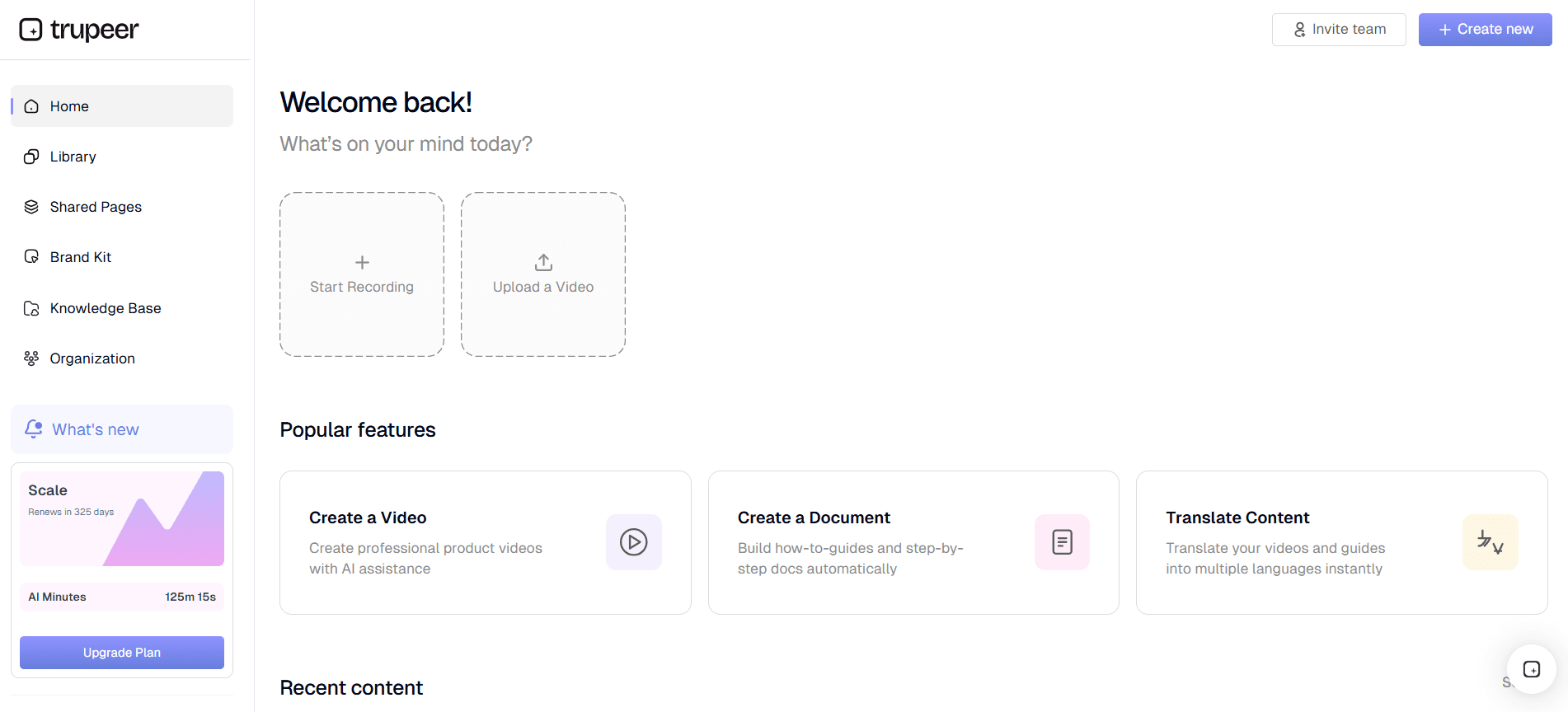
Step 2: Enable Single Sign-On (SSO)
Once your custom domain is set, enhancing security and user convenience with Single Sign-On (SSO) is crucial. In the Trupeer admin panel, find the 'SSO Configuration' section under security settings. Choose your SSO provider or integrate with your existing identity provider like Okta or Azure AD. Trupeer supports SAML and OAuth protocols, making it versatile. Input the necessary credentials and metadata provided by your identity provider. After saving, test the SSO login to ensure users can smoothly access the knowledge base without additional logins, so reducing friction and enhancing security. For a deeper look, our guide on best knowledge base examples covers the adjacent playbook.
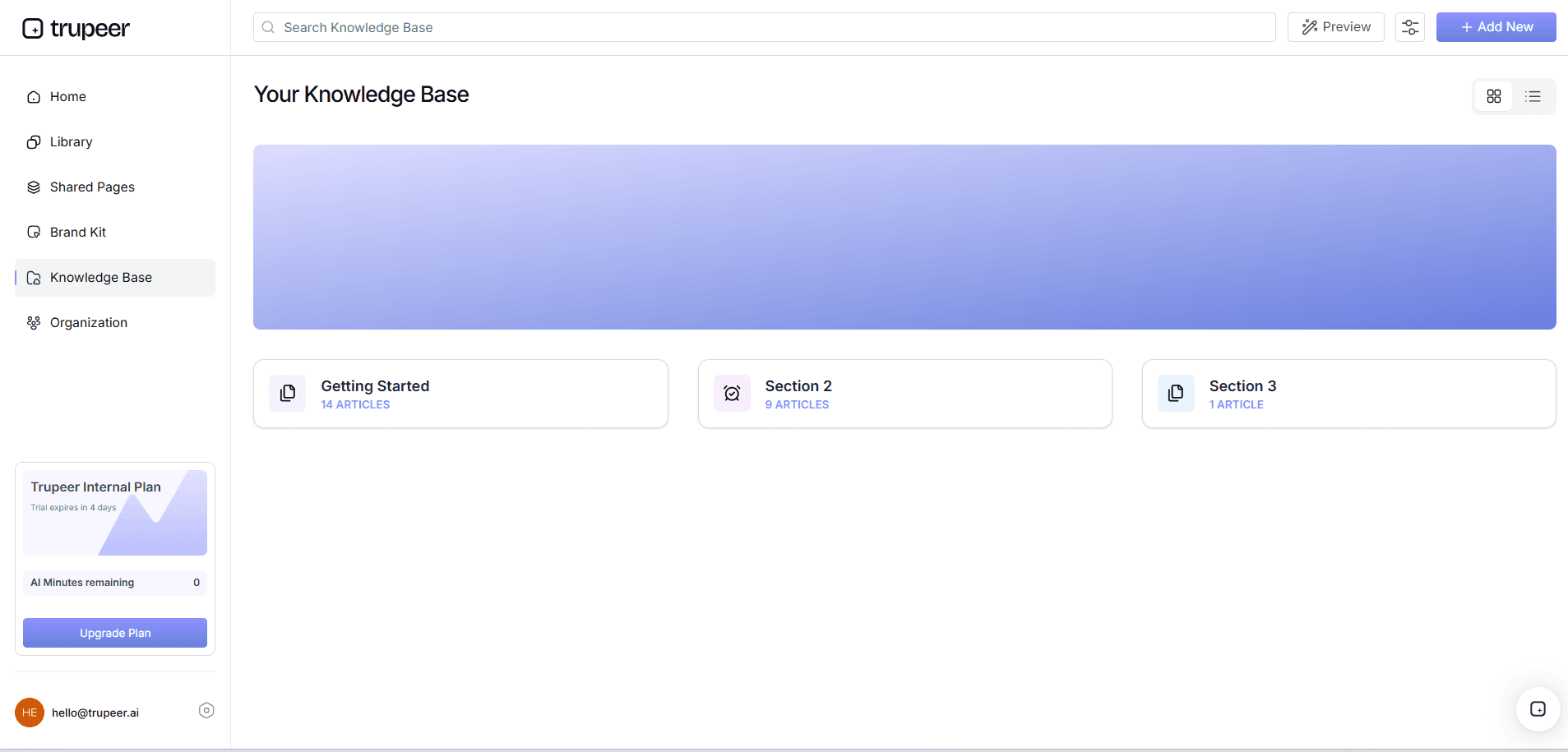
Step 3: Build your AI-searchable knowledge base
With the domain and SSO configured, it's time to populate your knowledge base. use Trupeer's AI capabilities by uploading documents, videos, and other resources. Navigate to the 'Content Management' tab and start adding resources. Trupeer automatically indexes your content, creating an AI-searchable database. This means users can find information using keywords or specific queries. Test the search functionality by entering common questions to ensure accurate results. Regularly update your content to keep the knowledge base relevant and comprehensive, taking full advantage of Trupeer's auto-updating documentation.
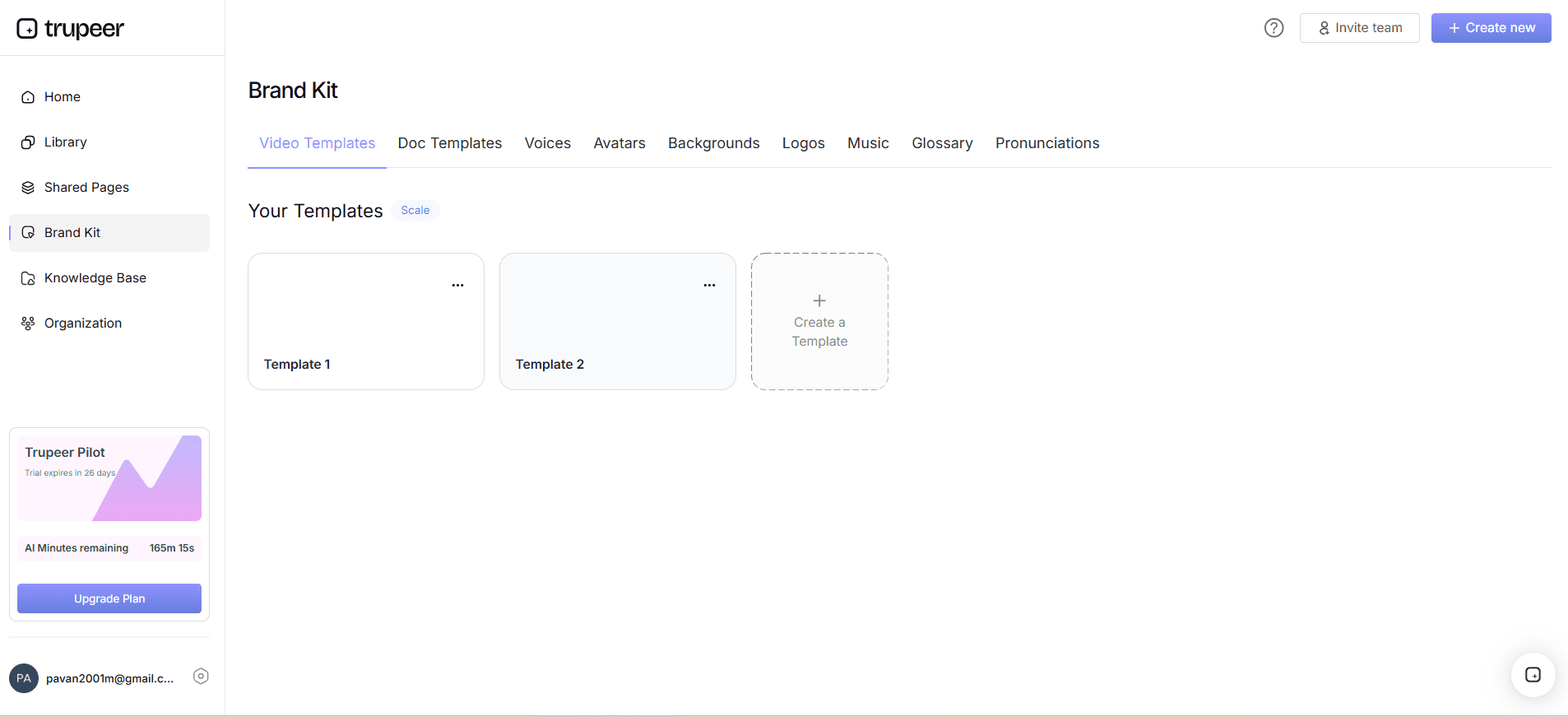
Step 4: Customize with brand kits and templates
Consistency in branding is vital for professional presentation. In the Trupeer dashboard, go to 'Branding Settings' and upload your brand assets such as logos, color palettes, and typography styles. Apply these elements using Trupeer’s branded templates. This ensures all documentation and knowledge base entries align with your company’s visual identity. Consistent branding not only reinforces professionalism but also enhances user trust. Review and approve each template to ensure it meets your standards, and preview changes to see how they appear to end-users before finalizing.
Step 5: Integrate AI voiceover for accessibility
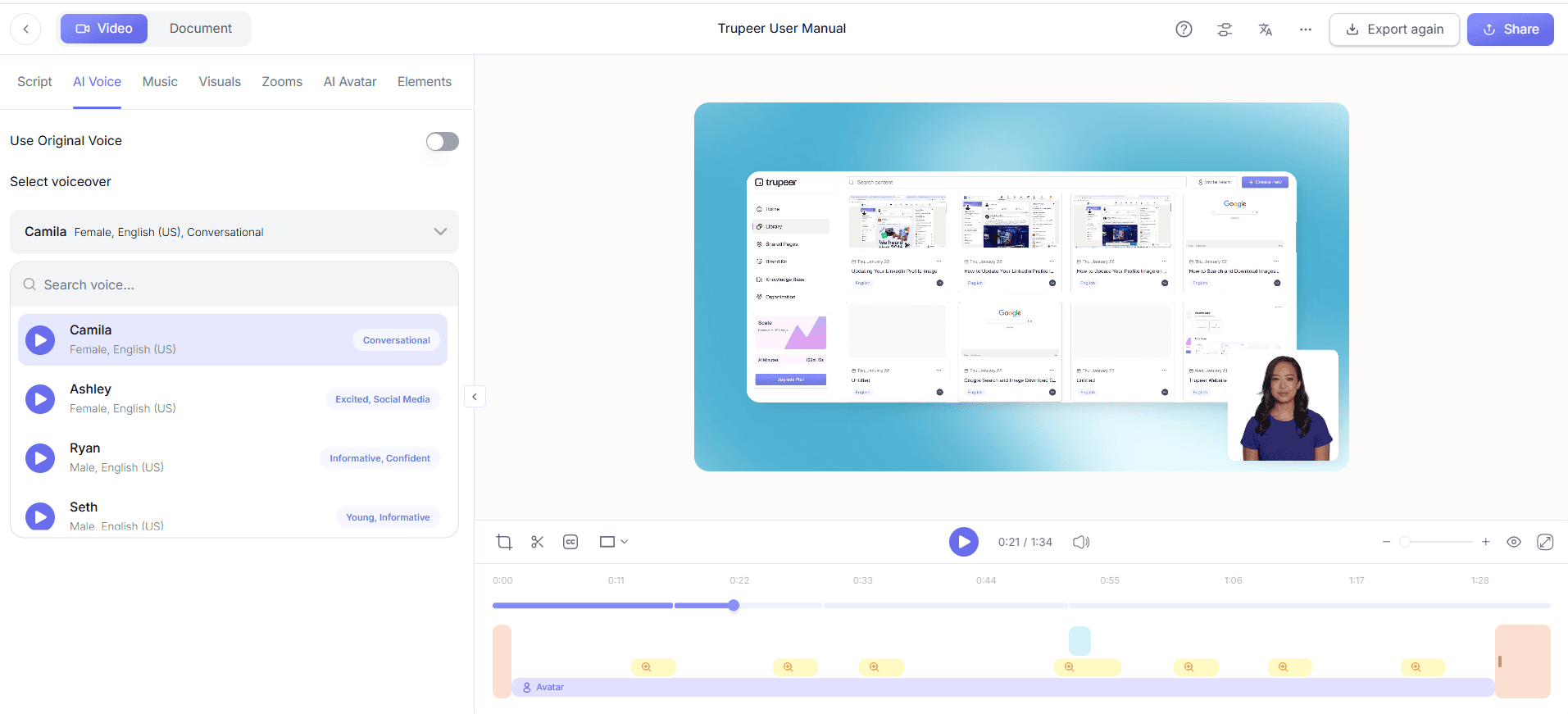
Enhancing accessibility is key, especially for diverse audiences. Use Trupeer’s AI voiceover feature to add audio narration to your written content. Go to the 'Voiceover' section and select from over 65+ natural voices available. Adjust the pace and tone to match your brand’s voice. For multilingual support, select the appropriate language for your audience. This feature not only aids visually impaired users but also caters to those who prefer auditory learning. Test the audio output for clarity and make necessary adjustments to improve user experience.
Step 6: Monitor and analyze engagement
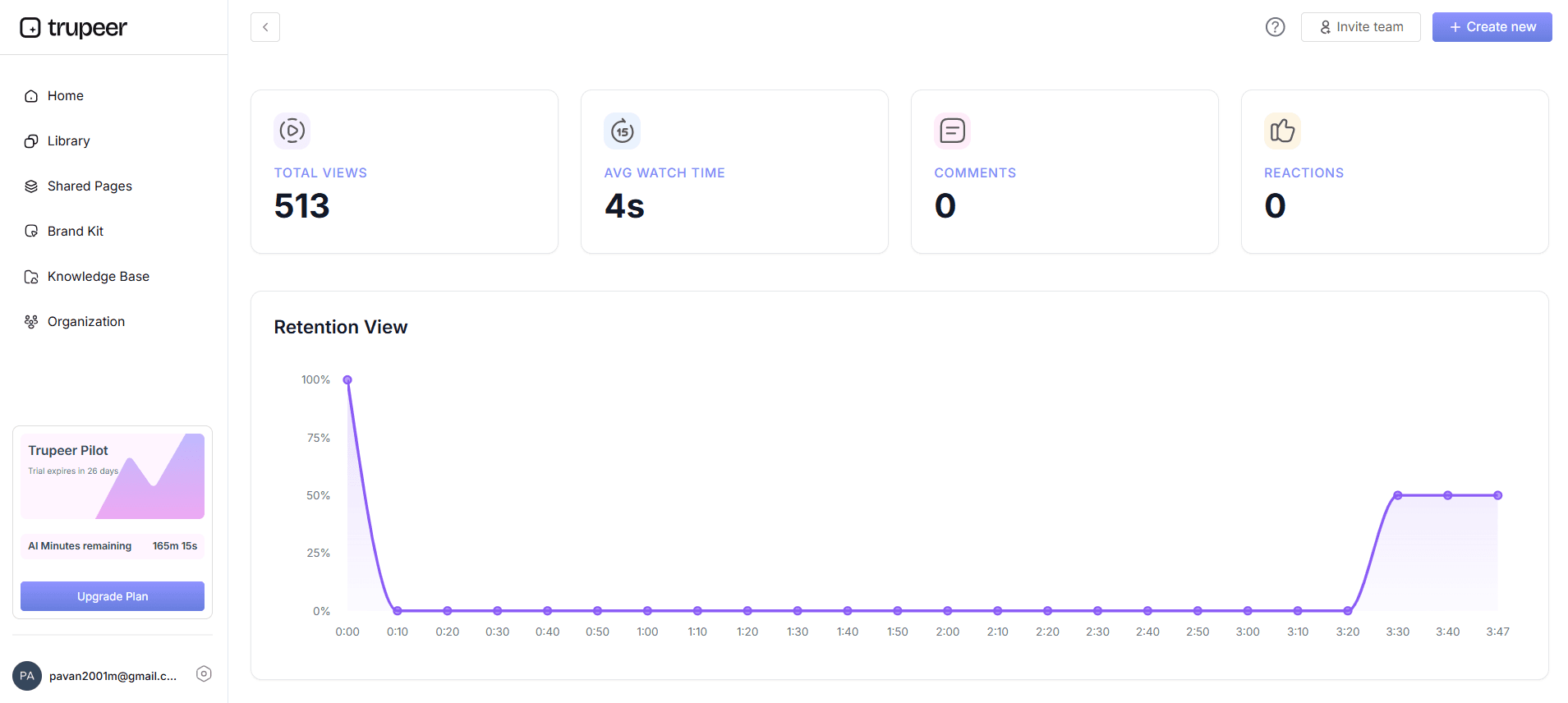
Finally, use Trupeer's analytics to monitor how users interact with your knowledge base. Access the 'Analytics' dashboard to view metrics on user engagement, such as page views, search queries, and session durations. Heatmaps show where users spend the most time, helping you identify popular content and areas needing improvement. Regularly review these insights to refine content strategy and ensure your knowledge base continues to meet user needs effectively. Adjust and update your content based on feedback and analytics to keep the knowledge base dynamic and user-centered.
What tips help you set up a custom domain knowledge base?
Creating an effective custom domain knowledge base requires careful planning and execution. Consider the following tips to enhance your setup process and ensure your knowledge base is both efficient and user-friendly.
Ensure DNS Accuracy. Double-check your DNS settings during configuration to prevent downtime and connectivity issues.
Regularly Update Content. Keep your knowledge base current by frequently adding and revising content. This maintains relevance and accuracy for users.
use Analytics. Use analytics to understand user behavior and preferences. Adapt your content strategy based on these insights.
use AI Features. Take advantage of Trupeer’s AI capabilities, like voiceover and search, to make your knowledge base more accessible.
Test SSO Functionality. Regularly test your SSO integration to ensure smooth user access and security compliance.
Consistent Branding. Apply brand kits to maintain visual consistency across all knowledge base materials, enhancing professionalism.
Review Competitor Offerings. Keep informed about industry standards by checking Scribe alternatives for SOPs to ensure your knowledge base remains competitive.
Trupeer also ships a internal knowledge base wiki software that handles this step without extra setup.
Frequently asked questions
How can I ensure my custom domain is secure?
Ensuring the security of your custom domain involves several steps. First, implement HTTPS by obtaining an SSL certificate, which encrypts data transferred between your users and the server. Trupeer facilitates SSL integration directly through its platform, simplifying the process. also, enable Single Sign-On (SSO) to centralize authentication and reduce the risk of unauthorized access. Regularly audit your security settings and update passwords and permissions as necessary. By following these practices, you protect sensitive information and maintain user trust.
What if I encounter issues with DNS propagation?
DNS propagation can sometimes take up to 48 hours, but if issues persist, check your DNS records for accuracy. Ensure you've correctly set the CNAME or A record as directed by Trupeer's instructions. If problems continue, contact your domain registrar for assistance. They can provide insights into any regional delays or misconfigurations. It's also beneficial to use online DNS checkers to verify the propagation status across different locations. Being proactive in these steps can help you quickly resolve DNS issues and minimize downtime.
Can I integrate other software with Trupeer's knowledge base?
Yes, Trupeer supports integration with various third-party tools to enhance functionality. For example, you can connect customer feedback platforms, CRM systems, and analytics tools to gather comprehensive insights. Trupeer’s API allows for custom integrations, enabling you to tailor the knowledge base to specific needs. By integrating other software, you simplify operations and enhance your knowledge base’s capabilities, making it a more powerful resource for both users and administrators.
Does Trupeer support multilingual content?
Yes, Trupeer supports multilingual content through its AI translation and dubbing features. You can offer your knowledge base in over 40 languages, making it accessible to a global audience. Trupeer's AI video translation ensures synchronized lip-sync and accurate translation, enhancing the user experience for non-English speakers. This capability is particularly useful for multinational companies or any organization seeking to broaden its reach and engagement across various regions and languages.
What steps should I take if a user reports a broken link?
If you receive a report of a broken link, first verify the issue by checking the link yourself. Use Trupeer’s analytics to trace the link’s usage history and identify any recent changes that might have affected it. Update the link in your knowledge base’s content management system if necessary. Communicate with the user to inform them of the resolution. Regularly audit your knowledge base to prevent similar issues from arising, ensuring a smooth user experience and maintaining trust in your resources.
Related Blogs