Trupeer Blog
Summarise

Imagine a sales team at the cusp of a quarter-end, where every minute counts. They're meant to input data into the CRM, but the tool feels like a chore rather than an asset. This is a common scenario in many organizations, where CRM systems become underutilized despite significant investments. In fact,
only 40% of CRM implementations achieve full user adoption
. This isn't just about wasted resources; it's about missed opportunities and potential revenue left on the table. A technology adoption strategy could be the big shift you need.
CRM adoption isn't just about initial training sessions or flashy software features. It's about ongoing engagement and making the tool indispensable to the user's workflow. A well-crafted video strategy can bridge this gap, turning the CRM from a seldom-used resource into a daily essential. This strategy is crucial for sales managers, trainers, and L&D professionals looking to maximize their CRM investment. It's time to dig into the specifics of why a CRM adoption video strategy matters, what benefits it brings, and how Trupeer can facilitate this transformation.
Why does CRM adoption video strategy matter?
CRM adoption video strategies are critical because they address a common pain point: lack of engagement from sales representatives. When reps fail to input data consistently, sales forecasts become inaccurate and management loses critical insights. This can lead to poor decision-making and missed opportunities. The challenge is not just getting reps to use the CRM, but to use it effectively and regularly. This is where a thoughtful video strategy comes into play.
Video content can significantly enhance the training videos workflow, offering dynamic and engaging ways to demonstrate CRM features and best practices. Engaging video tutorials as part of the training videos use case can showcase real-world scenarios that reps face daily, making the abstract functionalities of a CRM tangible and relevant. When reps see how the CRM directly supports their goals, such as closing deals faster or managing leads more efficiently, they are more likely to embrace the tool. This ultimately leads to improved data accuracy, better customer insights, and enhanced team performance. For sales managers and L&D teams, a well-executed video strategy can transform the CRM from a perceived burden into a valuable asset. Teams weighing tools often start with a Loom alternatives comparison before standardizing on a workflow.
What are the benefits of a CRM adoption video strategy?
Implementing a CRM adoption video strategy offers numerous benefits that can drive user engagement and operational efficiency.
Increased User Engagement. Videos can capture attention more effectively than text-based tutorials. With an ai video editing tool, you can create interactive content that keeps reps engaged and invested in learning.
Consistent Training Experience. A single AI video platform ensures uniform training for all reps. This consistency helps maintain a standard level of knowledge across the team, reducing discrepancies in CRM usage.
Reduced Training Time. By using video tutorials, you can significantly cut down on the time needed to train new reps. Engaging, concise videos convey information quickly, allowing reps to learn at their own pace.
Enhanced Knowledge Retention. Visual and auditory learning methods improve retention rates. When reps watch and listen to information, they're more likely to remember and apply it effectively.
Scalable Training Solutions. Video content can be easily distributed to a large audience, making it a scalable solution for growing teams. This ensures every new hire gets the same quality of training, regardless of team size.
Measurable ROI. By tracking video engagement metrics, you can measure the effectiveness of your training. This data helps refine strategies, ensuring a better return on investment for your training efforts.
Which Trupeer features help you implement a CRM adoption video strategy?
Trupeer offers several features that can significantly enhance your CRM adoption video strategy, making it easier to create, distribute, and measure the effectiveness of your training content.
AI screen recording with auto-zoom and click detection
Trupeer's AI screen recording feature simplifies the creation of detailed CRM tutorials. With auto-zoom and click detection, the tool highlights key actions and areas on the screen, ensuring that users don't miss critical steps. This is particularly useful for demonstrating complex CRM processes where clarity is essential. As the user navigates through the CRM, the recording automatically adjusts to focus on important interactions, making it easier for reps to follow along.
AI avatars / talking-head video
Using AI avatars, you can add a personal touch to your CRM training videos. This feature allows trainers to create engaging, personalized content without the need for on-camera appearances. The inclusion of talking-head videos can make the training more relatable and engaging. With Trupeer's video trimmer, you can further refine these videos to ensure they are concise and impactful.
Automatic SOP generation from any recording
Trupeer's capability to automatically generate SOPs from video recordings is a big shift for CRM training. This feature creates detailed, step-by-step guides that are directly linked to the video content, ensuring consistency between what reps see and what they read. The AI documentation platform allows easy editing and updates, keeping training materials current and relevant.
AI-searchable knowledge base
An AI-searchable knowledge base enhances the accessibility of training materials. With Trupeer, all video content is indexed and searchable, allowing reps to quickly find answers to their CRM-related questions. The video knowledge base can be tailored to include timestamp-level deep links, enabling users to jump directly to the relevant parts of a training video.
Viewer engagement analytics, drop-off, and heatmaps
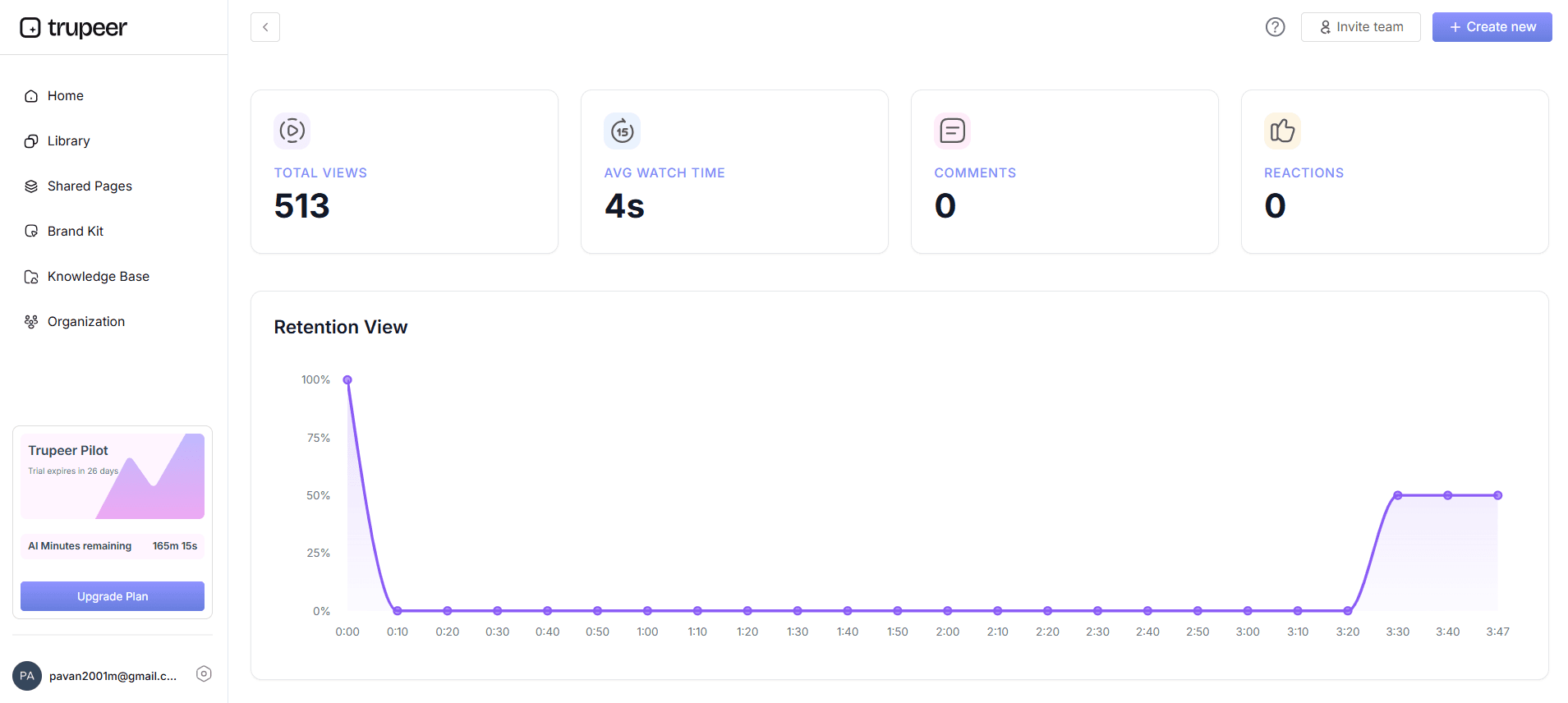
Understanding how reps interact with training videos is crucial for refining your strategy. Trupeer provides detailed analytics, including viewer engagement metrics and heatmaps that show where users drop off. By analyzing this data, you can identify which parts of your videos are most effective and where improvements are needed, ensuring your strategy continuously evolves to meet the needs of your team.
How do you implement a CRM adoption video strategy step by step with Trupeer?
Step 1: Capture the CRM Workflow
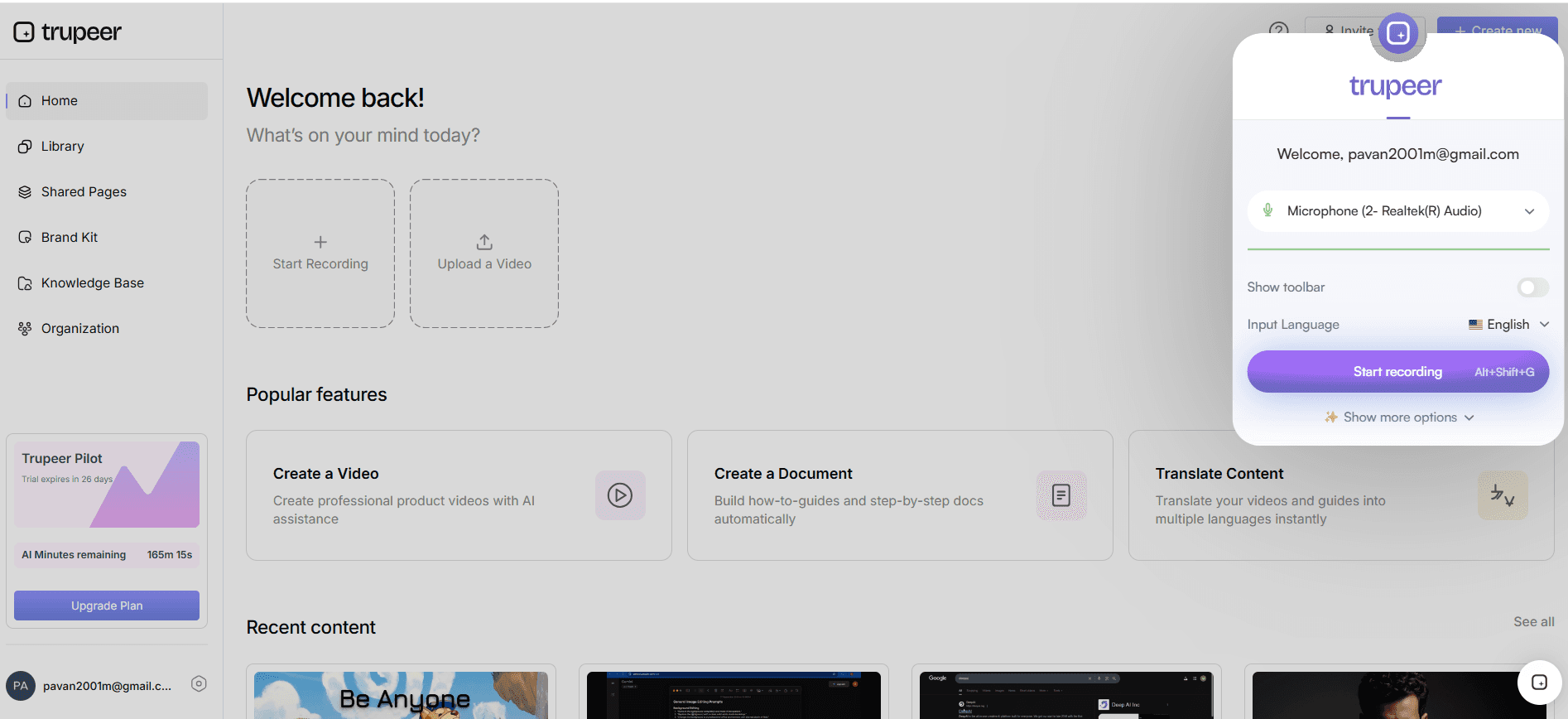
Start by using Trupeer's AI screen recording with auto-zoom and click detection. This feature allows you to capture your CRM dashboard interactions without missing any important details. Launch the browser-based recorder, which requires no installation, and begin recording your screen. As you navigate through the CRM, the tool automatically focuses on key actions like clicks and data entry. This precision ensures that your viewers will understand each step of the process. Typically, a 15-minute session is enough to cover most workflows, but you can extend this based on complexity.
Step 2: Enhance the Recording with AI Narration
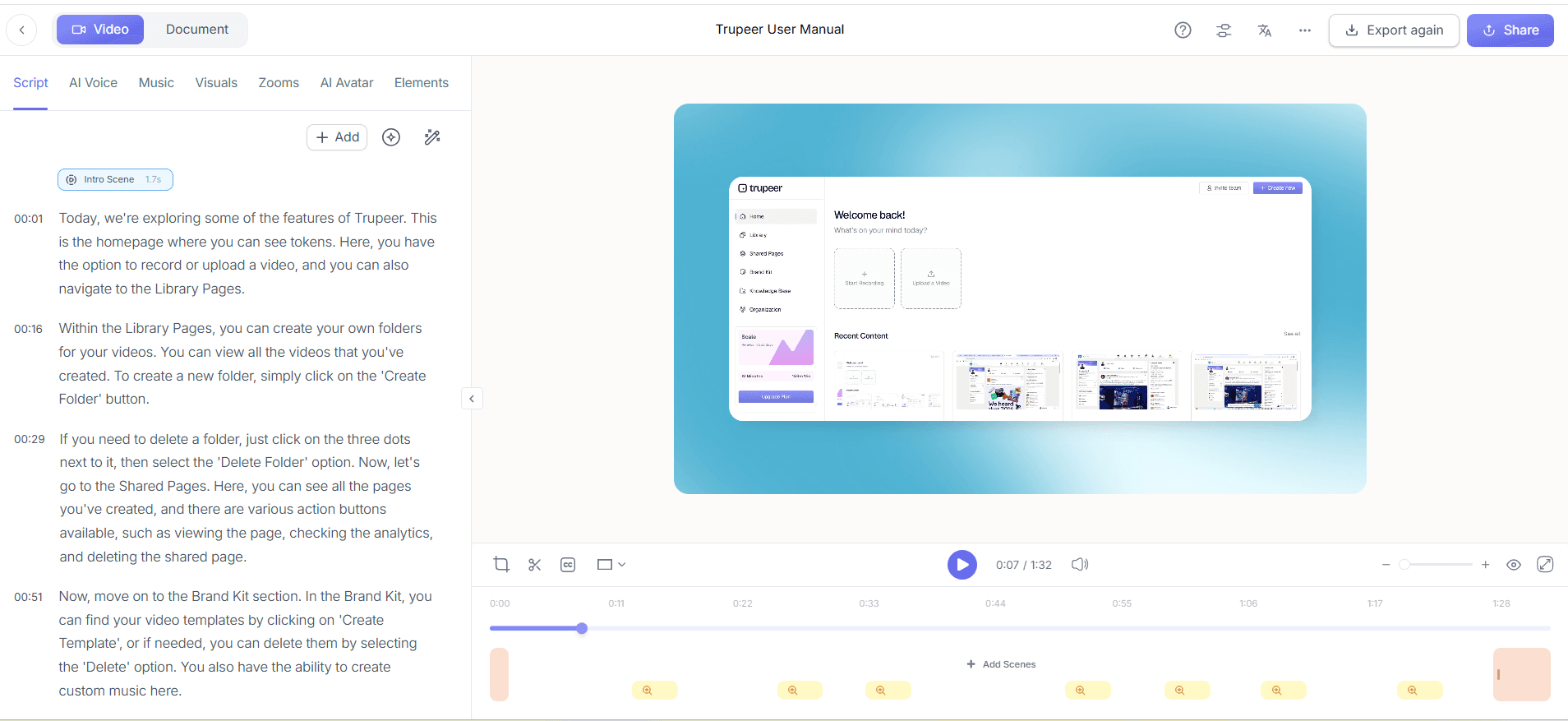
Once your recording is complete, you can enhance it using Trupeer's silent screen recording with automatic AI narration. This feature adds a professional voiceover to your video without requiring you to record audio yourself. Select from over 65+ natural voices and adjust the pace and tone to match your brand style. This step can take around 10 minutes and ensures that the narration complements the visual content, making it more engaging and informative for viewers.
Step 3: Edit for Clarity and Engagement
Use Trupeer's automatic filler-word removal and AI avatars to polish your video. This step involves removing unnecessary pauses and filler words like "um" and "ah," which can detract from the video's professionalism. also, consider integrating AI avatars for a personal touch, using the HeyGen integration for custom avatars if needed. This editing process might take 15-20 minutes, depending on the video's length, and results in a concise, engaging product.
Step 4: Generate and Link Documentation
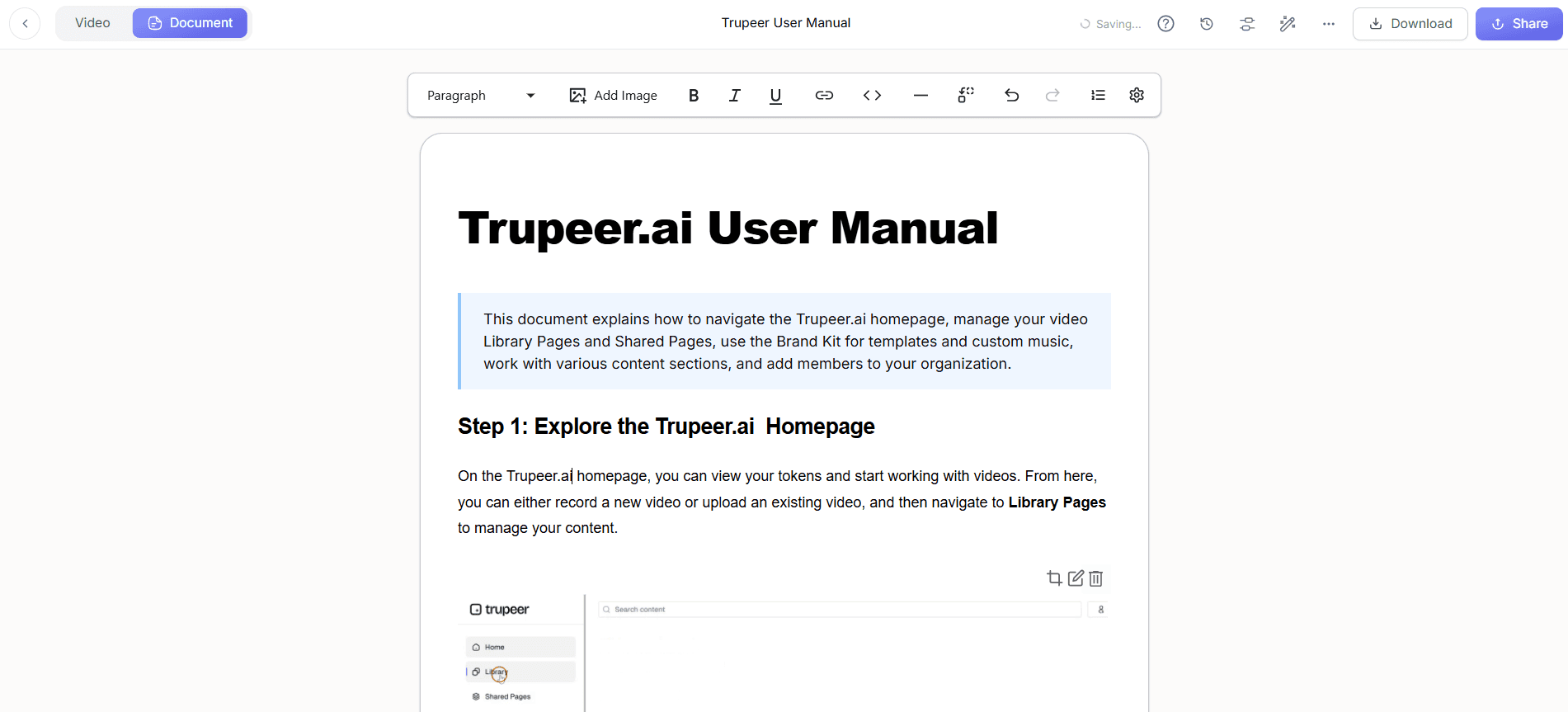
With the video edited, generate automatic SOPs using Trupeer's documentation generator. This feature creates a text-based guide that aligns with your video content, ensuring consistency. Edit the SOP if necessary and export it in multiple formats like PDF, HTML, or SCORM. This process typically takes about 10 minutes and ensures that reps have both visual and textual resources to refer to.
Step 5: Distribute Through the Knowledge Base
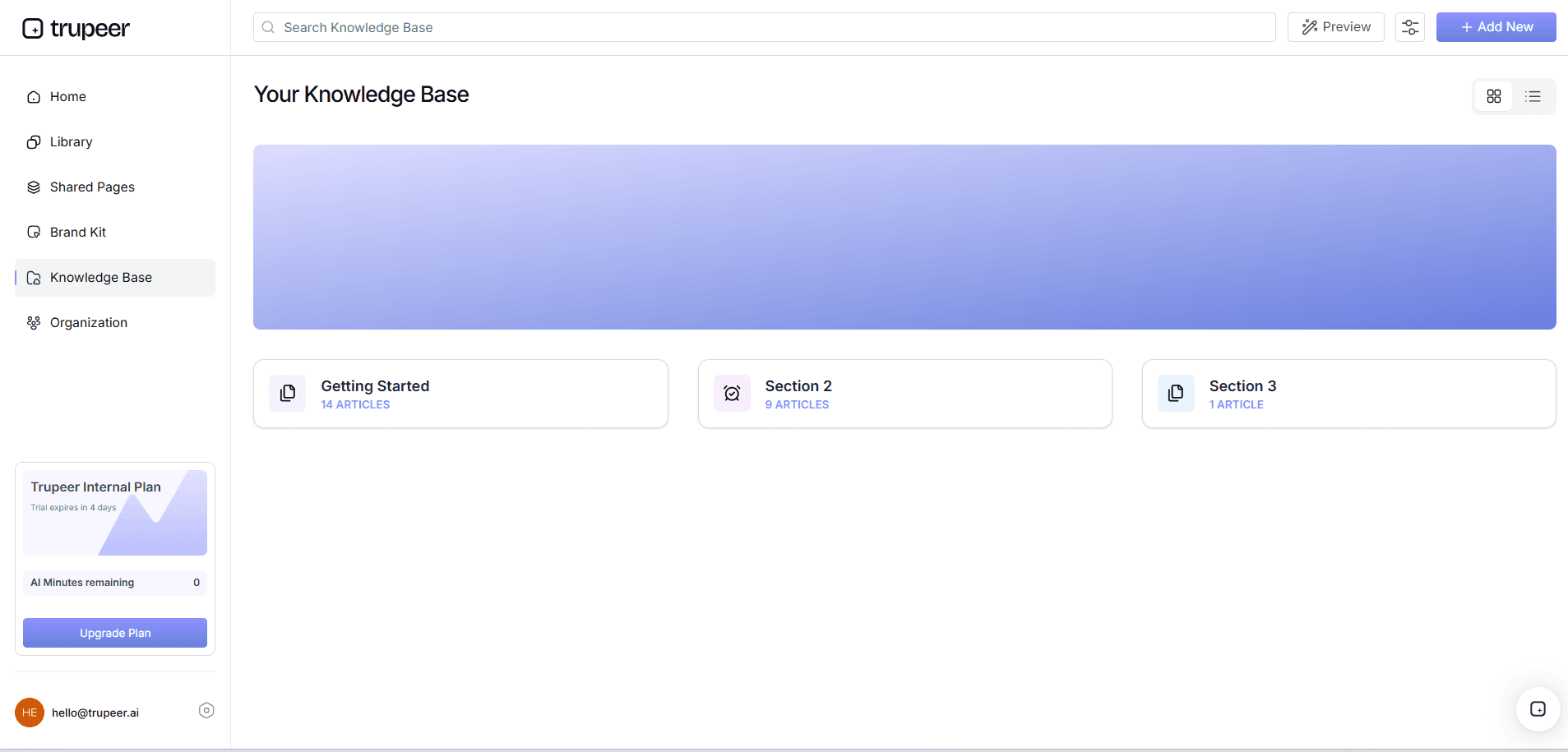
Distribute your training videos using Trupeer's AI-searchable knowledge base. Upload the video content, ensuring that each section is timestamped for easy navigation. This searchable knowledge base enables reps to quickly find specific CRM functions or processes they need to review, enhancing their learning experience. Setup usually takes about 5 minutes and significantly boosts accessibility and usability.
Step 6: Analyze Viewer Engagement
Finally, to optimize future training, analyze viewer engagement using Trupeer's analytics tools. Review metrics such as video drop-off rates and heatmaps to understand how reps interact with the content. This data helps identify which sections are most engaging and which may need improvement. Regularly checking this data, perhaps every week, allows you to refine your video strategy continuously, ensuring it meets the evolving needs of your sales team.
What tips help you create an effective CRM adoption video strategy?
Implementing a CRM adoption video strategy can significantly boost user engagement and tool utilization. Here are some actionable tips to make your strategy more effective.
Focus on Real Scenarios. Use examples relevant to your reps' daily tasks to make training relatable and practical.
Keep Videos Concise. Aim for videos under 10 minutes to maintain attention and focus on key points.
Standardize Visual Style. Use branded templates to create a consistent look and feel, reinforcing brand identity.
use AI Tools. Incorporate an auto video editor to simplify post-production and enhance video quality.
Encourage Interaction. Incorporate quizzes or feedback polls within videos to engage viewers actively.
Regularly Update Content. Ensure that your training material reflects the latest CRM updates and best practices.
Measure Effectiveness. Use analytics to track engagement and refine your strategy based on data insights.
When SOPs come into the same conversation, a Scribe alternatives comparison helps clarify the scope.
Frequently asked questions
How can videos improve CRM adoption rates?
Videos improve CRM adoption rates by making training more engaging and easier to understand. They provide visual demonstrations of CRM features, which can be more effective than text-based guides alone. When reps see the CRM in action, they're more likely to understand and retain the information. Videos can also be revisited anytime, allowing reps to learn at their own pace, which enhances comprehension and application.
What types of CRM training videos are most effective?
The most effective CRM training videos are those that focus on real-world applications and common challenges that reps face. Tutorials that demonstrate specific tasks, like inputting data or generating reports, are particularly valuable. also, videos that include interactive elements, such as quizzes, help reinforce learning. These types of videos not only show how to use the CRM but also why certain features are beneficial, leading to better user adoption.
Can Trupeer's AI tools integrate with other software?
Yes, Trupeer's AI tools can integrate with other software, enhancing their functionality. For example, the AI video translation tool can work alongside CRM systems to localize content for international teams. This integration ensures that training materials are accessible to a global audience, making it easier for teams in different regions to adopt the CRM effectively.
Why is viewer engagement analysis important in training?
Viewer engagement analysis is crucial because it reveals how users interact with training content. By understanding which parts of a video are most engaging or where viewers drop off, trainers can identify areas for improvement. This feedback loop allows for the continuous refinement of training materials, ensuring they remain effective and relevant. Ultimately, this leads to higher adoption rates and better performance.
Does using AI tools increase the cost of video production?
Using AI tools can initially increase the cost of video production, but they often lead to long-term savings. AI tools automate many of the time-consuming aspects of video creation, such as editing and narration, reducing the need for extensive manual intervention. This efficiency can lower production costs over time. also, the enhanced quality and engagement from AI-enhanced videos can lead to better training outcomes, justifying the initial investment.
What are the best digital adoption platforms by use case?
The right platform depends on the job in-app guidance for rollouts, walkthrough content for onboarding, analytics for adoption. Trupeer's digital adoption platform guide shows how recorded walkthroughs drive adoption without a heavy IT project.
Related Blogs