Trupeer Blog
Summarise
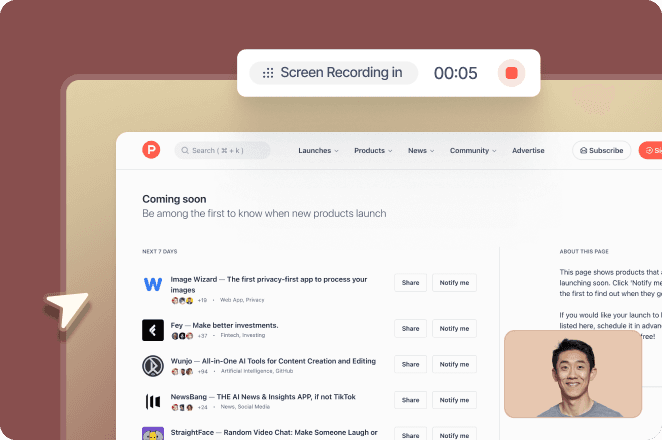
Consider a scenario where your sales team needs to quickly learn about a new product line. The training material is a 50-page document packed with specifications, use cases, and FAQs. Reading through it might take an entire day, and expecting your team to retain all that information is unrealistic. What if you could transform this lengthy training into digestible, focused segments? This is where chunking content for microlearning becomes invaluable.
Microlearning increases engagement by 50% and retention rates by up to 80%.
By breaking down extensive content into smaller, manageable chunks, employees can focus on one concept at a time, leading to better understanding and faster learning. The process not only saves time but also allows for flexible learning, where team members can absorb information at their own pace. This method is especially beneficial for those who juggle multiple responsibilities and need to fit learning into a busy schedule. ai/blog/training-videos">training videos as part of this approach to make learning even more engaging.
Why does chunking content for microlearning matter?
Chunking content into smaller segments is crucial for businesses aiming to improve knowledge retention and employee engagement. Long-form content often overwhelms learners, leading to information overload and decreased productivity. A training session that spans hours isn't just demanding; it’s also ineffective. When employees are bombarded with too much information at once, they’re likely to forget most of it, rendering the training ineffective.
For stakeholders, especially in fast-paced industries, this means a loss of valuable time and resources. Training content that doesn’t stick can lead to mistakes in the field, affecting customer satisfaction and the company's bottom line. By implementing a microlearning strategy, companies can not only enhance their customer education workflow but also ensure that critical information is retained and applied effectively. This approach allows for immediate application of knowledge, which is essential in sectors like healthcare, finance, and technology, where precision matters.
What are the benefits of chunking content for microlearning?
Breaking down content for microlearning offers several distinct advantages that can significantly impact learning outcomes and organizational efficiency.
Improved retention. By presenting information in smaller, focused segments, learners are more likely to remember what they’ve learned. This approach can boost retention rates by up to 80%.
Higher engagement. Learners tend to stay more engaged with content that’s concise and relevant. This method can increase engagement rates by 50%, making it easier to maintain interest throughout the training.
Time efficiency. Microlearning allows learners to consume content at their own pace, fitting training into their schedules without disrupting their workflow. This flexibility leads to a more efficient use of time.
Cost-effectiveness. Developing microlearning modules often requires fewer resources than traditional training programs. This can result in cost savings of up to 50% in training budgets.
Scalability. Microlearning content can be easily updated and scaled across the organization. This ensures that everyone has access to the most current training material without the need for extensive re-training.
Enhanced adaptability. Learners can easily return to specific segments when they need a refresher, ensuring that they can adapt quickly to new challenges or changes in their roles. This adaptability is supported by platforms like an AI-powered video tool that makes accessing content smooth.
Which Trupeer features help you break down long-form training into microlearning?
Trupeer offers several features designed to support the transformation of extensive training content into effective microlearning segments, enhancing both learning outcomes and content management.
AI screen recording with auto-zoom and click detection
This feature allows you to capture precise, focused segments of your screen activity, highlighting key actions and details automatically. It's perfect for creating step-by-step visual guides that are easy to follow. The auto-zoom ensures that learners don’t miss important details, making it ideal for technical training where specifics matter. By using this tool, you can create concise, targeted AI training video content that enhances understanding and retention.
Silent screen recording with automatic AI narration
This capability lets you create screen recordings that are automatically narrated by AI, providing a smooth learning experience without the need for manual voiceovers. The AI-generated narration is customizable, allowing you to adjust the tone and pace to match your audience's preferences. This feature is particularly useful for creating consistent, professional-quality training content that can be easily understood and accessed by all team members.
AI avatars / talking-head video
With Trupeer, you can integrate AI avatars into your training videos, offering a dynamic and engaging way to present information. These avatars can be customized using HeyGen integration, making it possible to align them with your brand's identity. Avatars can help keep learners engaged, especially in scenarios where face-to-face interaction is not possible. This feature adds a personal touch to your documentation generator efforts.
Auto chapters and segment detection
This feature simplifies the process of breaking down long-form content into smaller segments by automatically detecting logical chapters and sections within your recordings. It helps in organizing content into easily digestible parts, making navigation and review straightforward for learners. The auto chapter feature also supports the creation of structured microlearning modules that can be quickly accessed and consumed.
AI-searchable knowledge base
Trupeer's AI-searchable knowledge base indexes every recording with timestamp-level deep links, ensuring that learners can find and access the information they need quickly. This feature makes it easy to locate specific content within a vast library of resources, enhancing the efficiency and effectiveness of your training programs. It supports a more personalized learning experience by allowing users to search for the exact knowledge they need when they need it.
How do you chunk content for microlearning step by step with Trupeer?
Step 1: Capture your screen content
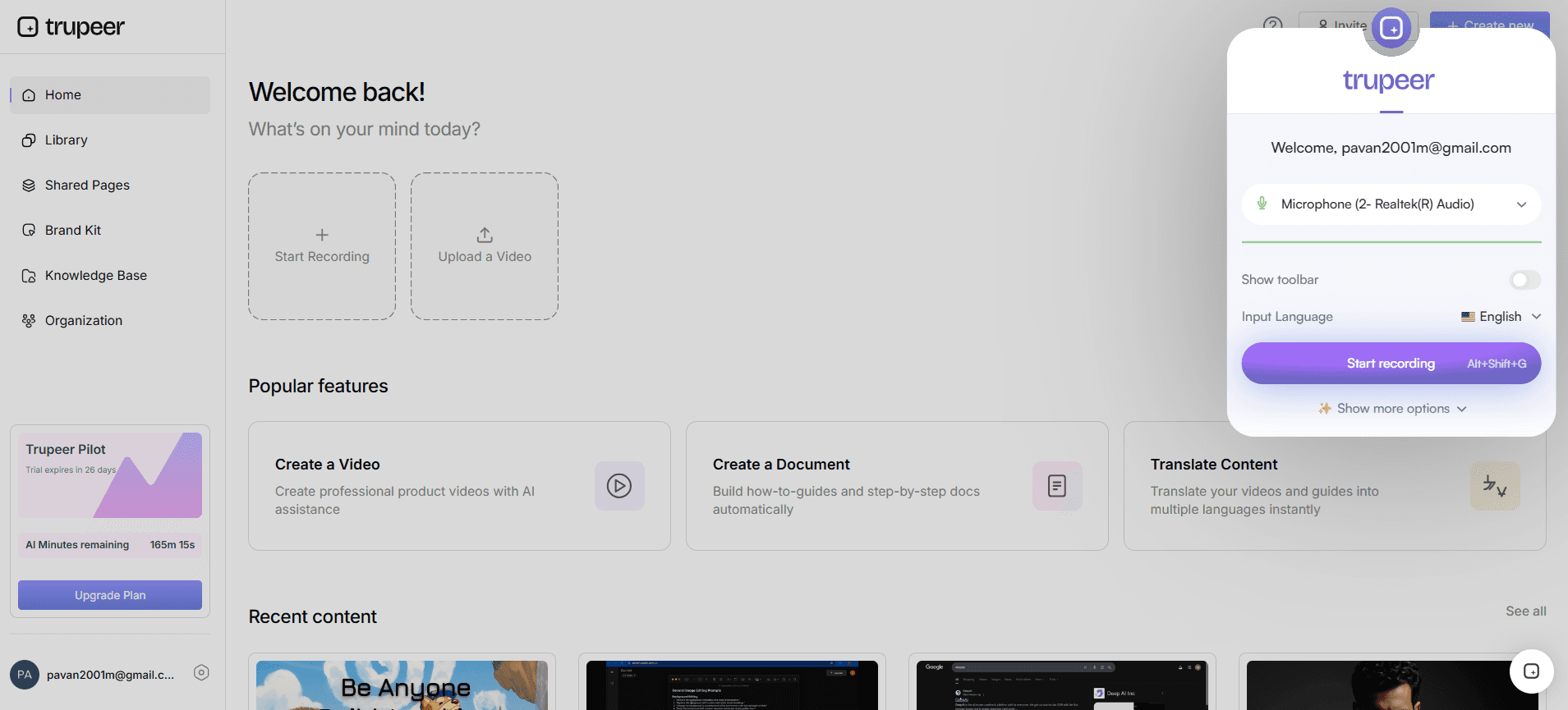
Begin by using Trupeer's AI screen recording with auto-zoom and click detection capability. Open the application or website you want to demonstrate and click on the record button. As you navigate through the content, Trupeer will automatically adjust the zoom to focus on areas of interest, ensuring that key details are highlighted. This process captures your screen activity efficiently, producing a high-quality recording that’s easy to follow. The automatic click detection further enhances the clarity by emphasizing user interactions, making the captured content suitable for microlearning segments.
Step 2: Generate AI narration
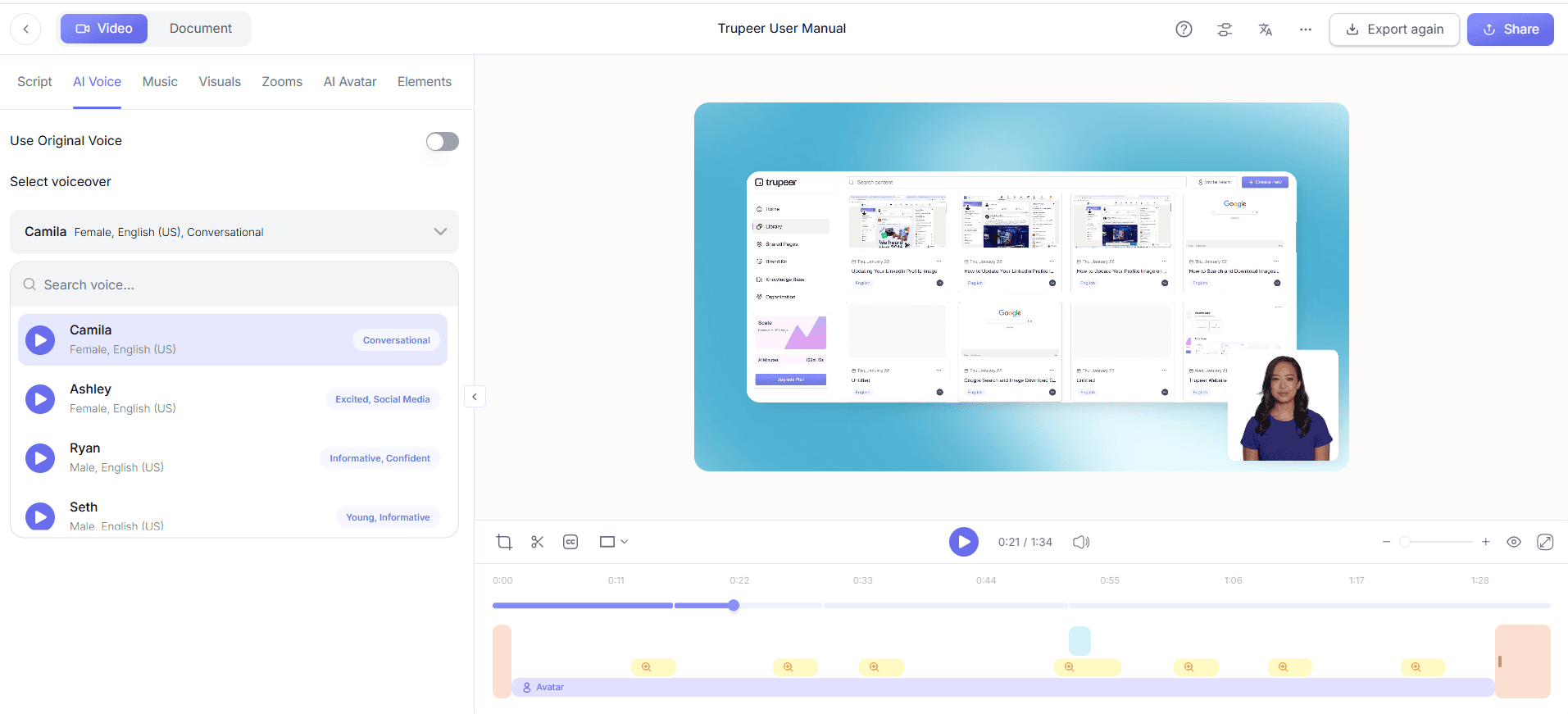
After capturing the screen content, use Trupeer's silent screen recording with automatic AI narration. Select the option to add narration, and choose the AI voice that best suits your audience. Trupeer will generate a voiceover synchronized with your screen recording, providing a clear and consistent narrative. This feature saves time compared to manual voiceovers and ensures that your microlearning content maintains a professional tone. Adjust the pace and tone of the narration to match the learning speed of your audience, offering a more personalized learning experience. Teams weighing tools often start with a Loom alternatives comparison before standardizing on a workflow.
Step 3: Use AI avatars for engagement
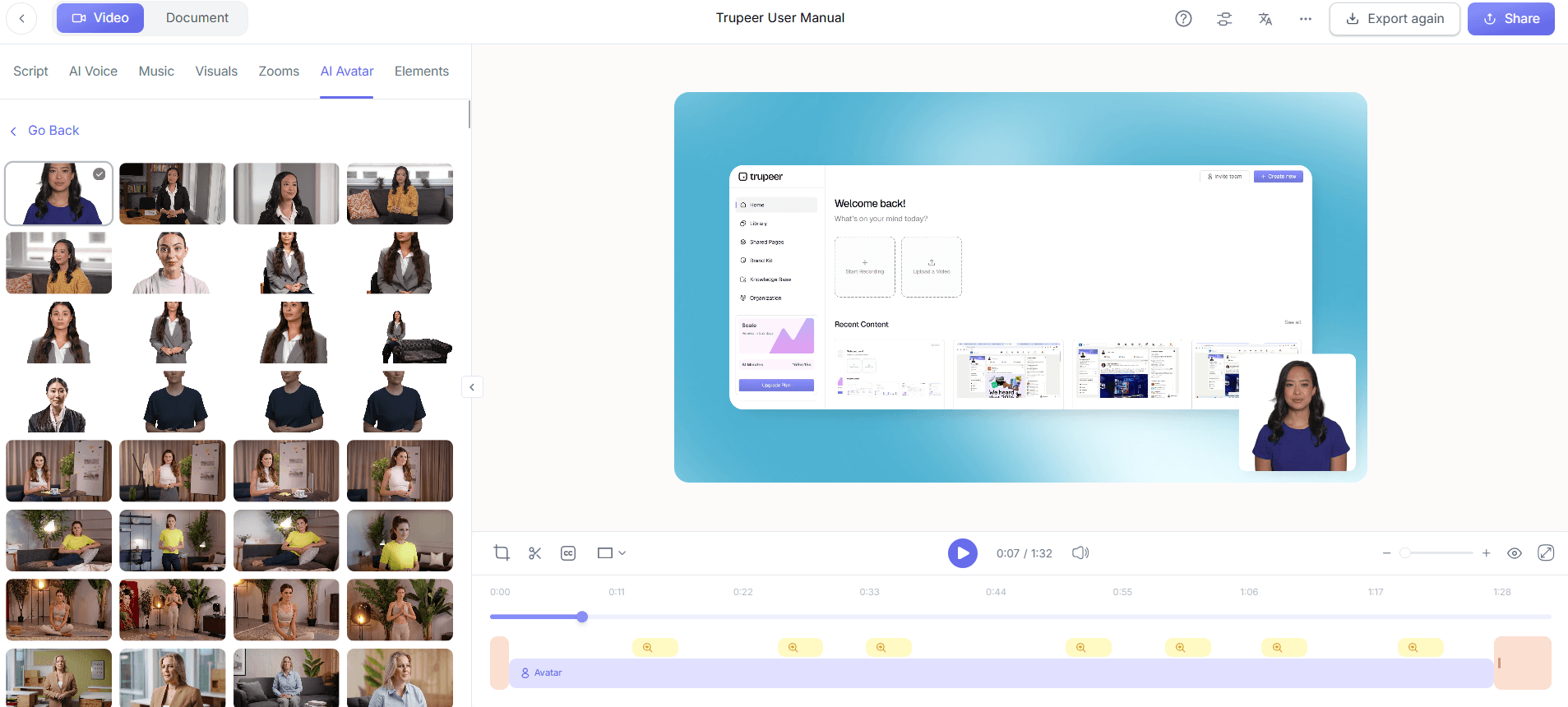
Incorporate AI avatars by accessing the talking-head video feature. Choose an avatar from the stock library or create a custom one using HeyGen integration. Add the avatar to your recording to provide a human touch and enhance engagement. This is particularly effective in scenarios where visual interaction can improve understanding. Customize the avatar to align with your brand identity, ensuring consistency across your training materials. The avatar can guide viewers through the content, making complex information more accessible.
Step 4: Create auto chapters and segments
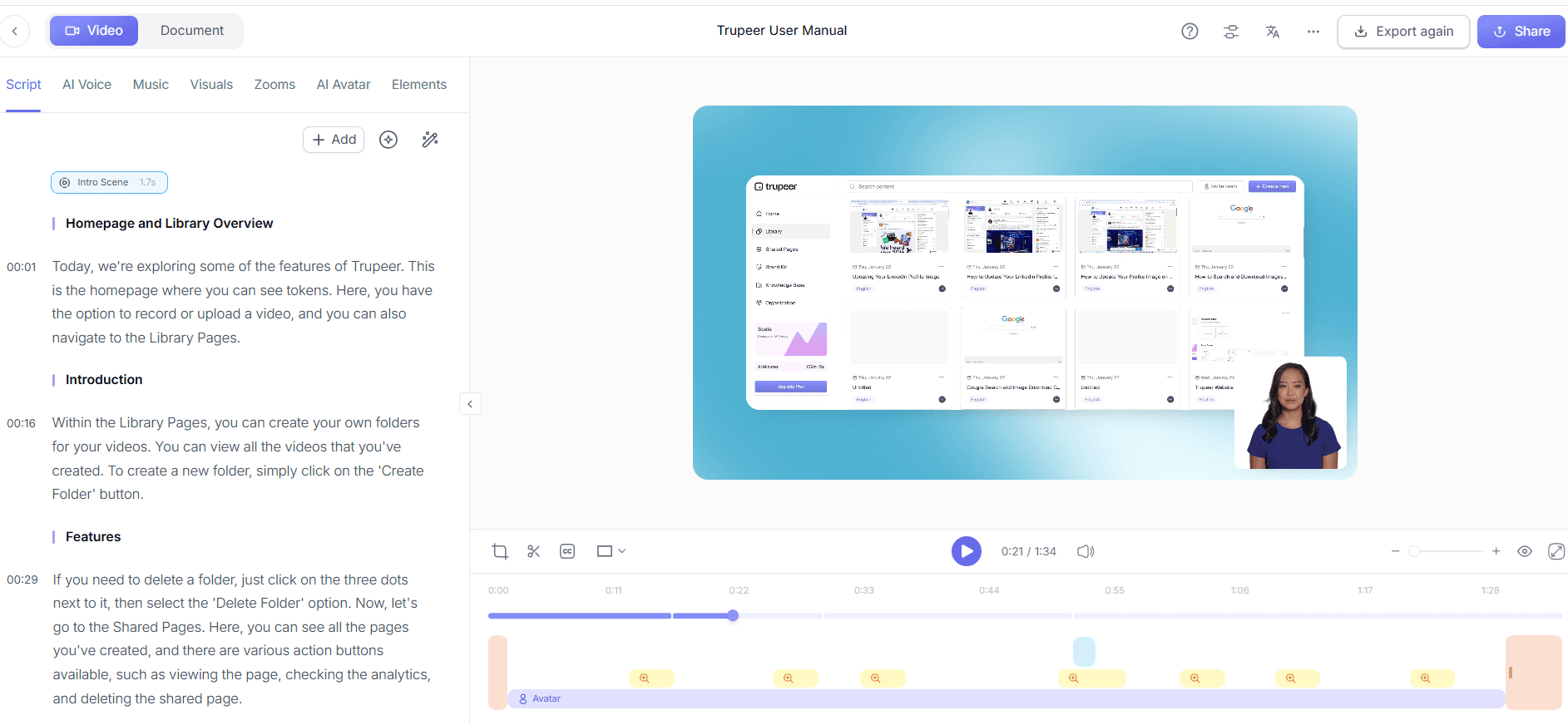
Once your video is ready, use the auto chapters and segment detection feature to organize the content. Trupeer will automatically identify logical breaks in the video, creating chapters that make it easy for learners to navigate. This organization is crucial for microlearning, allowing users to jump directly to specific topics or revisit sections as needed. The auto chapter feature ensures that your content remains structured and easy to digest, supporting focused learning and quick information retrieval.
Step 5: Export and localize your content
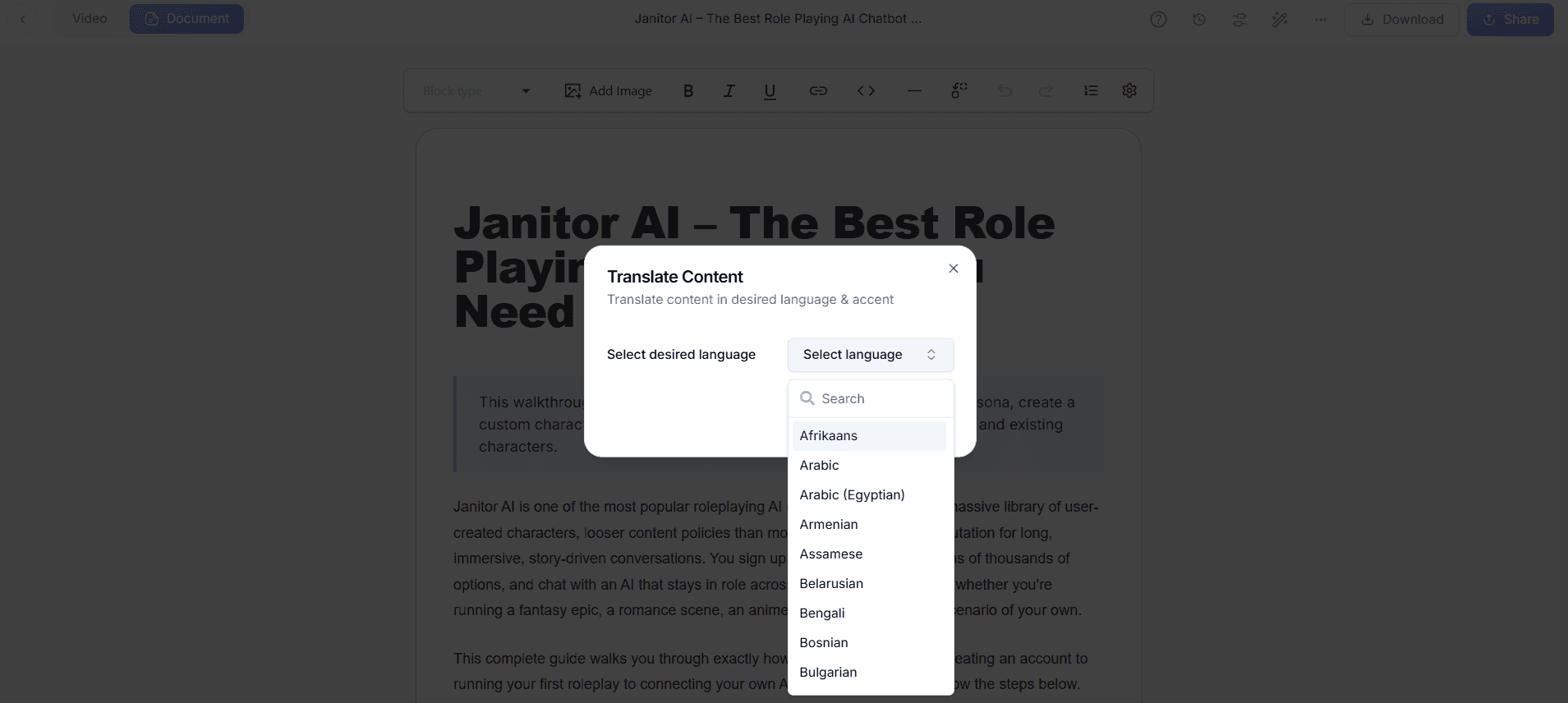
After segmenting your content, export it using Trupeer's multi-format export options. Choose from MP4, HTML, PDF, or SCORM, depending on your distribution needs. For international teams, use the AI translation feature to translate your content into 40+ languages, complete with lip-sync and dubbing. This ensures that your training materials are accessible to a global audience, enhancing inclusivity and understanding. The localization process is simplified, allowing you to deliver consistent training across different regions.
Step 6: Distribute through an AI-searchable knowledge base
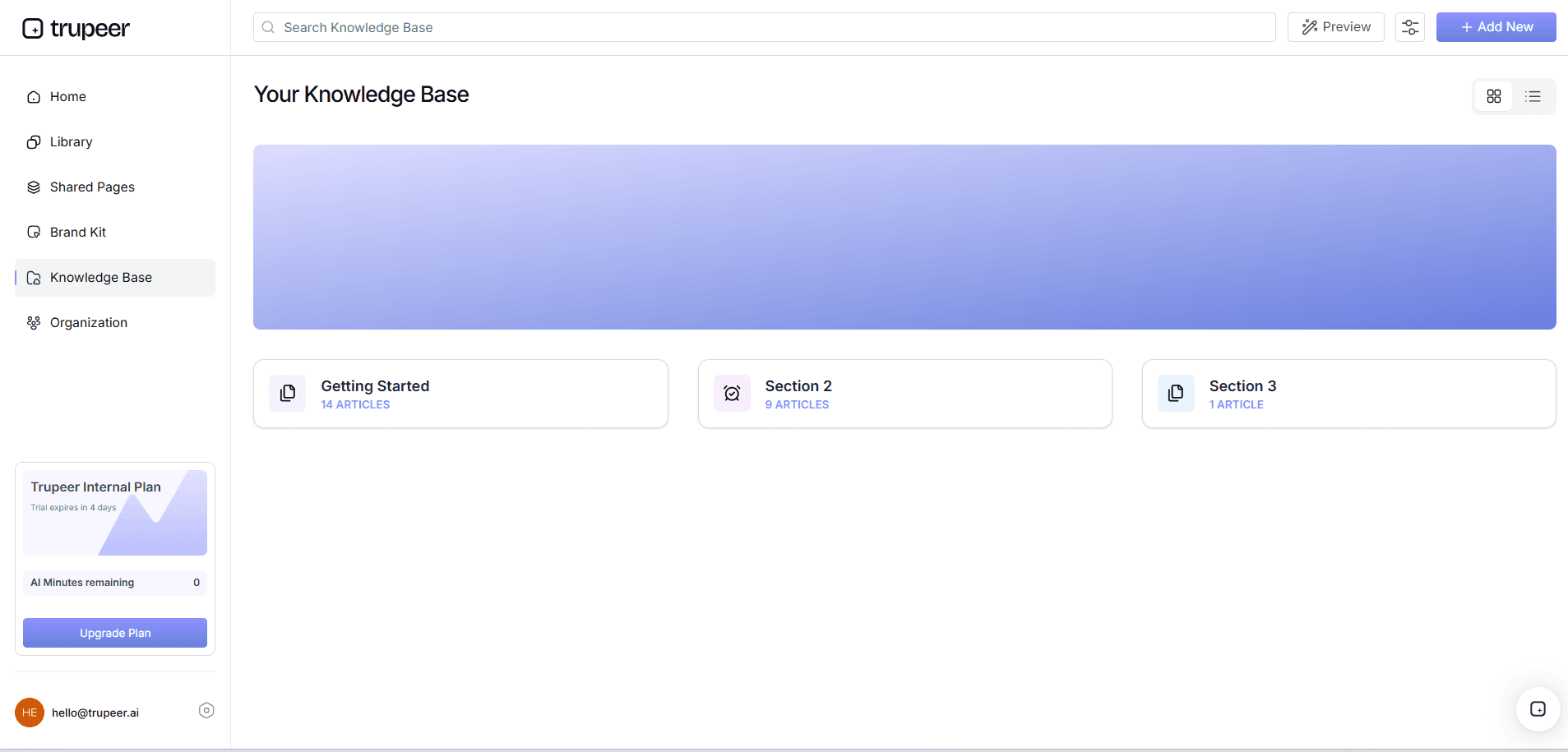
Finally, upload your segmented microlearning content to Trupeer's AI-searchable knowledge base. This platform indexes your videos with timestamp-level deep links, making it easy for team members to find and access specific information. The searchable knowledge base supports self-directed learning, allowing employees to seek out information as they need it. This method not only improves knowledge retention but also enhances productivity by reducing the time spent searching for resources.
What tips help you chunk content for microlearning?
Successfully implementing microlearning strategies requires some practical tips to ensure content is both effective and engaging. Here are some strategies to enhance your microlearning content creation.
Focus on one objective per segment. Keep each microlearning segment dedicated to a single learning objective to avoid overwhelming learners.
Keep content concise. Aim for 3 to 5-minute videos. Short and focused content is easier to digest and retains learners' attention.
Use a consistent format. Standardize your video format to maintain familiarity. This can include using a Scribe alternative comparison to ensure consistency in your SOPs.
Incorporate interactive elements. Use quizzes or prompts within videos to engage learners and reinforce retention.
use analytics. Review engagement analytics to optimize future content. Track which segments are most effective and adjust accordingly.
Update regularly. Ensure your content stays relevant by periodically reviewing and updating it to reflect the latest information.
use AI tools for efficiency. Employ a training video generator to simplify video creation and enhance productivity.
Frequently asked questions
How do I ensure my microlearning content is effective?
To ensure effectiveness, keep your content focused on specific learning objectives and make it interactive. Incorporate quizzes and prompts to engage learners actively. also, track engagement analytics to understand which parts of your content resonate most with your audience. This data-driven approach allows you to refine and improve your microlearning modules continuously. By aligning content with learner needs and preferences, you enhance both retention and application of knowledge.
What tools are best for creating microlearning content?
Tools like Trupeer are ideal for creating microlearning content due to their comprehensive features, including AI screen recording and automatic narration. These capabilities simplify the content creation process and ensure high-quality outputs. also, Trupeer’s AI avatars and auto-chapter features enhance engagement and organization. By using such tools, you can efficiently produce content that is both engaging and informative. The ability to export in multiple formats also ensures broad accessibility and distribution.
Can microlearning be used in all industries?
Yes, microlearning is versatile and can be adapted for use in most industries. It is particularly effective in sectors like technology, healthcare, and finance, where continuous learning and adaptation are crucial. The concise nature of microlearning modules allows for quick updates and easy integration into existing training programs. This adaptability makes microlearning a valuable tool for any industry where up-to-date knowledge and skills are essential. It supports ongoing professional development while minimizing disruption to daily operations.
Does microlearning improve knowledge retention?
Microlearning significantly improves knowledge retention by presenting information in smaller, focused chunks. Studies show that retention rates can increase by up to 80% with microlearning compared to traditional training methods. This approach allows learners to concentrate on one piece of information at a time, enhancing understanding and recall. also, microlearning's flexibility means that learners can engage with content at their own pace, reinforcing retention through self-directed review.
Is translation available for microlearning content?
Yes, translation is readily available for microlearning content. Tools like Trupeer offer AI video translation capabilities, enabling you to localize content into 40+ languages. This feature includes lip-sync and dubbing, ensuring that translated content maintains the same quality and engagement as the original. By making your microlearning modules accessible in multiple languages, you expand their reach and relevance, supporting a diverse and global workforce.
Related Blogs