Trupeer Blog
Summarise
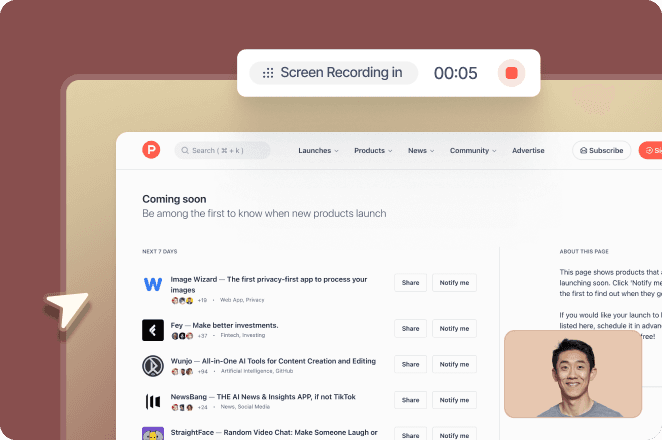
Imagine your team just completed a significant update to your software. The developers are excited to show off the new features, but the documentation team is overwhelmed by the prospect of drafting detailed release notes. Each release, they scramble to collect notes, write summaries, and ensure everything is accurate. According to research, the average team spends
up to 8 hours drafting and distributing release notes for each update.
That's a full day that could be better spent on innovation and improvement. By automating the release notes workflow, you can transform demo recordings into polished changelogs without the usual headaches. This guide explores how you can simplify this process, saving time and ensuring accuracy. Teams weighing tools often start with a Loom alternatives comparison before standardizing on a workflow.
Why does an automated release notes workflow matter?
Release notes are crucial for both internal teams and external stakeholders. They ensure everyone is aware of the latest changes, features, and bug fixes. For developers, clear and accurate release notes mean less time spent answering questions from other teams. For customer support, they provide a reliable reference, reducing the need for back-and-forth communication with development. And for customers, they enhance transparency, building trust in your product. Operations workflows become more efficient when everyone is on the same page, reducing friction and improving collaboration.
However, creating these notes can be time-consuming and error-prone. Manual processes often lead to inconsistencies, as different team members may interpret changes differently. This can result in confusion and miscommunication across departments. An automated workflow not only ensures consistency but also allows your team to focus on more strategic tasks. Instead of spending hours drafting notes, team members can dedicate their time to developing new features and improving user experience. This shift from manual to automated processes is not just a convenience; it's a necessity for maintaining competitive advantage -evolving tech landscape.
What are the benefits of automating release notes workflow?
Automating the release notes process brings a host of benefits, making life easier for everyone involved. Here's what you can expect:
Time savings. Automating the workflow cuts down on the hours spent manually gathering information and writing notes, freeing up valuable time for your team.
Consistency and accuracy. With automation, you ensure that every release note is formatted and detailed in the same manner, reducing the risk of errors and miscommunication.
Improved collaboration. By using an AI-powered video tool, team members can easily share and access the latest updates, ensuring everyone is informed and on the same page.
Enhanced transparency. Automatically generated release notes provide a clear, consistent record of changes that can be shared with stakeholders, building trust and credibility.
Reduced handoff friction. A single sales demo best practices lets ops hand off polished walkthroughs without editing.
Scalability. As your product and team grow, an automated workflow can easily scale to handle more complex and frequent release cycles without additional strain.
Which Trupeer features help you automate release notes workflow?
Trupeer offers a range of capabilities specifically designed to simplify your release notes workflow, making it easier to go from demo recordings to published changelogs efficiently.
AI screen recording with auto-zoom and click detection
Trupeer's AI screen recording captures every detail of your demo with precision. The auto-zoom feature highlights key interactions automatically, ensuring that all important events are clearly visible. Click detection adds another layer of detail, emphasizing user actions. This capability is essential for creating accurate and engaging release notes that reflect the user's experience. The recordings are browser-based, so there's no need for additional software installations, making the process smooth. For teams looking to enhance their product demo video recording editing tool process, this feature is invaluable.
Silent screen recording with automatic AI narration
For those who prefer a quieter approach, Trupeer offers silent screen recording. The magic happens when the automatic AI narration kicks in, converting your silent demo into a narrated walkthrough. This is particularly useful for creating release notes that require a detailed explanation of new features without the need for live commentary. The AI voice is customizable, allowing you to choose from over 65+ natural voices, ensuring that the narration matches your brand's tone. This feature reduces the need for manual voiceovers, saving both time and resources.
Automatic SOP generation from any recording
Trupeer's capability to generate standard operating procedures (SOPs) from recordings is a big shift. It transforms your demo into a detailed, edit-ready document that can be exported in various formats such as MP4, HTML, PDF, or SCORM. This is particularly useful for teams that need to document processes rapidly and accurately. By linking the SOPs to the original recording, any updates to the demo automatically reflect in the documentation, ensuring consistency and accuracy. This feature is part of Trupeer's AI documentation platform, which simplifies the documentation process.
AI-searchable knowledge base with timestamp deep-links
Trupeer provides an AI-searchable knowledge base that indexes every recording with timestamp-level deep links. This allows team members and customers to jump directly to the sections of a demo that are most relevant to them. It eliminates the need for sifting through entire videos to find specific information, enhancing user experience and reducing support queries. The knowledge base is customizable and can be hosted on a custom domain with single sign-on (SSO), integrating smoothly into your existing infrastructure.
Viewer engagement analytics, drop-off, and heatmaps
Understanding how stakeholders engage with your release notes is crucial for continuous improvement. Trupeer's analytics tools provide insights into viewer behavior, showing where they engage most and where they drop off. Heatmaps visualize viewer engagement, highlighting sections of the demo that capture the most interest. This data is invaluable for refining future demos and release notes, ensuring they meet the needs of your audience. By focusing on the most engaging content, you can enhance the effectiveness of your communications.
How do you automate release notes workflow step by step with Trupeer?
Step 1: Capture Your Demo
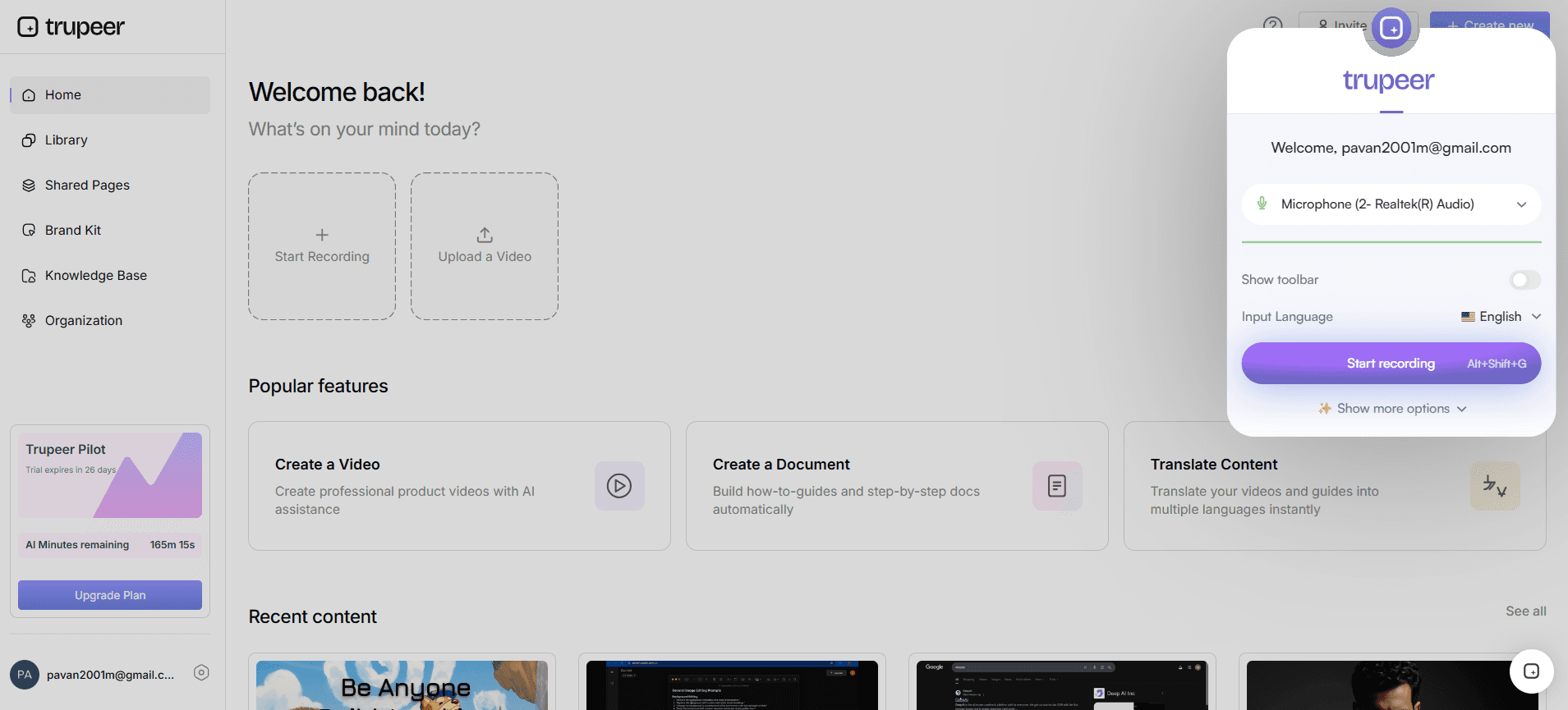
Begin by using Trupeer's AI screen recording with auto-zoom and click detection. Launch the browser-based recorder, select the screen or application window you want to capture, and initiate the recording. Trupeer automatically detects clicks and zooms in on critical interactions, ensuring that all essential elements are highlighted. This process takes only a few minutes to set up and execute. As you navigate through your demo, Trupeer records everything in high resolution, producing a detailed video that forms the basis of your release notes. The AI-driven auto-zoom ensures no important detail is missed, making it ideal for capturing intricate software features or complex workflows.
Step 2: Generate Automated Narration
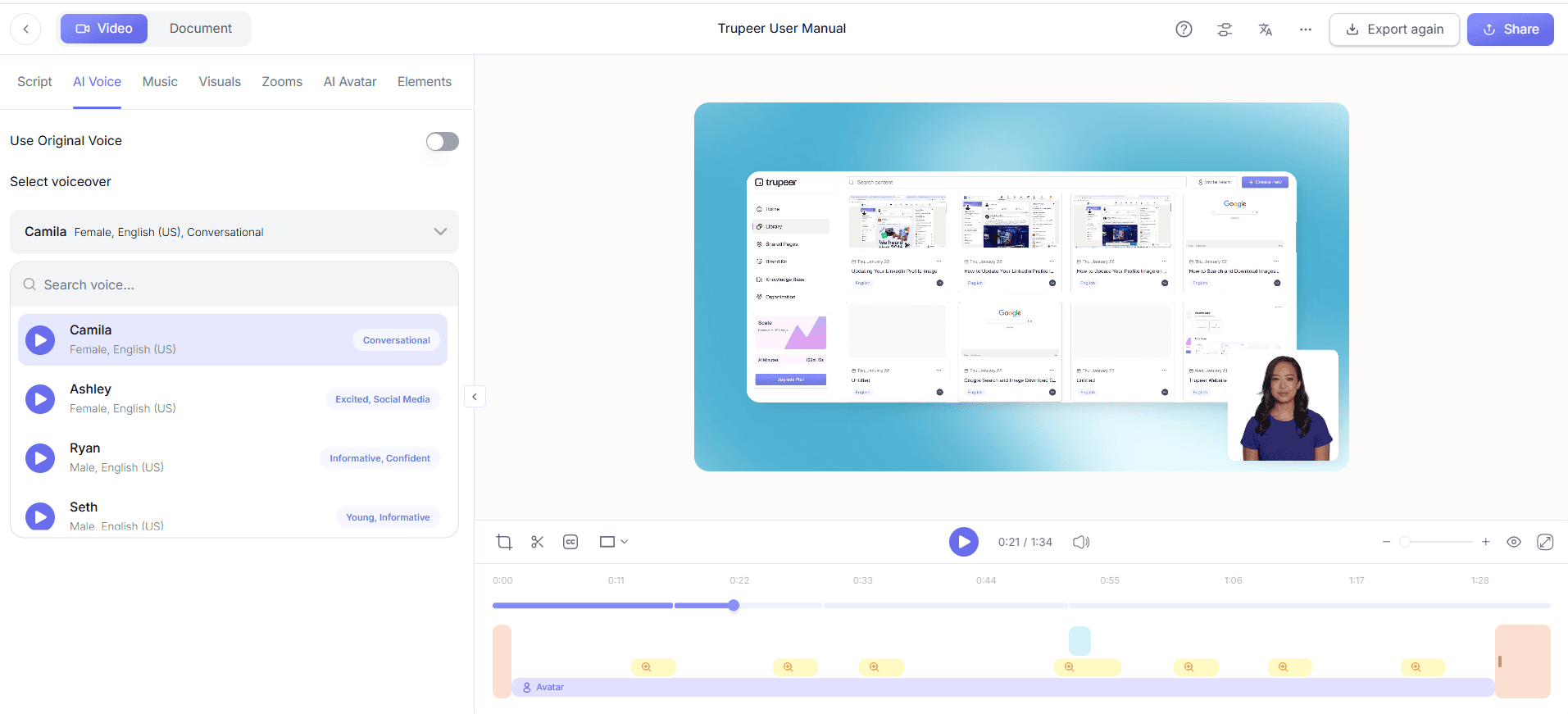
Once your demo recording is complete, enhance it with Trupeer's automatic AI narration. This feature converts your silent demo into a narrated video. Go to the editing panel and select the AI voiceover option. Choose from over 50 natural-sounding voices and adjust the pace and tone to match your brand's style. The AI analyzes the video content and generates a script that aligns with the demo's flow. This step typically takes around 10 minutes, depending on the video's length. The resulting narrated video is not only engaging but also informative, helping stakeholders quickly understand the new features and updates.
Step 3: Create an SOP from the Recording
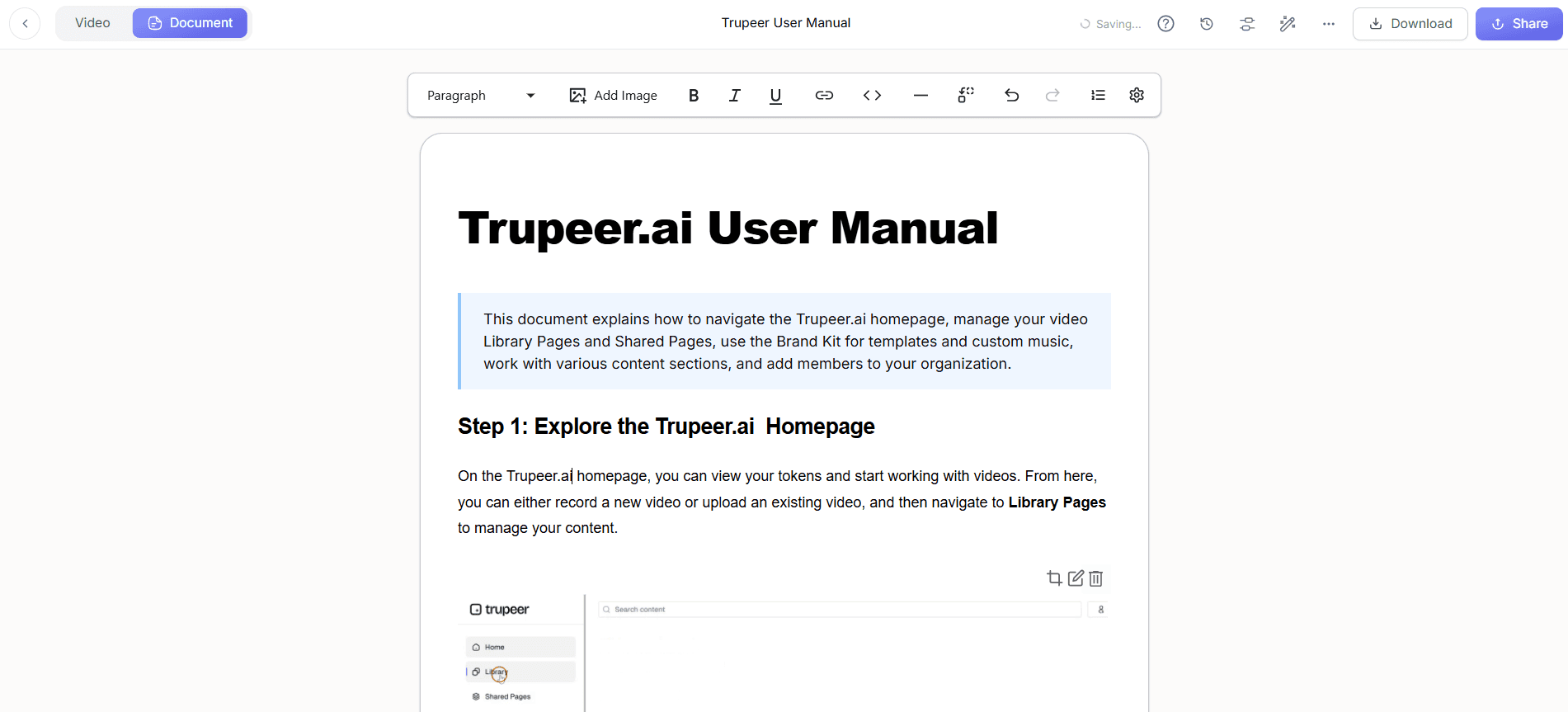
Next, use Trupeer's automatic SOP generation capability. Navigate to the SOP generation tool and import your recorded demo. Trupeer automatically converts the video into a detailed, step-by-step document. You can export this SOP in formats like PDF or HTML for easy sharing. The generated SOP includes timestamps, making it easy to align the document with the video. This process usually takes about 5 minutes, offering a quick way to produce comprehensive documentation that can be used internally or shared with clients. The SOP is fully editable, allowing you to customize it further if needed.
Step 4: Translate and Localize Your Content
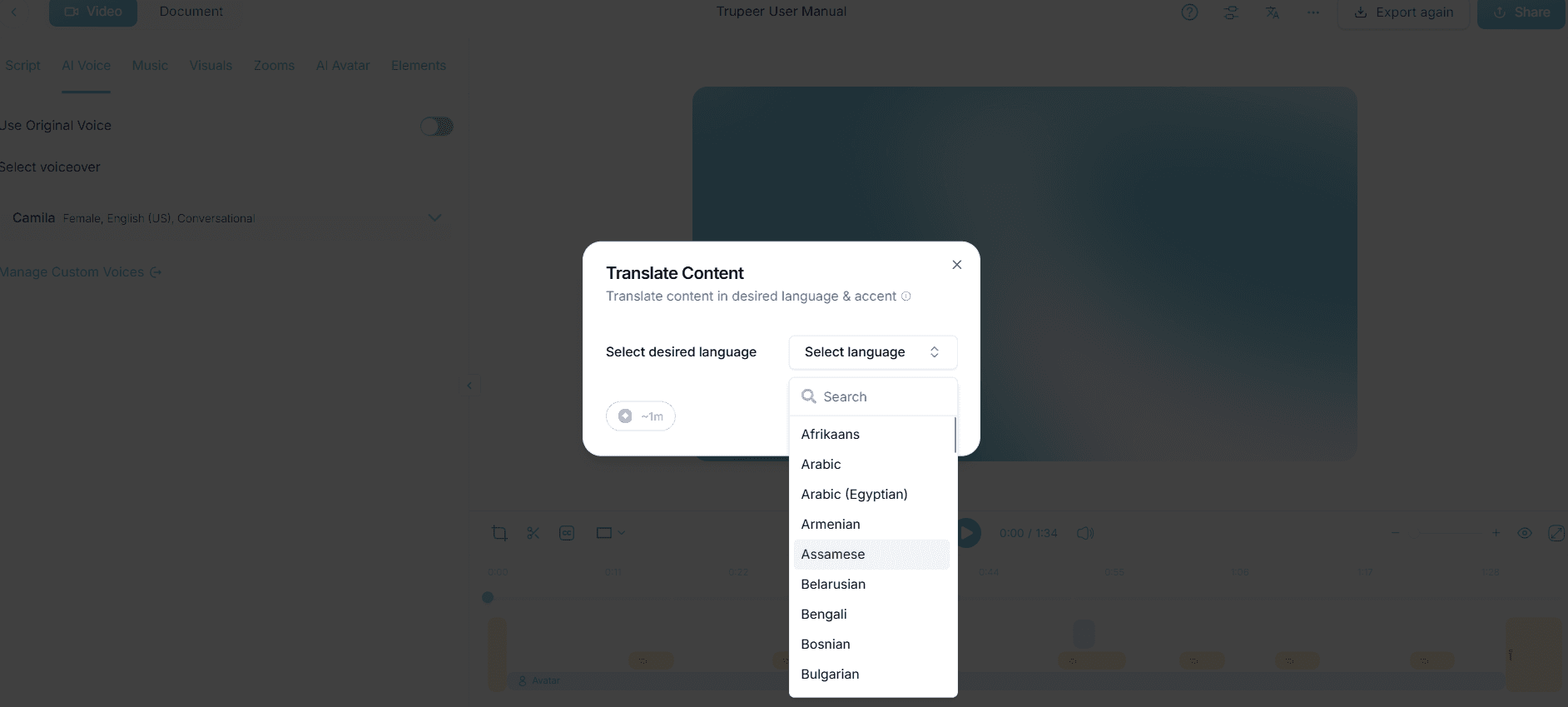
For global teams, Trupeer's AI translation feature is invaluable. Access the translation tool, select your video, and choose the target languages. Trupeer supports over 40 languages with lip-sync capabilities, ensuring your content is accessible to non-English speaking audiences. This translation process is automated and typically takes about 10 minutes, depending on the video length and the number of languages selected. The translated video is dubbed with AI voices, maintaining the original video's synchronization. This step broadens your reach, making your release notes understandable to a wider audience.
Step 5: Upload to the Knowledge Base
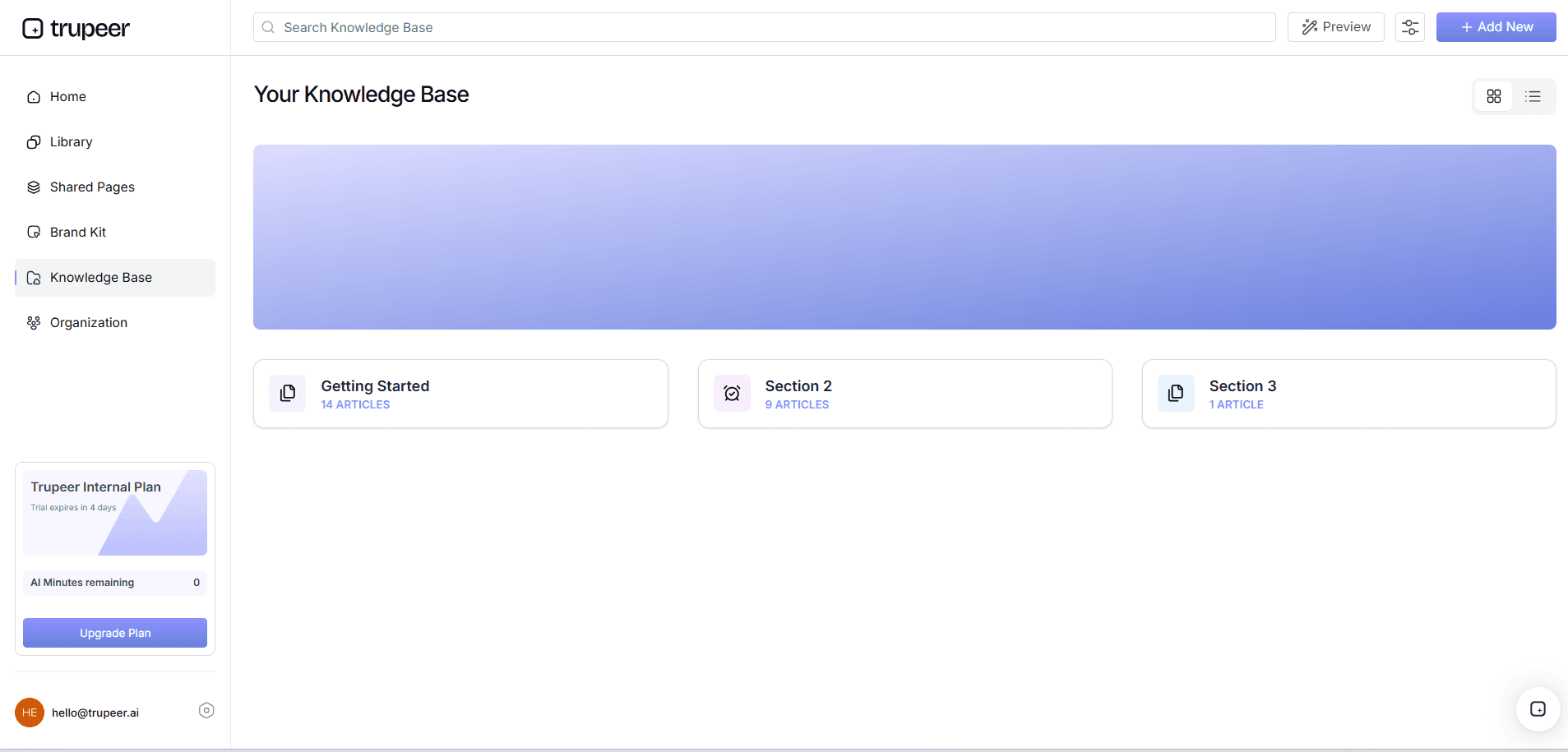
With your video and SOP ready, upload them to Trupeer's AI-searchable knowledge base. This platform indexes your content, allowing users to search and find specific information quickly. Use the timestamp deep-linking feature to make navigation easier. Uploading and indexing your content takes only a few minutes, ensuring that your release notes are available and accessible immediately. The knowledge base can be customized with your branding and hosted on a custom domain with single sign-on capabilities, integrating it smoothly into your existing infrastructure.
Step 6: Analyze Viewer Engagement
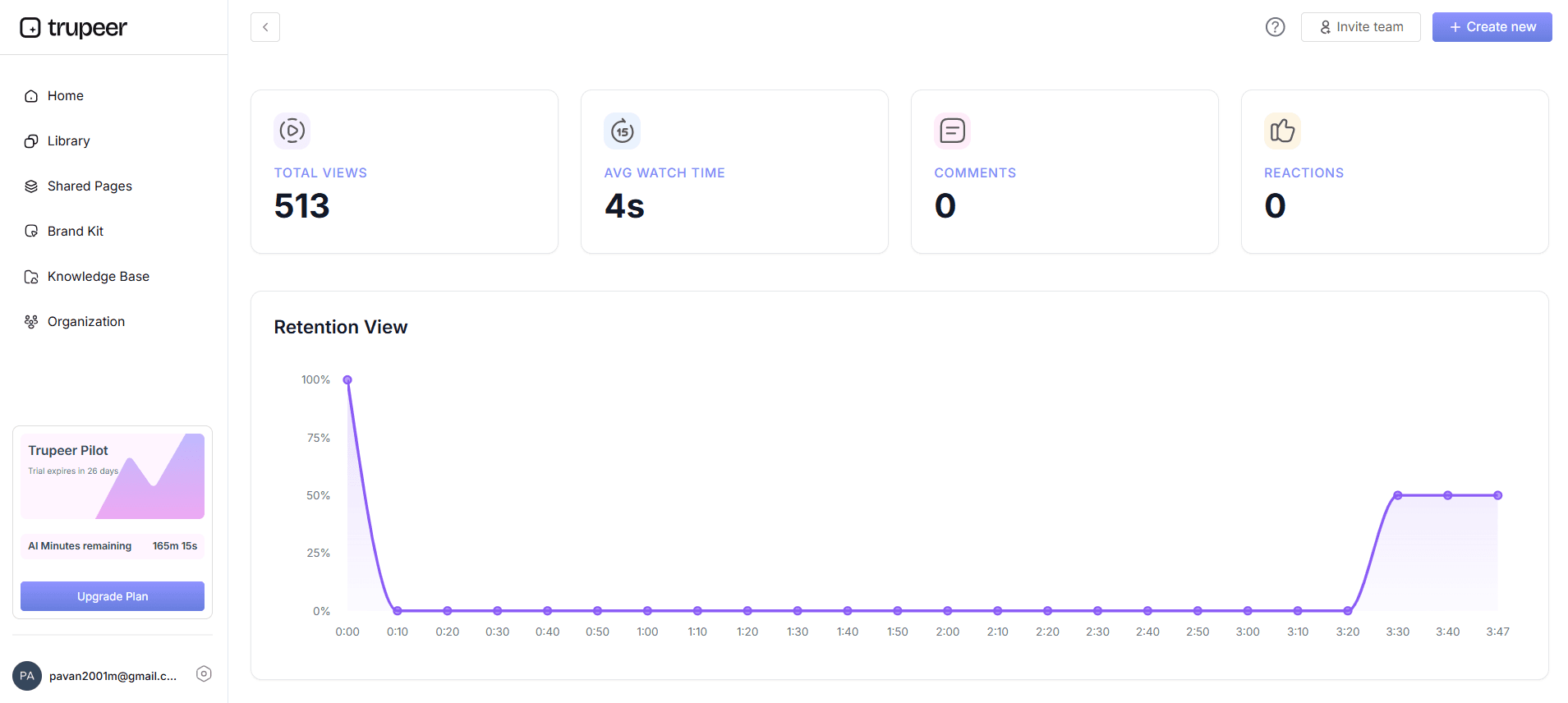
Finally, use Trupeer's viewer engagement analytics to gain insights into how your release notes are being consumed. Access the analytics dashboard to view metrics like viewer drop-off rates and heatmaps. These tools show which parts of your video are most engaging, helping you understand what content resonates with your audience. This analysis can inform future releases, allowing you to refine your approach for better engagement. The analytics are updated in real-time, providing you with immediate feedback on your release notes' effectiveness. For a deeper look, our guide on repurpose demo videos covers the adjacent playbook.
What tips help you automate release notes workflow?
Automating your release notes workflow can be transformative. Here are some practical tips to enhance the process and maximize efficiency:
Standardize Your Recording Process. Use the same recording settings for every demo to ensure consistency in your release notes. This standardization helps maintain a uniform quality across all releases.
use AI Narration. Choose AI voices that align with your brand's tone for a more cohesive presentation. Consistent narration quality enhances the professionalism of your release notes.
Optimize SOPs for Clarity. Edit automatically generated SOPs to remove any ambiguities. Clear and concise SOPs enhance understanding and usability.
use Localization Features. Translate your content into multiple languages to reach a broader audience. This step is crucial for companies with a global presence.
Monitor Analytics Regularly. Regularly review viewer engagement metrics to identify trends and areas for improvement. Use this data to refine future release notes.
Integrate with Existing Tools. Ensure that your release notes workflow integrates smoothly with existing documentation and communication tools for smooth operations.
Stay Updated with New Features. Continuously explore new capabilities in Trupeer's auto video editor to enhance your workflow further.
When SOPs come into the same conversation, a Scribe alternatives comparison helps clarify the scope.
Frequently asked questions
How does Trupeer automate release notes from demo recordings?
Trupeer automates the creation of release notes by transforming demo recordings into comprehensive, narrated videos and SOPs. The AI-powered tools capture the demo, add automatic narration, generate SOPs, and translate content into multiple languages. These steps are simplified within Trupeer's platform, facilitating quick and accurate release notes creation. The process is designed to reduce manual effort and ensure consistency, allowing teams to focus on core development tasks while maintaining high-quality documentation.
What languages does Trupeer support for translation?
Trupeer's translation feature supports over 40 languages, including major languages such as Spanish, French, German, Chinese, and Japanese. The platform provides AI dubbing and lip-sync options to maintain the video's original flow and timing. This capability is part of Trupeer's AI video translation suite, which ensures that your release notes are accessible to a global audience, enhancing communication and reducing barriers for non-English speaking users.
Can Trupeer's AI narration be customized?
Yes, Trupeer's AI narration can be customized to suit your brand's voice and style. You can choose from over 50 natural-sounding voices and adjust the pace and tone to align with your brand guidelines. This customization ensures that your release notes maintain a professional and consistent sound. The AI-generated narration is designed to complement the content, providing a smooth and engaging viewing experience for your stakeholders.
Does Trupeer integrate with existing knowledge bases?
Trupeer can integrate with existing knowledge bases through its AI-searchable platform. This integration allows for smooth content management and easy access to release notes and other documentation. The knowledge base includes timestamp deep-linking, enabling users to quickly find relevant information. This feature enhances user experience and ensures that your documentation is organized and easily navigable, supporting efficient information dissemination across your organization.
What analytics does Trupeer provide for viewer engagement?
Trupeer offers detailed analytics on viewer engagement, including metrics such as view counts, drop-off rates, and heatmaps. These insights help you understand how stakeholders interact with your release notes, identifying areas that capture interest or need improvement. Real-time analytics allow for immediate feedback, enabling teams to adjust their content strategy promptly. By analyzing this data, you can enhance the effectiveness of your release notes, ensuring they meet the needs and expectations of your audience.