4.8/5
SOP Management Software
Keep procedures current, versioned, and findable. Version history with one-click restore, staleness alerts, role-based access, and 65+ languages.
Manage Your SOPs Free
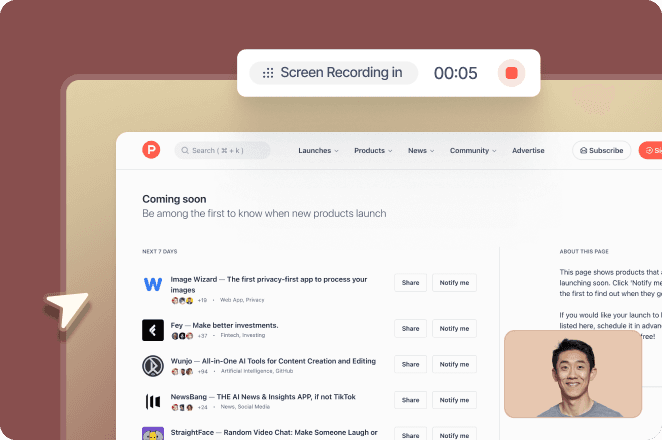
SOP management software helps teams keep standard operating procedures current, controlled, findable, and accessible after they are created. It gives every procedure a clear owner, a current version, access rules, a review status, and a place where people can reliably find it.
Trupeer adds recording-based creation to that workflow, which handles the part that breaks after the writing is done. Record a process once, publish it to a searchable knowledge base, restore any earlier version in a click, and see which procedures have gone stale before an auditor or a new starter finds out for you.
What Is SOP Management Software?
SOP management software, also sold as standard operating procedure management software or an SOP management system, is the system that holds your procedures after they exist: where they live, which version is current, who can change them, how people find them, and how you know when one has drifted out of date.
That is a narrower job than it sounds, and a different one from writing procedures. Most organisations do not have a shortage of SOPs. They have forty of them across three shared drives, two of which contradict each other, none of which anyone can date with confidence. Writing more does not fix that. Managing the ones you have does.
What Is SOP Management?
An SOP, or standard operating procedure, is a documented method for performing a recurring task the same way every time. In a management context its purpose is removing variation: the same job produces the same result regardless of who runs it, which shift they are on, or how long they have been with you.
SOP management is the discipline of keeping that promise true over time. A procedure written in March and never revisited is not managing anything by September, because the tool changed, the team changed, and the actual method quietly moved on without the document. The gap between the written process and the real one is where quality problems, audit findings, and inconsistent onboarding all come from.
Storing SOPs vs Managing SOPs: What Is the Difference?
This distinction decides whether your investment changes anything, and most teams buy storage while believing they bought management.
Storing means the file exists somewhere:
a folder, a wiki page, an attachment. Retrievable in principle, if you know it exists and where it wentManaging means the current version is the one people reach:
there is one authoritative copy, it is dated, earlier versions are recoverable, access is deliberate, and someone knows which procedures are overdue for review
Storing SOPs | Managing SOPs |
|---|---|
The file exists | The current version is identifiable |
Location matters | Search matters |
Updates happen manually, if someone remembers | There is a review process |
Copies multiply | One authoritative version |
Little or no ownership | A named owner per procedure |
Basic file-level access | Controlled, role-based access |
Historical copies sit alongside current ones | Version history, with the live version unambiguous |
An SOP document management system that only stores will accumulate contradictions at exactly the rate your organisation changes. The failure is rarely dramatic. Nobody deletes the procedure. It just becomes wrong slowly, everyone learns not to trust it, and the real process moves into the heads of whoever has been there longest, which is the situation SOPs were supposed to prevent.
SOP Software vs SOP Management Software
The two terms get used interchangeably and they are not the same purchase.
SOP software creates procedures:
capture, structure, screenshots, formatting, branding. Its measure of success is how many procedures you end up with and how quicklySOP management software governs them afterwards:
which version is current, who owns it, who may change it, when it was last reviewed, and how a reader finds it. Its measure of success is whether the library is still trustworthy in two years
Almost every team feels the first problem before the second, which is why most buy creation and discover the management gap eighteen months later, once there are enough procedures for nobody to be certain which ones are right. If you have no documentation yet, start with SOP software and grow into this. If you already have a library you have stopped trusting, this is the page you are on for the right reason.
Why Does SOP Management Become Chaotic?
The pattern is consistent enough to be predictable, and none of the causes are laziness.
Revision costs more than the revision is worth:
if updating a procedure means reopening a document, retaking screenshots, and re-exporting, small changes get postponed until the whole document is wrongNobody owns the review:
procedures are written by whoever ran the project and then belong to no one. Ownerless documents do not get maintainedThere is no way to tell current from historical:
without version history, the only evidence is a filename, and filenames lieThe document was written from memory:
so it never matched the real process closely enough to be trusted, and the gap only widensPeople cannot find the right one:
so they ask a colleague, which works, which means the document is now decorativeLanguage is a silent barrier:
a procedure in a second language is followed more slowly and less exactly, and nobody reports this as a problem
How Does SOP Management Software Work?
Whatever tool you use, managing procedures moves through five stages. The differences between products are mostly about how much of each stage the system handles for you rather than reminding you to handle yourself.
1. Create or Import
Procedures enter the system, either authored inside it or imported from wherever they currently live. This is also where the initial accuracy is set: a procedure captured from the real method starts accurate, while one written from memory starts with a gap that only widens.
2. Review
Someone who knows the process checks it before it goes live, and an owner is assigned. Ownership at this stage is what determines whether the procedure is ever maintained. Some organisations require formal sign-off here; most do not, and adding a gate you do not need slows publication for no benefit.
3. Publish
The approved procedure becomes available to the people who need it, with access scoped deliberately. Publishing is the stage teams most often get wrong, usually by putting procedures somewhere technically correct that nobody opens.
4. Monitor
The system reports on the library rather than waiting for someone to notice a problem: what is being read, what people searched for and did not find, and what has not been touched in a long time. Without monitoring, the only signal that a procedure is wrong is somebody following it and getting a bad result.
5. Update or Retire
Procedures are revised as the process changes, with earlier versions retained, or removed when the process no longer exists. Revision cost governs everything here. If updating is expensive, updates get postponed, and the library degrades no matter how good the rest of the system is.
Managing SOP Revisions Without Losing Control
Version control is where most SOP libraries come apart, usually through filenames doing work they were never designed for. Anyone who has opened a folder containing three files ending in final, final-v2, and final-USE-THIS knows the failure mode.
Trupeer keeps timestamped version history on every document. You can browse previous versions, compare them against the current one, and restore any of them with one click, at which point the restored version simply becomes current. There is no parallel filing convention to maintain and no ambiguity about which copy is live.
Review Cycles and Keeping SOPs From Going Stale
An obsolete procedure is worse than a missing one, because a missing procedure sends someone to ask a person while an obsolete one confidently tells them the wrong thing.
Trupeer tracks days since each article was last updated and flags anything untouched for more than 90 days as stale, alongside an average content freshness figure across the library. That turns review from a calendar reminder nobody honours into a visible list of what needs attention, ranked by neglect. The 90-day threshold is what the system flags, not an industry standard: your own review interval should follow how often your processes actually change and what your regulator or client expects.
A practical review rhythm when your system flags stale content:
Name an owner per procedure before publishing:
unowned documents are the ones that go stale. This is the single highest-value habit on this pageWork the stale list monthly, not annually:
a short regular pass beats an annual audit that nobody finishesTreat failed searches as revision triggers:
the Unresolved Rate shows questions your library could not answer, which is your backlog written by the people using itRe-record rather than patch:
when a process has changed materially, capturing it again is faster than editing around the difference and produces a document that matches realityRetire deliberately:
a procedure for a process you no longer run should be removed, not left to be found by a new starter
Access Control for SOP Libraries
Readers and editors should not necessarily have the same rights. Who can read a procedure and who can change it are separate questions, and conflating them is how libraries end up either locked down uselessly or editable by everyone. The general principle: read access should be as wide as the procedure allows, edit access should be narrow and deliberate, and the ability to manage people should be narrower still.
How Trupeer Handles Access
Workspace Admin:
manages user settings and controls access to workspace assets. This is your library owner, and there should be few of themWorkspace Editor:
creates and edits content but cannot manage users. This is the right level for the supervisors and senior operators who hold the process knowledgeOrganisation-level membership:
admins invite members through the organisation dashboard and assign roles, so access follows joining and leaving rather than being handled ad hocMultiple workspace membership:
one person can belong to several workspaces, so a supervisor who spans two sites does not need duplicate accountsPublication visibility, four levels:
a knowledge base can be published publicly, restricted to your organisation, restricted to selected email domains, or made invite-only. Domain restriction is the useful middle setting: a client or partner team reads the procedures without being added as users
SOP Management Software vs SharePoint and Shared Drives
Most teams arrive at this comparison because they already have SharePoint, a Google Drive, or a wiki, and are asking whether dedicated software is justified.
Capability | Shared drive | SharePoint | SOP management software |
|---|---|---|---|
Store files | Yes | Yes | Yes |
Search | Yes | Yes | Yes |
Version history | Yes | Yes | Yes |
SOP-specific structure | Limited | Configurable | Purpose-built |
Procedure ownership | Manual convention | Configurable | Built around procedures |
Staleness monitoring | Limited | Configurable | Dedicated reporting |
Procedure-specific workflow | Limited | Requires configuration | Core use case |
AI procedure creation | No | Depends on setup | Available in some tools |
Multilingual procedures | Manual translation | Depends on setup | Available in some tools |
SharePoint and shared drives can store and govern SOP documents, and organisations do run compliant documentation on them. The difference is that dedicated SOP software is built specifically around the lifecycle of operational procedures, rather than requiring teams to configure that workflow themselves and then maintain the configuration.
Which way that falls depends on your situation. If your procedures are stable and rarely change, a shared drive is often enough and you should not buy software to feel organised. If they change with your tooling and your team, the cost sits in revision, and that is what dedicated software addresses. Excel and a folder remain perfectly reasonable for a small, static set.
SOP Management Software vs Document Management Software
Document management software is built around the file. It stores, organises, secures, and retrieves documents of any kind, including contracts, invoices, policies, and drawings, with strong permissions, retention rules, and often e-signature and records management. Its unit of work is a document, and it is largely indifferent to what is inside one.
SOP management software is built around the procedure. It cares about the content: ordered steps, screenshots per step, scope, a process owner, review intervals, and whether the steps still match reality. A document management system can tell you a file is version 4 and who downloaded it. It cannot tell you the process changed in March and step 6 is now wrong.
Larger organisations often run both, using document management for the wider records estate and SOP management software for operational procedures, then connect them so published procedures are retained where compliance requires it.
Audit Readiness for SOP Libraries
Audit exposure is rarely that procedures do not exist. It is that nobody can evidence which version was in force when the work was done, or show that the library is reviewed rather than merely stored.
What the system gives you towards that:
A dated version trail:
timestamped versions per document, browsable and comparable, so "which procedure was live in April" has an answer that is not somebody's recollectionEvidence of review, not just existence:
content freshness reporting flags anything untouched for more than 90 days and gives an average across the library, which is the difference between claiming procedures are maintained and showing itControlled files on demand:
export a procedure to PDF or Word from the Documentation tab, for quality systems and audit files that still expect a documentSeparated rights:
distinct Workspace Admin and Workspace Editor roles, so edit access can be deliberately restricted
What Trupeer Does Not Replace
Three limits to establish before you rely on this, because they decide whether it fits your regime.
Signed audit trails:
version history records timestamps rather than per-user attribution of each individual change. If you need a signed record of who altered which line, verify that against your specific requirementFormal approval workflows:
there is no queue where a quality manager approves a draft before it publishes. Trupeer provides role separation and publication visibility controls, not mandatory pre-publication sign-offValidated QMS functionality:
Trupeer can support documentation governance, but it is not a replacement for a full quality management system where your organisation requires validated workflows, formal approvals, or signed audit trails. In that setup Trupeer sits alongside the QMS as the authoring and publishing layer
For regulated documentation specifically, the GxP compliant documentation tool page covers that ground properly.
Managing SOPs at Scale
SOP management is a different job at different sizes, and the failure modes change with the count.
A library of 30 procedures can usually be managed manually: one person knows what exists and roughly when it was last checked. At 300, ownership, search, review, and permissions become operational problems that no individual can hold in their head. At several thousand, language coverage, access scoping, analytics, and automated freshness checks stop being nice to have and become the only way the library stays usable at all.
Administer people centrally:
the Organization section is where admins view and manage members, adjust seating, and invite new people, so joiners and leavers do not become an access-audit exercise laterSeparate without duplicating:
use workspaces to keep teams, sites, or client accounts apart, and add individuals to more than one where their role spans bothScope each knowledge base deliberately:
public, organisation-wide, restricted to selected domains, or invite-only. At scale this is what lets internal procedures, partner guidance, and customer-facing help live in one system without leaking into each otherTranslate rather than fork:
publish the same procedure across 65+ languages, up to five targets at a time. The alternative, a maintained document per language, is how large libraries drift out of syncLet the library tell you where it is failing:
views, unique viewers, searches, and the Unresolved Rate. At a few hundred procedures you cannot review everything, so a ranked list of neglect and unanswered questions is the only workable triagePush authoring outward:
if only a central team can write procedures, the backlog grows with headcount. Recording-based capture means the supervisor who owns the process can produce the procedure, with review staying central
How to Choose SOP Management Software
Comparisons in this category tend to weigh feature counts. If you want to compare SOP management software providers usefully, ask these instead:
How long does revising one procedure take?:
time this in the demo. It predicts whether your library stays accurate better than any other measurable thingCan I see and restore previous versions?:
and confirm what exactly is recorded, since audit requirements vary and vendors describe this looselyDoes it require formal approval before publishing?:
some organisations must have this and some are slowed badly by it. Know which you are before shortlistingWill it tell me what has gone stale?:
a system that cannot surface neglect leaves you doing manual audits foreverWho can author without training?:
process knowledge sits with the people doing the work, not a technical writing functionCan I get a controlled file out?:
if your quality system expects a PDF, confirm the export before committingWhat does the reader see on a phone?:
check on a handset, because a lot of procedure reading happens away from a desk
Who Uses SOP Management Software?
Ownership varies by organisation, but the same handful of functions keep appearing.
Operations teams:
holding the procedures the business runs on, often created with an AI SOP generator and then maintained hereQuality and compliance:
turning corrective actions into revised procedures rather than a circulated memo, and evidencing that procedures exist and are currentOnboarding and training teams:
where the training material and the procedure library are effectively the same assetIT and internal support:
documenting system tasks and runbooks that on-call staff need at three in the morningManufacturing and production:
where standard procedures and work instructions sit next to each other and both need version controlFinance and shared services:
month-end, reconciliation, and approval processes where doing it differently is a real risk and staff turnover is normal
How Trupeer Manages SOPs
Step 1: Capture the Procedure as It Is Actually Performed
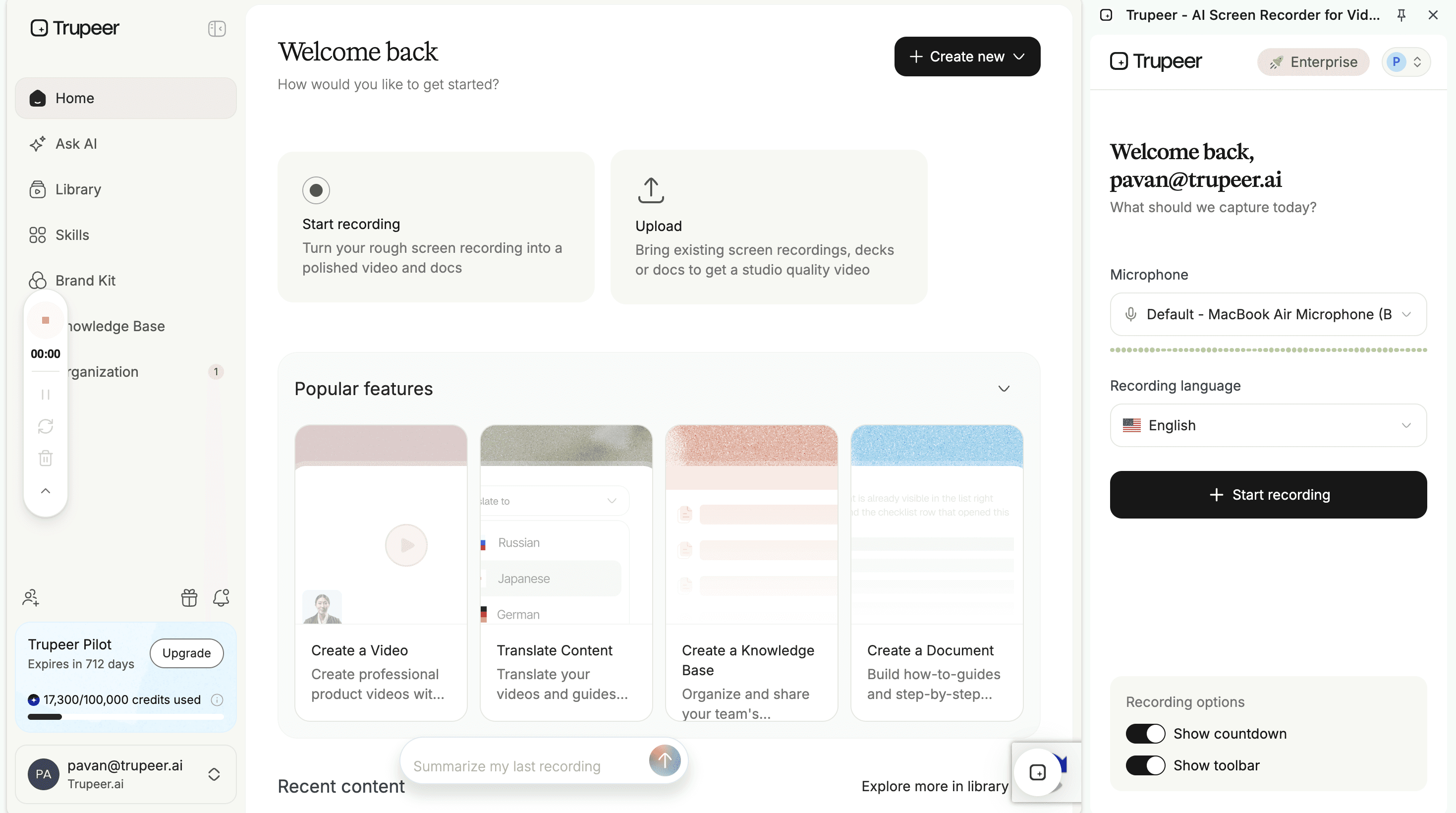
Click Start Recording, choose a tab, window, or your full screen, and run the task the way it is genuinely done. Existing footage can be uploaded instead, including an old screen recording you want to convert into an SOP. Capturing rather than writing matters for management specifically: a procedure derived from the real method starts accurate, so the maintenance job is keeping up with change rather than closing a gap that existed from day one.
Step 2: Generate the Procedure and Its Video Together
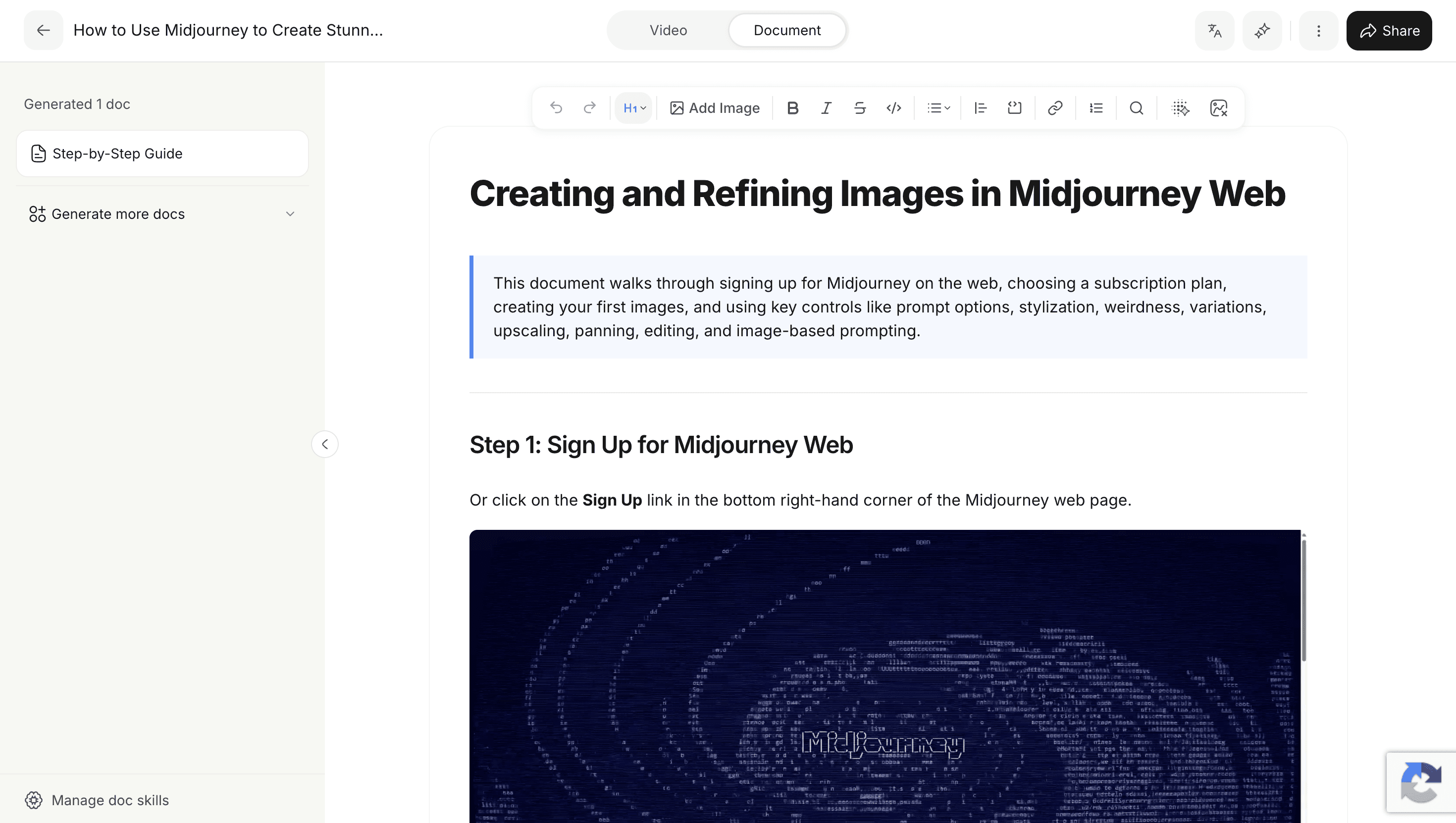
Click Generate AI Content and use Configure Output Options to produce a document, a video, or both. Having one source for both formats removes the most common versioning failure, where the written SOP is revised and the training video quietly keeps teaching the old method.
Step 3: Review, Correct, and Set Access
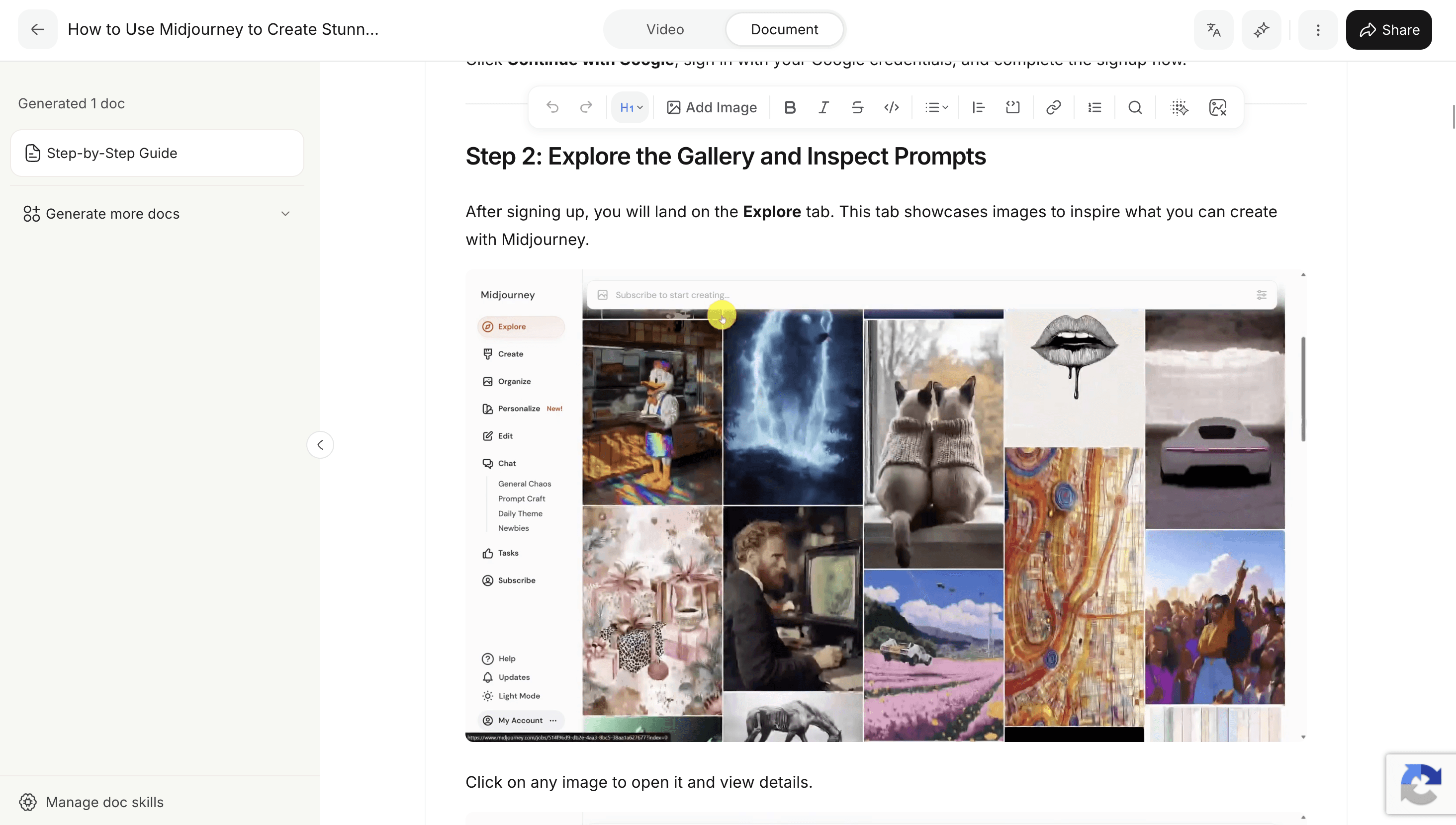
Open Edit to fix anything misread, rewrite wording to match your terminology, and mark the exact control at each step. Then set roles at organisation level, separating who can manage people from who can edit content.
Step 4: Publish Where People Will Actually Look
Create a knowledge base, organise procedures into sections and chapters, set visibility, and let people use Ask AI to ask a question in plain language rather than guessing a document title. Translate into your teams' languages, and export to PDF or Word where a controlled file is required.
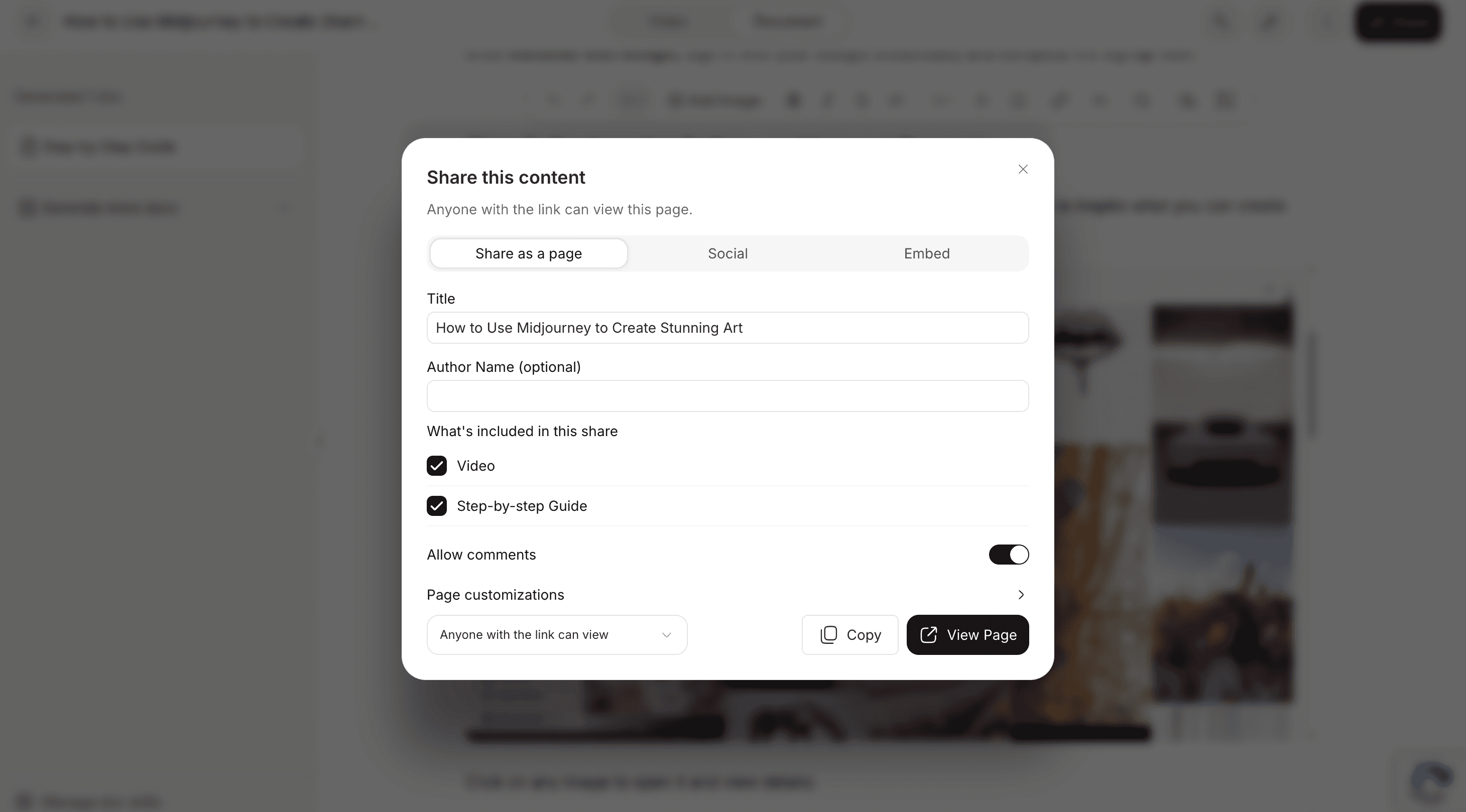
Step 5: Version, Monitor, and Revise
Click Version History to browse timestamped versions, compare them, and restore any earlier one in a single click, after which the restored version becomes current. Then use knowledge base analytics for views, unique viewers, searches, and the Unresolved Rate, plus content freshness reporting that flags any article untouched for more than 90 days.
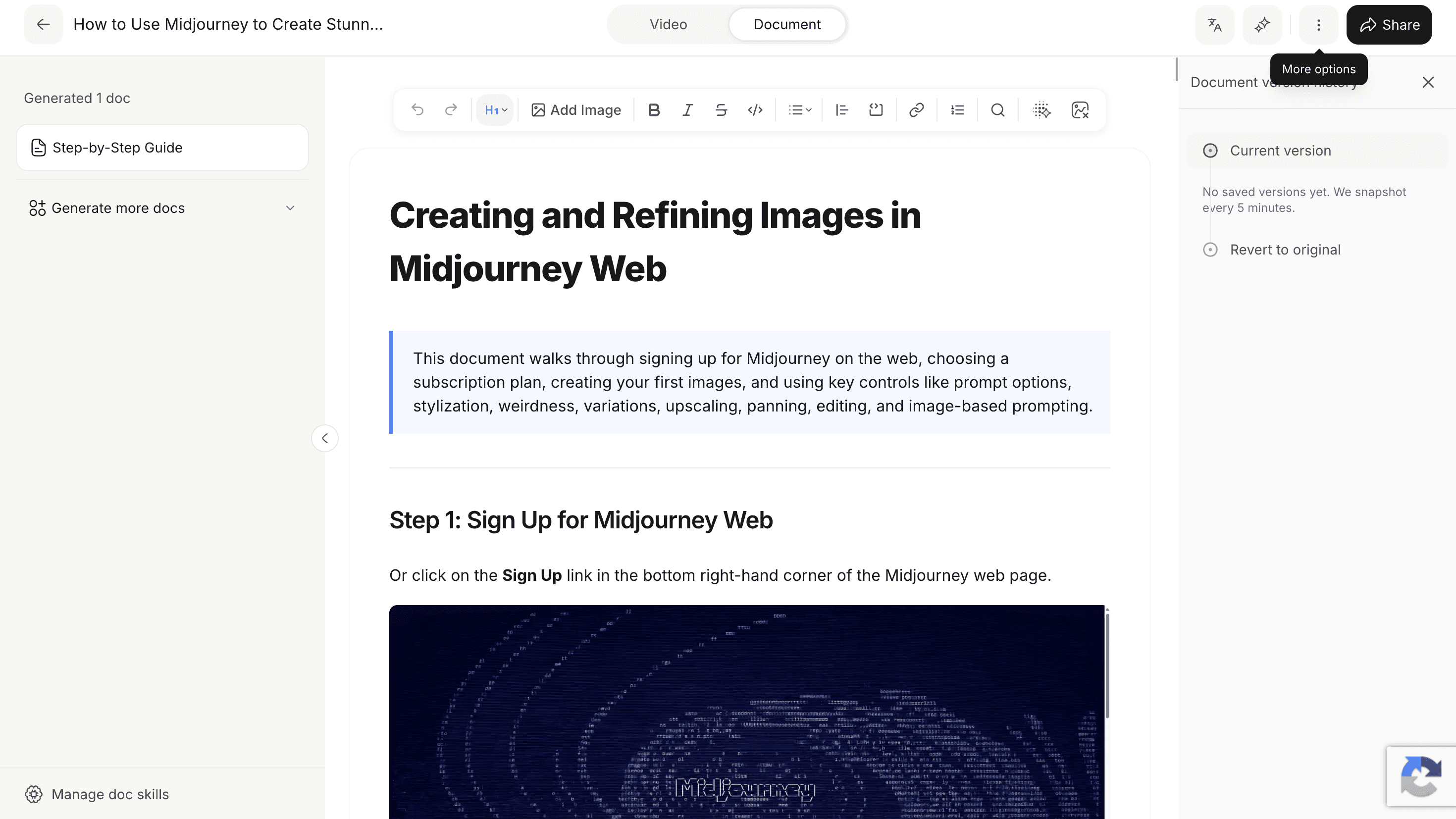
That last step is the whole argument. Revision is cheap because the procedure regenerates from a new recording, and the system tells you which procedures need attention instead of waiting for someone to notice.
Why Use Trupeer for SOP Management?
Create from reality:
record the process instead of documenting it from memory, so the procedure starts accurate rather than approximately rightManage from one source:
the written SOP and its video come from the same capture, so revising one cannot leave the other teaching an old methodKeep procedures current:
version history with one-click restore and stale-content reporting make maintenance visible instead of relying on somebody rememberingDistribute at scale:
searchable knowledge base with Ask AI, role and workspace controls, four levels of publication visibility, usage analytics, and publishing in 65+ languages
Explore Related Tools
Why Use Trupeer's SOP Management Software?
Revision Is Cheap, So Procedures Stay True
Because a procedure regenerates from a new recording rather than being edited by hand, keeping it accurate stays a small job. Revision cost is what quietly determines whether an SOP library is trusted or ignored.
Version History With One-Click Restore
Browse timestamped versions of any procedure, compare them against the current one, and restore an earlier version in a single click, so there is never ambiguity about which copy is live.
The System Tells You What Has Gone Stale
Articles untouched for more than 90 days are flagged as stale, with an average freshness figure across the library, which turns review from a reminder nobody honours into a visible, ranked list.
How to Manage SOPs Using Trupeer
Стъпка 1
Capture the Procedure
Стъпка 2
Publish to a Searchable Library
Стъпка 3
Version, Monitor, and Revise
Често задавани въпроси
What is SOP management software?
SOP management software is the system that holds your procedures after they exist: where they live, which version is current, who can change them, how people find them, and how you know when one has drifted out of date. It is a narrower job than writing procedures and a different purchase. Most organisations do not lack SOPs; they lack confidence about which of the ones they have is right.
What is the difference between SOP software and SOP management software?
SOP software creates procedures: capture, structure, screenshots, formatting. SOP management software governs them afterwards: version control, ownership, access, review cycles, and search. Teams usually feel the creation problem first and discover the management gap once there are enough procedures that nobody is certain which are current. If you have no documentation yet, start with SOP software.
How do you keep SOPs up to date?
Three habits do most of the work. Give every procedure a named owner before it publishes, because unowned documents are the ones that go stale. Work from a stale list monthly rather than running an annual audit nobody finishes. And treat failed searches as revision triggers, since questions your library could not answer are a backlog written by the people using it. Beyond that, keeping revision cheap matters more than any policy: if updating a procedure is slow, updates get postponed until the whole document is wrong.
How often should SOPs be reviewed?
There is no universal interval. Set it by how fast the underlying process changes and what your regulator, client, or quality system requires: a procedure tied to software that ships monthly needs looking at far more often than one covering a stable physical process. A system that reports on staleness is more useful than a fixed calendar rule, because it tells you which specific procedures have been neglected. Trupeer flags anything untouched for more than 90 days, which is a reporting threshold rather than a recommended review cycle.
Can SOP management software replace SharePoint?
Sometimes, and often it should sit alongside it instead. SharePoint and shared drives can store and govern SOP documents, and plenty of organisations run compliant documentation on them. The difference is that dedicated SOP software is built around the lifecycle of operational procedures rather than requiring you to configure that workflow and then maintain the configuration. If your procedures are stable, a shared drive is frequently enough. If they change with your tooling, revision cost is the deciding factor.
Още инструменти