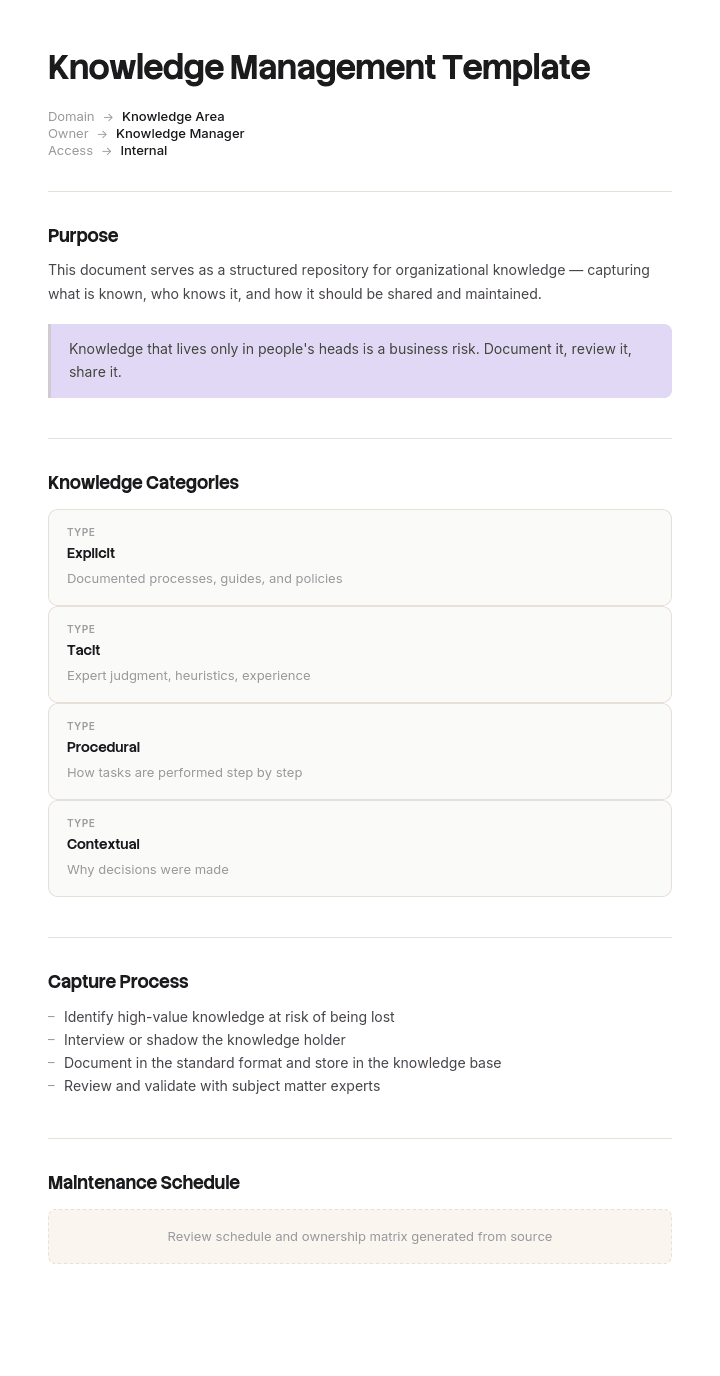
استخدم هذا القالب
إدارة المعرفة هي ما يحوّل الخبرة الفردية إلى قدرة مؤسسية. باستخدام Trupeer، يمكنك توفير ساعات في بناء نظام إدارة المعرفة لديك عبر البدء بقالب مجاني لإدارة المعرفة، وتخصيصه باستخدام إرشادات العلامة التجارية، ثم استخدام قاعدة المعرفة لاستضافة النتيجة.
ما هو قالب إدارة المعرفة، وهل تحتاج إليه؟
إدارة المعرفة هي ممارسة التقاط ما يعرفه الناس وإتاحته لمن يحتاجه في المرة التالية. قالب إدارة المعرفة هو البنية التي تحدد متى يحدث الالتقاط، ومن يقوم به، وأين تستقر النتيجة.
ما إذا كنت تحتاج إلى قالب يعتمد على إجابة صادقة لسؤال أضيق. إذا كانت مشكلتك أن المحتوى موجود ولا يمكن لأحد العثور عليه، فهذه مشكلة «حاوية»، وقالب قاعدة المعرفة يحل جزءًا أكبر منها. أما إذا كانت مشكلتك أن السؤال نفسه تتم الإجابة عنه من الصفر بشكل متكرر، وأن الإجابة لا تبقى بعد انتهاء المحادثة، فهذه مشكلة إدارة معرفة وهذه الصفحة هي المكان المناسب.
غالبًا تمتلك معظم الفرق النوعين معًا. مشكلة الحاوية أسهل في الملاحظة وتلفت الانتباه أولًا، ولهذا تستمر المشكلة الثانية لسنوات تحت قاعدة معرفة مرتبة تمامًا.
لماذا تُكتب المعرفة وما زالت تُفقد
الافتراض وراء معظم برامج إدارة المعرفة هو أن الناس لا يوثقون. راقب فريق الدعم أو فريق الهندسة عن قرب وستجد غالبًا العكس. إنهم يكتبون باستمرار: ملاحظات الحل، وتعليقات التذاكر، وردود السلاسل، ورسائل التسليم، وتعليقات في طلب سحب.
تُكتب المعرفة بالفعل. لكنها تُكتب في المكان الذي حدثت فيه المهمة، وليس في المكان الذي سيبحث فيه الشخص التالي، وغالبًا لا يكون المكانان متطابقين. ملاحظة الحل تعيش داخل تذكرة مغلقة. القرار يعيش داخل سلسلة. والشرح يعيش في رد على شخص واحد فقط طرح السؤال.
لذلك، فإن الالتقاط—بالمعنى الذي يهم—ليس فعلًا للكتابة. إنه فعل نقل، ويستغرق حوالي عشر دقائق في لحظة يكون فيها الشخص قد أنهى شيئًا للتو ويتم سحبه إلى المهمة التالية. لا تتضمن أي وصفة وظيفية تلك الدقائق العشر، ولهذا لا يحدث الالتقاط.
كل ما يلي هو محاولة لجعل تلك الدقائق العشر تخص شخصًا ما، في لحظة موجودة أصلًا في التقويم.
كيفية تخصيص هذا القالب في Trupeer
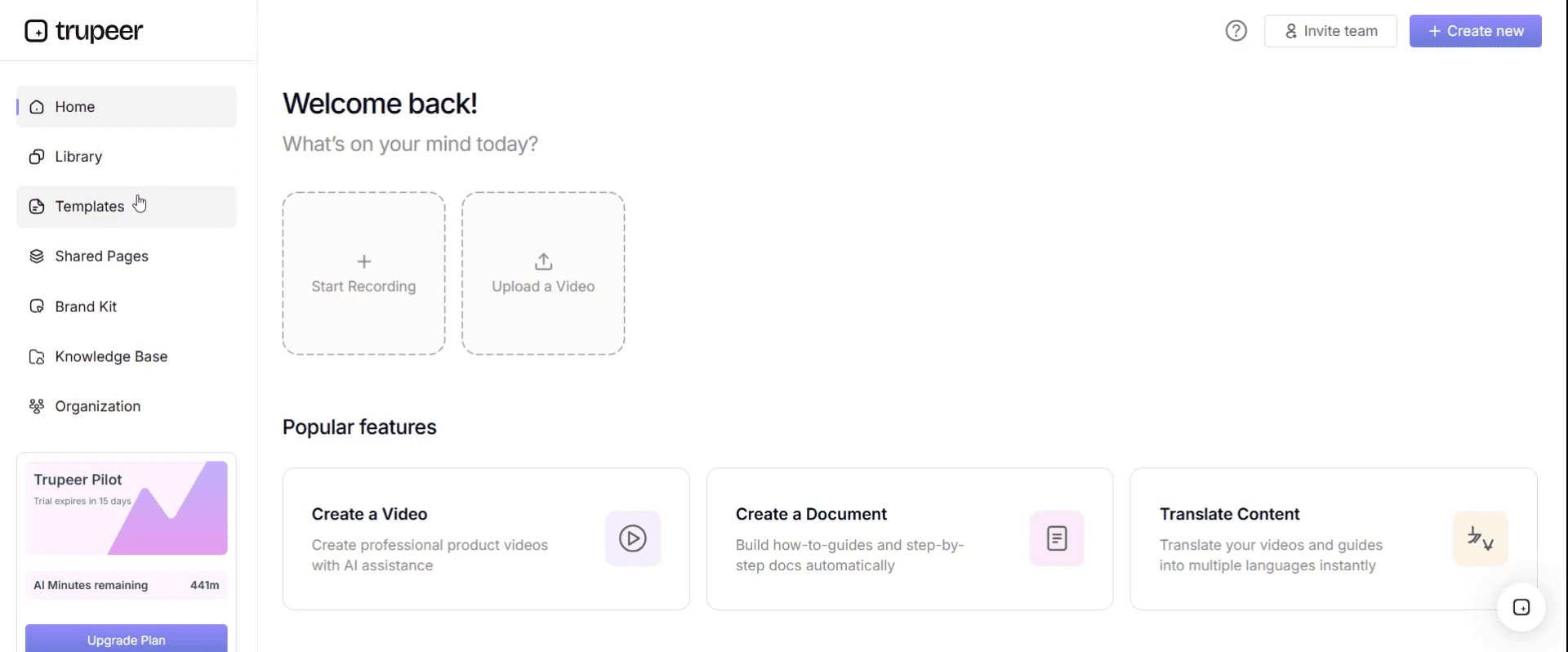
الخطوة 1: افتح قسم القوالب
انتقل إلى قسم القوالب من التنقل الرئيسي.
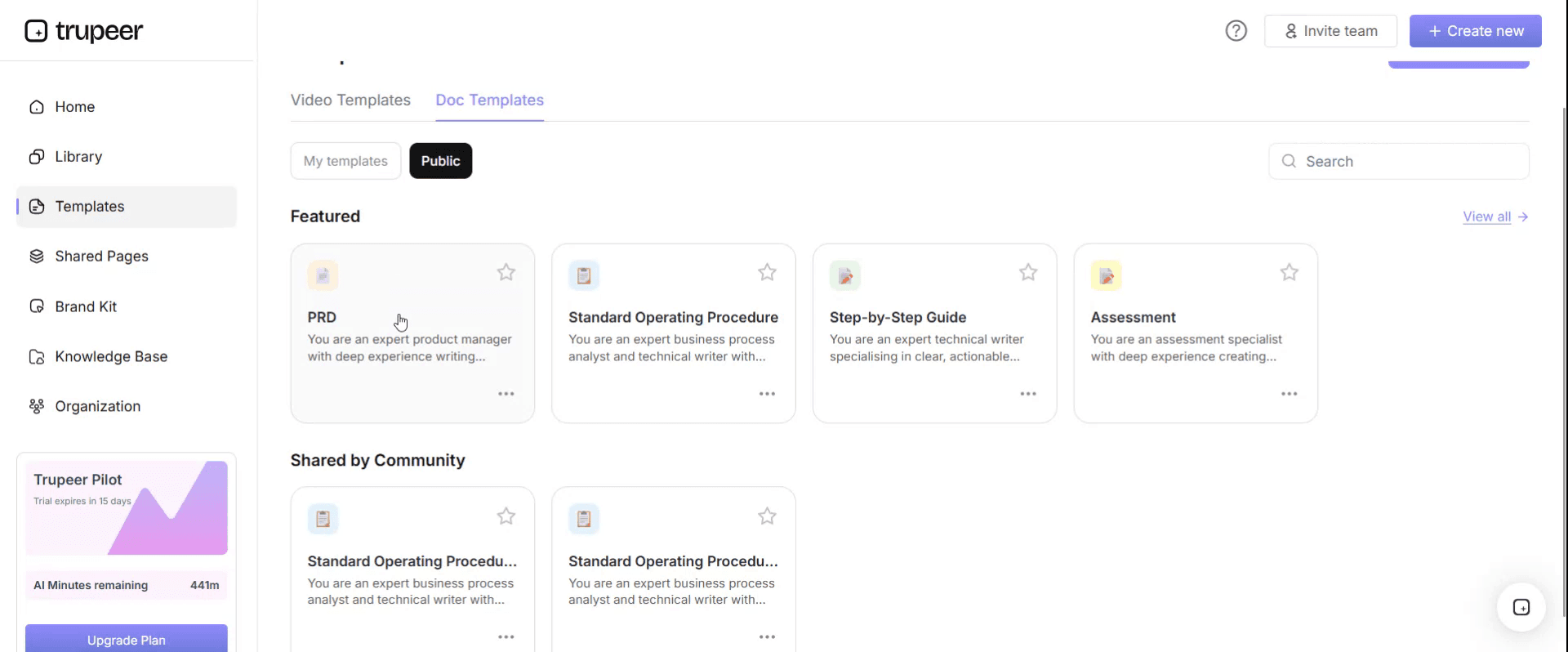
الخطوة 2: اختر قالبًا وافتحه
انقر على أي قالب تريد العمل عليه لفتحه.
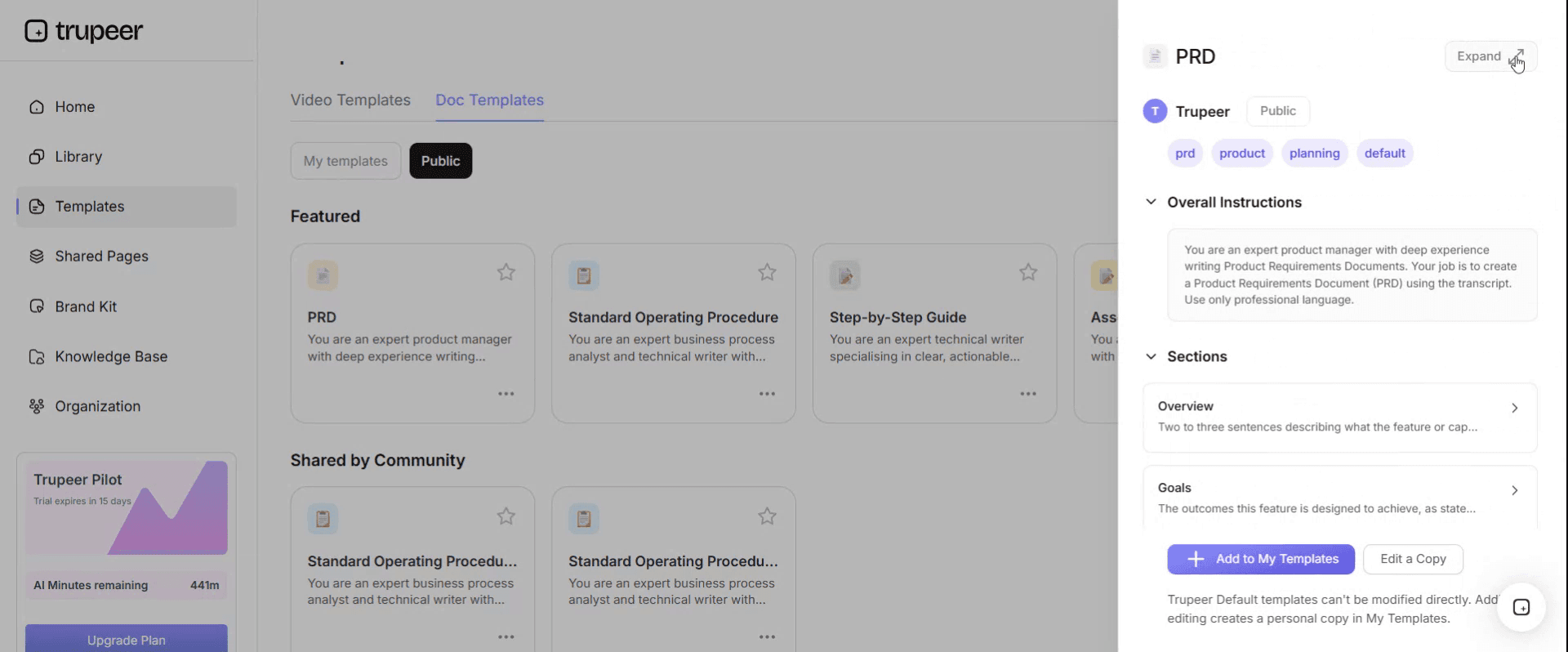
الخطوة 3: وسّع عرض القالب
إذا لزم الأمر، وسّع عرض القالب لرؤية التخطيط الكامل والتفاصيل بوضوح.
الخطوة 4: عدّل القالب
انقر على «Edit» لبدء تعديل القالب المحدد.
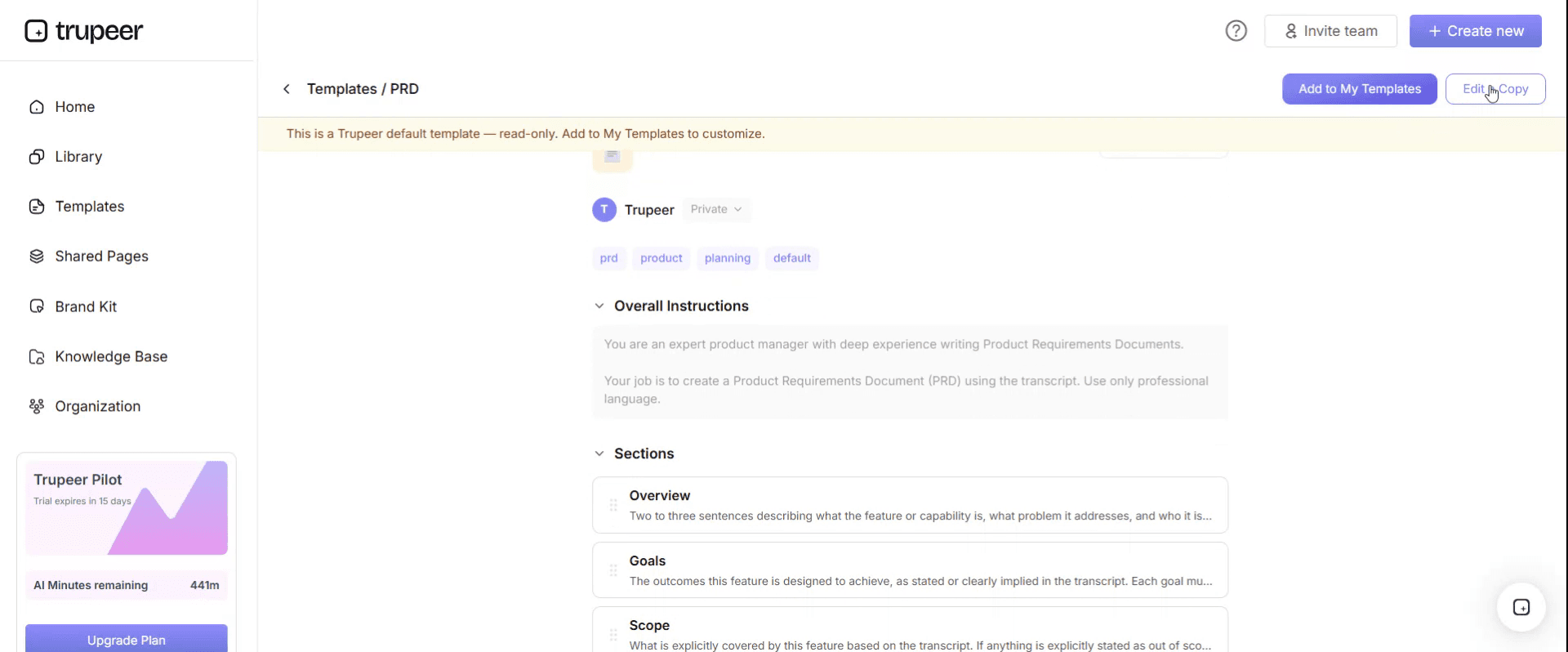
داخل المحرر، يمكنك:
إضافة أقسام جديدة
تحديد أو تحديث قواعد التنسيق
إضافة شعار وضبط موضعه والإعدادات ذات الصلة
الخطوة 5: احفظ قالبك المخصص
بعد إجراء جميع التغييرات اللازمة، انقر على Save لتخزين القالب المحدث كقالبك الخاص.
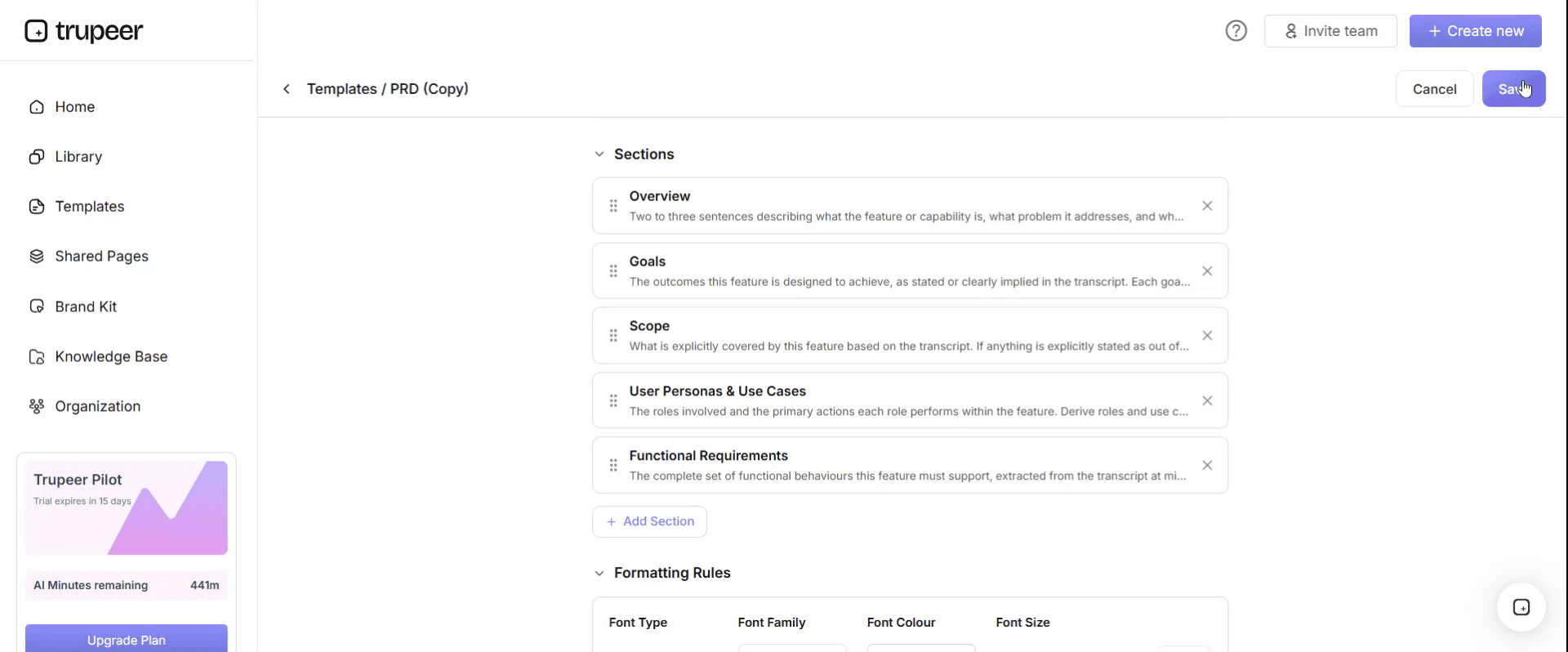
الخطوة 6: المعاينة وضبط القالب بدقة
عندما تريد معرفة كيف يبدو قالبك المخصص، افتح Preview.
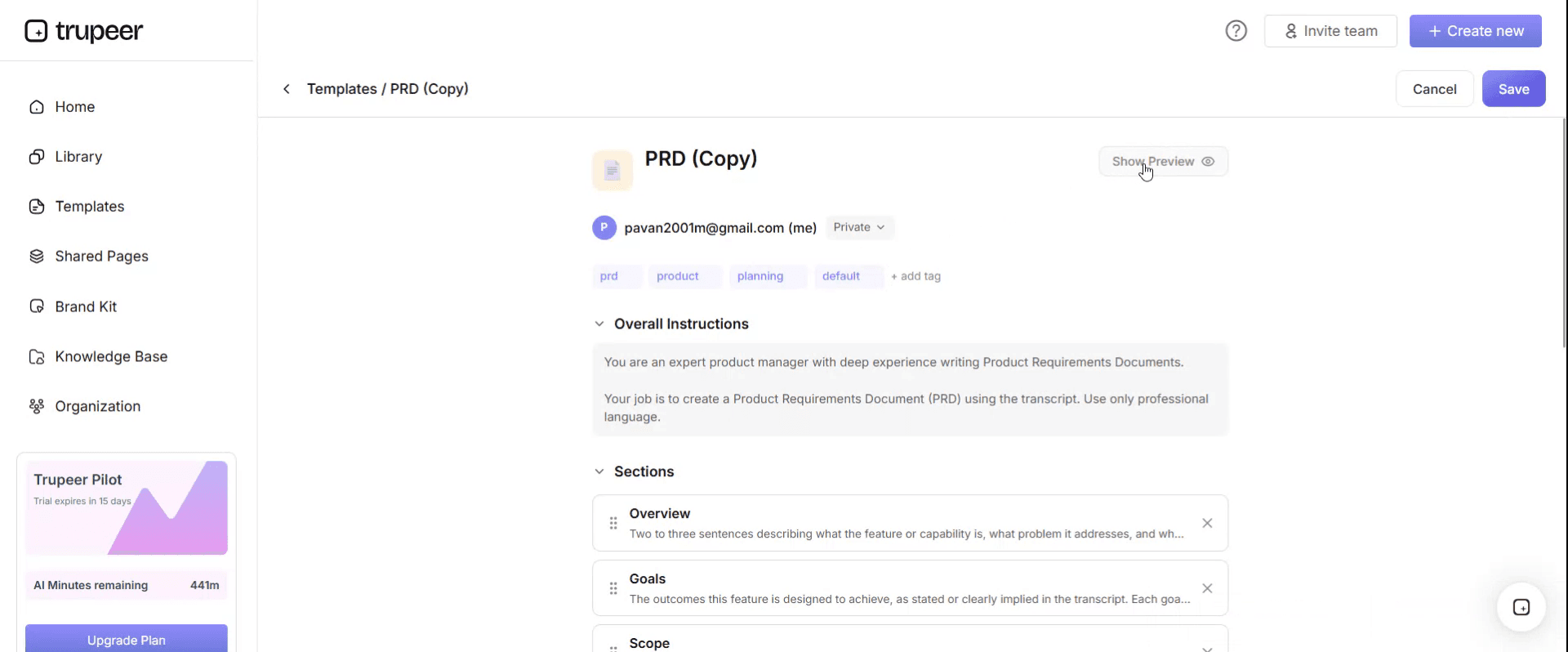
من شاشة المعاينة، يمكنك الاستمرار في إجراء تعديلات مباشرة إذا لزم الأمر، لضمان ظهور القالب تمامًا كما تريده.
باستخدام قالب إدارة المعرفة يمكنك:
توفير ساعات في الإعداد: تخطَّ الصفحة الفارغة مع بنية مستخدمة من فرق إدارة المعرفة.
التقاط المعرفة المؤسسية: وثّق الخبرة لتبقى حتى عند مغادرة الموظفين.
الالتزام بالهوية: طبّق شعارك وخطوطك وألوانك باستخدام حزمة العلامة التجارية الخاصة بـ Trupeer.
تحسين سهولة العثور: الوسوم المدمجة وحقول المسؤولية والوصول تجعل المحتوى أسهل في البحث وأكثر ثقة.
إضافة معرفة بالفيديو: حوّل المقالات الطويلة إلى دروس فيديو قصيرة يشاهدها المتعلمون فعليًا.
تمكين الفرق العالمية: ترجمة محتوى المعرفة إلى 65+ لغة بنقرة واحدة.
إدارة المعرفة عبارة عن مجموعة من محفزات الالتقاط، وليست مستودعًا
المستودع هو المكان الذي تذهب إليه المعرفة. إنه ليس ما ينتجها، وشراء مستودع أفضل لم يجعل أي فريقًا يكتب وثائق أكثر.
ما ينتج المعرفة هو عدد صغير من اللحظات المتكررة. يتم حل حادث. يطرح عميل سؤالًا جديدًا. يتم اتخاذ قرار سيبحث عنه الناس لمدة عامين. ينتهي مشروع. يستقيل شخص ما. تتغير عملية. يُطرح السؤال الداخلي نفسه للمرة الثالثة.
تملك هذه اللحظات ثلاث خصائص مفيدة. إنها قابلة للتوقع، وهي ظاهرة بالفعل في نظام ما في مكان ما، ولكل واحدة منها موعد نهائي موجود أصلًا. هذه الأخيرة هي ما يجعل الأمر قابلًا للتطبيق، لأن المعرفة التي يتم التقاطها «عندما تتوفر وقت» هي معرفة لا يتم التقاطها أبدًا.
لذلك، القالب ليس مستندًا لملئه. إنه سجل: لكل محفز، من يلتقط، وبأي صيغة، وأين تستقر النتيجة، وأي موعد نهائي موجود ترتبط به.
اللحظات السبع التي تستحق فيها المعرفة أن تُلتقط
المحفز | من يلتقط | الصيغة | مكان الاستقرار | ترتبط بـ |
|---|---|---|---|---|
يتم حل حادث عند P2 أو أعلى | من قام بحل المشكلة | مقال استكشاف الأخطاء وإصلاحها، مع عرض الأعراض أولًا | قاعدة المعرفة الداخلية | إغلاق التذكرة، والذي يتعذر بدونه |
يطرح عميل سؤالًا دون وجود إجابة مسبقة | الوكيل الذي أجاب | الأسئلة الشائعة أو دليل «كيف يتم» | قاعدة المعرفة العامة | نفس حل التذكرة |
يتم اتخاذ قرار سيسأل عنه الناس لاحقًا | صاحب القرار | سجل القرار: ماذا، ولماذا، وما الذي تم رفضه | قاعدة المعرفة الداخلية | الاجتماع الذي تم فيه اتخاذ القرار |
يُطرح السؤال الداخلي نفسه للمرة الثالثة | أي شخص أجاب | مقال داخلي قصير | قاعدة المعرفة الداخلية | الطلب الثالث، وهو المحفز |
تتغير عملية | صاحب العملية | تحديث SOP الموجود | حيثما توجد تلك الـ SOP | إطلاق التغيير |
يُغلق مشروع | قائد المشروع | ملاحظات التشغيل وما الذي سنفعله بشكل مختلف | قاعدة المعرفة الداخلية | إغلاق المشروع |
يُعطي شخص ما إشعارًا | مديره | نقل المعرفة لما يعرفه هو فقط | قاعدة المعرفة الداخلية والخلف | قائمة التحقق الخاصة بالخروج |
السبعة مقصودة. تستطيع كل مؤسسة تسمية عشرين لحظة يتم فيها إنشاء المعرفة نظريًا، وسجل من عشرين لا يديره أحد. ابدأ بالاثنين أو الثلاثة الأكثر إيلامًا، واثبت أنها تعمل، ثم أضف المزيد.
قالب مجاني لإدارة المعرفة: سجل الالتقاط للنسخ
لكل محفز خمس حقول. هذا هو القالب بالكامل.
المحفز. الحدث المرصود، مُصاغ بدقة كافية بحيث يمكنك كتابة قاعدة له. «يتم حل حادث P2» يعمل. «يحدث شيء مهم» لا يعمل.
المسؤول. دور مُسمّى واحد، وليس فريقًا. الشخص الذي كان يحمل الأمر بالفعل عندما انتهى، لأنه الوحيد الذي يعرفه، والوحيد الذي يستغرق له هذا عشر دقائق بدل ساعة.
الصيغة. ما يتم إنتاجه، مُسمّى كنوع مقال موجود بدل وصف. هذا يمنع الالتقاط من أن يصبح مشروع كتابة، وتوجد البنى في قوالب مقالات قاعدة المعرفة لدينا.
الوجهة. المكان المحدد، أي فئة مُسمّاة داخل نظام مُسمّى. ليس «الويكي».
الموعد النهائي المرتبط. البوابة الموجودة التي يتصل بها. هذه هي الحقل الذي يحدد ما إذا كان السجل يعمل، وأقوى نسخة منه هي بوابة لا يمكن تجاوزها دونها، مثل تذكرة لن تُغلق.
أضف تاريخ مراجعة للسجل ككل، مرتين في السنة. لا شيء غير ذلك. قالب إدارة معرفة يصل إلى خمسة عشر حقلًا يصبح الشيء الذي تحصل عليه بدل إدارة المعرفة.
كيفية ربط الالتقاط بموعد نهائي موجود بالفعل
الالتقاط الطوعي يفشل بشكل يمكن التنبؤ به، ويفشل لسبب يستحق الفهم: الشخص الذي أنهى للتو شيئًا هو الوحيد الذي يمكنه كتابته، وهو الأقل توفرًا في المبنى في تلك اللحظة.
هناك ثلاث نقاط قوة للربط، وتتصرّف بشكل مختلف جدًا.
البوابة المانعة هي الأقوى. لا يمكن إغلاق التذكرة، ولا يمكن اعتبار المشروع مكتملًا، ولا يمكن توقيع قائمة التحقق الخاصة بالمغادر. استخدمها بحذر وبشكل حصري فقط عندما تكون تكلفة فقد المعرفة مرتفعة، لأن بوابة مانعة على محفز منخفض القيمة تنتج مقالات من سطر واحد مكتوبة لتجاوزها.
عنصر قائمة التحقق هو الخيار الأوسط ويغطي معظم المحفزات. يظهر ضمن عملية يتبعها الناس بالفعل، ويكون واضحًا إذا تم تخطيه، ولا يمنع أي شيء.
التذكير هو الأضعف، ولا يساوي تقريبًا شيئًا بمفرده. إذا كان المحفز لا يحصل إلا على تذكير، فقرر بصدق ما إذا كان يجب أن يكون موجودًا في السجل أصلًا.
مثال على إدارة المعرفة: نفس الحادث تم حله أربع مرات
Torvin، شركة منصة تجارة إلكترونية تضم حوالي مئتين وخمسين شخصًا، كانت لديها مزامنة يومية لبيانات المخزون تتم ليلًا وتُسقط السجلات بصمت عندما تصل تغذية مورد بترميز أحرف محدد. كانت مستويات المخزون تصبح قديمة في صباح اليوم التالي بالنسبة لفئة من التجار.
حدث ذلك أربع مرات بين مارس 2024 وسبتمبر 2025. أربعة مهندسين مناوبين مختلفين. استغرقت عملية التشخيص ثلاثًا وأربعًا وخمسًا وسبع ساعات على التوالي، بإجمالي تسع عشرة ساعة هندسية، بالإضافة إلى أربع صباحات من وصول مستويات مخزون خاطئة إلى العملاء.
كتب كل واحد من هؤلاء المهندسين الأربعة ملاحظة حل بعناية. كانت ملاحظات جيدة فعلًا، مع الاستعلام الذي تم تشغيله والإصلاح الذي تم تطبيقه. دخلت جميع الملاحظات الأربع في التذكرة وبقيت هناك.
قام المهندس الرابع بالبحث في قاعدة المعرفة أولًا ولم يجد شيئًا. ثم وجد التذاكر الثلاث السابقة، لكن فقط لأنه تخمّن سلسلة الخطأ الدقيقة، وكانت السلسلة قد تم تسجيلها بشكل مختلف قليلًا في كل مرة.
أبرزت مراجعة ما بعد الحادث الفكرة بوضوح. تم تدوين المعرفة أربع مرات. لكن تم التقاطها صفر مرة، لأن الالتقاط يعني نقلها إلى المكان الذي سيبحث فيه الشخص التالي، وهذا النقل لم يقم به أحد ضمن مسؤولياته.
كان التغيير سطرًا واحدًا في قائمة التحقق لإغلاق الحادث: لا يمكن إغلاق حادث عند P2 أو أعلى حتى يقوم من قام بالحل إما بربط مقال معرفة موجود أو إنشاء واحد. عشر دقائق، وهي ما تزال جديدة، من الشخص الذي يعرف بالفعل.
خلال الأشهر الاثني عشر التالية، تم إغلاق واحد وستين حادثًا وفقًا لهذه القاعدة. ارتبط ثمانية وثلاثون منها بمقال كان موجودًا بالفعل، وهي القيمة المهمة لأن كل واحدة منها عبارة عن إعادة اكتشاف لم تحدث. أنشأ ثلاثة وعشرون مقالًا جديدًا. انخفض متوسط وقت التشخيص في الحوادث المتكررة من حوالي أربع ساعات إلى حوالي خمس وعشرين دقيقة.
لم يتم شراء أي شيء ولم يتم اعتماد أي إطار عمل. كان هناك عنصر قائمة تحقق واحد، على بوابة كانت موجودة أصلًا.
كم يجب أن تلتقط دون إنشاء وظيفة ثانية
فشل الجهة الأخرى حقيقي. أخبرت إحدى الفرق أن تلتقط كل شيء، فنتج عن ذلك مئة مقال رقيق لا يقرأه أحد ويستاء من العملية خلال شهر.
التقط ما سيستغرق من الشخص التالي أكثر من حوالي عشرين دقيقة ليكتشفه، ولا يمكن اكتشافه من النظام نفسه. هذه هي القاعدة كاملة. إذا كانت الإجابة ظاهرة في الواجهة، أو في سجل، أو في الكود، فسيصبح مقال المعرفة قديمًا أسرع من الشيء الذي يصفه، ولن يضيف شيئًا.
وبشكل محدد، لا يستحق الالتقاط: أي شيء تُجيب عنه عملية بحث واحدة في توثيق المنتج، وإعدادات مخصصة مرة واحدة لعميل واحد، والتفكير في قرار تم عكسه لاحقًا. القرارات المعكوسة تستحق سطرًا واحدًا فقط يذكر أنها تم عكسها ومتى.
اختبار ما يعمل فعليًا هو ما إذا كنت تستطيع تسمية الشخص الذي سيحتاج هذا. إذا لم تستطع، فأنت تكتب لجمهور غير موجود.
أطر عمل إدارة المعرفة: DIKW وSECI وITIL في الممارسة
تظهر ثلاثة أطر باستمرار، ومن المفيد أن نكون صريحين بشأن ما الذي يهدف كل واحد منها إليه.
DIKW، تسلسل البيانات إلى معلومات إلى معرفة إلى حكمة، هو طريقة لشرح لماذا لا تكون البيانات الخام مفيدة. إنها أداة تعليمية. لن تخبرك ماذا تفعل يوم الاثنين.
SECI، من Nonaka وTakeuchi، يصف كيف تتحول المعرفة الضمنية إلى معرفة صريحة ثم تعود مرة أخرى عبر التنشئة الاجتماعية، والتوضيح، والتركيب، والتمثل. وهو الأكثر فائدة من بين الثلاثة، لأن خطوة التوضيح هي بالضبط نقل الدقائق العشر المذكور أعلاه، وتسميته يساعد الناس على رؤيته كعمل وليس كإدارة.
ITIL يضع إدارة المعرفة كممارسة تدعم إدارة الخدمات، مع التركيز على إتاحة المعلومات عند نقطة اتخاذ القرار. إذا كنت بالفعل تشغّل عمليات ITIL، فاجعل محفزاتك مرتبطة ببوابات الحوادث والمشكلات والتغييرات التي لديك، بدل بناء بنية موازية.
لا يوجد أي إطار من الثلاثة هو عنق الزجاجة. لا تفشل الفرق في إدارة المعرفة لأنها اختارت إطارًا خاطئًا، ولن تصمد استراتيجية مبنية على أي منها عند مواجهة يوم ثلاثاء بعد الظهر.
قوالب إدارة المعرفة في Notion والأدوات الأخرى
يسيطر Notion على نتائج هذا البحث، وهذا اختيار منطقي: قواعد بيانات بخصائص تجعل سجل الالتقاط بسيطًا، ويمكن لزر القالب إنشاء صفحة مُهيأة مسبقًا من محفز بنقرة واحدة.
لكن الأداة أقل أهمية بكثير من آلية الربط. سجل في Notion بدون بوابة مانعة يؤدي تقريبًا بنفس أداء سجل في جدول بيانات بدون بوابة مانعة، أي أنه لا يؤدي على الإطلاق. قبل الاختيار، تحقق من ثلاث نقاط: هل يمكنك إنشاء صفحة من قالب بإجراء واحد، وهل يمكنك طلب حقول قبل تغيير الحالة، وهل يمكنك البحث عبر كل ما قد يحتاجه القارئ في مكان واحد.
إذا كانت الإجابة عن النقطة الثالثة «لا»، فستُنهي الأمر بإدارة المعرفة في نظامين ولن يثق أحد بهما. هذا قرار حاوية وليس قرار ممارسة، وهو مغطى في قالب قاعدة المعرفة.
هل يمكنني الحصول على قالب مجاني لإدارة المعرفة في Word أو PDF؟
سجل الالتقاط أعلاه يتم لصقه مباشرة في Word أو Google Docs، وهذه الوثيقة مفيدة فعلًا كشيء تأخذه إلى اجتماع القيادة للموافقة على البوابات المانعة. الحصول على الموافقة هو الجزء الصعب من هذا العمل، وسجل من صفحة واحدة هو الأداة المناسبة لذلك.
يناسب PDF النسخة المتفق عليها التي يتم تداولها بعد ذلك. أما ما لا يعمل في أي منهما فهو تشغيل السجل من داخل مستند، لأن السجل يحتاج أن يكون داخل الأدوات التي تنطلق منها المحفزات. نسخة Word مخصصة لاتخاذ القرار. أما التنفيذ فيعيش في نظام التذاكر وقوائم التحقق الخاصة بك.
ما الذي يجعل أفضل قالب مجاني لإدارة المعرفة؟
ليس عدد الحقول ولا تعقيد إطار العمل خلفه. قيّم القالب بناءً على ما إذا كان يذكر لحظات محفز محددة، وما إذا كان لكل محفز مسؤول واحد مُسمّى، وما إذا كان يوضح ما يحدث إذا تم تخطي الالتقاط.
معظم قوالب إدارة المعرفة المجانية تكون مخططات مستندات، أي عناوين لما يجب أن يحتويه مقال المعرفة. هذه مفيدة وهي أداة مختلفة، ومغطاة في قوالب مقالات قاعدة المعرفة. القالب الذي لا يذكر متى يحدث الالتقاط قد تخطى الجزء الوحيد الذي يحدد ما إذا كان سيتم التقاط أي شيء.
كيفية جعل الالتقاط سريعًا بما يكفي ليفعله الناس فعلًا
كل الحُجج أعلاه تنهار إذا اتضح أن الدقائق العشر تصبح أربعين. يعمل السجل فقط عندما يكون الالتقاط أرخص فعلًا من إعادة الاكتشاف التي يمنعها.
Trupeer AI مفيد تحديدًا عند هذه النقطة. المهندس الذي أصلح شيئًا للتو يسجل نفسه وهو يمر عبر الإصلاح، وتكون النتيجة مقالًا مُنسقًا مع الخطوات واللقطات المصورة جاهزة، يقوم بتعديلها بدل كتابتها. ما كان مهمة كتابة تستغرق أربعين دقيقة في نهاية حادث طويل يصبح تسجيلًا لمدة ثلاث دقائق وتعديلًا قصيرًا.
سجّله. اجعله بعلامتك. ترجمّه. Trupeerّه.
ينتج عن نفس التسجيل مقال مكتوب، وفيديو للذين يفضلون المشاهدة، ووثيقة في قاعدة المعرفة لديك، جميعها بعلامة تجارية متسقة. بالنسبة لفرق الهندسة والمنتج، التوثيق التقني يعمل بالطريقة نفسها، والترجمة تعني أن المقال الملتقط في منطقة واحدة يصبح قابلًا للاستخدام في المنطقة التالية. توجد تعليمات الإعداد في دليل إعداد قالب المستند.
الأسئلة الشائعة
هل يوجد قالب مجاني لإدارة المعرفة في Word؟
يتم لصق سجل الالتقاط في Word أو Google Docs كجدول من صفحة واحدة، وهو التنسيق المناسب للموافقة على المحفزات والمسؤولين والبوابات مع الأشخاص الذين يجب أن يعتمدوا ذلك. لا يوجد تنزيل مقيد ولا نموذج. بعد الموافقة، يجب أن ينتقل السجل إلى الأدوات التي تنطلق منها المحفزات فعليًا.
هل يوجد قالب مجاني لإدارة المعرفة في PDF؟
صدّر نسختك الخاصة بعد الاتفاق على السجل، ثم وزّعها. احتفظ بنسخة العمل قابلة للتعديل خلال الربع الأول، لأن الحقل الذي يحتاج دائمًا إلى ضبط هو الموعد النهائي المرتبط، ولن تعرف أي البوابات تمسك إلا عندما يبدأ الناس في مواجهتها.
هل يمكنني تنزيل قالب مجاني لإدارة المعرفة؟
سجل الالتقاط، والمحَفزات السبعة، ونقاط قوة الربط كلها مجانية وغير مقيدة. عدّل المحفزات بما يناسب عملياتك وضعها في وثائق العملية الخاصة بك دون الحاجة إلى إسناد.
ما هو أفضل قالب مجاني لإدارة المعرفة في Notion؟
أي من قوالب Notion الشائعة سيمنحك قوالب قواعد بيانات وصفحات، وهي الجزء السهل. أيًا كان ما تختاره، أضف خاصيتين لا تتوفران في النسخ الجاهزة: المحفز الذي أنشأ الإدخال، والبوابة التي تم ربطه بها. بدون هاتين الخاصيتين ستحصل على مستودع مرتب دون ممارسة التقاط.
ما الفرق بين إدارة المعرفة وقاعدة المعرفة؟
قاعدة المعرفة هي نظام، أي مكان قابل للبحث مع فئات ومسؤولين. إدارة المعرفة هي ممارسة إدخال المعرفة فيه والحفاظ عليها صحيحة عبر كل نظام يحدث فيه العمل. يمكنك امتلاك قاعدة معرفة دون إدارة معرفة، ومعظم المؤسسات تفعل ذلك. العكس أقل شيوعًا ويعمل بشكل مدهش.
من يجب أن يتولى إدارة المعرفة؟
يتولى ذلك من يملك العمليات التي تتعلق بها المحفزات، وغالبًا ما تكون خدمة التقديم أو الدعم أو العمليات بدل وظيفة التوثيق. يمكن لفريق التوثيق أن يتولى الجودة والبنية. لكن لا يمكنه أن يتولى الالتقاط، لأنهم ليسوا في الغرفة عندما يتم حل الحادث.
كيف تقيس إدارة المعرفة؟
رقمان. نسبة المحفزات التي أنتجت شيئًا، والتي تخبرك ما إذا كانت البوابات تعمل. ونسبة عمليات الالتقاط التي ارتبطت بمقال موجود بدل إنشاء مقال جديد، والتي تخبرك ما إذا كانت المكتبة تصل إلى الأشخاص الذين يحتاجونها. عدد المقالات وحده لا يخبرك بأي شيء على الإطلاق.


