4.8/5
Convert a Teams Recording to an SOP
Turn a Microsoft Teams meeting or walkthrough recording into a structured SOP with step-by-step instructions and screenshots. Upload it, review it, publish it.
Convert Teams Recording to SOP
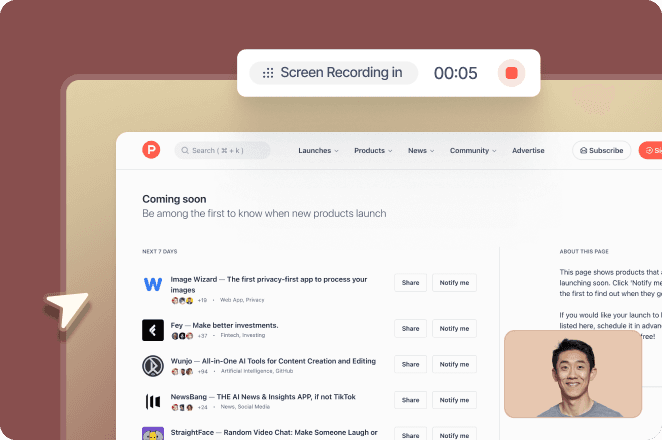
Upload a Microsoft Teams recording and turn it into a step-by-step SOP with screenshots.
Teams meeting → recording → upload to Trupeer → AI extracts the workflow → SOP with screenshots → human review → publish.
Trupeer converts Teams recordings into structured SOP drafts with step-by-step instructions and screenshots. Instead of asking somebody to rewatch a long meeting and document the process by hand, you reuse the recording as the source material. The generated procedure can then be edited, branded, translated and published, so the process knowledge shared in a Microsoft Teams call doesn't disappear once the meeting ends. This solves a problem every operations, IT, and onboarding team knows: walkthroughs and training happen live in Teams, but that knowledge rarely makes it into usable documentation. With Trupeer's AI screen recorder and video upload, the recording is the source and the SOP is generated for you.
Once the recording is uploaded, the platform analyzes it, identifies the key steps, captures relevant screenshots from any shared screen, and writes clear instructions to match. You can upload recordings stored in OneDrive or SharePoint, or video from any tool that exports a file, then publish a finished SOP or supporting documentation after a quick review. The same recording can also produce a polished video, so a single Teams call becomes a reusable knowledge asset. For teams that already have process and training recordings, this provides a way to turn existing meeting knowledge into reusable documentation.
Where to Find Your Teams Recording
This is the step that trips people up, because it depends on how the meeting was set up rather than on anything you choose.
A scheduled or private meeting:
the recording usually lands in the OneDrive of whoever pressed record, in a Recordings folder. If that was not you, you need them to share itA channel meeting:
the recording usually goes to the SharePoint site behind that channel, under Recordings, where anyone with channel access can reach itEither way, start in the chat:
the recording appears in the meeting chat or the Recap tab afterwards, which is usually quicker than hunting through file locations
Storage locations depend on your organisation's Teams and retention configuration, so check with whoever administers your tenant if the recording is not where you expect.
How to Convert a Teams Recording to an SOP
You already have the recording, so the workflow is short. Trupeer's screen recorder and upload flow handle the capture, and the AI does the structuring, writing, and formatting.
Step 1: Upload Your Teams Recording
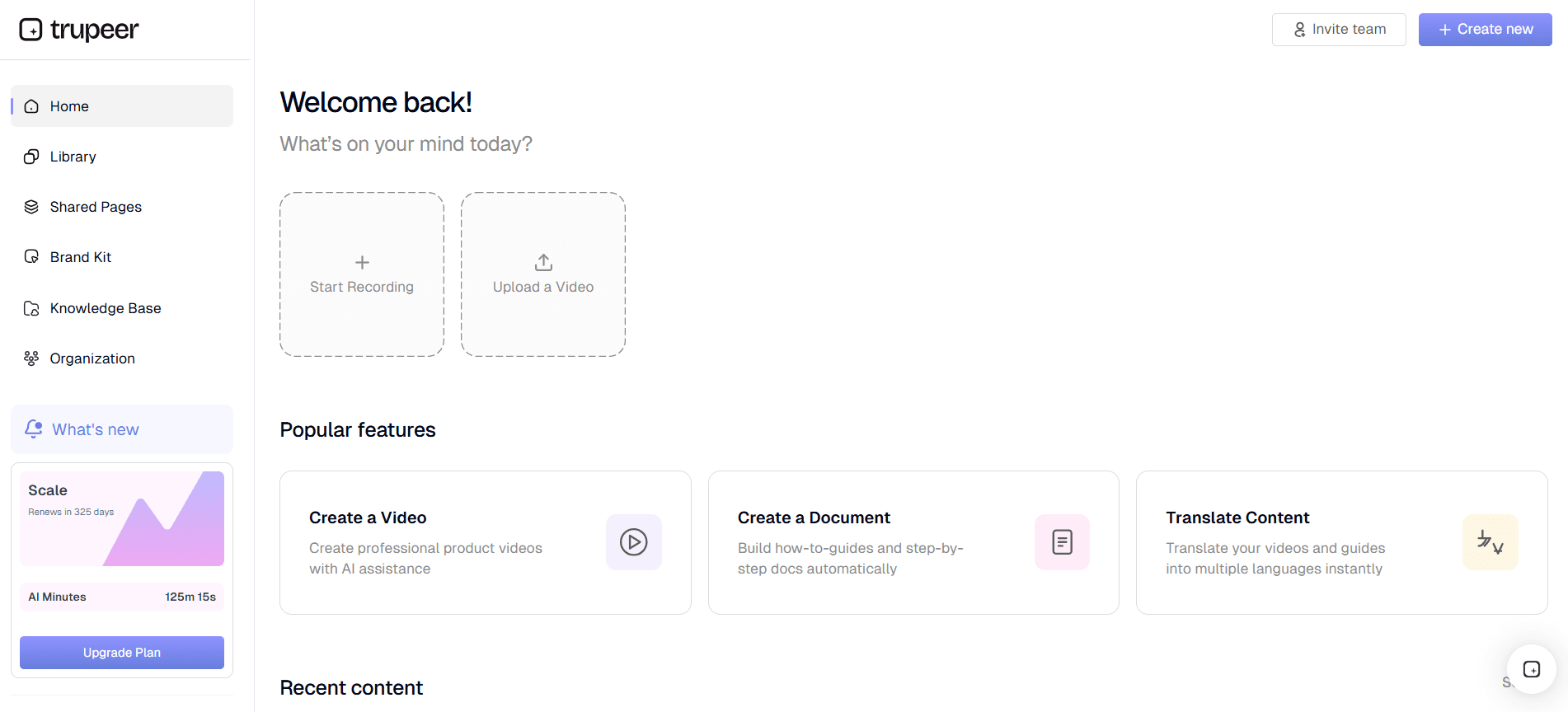
Download the recording from its Teams-associated storage location, such as OneDrive or SharePoint, and upload it to Trupeer. If no recording exists yet you can capture a fresh walkthrough instead, though the usual starting point here is one you already have. There is nothing to recreate, because the walkthrough already happened.
Step 2: AI Converts the Teams Recording to an SOP
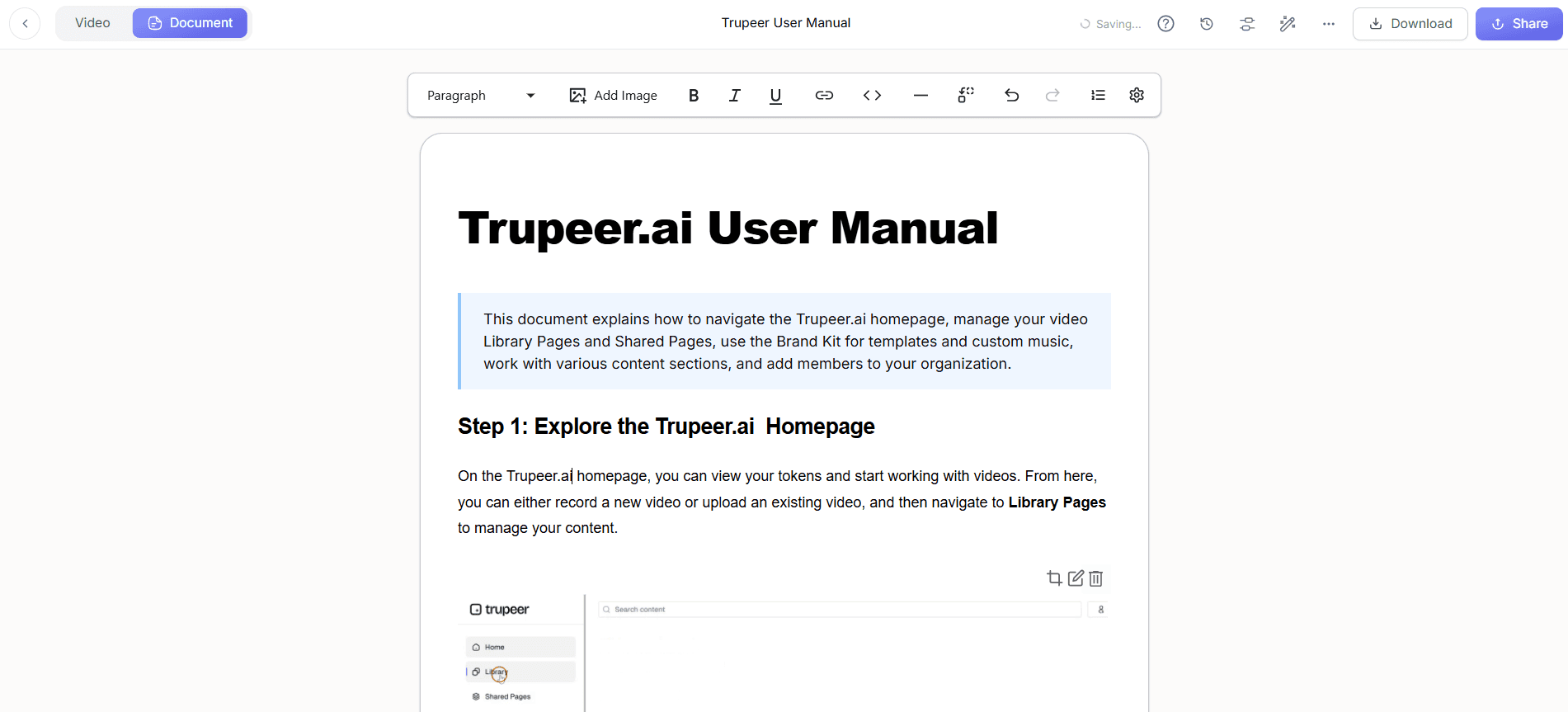
Trupeer's AI processes the recording automatically. It removes filler and dead air, identifies the sequence of steps, captures screenshots from any shared screen, and writes descriptive instructions, converting the Teams recording to an SOP with ordered steps and supporting visuals.
Step 3: Edit, Brand, and Share
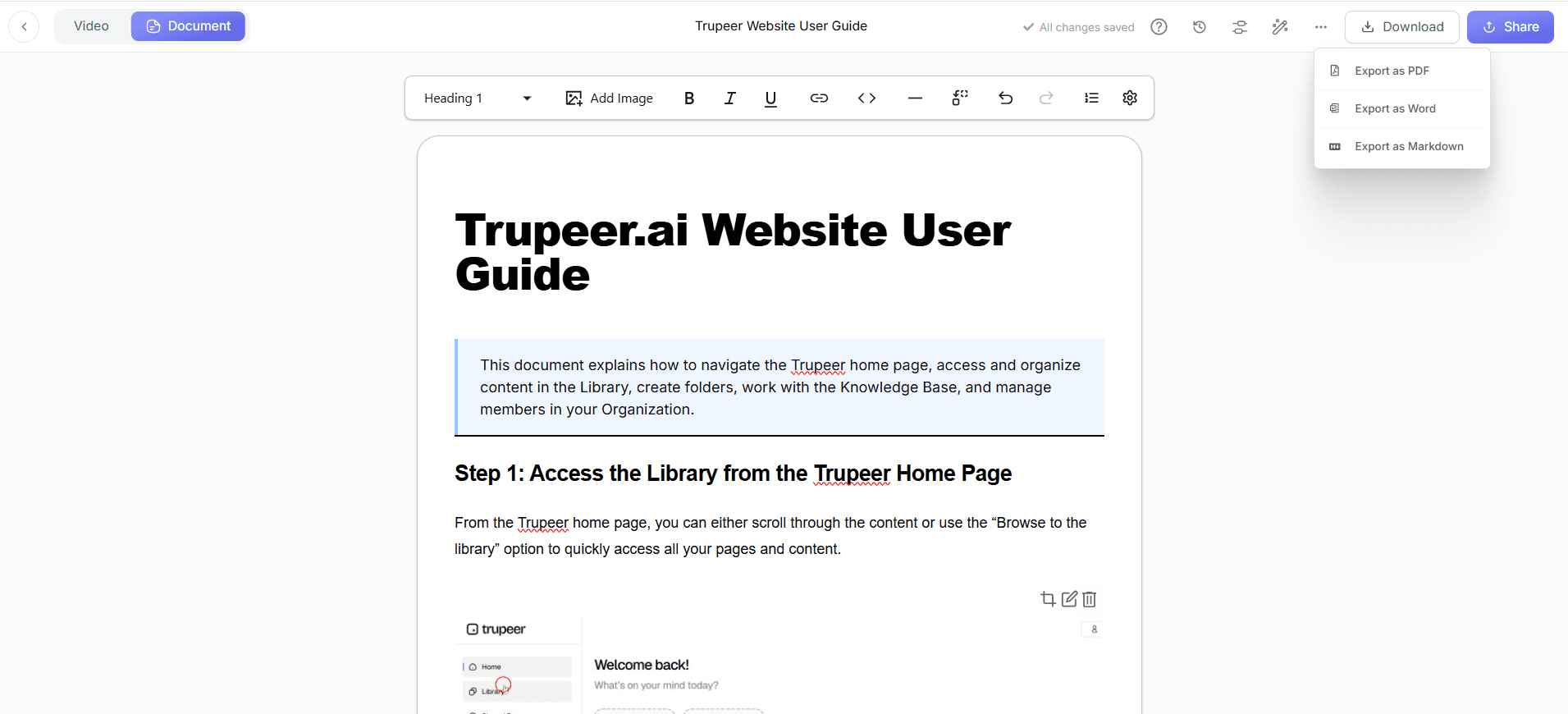
The generated SOP is fully editable, so you can refine the wording, add or replace images, and reorder steps until it matches your standards. Apply your brand kit for consistent logos and formatting, translate it into other languages if needed, then export the SOP or host it in a searchable knowledge base your whole team can access.
What Types of Teams Recordings Can You Convert?
Training sessions:
the session someone ran once for a group and never wrote upProcess walkthroughs:
a colleague talking another through how something gets doneKnowledge-transfer meetings:
usually scheduled because somebody is leaving or changing roleCustomer onboarding calls:
implementation and setup walkthroughs that get repeated for every accountInternal system demonstrations:
a tour of your CRM, ERP, HR system or an internal applicationHandover meetings:
recorded explanations of recurring tasks passing to someone new
What Can You Create From a Teams Recording?
Employee training SOPs:
a written procedure people can reference later, rather than a video they watched onceKnowledge-transfer SOPs:
repeatable documentation, produced before that knowledge leaves with the person who has itInternal process documentation:
a step-by-step procedure for the system the walkthrough coveredCustomer onboarding documentation:
reusable material instead of a one-off explanation per accountHandover procedures:
something the next person can actually follow
Knowledge Transfer From Teams Meetings
This is the case where converting a recording is worth the most, and where leaving it as a recording costs the most.
A subject-matter expert spends half an hour in Teams showing a colleague how a recurring process works. The recording gets saved. Then the expert changes role, or leaves, and what they knew is technically still available but practically gone: nobody watches a half-hour recording to find out what to click at step four, and nobody can search inside it.
Converting that recording turns it into something a future employee can search, scan and follow. The recording is already made and the explanation already happened, so the only work left is review. That is why offboarding and role handovers are the highest-return documentation most teams never get around to.
Turning Teams Training Recordings Into SOPs
Training recordings have the same problem in a milder form: useful once, then forgotten. Converting one gives people both the original walkthrough and a written reference they can search when they need a specific step, which is a different need from watching the session again. New starters tend to watch first and then work from the written version.
Key Features of Teams-to-SOP
The Teams-to-SOP workflow combines existing recordings, AI-assisted documentation, editing and publishing in one process.
Works With Your Teams Recordings: Upload the Teams recording from wherever it was stored, such as OneDrive or SharePoint. Video from other meeting tools works too, though Teams recordings are what this is built around.
Automatic Step Detection: The AI breaks the recording into clear, ordered steps, so you don't have to scrub through the footage deciding where one instruction ends and the next begins.
Auto-Captured Screenshots: When a meeting includes a screen share or walkthrough, relevant screenshots are pulled from the recording and placed beside the matching step, giving the SOP the visual detail readers need.
SOP and Video From One Recording: A single Teams recording can produce both a written SOP and a narrated training video, so you get a procedure and a training video from one session.
Multi-Language Support: Publish each SOP in multiple languages so distributed and global teams can follow the same process in their own language.
Enterprise Workspaces and Roles: Organization workspaces, user roles, and shared-page visibility controls let large teams keep sensitive procedures restricted to the right people.
Why Convert Teams Recordings Into SOPs?
Knowledge shared in Teams is easily lost once the call ends, and writing it up manually pulls experienced staff away from higher-value work. Converting the recording reuses knowledge that has already been shared, and keeps documentation consistent whoever produced it.
Capture Knowledge Before It's Lost: Walkthroughs and decisions from a call become permanent documentation, so know-how doesn't disappear when the meeting ends or a team member moves on.
Reduce Documentation Work: AI creates the initial structure and wording so the team can focus on reviewing the procedure, instead of someone rewatching and transcribing the Teams meeting into a procedure.
Stay Closer to the Original Walkthrough: Because the SOP is built from the actual recording, the documented steps reflect what was really shown and said, reducing the errors common in memory-based write-ups.
Consistency Across Teams: When everyone works from the same tool, all documentation follows the same structure, tone, and branding regardless of who created it.
Faster Onboarding: New hires learn from clear, visual SOPs drawn from real working sessions, instead of sitting through long recordings to find the parts that matter.
Support Audit Documentation: Detailed, current SOPs support strong internal controls and make audits smoother for regulated teams.
Teams Recording vs Writing an SOP Manually
The value here is reusing work that already happened rather than scheduling it again.
Stage | Writing it manually | Converting the recording |
|---|---|---|
Source material | Notes taken during the meeting | The recording that already exists |
Identifying the steps | Manual | AI-assisted |
Screenshots | Captured by hand afterwards | Taken from the shared screen |
Writing | From notes and memory | AI draft, then edited |
Business rules and exceptions | Human | Human |
Review and approval | Human | Human |
What happens to the recording | Stays separate, gradually forgotten | Becomes the source for the generated procedure |
Two rows do not change. The AI drafts from the visible workflow; the process owner still reviews it and adds anything the recording could not show, including verbal approvals, thresholds that live in a policy, and the exceptions.
Who Should Convert Teams Recordings Into SOPs?
Converting a Teams recording to an SOP is most useful for teams that already use recorded calls to explain processes, train employees, or transfer knowledge.
Operations Teams: Convert process and hand-off calls into SOPs so workflows stay clear and repeatable as the team changes.
IT and System Administrators: Turn troubleshooting and configuration calls into SOP libraries and technical documentation that reduce repeat questions.
Customer Success and Support: Capture onboarding and resolution walkthroughs from client calls and turn each recording into something agents and customers can follow.
HR and Onboarding Teams: Record training sessions once and convert them into reusable onboarding SOPs instead of repeating the same live walkthrough for every new hire.
Enterprise and Compliance Leaders: Standardize procedures across the organization with secure workspaces and controlled sharing, making it safe to run at scale. Learn more on the enterprise page.
Best Practices for Teams Recordings
A little structure in the call itself makes the SOP far stronger. These practices help the AI produce a cleaner first draft.
Share Your Screen During the Walkthrough: The AI captures the best screenshots from shared screens, so demonstrating the process on screen produces a far more detailed SOP than audio alone.
Narrate the Steps Clearly: Explain what you're doing and why as you go. The AI uses that narration to write richer, more useful instructions.
Record in High Resolution: A clear, high-resolution Teams recording produces sharper screenshots and a more readable SOP.
Keep Calls Focused: Cover one process per recording where possible. A focused call becomes a focused SOP that's easier to follow and update.
Standardize With Templates and Brand Kits: Use consistent templates and your brand kit so every SOP looks and reads the same across your library.
What Makes a Good Teams Recording for SOP Creation?
Not every meeting recording converts well. The ones that do tend to share these traits:
The screen is clearly visible:
a shared screen at full size, not a small window inside a gallery view of facesOne workflow is the main subject:
a meeting covering four unrelated topics produces one confused procedureThe speaker explains as they go:
narration adds the why, which is the part a screen capture cannot showDiscussion is separated from the walkthrough:
Teams calls usually contain introductions, questions and side conversations. Where you can, keep the process walkthrough as one clear stretch of the call so the generated procedure has a cleaner sourceThe process runs start to finish:
a partial walkthrough produces a partial procedureSensitive data is handled at review:
customer names and account details that appeared on the shared screen can be blurred before publishing, so a live-data recording is still usable
If you are starting from a fresh capture rather than an existing meeting, the general route on converting a screen recording to an SOP covers recording specifically for documentation.
Explore Related Tools
Why Choose Trupeer for Teams Recording to SOP
Works With Your Teams Recordings
Upload the Teams recording from wherever it was stored, such as OneDrive or SharePoint. No special format required.
AI-Built SOP Structure
The AI breaks the recording into ordered steps and captures screenshots from shared screens to build a complete, structured SOP
Enterprise-Ready Controls
Organization workspaces, user roles, and shared-page security let large teams convert a Teams recording to SOP content safely at scale
How to Convert a Teams Recording to SOP
Passo 1
Upload your Teams recording
Passo 2
AI converts the Teams recording to an SOP
Passo 3
Edit, brand, and share instantly
Perguntas Frequentes
Can I convert a Microsoft Teams recording into an SOP?
Yes. Download the recording, upload the file to Trupeer, and the AI produces a draft procedure with ordered steps and screenshots taken from the shared screen. It works on any Teams recording where the screen is visible, whether that was a training session, a handover, or a walkthrough somebody happened to record.
Where do Teams meeting recordings get stored?
It depends on how the meeting was set up. Recordings of scheduled or private meetings usually land in the OneDrive of whoever pressed record, in a Recordings folder. Channel meeting recordings usually go to the SharePoint site behind that channel. The quickest route either way is the meeting chat or Recap tab, where the recording appears afterwards. Storage and retention depend on your tenant configuration, so check with whoever administers Teams if it is not where you expect.
Does the Teams meeting need to include a screen share?
For the most detailed SOP, yes, a screen share or walkthrough lets the AI capture screenshots and document the exact steps. Calls without a screen share can still be turned into a written procedure from the spoken content, but screen-share recordings produce the richest, most visual SOPs.
Can a Teams training recording become an SOP?
Yes, and it is one of the best uses for this. Training recordings tend to be useful once and then forgotten. Converting one gives people the original walkthrough plus a written reference they can search when they need a specific step, which is a different need from watching the whole session again. New starters usually watch first and then work from the written version.
What happens if the Teams recording contains several processes?
You get one confused procedure rather than several clean ones. A meeting covering four unrelated topics does not separate itself. If you already have a long recording spanning several workflows, you will get a better result splitting the file before uploading than trying to untangle the steps afterwards. One workflow per recording is the rule worth following.
Mais ferramentas