Trupeer Blog

Knowledge Base Search UX: How to Design a Search Experience That Works

Knowledge Base Search UX: How to Design a Search Experience That Works

目次

ラフな画面録画から、AIで製品動画とドキュメントを即座に作成

無料で始める

Imagine your customer support team is swamped with repetitive questions that your knowledge base should easily answer. Yet, users struggle to find the right articles, leading to frustration and increased support tickets. The stakes are high knowledge base search UX. A poor search experience can inflate your support costs and decrease user satisfaction. Consider this: according to Forrester Research,

75% of users will not return to a website if they struggle to find what they need in their first visit.

This statistic highlights the importance of a well-designed search experience in your knowledge base. It's not just a tool, it's a critical part of user interaction and customer retention. This becomes even more crucial if your knowledge base serves as a primary resource for your product or service, like in the best knowledge base examples where smooth UX directly correlates with customer loyalty and reduced support workload.


Why does knowledge base search UX matter?

The search experience within a knowledge base significantly impacts both user experience and operational efficiency. For businesses, the primary goal is to provide users with quick access to the information they need. If users can't find answers efficiently, frustration builds, leading to increased support calls or lost customers. A well-optimized search experience can drastically reduce these negative outcomes. This is particularly important for customer support teams who rely on these resources to resolve issues swiftly. A simplified search experience can lead to faster problem resolution, allowing support agents to handle more queries in less time, ultimately boosting productivity and customer satisfaction.

Also, businesses can directly measure the impact of a knowledge base's search UX on their bottom line. Poor search functionality often results in higher churn rates as users become disillusioned with the support they receive. Conversely, a well-designed search experience can enhance customer retention by ensuring users feel supported and informed. This is evident in a customer success workflow where access to precise information can mean the difference between a satisfied customer and a frustrated one. Therefore, investing in a high-quality search UX is not just about user satisfaction, it's a strategic move to sustain and grow your customer base.

What are the benefits of a well-designed knowledge base search experience?

A well-executed search experience in a knowledge base offers several compelling benefits, enhancing both user satisfaction and operational efficiency.

  • Increased user satisfaction. A well-designed search UX ensures users find answers quickly, reducing frustration and increasing engagement with your product. This can directly lead to higher customer loyalty.

  • Reduced support costs. By enabling users to find answers independently, you decrease the volume of support tickets, saving time and resources for your support team. This can cut support costs by up to 30%.

  • Enhanced content discovery. Advanced search functionalities can expose users to a broader range of content, increasing the value they derive from your knowledge base. This is where a knowledge base one excels, offering users a comprehensive view of available resources.

  • Improved content relevance. By analyzing search data, you can better understand what users are looking for and optimize content to meet their needs, enhancing the overall relevance of your knowledge base.

  • Better decision-making. Insights gained from search analytics can inform product improvements and marketing strategies, making your business more responsive to user needs. Tools like an AI video platform can integrate these insights smoothly.

  • Increased productivity. A reliable search UX allows employees to quickly find internal documentation, reducing time spent searching for information. This boosts productivity by up to 25%.

Which Trupeer features help you design a knowledge base search UX that works?

Trupeer offers a suite of capabilities tailored to enhance your knowledge base search UX. These features simplify the creation, management, and optimization of your knowledge base, ensuring users have a smooth search experience.

AI-searchable knowledge base

Trupeer's AI-searchable knowledge base indexes every recording with timestamp-level deep links. This feature transforms video content into searchable text, allowing users to find specific segments within videos quickly. Users can type a query and jump directly to the point in a video where their topic is discussed. This granular level of searchability enhances user satisfaction by providing precise answers efficiently, cutting down on the time spent sifting through content.

Automatic SOP generation

Trupeer's automatic SOP generation capability turns any video recording into an edit-ready, exportable Standard Operating Procedure. This feature is invaluable for creating a structured knowledge base that supports both employees and customers. By converting detailed processes into easily digestible SOPs, users can find step-by-step guides through a simple search. This capability is particularly useful for complex workflows where clarity and precision are paramount. Trupeer's AI documentation platform ensures that your documentation remains up-to-date and relevant.

Multi-format export

Trupeer supports multi-format export options including MP4, HTML, PDF, and SCORM, which caters to diverse user preferences and technical requirements. By offering information in various formats, your knowledge base becomes more accessible and user-friendly. This feature is crucial for users who may have specific format needs, such as those integrating content into other software applications. The flexibility in format ensures that users can choose the most convenient way to consume information, enhancing overall usability.

AI translation and dubbing

Trupeer's AI translation and dubbing capabilities allow you to translate video content into over 40 languages with lip-sync, ensuring that your knowledge base is accessible to a global audience. This feature is key for organizations that cater to international customers, as it removes language barriers and broadens the reach of your content. By offering content in multiple languages, you enhance user satisfaction and open up new markets, making your knowledge base a truly global resource.

Viewer engagement analytics

Trupeer provides detailed viewer engagement analytics, offering insights into how users interact with your content. This data can inform improvements to your knowledge base by highlighting which sections are most valuable or where users tend to drop off. Understanding user behavior allows you to refine and optimize content, ensuring it's aligned with user needs. This feature, part of Trupeer's knowledge base generator, enables you to continuously improve the search experience and content relevance.

How do you design a knowledge base search UX step by step with Trupeer?

Step 1: Capture Screen Recording

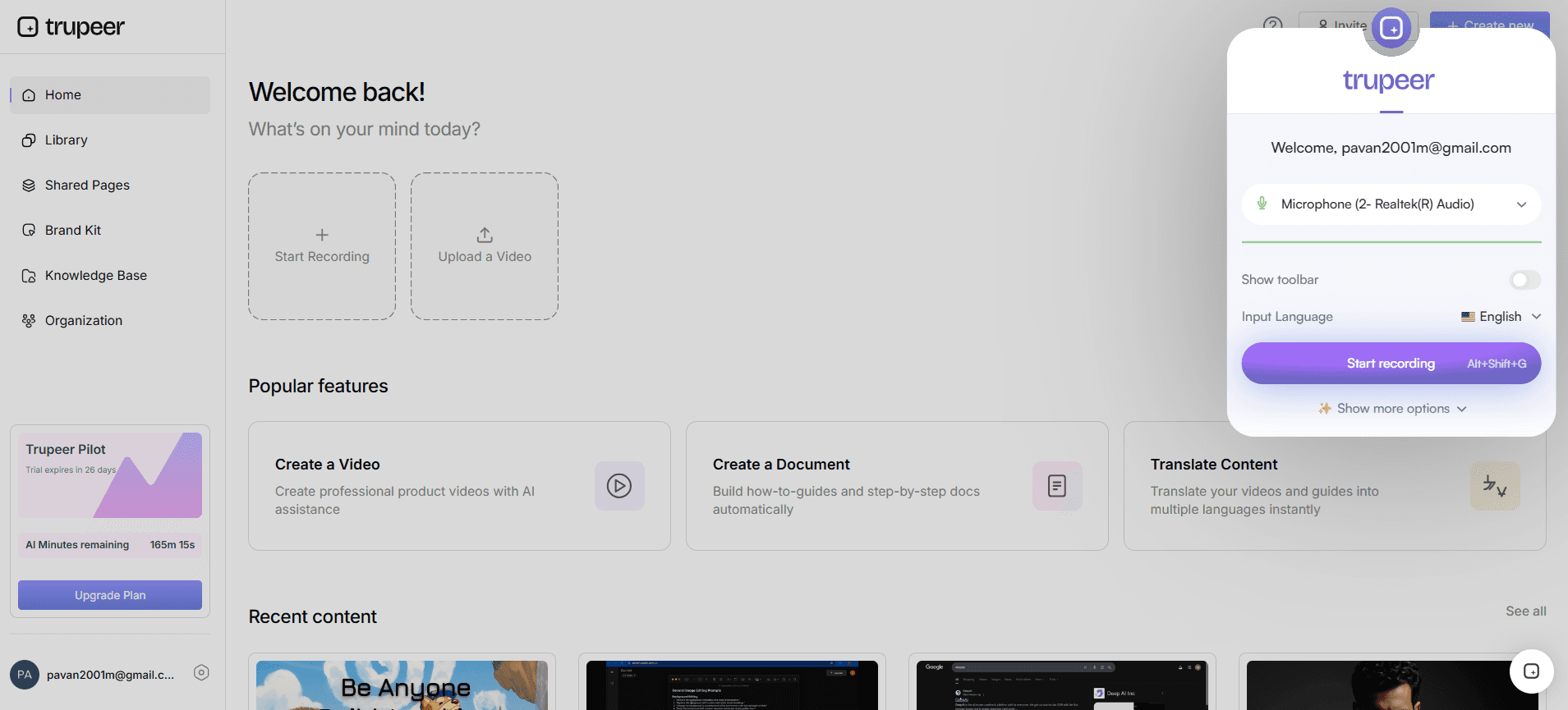
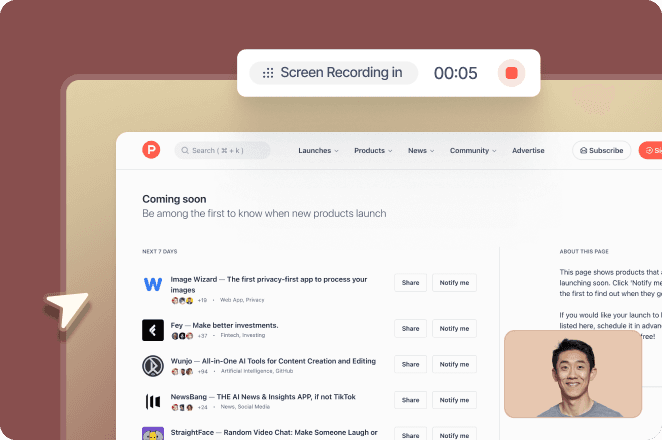
Begin by using Trupeer's browser-based recorder to capture a screen recording of your knowledge base content. This tool requires no installation, making it accessible from anywhere. Click "Start Recording" to initiate the capture process. Trupeer's AI screen recording with auto-zoom and click detection highlights essential actions and focuses on critical areas of the screen. This ensures that the end-user sees exactly what they need without unnecessary distractions. The recording duration depends on the complexity of the content but typically takes as long as the process you're documenting. If new actions occur, the AI adjusts the focus accordingly, providing a smooth visual experience.

Capture Screen Recording

Step 2: Enhance with AI Voiceover

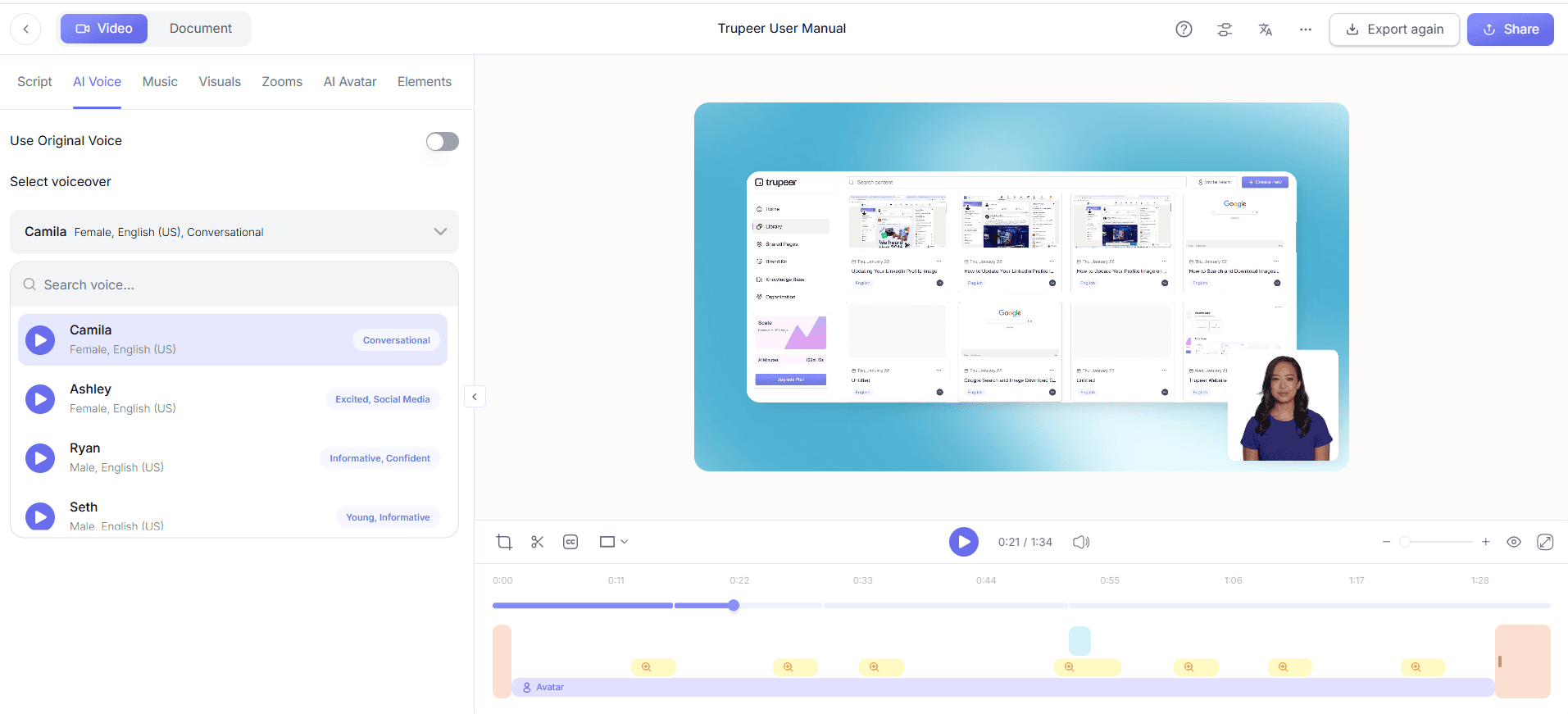
Once the recording is complete, enhance it using Trupeer's AI voiceover feature. Choose from over 65+ natural voices, adjusting the pace and tone to match your audience's preferences. This step is crucial as it provides context and clarity, making complex information easy to understand. You can also use AI voice cloning to maintain a consistent voice across your knowledge base. Simply provide a short sample, and Trupeer will replicate the vocal characteristics. This process takes a few minutes, depending on the audio length, ensuring your voiceover aligns perfectly with the visual content.

Enhance with AI Voiceover

Step 3: Generate Auto Chapters

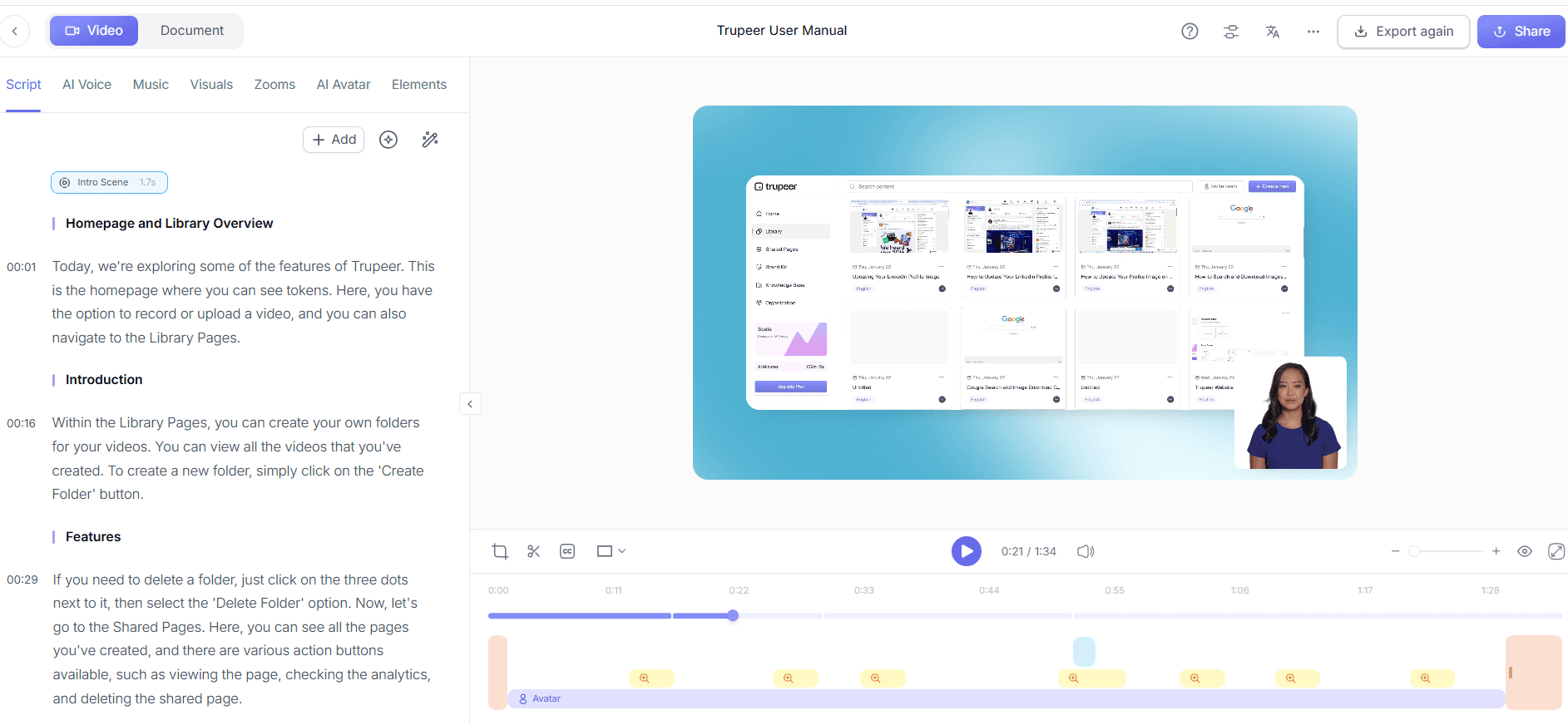
Next, use Trupeer's auto chapters and segment detection to break down your video into digestible sections. This feature automatically identifies key points and creates chapters, making it easier for users to navigate the content. Users can jump to the section they find most relevant, enhancing their search experience. This segmentation happens almost instantly after the recording is processed, allowing for quick updates. In cases where the AI misses a segment, you can manually adjust chapters to ensure complete accuracy and relevance.

Generate Auto Chapters

Step 4: Export in Multiple Formats

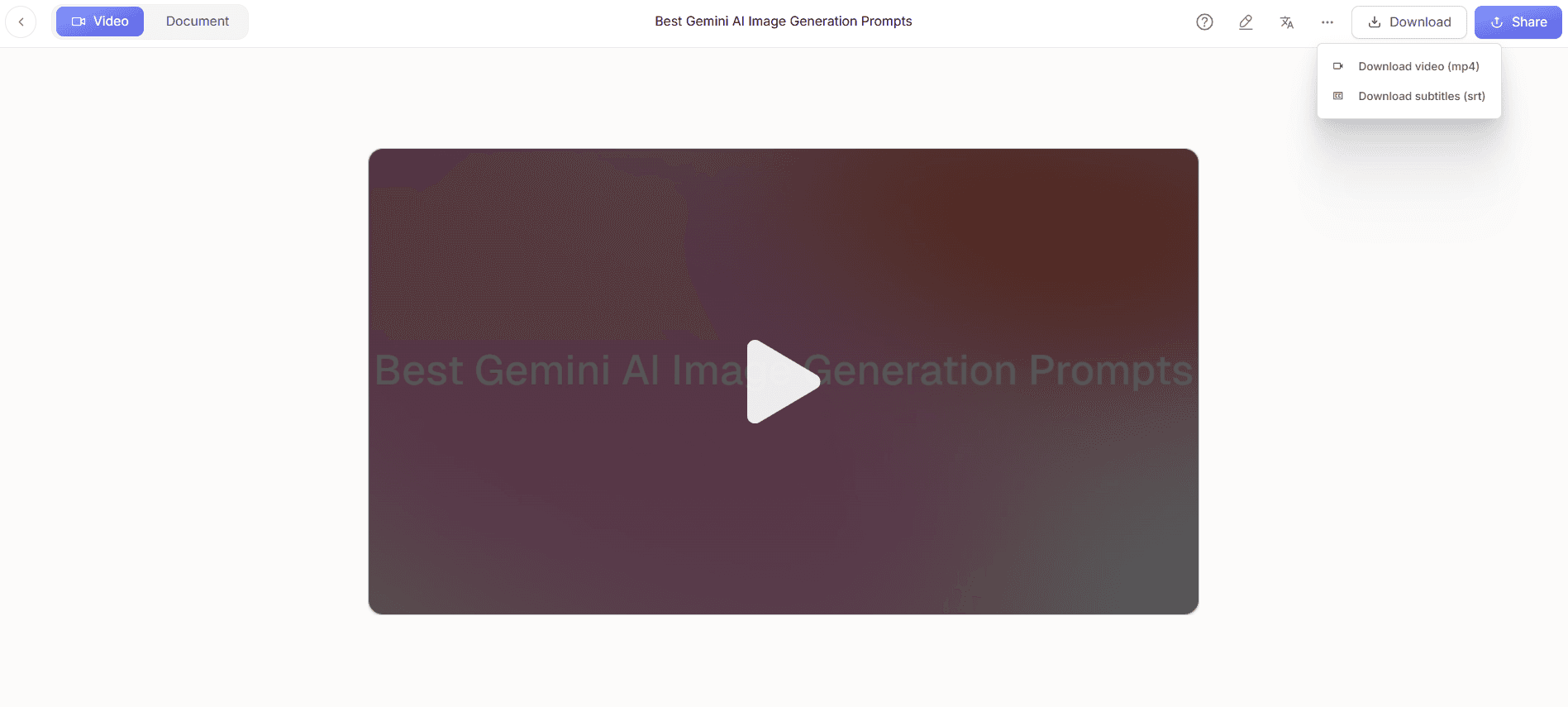
After the video is segmented, export it using Trupeer's multi-format export options. Choose from MP4, HTML, or PDF formats according to your audience's needs. This flexibility ensures that users can access the content in their preferred format, whether they're viewing on a desktop, integrating into a learning management system, or printing a physical guide. Exporting typically takes a few seconds to a minute, depending on the video length. This step is crucial for accommodating diverse user preferences and technical requirements. Teams weighing tools often start with a Loom alternatives comparison before standardizing on a workflow.

Export in Multiple Formats

Step 5: Integrate AI Translation

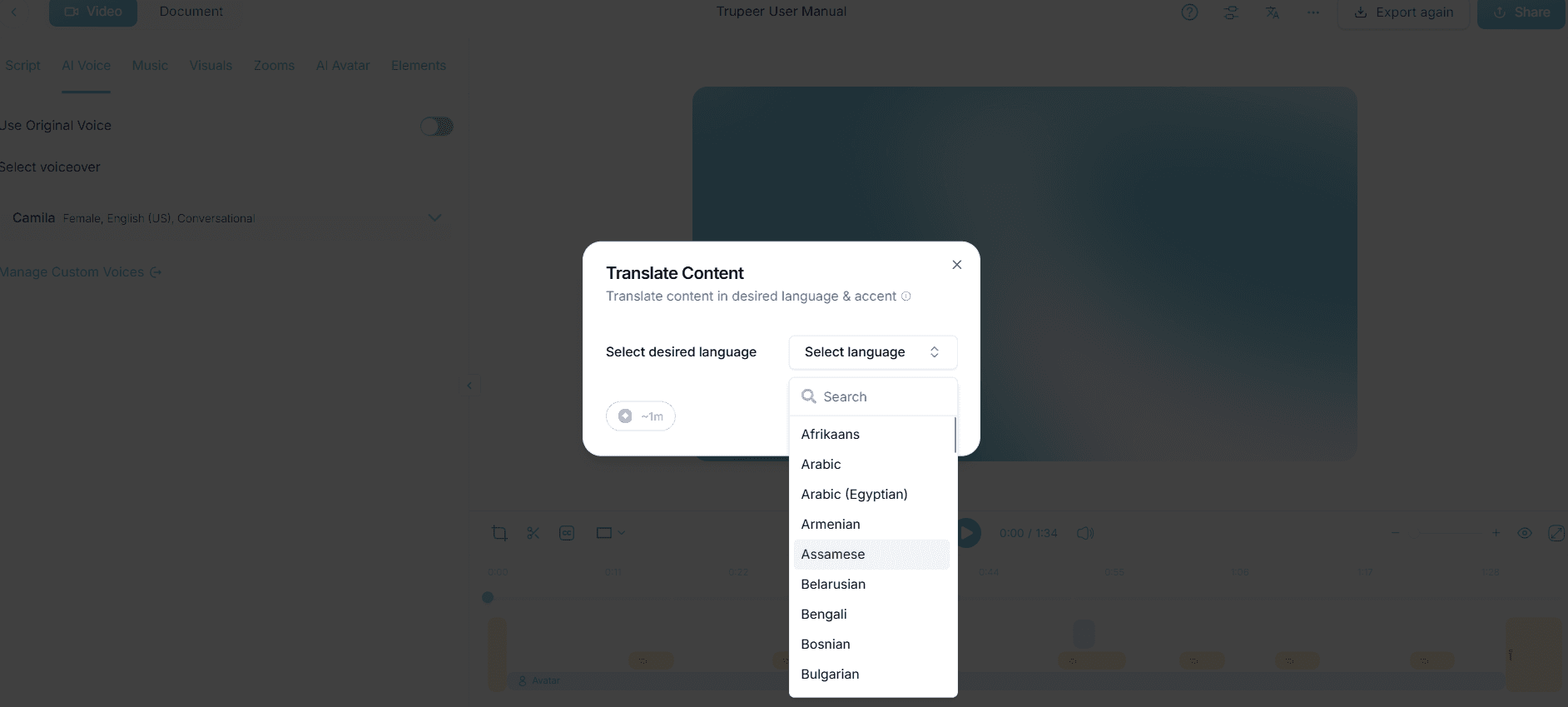
For a global audience, use Trupeer's AI translation and dubbing to localize your video content. This tool translates the video into over 40 languages with accurate lip-sync, ensuring non-English speakers have the same smooth experience. Simply select the desired languages, and Trupeer handles the rest. The translation process is quick, often completing within minutes for standard-length videos. This capability is essential for organizations with international users, eliminating language barriers and enhancing accessibility.

Integrate AI Translation

Step 6: Analyze Viewer Engagement

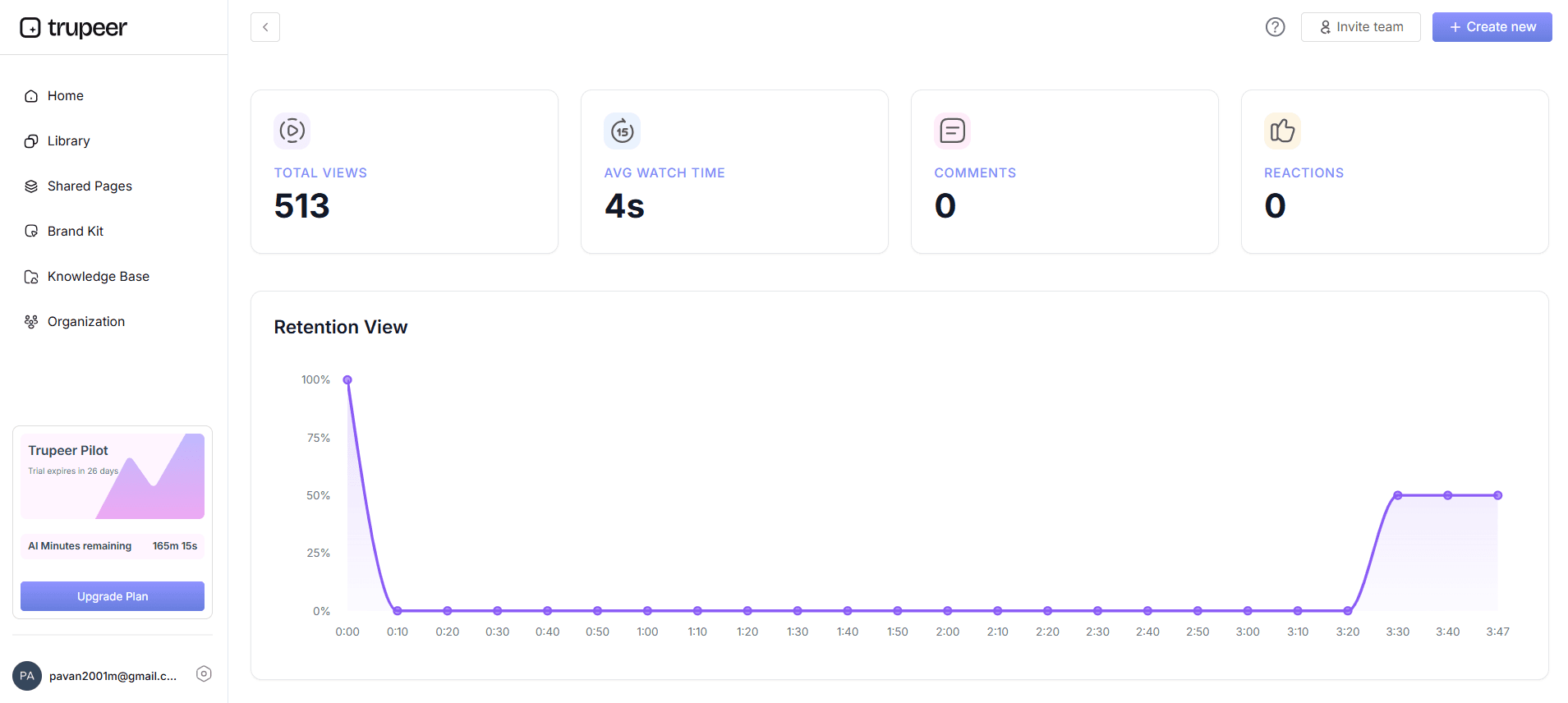
Finally, monitor how users interact with your content using Trupeer's viewer engagement analytics. This feature provides insights into which sections users find most valuable and where they drop off. These analytics help refine your search UX by highlighting areas for improvement. For example, if users frequently rewind a particular section, consider adding more detail or clarity. This data-driven approach to optimization ensures your knowledge base remains effective and user-friendly. Analyzing engagement is an ongoing process, crucial for maintaining high-quality content that meets user needs.

Analyze Viewer Engagement

What tips help you design a knowledge base search UX?

Creating an effective knowledge base search UX involves more than just technical tools. It requires strategic planning and continuous improvement based on user feedback and data analysis. Here are some practical tips to guide you.

  • Keep it simple. Ensure your search bar is prominently placed, easy to find, and intuitive to use. A complex interface can deter users from searching effectively.

  • Use clear labels. Label content clearly with keywords that users are likely to search for. This improves search accuracy and user satisfaction.

  • use analytics. Regularly review search analytics to understand user behavior and adjust content accordingly. Insights from a Scribe alternative comparison can guide improvements.

  • Incorporate AI. Use AI-powered tools to enhance search functionality, such as predictive text or suggested results. These features can lead to faster, more accurate searches.

  • Optimize for mobile. Ensure your knowledge base and search functions are mobile-friendly. A growing number of users access information via mobile devices.

  • Regular updates. Keep your content current with regular updates. Outdated information can lead to user frustration and decreased trust.

  • Test with users. Conduct usability testing with real users to gather feedback and make necessary adjustments. This ensures your search UX meets actual user needs.

Frequently asked questions

How can I improve the search functionality of my knowledge base?

Improving search functionality involves several strategies. Start by using clear and relevant keywords in your content. Optimize the search algorithm to prioritize the most relevant results. Incorporate AI technology to suggest related articles and auto-complete search terms. Regularly analyze search data to identify common queries and refine content accordingly. also, consider user feedback to understand their search challenges and make necessary adjustments for a more intuitive experience.

What is the role of AI in knowledge base search UX?

AI plays a crucial role in enhancing knowledge base search UX by making search processes smarter and more efficient. AI can analyze user queries to provide more relevant results, predict search terms, and offer personalized content recommendations. It also helps in organizing content through automatic tagging and categorization. AI-driven analytics provide insights into user behavior, enabling continuous improvements to search functionalities. This integration leads to a more user-friendly and responsive knowledge base.

Why is user testing important for knowledge base design?

User testing is essential for knowledge base design because it provides direct insights into user experiences and challenges. By observing how real users interact with the search functions, designers can identify usability issues and areas for improvement. User testing helps ensure that the search UX aligns with user expectations and needs. It also provides opportunities to gather feedback on new features or changes, ensuring they enhance rather than hinder the user experience.

Can Trupeer help with internationalization of knowledge base content?

Yes, Trupeer can significantly aid in the internationalization of knowledge base content through its AI translation and dubbing features. These tools allow you to translate video content into over 40 languages, complete with accurate lip-syncing. This capability ensures that your knowledge base is accessible to a global audience, breaking down language barriers. By providing localized content, you enhance user satisfaction and extend your reach to international markets. For more on this, explore Trupeer's AI video translation services.

Does a well-designed search UX reduce customer support load?

Absolutely, a well-designed search UX can significantly reduce customer support load by enabling users to find answers independently. When users can quickly locate the information they need through effective search functionalities, they are less likely to reach out to support for assistance. This decreases the volume of support tickets and allows your team to focus on more complex issues. so, this can lead to faster response times and better customer satisfaction.

動画編集者、翻訳者、脚本家が必要ですか?

Trupeerを無料でお試しください

デモを予約する

動画編集者、翻訳者、脚本家が必要ですか?

Trupeerを無料でお試しください

デモを予約する

動画編集者、翻訳者、脚本家が必要ですか?

Trupeerを無料でお試しください

デモを予約する