4.8/5
Free Employee Onboarding & Offboarding Software
Capture how the work is actually done. New hires get recorded walkthroughs, and leavers document what only they know before their last day, in 65+ languages
Capture Your Processes Free
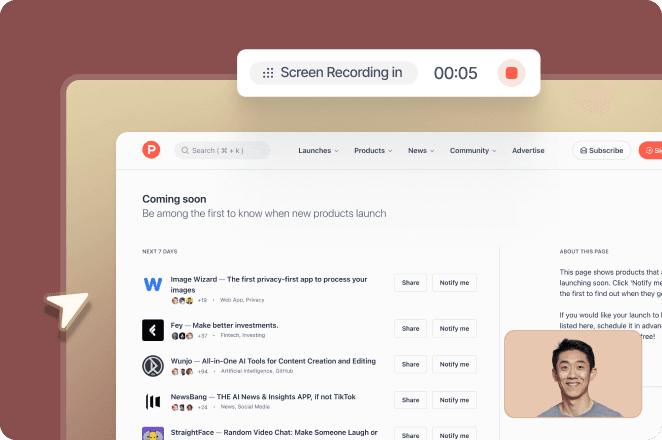
Trupeer handles the knowledge side of employee onboarding and offboarding software. New starters get recorded walkthroughs of the systems and processes they need, and leavers record how their work is actually done before their last day, so the knowledge stays with the team. Everything is generated from a screen recording, in 65+ languages.
What Is Employee Onboarding and Offboarding?
Employee onboarding is everything that happens between accepting an offer and being productive: paperwork, accounts, introductions, and learning how the job is actually done. Employee offboarding is the mirror image when someone leaves: returning equipment, revoking access, final payroll, an exit conversation, and handing over their work. Together, onboarding and offboarding bookend the hire to retire process flow.
Both are usually described as processes, which understates the problem. They are coordination exercises spanning HR, IT, the hiring manager, and often finance, with a hard deadline and consequences for getting it wrong. Onboarding failures cost a new hire weeks of productivity. Offboarding failures cost you either a security exposure or an entire body of undocumented knowledge.
Onboarding vs Offboarding: What Is the Difference?
They are structurally similar and get treated as symmetrical, which is where most offboarding programmes go wrong.
Onboarding is additive and generous with time:
you can spread it over ninety days, and getting it slightly wrong is recoverable because the person is still there to askOffboarding is subtractive and time-boxed:
access must be removed on a specific day, and once someone has gone, anything you failed to capture is gone with them. There is no second attemptOnboarding is rehearsed:
every hire runs the same path, so the process gets better through repetitionOffboarding is improvised:
each departure feels like a one-off, notice periods are short, and the person leaving has limited incentive to document anything
That asymmetry is why companies with polished onboarding often have no real offboarding at all beyond a checklist for disabling accounts.
Why Do Onboarding and Offboarding Matter?
Time to productivity:
how quickly a new hire does useful work unsupervised. Every week saved is a week of salary returning value instead of consuming itEarly attrition:
a meaningful share of leavers decide in the first month. Confusing onboarding is a preventable causeSecurity exposure at exit:
accounts left active after a departure are one of the most common audit findings in any organisationKnowledge retention:
the least measured and most expensive. When someone leaves with the only working understanding of a process, the cost surfaces months later as errors nobody can explainManager load:
unstructured onboarding pushes the burden onto the hiring manager, who absorbs it by not doing their own jobRehire and reputation:
how someone is treated on the way out shapes whether they refer candidates or return later
What Does Onboarding and Offboarding Software Actually Cover?
This category spans three genuinely different layers, and most disappointed purchases come from buying one while expecting another.
The HR system layer:
offer letters, e-signature, document collection, tax and payroll forms, benefits enrolment, and employee records. This is HRIS territory and where tools like BambooHR, Rippling, and Deel operateThe IT provisioning layer:
creating and removing accounts, granting and revoking application access, assigning and recovering devices. Increasingly handled by identity governance and SaaS management platformsThe knowledge layer:
the actual content: how the systems work, how the process runs, what the departing person knows. This is the layer that determines whether a new hire becomes competent or merely enrolled
Trupeer is the third layer, and only the third. It does not assign checklist tasks to HR or IT, collect signed documents, provision or deprovision accounts, or hold employee records. What it does is capture and deliver the knowledge on both ends of the employee lifecycle. Most teams run it alongside an HRIS rather than instead of one, because the HRIS tracks that onboarding happened and this determines whether it worked.
The Offboarding Problem Nobody Solves
Ask most teams about employee offboarding and you get a checklist: laptop back, accounts off, final payslip, exit interview. All necessary, all administrative, and none of it addresses the largest actual loss.
The real risk is that the person leaving is the only one who knows how something works. Not the documented version, the working version: which report has to run before the reconciliation, why that field is always set manually, the client whose invoices need a different approval path, the workaround for the integration that fails every month end. None of that is in your process documentation, because the person who knew it never had a reason to write it down.
Documenting it in a leaver’s final two weeks by writing has never worked. Nobody wants to write documentation on their way out, and prose is the slowest possible way to explain a screen-based process. Recording is different, because it asks them to do the job while narrating rather than to become a technical author for a fortnight.
What to capture, in priority order:
Anything with a deadline:
month end, payroll runs, regulatory submissions. These fail loudly and publicly if mishandledAnything only they do:
the tasks that appear nowhere in a job description and would simply stopThe exceptions and workarounds:
where the real process differs from the documented one. Usually the most valuable recording of the whole exerciseRelationship context:
who to contact for what, and the history behind why a client or vendor is handled a particular waySystem access and configuration knowledge:
not credentials, but which settings matter and why they are set that way
Practically, five short recordings made in a leaver’s last fortnight are worth more than a written handover document nobody finishes. Each becomes a standard operating procedure their successor can follow.
How Does Onboarding and Offboarding Software Work?
Trupeer’s employee onboarding and offboarding software free online follows a streamlined five-step process for capturing and delivering knowledge at both ends of the lifecycle.
Step 1: Record the Work, From Whoever Currently Does It
Click Start Recording and choose a Chrome tab, a window, or the whole screen, allowing microphone access to narrate. For onboarding, the person who does the job records it once. For offboarding, the leaver records the tasks only they perform. Click Stop Sharing when done. Recording takes about as long as the task, which is the reason a departing employee will actually do it.
Step 2: Generate the Guide and the Video
Click Generate AI Content, open Configure Output Options to choose a document, a video, or both, and set the input language. Trupeer writes the steps from the observed actions and produces the transcript, so a fifteen-minute recording becomes a structured written procedure plus a narrated walkthrough without anyone writing it up.
Step 3: Review and Fill the Gaps
Open Edit to correct anything misread, selecting a passage and clicking Keep Changes, or using AI rewrite with your own instructions. Click Refresh Voiceover to regenerate narration and set a voice under AI Voice. This is the moment to review an offboarding recording with the leaver still available, which is the last chance to ask what the recording did not explain.
Step 4: Mark Up the Screens
Use Zoom to set zoom level, position, and speed so dense interface text stays readable, and Add Text to label the exact field or control at each step. Internal systems are usually the least intuitive software anyone uses, so labelling matters more here than for polished customer-facing products.
Step 5: Publish, Translate, and Keep It Current
Publish into a searchable knowledge base where people use Ask AI to ask a question in plain language, or share by link with visibility restricted to named people for anything sensitive. Translate up to five target languages at a time from 65+ supported, export to PDF or Word, and use Version History to compare and restore versions. Content freshness reporting flags anything untouched for over 90 days.
The compounding effect is that each departure leaves the organisation better documented than before, which reverses the usual pattern where every exit makes the remaining team more dependent on individuals.
The Employee Onboarding and Offboarding Process, Step by Step
A workable sequence, with the knowledge work marked out because it is the part usually left to chance.
Onboarding
Before day one:
contracts, accounts, and equipment ordered. Send the role walkthroughs in advance so the first day is not spent watching someone click through screensWeek one:
systems access and the workflows they will use daily, delivered as recordings they can replay rather than a single live session they half rememberWeeks two to four:
the processes specific to their role, and the exceptions. This is where recorded content beats shadowing, because it can be rewatched at the moment of needDay thirty and ninety:
check what they still cannot do unaided. The gaps point at missing documentation, not at the hire
Offboarding
On notice:
the employee offboarding process should start by identifying the tasks only this person performs, before anything else. This list is the entire basis of the handoverFirst week of notice:
record the deadline-bound and sole-owner tasks while there is still time to ask follow-up questionsSecond week:
record exceptions, workarounds, and relationship context, and have the successor watch and question the recordingsFinal days:
access revocation, equipment return, and exit conversation, handled by HR and IT systems rather than hereAfter departure:
review whether the successor can actually run the work. What they cannot do is what the recordings missed
Employee Offboarding Checklist Essentials
Most employee offboarding checklist and employee offboarding template downloads cover administration thoroughly and knowledge barely at all. A usable onboarding offboarding template spans four areas.
Access and security:
application accounts, VPN, shared credentials rotated, email forwarding or delegation, physical access revoked. An it onboarding and offboarding checklist usually drives this and should be owned by IT with a hard dateAssets:
laptop, phone, peripherals, keys, cards, and anything held at home. Easier to track from the day it is issued than reconstructed at exitAdministration and legal:
final payroll, unused leave, benefits termination, references policy, and any restrictive covenants confirmedKnowledge and handover:
the sole-owner task list, recordings of each, successor named per task, and confirmation the successor has actually run the work. This is the section most templates omit and the only one with a delayed cost
On the AI employee offboarding checklist generators now appearing: a generated checklist is a reasonable starting structure, but the sole-owner task list has to come from a conversation with the person and their manager, because no template knows what only they do.
Key Features to Look for in Offboarding Software
Comparisons of employee offboarding software and the best offboarding software mostly weigh checklist automation. Worth adding these:
Speed of knowledge capture:
notice periods are two to four weeks. If documenting one process takes half a day, most of the knowledge will not get captured. This is the constraint that decides outcomesCapture by doing, not writing:
a leaver will narrate a task while performing it. They will not write a procedure. Any tool requiring authoring effort in a notice period will go unusedAccess revocation coverage:
whether it integrates with your identity provider and application estate, or just reminds someone to do it manuallyAsset tracking from issue to return:
reconstructing what someone was given at exit is unreliableSuccessor assignment per task:
a handover with no named owner per task is a list, not a handoverRestricted visibility:
offboarding content often covers sensitive processes and should not sit in an open librarySearchability afterwards:
captured knowledge nobody can find six months later has not been retained. It has been stored
Choosing Employee Onboarding and Offboarding Software
Shortlists for the best employee onboarding software and onboarding and offboarding software often mix HRIS, IT provisioning, and content tools. Decide which layer you are missing, then ask:
Which layer is actually failing?:
if paperwork is fine but new hires take three months to become useful, buying another HRIS will not help. That is a knowledge problemDoes it integrate with the HRIS we already have?:
few organisations replace their HR system, so the realistic question is what sits alongside itWho creates the content, and does it need training?:
the people who know the processes are doing the processes. If content creation needs a specialist, coverage stays thinWhat happens to knowledge when someone leaves?:
ask any vendor this directly. Most onboarding tools have no answer, because they were built for the arrival half onlyCan content be restricted?:
internal procedures and offboarding handovers need tighter visibility than customer-facing materialDoes free mean usable?:
free employee onboarding software plans sometimes cap users or block export, which matters when the content is your only record of a departed employee's work
Who Uses Onboarding and Offboarding Software?
HR and people teams:
owning the lifecycle end to end and increasingly held accountable for time to productivity rather than just process completionIT and internal support:
provisioning and revoking access, and documenting the internal systems every new starter has to learnHiring managers:
who absorb the cost of poor onboarding personally, and benefit most from a reusable onboarding guide rather than repeating themselves each hireOperations teams:
where sole-owner processes are most common and a departure does the most damage, usually mitigated with SOP managementFinance and shared services:
high turnover combined with deadline-bound work makes knowledge capture non-optionalSmall companies without HR:
where the founder runs onboarding and cannot afford to lose process knowledge to a single resignation
Key Features of Trupeer for Onboarding and Offboarding
Browser-based screen recording:
capture any internal system or workflow with nothing installed, which matters when a leaver has two weeksAI-generated procedure and transcript:
a recording becomes structured written steps plus a narrated video, with every line editableWritten guide and video from one capture:
the step-by-step guide and the walkthrough come from the same recording, so a successor can read or watchZoom and text annotation:
label the exact field in the internal systems that are rarely intuitiveAI voiceover with voice and accent selection:
consistent narration across an onboarding library without re-recording for toneSearchable knowledge base with Ask AI:
new starters ask a question in plain language instead of interrupting a colleagueRestricted visibility controls:
limit sensitive handover content to named people while keeping general onboarding material open to the teamVersion history with restore:
browse timestamped versions and roll back, so a process updated after a handover keeps its historyContent freshness reporting:
anything untouched for more than 90 days is flagged stale, which catches onboarding material that quietly went out of dateTranslation into 65+ languages:
up to five target languages at a time, for distributed and multilingual teamsPDF and Word export:
produce a handover pack or a controlled document for an HR fileWorkspace Admin and Editor roles:
separate rights for managing people and creating content, assigned from the organisation dashboard
Explore Related Tools
Why Use Trupeer for Onboarding & Offboarding?
Leavers Record Instead of Writing
Nobody writes documentation in their notice period. Narrating a task while performing it takes about as long as the task, which is the difference between knowledge being captured and knowledge walking out of the building.
New Hires Stop Asking the Same Questions
Recorded walkthroughs of the systems and processes a role depends on can be replayed at the moment of need, which shortens time to productivity and takes the repetition off the hiring manager.
Each Departure Leaves You Better Documented
When offboarding includes recording sole-owner tasks, every exit adds to your process library instead of subtracting from it, which reverses the usual pattern of growing dependence on individuals.
How to Capture Onboarding & Offboarding Knowledge
Langkah 1
Record the Work
Langkah 2
Generate Guide & Video
Langkah 3
Publish to a Searchable Library
Pertanyaan yang Sering Diajukan
1. What is the difference between onboarding and offboarding?
Onboarding covers everything between accepting an offer and being productive, and it is additive, rehearsed, and forgiving because the person is still there to ask. Offboarding is subtractive and time-boxed: access must be removed on a date, and anything not captured before someone leaves is gone permanently. That asymmetry is why polished onboarding often sits alongside almost no real offboarding.
2. Is Trupeer an HRIS or onboarding checklist tool?
No. Trupeer does not assign checklist tasks, collect signed documents, handle payroll or benefits, provision or revoke accounts, or store employee records. It covers the knowledge layer: recording how systems and processes actually work for new starters, and capturing what a departing employee knows. Most teams run it alongside an HRIS, which tracks that onboarding happened while this determines whether it worked.
3. What should an employee offboarding checklist include?
Four areas. Access and security, covering accounts, VPN, shared credentials, and physical access. Assets, meaning devices and anything held at home. Administration, including final payroll, leave, and benefits. And knowledge handover: the list of tasks only that person performs, a recording of each, a named successor per task, and confirmation the successor has run the work. Most templates omit the fourth.
4. How do you capture knowledge before an employee leaves?
Start by identifying the tasks only they perform, which is the whole basis of the handover. Then have them record each one while narrating, prioritising deadline-bound work and sole-owner tasks first, then exceptions and workarounds. Recording works where writing fails because it takes about as long as the task itself. Have the successor watch and question the recordings while the leaver is still available.
5. Why does offboarding knowledge loss matter more than the checklist?
Checklist failures are visible and fixable, such as an account left active. Knowledge loss surfaces months later as errors nobody can explain, because the person who understood why a field was set manually or which report must run first has gone. That understanding is rarely in your documentation, since the person who held it never had a reason to write it down.
Alat Lainnya