Trupeer Blog
Implementing enterprise software like SAP, Workday, or ServiceNow isn't just about deploying technology. It's about transforming processes and aligning them with business goals. Imagine a global company with operations in 30 countries, each with its own set of compliance requirements and business processes. Without standardized procedures, chaos ensues. Employees might follow different protocols, leading to inefficiencies and compliance risks. A standardized SOP template becomes crucial, ensuring consistency and facilitating smoother transitions. According to a recent study,
companies that implement standardized SOPs reduce errors by up to 35%.
This statistic is a testament to the importance of having a structured approach in place. Companies can no longer afford the luxury of time-consuming, inconsistent processes. They need efficient, reliable, and scalable solutions. This is precisely where SOP templates tailored for specific software implementations come into play. These templates provide a solid foundation for companies to build upon, addressing the unique requirements of SAP, Workday, and ServiceNow rollouts. If you're looking to improve efficiency and reduce operational overhead, understanding how to use these templates is essential. For more insights on this, you can refer to the user guide software resources.
Why do SOP templates for enterprise software implementations matter?
Enterprise software implementations are complex endeavors that affect multiple layers of an organization. A well-crafted SOP template is essential for managing these complexities. For instance, SAP implementations require meticulous coordination among IT, finance, and operations teams. Each department must align its processes to ensure the software functions as intended. Without standardized templates, departments might operate in silos, leading to miscommunication and process disruptions. This is particularly true for large enterprises where different teams might have conflicting priorities. By providing a standardized framework, SOP templates help align these priorities, ensuring all stakeholders are on the same page.
Also, SOP templates for software like Workday or ServiceNow are crucial for regulatory compliance. These platforms often handle sensitive employee data, requiring strict adherence to data protection regulations. SOPs ensure that all users follow the same procedures for data handling, reducing the risk of breaches and non-compliance. In the context of operations use case, templates provide a clear, step-by-step guide for every process, reducing the likelihood of errors. They also serve as a valuable training tool for new employees, speeding up the onboarding process and ensuring they understand the software's intricacies from day one. In essence, SOP templates are not just about documentation; they're about creating a culture of consistency and accountability across the organization.
What are the benefits of using SOP templates for enterprise software implementations?
Standardized SOP templates provide a range of benefits that simplify enterprise software implementations.
Consistency across departments. SOP templates ensure every department follows the same procedures, reducing misunderstandings and errors, especially during high-stakes implementations like SAP.
Faster onboarding. With clear, step-by-step guides, new employees can quickly get up to speed, minimizing downtime and enhancing productivity. Integrating an onboarding software solution can further accelerate this process.
Improved compliance. SOPs provide a standardized approach to data handling and regulatory processes, ensuring compliance with industry standards and legal requirements.
Enhanced training efficiency. SOP templates serve as a foundation for training programs, allowing trainers to focus on higher-level instruction rather than procedural basics. A video generation platform can complement these templates by providing visual aids.
Reduced error rates. By providing clear, detailed instructions, SOP templates minimize the chances of errors during critical processes, saving time and resources.
Scalability. SOP templates offer a replicable framework that can easily be scaled across different locations and departments, facilitating smooth expansion and growth.
Which Trupeer features help you create SOP templates for enterprise software implementations?
Trupeer offers several features that simplify the creation and management of SOP templates, making enterprise software implementations more efficient and effective.
Automatic SOP generation from any recording
Trupeer's automatic SOP generation capability is a big shift for teams that need to document processes rapidly. By capturing every step of a software workflow through AI screen recording, Trupeer generates an edit-ready SOP document. This document can be easily exported in multiple formats, such as MP4, HTML, PDF, and SCORM, catering to diverse needs. This feature is particularly valuable for complex implementations like SAP, where each step needs precise documentation. The auto-generated SOPs ensure that all team members have access to the same, accurate information, simplifying the implementation process. For more on this, consider how the AI documentation platform supports these capabilities.
AI screen recording with auto-zoom and click detection
Trupeer's AI screen recording feature captures every detail of your software workflows. The auto-zoom and click detection functionalities highlight essential actions, making it easier for users to follow along. This is particularly useful for documenting intricate processes in Workday, where missing a step can lead to significant issues. The recordings serve as a visual SOP, providing a clear reference for team members. This feature ensures that the recorded content is both engaging and informative, reducing the time spent on creating separate instructional materials. Users benefit from having a comprehensive visual guide that complements the written SOPs, enhancing understanding and retention.
AI-searchable knowledge base
Trupeer's AI-searchable knowledge base is an invaluable resource for enterprise software implementations. It indexes every recording with timestamp-level deep links, allowing users to find specific information quickly. This feature supports the dynamic nature of ServiceNow implementations, where users may need to reference particular configurations or settings. The searchable knowledge base ensures that all SOPs and documentation are easily accessible, reducing the time spent searching for information. Teams can quickly access the relevant SOPs, facilitating efficient problem-solving and decision-making processes.
AI translation into 40+ languages with lip-sync
For global enterprises, language barriers can be a significant challenge. Trupeer's AI translation capability offers translations into over 40 languages, complete with lip-sync for video content. This feature ensures that SOPs are accessible to all team members, regardless of their location or language proficiency. It's particularly beneficial for multinational SAP implementations, where stakeholders in different regions need to access the same information. By providing localized SOPs, Trupeer helps companies maintain consistency and compliance across borders. This capability ensures that language is no longer a barrier to effective software implementation.
Enterprise documentation software tool
Trupeer's enterprise documentation software tool provides a solid platform for managing all your SOPs and related documentation. It allows for smooth updates and revisions, ensuring that your SOPs remain current as your software evolves. This tool is particularly useful for complex systems like Workday and ServiceNow, where regular updates and changes are the norm. By centralizing all documentation in one platform, Trupeer facilitates easy access and collaboration among team members. This ensures that everyone is working with the latest information, reducing the risk of outdated or incorrect procedures being followed.
How do you create SOP templates for enterprise software implementations step by step with Trupeer?
Step 1: Capture the Workflow
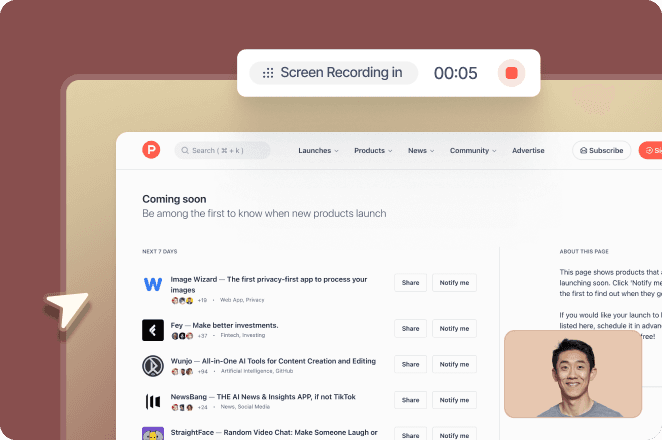
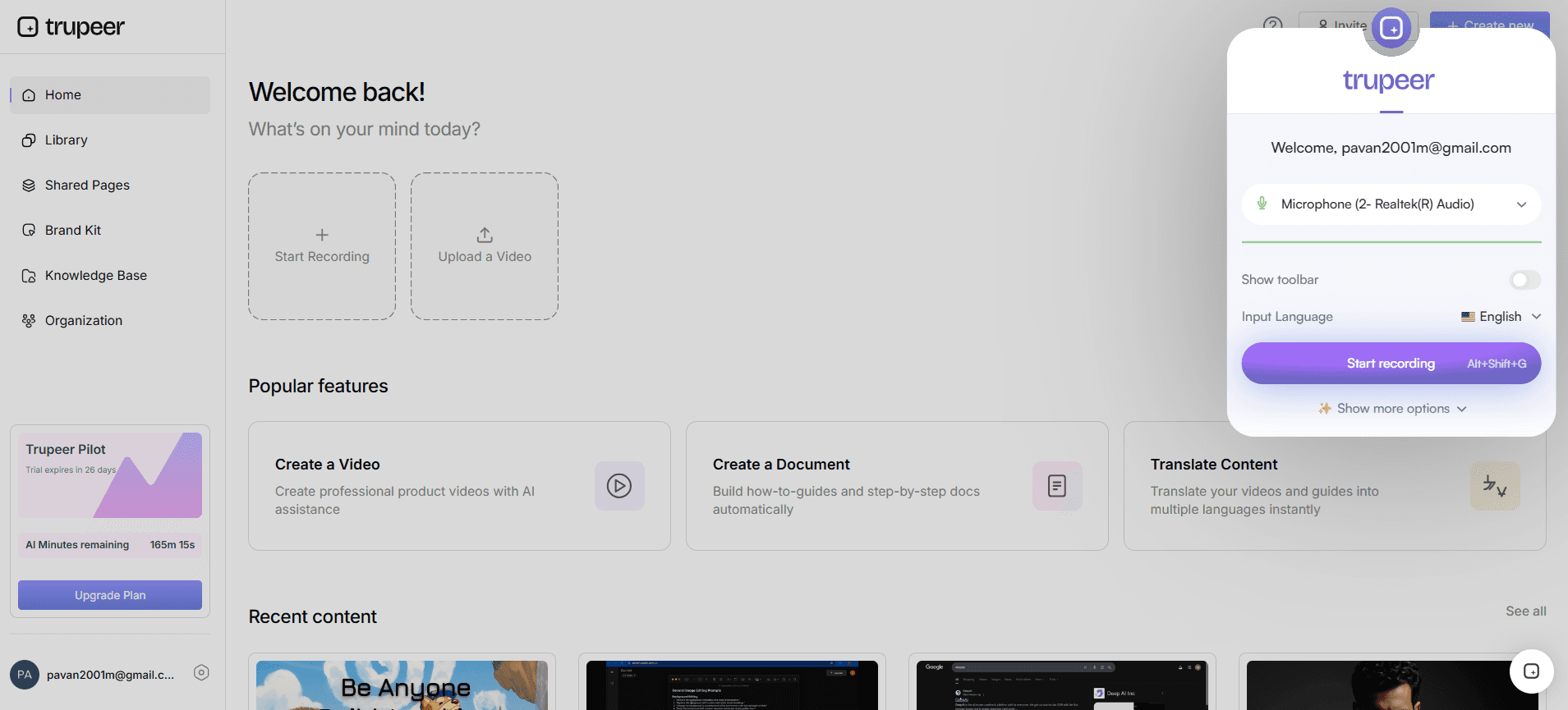
Begin by launching Trupeer's browser-based recorder to capture the workflow that needs documentation. This tool requires no installation, making it easy to use on any device. Start recording your screen, and Trupeer's AI will automatically detect clicks and zoom in on key actions. This creates a detailed visual record of your process. This step usually takes as long as the process itself, whether it's a quick task or a more complex operation. If you're documenting a multi-step workflow in SAP, for example, ensure each step is clear and captured accurately to avoid confusion later.
Step 2: Generate the SOP
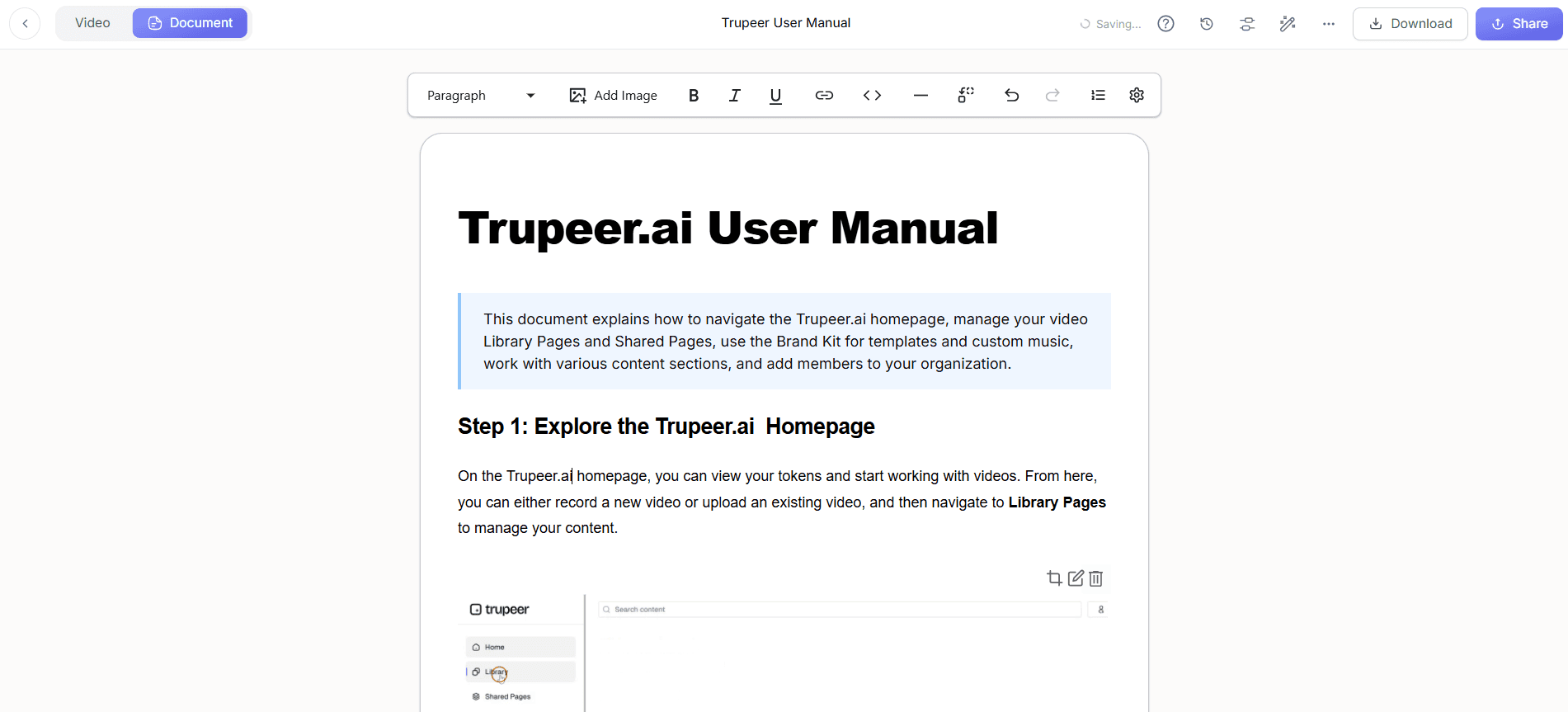
Once your recording is complete, use Trupeer's automatic SOP generation feature to convert the captured workflow into a structured document. This feature creates an editable SOP, which you can export in formats like HTML or PDF. The conversion happens quickly, often in under a minute. This capability is invaluable for documenting comprehensive software like Workday, where SOPs need to address both common and exceptional scenarios. If any part of the workflow needs adjustment, you can easily edit the generated SOP before finalizing it. Teams weighing tools often start with a Loom alternatives comparison before standardizing on a workflow.
Step 3: Enhance the Documentation
Trupeer offers AI voiceover options to add narrative explanations to your SOPs. Choose from 65+ natural voices and adjust the pace and tone to suit your audience. This step enhances the clarity of your documentation, particularly useful for complex ServiceNow implementations. Adding a voiceover takes just a few minutes and can make the SOP more engaging and accessible, especially for auditory learners or when demonstrating intricate procedures. Ensure the voiceover aligns with the recorded actions to maintain consistency.
Step 4: Localize the SOP
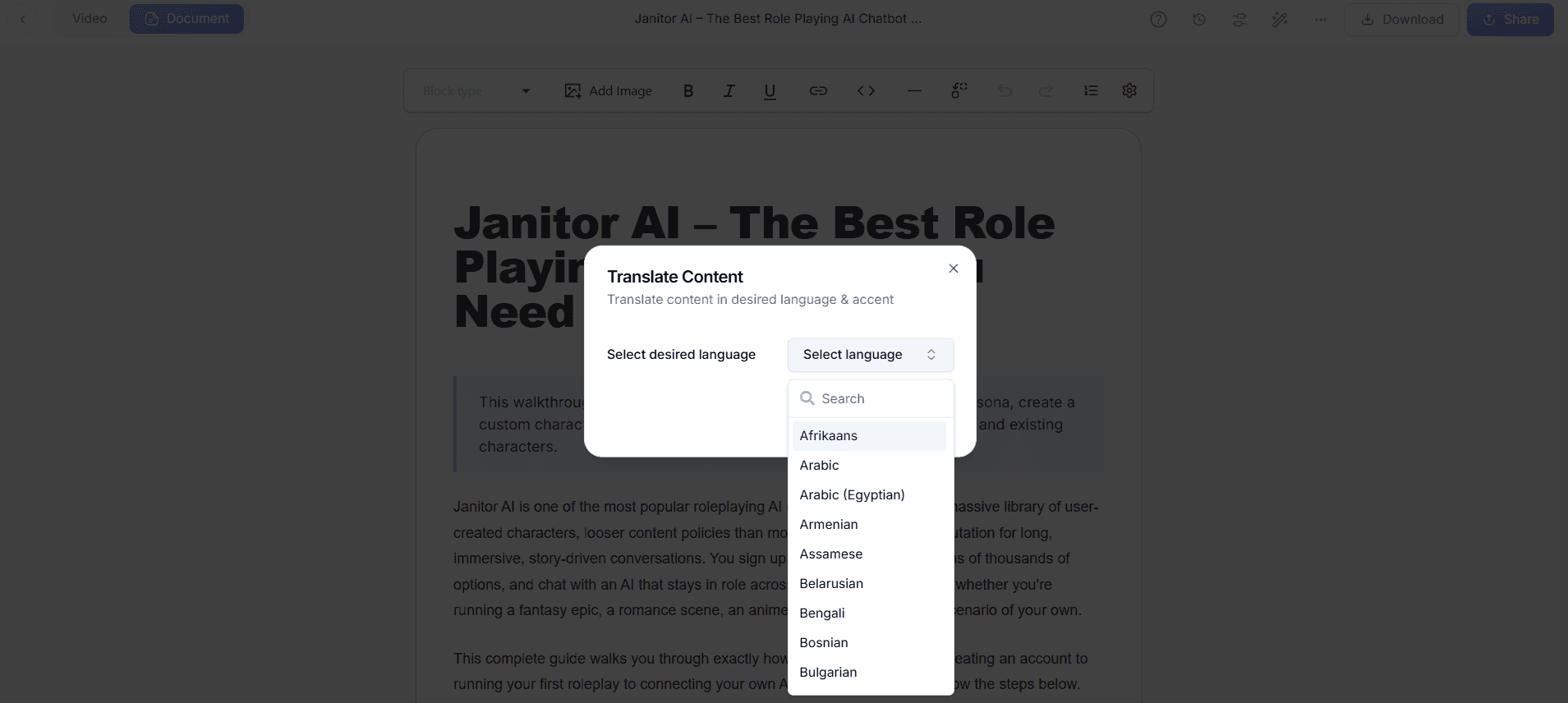
For multinational companies, localizing SOPs is crucial. Use Trupeer's AI translation feature to translate your SOP into over 40 languages, complete with lip-sync for any embedded video content. This process is automated and can be completed in minutes, ensuring that all your global teams have access to the same information. Localizing your SOPs ensures consistency across regions and helps maintain compliance with local regulations, particularly in diverse SAP environments.
Step 5: Host and Distribute
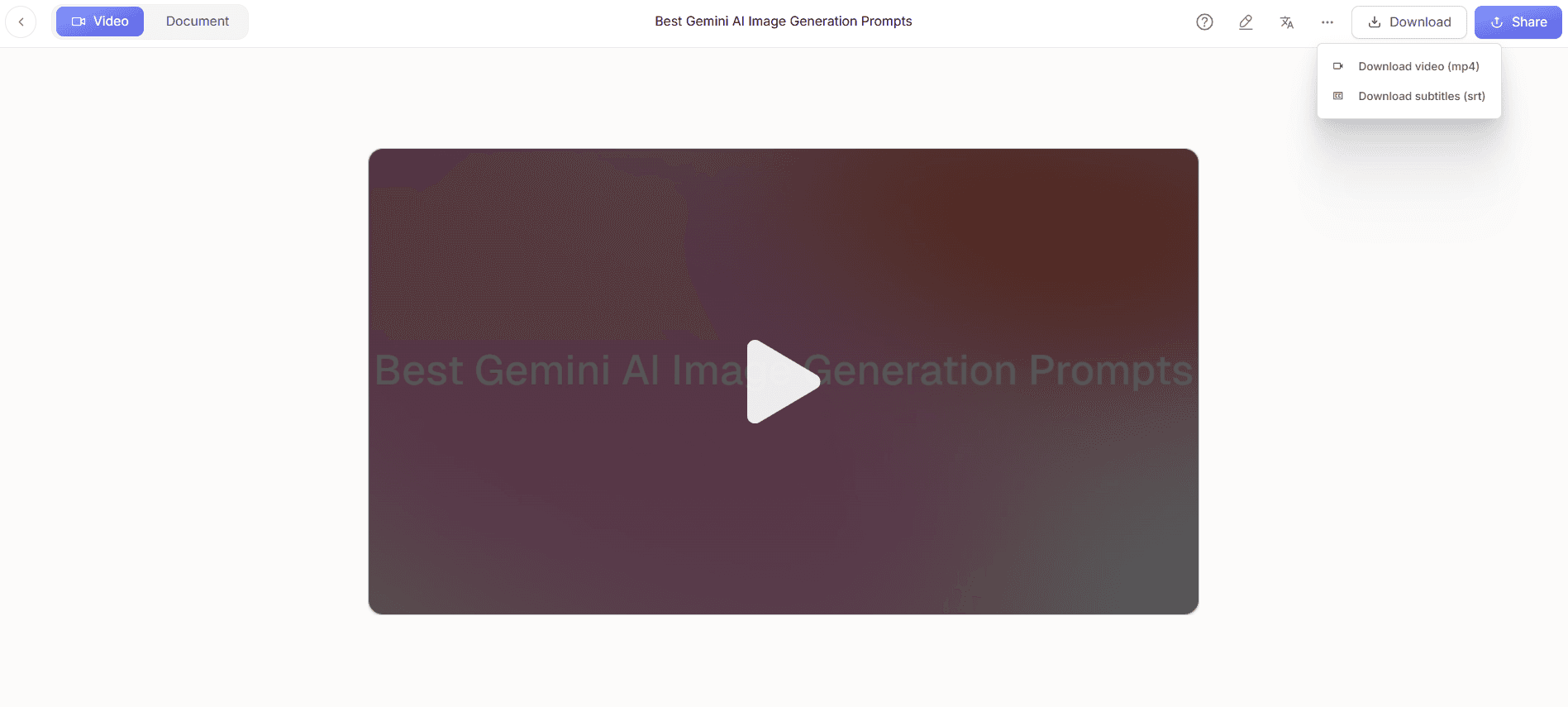
Once your SOP is finalized, use Trupeer's custom-domain hosting and SSO features to distribute it. This creates a centralized, secure location for all your documentation, accessible to authorized users only. Hosting your SOPs on a custom domain ensures they are always up to date, as any amendments will automatically reflect in the hosted version. This step is crucial for maintaining a single source of truth, especially for companies scaling their Workday implementations across multiple departments or locations.
Step 6: Monitor and Update
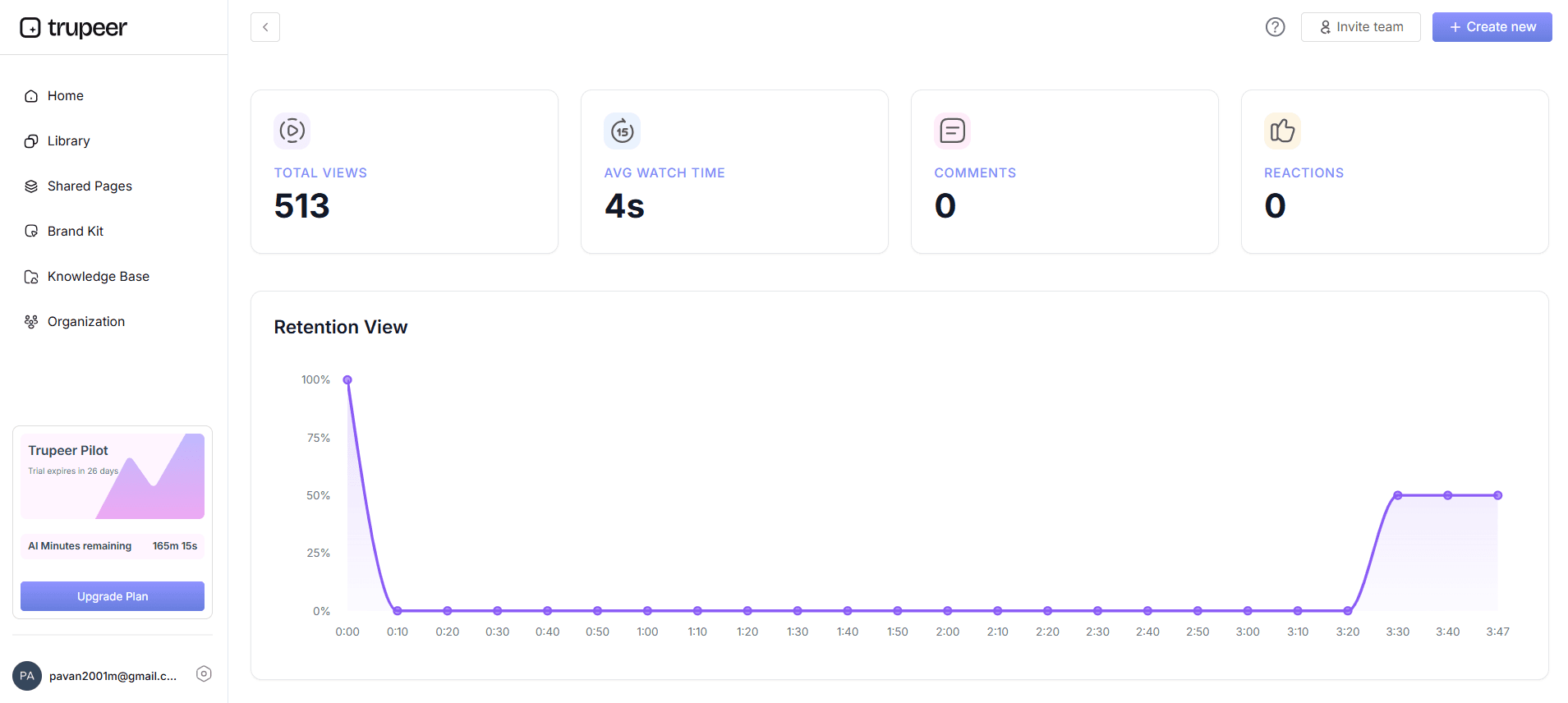
After distribution, use Trupeer's viewer engagement analytics to track how your SOPs are accessed and used. This feature provides insights into which parts of the SOP are most viewed, helping you identify areas that may need further clarification. Regular updates are essential in dynamic environments like ServiceNow, where new features and processes are frequently introduced. Setting a routine schedule for reviewing and updating your SOPs ensures they remain relevant and useful, reducing the need for extensive retraining.
What tips help you create SOP templates for enterprise software implementations?
Creating effective SOP templates requires not just the right tools but also strategic insights. Here are some tips to enhance your SOP creation process.
Be concise. Keep instructions clear and to the point to maintain engagement and reduce the chance of errors.
Use visuals. Incorporate screenshots or videos from Trupeer's AI screen recording to make complex steps easier to understand.
Engage stakeholders. Involve key personnel from departments like IT and operations to ensure the SOP meets all needs.
Test your SOPs. Before full deployment, run a pilot test with a small group to identify any issues or areas for improvement.
Continual feedback. Encourage users to provide feedback on the SOPs to facilitate ongoing improvements.
Standardize formats. Use a consistent template style across all SOPs to simplify the reading experience and improve usability.
Compare tools. Look at Scribe alternative comparison options to ensure you have the best fit for your needs.
Trupeer also ships a free sop software that handles this step without extra setup.
Frequently asked questions
How do I ensure my SOPs remain up to date with Trupeer?
Trupeer offers auto-updating documentation tied to the underlying recording, ensuring your SOPs are always current. This feature automatically reflects any updates made to the recorded workflow in the SOP, eliminating the need for manual revisions. It’s particularly beneficial for software like ServiceNow, which frequently updates its features. Regularly reviewing viewer engagement analytics can also highlight parts of the SOP that may require clarification or updates, ensuring the documentation remains relevant and effective.
What formats can I export my Trupeer-generated SOPs in?
Trupeer allows you to export your SOPs in multiple formats, including MP4, HTML, PDF, and SCORM. This flexibility ensures compatibility with various platforms and user preferences. HTML is ideal for web-based platforms, while PDF is perfect for offline access and distribution. For learning management systems, SCORM compatibility ensures smooth integration. This variety in export options ensures your SOPs can meet different organizational needs, from internal training to external compliance audits.
Why is localization important for SOPs in enterprise software?
Localization ensures that all team members, regardless of their location or language, can access and understand the SOPs. This is crucial for multinational enterprises using software like SAP, where consistent processes are vital across different regions. Trupeer's AI translation capability supports localization by translating SOPs into over 40 languages, complete with lip-sync for video content. This feature helps maintain global consistency, enhances compliance with local regulations, and builds better team collaboration across borders.
Can Trupeer handle SOPs for different software like SAP and Workday simultaneously?
Yes, Trupeer's versatile platform can handle SOPs for various software, including SAP and Workday, simultaneously. Its automatic SOP generation feature is adaptable to different workflows, ensuring that each software's unique processes are accurately documented. Trupeer's multi-format export and AI voiceover capabilities further support this by providing tailored documentation that meets the specific requirements of each software. This flexibility allows companies to simplify their SOP management across multiple platforms, enhancing efficiency and consistency.
Does Trupeer support video localization for SOPs?
Yes, Trupeer supports video localization, which is crucial for making SOPs accessible to a global audience. Its AI video translation feature allows for translations into over 40 languages, ensuring that instructional content is understandable for all users. The lip-sync capability ensures that translated videos appear natural, maintaining the integrity of the original content. This feature is particularly beneficial for large organizations with diverse teams, ensuring that everyone can follow the same procedures regardless of language barriers.