Trupeer Blog
Summarise

When your organization launches a new software platform, the initial post-go-live phase can be chaotic. Team members flood support channels with hypercare tickets as they encounter issues and uncertainties. While this is a common scenario, it doesn't have to be overwhelming. Instead of relying solely on traditional support methods, consider implementing a post-go-live video support strategy. This approach can reduce ticket volumes significantly, allowing your support team to focus on complex issues rather than repetitive queries. A well-executed video strategy helps users find answers independently, building their confidence and proficiency faster.
In post-go-live support, one key metric is the volume of hypercare tickets. A high number indicates that users struggle to find solutions on their own, which can lead to frustration and delays in adoption. By using video support, you enable users to solve common issues quickly and independently.
For example, companies implementing video support have reported a 30% reduction in hypercare tickets within the first month.
This strategy is especially relevant for SaaS companies, where users often need guidance handling new software. Video content can provide step-by-step instructions, allowing users to visualize processes and solutions. If you're looking to enhance your support strategy and reduce ticket volumes, it's time to consider integrating video support into your post-go-live plan. By doing so, you'll not only decrease the burden on your support team but also build a more self-sufficient user base. To get started, explore Trupeer's AI video editing capabilities to create engaging and informative support videos.
Why does a post-go-live video support strategy matter?
After a software launch, the post-go-live phase is critical for ensuring successful adoption and minimizing disruptions. During this period, users often face challenges and require immediate assistance to continue their work effectively. Without a well-structured support strategy, the influx of hypercare tickets can overwhelm your support team, leading to delayed responses and unresolved issues. This not only impacts user experience but can also hinder the overall success of the software implementation.
A post-go-live video support strategy addresses these challenges by offering users an accessible and efficient way to find solutions. Unlike traditional documentation, videos provide visual and auditory guidance, making it easier for users to understand complex processes. This reduces the reliance on live support and allows users to resolve issues at their own pace. With a substantial decrease in hypercare tickets, support teams can focus on more complex problems, improving response times and resolution rates.
Training and support teams play a crucial role in this strategy. By creating targeted video content, they can address common user issues proactively. This not only lightens the support load but also enables users to become more confident and self-sufficient. For instance, a company that adopts a training videos use case approach often sees quicker user adoption and reduced support costs. Ultimately, a video support strategy enhances user satisfaction and drives successful software adoption.
What are the benefits of post go-live video support?
Implementing a post-go-live video support strategy provides numerous benefits for your organization and users.
Reduced Ticket Volume. By providing visual guidance, users can independently resolve common issues, leading to a 30% reduction in hypercare tickets.
Improved User Confidence. Videos offer step-by-step instructions, helping users feel more comfortable handling new software. This boosts user confidence and satisfaction.
Enhanced Learning Experience. A video prospecting approach facilitates better learning outcomes, as users can visualize processes and revisit content as needed.
Scalable Support Solution. Unlike live support, videos can be accessed by unlimited users simultaneously, offering a scalable solution that grows with your user base.
Consistent Messaging. A single AI video platform ensures all users receive the same information, reducing the risk of miscommunication.
Time Efficiency. Users can find solutions quickly, reducing downtime and allowing them to focus on their core tasks, ultimately boosting productivity.
Which Trupeer features help you reduce hypercare tickets with video support?
Trupeer offers a suite of features tailored to enhance your post-go-live video support strategy, helping you reduce hypercare tickets effectively.
AI screen recording with auto-zoom and click detection
Trupeer's AI screen recording tool automates the capture of on-screen activities, providing a clear and focused view of processes. The auto-zoom feature highlights important actions, ensuring that users don't miss critical steps. This capability is invaluable for creating instructional videos that guide users through complex software features. By highlighting clicks and focusing on relevant areas, the videos become more engaging and informative, reducing the likelihood of user errors and subsequent support requests.
Silent screen recording with automatic AI narration
Sometimes, users need quick guidance without the need for extensive audio explanations. Trupeer's silent screen recording with automatic AI narration addresses this by providing concise, narrated videos. This feature is perfect for creating short, topic-specific videos that answer common user questions. The AI-generated narration ensures consistency in messaging while allowing users to follow along visually. By offering clear and concise video support, you can significantly reduce the volume of hypercare tickets related to basic queries.
Automatic SOP generation from any recording
Creating standard operating procedures (SOPs) can be time-consuming. Trupeer simplifies this process with its automatic SOP generation capability. By converting recordings into editable SOPs, you can quickly produce comprehensive guides for users. These SOPs are tied to the underlying recordings, ensuring accuracy and relevance. This feature not only saves time but also enables you to maintain up-to-date documentation that users can refer to, reducing the need for live support.
AI-searchable knowledge base with timestamp deep-links
Trupeer's AI-searchable knowledge base indexes every video with timestamp-level deep links, making it easy for users to find the exact information they need. Users can search for specific topics and jump directly to the relevant section of a video. This feature enhances user self-service capabilities, allowing them to resolve issues independently. By reducing the time spent searching for answers, users experience fewer frustrations, and the support team sees a decline in repetitive ticket submissions.
Viewer engagement analytics, drop-off, and heatmaps
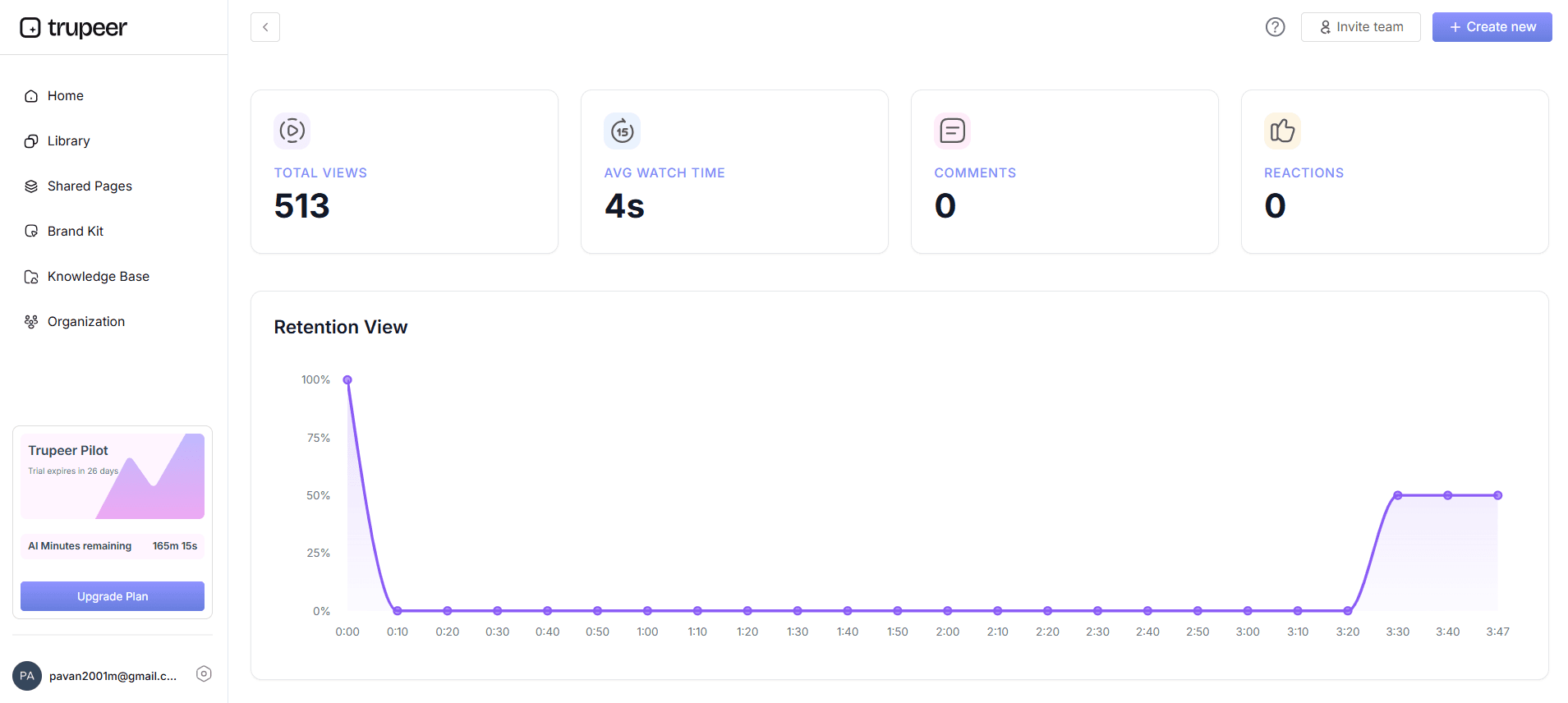
Understanding how users interact with your video content is crucial for optimizing your support strategy. Trupeer provides detailed viewer engagement analytics, highlighting where users drop off or spend the most time. These insights help you identify areas where users may struggle and adjust your content accordingly. By addressing these pain points, you can create more effective support videos, further reducing the need for hypercare tickets. This data-driven approach ensures that your video content continuously improves, meeting user needs more effectively.
How do you reduce hypercare tickets step by step with Trupeer?
Step 1: Capture the Process with AI Screen Recording
Begin by using Trupeer's AI screen recording with auto-zoom and click detection. Open the software application that users frequently have questions about. With the recording feature, navigate through the application, demonstrating key functions and troubleshooting common issues. Trupeer automatically zooms into areas of interest and highlights clicks, ensuring viewers focus on crucial steps. This recording can last as long as necessary to cover all pertinent information. The recording is then saved to your Trupeer library, ready for editing and distribution. This step typically takes around 15-20 minutes, depending on the complexity of the content you need to capture.
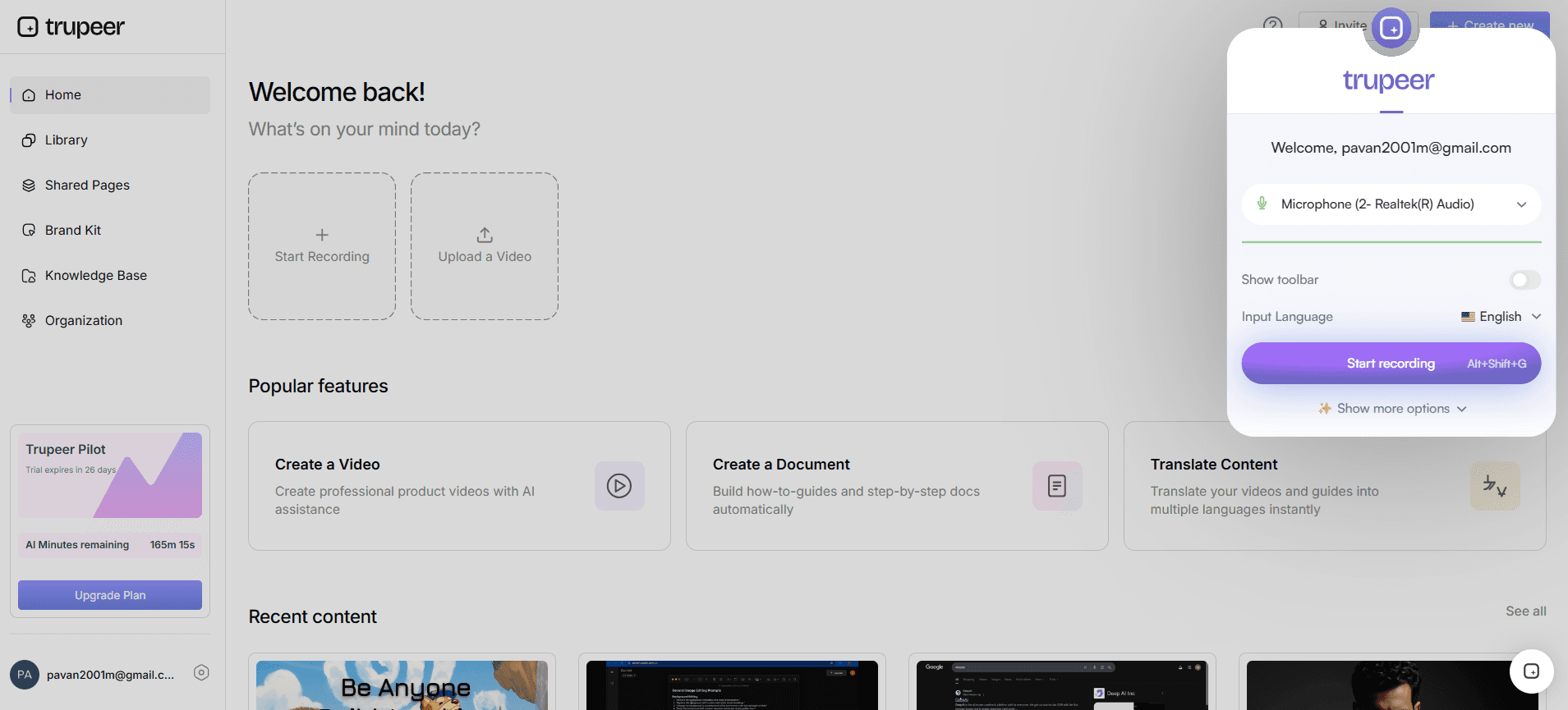
Step 2: Edit with Automatic AI Narration
Once you have the raw footage, Trupeer's silent screen recording with automatic AI narration becomes invaluable. This feature allows you to add a consistent voiceover to your captured video without needing to record audio separately. Choose from over 65+ natural voices, adjusting the pace and tone as needed to match your brand’s style. The AI-generated narration will ensure that the instructions are clear and professional. Editing typically takes another 10-15 minutes, as the AI handles most of the heavy lifting, and you simply review and tweak the output as necessary.
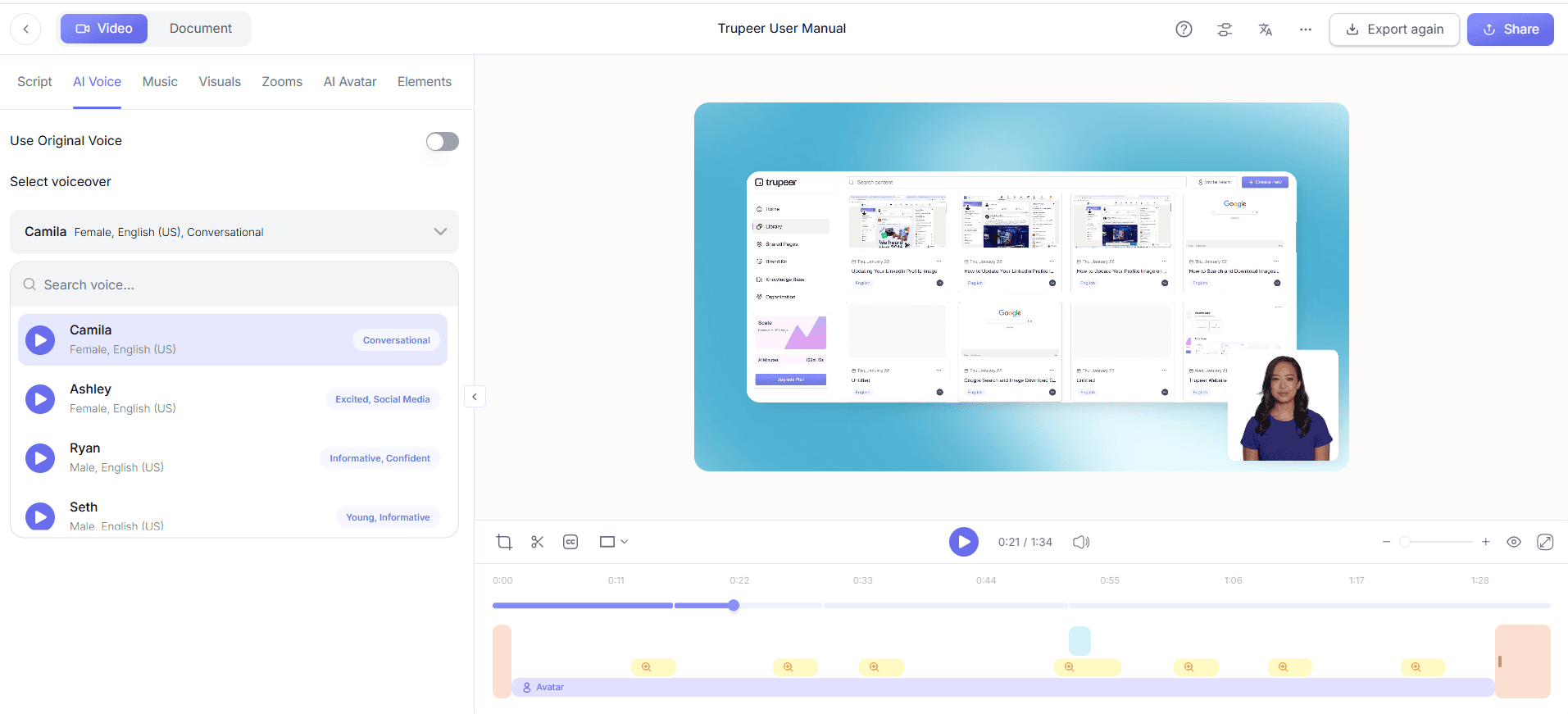
Step 3: Generate Documentation with SOP Feature
After editing, use Trupeer's automatic SOP generation to create comprehensive documentation. This tool converts your video into an editable standard operating procedure, complete with step-by-step instructions. The SOP can be exported in multiple formats, such as PDF or HTML, allowing easy distribution. This step takes approximately 5-10 minutes, as Trupeer automatically formats the SOP based on the video content. Having both video and written documentation ensures users can access information in the format they prefer, further reducing the need for hypercare tickets.
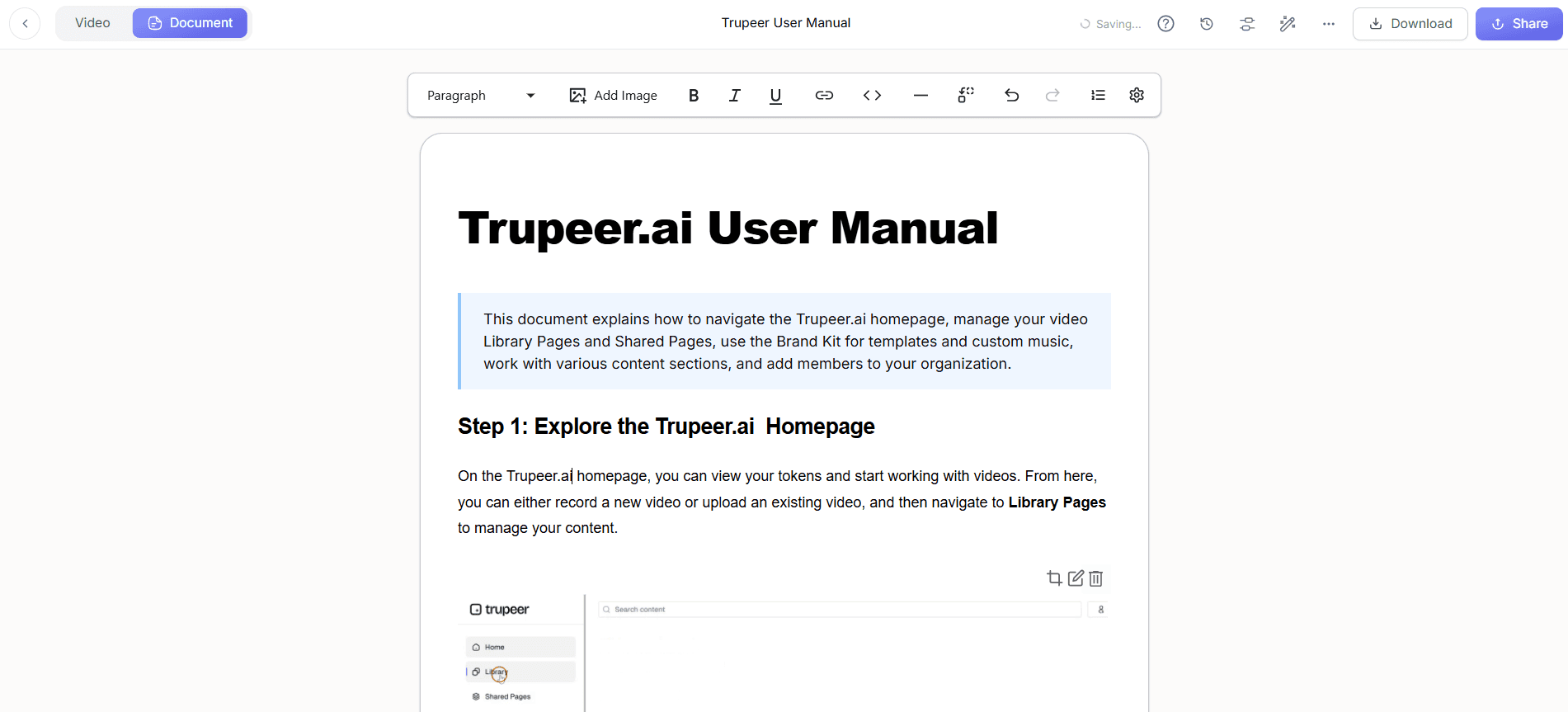
Step 4: Localize Content with AI Translation
To cater to a diverse user base, localize your content using Trupeer's AI translation capabilities. This feature translates your video into more than 40 languages, complete with lip-sync and AI dubbing for non-English audiences. Simply select the languages needed and let Trupeer handle the rest. This process is quick, usually taking around 10 minutes per language. Localized videos ensure that all users, regardless of their language, can follow the instructions accurately, minimizing support requests from international users.
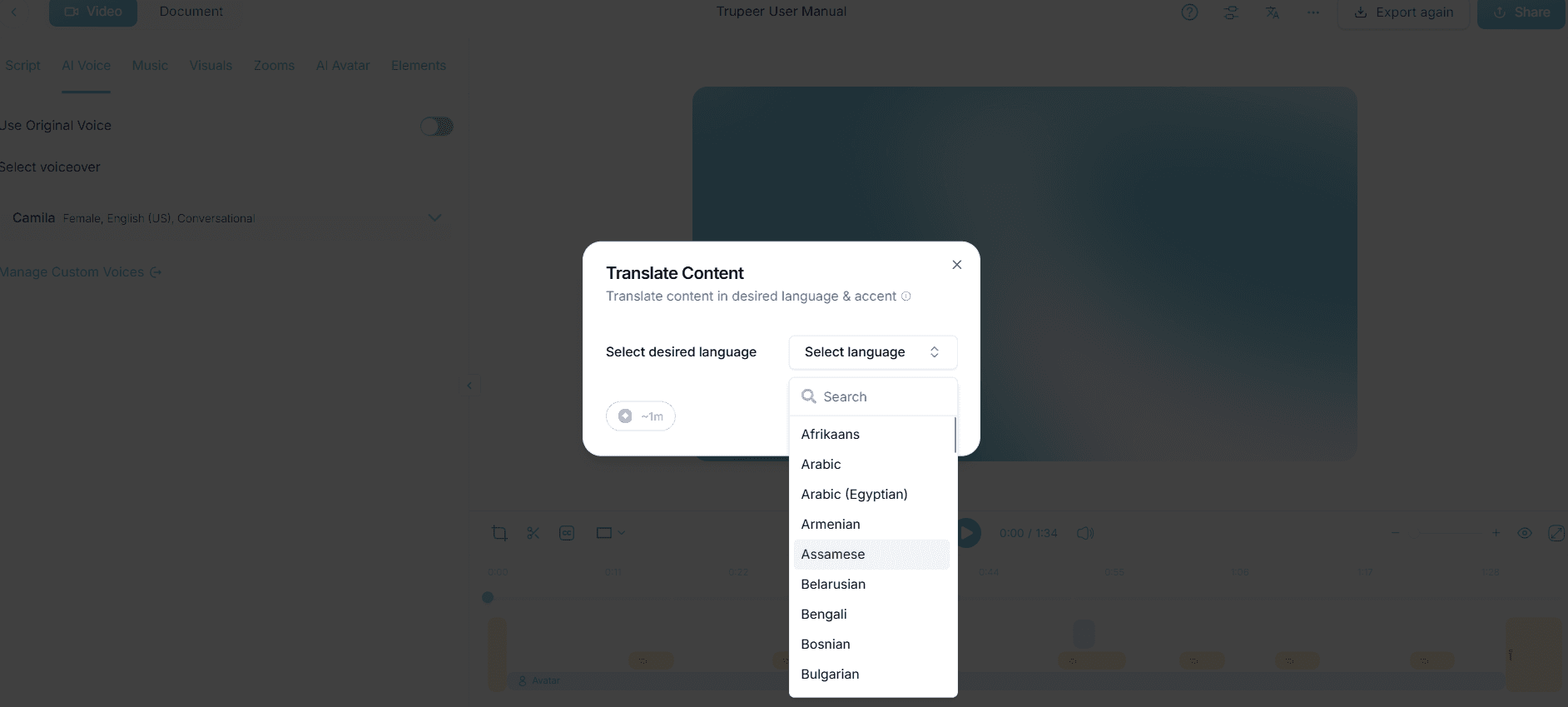
Step 5: Distribute via AI-Searchable Knowledge Base
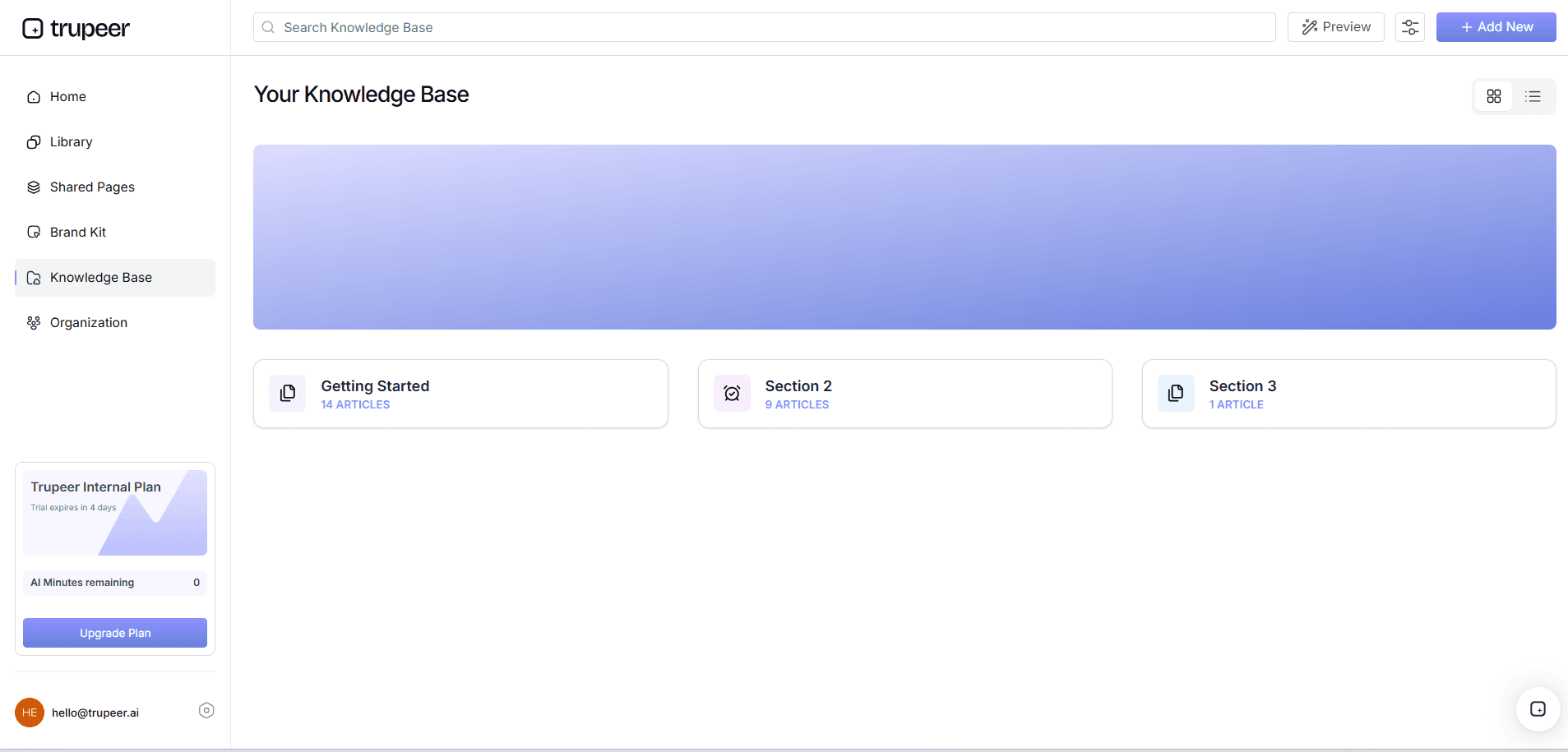
With your video and documentation ready, distribute them through Trupeer's AI-searchable knowledge base. Upload the content to a custom-domain hosting platform with SSO for secure user access. Users can search for specific topics and jump directly to the relevant video segments using timestamp deep-links. This functionality significantly enhances user self-service capabilities, reducing the need for direct support. Setting up the knowledge base and uploading content usually takes about 20 minutes, after which users can begin accessing the resources immediately.
Step 6: Monitor and Optimize with Engagement Analytics
Finally, use Trupeer's viewer engagement analytics to monitor how users interact with your support videos. Analyze drop-off points and heatmaps to identify where users lose interest or face difficulties. This data allows you to refine your content, ensuring it remains engaging and effective. Regularly updating videos based on analytics ensures continuous improvement and ongoing reduction in hypercare tickets. Reviewing analytics and making necessary adjustments is an ongoing process, requiring periodic check-ins, usually taking about 30 minutes each week. When SOPs come into the same conversation, a Scribe alternatives comparison helps clarify the scope.
What tips help you reduce hypercare tickets with video support?
Implementing a video support strategy effectively requires more than just creating content. Here are some practical tips to maximize its impact.
Keep Videos Concise. Users prefer shorter, focused content. Aim for videos under five minutes to maintain attention and ensure quick access to solutions.
use Visual Cues. Incorporate highlights, arrows, and text callouts to emphasize important actions and decisions within the video.
Organize Content Logically. Structure videos and documentation in a user-friendly way, grouping similar topics together to aid in easy navigation.
Provide Multilingual Support. use Trupeer's translation features to offer content in multiple languages, broadening accessibility and reducing language-related queries.
Regularly Update Content. Ensure videos and documentation reflect the latest software updates and user feedback to maintain relevance and accuracy.
Integrate with Other Tools. ai/tools/auto-video-editor">auto video editor tool to simplify the editing process and maintain consistency across all content.
Test Before Release. Have a small group of users test new videos and provide feedback before making them widely available to identify potential improvements.
Teams weighing tools often start with a Loom alternatives comparison before standardizing on a workflow.
Frequently asked questions
How can Trupeer reduce my support team's workload?
Trupeer reduces your support team's workload by enabling users to resolve common issues independently. With features like AI screen recording and automatic AI narration, users can access clear, step-by-step instructions without needing direct assistance. also, the AI-searchable knowledge base allows users to find answers quickly. By providing comprehensive video support, Trupeer minimizes the volume of repetitive queries, allowing your support team to focus on more complex issues that require human intervention.
What makes Trupeer different from other video support tools?
Trupeer stands out due to its comprehensive suite of AI-driven capabilities that simplify the video support process. Unlike other tools, Trupeer offers features like auto-zoom in screen recordings, AI-generated SOPs, and multilingual translation with lip-sync. These features ensure that your content is accessible, accurate, and engaging. also, Trupeer's integration with other platforms and tools, such as its video trimmer, enhances its functionality, providing a smooth experience from content creation to distribution.
Why should I invest in video support for post-go-live phases?
Investing in video support for post-go-live phases offers numerous benefits, including reduced support ticket volumes and improved user satisfaction. Videos provide a visual learning experience, making it easier for users to understand and retain information. This approach not only enables users to solve problems independently but also frees up your support team to handle more critical issues. In turn, this leads to faster adoption of new software and a more efficient support operation.
Can Trupeer handle multilingual video support?
Yes, Trupeer is equipped to handle multilingual video support. Its AI translation feature can translate videos into over 40 languages, complete with lip-sync and dubbing. This capability ensures that users worldwide can access content in their preferred language, reducing language barriers and enhancing user understanding. By offering localized support content, you significantly decrease the number of language-related support tickets, simplifying your post-go-live operations.
Does Trupeer offer analytics to improve video content?
Yes, Trupeer provides detailed viewer engagement analytics that are crucial for optimizing your video content. You can track user interactions, such as where they drop off or spend the most time. This data helps you identify which parts of your videos are effective and which need improvement. By continuously refining your content based on these insights, you can better meet user needs and further reduce hypercare ticket volumes. For more on language capabilities, explore Trupeer's video localization tool.