Trupeer Blog
Imagine you're tasked with producing service guides for a city with a population as diverse as New York City. Over 200 languages are spoken, and every citizen needs access to essential services in a language they understand. But crafting guides that truly serve this diverse population isn't just about translating text. It involves creating experience-driven content that resonates across cultural boundaries. According to the U.S. Census Bureau, 22% of the population speaks a language other than English at home.
22% of the U.S. population speaks a language other than English at home.
For government agencies and service providers, this means the stakes are high. Effective multilingual guides can significantly impact citizen engagement and satisfaction. They ensure everyone has equal access to information, regardless of language barriers. If you're looking to create guides that genuinely reach all citizens, you need a comprehensive approach that integrates translation, cultural adaptation, and engaging formats. To start, visit create guide for foundational insights on structuring your documentation to meet diverse needs.
Why do multilingual citizen guides matter?
In a country where nearly a quarter of the population speaks a language other than English at home, creating multilingual citizen guides is no longer optional, it's a necessity. For public services to be truly accessible, they need to communicate in the native languages of their diverse populations. This is especially critical in healthcare, emergency services, and community assistance programs, where misunderstandings can have dire consequences. By producing guides in multiple languages, agencies can reduce confusion, increase compliance with public programs, and enhance overall community well-being.
The business problem is twofold: ensuring compliance with legal requirements for language access and improving service delivery outcomes. In many jurisdictions, laws mandate that public information be available in multiple languages. Failing to comply can result in legal penalties and erode public trust. also, comprehensive multilingual guides enhance the effectiveness of service delivery. Citizens who understand service instructions in their native language are more likely to use services correctly, leading to better outcomes. For example, multilingual healthcare instructions can lead to higher medication adherence rates, ultimately improving public health metrics.
Investing in high-quality multilingual guides also makes economic sense. By reducing the need for in-person translation services and minimizing errors in service delivery, agencies can save significant costs. also, well-translated materials can prevent costly misunderstandings and legal disputes. To understand how video training materials can be adapted for multilingual use, explore the training videos use case where language adaptation plays a crucial role.
What are the benefits of creating multilingual service guides?
Creating multilingual service guides offers numerous advantages that go beyond simply translating text. Here are some key benefits:
Enhanced Accessibility. Multilingual guides ensure that all citizens, regardless of their language proficiency, have access to vital information. This increases participation in public programs and reduces inequality.
Improved Compliance. Having guides in multiple languages helps meet legal requirements for language access, safeguarding agencies against potential lawsuits and compliance penalties. When you create user guide content, ensure it meets these standards.
Cost Efficiency. By reducing the need for live interpreters and minimizing errors in service delivery, multilingual guides can significantly cut costs. This is particularly beneficial for large agencies serving diverse populations.
Cultural Resonance. Properly adapted guides do more than translate words; they convey cultural nuances that make information more relatable and understandable, building trust and engagement.
Increased Citizen Satisfaction. Citizens who receive information in their native language are more likely to feel respected and valued, leading to higher satisfaction with public services.
simplified Communication. A single AI video platform can effectively distribute information across multiple languages, reducing communication lags and ensuring everyone gets the message simultaneously.
Which Trupeer features help you create multilingual service guides?
Trupeer offers a suite of tools specifically designed to simplify the creation of multilingual service guides. how these capabilities can be harnessed to serve diverse citizen populations effectively.
AI Translation into 40+ Languages with Lip-Sync
Trupeer's AI translation feature allows you to convert your guides into over 40 languages, complete with lip-sync for video content. This ensures that the translated material not only reads naturally but also looks professional in video format. The lip-sync feature is particularly valuable in engaging audiences who rely on visual cues. By integrating auto-generated documentation, the translation process becomes smooth and efficient, enhancing both the accuracy and appeal of your guides.
AI Dubbing for Non-English Audiences
With Trupeer's AI dubbing, you can provide non-English-speaking audiences with audio content that matches the quality of your original recordings. This feature supports a wide range of languages and allows you to adjust the pace and tone of the voiceover to suit different cultural preferences. The AI voice cloning capability can further personalize the experience by using familiar voices, which adds an extra layer of comfort and trust for the audience.
Silent Screen Recording with Automatic AI Narration
This feature is ideal for creating step-by-step guides where verbal instructions are crucial. Trupeer's silent screen recording captures every detail of the process while the AI narration provides clear, concise instructions. This approach is particularly effective for technical tutorials or service instructions, where users benefit from hearing the steps as they see them. The automatic filler-word removal ensures that the narration is smooth and professional.
AI-Searchable Knowledge Base with Timestamp Deep-Links
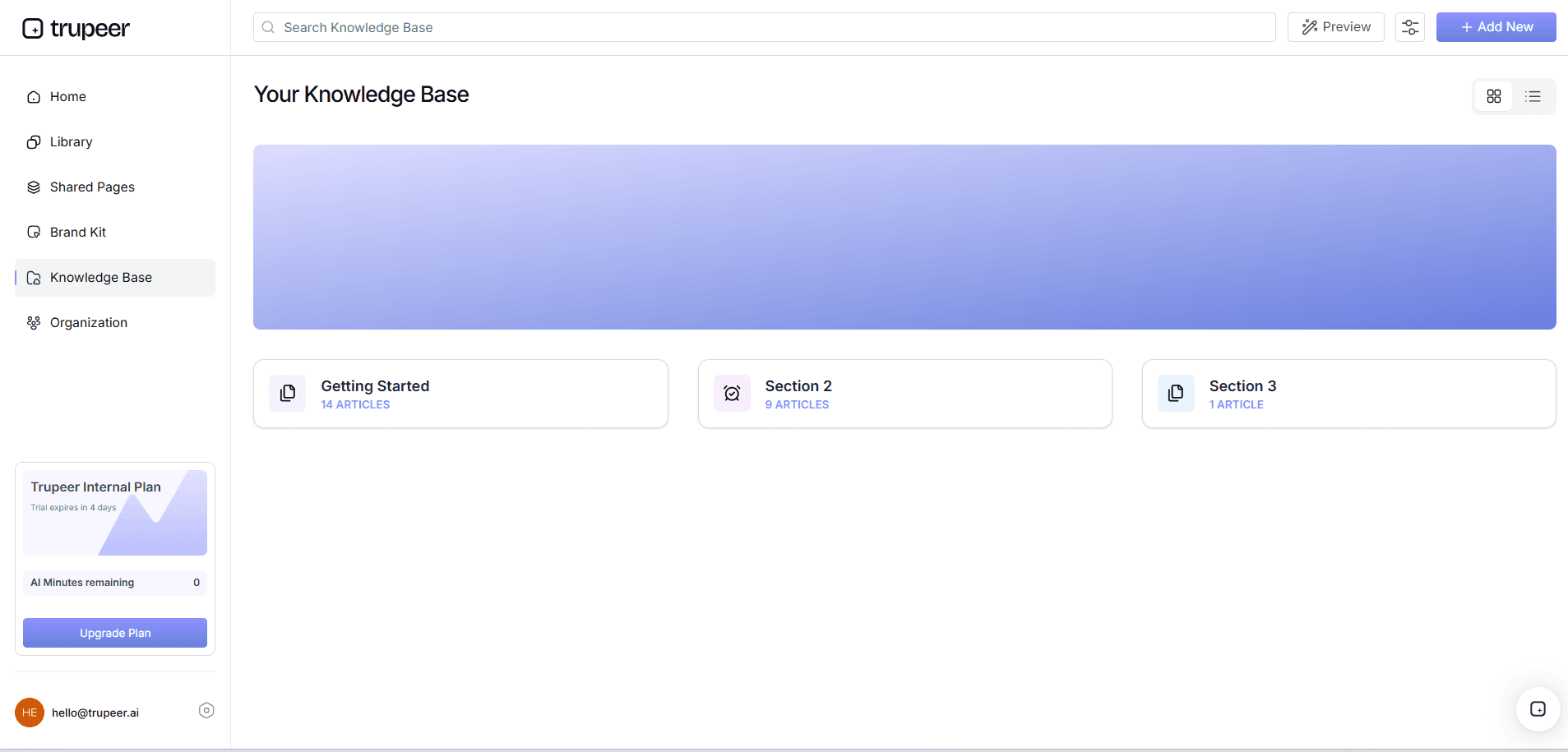
Organizing your multilingual guides in a video knowledge base makes them easy to search and navigate. Trupeer's AI-searchable knowledge base indexes every recording with timestamp-level deep links, allowing users to jump directly to the sections they need. This feature is incredibly useful for large volumes of content, making it easier for users to find specific information quickly.
Automatic SOP Generation from Any Recording
Trupeer's ability to create process guides in seconds is a big shift for agencies looking to simplify their documentation processes. By automatically generating Standard Operating Procedures (SOPs) from any recording, you can ensure that your multilingual guides are always up-to-date and consistent. The multi-format export options (MP4, HTML, PDF, SCORM) make it easy to distribute the SOPs across different platforms and formats, ensuring accessibility for all users.
How do you create multilingual service guides step by step with Trupeer?
Step 1: Initiate Screen Recording
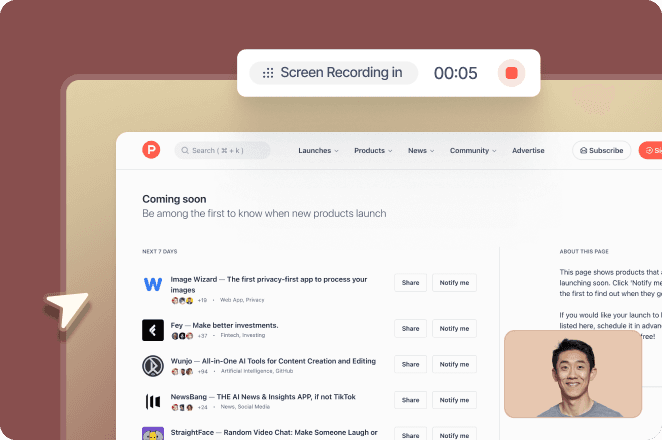
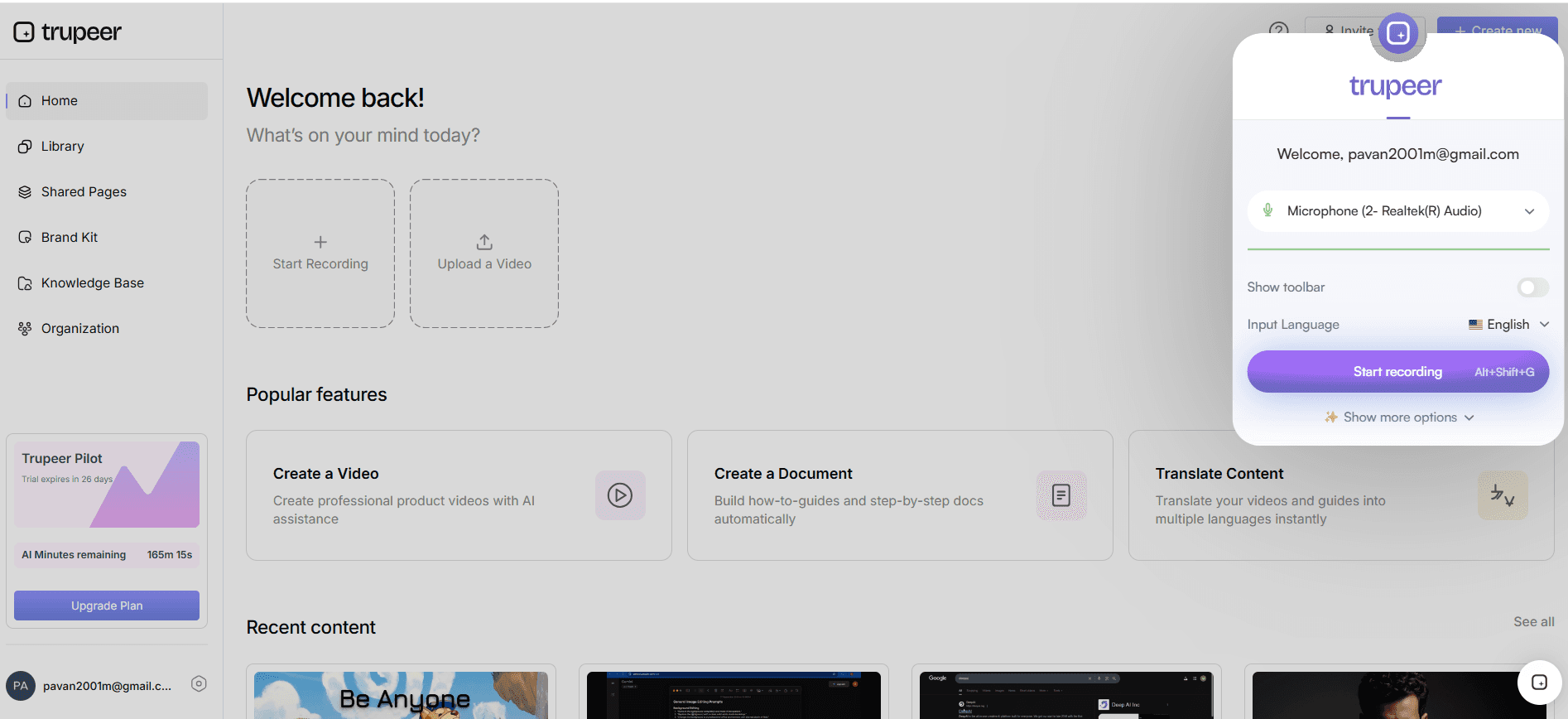
Start by using Trupeer's browser-based screen recorder, which requires no installation. Simply navigate to the Trupeer website, log in, and select "Start Recording." This feature is perfect for capturing step-by-step instructions on your desktop, ensuring every click and action is documented. The AI screen recording with auto-zoom and click detection will enhance focus on key areas, making your guide more engaging. Recording typically takes as long as your process, but the auto-zoom feature ensures viewers don't miss important details, which is crucial for complex instructions.
Step 2: Add AI Narration
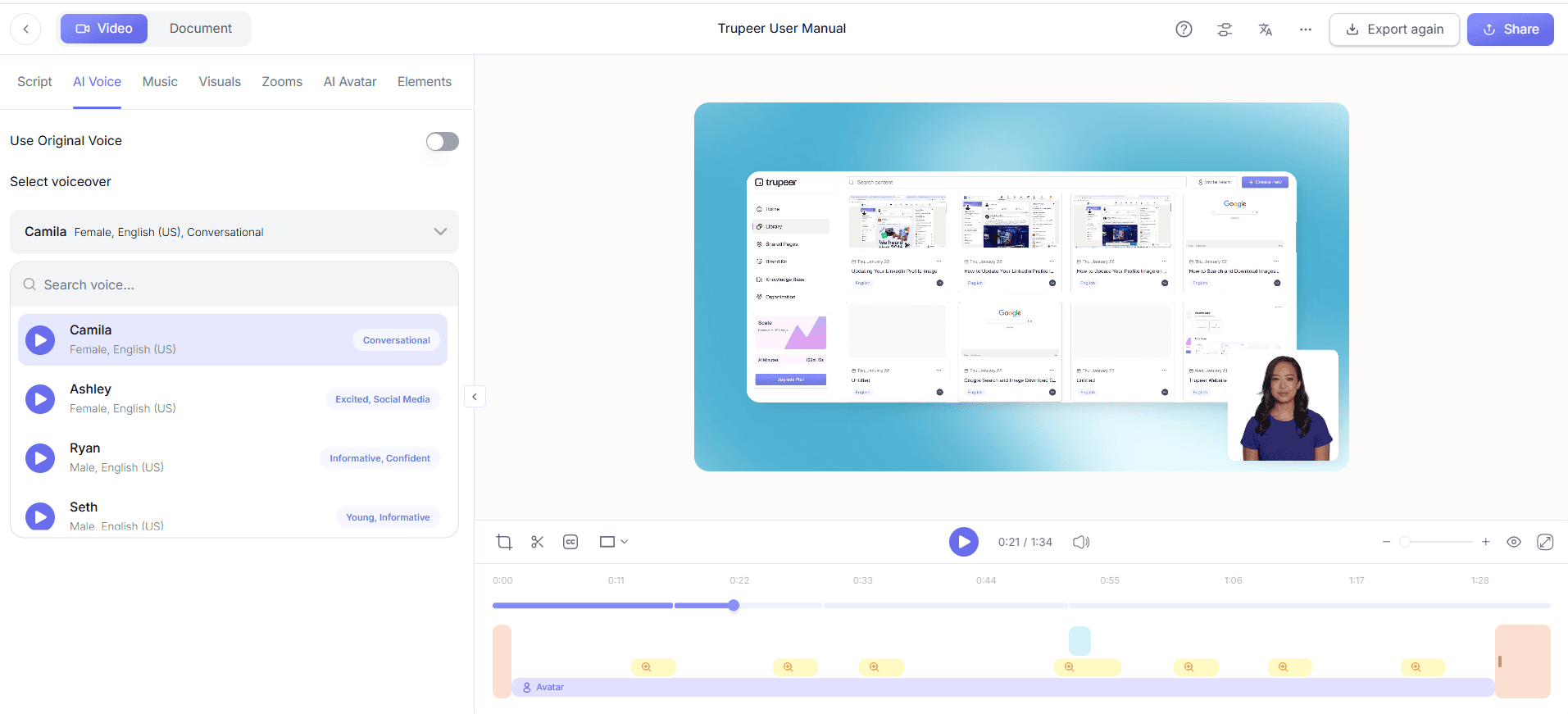
Once your recording is complete, use Trupeer's silent screen recording with automatic AI narration. Choose from over 65+ natural voices to match your audience's preferences, adjusting the pace and tone as needed. This feature is invaluable for creating multilingual guides, as it allows you to provide clear, consistent instructions without the need for live narration. The AI will automatically remove filler words, ensuring a smooth listening experience. This step typically takes a couple of minutes, depending on the length of the recording.
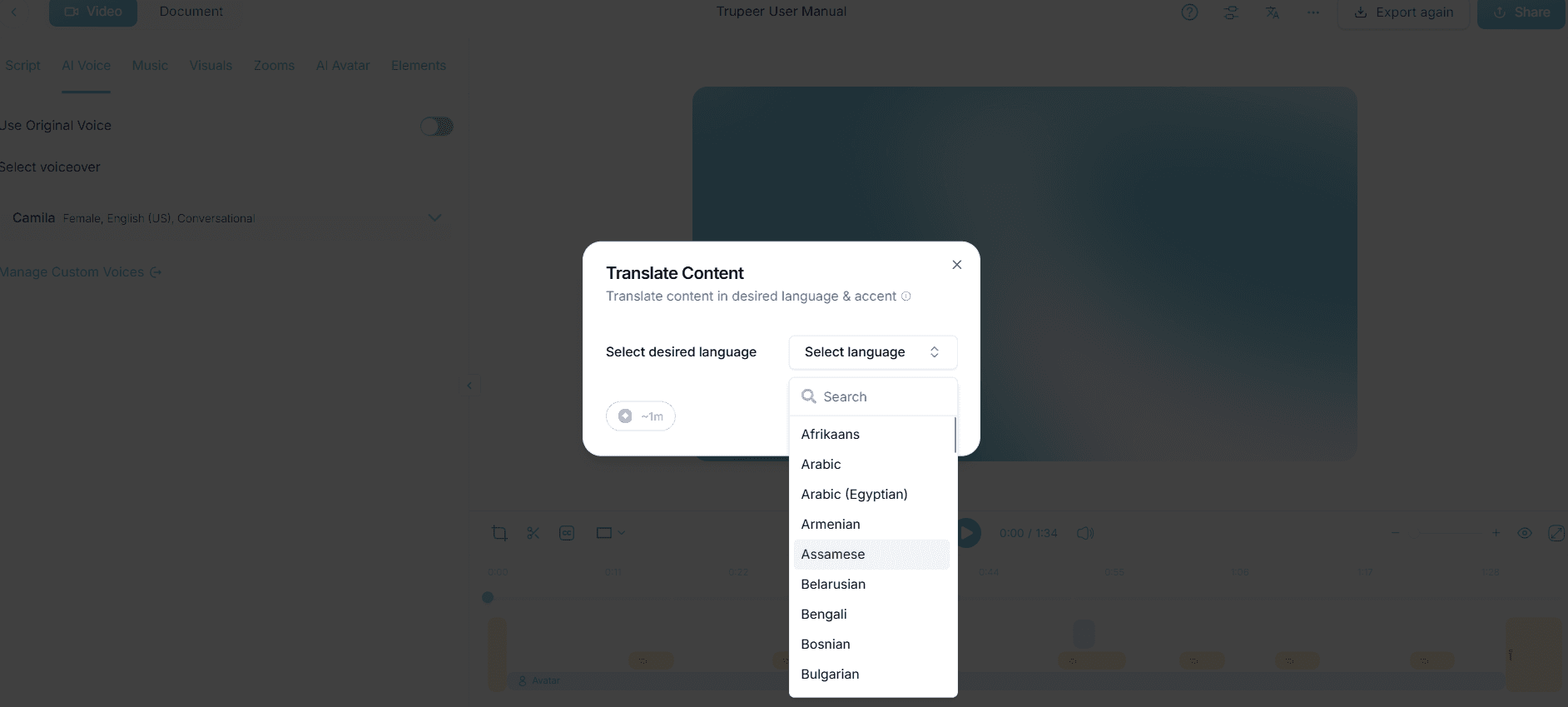
Step 3: Translate Content
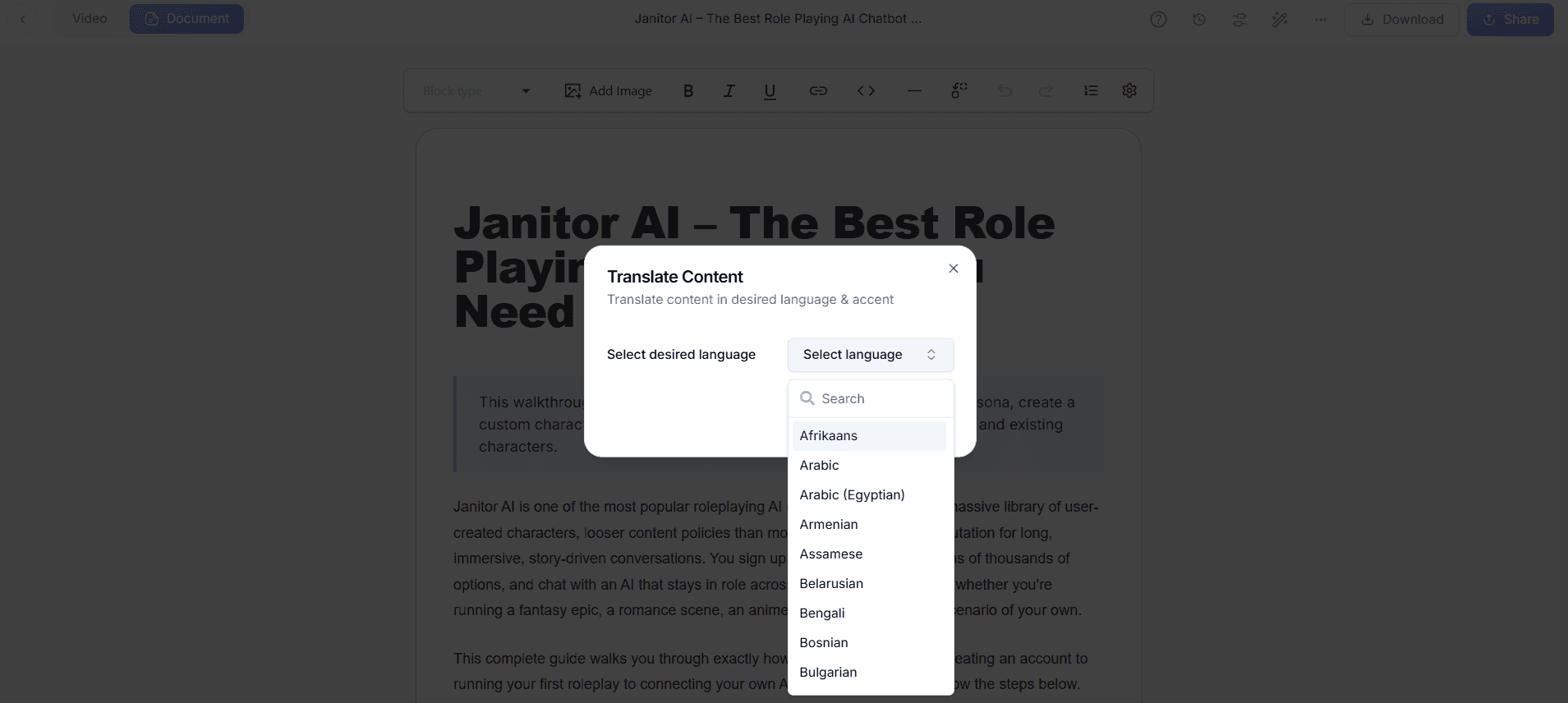
To broaden your guide's accessibility, use Trupeer's AI translation into over 40 languages. Select the languages you need, and the platform will generate translations with precise lip-sync for any video content. This feature is critical for ensuring that your guides are not only understood but also culturally resonant. The translation process is quick, often completed in minutes, and ensures that all visual and spoken content aligns perfectly. Be mindful of cultural contexts to maintain the effectiveness of your guide.
Step 4: Implement AI Dubbing
For audio content, apply Trupeer's AI dubbing to replace the original English narration with high-quality voiceovers in your chosen languages. This is particularly useful for non-English-speaking audiences who rely on auditory information. The AI voice cloning capability can personalize this further by using familiar voices that resonate with the audience. This step can take a little longer, especially if adjustments are needed for tone and pace, but the result is a professionally dubbed guide that maintains the integrity of your original content.
Step 5: Generate SOPs Automatically
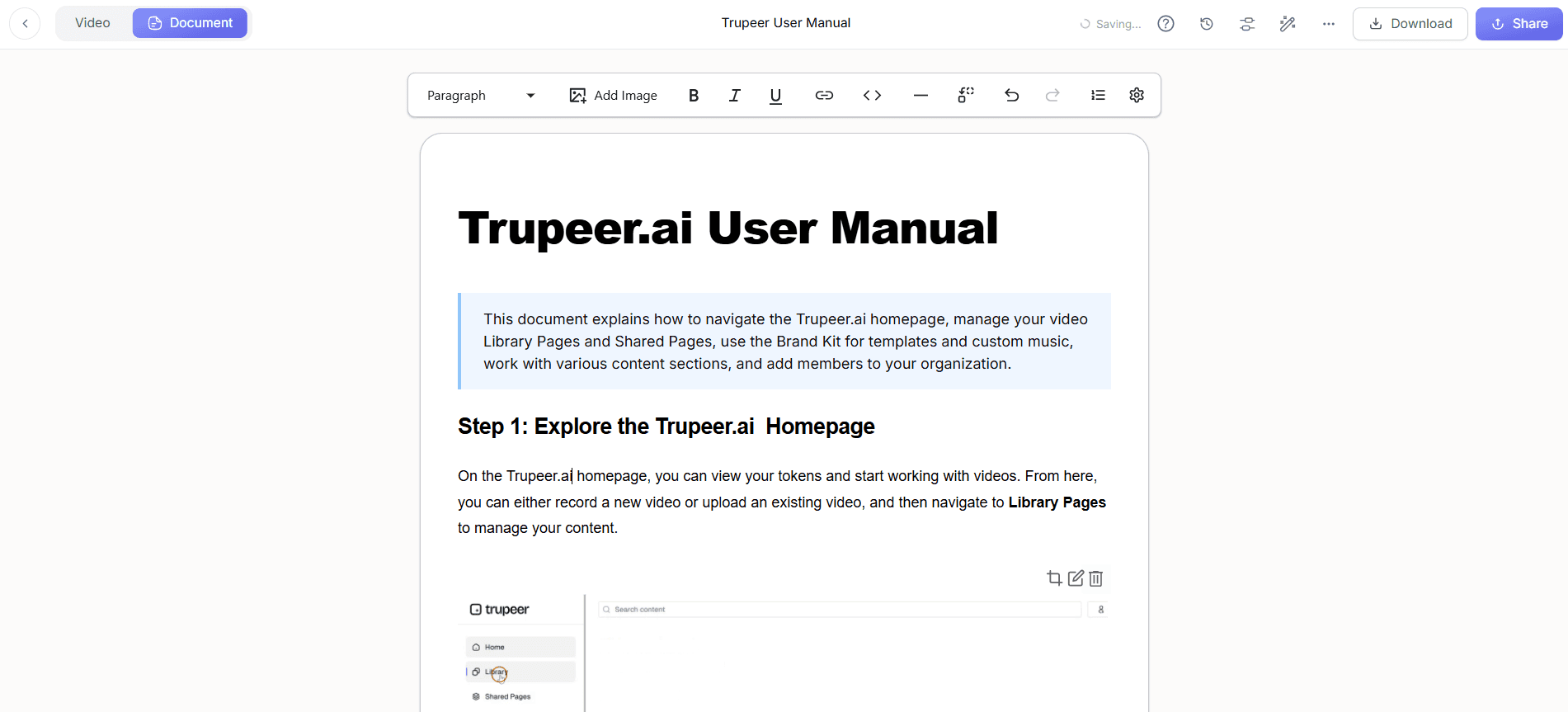
Use Trupeer's automatic SOP generation from your recordings to create detailed, step-by-step procedural documents. This feature turns your video content into edit-ready, exportable SOPs in formats like HTML, PDF, and SCORM. This step is instrumental in ensuring that your guides remain consistent and up-to-date, especially when procedures change. The SOP generation is nearly instantaneous, making it easy to keep documentation current without manual updates. For a simplified process, check out the AI to create SOPs tool.
Step 6: Distribute via Knowledge Base
Finally, organize your multilingual guides into Trupeer's AI-searchable knowledge base. This step ensures your guides are easily accessible and navigable. The knowledge base indexes each recording with timestamp deep-links, allowing users to jump directly to relevant sections. This setup not only enhances user experience but also reduces the time spent searching for information. The distribution process is straightforward and allows for custom-domain hosting with SSO, providing secure access to your guides. For comparison with similar tools, explore the Loom vs Trupeer comparison.
What tips help you create multilingual service guides?
Creating effective multilingual service guides requires more than just translation. Here are some tactical tips to enhance your process and outcomes:
Understand Cultural Nuances. Tailor content to reflect cultural differences, which can improve relatability and effectiveness. Use regional idioms and examples where appropriate.
Use Consistent Terminology. Ensure terms are consistently translated across all languages to avoid confusion. This is where a digital guide maker can be beneficial.
Test with Native Speakers. Before finalizing, have native speakers review your guides to catch errors and ensure authenticity. This step is crucial for maintaining credibility.
use Visuals. Visual aids transcend language barriers and can clarify complex instructions. Pair them with simple language for maximum impact.
use Feedback. Collect user feedback to identify areas for improvement. Use this data to refine your guides continually.
Standardize Formats. Maintain a consistent format across guides to improve user familiarity and ease of use.
Regularly Update Content. Keep your guides up-to-date with the latest information. This includes both procedural changes and updates in technology. Compare with Scribe alternatives for SOPs to ensure you're using the best tools.
Frequently asked questions
How can I ensure my multilingual guides are culturally appropriate?
To ensure cultural appropriateness, engage native speakers in the review process and pay attention to regional differences. This means not just translating words but adapting the content to reflect cultural norms and expectations. Use idiomatic expressions and examples that resonate with local audiences. also, consider hiring cultural consultants for regions with significant cultural nuances. By doing so, you enhance the guide's relatability and effectiveness, building greater trust with your audience.
What are the most common challenges in creating multilingual guides?
The most common challenges include maintaining consistency across languages, addressing cultural nuances, and ensuring accurate translations. Inconsistent terminology can confuse users, while poor cultural adaptation might render a guide ineffective. To combat these, use translation management tools and consult with native speakers. Also, regularly update your guides to reflect any changes in both language and procedure, keeping them relevant and reliable for users.
Why is AI translation important for multilingual guides?
AI translation is crucial as it provides rapid, accurate translations while supporting multiple languages simultaneously. This capability is essential for reaching a diverse audience without delay. AI translation also allows for scalability, enabling you to update or expand guides efficiently. also, AI platforms like Trupeer ensure that translations are synced with video content, maintaining the integrity of visual and verbal elements. For video-specific translations, ai/translation">video localization tool.
Can AI dubbing replace human voiceovers in service guides?
Yes, AI dubbing can effectively replace human voiceovers, providing a consistent and scalable solution for multilingual content. AI-generated voices can be customized for tone and pace, making them suitable for various audiences. This feature is particularly beneficial for maintaining uniformity across large volumes of content. However, for highly subtle or emotional messaging, human voiceovers might still be preferred. AI dubbing is best used for clear, instructional content where consistency is key.
Does Trupeer support collaboration in creating multilingual guides?
Yes, Trupeer supports collaboration through its platform, allowing multiple stakeholders to review and approve content. This is facilitated by features like collaborative review workflows and detailed viewer engagement analytics. By involving various team members, you can ensure content quality and consistency. Collaborative tools also allow for faster iterations and updates, keeping your guides relevant. The ability to work together in real-time enhances the overall efficiency and effectiveness of the guide creation process.