Trupeer Blog
Imagine managing multiple clients with unique setups, each requiring precise documentation and rapid support responses. As a Managed Service Provider (MSP), the challenge is not just in offering a generic solution but in tailoring your approach to individual client needs. This specificity ensures that your services are not only effective but also highly valued. A client-specific knowledge base becomes indispensable in this scenario. It allows you to scale your support efforts across numerous accounts without losing critical context. According to a recent report,
companies with dedicated knowledge bases reduce support request resolution time by up to 30%.
For MSPs, this means freeing up valuable resources and increasing client satisfaction. This guide is crafted for MSP operators who are eager to implement or refine their client-specific knowledge bases, ensuring that your team is always one step ahead in providing top-tier service. By understanding how to effectively structure and maintain these knowledge bases, you'll be able to deliver consistent, efficient, and personalized support. For a deeper look, our guide on knowledge base one covers the adjacent playbook.
Why does building a client-specific knowledge base matter?
In the competitive landscape of IT Managed Services, personalization and efficiency are crucial. Each client has unique systems, requirements, and challenges. A generic approach simply won't suffice. Building a client-specific knowledge base allows you to tailor your support to meet the precise needs of each client, increasing the value of your service. Without this specificity, your team could be overwhelmed with support tickets and lack the necessary information to resolve issues quickly.
Also, as your client base grows, the complexity of managing information multiplies. Each client setup is different, and keeping track of individual configurations and past interactions becomes challenging. With a well-structured knowledge base, you can centralize this information. This not only improves your team's productivity but also enhances the client experience. With a training videos use case, for instance, MSPs can facilitate smoother onboarding processes, reducing the time it takes for new team members to become effective contributors. Ultimately, a client-specific knowledge base leads to faster problem resolution, higher client satisfaction, and a more efficient allocation of your team's resources.
What are the benefits of a client-specific knowledge base?
Building a client-specific knowledge base offers several tangible benefits that directly impact your service delivery and client relationships.
Enhanced Service Efficiency. A detailed knowledge base allows your team to resolve issues faster, reducing downtime for clients. This efficiency translates into increased trust and satisfaction.
Consistent Support Quality. By maintaining standardized solutions and documentation, you ensure that every client receives the same high level of service, regardless of the team member handling the issue.
Reduced Training Time. New hires can access a comprehensive repository of client-specific information, cutting down on training time and accelerating their ability to contribute effectively.
Scalable Client Management. As your client list grows, a knowledge base helps manage the complexity without overwhelming your support team. It provides a scalable way to handle information.
Improved Client Relationships. Clients appreciate quick, accurate responses to their queries. A knowledge base ensures that your team can provide these consistently, strengthening client relationships.
Data-Driven Insights. Analyzing the knowledge base can reveal common issues and trends, allowing you to proactively address potential problems before they escalate.
For a deeper look, our guide on best knowledge base examples covers the adjacent playbook.
Teams weighing tools often start with a Loom alternatives comparison before standardizing on a workflow.
Which Trupeer features help you build a client-specific knowledge base?
Trupeer offers a range of features specifically designed to assist MSPs in creating and maintaining client-specific knowledge bases. These tools ensure that your documentation is up-to-date, accessible, and easy to navigate.
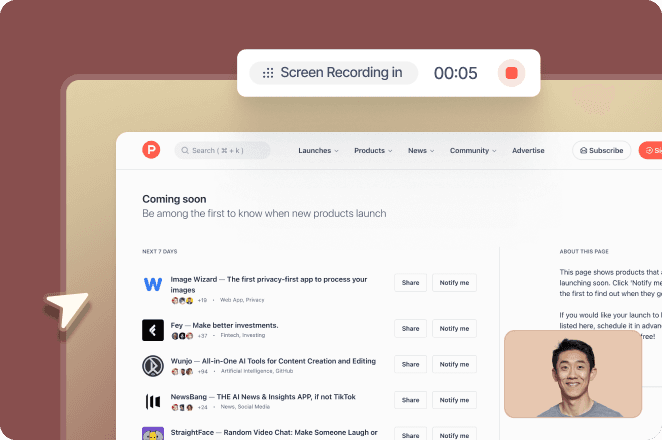
AI screen recording with auto-zoom and click detection
Trupeer's AI screen recording feature is essential for capturing detailed client-specific processes. The auto-zoom and click detection capabilities ensure that every step of a process is clearly documented, capturing the exact interactions needed for each client's setup. This feature allows you to create comprehensive visual documentation that can be easily referenced by your support team. It eliminates the need for manual note-taking and ensures accuracy in documenting complex procedures.
Automatic SOP generation from any recording
With Trupeer's automatic SOP generation, you can transform video recordings into step-by-step procedural documents. This feature is invaluable for MSPs handling multiple clients, as it converts complex processes into easy-to-follow instructions. The generated SOPs are edit-ready and can be exported in various formats, such as MP4, HTML, PDF, or SCORM, ensuring compatibility with your existing systems. This reduces the time spent on documentation and ensures that your team has reliable resources at their fingertips.
AI-searchable knowledge base with timestamp deep-links
Trupeer's AI-searchable knowledge base is a powerful tool for managing client-specific information. The platform indexes every recording with timestamp-level deep links, making it easy to find and reference specific sections of a video. This feature enhances your team's ability to quickly locate relevant information, improving response times and ensuring that support provided is both accurate and contextually relevant. By having a searchable repository, you can maintain a high level of service quality while reducing the cognitive load on your support staff.
AI translation into 40+ languages with lip-sync
Global clients often require support in multiple languages. Trupeer's AI translation feature translates content into over 40 languages with accurate lip-sync capabilities. This ensures that all your client-specific documentation is accessible to non-English speaking clients, widening your service reach and improving communication. This feature is particularly beneficial for MSPs operating in diverse markets, ensuring that language barriers don't hinder the quality of service provided.
Viewer engagement analytics, drop-off, and heatmaps
Understanding how clients interact with your knowledge base is crucial for continuous improvement. Trupeer provides detailed analytics, including viewer engagement metrics, drop-off rates, and heatmaps. These insights help you identify which parts of your documentation are most effective and which may need revision. By analyzing this data, you can optimize your knowledge base content, ensuring that it remains relevant and useful for your clients. This feature not only helps in maintaining the quality of your documentation but also guides strategic improvements to your overall support strategy.
How do you build a client-specific knowledge base step by step with Trupeer?
Step 1: Capture the Process
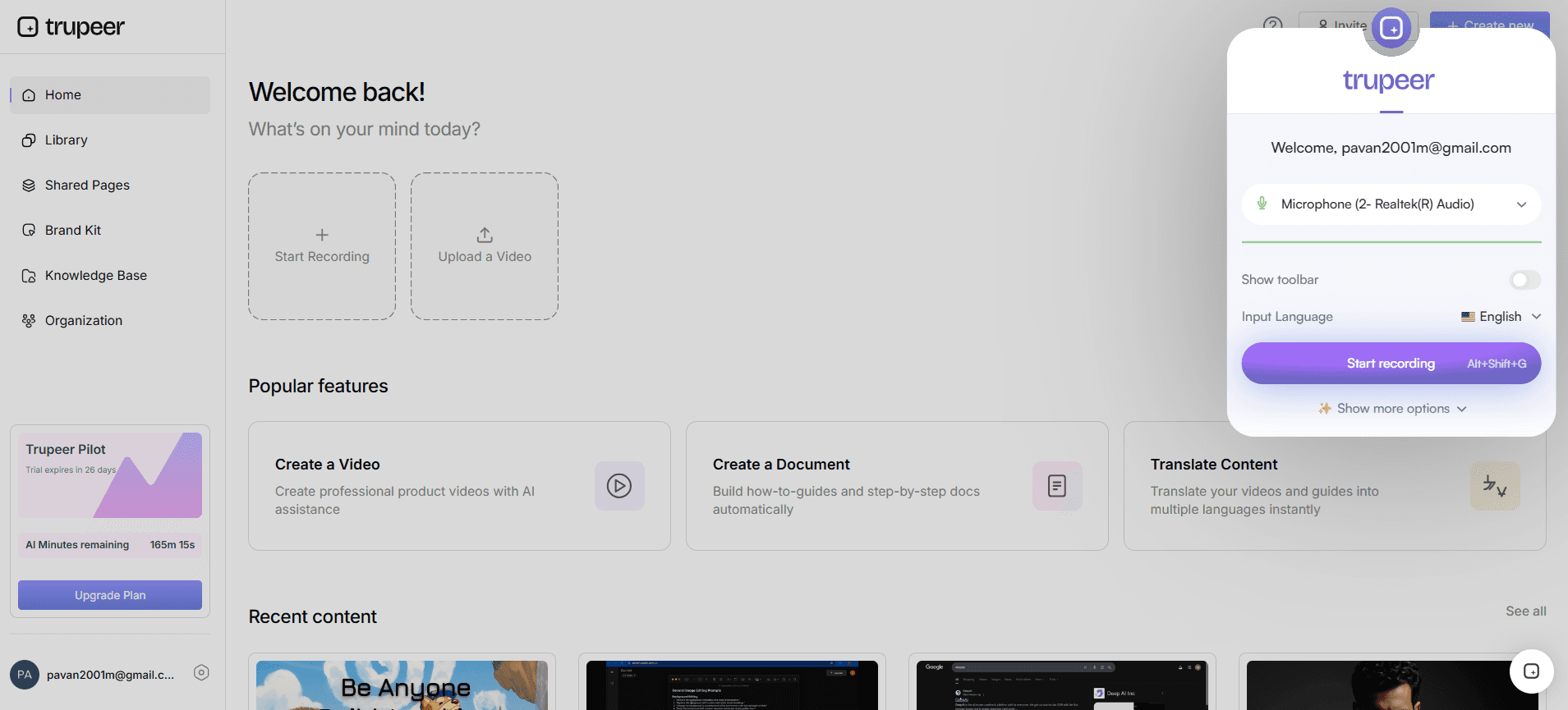
Begin by using Trupeer's AI screen recording with auto-zoom and click detection to capture the client-specific processes. Launch the browser-based recorder, which requires no installation, and start recording the screen as you navigate through the client's system. The auto-zoom feature highlights key areas of interaction, ensuring that every critical click and action is prominently captured. This detailed recording is essential for creating accurate documentation. The entire recording process can take as little as a few minutes, depending on the complexity of the task, ensuring efficiency without compromising on detail.
Step 2: Generate SOPs Automatically
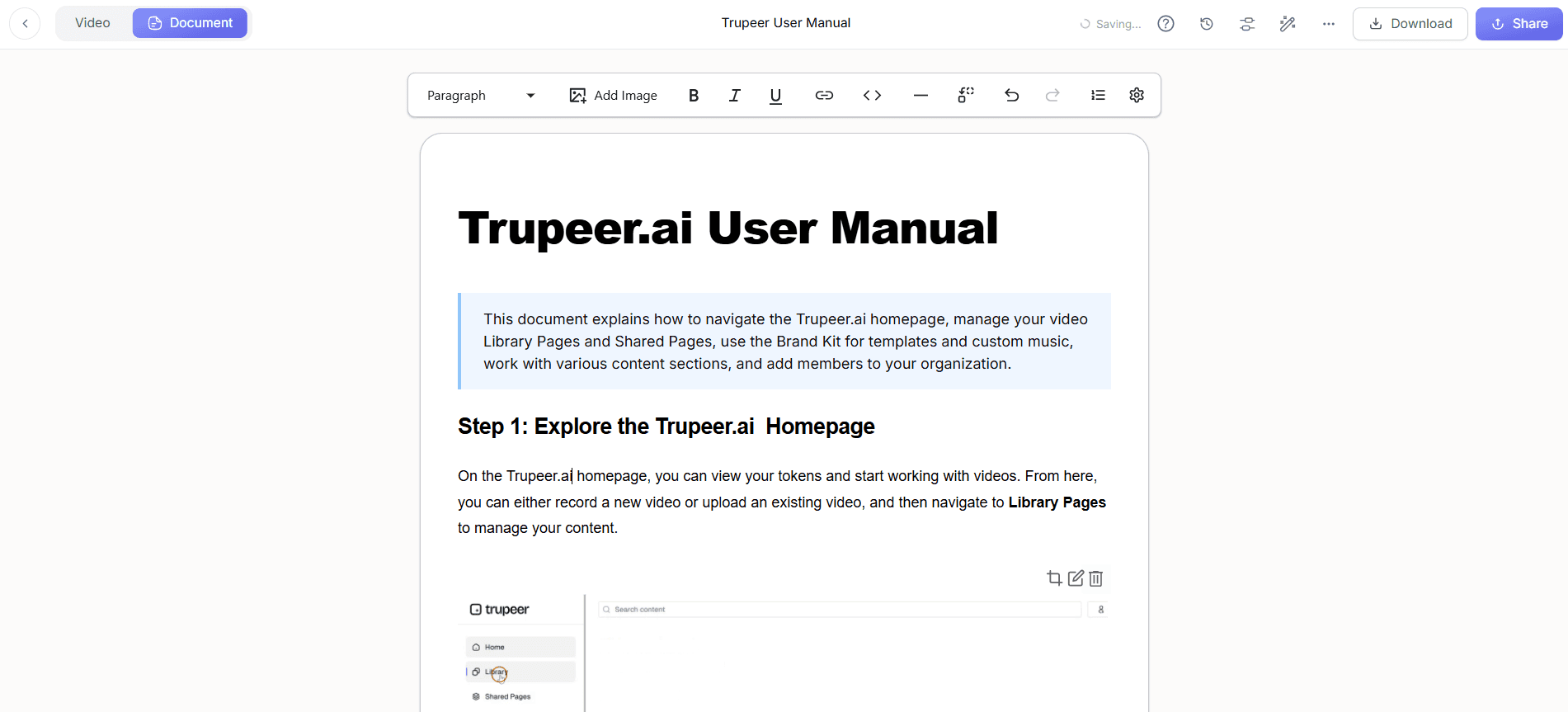
Once the recording is complete, use Trupeer's automatic SOP generation feature. This tool converts your video into a step-by-step procedural document. Simply upload the recording to Trupeer, and within moments, you'll have an edit-ready SOP. The tool identifies key actions and segments them into clear instructions. This capability is especially valuable for complex client environments where detailed steps are necessary. The generated SOP can be exported in multiple formats, such as PDF or HTML, making it easy to integrate into your existing documentation systems. Teams ship this workflow end-to-end using Trupeer's AI video platform, which turns raw recordings into polished output without an editor.
Step 3: Create a Searchable Knowledge Base
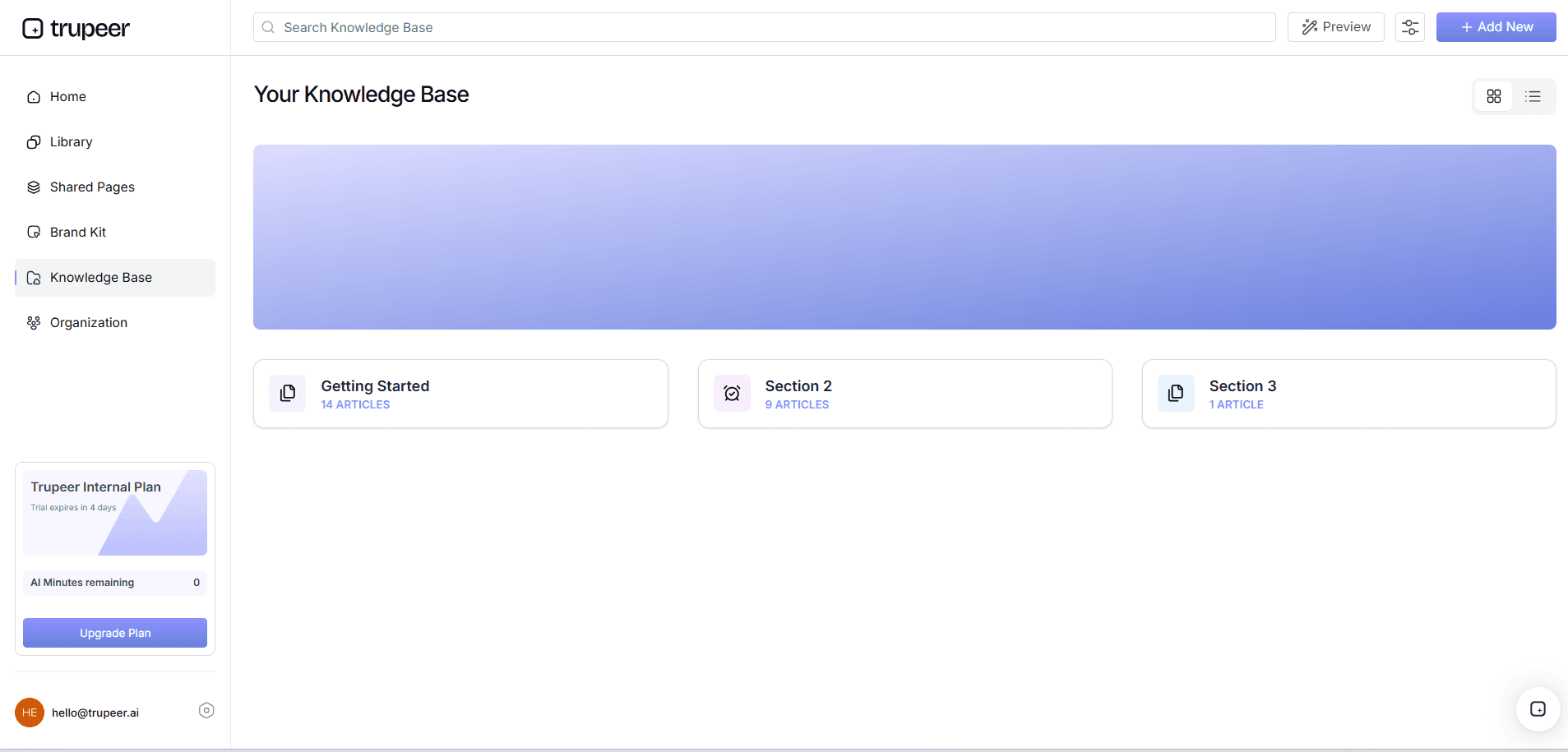
With your SOPs and recordings prepared, the next step is to build an AI-searchable knowledge base. Use Trupeer's internal knowledge base wiki software to index every document and video. The platform allows you to tag recordings with relevant keywords and timestamps, making it easy to locate specific information. This searchable repository ensures that your support team can quickly find and reference the exact materials needed, simplifying the troubleshooting process and enhancing service delivery.
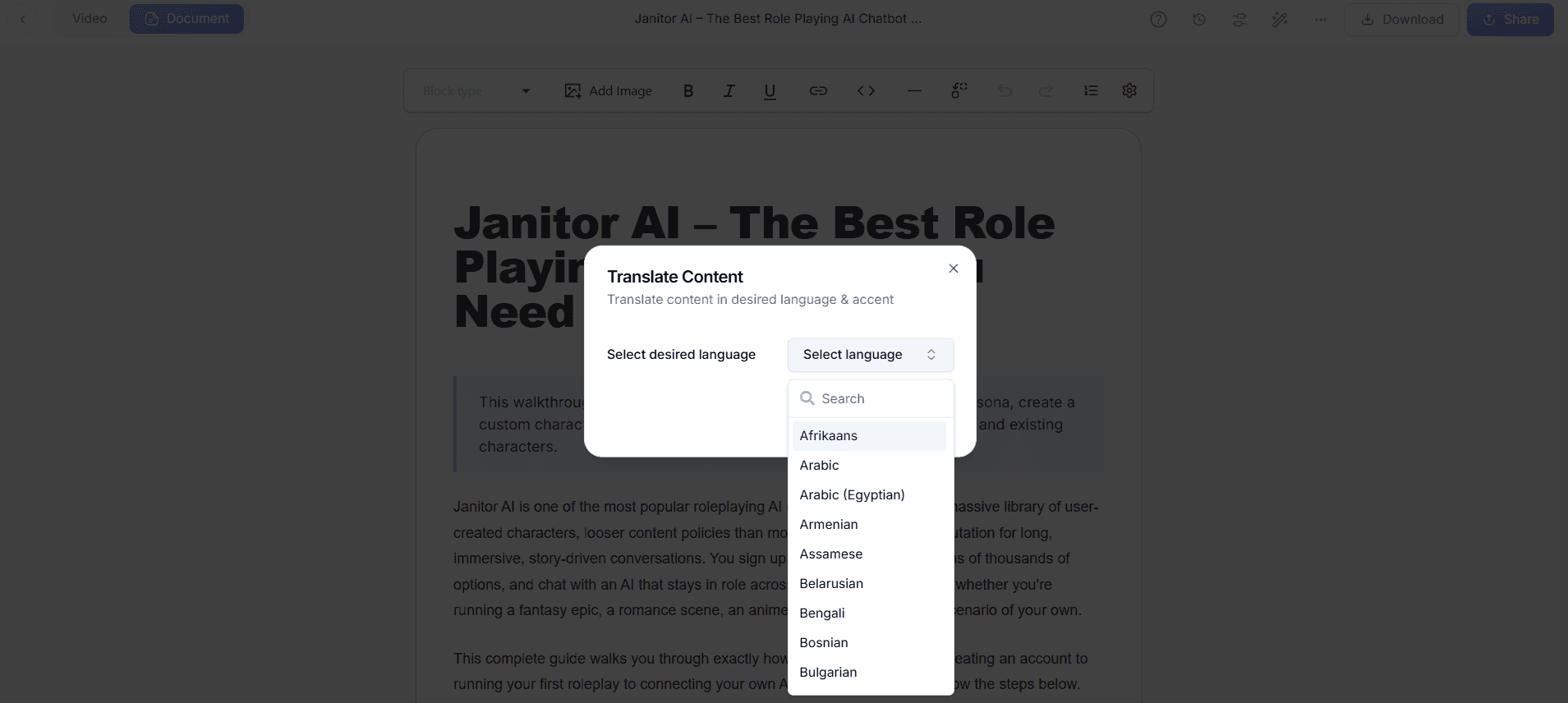
Step 4: Localize Content for Global Clients
If your client base is international, take advantage of Trupeer’s AI translation feature. This tool translates your documentation and videos into over 40 languages, complete with lip-sync for video content. Simply select the target languages and initiate the translation. Within minutes, you'll have localized resources ready for use. This capability is crucial for maintaining consistency in service quality across different regions, ensuring that language barriers don't impede your support efforts. The translated content can be smoothly integrated into your knowledge base, enhancing accessibility for non-English speaking clients.
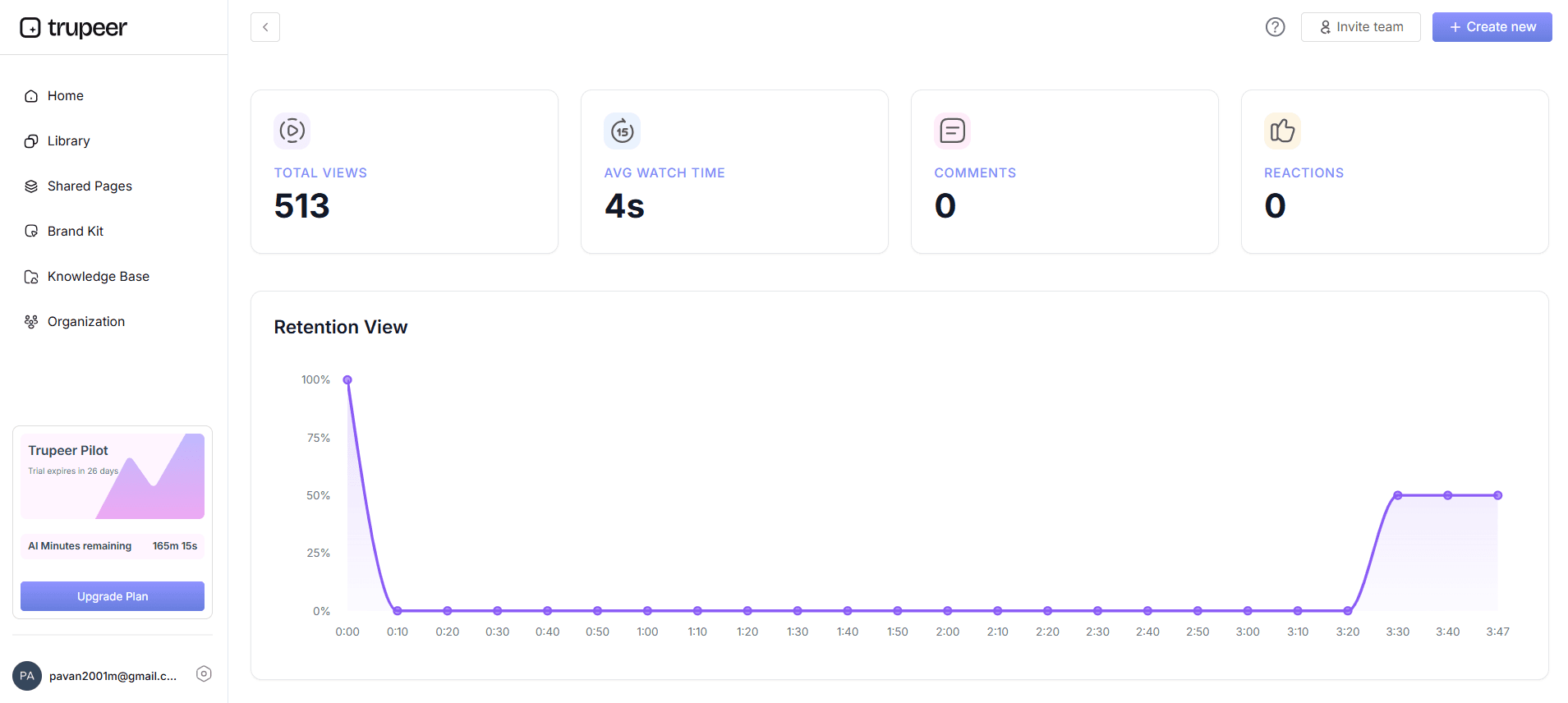
Step 5: Analyze Engagement and Optimize
After the knowledge base is live, use Trupeer's viewer engagement analytics to monitor how clients interact with your content. Access detailed metrics, including viewer heatmaps and drop-off rates, to identify which parts of your documentation are most engaging and which may require optimization. This data-driven approach allows you to refine your knowledge base continuously, ensuring it remains relevant and effective. Regularly reviewing these analytics helps in making informed decisions about content updates and enhancements, ultimately improving the overall client experience.
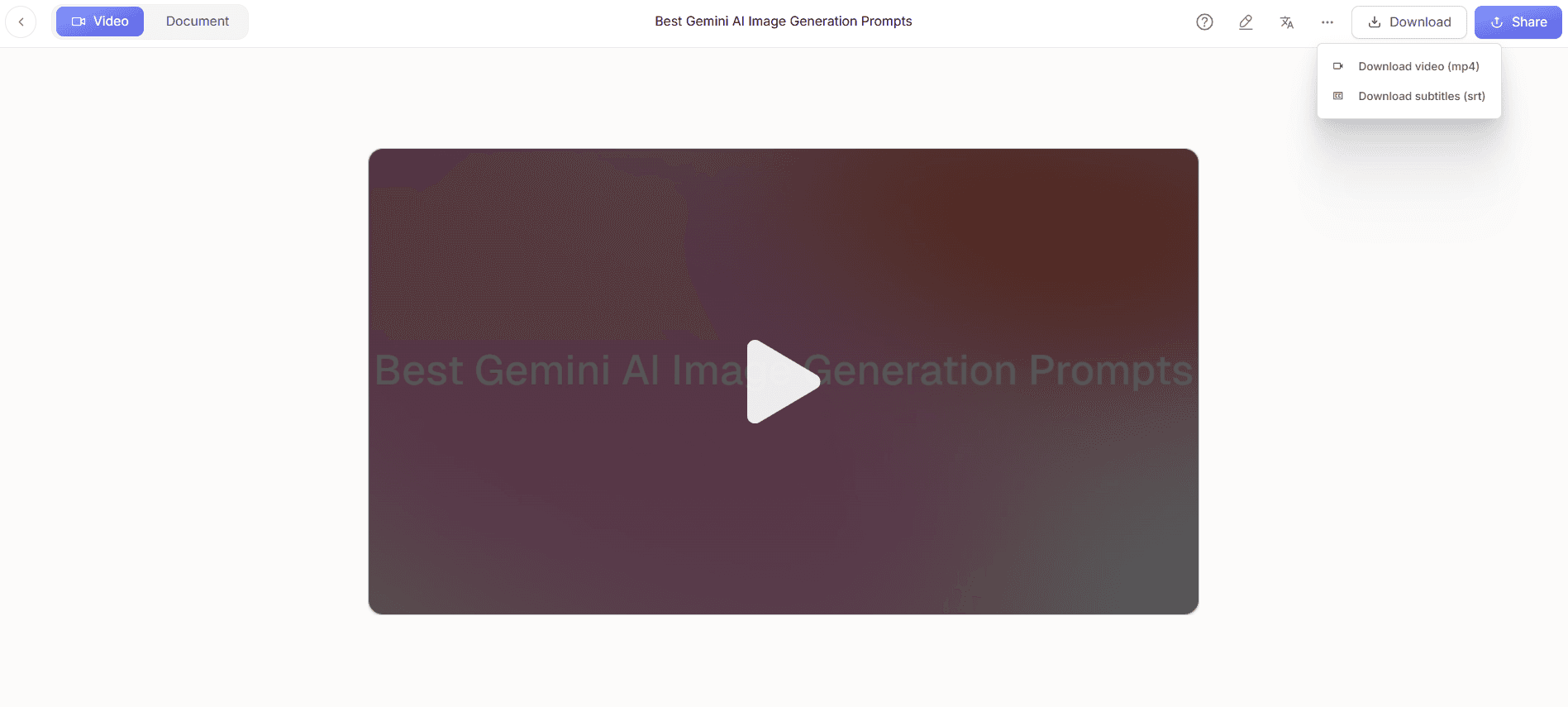
Step 6: Distribute via Client Portals
Finally, ensure that your knowledge base is easily accessible by distributing it through client-facing portals. Trupeer offers shared pages and custom-domain hosting with single sign-on (SSO) capabilities, providing a smooth access experience for clients. Simply configure the portal settings, customize the branding to match your client's preferences, and publish the knowledge base. This setup not only enhances the professionalism of your service but also simplifies client access to critical resources. By centralizing information in one accessible location, you improve both the efficiency and effectiveness of your support operations.
What tips help you build a client-specific knowledge base?
Creating an effective client-specific knowledge base requires strategic planning and execution. These tips are designed to enhance the utility and accessibility of your knowledge base.
Standardize Documentation Format. Use consistent templates across all client documentation to maintain uniformity and ease of use. This approach simplifies updates and ensures clarity.
Incorporate Visuals. Enhance comprehension by including screenshots and videos in your knowledge base. Visual aids help in clarifying complex processes, making them easier to understand.
Update Regularly. Schedule periodic reviews of your knowledge base to update content with the latest information. This ensures that your documentation remains accurate and relevant.
use Feedback. Solicit feedback from clients and support teams to identify areas for improvement. Use this input to refine and expand your knowledge base over time.
use a Scribe alternative comparison. Compare tools to find the best fit for your SOP documentation needs, ensuring you select platforms that align with your operational goals.
Ensure Cross-Platform Access. Make your knowledge base accessible on multiple devices and platforms to cater to diverse user preferences and environments.
Integrate with knowledge base software teams customers. Choose software that supports both team collaboration and client access, facilitating smooth information sharing.
Frequently asked questions
How can I make my knowledge base easily navigable?
To enhance navigation, structure your knowledge base with clear categories and subcategories. Use Trupeer's AI-searchable tools to tag content with relevant keywords and timestamps, which allows users to quickly find information. Implement a search function that suggests popular topics and recent updates. Regularly update your index to include new content and remove outdated materials. This approach maintains an organized and intuitive knowledge base, improving user experience and reducing search times.
What is the best way to ensure content consistency?
Content consistency can be achieved by using standardized templates across all documentation. Trupeer's automatic SOP generation feature helps maintain uniformity by converting recordings into structured documents. Ensure that all team members adhere to the same writing style and terminology guidelines. Regularly review and audit content to check for consistency. This not only improves the readability and professionalism of your knowledge base but also ensures that clients receive reliable and coherent information.
Why should I localize my knowledge base content?
Localizing content makes your knowledge base accessible to a broader audience, enhancing client satisfaction and support effectiveness. Trupeer's AI translation feature enables you to translate content into 40+ languages, ensuring that language differences don't become a barrier. Localization considers cultural nuances and language preferences, providing a personalized user experience. This is particularly important for MSPs with international clients, as it promotes inclusivity and improves communication, leading to better client relationships and service delivery.
Can analytics really improve my knowledge base?
Yes, analytics provide valuable insights into how users interact with your knowledge base. Trupeer's viewer engagement analytics, including heatmaps and drop-off rates, help identify which content is most engaging and which sections may need improvement. By understanding user behavior, you can optimize content layout and update underperforming areas. This continuous improvement cycle ensures that your knowledge base remains relevant and effective, ultimately enhancing user satisfaction and support efficiency.
Does Trupeer support video localization?
Yes, Trupeer offers solid localization tools, including AI video translation. Their video localization tool translates content into multiple languages with precise lip-sync, making it suitable for global audiences. This feature ensures that your video content is accessible to non-English speaking clients, helping you deliver consistent and comprehensive support across different regions. By localizing video content, you can broaden your reach and improve client engagement worldwide.