チュートリアル

Google Sheetsでのテーブルの作成方法 – ステップバイステップガイド

Google スプレッドシートでデータを効率的に整理したいですか?ヘッダー、フォーマット、およびフィルターを使用して構造化されたテーブルを作成する方法を学びましょう。

この文書は、Google シート内にテーブルを作成するための簡単なプロセスを提供します。
これらの手順に従って、データを整然としたテーブルにシームレスに整理してください。

Google Sheetsでテーブルを作成することは、データをより簡単に整理、フォーマット、分析するのに役立ちます。空白のセルから始める場合でも、既存のデータをフォーマットする場合でも、これから始める方法は以下の通りです:

1. スプレッドシートを開く

2. データを選択する

  • 既存のデータを使用する: テーブルに変換したいセルをハイライトします。

  • 最初から始める: テーブルを置くための空白の範囲を選択し、必要な行数と列数を選びます。

3. テーブルを挿入する

  • トップメニューから「挿入」をクリックします。

  • 次に「テーブル」を選択してテーブルレイアウトを生成します(注: この機能はアカウント設定によってはよりテンプレートのように見える場合があります)。

代替方法:
Excelのようなネイティブの「テーブルとしてフォーマット」はありませんが、手動でセルに境界、背景色、およびフィルターを使用して類似の機能を持たせることができます。

4. ヘッダーを追加する(オプションだが推奨される)

  • テーブルにヘッダー(「名前」、「日付」、「金額」など)が含まれている場合は、それらが最初の行にあることを確認してください。

  • その後、最上行を固定することができます(表示 > 固定 > 1 行)ので、スクロールしてもヘッダーが表示され続けます。

5. テーブルをカスタマイズする

  • ツールバーの境界ボタンを使用して、セルの間に線を追加します。

  • より良い可読性のために、交互の行に塗りつぶし色を適用します。

  • フォーマット > 条件付き書式をクリックして、データに基づいた色ルールを追加します。

6. テーブルに名前を付ける(オプション)

  • Google SheetsがExcelのように公式にテーブルに名前を付けることはありませんが、範囲に名前を付けることができます:

    • テーブルを選択 > 右クリック > “名前付き範囲を定義”を選びます。

    • 数式で簡単に参照できるように、一意の名前を付けます。

7. テーブル機能を使用する

  • ソートとフィルター: テーブルをハイライトし、フィルターアイコン(ファンネル)をクリックしてドロップダウンフィルターを追加します。

  • 列や行のサイズ変更: 列/行の端にカーソルを合わせ、ドラッグしてサイズを変更します。

  • 行/列を追加: 行または列ラベルを右クリックし、「挿入」を選択します。

ステップバイステップガイド:Sheetsでテーブルを作成する方法

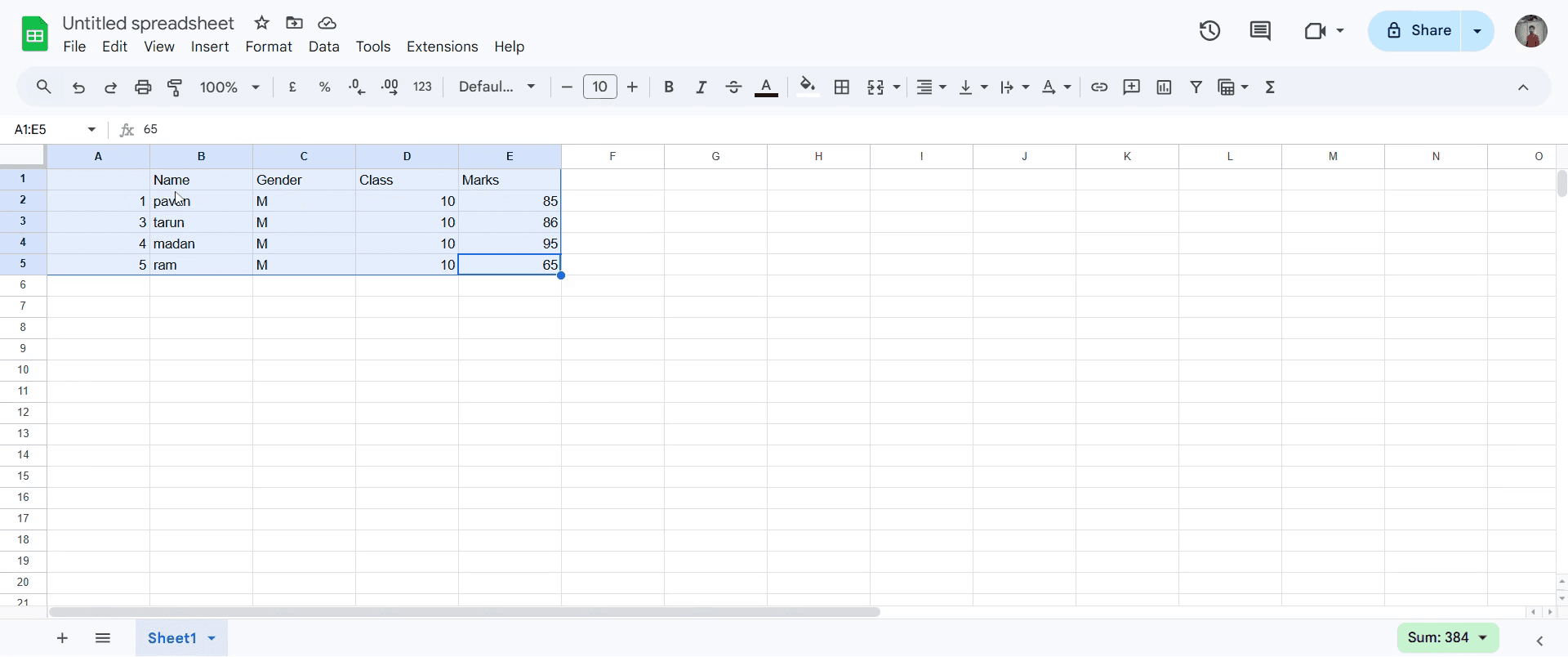
ステップ 1

まず、Google スプレッドシートを開きます。整理したいデータセットを選択します。

To begin, open your Google Spreadsheet. Select the dataset that you wish to organize into a table.


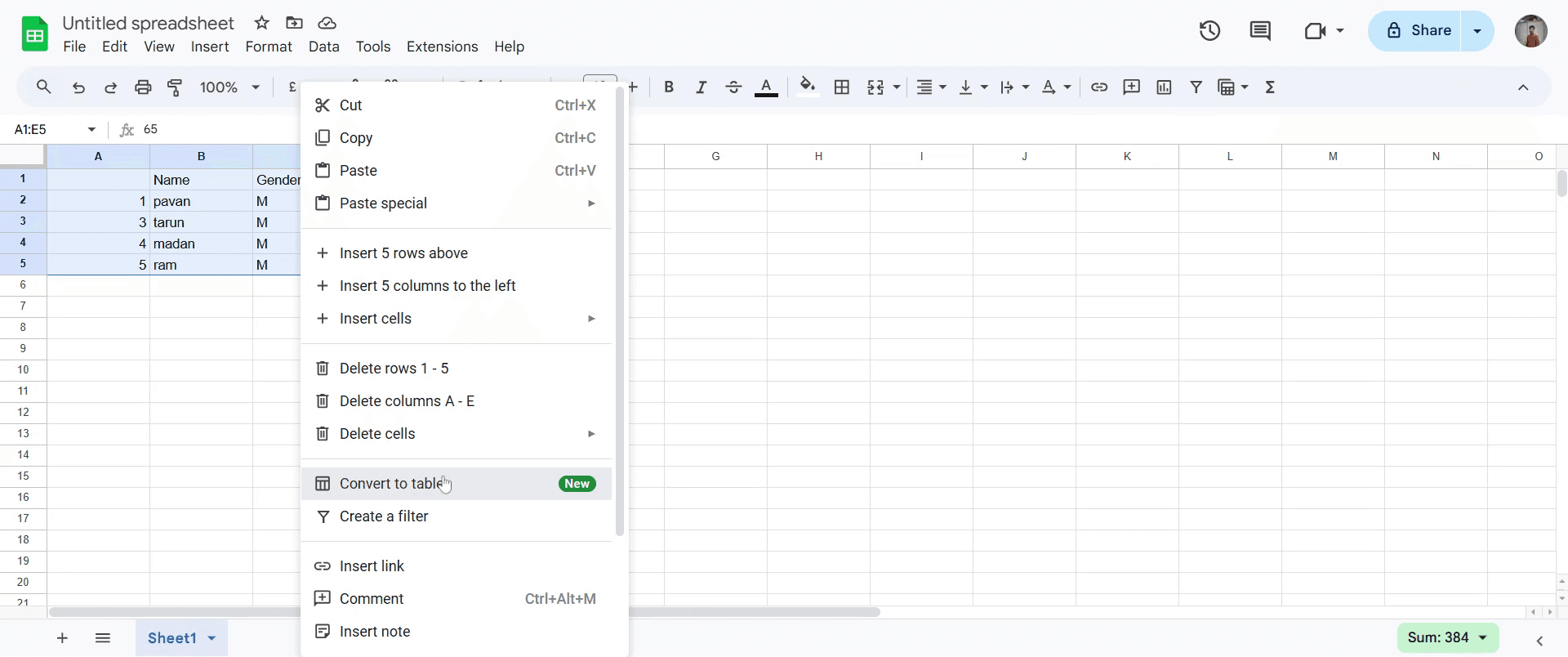
ステップ 2

右クリックして「テーブルに変換」をクリックします。

Right-click and Click on "Convert to table".

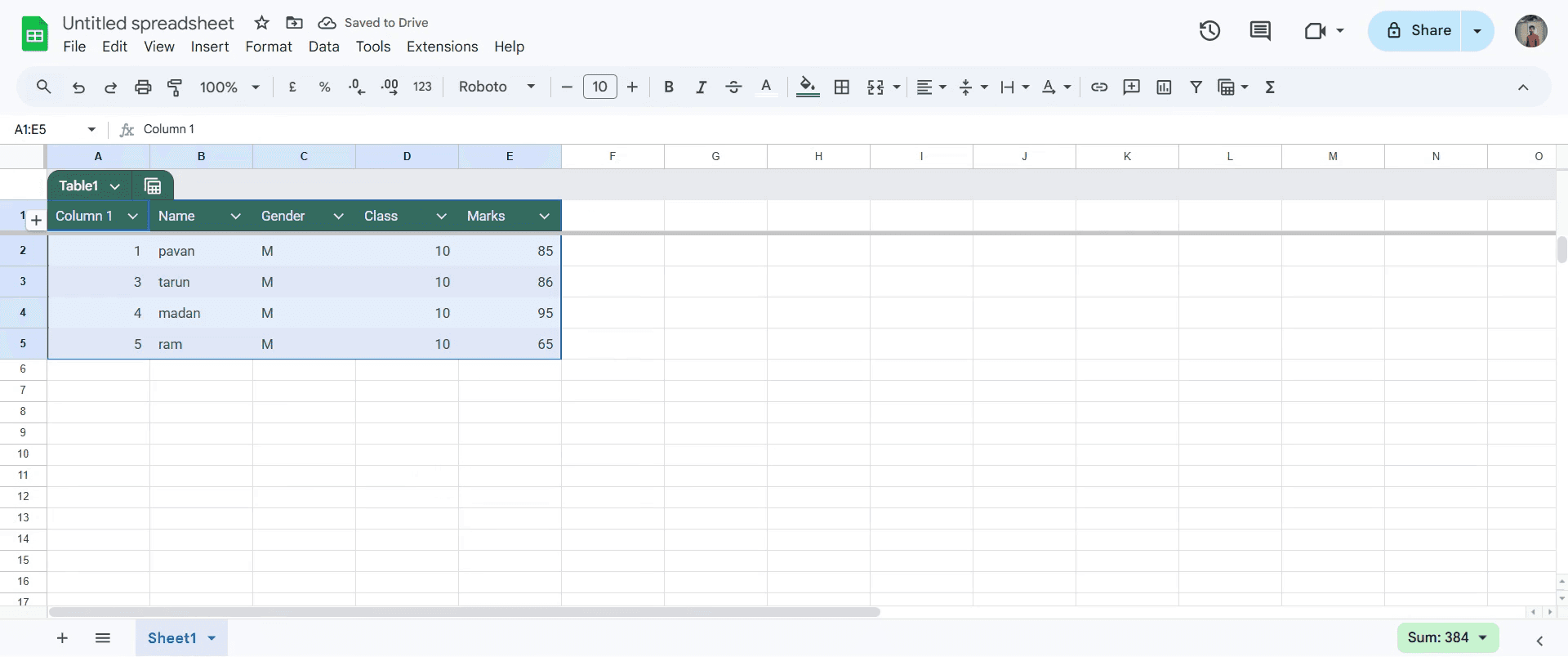
ステップ 3

クリックした後、自動的にデータがテーブルに変換されます。

 After clicking, its automatically convert data in to Table.

Google Sheetsでテーブルを作成するためのプロのヒント

  • 最初の行にヘッダーを使用し、それを太字にしてテーブルを読みやすくします。

  • ツールバーを使用して境界を適用し、テーブルのセルを視覚的に分けます。

  • より良い可読性のために交互の色を適用することで、テーブルとしてフォーマットするオプションを使用します。

Google Sheetsでテーブルを作成する際の一般的な落とし穴とそれを避ける方法

  • ヘッダー行を固定するのを忘れると、列名を追跡するのが難しくなる可能性があります。表示>固定>1行に移動してください。

  • データを正しくソートまたはフィルタリングしないと、データをソートを有効にするためにデータ>フィルターを作成オプションを使用します。

  • マージされたセルを不適切に使用すると、フォーマットの問題が発生する可能性があるため、必要でない限りマージを避けてください。

Google Sheetsでテーブルを作成するための一般的なFAQ

  • Google Sheetsでテーブルをフォーマットするにはどうすればよいですか?
    フォーマットメニューの下にある交互の色オプションを使用し、ヘッダーに太字のテキストを適用します。

  • テーブルにフィルターを追加できますか?
    はい、データを選択して、データ>フィルターを作成をクリックしてソートとフィルタリングを有効にします。

  • 新しいデータでテーブルを自動的に更新するにはどうすればよいですか?
    配列数式や名前付き範囲といった関数を使用して、新しいデータを自動的に含める動的範囲を使用します。

  • Macで画面を録画するには? 
    Macで画面を録画するには、Trupeer AIを使用できます。全画面をキャプチャすることができ、AIアバターの追加、音声の追加、動画でのズームインおよびズームアウトなどのAI機能を提供します。TrupeerのAIビデオ翻訳機能を使用すると、30以上の言語に動画を翻訳できます。

  • 画面録画にAIアバターを追加するには?
    画面録画にAIアバターを追加するには、AI画面録画ツールを使用する必要があります。 Trupeer AIはAI画面録画ツールで、複数のアバターを使用した動画を作成するのを支援し、動画用の独自のアバターを作成するのを助けます。

  • Windowsで画面を録画するには?

    Windowsで画面を録画するには、組み込みのゲームバー(Windows + G)を使用するか、AIアバター、音声の追加、翻訳などの高度な機能を備えた高度なAIツールであるTrupeer AIを使用できます。

  • 動画に音声を追加するには?
    動画に音声を追加するには、Trupeer AI Chrome拡張機能をダウンロードしてください。サインアップ後、音声のある動画をアップロードし、Trupeerから希望の音声を選択して、編集した動画をエクスポートします。

  • 画面録画をズームインするには?
    画面録画中にズームインするには、Trupeer AIのズーム効果を使用します。これにより特定の瞬間にズームインおよびズームアウトが可能になり、動画コンテンツの視覚的なインパクトを高めます。

この文書は、Google シート内にテーブルを作成するための簡単なプロセスを提供します。
これらの手順に従って、データを整然としたテーブルにシームレスに整理してください。

Google Sheetsでテーブルを作成することは、データをより簡単に整理、フォーマット、分析するのに役立ちます。空白のセルから始める場合でも、既存のデータをフォーマットする場合でも、これから始める方法は以下の通りです:

1. スプレッドシートを開く

2. データを選択する

  • 既存のデータを使用する: テーブルに変換したいセルをハイライトします。

  • 最初から始める: テーブルを置くための空白の範囲を選択し、必要な行数と列数を選びます。

3. テーブルを挿入する

  • トップメニューから「挿入」をクリックします。

  • 次に「テーブル」を選択してテーブルレイアウトを生成します(注: この機能はアカウント設定によってはよりテンプレートのように見える場合があります)。

代替方法:
Excelのようなネイティブの「テーブルとしてフォーマット」はありませんが、手動でセルに境界、背景色、およびフィルターを使用して類似の機能を持たせることができます。

4. ヘッダーを追加する(オプションだが推奨される)

  • テーブルにヘッダー(「名前」、「日付」、「金額」など)が含まれている場合は、それらが最初の行にあることを確認してください。

  • その後、最上行を固定することができます(表示 > 固定 > 1 行)ので、スクロールしてもヘッダーが表示され続けます。

5. テーブルをカスタマイズする

  • ツールバーの境界ボタンを使用して、セルの間に線を追加します。

  • より良い可読性のために、交互の行に塗りつぶし色を適用します。

  • フォーマット > 条件付き書式をクリックして、データに基づいた色ルールを追加します。

6. テーブルに名前を付ける(オプション)

  • Google SheetsがExcelのように公式にテーブルに名前を付けることはありませんが、範囲に名前を付けることができます:

    • テーブルを選択 > 右クリック > “名前付き範囲を定義”を選びます。

    • 数式で簡単に参照できるように、一意の名前を付けます。

7. テーブル機能を使用する

  • ソートとフィルター: テーブルをハイライトし、フィルターアイコン(ファンネル)をクリックしてドロップダウンフィルターを追加します。

  • 列や行のサイズ変更: 列/行の端にカーソルを合わせ、ドラッグしてサイズを変更します。

  • 行/列を追加: 行または列ラベルを右クリックし、「挿入」を選択します。

ステップバイステップガイド:Sheetsでテーブルを作成する方法

ステップ 1

まず、Google スプレッドシートを開きます。整理したいデータセットを選択します。

To begin, open your Google Spreadsheet. Select the dataset that you wish to organize into a table.


ステップ 2

右クリックして「テーブルに変換」をクリックします。

Right-click and Click on "Convert to table".

ステップ 3

クリックした後、自動的にデータがテーブルに変換されます。

 After clicking, its automatically convert data in to Table.

Google Sheetsでテーブルを作成するためのプロのヒント

  • 最初の行にヘッダーを使用し、それを太字にしてテーブルを読みやすくします。

  • ツールバーを使用して境界を適用し、テーブルのセルを視覚的に分けます。

  • より良い可読性のために交互の色を適用することで、テーブルとしてフォーマットするオプションを使用します。

Google Sheetsでテーブルを作成する際の一般的な落とし穴とそれを避ける方法

  • ヘッダー行を固定するのを忘れると、列名を追跡するのが難しくなる可能性があります。表示>固定>1行に移動してください。

  • データを正しくソートまたはフィルタリングしないと、データをソートを有効にするためにデータ>フィルターを作成オプションを使用します。

  • マージされたセルを不適切に使用すると、フォーマットの問題が発生する可能性があるため、必要でない限りマージを避けてください。

Google Sheetsでテーブルを作成するための一般的なFAQ

  • Google Sheetsでテーブルをフォーマットするにはどうすればよいですか?
    フォーマットメニューの下にある交互の色オプションを使用し、ヘッダーに太字のテキストを適用します。

  • テーブルにフィルターを追加できますか?
    はい、データを選択して、データ>フィルターを作成をクリックしてソートとフィルタリングを有効にします。

  • 新しいデータでテーブルを自動的に更新するにはどうすればよいですか?
    配列数式や名前付き範囲といった関数を使用して、新しいデータを自動的に含める動的範囲を使用します。

  • Macで画面を録画するには? 
    Macで画面を録画するには、Trupeer AIを使用できます。全画面をキャプチャすることができ、AIアバターの追加、音声の追加、動画でのズームインおよびズームアウトなどのAI機能を提供します。TrupeerのAIビデオ翻訳機能を使用すると、30以上の言語に動画を翻訳できます。

  • 画面録画にAIアバターを追加するには?
    画面録画にAIアバターを追加するには、AI画面録画ツールを使用する必要があります。 Trupeer AIはAI画面録画ツールで、複数のアバターを使用した動画を作成するのを支援し、動画用の独自のアバターを作成するのを助けます。

  • Windowsで画面を録画するには?

    Windowsで画面を録画するには、組み込みのゲームバー(Windows + G)を使用するか、AIアバター、音声の追加、翻訳などの高度な機能を備えた高度なAIツールであるTrupeer AIを使用できます。

  • 動画に音声を追加するには?
    動画に音声を追加するには、Trupeer AI Chrome拡張機能をダウンロードしてください。サインアップ後、音声のある動画をアップロードし、Trupeerから希望の音声を選択して、編集した動画をエクスポートします。

  • 画面録画をズームインするには?
    画面録画中にズームインするには、Trupeer AIのズーム効果を使用します。これにより特定の瞬間にズームインおよびズームアウトが可能になり、動画コンテンツの視覚的なインパクトを高めます。

Start creating videos with our AI Video + Doc generator

Start creating videos with our AI Video + Doc generator

Start creating videos with our AI Video + Doc generator

This document provides a straightforward process for creating a table within Google sheet.
Follow these steps to seamlessly organize your data into a well-structured table.

Creating a table in Google Sheets helps you organize, format, and analyze your data more easily. Whether you're starting with blank cells or formatting existing data, here's how to get started:

1. Open Your Spreadsheet

2. Select the Data

  • With existing data: Highlight the cells you want to convert into a table.

  • Starting from scratch: Select a blank range where your table will go, choose the number of rows and columns you'll need.

3. Insert the Table

  • Click “Insert” from the top menu.

  • Then choose “Table” to generate a table layout (note: this feature may be more template-like depending on your account setup).

Alternative Method:
There’s no native "Format as Table" like in Excel, but you can manually format cells using borders, background colors, and filters for similar functionality.

4. Add Headers (Optional but Recommended)

  • If your table includes headers (like "Name", "Date", "Amount"), make sure they're in the first row.

  • You can then freeze the top row (View > Freeze > 1 row) so headers stay visible as you scroll.

5. Customize Your Table

  • Use the Borders button in the toolbar to add lines between cells.

  • Apply fill colors to alternate rows for better readability.

  • Click Format > Conditional formatting to add color rules based on your data.

6. Name Your Table (Optional)

  • While Google Sheets doesn’t officially name tables like Excel, you can name the range:

    • Select your table > right-click > “Define named range”.

    • Give it a unique name for easy reference in formulas.

7. Use Table Features

  • Sort and filter: Highlight your table and click the filter icon (funnel) to add dropdown filters.

  • Resize columns and rows: Hover over the edge of a column/row and drag to resize.

  • Add rows/columns: Right-click on a row or column label and choose Insert.

Step-by-Step Guide: How to create a table in Sheets

Step 1

To begin, open your Google Spreadsheet. Select the dataset that you wish to organize into a table.

To begin, open your Google Spreadsheet. Select the dataset that you wish to organize into a table.

Step 2

Right-click and Click on "Convert to table".

Right-click and Click on "Convert to table".

Step 3

After clicking, its automatically convert data in to Table.

 After clicking, its automatically convert data in to Table.

This document provides a straightforward process for creating a table within Google sheet.
Follow these steps to seamlessly organize your data into a well-structured table.

Creating a table in Google Sheets helps you organize, format, and analyze your data more easily. Whether you're starting with blank cells or formatting existing data, here's how to get started:

1. Open Your Spreadsheet

2. Select the Data

  • With existing data: Highlight the cells you want to convert into a table.

  • Starting from scratch: Select a blank range where your table will go, choose the number of rows and columns you'll need.

3. Insert the Table

  • Click “Insert” from the top menu.

  • Then choose “Table” to generate a table layout (note: this feature may be more template-like depending on your account setup).

Alternative Method:
There’s no native "Format as Table" like in Excel, but you can manually format cells using borders, background colors, and filters for similar functionality.

4. Add Headers (Optional but Recommended)

  • If your table includes headers (like "Name", "Date", "Amount"), make sure they're in the first row.

  • You can then freeze the top row (View > Freeze > 1 row) so headers stay visible as you scroll.

5. Customize Your Table

  • Use the Borders button in the toolbar to add lines between cells.

  • Apply fill colors to alternate rows for better readability.

  • Click Format > Conditional formatting to add color rules based on your data.

6. Name Your Table (Optional)

  • While Google Sheets doesn’t officially name tables like Excel, you can name the range:

    • Select your table > right-click > “Define named range”.

    • Give it a unique name for easy reference in formulas.

7. Use Table Features

  • Sort and filter: Highlight your table and click the filter icon (funnel) to add dropdown filters.

  • Resize columns and rows: Hover over the edge of a column/row and drag to resize.

  • Add rows/columns: Right-click on a row or column label and choose Insert.

Step-by-Step Guide: How to create a table in Sheets

Step 1

To begin, open your Google Spreadsheet. Select the dataset that you wish to organize into a table.

To begin, open your Google Spreadsheet. Select the dataset that you wish to organize into a table.

Step 2

Right-click and Click on "Convert to table".

Right-click and Click on "Convert to table".

Step 3

After clicking, its automatically convert data in to Table.

 After clicking, its automatically convert data in to Table.

Start creating videos with our AI Video + Doc generator for free

Start creating videos with our AI Video + Doc generator for free

Start creating videos with our AI Video + Doc generator for free

Pro-tips for creating a table in Google Sheets

  • Use headers in the first row and bold them to make your table easier to read.

  • Apply borders using the toolbar to visually separate table cells.

  • Use the format as table option by applying alternating colors for better readability.

Common pitfalls & how to avoid them while creating a table in Google Sheets

  • Forgetting to freeze the header row can make it difficult to track column names, go to view > freeze > 1 row.

  • Not sorting or filtering data properly, use the data > create a filter option to enable sorting.

  • Using merged cells incorrectly can cause formatting issues, avoid merging unless necessary.

Pro-tips for creating a table in Google Sheets

  • Use headers in the first row and bold them to make your table easier to read.

  • Apply borders using the toolbar to visually separate table cells.

  • Use the format as table option by applying alternating colors for better readability.

Common pitfalls & how to avoid them while creating a table in Google Sheets

  • Forgetting to freeze the header row can make it difficult to track column names, go to view > freeze > 1 row.

  • Not sorting or filtering data properly, use the data > create a filter option to enable sorting.

  • Using merged cells incorrectly can cause formatting issues, avoid merging unless necessary.

Common FAQs for creating a table in Google Sheets

  • How do I format a table in Google Sheets?
    Use the alternating colors option under the format menu and apply bold text to headers.

  • Can I add a filter to my table?
    Yes, select your data and click data > create a filter to enable sorting and filtering.

  • How do I make my table automatically update with new data?
    Use dynamic ranges with functions like array formula or named ranges to include new data automatically.

  • How to screen record on mac? 
    To screen record on a Mac, you can use Trupeer AI. It allows you to capture the entire screen and provides AI capabilities such as adding AI avatars, add voiceover, add zoom in and out in the video. With trupeer’s AI video translation feature, you can translate the video into 30+ languages. 

  • How to add an AI avatar to screen recording?
    To add an AI avatar to a screen recording, you'll need to use an AI screen recording tool. Trupeer AI is an AI screen recording tool, which helps you create videos with multiple avatars, also helps you in creating your own avatar for the video.

  • How to screen record on windows?

    To screen record on Windows, you can use the built-in Game Bar (Windows + G) or advanced AI tool like Trupeer AI for more advanced features such as AI avatars, voiceover, translation etc.

  • How to add voiceover to video?
    To add voiceover to videos, download trupeer ai chrome extension. Once signed up, upload your video with voice, choose the desired voiceover from trupeer and export your edited video. 

  • How do I Zoom in on a screen recording?
    To zoom in during a screen recording, use the zoom effects in Trupeer AI which allows you to zoom in and out at specific moments, enhancing the visual impact of your video content.


Suggested Reads

Technical Documentation Generator

User Manual Guide

Knowledge base software

How to Turn an Image into a Coloring Page in Canva

How to Print Double Sided on Canva

How to Stretch Text in Canva

How to Download Multiple Files at Once from Canva

How To Fade Edges Of Photo In Canva

Common FAQs for creating a table in Google Sheets

  • How do I format a table in Google Sheets?
    Use the alternating colors option under the format menu and apply bold text to headers.

  • Can I add a filter to my table?
    Yes, select your data and click data > create a filter to enable sorting and filtering.

  • How do I make my table automatically update with new data?
    Use dynamic ranges with functions like array formula or named ranges to include new data automatically.

  • How to screen record on mac? 
    To screen record on a Mac, you can use Trupeer AI. It allows you to capture the entire screen and provides AI capabilities such as adding AI avatars, add voiceover, add zoom in and out in the video. With trupeer’s AI video translation feature, you can translate the video into 30+ languages. 

  • How to add an AI avatar to screen recording?
    To add an AI avatar to a screen recording, you'll need to use an AI screen recording tool. Trupeer AI is an AI screen recording tool, which helps you create videos with multiple avatars, also helps you in creating your own avatar for the video.

  • How to screen record on windows?

    To screen record on Windows, you can use the built-in Game Bar (Windows + G) or advanced AI tool like Trupeer AI for more advanced features such as AI avatars, voiceover, translation etc.

  • How to add voiceover to video?
    To add voiceover to videos, download trupeer ai chrome extension. Once signed up, upload your video with voice, choose the desired voiceover from trupeer and export your edited video. 

  • How do I Zoom in on a screen recording?
    To zoom in during a screen recording, use the zoom effects in Trupeer AI which allows you to zoom in and out at specific moments, enhancing the visual impact of your video content.


Suggested Reads

Technical Documentation Generator

User Manual Guide

Knowledge base software

How to Turn an Image into a Coloring Page in Canva

How to Print Double Sided on Canva

How to Stretch Text in Canva

How to Download Multiple Files at Once from Canva

How To Fade Edges Of Photo In Canva

Start creating videos with our AI Video + Doc generator

Start creating videos with our AI Video + Doc generator

Start creating videos with our AI Video + Doc generator

私たちのAIビデオ+ドキュメントジェネレーターで動画を作成し始めましょう

粗いスクリーン録画からのインスタントAI製品ビデオとドキュメント

Experience the new & faster way of creating product videos.

Instant AI Product Videos and Docs from Rough Screen Recordings.

Experience the new & faster way of creating product videos.

Instant AI Product Videos and Docs from Rough Screen Recordings.

Experience the new & faster way of creating product videos.

Instant AI Product Videos and Docs from Rough Screen Recordings.