Trupeer Blog
Riassumi
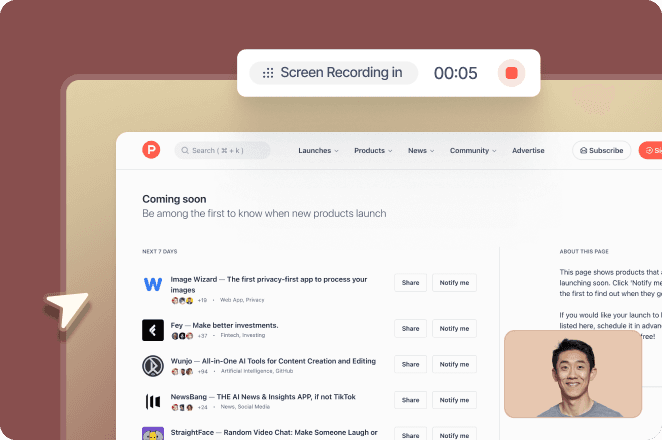
Immagina di guidare un team in un'azienda tecnologica, responsabile della creazione di tutorial coinvolgenti per il rilascio di un nuovo software. Il tuo team registra le attività sullo schermo per catturare walkthrough dettagliati, ma le registrazioni silenziose risultano insipide senza uno script di narrazione che le accompagni. Redigere questi script manualmente richiede molto tempo, spesso fino a cinque ore per un video di 30 minuti.
La tecnologia di visione artificiale può ridurre questo processo a pochi minuti.
Con gli strumenti giusti, puoi trasformare registrazioni silenziose dello schermo in script completi, semplificando il processo di produzione dei contenuti. I team che valutano gli strumenti spesso iniziano con un confronto tra alternative a Loom prima di standardizzare un flusso di lavoro.
Perché è importante la narrazione tramite visione artificiale?
Per le aziende che cercano di migliorare i propri contenuti video, trasformare l'attività sullo schermo in una narrazione avvincente è fondamentale. Senza una narrazione efficace, gli spettatori potrebbero perdere informazioni critiche o fraintendere il materiale. In contesti educativi e di formazione, questo può portare a tassi di ritenzione più bassi e a un calo del coinvolgimento degli utenti. Ad esempio, i dipendenti che imparano un nuovo strumento software potrebbero avere difficoltà a comprendere funzionalità complesse se il video mostra solo azioni sullo schermo senza contesto. Questa mancanza di comprensione può causare errori costosi e flussi di lavoro inefficienti.
Inoltre, in settori in cui il tempo equivale a denaro, come il supporto clienti o l'onboarding dei clienti, la distribuzione rapida e accurata delle informazioni è fondamentale. Quando il tuo team può convertire senza sforzo le registrazioni dello schermo in script, risparmia tempo e risorse preziose. Invece di passare ore a trascrivere e creare narrazioni, può concentrarsi sul perfezionamento dei contenuti e sulla risposta alle domande degli utenti. Questa efficienza è vitale per mantenere un vantaggio competitivo in settori frenetici. Integrando i casi d'uso dell'adozione dell'IA con la visione artificiale, le aziende possono migliorare in modo significativo i propri metodi di distribuzione dei contenuti.
Quali sono i vantaggi della narrazione tramite visione artificiale?
Integrare la visione artificiale nel tuo processo di produzione video offre numerosi vantaggi:
Efficienza del tempo. Automatizzando il processo di generazione degli script, i team possono ridurre il tempo dedicato alla trascrizione manuale. Ciò consente loro di concentrarsi su attività di livello superiore, risparmiando fino all'80% del tempo precedentemente dedicato alla scrittura degli script.
Coerenza nel messaggio. Gli script automatizzati garantiscono che ogni video mantenga un tono e uno stile coerenti. Questa uniformità aiuta a costruire una forte presenza del brand ed evita incomprensioni.
Maggiore coinvolgimento. Con una narrazione rifinita, i video diventano più coinvolgenti, aumentando i tassi di retention degli spettatori fino al 30%. Una guida ben scritta cattura il pubblico, garantendo che il messaggio venga trasmesso in modo efficace.
Accessibilità. Gli script di narrazione rendono i video accessibili a un pubblico più ampio, comprese le persone che si affidano a contenuti testuali. Questa inclusività può ampliare la tua portata e migliorare la soddisfazione degli utenti.
SEO migliorata. Le trascrizioni generate dalle attività sullo schermo potenziano gli sforzi di ottimizzazione per i motori di ricerca, rendendo i contenuti video più facili da scoprire. Integrando una piattaforma video IA, le aziende possono migliorare la propria visibilità online.
Riduzione dei costi. Automatizzare la scrittura degli script riduce la necessità di ampie risorse umane, abbattendo in modo significativo i costi del lavoro. Questa efficienza consente alle aziende di allocare i budget ad altre aree critiche.
Quali funzionalità di Trupeer ti aiutano a trasformare l'attività sullo schermo in script di narrazione?
Trupeer offre diverse funzionalità progettate per semplificare il processo di conversione dell'attività sullo schermo in script di narrazione dettagliati.
Registrazione dello schermo con IA con auto-zoom e rilevamento dei clic
Questa funzionalità cattura ogni dettaglio della tua attività sullo schermo, eseguendo automaticamente lo zoom sulle aree di interesse e rilevando i clic. Tale precisione garantisce che tutte le azioni critiche vengano evidenziate, gettando le basi per uno script completo. Con il registratore schermo per Mac di Trupeer, gli utenti possono acquisire facilmente registrazioni di alta qualità senza installare software aggiuntivo.
Registrazione silenziosa dello schermo con narrazione IA automatica
La funzionalità di registrazione silenziosa dello schermo di Trupeer genera automaticamente script di narrazione utilizzando l'IA. L'IA analizza le azioni registrate, traducendole in narrazioni coerenti. Questa funzione è ideale per creare bozze rapide di script di narrazione, consentendoti di concentrarti sul perfezionamento dei contenuti invece di partire da zero.
Generazione automatica di SOP da qualsiasi registrazione
Trupeer eccelle nella generazione di Procedure Operative Standard da registrazioni dello schermo. Questa funzione trasforma le attività catturate in documenti strutturati, pronti per la modifica. Con la piattaforma di documentazione IA, i team possono produrre facilmente SOP, garantendo che tutte le procedure siano ben documentate e accessibili.
Voiceover IA in oltre 65 voci naturali, con velocità e tono regolabili
Una volta che lo script di narrazione è pronto, la funzione di voiceover IA di Trupeer può dargli vita. Con oltre 65 voci naturali tra cui scegliere, puoi regolare la velocità e il tono in base alle preferenze del tuo pubblico. Questa capacità migliora l'esperienza complessiva di visione, rendendo i tuoi contenuti video più coinvolgenti.
Base di conoscenza ricercabile con IA e deep-link con timestamp
Dopo aver convertito l'attività sullo schermo in uno script, puoi archiviare e gestire i tuoi contenuti nella base di conoscenza ricercabile con IA di Trupeer. Questa funzione indicizza ogni registrazione, consentendo agli utenti di cercare contenuti specifici tramite deep link con timestamp. Garantisce che tutti i contenuti video siano facilmente accessibili, facilitando un recupero efficiente delle informazioni.
Come si trasforma passo dopo passo l'attività sullo schermo in script di narrazione con Trupeer?
Passaggio 1: registra il tuo schermo
Inizia aprendo il registratore basato su browser di Trupeer, che non richiede alcuna installazione. Questo strumento semplifica il processo di registrazione, consentendoti di acquisire senza sforzo attività sullo schermo di alta qualità. Scegli la funzione di registrazione dello schermo con IA con auto-zoom e rilevamento dei clic per assicurarti che la registrazione evidenzi le interazioni essenziali. La funzione di auto-zoom mette in evidenza le aree chiave sullo schermo, mentre il rilevamento dei clic cattura le interazioni dell'utente. Questa configurazione fornisce una base completa per il tuo script di narrazione, assicurando che nessun dettaglio critico venga trascurato. In genere, la registrazione richiede la durata della tua attività, più qualche minuto per l'elaborazione.
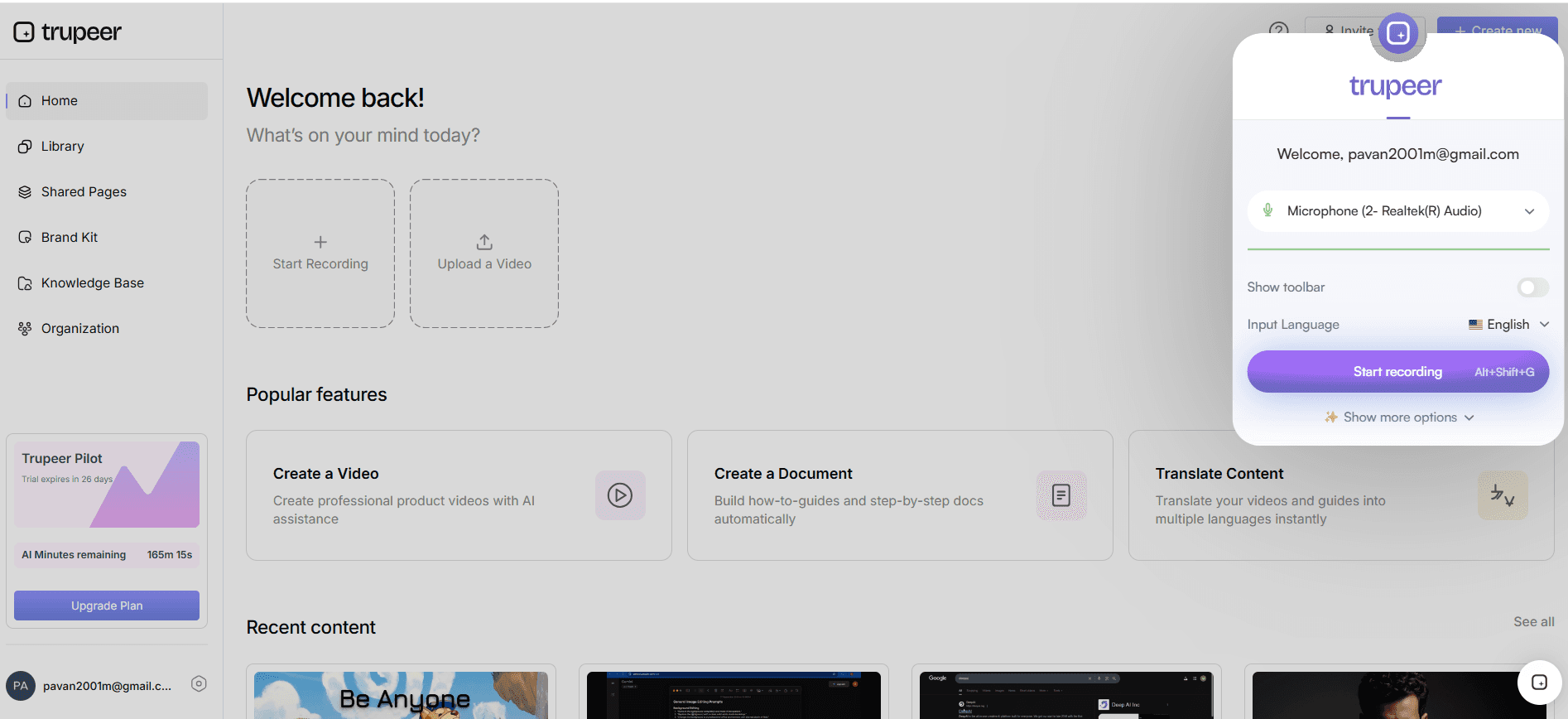
Passaggio 2: abilita la registrazione silenziosa dello schermo
Successivamente, attiva la registrazione silenziosa dello schermo con narrazione IA automatica. Questa funzione cattura il tuo schermo mentre genera una bozza di script di narrazione. L'IA di Trupeer analizza le azioni registrate, traducendole in una bozza narrativa coerente. Questo script iniziale funge da base, consentendoti di concentrarti sul perfezionamento dei contenuti. Il processo è rapido: la generazione dello script richiede solo pochi minuti dopo la registrazione. Nei casi limite in cui si verificano azioni complesse, l'IA può fornire suggerimenti per chiarire, garantendo l'accuratezza della narrazione.
Passaggio 3: modifica e migliora lo script
Una volta che la bozza dello script è pronta, è il momento di migliorarla utilizzando le funzionalità di editing di Trupeer. Usa la rimozione automatica delle parole riempitive per eliminare eventuali suoni superflui come "ehm" o "ah", migliorando la chiarezza dello script. Questo passaggio è fondamentale per mantenere un tono professionale e può essere completato in pochi secondi. Regola la velocità e il tono utilizzando la funzione di voiceover IA, che offre oltre 65 voci naturali. Questi aggiustamenti garantiscono che lo script sia allineato allo stile di presentazione desiderato, rendendolo più coinvolgente per il pubblico.
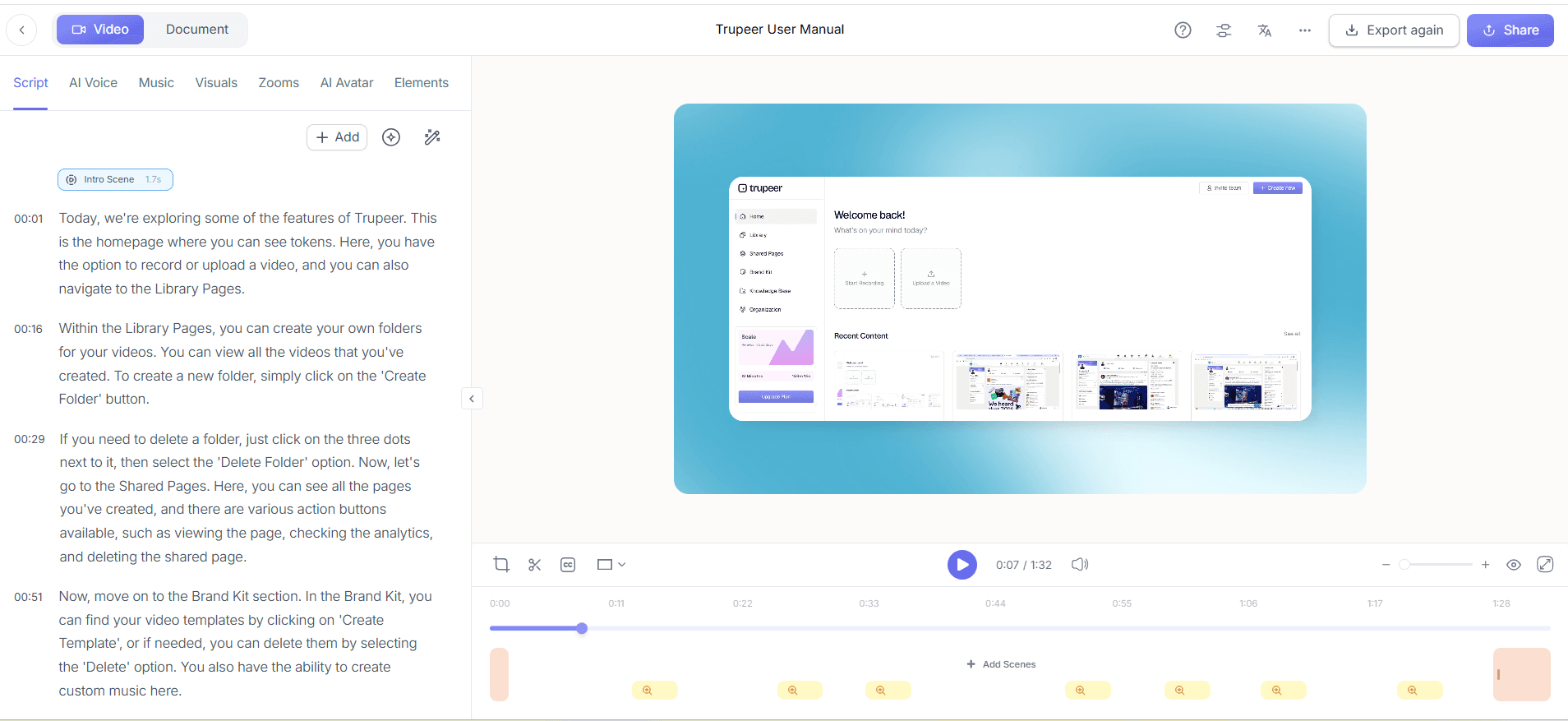
Passaggio 4: genera le SOP
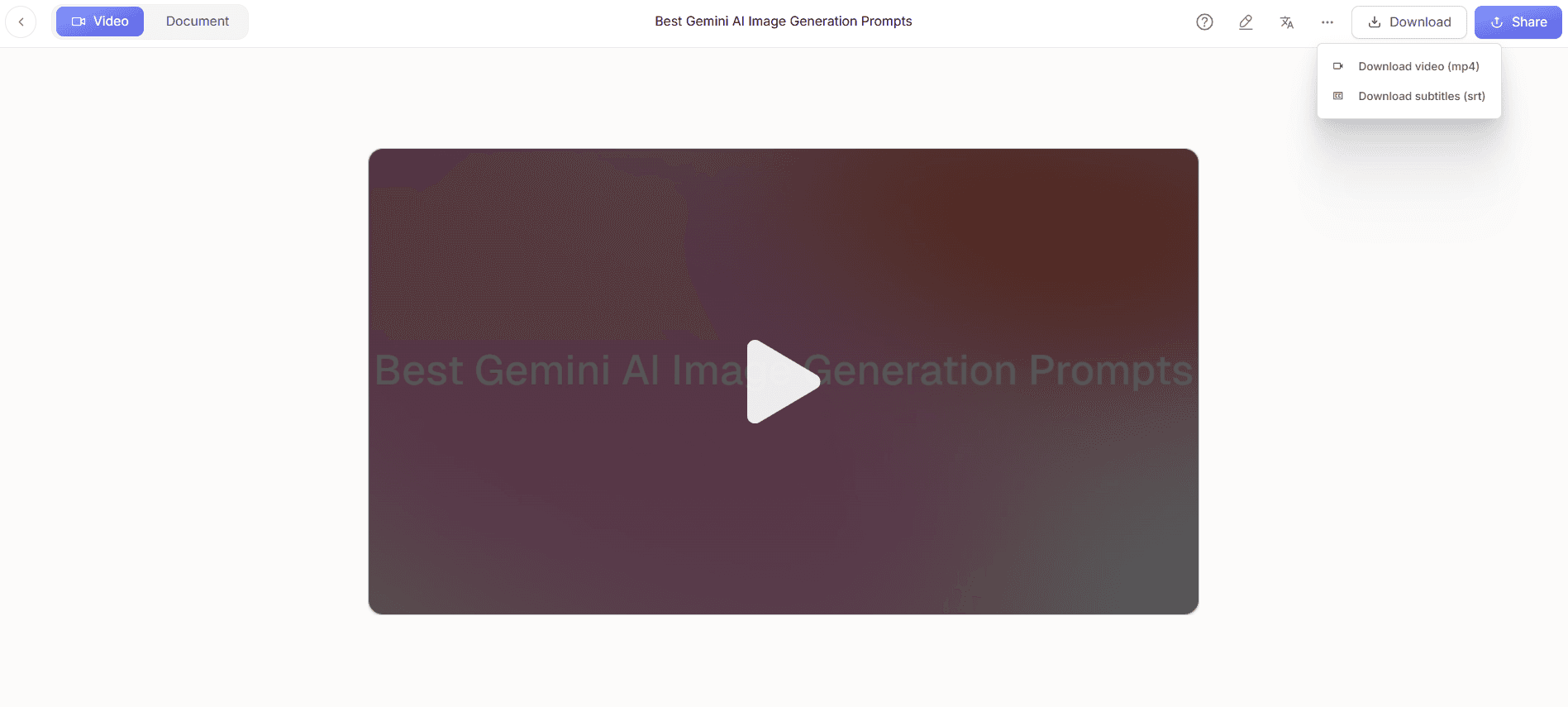
La generazione automatica delle SOP di Trupeer è una svolta importante per creare documentazione strutturata dalle tue registrazioni. Dopo aver modificato lo script, usa questa funzione per convertire la narrazione in una Procedura Operativa Standard dettagliata. Questa capacità trasforma i tuoi contenuti video in una guida completa, pronta per la distribuzione o per scopi formativi. Le SOP generate sono pronte per la modifica, consentendo una rapida personalizzazione ed esportazione in più formati come MP4, HTML o PDF. Questo passaggio richiede in genere pochi minuti, a seconda della durata della registrazione.
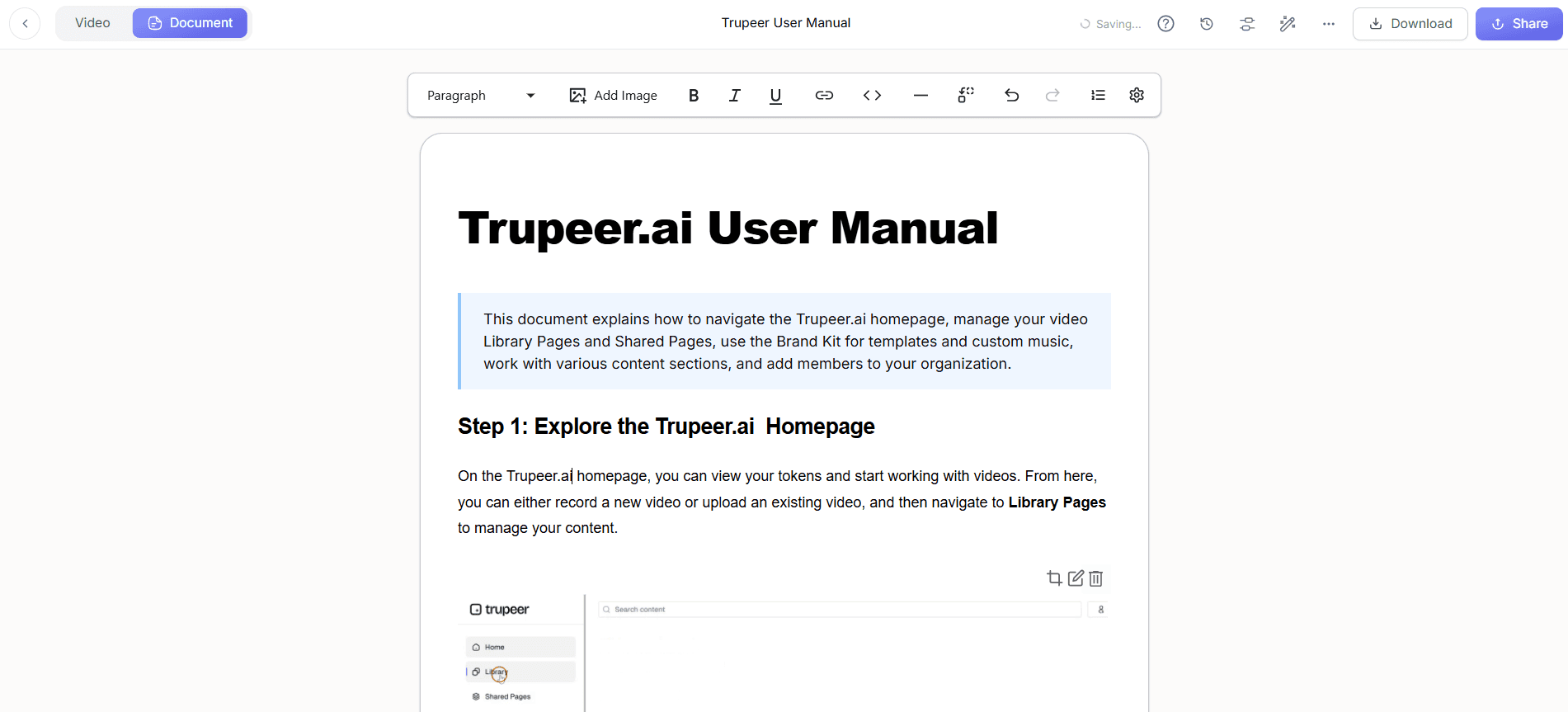
Passaggio 5: localizza e traduci i contenuti
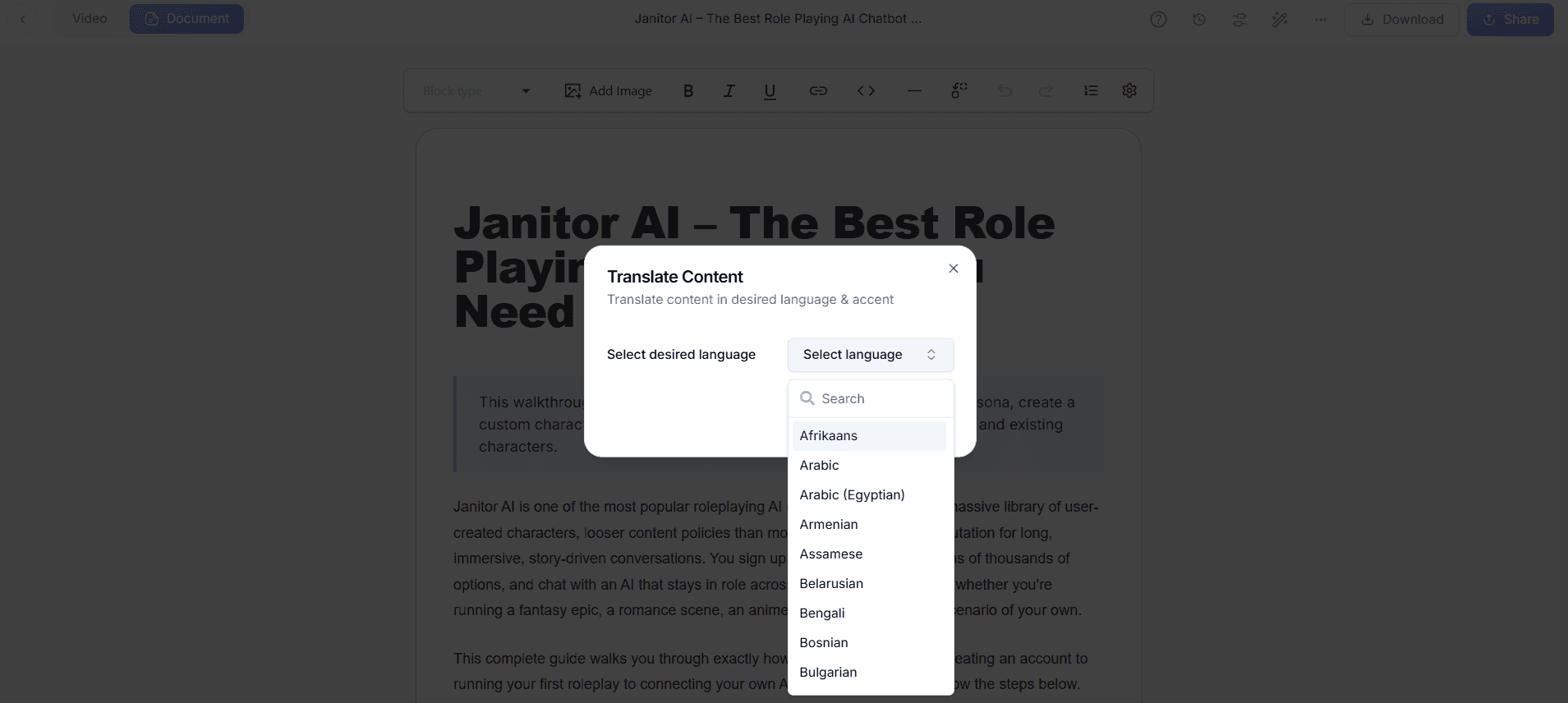
Per il pubblico globale, la localizzazione è fondamentale. Trupeer offre traduzione IA in oltre 40 lingue, completa di opzioni di sincronizzazione labiale e doppiaggio. Questa funzione garantisce che il tuo script di narrazione sia accessibile a un pubblico non anglofono, ampliando la tua portata. Basta selezionare la lingua di destinazione e Trupeer si occupa del resto, sincronizzando audio e immagini in modo fluido. Questo processo è efficiente e richiede in genere meno di un'ora per tradurre e doppiare un video di durata standard. È un modo efficace per assicurarti che i tuoi contenuti risuonino con pubblici diversi.
Passaggio 6: distribuisci e misura l'impatto
Infine, usa la base di conoscenza ricercabile con IA di Trupeer per la distribuzione. Carica i tuoi video localizzati, consentendo un facile accesso e recupero tramite deep link con timestamp. Questa funzione non solo migliora l'esperienza utente, ma facilita anche la gestione dei contenuti. Monitora il coinvolgimento degli spettatori utilizzando gli strumenti di analisi di Trupeer, che offrono informazioni sulle prestazioni dei video, sui tassi di abbandono e sulle heatmap. Queste metriche sono preziose per perfezionare la tua strategia dei contenuti, assicurando che i tuoi video soddisfino le aspettative del pubblico. Completare questo passaggio completa il processo, rendendo i tuoi script azionabili e di impatto. Per un approfondimento, la nostra guida su scrivere uno script video copre il playbook correlato.
Quali suggerimenti aiutano a scrivere script di narrazione partendo dall'attività sullo schermo?
Creare script di narrazione efficaci a partire dall'attività sullo schermo richiede un mix di tecnica e strategia. Ecco alcuni suggerimenti per ottimizzare il tuo processo:
Usa linee guida chiare per la registrazione. Stabilisci uno stile coerente per catturare le attività sullo schermo, per garantire uniformità in tutti i video. Questo approccio aiuta a mantenere l'identità del brand.
Ottimizza l'editing dello script. Concentrati sulla rimozione delle parole riempitive e sulla chiarezza del tuo script. Usa gli strumenti di editing di Trupeer per un prodotto finale rifinito.
usa la traduzione IA. ai/tools/script-to-video-maker">strumento per creare video da script per una traduzione e localizzazione rapide, ampliando il tuo pubblico.
Standardizza con le SOP. Converti gli script in SOP per uso interno, assicurando che tutti i membri del team abbiano accesso a materiali di formazione coerenti.
Monitora le metriche di coinvolgimento. Usa l'analisi per tracciare il modo in cui il tuo pubblico interagisce con i video. Questi dati sono fondamentali per perfezionare i contenuti.
Rimani aggiornato sulle funzionalità. Esplora regolarmente le nuove funzionalità e integrazioni all'interno di Trupeer per migliorare il tuo processo di scrittura degli script.
Confronta le alternative. Consulta un confronto tra alternative a Scribe per assicurarti di utilizzare lo strumento migliore per le tue esigenze.
Domande frequenti
In che modo la visione artificiale crea uno script di narrazione dall'attività sullo schermo?
La visione artificiale cattura e analizza le azioni sullo schermo, convertendole in testo coerente. Identifica le azioni chiave, come clic e transizioni, e le traduce in una narrazione. Questo processo coinvolge algoritmi di IA che riconoscono schemi e contesto all'interno della registrazione. Automatizzando questo processo, la visione artificiale riduce lo sforzo manuale normalmente richiesto per creare uno script, garantendo che la narrazione sia accurata e allineata al contenuto visivo.
Quali sono i limiti dell'uso dell'IA per la generazione di script?
La generazione di script con IA può occasionalmente interpretare in modo errato azioni complesse o contesti sottili, portando a inesattezze. Sebbene eccella nella gestione di attività semplici, scenari intricati potrebbero richiedere aggiustamenti manuali. Inoltre, l'IA può avere difficoltà con accenti o slang, influenzando l'accuratezza dello script generato. Nonostante questi limiti, i continui progressi nella tecnologia IA stanno gradualmente riducendo tali problemi, rendendola uno strumento affidabile per la maggior parte delle applicazioni standard.
Trupeer può gestire script di narrazione in più lingue?
Sì, Trupeer supporta script di narrazione multilingue tramite la sua funzione di traduzione IA. Offre traduzione in oltre 40 lingue, con capacità di sincronizzazione labiale e doppiaggio. Questo garantisce che i tuoi contenuti video siano accessibili a un pubblico globale. Utilizzando la funzione di traduzione video IA, puoi raggiungere senza problemi gruppi linguistici diversi, migliorando l'impatto e la portata dei tuoi contenuti.
Trupeer richiede l'installazione per la registrazione?
No, il registratore basato su browser di Trupeer ti consente di acquisire attività sullo schermo senza alcuna installazione. Questa funzione è particolarmente utile per chi ha bisogno di una soluzione di registrazione rapida ed efficiente. Eliminando la necessità di scaricare software, Trupeer semplifica il processo di registrazione, rendendolo accessibile da qualsiasi dispositivo con accesso a Internet. Questa flessibilità è ideale per team remoti e creatori di contenuti sempre in movimento.
È possibile integrare Trupeer con i sistemi di gestione dei contenuti esistenti?
Sì, Trupeer può essere integrato con vari sistemi di gestione dei contenuti (CMS) per migliorare l'efficienza del flusso di lavoro. Questa integrazione consente una gestione e distribuzione dei contenuti fluida. Collegando Trupeer al tuo CMS, puoi automatizzare i processi di caricamento e aggiornamento, garantendo che tutti i contenuti video siano aggiornati e facilmente accessibili. Tali integrazioni sono fondamentali per mantenere una libreria di contenuti organizzata ed efficiente.
Blog correlati