Trupeer Blog
Summarise
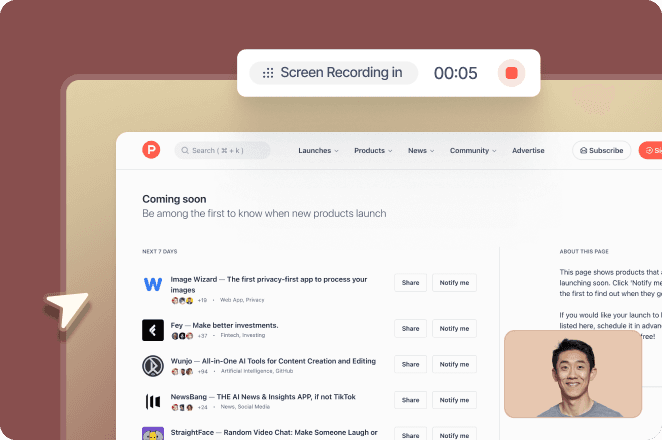
We tested 12 knowledge base software tools across pricing, AI search, video support, ease of use, and integrations, for both internal team documentation and customer-facing help centers. Here's what's actually worth your time.
A knowledge base is the difference between a team that ships and a team that spends half the week answering the same questions. Done well, it cuts support tickets, speeds up onboarding, and turns scattered tribal knowledge into something searchable. Done badly, it becomes a graveyard of stale docs nobody trusts.
Most "best knowledge base software" lists are sponsored placements or three-year-old reviews of tools that have completely changed since. We did this differently. We signed up for every tool below, ran the same five workflows through each, onboarding doc, troubleshooting article, video walkthrough, internal SOP, customer FAQ, and timed how long each took. We also tracked the gap most lists ignore: how the same tool performs for internal teams versus customer-facing help centers. They are not the same job.
If you're short on time, jump to:
The comparison table
Best for internal team documentation
Best for customer-facing help centers
Best free and open-source option
How to actually pick
FAQ
What is knowledge base software, exactly?
Knowledge base software is a tool that stores and organizes a company's institutional knowledge, how-to guides, troubleshooting articles, SOPs, policies, FAQs, video walkthroughs, in one searchable place. Employees, customers, or both use it to find answers without asking a human. That's also where the knowledge base article fits in: it takes the knowledge you already have and turns it into something you can share.
Two things separate modern knowledge base software from a shared Google Drive folder: structure and search. Structure means hierarchy, categories, permissions, and templates so content stays organized as it scales. Search means a way to find the right answer in seconds, ideally with AI that understands intent rather than just matching keywords.
There are two main flavors. Internal knowledge bases live behind a login and serve employees, engineering wikis, HR handbooks, sales playbooks. Customer-facing knowledge bases (often called help centers) are public and serve users, product help docs, troubleshooting guides, onboarding tutorials. Some tools do both well. Most pick a side. For a deeper definition and the business case, see our guide on what a knowledge base is and why you need one.
How we tested
Every tool on this list went through the same five-part evaluation:
Setup speed. How long from sign-up to first published article. We timed it. Anything over 30 minutes lost points.
Search quality. We loaded each tool with the same 50 documents and asked the same 15 questions. We graded answers on accuracy, citation quality (does the tool tell you which doc the answer came from?), and speed.
Editor experience. We wrote the same 800-word how-to guide in each tool, with images, a video embed, and a code block. We noted formatting limits, embed support, and whether the published page actually looks decent.
Maintenance. We checked whether the tool helps you keep content fresh, stale-content detection, scheduled reviews, broken-link alerts, content ownership at the article level.
Real pricing at scale. We modeled cost for a 50-person team. Many tools advertise "$8/user/mo" but ta
ck on AI features as a $10 add-on, charge for guests, or hide enterprise pricing behind a sales call.
We didn't accept demos from vendors and we didn't take affiliate money for placement. If you'd like to see how the leading examples actually look in production, our companion guide on the best knowledge base examples breaks down the design and structure of nine real-world help centers.
What to look for in knowledge base software
Before you pick a tool, get clear on six things. Most teams skip this and end up migrating in 18 months.
1. Internal team or customer-facing, or both? A tool optimized for customer help centers (Zendesk, Document360, HelpScout) is overkill and underwhelming for an engineering wiki. A tool optimized for internal team docs (Slite, Notion, Confluence) usually has weak public-facing customization. Decide before you shortlist.
2. AI search that actually works. Almost every tool now claims "AI-powered search." Most just bolt OpenAI on top of keyword matching. Real AI search returns the answer with a citation showing which document it pulled from, handles natural-language queries ("how do I cancel my account") not just keywords, and refuses to hallucinate when the answer isn't in your docs. Test this in a free trial, don't take their word.
3. Video and rich media. Text-only knowledge bases are a 2010 problem. Most users would rather watch a 90-second walkthrough than read 600 words. Look for native video embeds, screen recording integrations, and the ability to make video content searchable with timestamps and transcripts.
4. Maintenance, not just creation. Knowledge bases rot. Articles go stale, owners leave, products change. The tools that actually work in year three have content verification (mark a doc as "verified" with an expiry), stale-content detection, ownership at the article level, and analytics on which articles aren't performing.
5. Honest pricing at your team size. A "$8/user" tool can become $25/user once you add AI, guests, advanced permissions, and audit logs. Always model the price for your headcount in 12 months, not today.
6. Migration path in and out. You will switch tools eventually. Tools that import cleanly from Notion, Confluence, and Google Drive get adopted faster. Tools that let you export to Markdown protect you from lock-in.
Quick verdict: who should pick what
Need a video-led knowledge base for both internal teams and customers? Trupeer AI
Pure internal team docs, growing past 50 people? Slite
All-in-one workspace and don't mind maintaining structure? Notion
Already deep in the Atlassian stack? Confluence
Customer-facing help center for a SaaS product? Document360 or HelpScout
Customer support knowledge base with ticketing built in? Zendesk Guide
Free, open-source, self-hostable? BookStack
Comparison table: the 12 knowledge base tools
# | Tool | Best for | Starts at | Free plan | AI search | Video-native | Public help center |
|---|---|---|---|---|---|---|---|
1 | Trupeer AI | Video-first KBs for teams + customers | $25/mo | ✅ | ✅ | ✅ | ✅ |
2 | Slite | Internal team docs | $8/user/mo | ✅ | ✅ | ❌ | ❌ |
3 | Notion | All-in-one workspace | $10/user/mo | ✅ | $10 add-on | ❌ | Limited |
4 | Confluence | Atlassian-heavy enterprises | $5.50/user/mo | ✅ (10 users) | Premium only | ❌ | ✅ |
5 | Slab | Clean, simple team wiki | $6.67/user/mo | ✅ (10 users) | Limited | ❌ | ❌ |
6 | Tettra | Q&A-style internal KB via Slack | $4/user/mo | ❌ | ✅ | ❌ | ❌ |
7 | Nuclino | Visual team knowledge | $8/user/mo | ✅ (50 items) | ✅ | ❌ | ❌ |
8 | Guru | Sales-enablement KB | $15/user/mo | ✅ (3 users) | ✅ | ✅ | ❌ |
9 | Document360 | SaaS product help centers | $149/project/mo | Trial only | ✅ | Limited | ✅ |
10 | Zendesk Guide | Support teams with ticketing | $55/agent/mo | Trial only | ✅ | Limited | ✅ |
11 | HelpScout Docs | Lean customer support teams | $50/user/mo | Trial only | ✅ | Limited | ✅ |
12 | BookStack | Free self-hosted wiki | Free | ✅ | Basic | ❌ | ✅ |
Best knowledge base software for internal teams
These are the tools we recommend if your primary use case is documentation that lives behind a login, engineering wikis, HR handbooks, sales playbooks, internal SOPs, and how-to guides for employees.
1. Trupeer AI: Best for video-first knowledge bases
Best for: Teams and companies who want a knowledge base that uses video as a first-class citizen, not just an afterthought attached to text articles.
The problem with most knowledge bases is that people don't read them. Walls of text, dated screenshots, no context. The average article gets opened, skimmed, and abandoned within 30 seconds. Trupeer AI flips this by making video the default unit of documentation, not text.
You record your screen the way you'd show a teammate. Trupeer AI watches what you do, transcribes what you say, and turns it into three things automatically: a polished video walkthrough with AI voiceover, a step-by-step written guide with annotated screenshots, and a searchable transcript with timestamps. When someone searches your knowledge base, they don't just get an article, they get a 90-second video that jumps to the exact moment that answers their question.
The same content works for internal teams and external customers. Record once, publish to your internal wiki and your public help center, translate into 30+ languages with one click, and update by re-recording the screen. No more rewriting docs every product release. The AI screen recorder sits at the centre of the workflow, so creating new docs feels like sending a Loom, except the output is finished documentation in five formats, not a one-off video.
Key features:
AI screen recorder that converts recordings into videos, written guides, and SOPs in one pass
Searchable video transcripts, users find the exact 10-second clip that answers their question
Auto-generated AI voiceovers in 30+ languages, with brand-aligned voice cloning available
Multi-format export: PDF, Word, Markdown, MP4, embed anywhere (Confluence, Notion, your help center)
Built-in branding: custom intros and outros, color palette, custom voice, logo overlays
Pricing:
Free: 5 video credits/month, basic features
Studio: $25/month, unlimited videos, AI voiceovers, brand kit
Business: $99/user/month, team workspaces, custom avatars, SSO, API access
Enterprise: custom, security review, SLA, dedicated CSM
Pros:
The only tool on this list where video is a first-class format, not bolted on
Updates are trivial, re-record a 90-second screen, the doc updates
One source of content powers internal docs, customer help, sales enablement, and training
Cons:
If you only want text articles, you'll under-use most of what Trupeer AI does
Larger video libraries need thoughtful taxonomy (we recommend pairing with categories like Setup, Billing, Troubleshooting)
Notable feature: Edit videos by editing the transcript. Delete a sentence in the script and the video re-renders without it. No timeline scrubbing, no clip splicing.
Verdict: If your customers and employees prefer "show me, don't tell me", and they do, Trupeer AI is the most efficient way to build a knowledge base in 2026. Read how Nspire augmented their knowledge library with Trupeer for a real-world rollout, or start free and turn your next workflow into a video and written guide in one recording.
2. Slite: Best for focused internal team documentation
Best for: Companies between 20–500 employees that want a clean, AI-powered internal wiki and have learned the hard way that Notion isn't built for it.
Slite does one thing, internal knowledge management, and does it well. The interface is intentionally minimal, the AI search ("Ask") returns answers with citations to the source doc, and the verification system flags articles that need review so the wiki doesn't rot. It pairs with Super, Slite's enterprise search product, to surface answers from Slack, Drive, Linear, and 40+ other connected tools.
Key features:
Ask Slite AI, natural-language search with cited sources
Doc verification with auto-stale detection
50+ integrations (Slack, Drive, Linear, Figma)
Importer from Notion, Google Docs, Confluence
Pricing: Standard at $8/user/month annually; Knowledge Suite (Slite + Super) at $20/user/month for cross-tool AI search.
Pros: Fast onboarding, low learning curve, the editor stays out of your way. Verification system genuinely keeps content fresh.
Cons: No real customer-facing help center. No video-native workflow, you'd pair Slite with Trupeer AI if your team produces video. Project management lives elsewhere.
Verdict: If you only need an internal team wiki and you've outgrown Notion's structure problems, Slite is the most defensible pick. Doesn't replace customer-support tooling.
3. Notion: Best all-in-one workspace
Best for: Smaller teams (under 50) that want one tool for docs, projects, databases, and notes, and have someone willing to maintain the structure.
Notion's blank-canvas approach is its biggest strength and its biggest curse. You can build any workflow you want, knowledge base, project tracker, CRM, OKRs, all in the same workspace. The flexibility is unmatched. The downside is that without a dedicated Notion admin enforcing templates, taxonomy, and archival rules, every Notion workspace at 100+ people becomes a swamp of half-finished pages.
Key features:
Blocks system that lets pages contain databases, embeds, kanban boards, calendars, and code
Multiple views of the same database (table, board, gallery, calendar, timeline)
Real-time collaborative editing with @mentions and comments
Notion AI as a $10/user/month paid add-on for writing, summarizing, and Q&A
Pricing: Free for personal; Plus at $10/user/mo; Business at $15/user/mo; Enterprise custom. Notion AI adds $10/user/mo on top of plan pricing.
Pros: Most flexible tool on this list. Huge template library. Strong community.
Cons: No content verification or stale detection. AI is a paid add-on. Search degrades fast at scale. No real public help-center mode. Many teams pair Notion with a dedicated video documentation tool once they realise text alone doesn't move adoption.
Verdict: Excellent until ~75 people, then the maintenance overhead starts to hurt. If you're already big and don't have a Notion admin, look at Slite or Confluence instead.
4. Confluence: Best for Atlassian-heavy enterprises
Best for: Engineering and product orgs already running Jira, where bidirectional ticket-to-doc linking is operationally non-negotiable.
Confluence's single biggest moat is its native integration with Jira, engineering specs live next to the tickets they describe, requirements link to implementation, and product docs auto-update from project state. Outside the Atlassian ecosystem, Confluence's editor feels dated and adoption is famously hard. Inside the Atlassian ecosystem, nothing else competes.
Key features:
Bidirectional Jira linking (the killer feature)
Spaces and page trees with granular permissions
Hundreds of pre-built templates for engineering, product, and HR
Atlassian Intelligence (AI writing and summaries) on Premium and Enterprise
Pricing: Free for 10 users; Standard $5.50/user/mo; Premium $10.20/user/mo; Enterprise custom.
Pros: Unbeatable for engineering orgs on Jira. Granular enterprise permissions. Trusted at Fortune 500 scale.
Cons: Editor feels years behind Notion or Slite. Page sprawl is the default outcome without active governance. Adoption is the most-cited complaint in user reviews. Many teams embed Trupeer AI video walkthroughs inside Confluence pages to lift engagement on otherwise text-heavy specs.
Verdict: If you're on Jira, default to Confluence and stop shopping. If you're not, almost any other tool on this list is more pleasant to use.
5. Slab: Best for clean, simple team wikis
Best for: Small teams (5–50) that want a wiki with no learning curve and don't need AI bells and whistles.
Slab is the cleanest, most minimal team wiki on the market. The editor is fast, the hierarchy is sensible, the unified search indexes content across integrated tools (Drive, Asana, Figma). What it lacks is the AI search and content-verification features that newer tools like Slite ship by default.
Key features:
Hierarchical Topics with curated reading order
Unified search across integrated tools
Real-time collaborative editor
User profiles that surface relevant content per role
Pricing: Free for 10 users; Startup $6.67/user/mo; Business $12.50/user/mo.
Pros: Lowest learning curve on this list. Clean output. Easy to roll out.
Cons: Light on AI. No video-native workflow. Limited analytics. No public help-center mode.
Verdict: Solid for sub-50-person teams who want minimal cognitive overhead. Outgrow it once you need AI search, video, or external help centers.
6. Tettra: Best Q&A-driven internal KB for SMBs
Best for: Small and mid-sized companies (10–200) that want their knowledge base built from the real questions employees ask in Slack.
Tettra's approach is unusual, it treats Slack as the input layer. When someone asks a question that's already documented, Kai (the Tettra AI) answers in-thread. When the question isn't documented, Tettra routes it to a subject-matter expert and turns the answer into a permanent article. Knowledge gets created as a side effect of normal Slack chatter rather than as a planned writing exercise.
Key features:
Kai AI bot that answers in Slack with citations
Q&A workflow that turns questions into reusable articles
Content verification on a schedule
AI-powered tagging and semantic search
Pricing: Scaling at $4–8/user/mo (10-user minimum); Enterprise custom.
Pros: Lowest-friction way to start documenting if your team lives in Slack. Verification system actually works.
Cons: Editor is bare-bones. No video. No public help-center mode. Customization is light.
Verdict: If your team's pain is "every question gets asked five times in Slack," Tettra is purpose-built for that. If you need anything richer, look elsewhere.
7. Nuclino: Best for visual team knowledge
Best for: Small to mid-sized teams that want a wiki plus light project management without the Notion-scale complexity.
Nuclino's standout feature is "Graph View," which renders the relationships between your documents as an interactive map. For knowledge bases where ideas connect non-linearly, research libraries, product wikis, design systems, this visual representation makes navigation feel natural in a way folder hierarchies don't.
Key features:
Graph view for visual document relationships
Multiple views: list, board, table, graph
Built-in canvas for whiteboards and diagrams
Sidekick AI for drafting, summarizing, and image generation
Pricing: Free up to 50 items; Starter $8/user/mo; Business $12/user/mo. Guests count toward seat billing on paid plans.
Pros: Graph view is genuinely useful. Lightweight enough to adopt quickly. Decent AI features baked in.
Cons: Limited scalability past ~200 users. Guests counting toward billing surprises teams. No public help center.
Verdict: Pick Nuclino if your knowledge has lots of cross-references and you want to see them visually. Pass if you need enterprise governance.
8. Guru: Best for sales-enablement and customer-success teams
Best for: Customer-facing teams (sales, support, success) that need verified answers to surface in their workflow tools (Slack, browser, CRM).
Guru's distinguishing model is "verified cards", short, expert-confirmed pieces of knowledge that surface in context wherever the rep is working. A salesperson hovering over a competitor name in Salesforce gets the battle card. A support rep typing in Zendesk gets the policy. This in-workflow surfacing is more useful for customer-facing teams than a destination wiki, and pairs naturally with video sales demos and sales enablement libraries.
Key features:
Verified Cards with expiry dates and SME ownership
Browser extension that surfaces relevant cards based on what you're viewing
Slack and Salesforce native integrations
AI Suggest that drafts new cards from existing content
Pricing: Free for up to 3 users; Builder $15/user/mo; Enterprise custom.
Pros: Best in class for sales and CS teams. Verification model genuinely keeps content fresh.
Cons: Less useful for engineering or product docs. Browser-extension dependency. Pricing climbs fast.
Verdict: If your knowledge base primarily serves a customer-facing team, Guru's in-workflow model beats a destination wiki. If it serves engineering, look elsewhere.
Best knowledge base software for customer-facing help centers
These tools are optimized for public-facing knowledge bases, the help.yourcompany.com docs that customers find via Google, search through, and self-serve from. The bar is different: these need strong customization, SEO controls, multi-language support, and tight integration with support ticketing.
9. Document360: Best dedicated customer help-center tool
Best for: SaaS companies that need a polished, brandable customer help center with strong SEO and analytics.
Document360 is purpose-built for customer-facing knowledge bases. The editor handles markdown and WYSIWYG, the customization is genuinely flexible (custom domains, branded themes, sidebar layouts), and the analytics tell you exactly which articles are failing, what people search for and don't find. It's also one of the few tools with a private knowledge base option for internal docs in the same workspace.
Key features:
Category manager with up to six levels of nesting
Version control with revert and audit trail
Ask Eddy AI assistant for customer-facing search
API and webhooks for embedding in your product
Strong SEO controls (meta tags, sitemap, structured data)
Pricing: Free trial; Business at $149/project/month; Business Plus at $299/project/month; custom enterprise. Pricing is per project, not per user.
Pros: Best-in-class for customer help centers. Per-project pricing scales gracefully for small teams.
Cons: Less suited for internal-only documentation. Custom pricing for important features. Editor has a learning curve. Many teams pair it with Trupeer's documentation tool to add video walkthroughs that Document360 can't generate natively.
Verdict: If your primary need is a customer-facing SaaS help center and you've outgrown HelpScout, Document360 is the obvious upgrade.
10. Zendesk Guide: Best when you need ticketing and KB in one platform
Best for: Mid-market and enterprise customer support teams who want a knowledge base that's tightly integrated with their ticketing, AI agents, and analytics.
Zendesk Guide isn't the standalone star, it's a strong piece of an integrated customer service platform. If you're already using Zendesk for ticketing, adding the knowledge base means deflected tickets feed into the same analytics, AI agents can pull answers from your articles, and the customer experience is continuous from search to ticket. Used well, the KB drives the kind of support deflection through video that trims ticket volume measurably.
Key features:
Multi-language support (40+ languages)
AI-powered search and AI agents that draw on your KB
Resolution Learning Loop that improves automation over time
No-code workflow builder
Knowledge Connectors that pull from Confluence, Drive, SharePoint without migration
Pricing: Suite Team at $55/agent/mo; Suite Growth $89; Suite Professional $115; Suite Enterprise $169.
Pros: Tightest ticketing-to-KB integration on the market. AI features are mature. Scales to enterprise.
Cons: Expensive. Knowledge base is a feature, not the focus, if you need a standalone KB, this is overkill. Implementation typically takes 2–4 months.
Verdict: Default choice if you're scaling support past 20 agents and want one platform for tickets, KB, and AI deflection.
11. HelpScout Docs: Best lean customer support and KB combo
Best for: Small to mid-market SaaS companies that want shared inbox + knowledge base in one tool, without Zendesk's complexity or price.
HelpScout's Docs product gives you a clean, brandable customer help center attached to a shared inbox. The interface is famously simple, the editor doesn't fight you, and the integration between Beacon (their in-app widget) and Docs means customers see relevant articles before they email support, measurable ticket deflection. Teams that combine HelpScout articles with video customer education content typically see the strongest deflection numbers.
Key features:
Beacon widget that surfaces articles in-app
Custom domains and branded themes
AI Summarize and AI Answers
Reporting on article views, search queries, and deflection
Multi-brand support on higher tiers
Pricing: Standard at $50/user/mo; Plus $75/user/mo; Pro $150/user/mo (annual billing).
Pros: Cleanest UX of any support+KB combo. Beacon deflection is genuinely effective.
Cons: Less customizable than Document360. AI features are newer and less mature than Zendesk's.
Verdict: Best pick for SaaS companies under 200 employees who want support and KB without enterprise overhead.
Best free knowledge base software
If budget is the constraint or compliance requires self-hosting, this is the option worth seriously considering.
12. BookStack: Best free self-hosted wiki
Best for: Small teams that want a clean, simple, self-hosted wiki without paying for SaaS, and have one engineer who can spin up a Docker container.
BookStack is open-source under the MIT license, runs on PHP/MySQL, and gives you a Confluence-like wiki experience for the price of a small VPS. The hierarchy is intuitive (Books → Chapters → Pages), the editor is functional, and the public-facing mode lets you share docs externally without paid plans.
Key features:
Three-tier hierarchy (Books, Chapters, Pages)
WYSIWYG and Markdown editor
Granular role permissions
Full-text search
Public/private toggle per book
Pricing: Free, self-hosted. Hosting cost: roughly $5–20/month on a VPS, plus your own admin time.
Pros: Genuinely free. Lightweight. Easy to deploy if you're technical.
Cons: Search is keyword-based, not AI. No native video. Requires server admin skills. No content verification or analytics.
Verdict: Best free wiki for teams with technical resources. If you want commercial-grade AI search and video, you'll outgrow it within a year.
Internal team docs vs customer-facing help centers: which side are you on?
Most knowledge base shopping decisions go sideways at this question. Picking a customer-help-center tool for an engineering wiki gives you a polished public site nobody internal wants to use. Picking a team wiki for a customer help center gives you weak SEO, no theming, and no support-ticket integration.
The cleanest framing:
Pick an internal-team tool (Slite, Notion, Confluence, Slab, Tettra, Nuclino, Guru) if your primary readers are employees, your editors are 5–50 people, content is created during normal work, and you don't need public SEO or theming.
Pick a customer-help-center tool (Document360, Zendesk Guide, HelpScout Docs) if your primary readers are customers, your articles need to rank in Google, you need branded theming and custom domains, and the KB sits next to ticketing or in-app messaging.
Pick a video-first hybrid (Trupeer AI) if you serve both audiences from one source, the same product walkthrough should appear in your internal wiki, your customer help center, your sales demos, and your training material, and you don't want to maintain four separate sources.
How much does knowledge base software actually cost?
Honest pricing for a team of 50 in 2026, including AI features and the add-ons most lists hide:
Tool | Sticker price | Real price for 50 users with AI | Annual total |
|---|---|---|---|
Trupeer AI | $25/mo Studio | $99/user/mo Business | ~$59,400 |
Slite | $8/user/mo | $20/user/mo Knowledge Suite | ~$12,000 |
Notion | $10/user/mo | $20/user/mo with AI add-on | ~$12,000 |
Confluence | $5.50/user/mo | $10.20/user/mo Premium | ~$6,120 |
Document360 | $149/project/mo | $299/project/mo Business Plus | ~$3,588 |
Zendesk | $55/agent/mo Suite Team | $115/agent/mo Suite Pro | ~$69,000 |
HelpScout | $50/user/mo | $75/user/mo Plus | ~$45,000 |
BookStack | Free + ~$10/mo hosting | ~$10/mo + admin time | ~$120 |
How to roll out a new knowledge base without rebellion
The single most common reason knowledge base rollouts fail isn't tool choice, it's change management. Three rules:
Don't migrate everything on day one. Pick one high-value use case (onboarding, support FAQs, engineering runbooks) and build that out first. Prove value, then expand. Trying to migrate the whole company's docs to a new tool over a weekend is how you end up with two unfinished knowledge bases.
Assign owners at the section level. Without named owners, articles rot. Owners get pinged when content goes stale, when links break, when search shows a query is failing. No owner, no quality.
Make finding answers faster than asking a human. This is the only metric that matters. If searching the KB is harder than DMing the person who knows, people DM. The fastest way to make search faster than asking is to put answers in video, most people would rather watch 90 seconds than read 600 words. That's exactly the wedge Trupeer AI was built for: capture the workflow once with a screen recording, get a video, written guide, and SOP back automatically, and let your team find answers via searchable video the way they'd ask a coworker.
For a deeper playbook on rolling out content that actually reduces inbound questions, our guide on reducing support tickets with training videos walks through the structure step by step.
Build a knowledge base your team will actually use
You don't need 12 tools. You need one your team will use, that fits how your people naturally produce content, and that grows with you.
If your team prefers "show me, don't tell me", and most do, start free with Trupeer AI and turn your next workflow into a video, written guide, and SOP in one recording. Or book a demo and we'll walk you through how Nspire, Siigo, and Zetwerk use Trupeer AI to power both internal documentation and customer education from the same content engine.
Looking for design inspiration first? See our companion guide on the best knowledge base examples, real companies whose KBs are worth copying.
Frequently asked questions
What is the best knowledge base software in 2026?
The best knowledge base software depends on your primary use case. For internal team documentation, Slite and Notion lead the field. For customer-facing help centers, Document360 and Zendesk Guide are the strongest options. For organizations that need both, internal docs and customer education from the same content, Trupeer AI's video-first approach lets you create once and publish to both audiences.
What's the difference between a knowledge base and a wiki?
A wiki is a type of knowledge base. The terms are often used interchangeably, but in practice "wiki" usually implies a collaborative, hierarchical, mostly-internal documentation tool (Confluence, Notion, BookStack), while "knowledge base" is broader and includes both internal wikis and customer-facing help centers (Zendesk Guide, Document360, HelpScout Docs). All wikis are knowledge bases. Not all knowledge bases are wikis.
How much does knowledge base software cost?
Pricing for knowledge base software ranges from free (BookStack, MediaWiki self-hosted) to enterprise contracts in the hundreds of thousands per year (Zendesk Enterprise, Confluence Enterprise). For a 50-person team in 2026, expect to pay $5,000–$15,000/year for a focused team wiki (Slite, Notion, Confluence Premium), $25,000–$75,000/year for a customer help center with ticketing (Zendesk, HelpScout), and around $3,500–$5,000/year for a project-priced help center (Document360).
Is there free knowledge base software?
Yes. The best free knowledge base option in 2026 is BookStack, open-source, MIT-licensed, self-hostable. Notion, Slite, Confluence, and Slab also offer free tiers for small teams (typically up to 10 users or 50 items), though they shift to paid plans as you scale. Trupeer AI also offers a free tier with 5 video credits per month if you want to build a video knowledge base on a budget.
What's the best knowledge base software for small businesses?
For small businesses under 25 people, Slite ($8/user/mo) and Slab ($6.67/user/mo, free up to 10 users) are the cleanest internal team options. For customer-facing help centers at small business scale, HelpScout Docs ($50/user/mo) is the most cost-effective choice. If your team prefers video over written docs, Trupeer AI starts free and scales with your team.
What is the best AI knowledge base software?
For AI-powered knowledge bases in 2026, the top picks depend on use case. For AI search inside an internal wiki, Slite's Ask leads with cited answers. For AI-generated knowledge bases from screen recordings, Trupeer AI is the most fully-featured option, it converts a single recording into a video, a written guide, and an SOP. For AI-powered customer help centers, Zendesk's AI agents and Document360's Ask Eddy lead the support-focused space.
Can a knowledge base reduce support tickets?
Yes, a well-built knowledge base can reduce support ticket volume by 30–50% within six months. The mechanism is self-service: when customers can find accurate, up-to-date answers on their own through clearly written articles, video walkthroughs, and searchable FAQs, they don't need to email support. Tools like HelpScout's Beacon and Intercom's Articles surface relevant KB content inside your product before customers can submit a ticket, which compounds the deflection effect. For a step-by-step playbook, see our guide to reducing support tickets with training videos.
What's the best knowledge base software for customer support?
For pure customer support knowledge bases in 2026, Zendesk Guide leads at enterprise scale, HelpScout Docs leads at SMB scale, and Document360 is the best option for SaaS companies that want a polished standalone help center separate from their ticketing system. All three offer multi-language, branded themes, custom domains, and analytics.
What's the best internal knowledge base software for teams?
For internal team documentation in 2026, Slite is the top pick for teams of 20–500, purpose-built for the use case, AI search that cites sources, and content verification that keeps the wiki from rotting. Notion is the best alternative if you want one tool for docs, projects, and databases and have someone willing to maintain structure. Confluence remains the default if your team is already on Jira. If your team produces video content (Looms, screen recordings, walkthroughs), Trupeer AI is the only tool on this list built around that workflow.
How do I migrate to a new knowledge base?
The cleanest migration path: don't migrate everything at once. Pick one high-value content area (onboarding docs, support FAQs, engineering runbooks), migrate that section into the new tool, validate it works for editors and readers, then expand. Most modern knowledge base tools (Slite, Document360, Notion) have built-in importers for Confluence, Notion, Google Docs, and HTML. For tools without importers, exporting your existing content to Markdown is the most portable bridge format.
What features should a knowledge base have?
A modern knowledge base should have: AI-powered semantic search with citations, content verification or stale-content detection, version history and audit logs, granular permissions (page-level and group-level), strong multimedia support (video, images, code blocks), templates for consistent structure, analytics on what people search for and don't find, multi-language support if your audience is global, and clean export options to protect against vendor lock-in.
Why do IT help desks get overwhelmed during software rollouts?
Help desks flood when users hit a new tool with no self-serve guidance. With Trupeer's knowledge base guide, staff self-serve answers, which cuts repeat questions to the team.
Related Blogs