Trupeer Blog
Резюмировать
The org chart is changing quietly. Alongside the people in finance, HR, IT and customer operations, more teams now run AI agents that triage tickets, match invoices, draft responses and update records. Most companies are building a hybrid human agent workforce one workflow at a time, each with its own prompt, its own instructions and its own idea of how the work should be done. That's how you end up with two rulebooks: one for people and one for agents. The hybrid human agent workforce only works if both follow the same one.
This post argues that the hybrid human-agent workforce needs shared SOPs: one set of procedures that people and agents both learn from, act on and are held to. It explains what goes wrong without them, how work should be divided, why handoffs become the new process risk, which roles emerge, and five principles for leaders building a hybrid team.
What is a hybrid human agent workforce?
A hybrid human agent workforce is a team in which people and AI agents share the work of a process. Agents take on defined tasks, such as checking, matching, routing and drafting, while people handle judgement, exceptions, relationships and accountability. The work passes back and forth between them many times a day.
It's different from simple automation. Traditional automation runs a fixed script in the background. Agents read instructions, make choices within limits and hand work to people when they reach those limits. That makes them more like colleagues than tools, and colleagues need to follow the same procedures as everyone else.
Why shared SOPs are the operating system of a hybrid workforce
One source of truth. When people and agents follow different instructions, results diverge. Shared SOPs make sure an invoice, a ticket or a request is handled the same way whoever touches it.
Clean handoffs. Work moves between people and agents constantly. A shared procedure defines exactly where the agent stops, what it passes on and what the person does next.
Clear accountability. Every procedure has an owner. When an agent follows a shared SOP, there's a person responsible for what that SOP says, and an audit trail of which version was followed.
Faster change. When a process changes, you update one procedure, and people and agents both pick up the change. With two rulebooks, every change has to be made twice, and one copy is always behind.
A learning loop. Exceptions that agents hand off to people show where the procedure is incomplete. Each one is a chance to add a rule, so agents handle more over time.
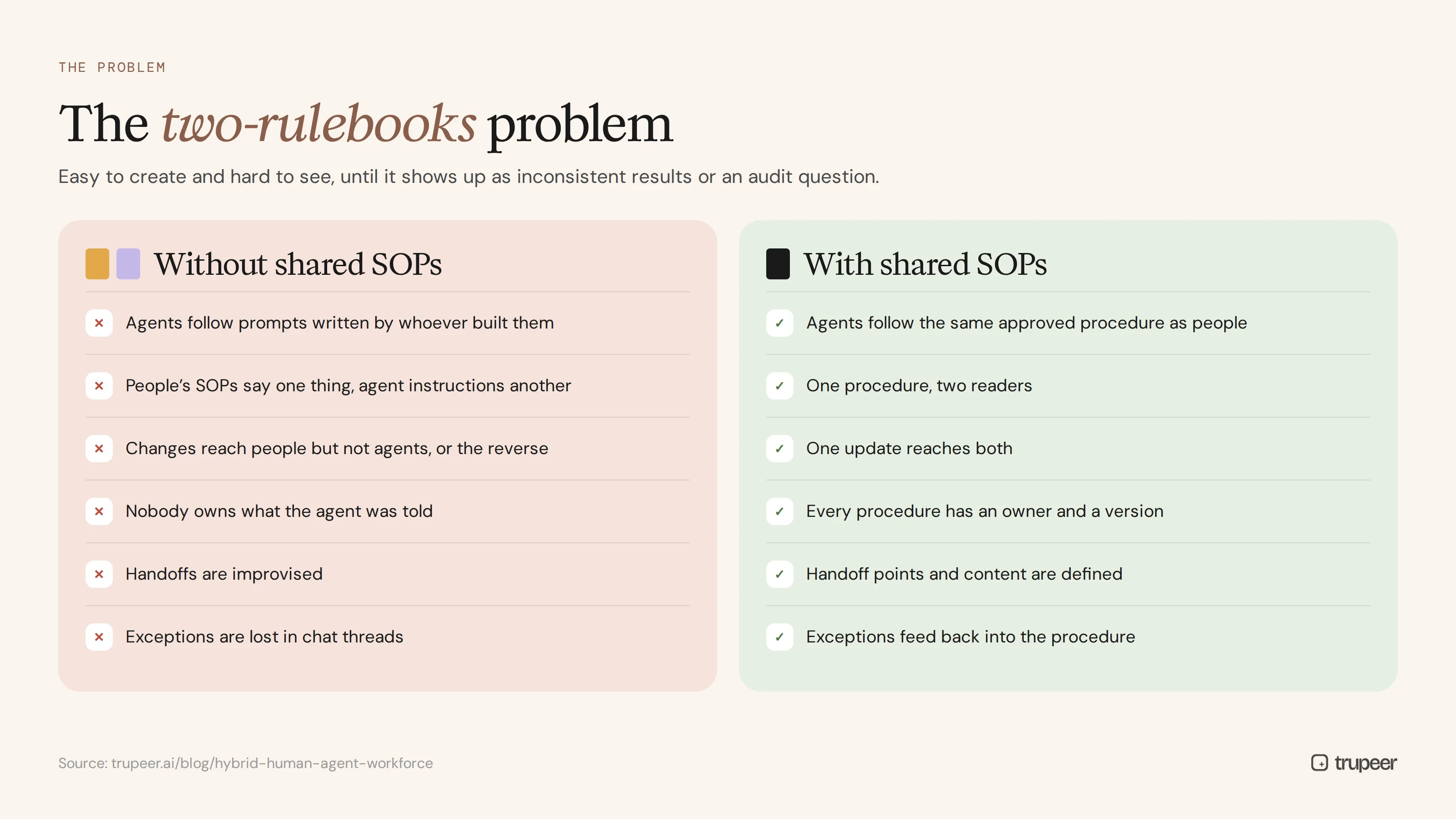
The two-rulebooks problem
Without shared SOPs | With shared SOPs |
|---|---|
Agents follow prompts written by whoever built them | Agents follow the same approved procedure as people |
People's SOPs say one thing, agent instructions say another | One procedure, two readers |
Process changes reach people but not agents, or the reverse | One update reaches both |
Nobody owns what the agent was told | Every procedure has an owner and a version |
Handoffs are improvised | Handoff points and content are defined |
Exceptions are lost in chat threads | Exceptions feed back into the procedure |
The two-rulebooks problem is easy to create and hard to see. It usually surfaces as inconsistent results, unexplained errors or an audit question nobody can answer.
One procedure, two readers
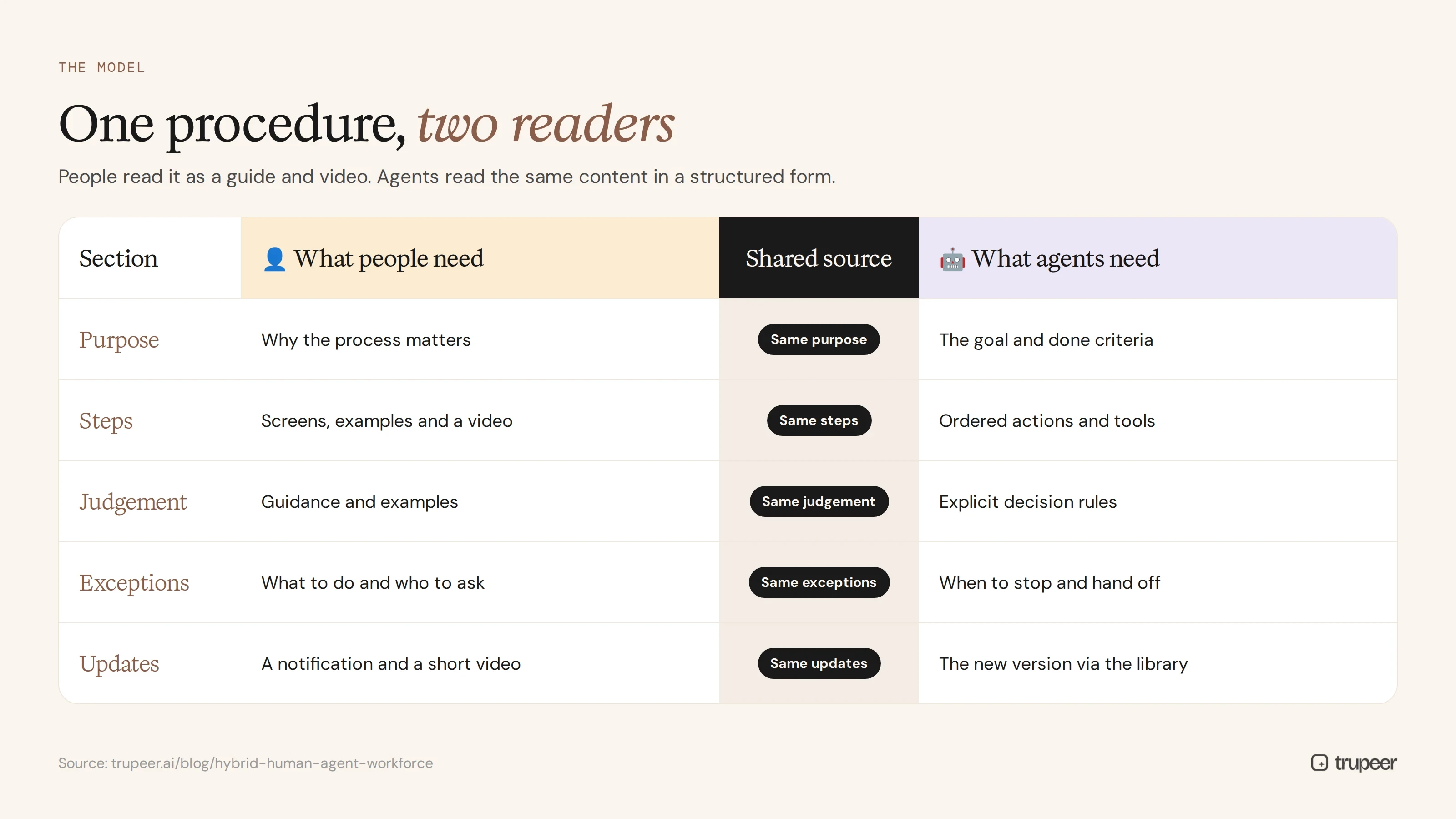
A shared SOP isn't two documents. It's one procedure written so both people and agents can use it. People read it as a guide with steps, screenshots and a short video. Agents read the same content in a structured form: goal, inputs, allowed actions, steps, decision rules, exceptions and when to hand off. We call that form an agentic operating procedure.
What people need | What agents need | Shared source | |
|---|---|---|---|
Purpose | Why the process matters | The goal and done criteria | Same purpose section |
Steps | Screens, examples and a video | Ordered actions and tools | Same steps |
Judgement | Guidance and examples | Explicit decision rules | Same rules, written explicitly |
Exceptions | What to do and who to ask | When to stop and hand off | Same exception table |
Updates | A notification and a short video | The new version through their connection to the library | Same versioned procedure |
How should work be divided between people and agents?
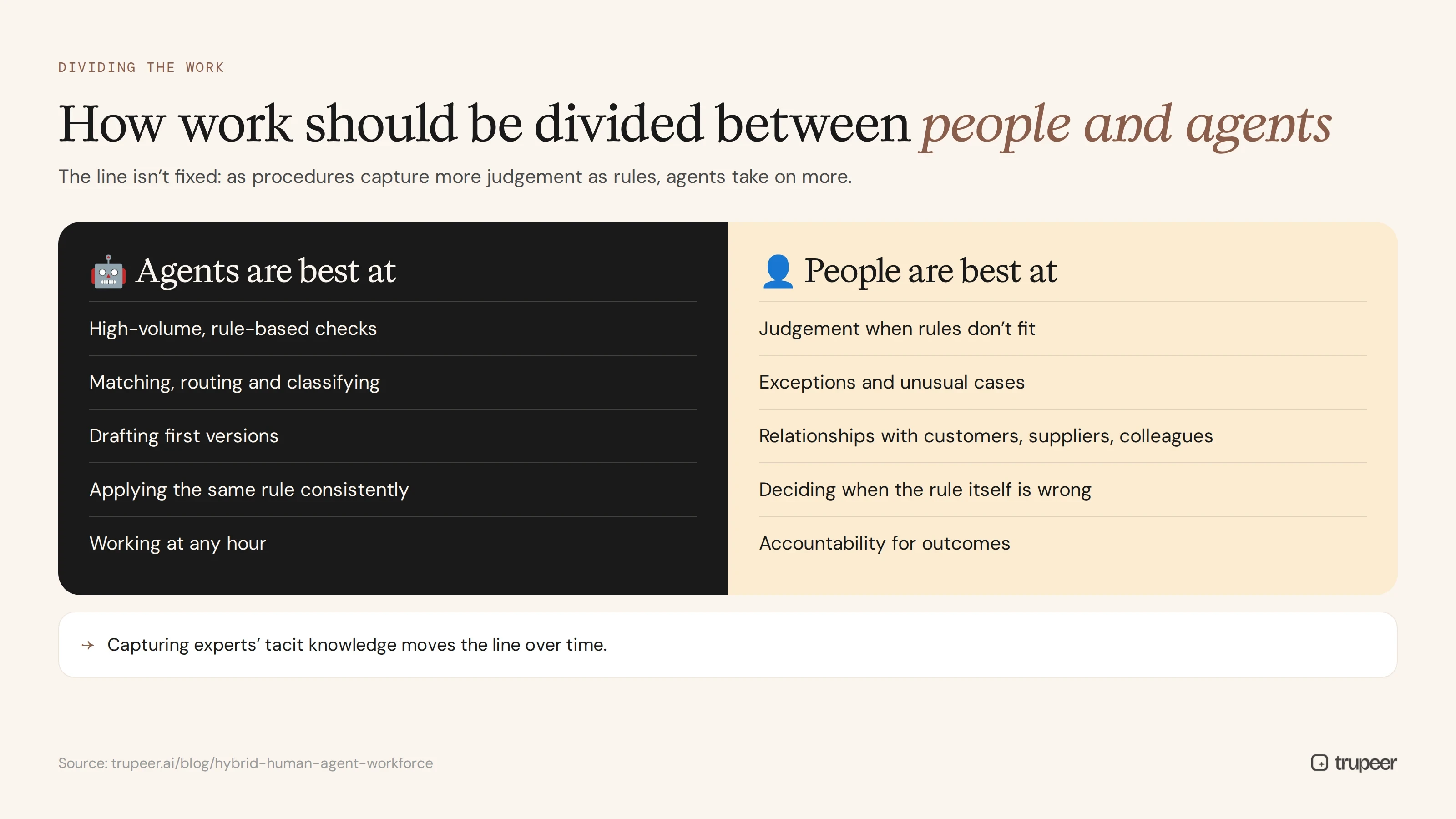
Agents are best at | People are best at |
|---|---|
High-volume, rule-based checks | Judgement when rules don't fit |
Matching, routing and classifying | Exceptions and unusual cases |
Drafting first versions | Relationships with customers, suppliers and colleagues |
Applying the same rule consistently | Deciding when the rule itself is wrong |
Working at any hour | Accountability for outcomes |
The dividing line isn't fixed. As procedures capture more of people's judgement as explicit rules, agents can take on more. That's why capturing tacit knowledge, the decisions and exceptions experts carry in their heads, matters so much in a hybrid workforce; see tacit knowledge capture.
Handoffs are the new process risk
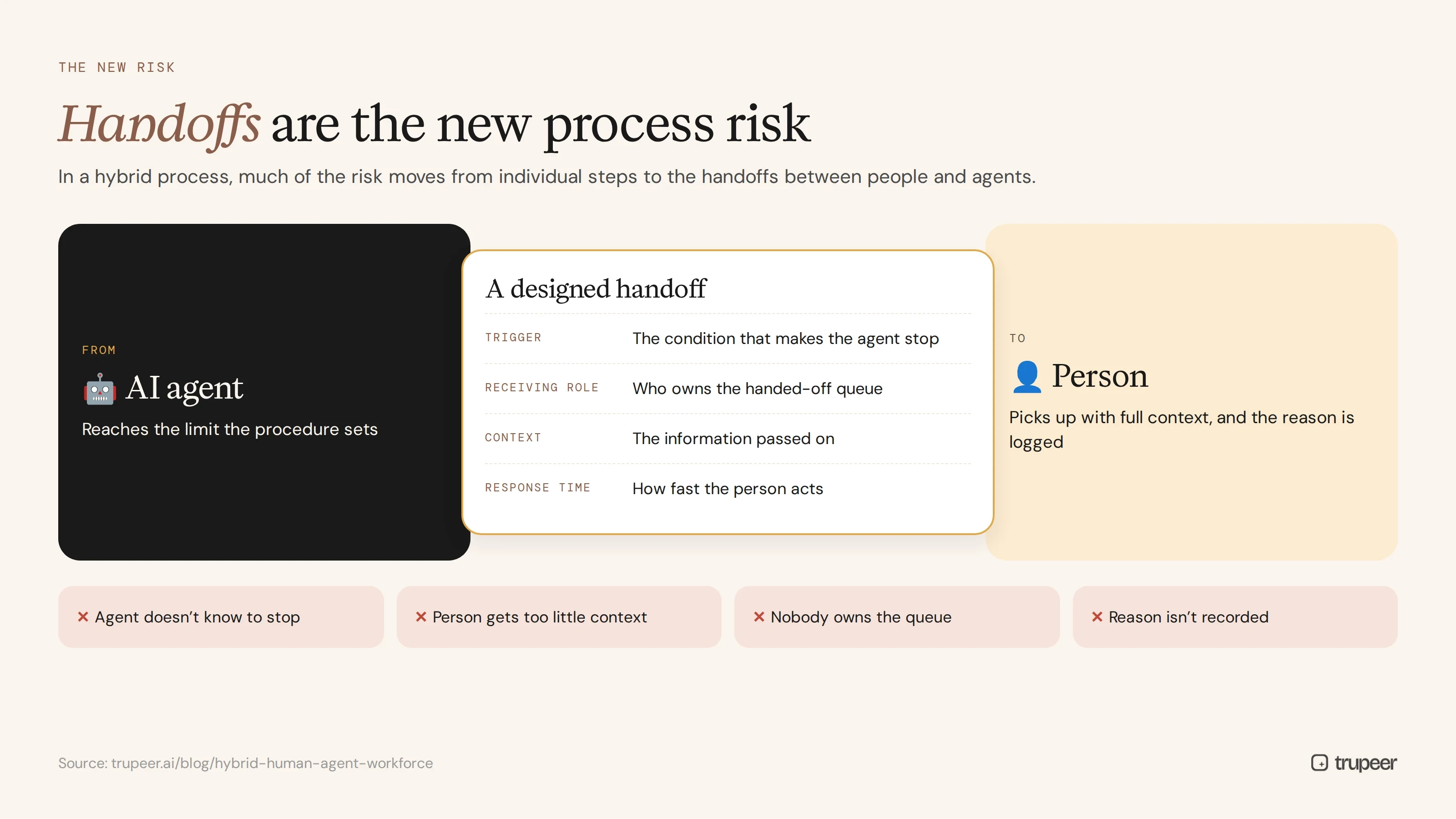
In a fully human process, most risk sits in individual steps. In a hybrid process, a lot of it moves to the handoffs: the moment an agent passes a case to a person, or a person sends work back to an agent. Handoffs fail when:
The agent doesn't know it should stop, so it carries on outside its limits.
The person doesn't get enough context, so they start the case again.
Nobody owns the handed-off queue, so cases wait.
The reason for the handoff isn't recorded, so the procedure never improves.
A shared SOP defines each handoff: the trigger, the receiving role, the information passed on and the expected response time.
New roles in the hybrid workforce
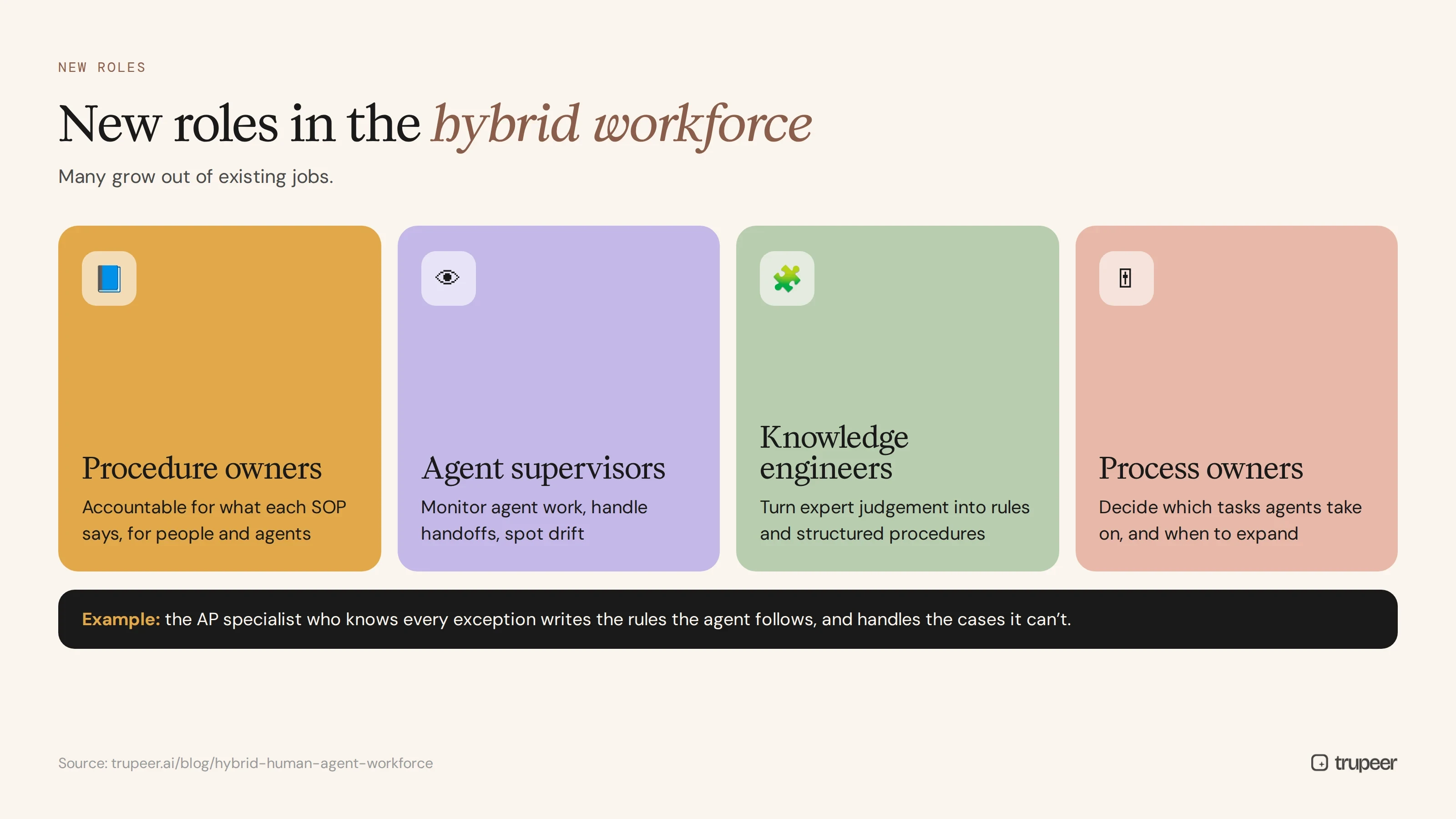
Procedure owners who are accountable for what each SOP says, for both people and agents.
Agent supervisors who monitor agent work, handle handoffs and spot drift.
Knowledge engineers who turn expert judgement into rules, exceptions and structured procedures.
Process owners who decide which tasks agents take on, and when to expand or pull back.
Many of these roles grow out of existing jobs. The AP specialist who knows every exception becomes the person who writes the rules the agent follows and handles the cases it can't.
Onboarding a hybrid human agent workforce from the same SOPs
In a hybrid workforce, onboarding a new person and deploying a new agent draw on the same material. The person watches the video and reads the guide; the agent reads the structured procedure. Both learn the same steps, rules and exceptions, and both are updated when the procedure changes. That's also the strongest argument for keeping procedures in one governed library rather than scattered across prompts, wikis and slide decks. For how procedures become agent instructions, see how to turn SOPs into AI agent skills.
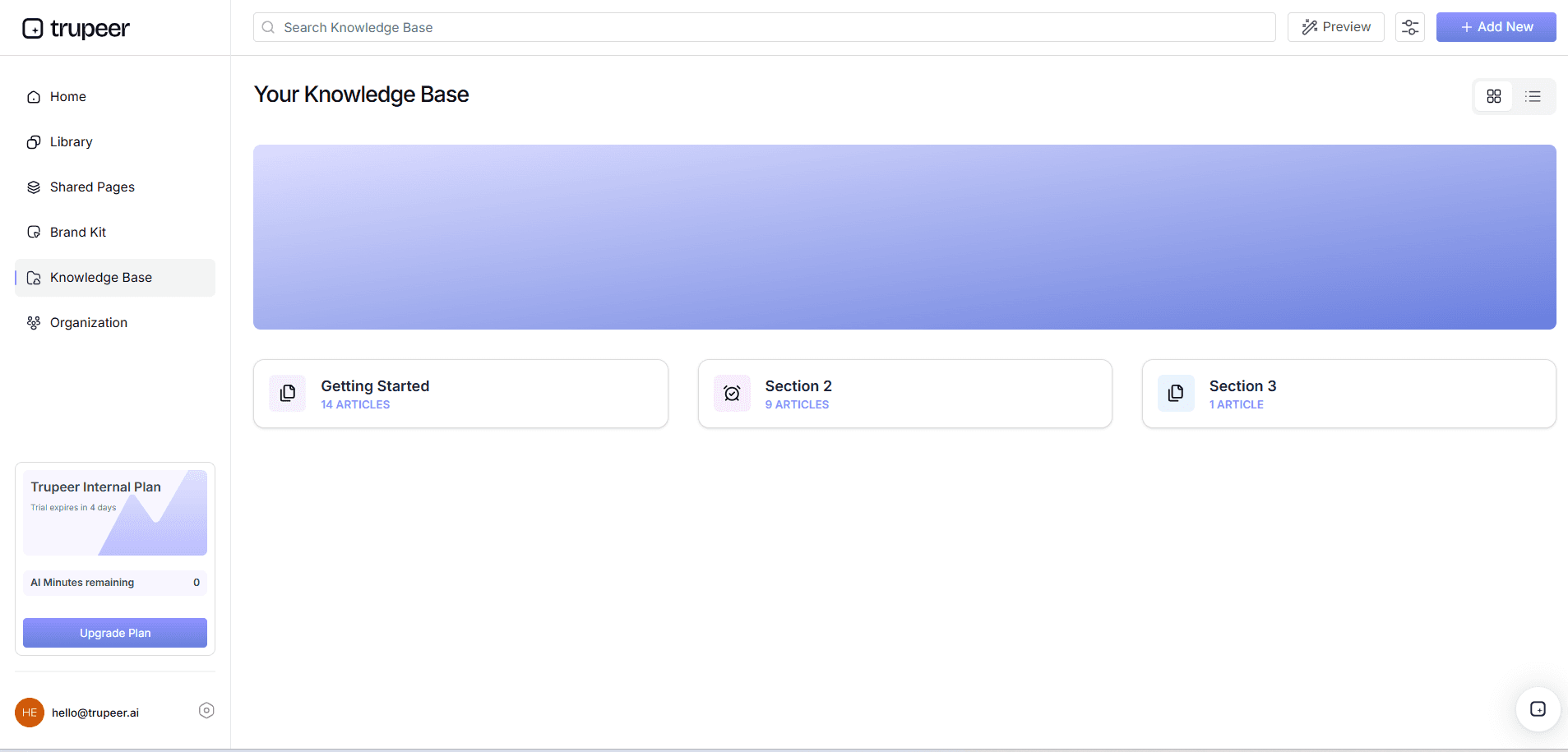
Governing a hybrid workforce
One library, one version. People and agents always use the current procedure.
Least-privilege permissions for agents, expanding as trust is earned.
Human approval for high-risk actions, such as payments and irreversible changes.
Audit trails showing which procedure version an agent followed and what it did.
Freshness monitoring, because an outdated procedure misleads people occasionally and agents every time; see stale SOP detection.
What changes for managers in a hybrid human agent workforce?
Managers in a hybrid human agent workforce manage two kinds of capacity. They still coach people, but they also decide which tasks agents handle, watch the handoff queue and spot when an agent is drifting outside its procedure. Practically, that means:
Reviewing handoffs, not just output, to see where agents stop and why.
Balancing work between people and agents as volumes change.
Feeding exceptions back into the shared SOP, so the rulebook improves every week.
Explaining the change to their teams: which tasks move to agents, what people focus on instead and how roles grow.
The last point matters most. People accept agents more readily when they see them as colleagues following the same rules, not as a separate system working to rules nobody can see. For the communication side, see how to communicate new tools and ways of working.
How to measure a hybrid human-agent workforce
Share of cases handled end to end by agents, and how it changes as rules improve.
Handoff rate and reasons, which show where procedures need more rules.
Handoff response time, so cases don't wait between agent and person.
Error and rework rates, for agent-handled and person-handled cases on the same procedure.
Procedure freshness: share of SOPs verified since the last system or process change.
Time to proficiency for new people joining the team.
Comparing agents and people on the same procedure is only possible when they share one. For measuring adoption more broadly, see end user adoption metrics that matter.
Five principles for leaders building a hybrid human-agent workforce
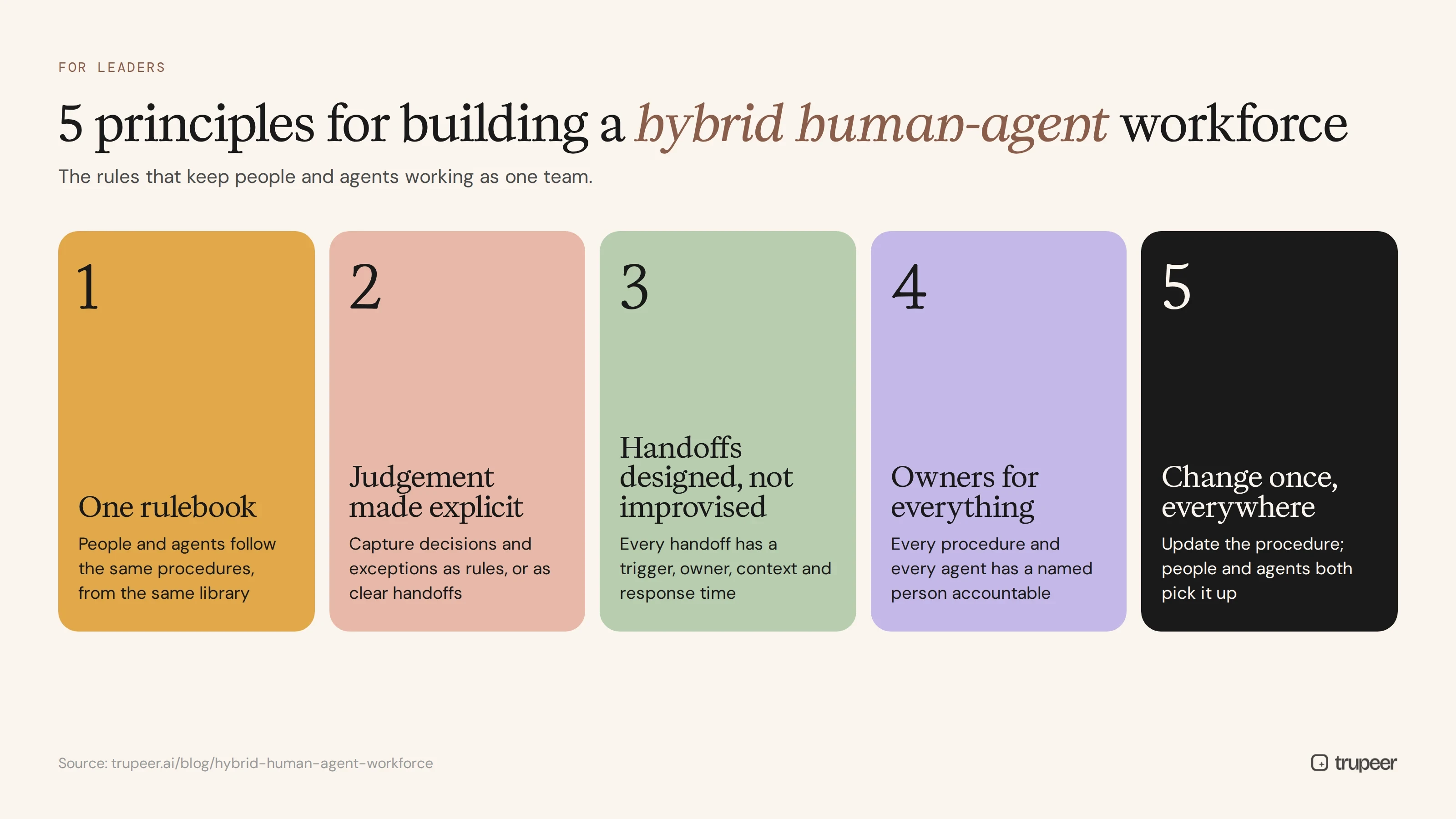
One rulebook. People and agents follow the same procedures, from the same library.
Judgement made explicit. Capture decisions and exceptions as rules, or as clear handoffs where rules aren't enough.
Handoffs designed, not improvised. Every handoff has a trigger, an owner, context and a response time.
Owners for everything. Every procedure, and every agent, has a named person accountable for it.
Change once, everywhere. Update the procedure, and let people and agents both pick up the change.
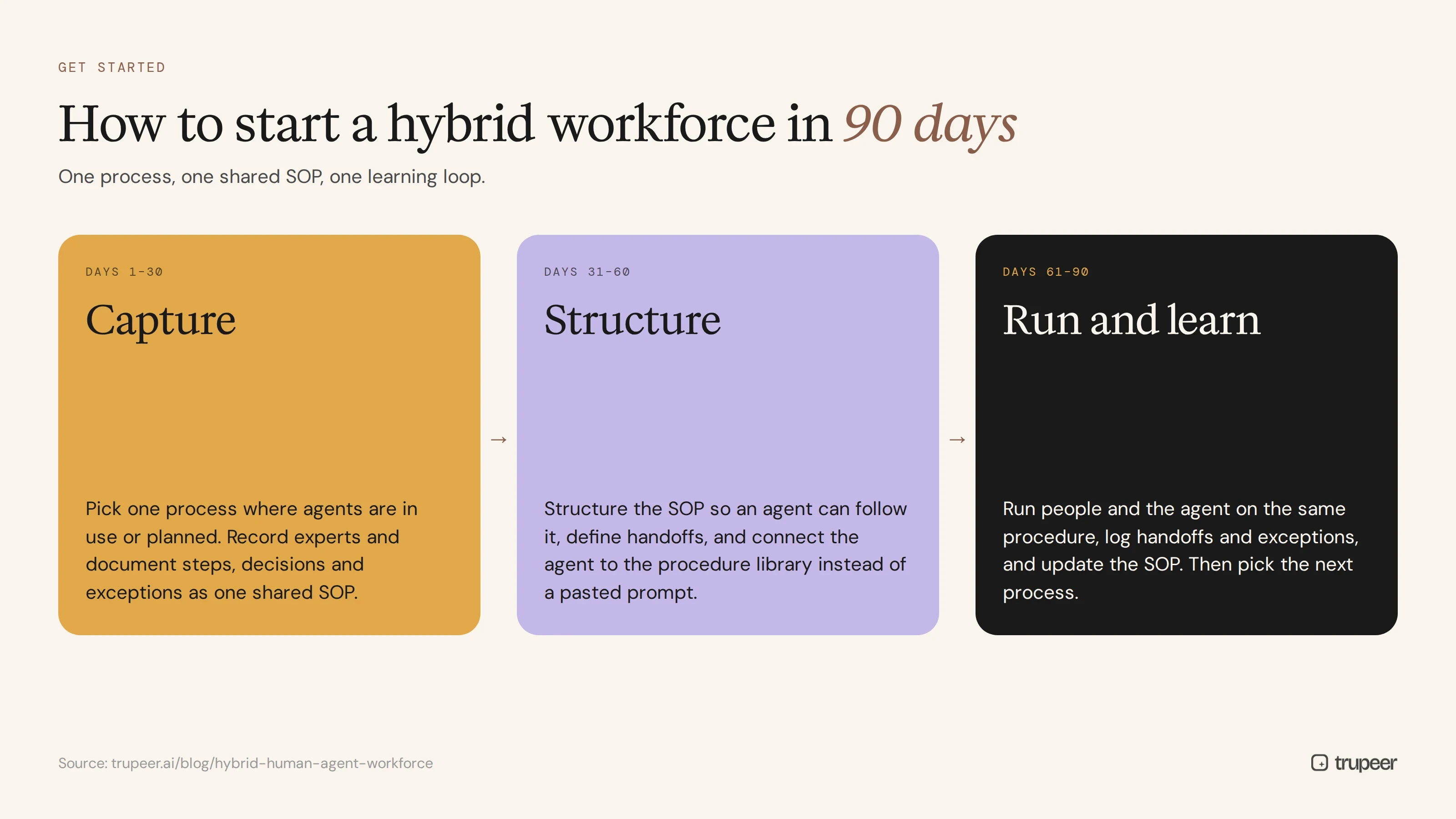
How to start in 90 days
Period | What to do |
|---|---|
Days 1–30 | Pick one process where agents are already in use or planned. Record experts doing it and document the steps, decisions and exceptions as one shared SOP. |
Days 31–60 | Structure the SOP so an agent can follow it, define handoffs and connect the agent to the procedure library instead of a pasted prompt. |
Days 61–90 | Run people and the agent on the same procedure, log handoffs and exceptions, and update the SOP from what you learn. Then pick the next process. |
How Trupeer helps
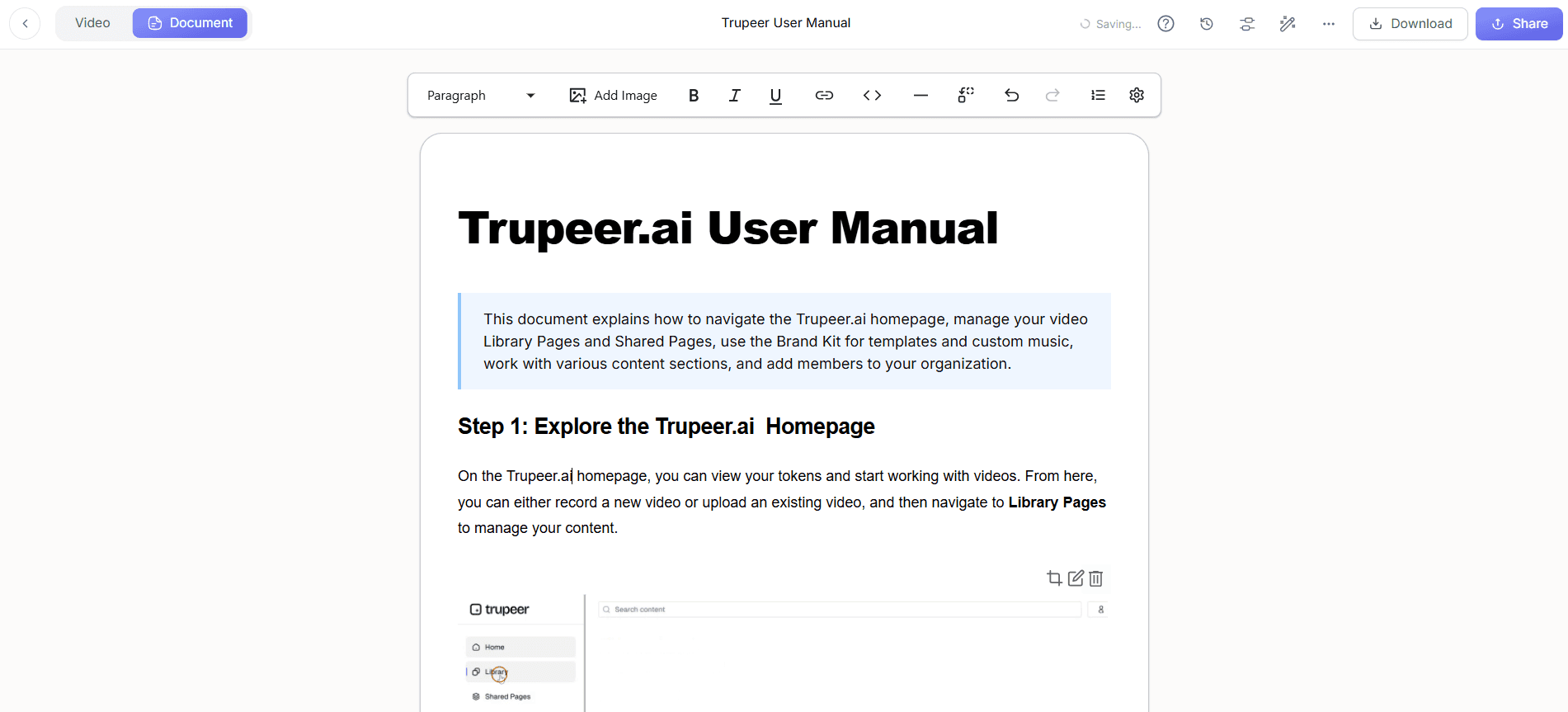
Trupeer turns recordings of real work into step-by-step SOPs and videos people can follow, and makes the same procedures available to AI assistants and agents through an MCP connection, so one library serves both readers. When a process changes, you update the procedure once by editing the script or replacing a single step. See how it works on Trupeer's MCP page.
Frequently asked questions
What is a hybrid human agent workforce?
It's a team in which people and AI agents share the work of a process, with agents handling defined, rule-based tasks and people handling judgement, exceptions, relationships and accountability.
Why does a hybrid workforce need shared SOPs?
Because people and agents must handle work the same way. Shared SOPs give one source of truth, define handoffs, keep accountability clear and let one update reach both.
What is the two-rulebooks problem?
It's when people follow SOPs and agents follow separately written prompts or instructions, so the two drift apart and results become inconsistent.
How do you write an SOP that both people and agents can use?
Keep one procedure with a clear goal, inputs, steps, decision rules, exceptions and handoff conditions. People read it as a guide and video; agents read the same content in a structured form.
What tasks should AI agents take on first?
High-volume, rule-based tasks such as checking, matching, routing and drafting, where mistakes are manageable and the rules are clear.
What new roles does a hybrid workforce create?
Procedure owners, agent supervisors, knowledge engineers and process owners who decide what agents take on, often growing out of existing expert roles.
How do you manage handoffs between agents and people?
Define each handoff in the SOP: what triggers it, who receives it, what information is passed on and how quickly it should be handled, and record the reason so the procedure can improve.
How does Trupeer support a hybrid human-agent workforce?
Trupeer turns recordings of real work into SOPs and videos for people and makes the same procedures available to AI agents through MCP, so both follow one current version.
One rulebook for people and agents
The companies that get the most from AI agents won't be the ones with the most agents. They'll be the ones where people and agents work from the same procedures, hand work to each other cleanly and improve the rulebook together. See how Trupeer works.
Похожие блоги