Trupeer Blog
Резюмировать
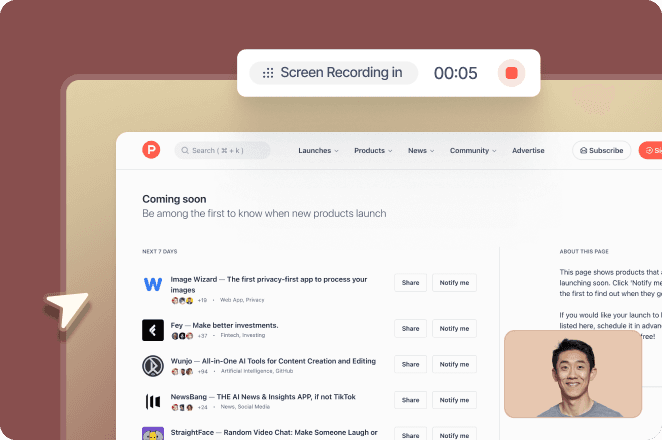
Everyone takes screenshots. Almost no one takes good ones. The gap between a raw PrtSc grab and a clean, annotated, on-brand image is exactly where a proper screenshot tool earns its place, and in 2026 there are more of them than ever, from free built-in utilities to AI screenshot editors that generate whole step-by-step guides for you.
This guide compares the 19 best screenshot generator tools worth your time this year. We've grouped them by what they're actually for capturing and annotating, beautifying for social, generating App Store and website shots, and automating captures at scale, so you can jump straight to the job you're trying to do. If your captures usually end up inside tutorials and help docs, tools like Trupeer AI now generate the screenshots for you; if you just need a fast grab, a free native tool is often all you need.
How we evaluated these screenshot tools
Rather than counting features, we weighed each tool against the criteria that actually matter in day-to-day use, drawing on hands-on use, current product documentation, and feedback from developer and documentation communities:
Capture speed and reliability: how quickly you go from hotkey to usable image, and whether it copies to the clipboard instantly.
Annotation quality: arrows, boxes, step numbers, text, and blur, ideally without a separate editor window.
Scrolling and full-page capture: for long pages, dashboards, and documents.
OCR: pulling selectable text out of an image.
Beautification: backgrounds, padding, shadows, and device frames.
Automation and AI: the ability to generate captures at scale rather than clicking one at a time.
Sharing and collaboration: instant links, cloud options, and team workflows.
Pricing and value: free, one-time, or subscription, and what you actually get for it.
Platform support: Windows, Mac, Linux, and browser.
Where a tool is strong or weak against these, we've called it out in the write-ups below.
The best AI screenshot generator for documentation: Trupeer AI
If your screenshots exist to explain something, a product feature, an onboarding flow, or a support answer, you don't really want a screenshot tool. You want a tool that generates all the screenshots for you, annotated and on-brand, as a byproduct of doing the task once.
That's what Trupeer AI does. You record your screen once with the Trupeer screen recorder, and Trupeer automatically turns that recording into a polished step-by-step guide or document, pulling out the key moments as clean screenshots, applying auto-zoom and annotations, and letting you crop, highlight, and blur sensitive information without leaving the editor.
Why it stands out as a screenshot generator:
Screenshots are generated automatically from a recording, not captured frame by frame.
Auto-zoom and annotation draw the reader's eye to the right button or field.
Output stays consistent and on-brand through brand kits, which matters when you produce SOPs, user manuals, and knowledge base articles at volume.
Best for: product, support, marketing, and enablement teams who create tutorials, help centers, and SOPs and want the screenshots generated, annotated, and branded automatically.
Pricing: Free to start; paid plans on the pricing page. You can also book a demo.
If your goal is one-off captures rather than generated documentation, the classic capture-and-annotate tools below are the place to look.
Best screenshot tools for Mac
1. Trupeer AI: the top pick for Mac
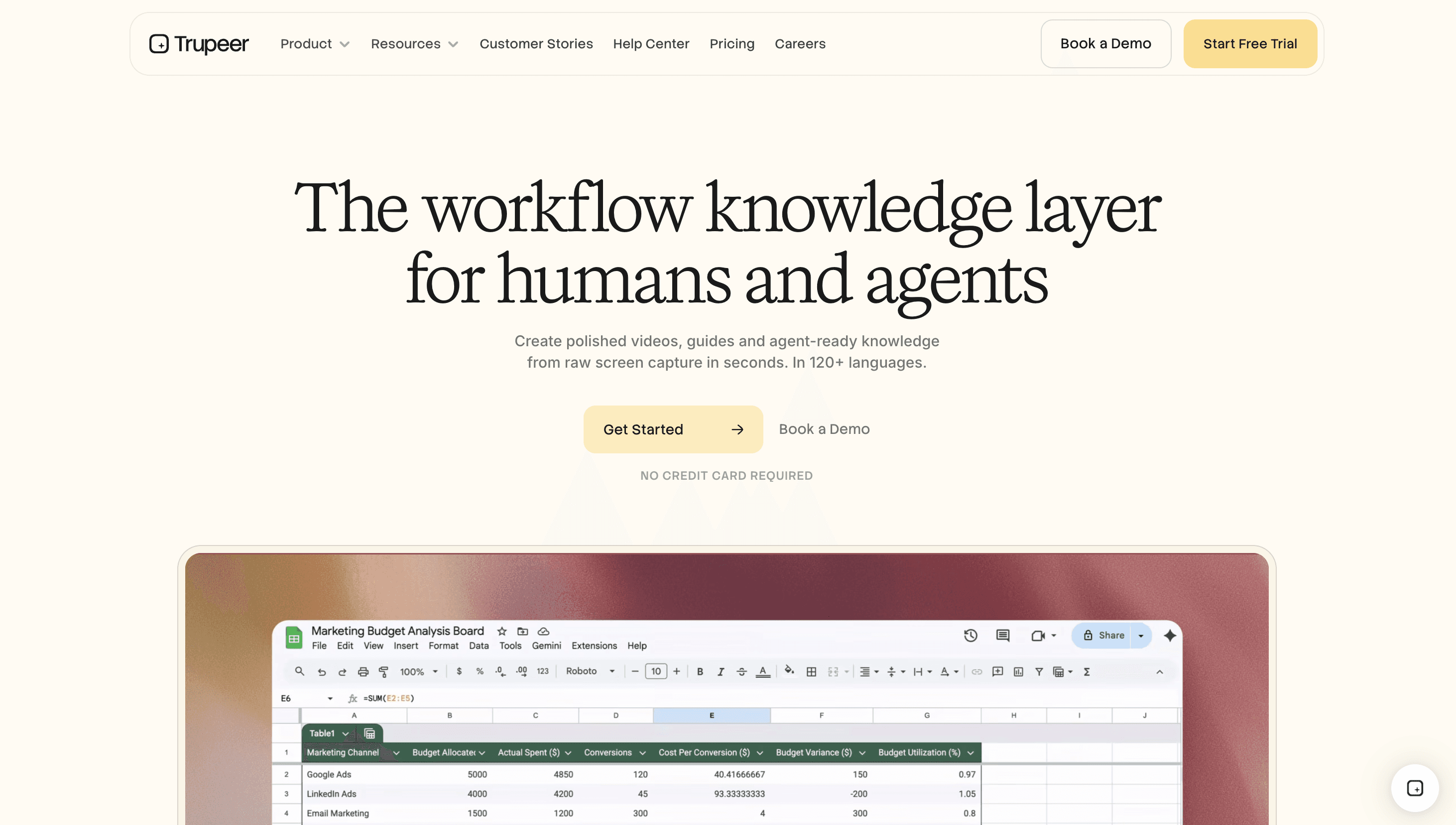
For Mac users whose screenshots end up in tutorials, help docs, or SOPs, Trupeer AI is the top pick. Because it's browser-based (with a Chrome screen recorder), it runs on any Mac with no install and generates a full set of annotated, on-brand screenshots from a single recording. If you want documentation out of your captures rather than one image at a time, start here. The Mac-native capture apps below are the better fit for quick one-off screenshots.
2. CleanShot X: the polished all-rounder
CleanShot X markets itself as several tools in one, and it lives up to it: screenshot capture, scrolling capture, screen and GIF recording, annotation, and a floating "quick access" overlay that lets you act on a capture without saving it. In practice, that overlay is the feature you miss most when you switch away from it, and it's the reason so many of the polished, gradient-background screenshots you see shared online come from CleanShot.
Best for: Mac users who want a single premium capture-and-share tool and don't mind paying for it.
Pricing: One-time purchase for the base app, with an optional monthly subscription for its cloud sharing features.
Watch for: the cloud features are a recurring cost, and there's no pixel ruler.
3. Shottr: fast, free, and developer-friendly
Shottr is tiny, blazing fast, and beloved by developers for its pixel-measurement tools, color picker, and OCR. Recent versions added background templates (shadows, gradients, rounded corners), closing much of the beautification gap with pricier apps while staying free or near-free. The trade-off you notice quickly is that its annotation tools are functional rather than refined.
Best for: developers and designers who want speed, measurements, and OCR without a subscription.
Pricing: Free, with an inexpensive one-time Pro upgrade for scrolling capture.
Watch for: no built-in screen recording and no native cloud sharing.
4. Xnapper: beautiful screenshots, fast
Xnapper focuses on one thing: making screenshots look great for social posts and marketing, with automatic backgrounds, balanced padding, and easy redaction. If your main need is polished, share-ready images rather than a deep feature set, it's a clean, affordable pick.
Best for: creators and marketers who mainly need attractive social-media screenshots.
Pricing: Low one-time purchase.
5. macOS built-in (Cmd + Shift + 5)
Don't overlook what's already on your Mac. The built-in tool captures full screen, a region, or a window, records video, and pops a floating thumbnail for quick Markup annotations (arrows, text, shapes, redaction). For basic captures it's genuinely capable and completely free, and it has improved enough that many users never install anything else.
Best for: quick one-off captures when you don't need sharing or beautification.
Pricing: Free, built in.
Best screenshot tools for Windows
6. ShareX: the free power tool
ShareX is the open-source heavyweight for Windows. It captures anything (region, window, scrolling, full page), supports a huge range of after-capture actions, records video and GIFs, and now includes a "beautify image" step for backgrounds. Across documentation workflows its automation is hard to beat for the price, though the sheer number of options means the interface takes time to learn.
Best for: Windows power users who want maximum capability for free.
Pricing: Free and open source.
Watch for: the depth of options has a learning curve.
7. Snagit: the enterprise standard
Snagit by TechSmith has been the default in corporate documentation for decades. Its strengths are a searchable asset library, templates, step-by-step capture, scrolling capture, and consistent output across both Windows and Mac. For a technical writer producing documentation every week, the searchable library alone tends to justify the cost.
Best for: technical writers, support teams, and enterprises that need consistency and cross-platform support.
Pricing: Paid, on an annual model.
Watch for: it's overkill (and pricey) for casual users.
8. Greenshot: the reliable free classic
Greenshot has been a dependable free Windows screenshot tool since 2007. It handles region, window, and full-screen capture with a simple built-in editor for annotations and redaction. It hasn't changed dramatically over the years, and that stability is exactly the appeal.
Best for: Windows users who want a lightweight, no-cost, no-nonsense capture-and-annotate tool.
Pricing: Free and open source.
9. Windows Snipping Tool
The built-in Windows Snipping Tool (Win + Shift + S) has quietly become a solid baseline: region and window capture, basic annotation, and even scrolling capture in recent updates. Free, always available, and enough for many everyday needs, it's the best snipping tool alternative starting point before you pay for anything.
Best for: quick captures without installing anything.
Pricing: Free, built in.
Best screenshot tools for Linux
10. Flameshot
Flameshot is the go-to open-source screenshot tool on Linux (with Windows and Mac builds too). It offers on-screen annotation right after capture, region selection, and a command-line interface that makes it easy to script, which is why Linux users who want automation reach for it first.
Best for: Linux users who want a free, scriptable capture-and-annotate tool.
Pricing: Free and open source.
Cross-platform and quick-share screenshot tools
11. Lightshot
Lightshot is the quick-and-dirty option for Mac and Windows: install, capture a region, annotate lightly, and share a link in seconds. It's fast and popular for casual sharing.
Best for: fast, casual captures and quick link sharing.
Pricing: Free.
Watch for: it uploads by default, so avoid it for anything sensitive.
12. Monosnap
Monosnap has one of the fastest screenshot-to-link workflows around, plus straightforward annotation and cloud options. It's a favorite for teams that live in chat and want to drop a shareable link into a channel instantly.
Best for: remote teams that share screenshots constantly and want speed to a link.
Pricing: Free tier with paid upgrades.
13. Awesome Screenshot (browser)
Awesome Screenshot is a browser-extension staple for capturing full web pages, cropping, annotating, and sharing without leaving the tab. It's the natural screenshot tool for Chrome when most of your captures come from the web.
Best for: capturing and annotating web pages directly in the browser.
Pricing: Free tier with paid plans.
Best screenshot beautifier and editor tools
These are the tools you reach for when a raw capture needs to become a presentation-ready image, the "screenshot editor online" and "screenshot beautifier" category.
14. Screely
Screely instantly wraps a pasted screenshot in a clean background, padding, and a subtle window frame. No install, no learning curve, just a browser-based way to make a plain capture look designed.
Best for: quick, free beautification of a single screenshot in the browser.
15. Pika
Pika offers more control over backgrounds, device frames, gradients, and mockups for marketing images and social posts, with templates that keep output consistent.
Best for: marketers producing polished screenshot visuals regularly.
16. Screenshot.rocks
Screenshot.rocks is a lightweight browser tool for dropping screenshots into browser and device mockups, useful for landing pages and blog headers.
Best for: wrapping screenshots in device and browser frames fast.
Best App Store and website screenshot generators
This is the "app store screenshot generator" and "website screenshot generator" cluster, tools that generate screenshots programmatically rather than capturing your live screen.
17. AppLaunchpad
AppLaunchpad is a popular free app-screenshot generator for building App Store and Google Play listing images, with device frames, captions, and templates sized for every store requirement.
Best for: indie developers and app marketers creating store listing screenshots.
18. Previewed / AppScreens
Template-driven App Store screenshot generators with 3D device mockups and marketing layouts, ideal when you want listing images that look professionally designed without a designer.
Best for: polished, on-brand App Store and Play Store screenshot sets.
19. Website screenshot APIs (Urlbox and similar)
For generating screenshots of websites at scale (thumbnails, previews, monitoring, or embedding in your own product), a website screenshot API such as Urlbox renders any URL to an image on demand. This is also the route for a fully automated screenshot tool: capture on a schedule or trigger, then process the output automatically.
Best for: developers who need automated, programmatic website screenshots.
Screenshot tools compared at a glance
Tool | Platform | OCR | Scrolling | Recording | Beautify | Cloud sharing | Pricing |
|---|---|---|---|---|---|---|---|
Trupeer AI | Web / Chrome | Auto | Auto (from recording) | Yes (video) | Yes (brand kits) | Yes | Free + paid |
CleanShot X | Mac | Yes | Yes | Yes | Yes | Sub | One-time + cloud sub |
Shottr | Mac | Yes | Pro | No | Yes | No | Free / low one-time |
Xnapper | Mac | Yes | No | No | Yes | No | One-time |
ShareX | Windows | Yes | Yes | Yes | Basic | Yes | Free |
Snagit | Win / Mac | Yes | Yes | Yes | Templates | Via TechSmith | Paid (annual) |
Greenshot | Windows | Plugin | No | No | Basic | No | Free |
Flameshot | Linux / Win / Mac | No | No | No | Basic | No | Free |
Lightshot | Win / Mac | No | No | No | Basic | Yes | Free |
Monosnap | Win / Mac | No | No | Yes | Basic | Yes | Free + paid |
Awesome Screenshot | Browser | No | Yes (web) | Yes | Basic | Yes | Free + paid |
Screely / Pika | Web | No | No | No | Yes | Links | Free + paid |
AppLaunchpad | Web | No | n/a | No | Yes | n/a | Free + paid |
Free vs paid screenshot tools
Free tools have closed much of the gap. On Windows, ShareX matches or beats most paid apps on raw capability on Mac, Shottr and the built-in tool cover the majority of everyday needs on Linux, Flameshot is all many users ever install. You should pay only when you hit a specific wall reliable scrolling capture, built-in screen recording, team cloud sharing, or automation and AI that generate captures for you. When you do pay, a one-time purchase (Shottr, Xnapper) usually beats a subscription over a few years unless you genuinely use the cloud and collaboration features.
Browser extension vs desktop software
A browser extension like Awesome Screenshot is the right choice when nearly all of your captures come from web pages, because it can grab a full scrolling page inside the tab. Desktop software wins the moment you need to capture other applications, the OS itself, video, or global hotkeys that work everywhere. Many teams run both: an extension for web work and a desktop tool for everything else.
Security and privacy considerations
Screenshots often contain more than you intend: tokens, customer data, internal URLs. Two habits matter. First, redact before you share; blur or box out anything sensitive rather than cropping and hoping. Second, know where your capture goes. Some quick-share tools upload by default, which is convenient but wrong for confidential material, so prefer tools that keep processing local or let you point sharing at your own storage. For regulated or customer-facing documentation, a tool that applies blur consistently and keeps output inside your own environment is worth more than a marginally faster capture.
The best screenshot tool by use case
For developers: Shottr (measurements, OCR, speed) on Mac, ShareX on Windows, Flameshot on Linux.
For designers: CleanShot X or Xnapper for clean, share-ready output with backgrounds and frames.
For remote teams: Monosnap or Lightshot for the fastest screenshot-to-link sharing.
For documentation and SOPs: Trupeer AI to generate annotated guides, or Snagit for a traditional writer-driven library.
For OCR: Shottr, Snagit, and ShareX all extract text from captures.
For AI-generated captures: Trupeer AI turns one recording into a fully documented, annotated guide.
For the App Store: AppLaunchpad or Previewed for listing images.
Common mistakes when taking screenshots
The usual reasons a screenshot fails to land capturing the whole screen when a cropped region would be clearer leaving sensitive data visible forgetting annotations, so the reader has to hunt for the point inconsistent styling across a set of images and saving files locally when a link would have been faster to share. A good tool nudges you away from all five, and a documentation-focused generator removes most of them by default.
Frequently asked questions
What is the best free screenshot tool?
On Windows, ShareX is the most capable free screenshot tool, with Greenshot and the built-in Snipping Tool close behind. On Mac, Shottr and the built-in Cmd + Shift + 5 tool cover most needs at no cost. On Linux, Flameshot is the standard. For generating annotated screenshots inside documentation, Trupeer AI has a free tier.
What's the difference between a screenshot tool and a screenshot generator?
A screenshot tool captures what's on your screen right now. A screenshot generator produces images programmatically or automatically App Store listing images, website previews, or, in the case of AI tools like Trupeer, a full set of annotated screenshots generated from a single screen recording.
Which screenshot tool is fastest?
For capture-to-clipboard speed, Shottr on Mac and the native Snipping Tool on Windows are near-instant. For capture-to-shareable-link, Monosnap and Lightshot are the quickest.
Which screenshot tools work offline?
Most desktop tools work fully offline, including Greenshot, Flameshot, Shottr, Snagit, and the built-in OS tools. Browser-based beautifiers and website screenshot APIs need a connection.
Can screenshot tools record video?
Some can. ShareX, Snagit, CleanShot X, and Monosnap record video or GIFs. Dedicated capture tools like Shottr and Greenshot do not. Trupeer AI is built around recording and turns that recording into both a video and a documented set of screenshots.
Which screenshot tool has OCR?
Shottr, Snagit, and ShareX all include OCR to pull selectable text out of a capture.
What's the safest screenshot tool?
Prefer tools that process locally and let you redact before sharing, and avoid tools that upload by default for anything sensitive. For team documentation, a tool that keeps output in your own environment and applies blur consistently is the safer choice.
Can I capture a full web page or a long, scrolling screen?
Yes. Scrolling capture is available in ShareX, Snagit, CleanShot X, and Shottr Pro, and in browser extensions like Awesome Screenshot.
The bottom line
For one-off captures, the best screenshot tool is simply whichever matches your platform and budget: ShareX on Windows, CleanShot X or Shottr on Mac, Flameshot on Linux, and the free built-in tools when you just need a quick grab.
But if your screenshots exist to teach, sell, or support, if they end up in tutorials, help centers, and SOPs, the smarter move is to stop taking screenshots one at a time and let them be generated for you. See how Trupeer AI turns a single screen recording into a fully documented, annotated, on-brand guide, or book a demo to watch it happen.
Похожие блоги