Trupeer Blog
Samenvatten
Most SOPs are written to be correct, not to be learned from. They're accurate, approved and complete, and they sit in a shared drive while new hires ask a colleague to "just show me". Turning an SOP into a training video bridges that gap: the same approved procedure, explained step by step, in a format people actually finish.
SOP, Video SOP, or SOP Training Video: What's the Difference?
These three terms get mixed up, and the difference changes what you build:
SOP (standard operating procedure): the written, approved source of truth for how a task is done. It's built for accuracy and audits, and people use it as a reference.
Video SOP: the procedure itself recorded as a video, usually a straight screen or camera recording of someone doing the task. It shows the steps but rarely explains the reasons, decisions or exceptions.
SOP training video: a lesson built from the SOP. It teaches someone to perform the procedure correctly: the steps in order, the reason behind each one, the decisions they'll face and the mistakes to avoid.
This guide is about the third one. The written SOP stays the source of truth, and the training video is how people learn it.
Why an SOP Alone Isn't Training
An SOP tells people what to do. Training has to make sure they can do it. That's why a well-written SOP still leads to errors:
SOPs are written for completeness, not learning. Every edge case sits at the same visual weight, so the critical step looks just like the trivial one.
The reasons are usually missing. "Verify the batch number" doesn't say what happens if you don't, so the step gets skipped under pressure.
Decisions are buried in text. "If the amount exceeds the limit, see Section 7.3" is easy to miss in a 12-page document.
Nobody reads the whole thing. New hires skim, and experienced staff rely on memory, including outdated memory.
A training video solves this by putting the steps in sequence, explaining why each one matters, and making decision points impossible to miss.
When Should You Turn an SOP Into a Training Video?
Not every SOP needs a video. Prioritize procedures where video pays off most:
Tasks new hires learn in their first weeks, so every person gets the same explanation.
Procedures where mistakes are costly, such as safety, quality, finance, data privacy or customer-facing steps.
Visual or software-based tasks, where seeing the screen or equipment is faster than reading a description.
Procedures performed across sites, shifts or countries, where consistency matters and translation helps.
SOPs that trigger repeated questions to supervisors or support teams.
Procedures that are rarely performed and very low risk can usually stay as documents.
How to Turn an SOP Into a Training Video With AI
This is the fastest method, because the AI writes the lesson script, which is usually the slowest part of turning an SOP into a video. Here's how it works in Trupeer.
Step 1: Choose one task and one role
Start with a single procedure, such as "How to process a customer refund", not the full finance operations manual. If an SOP covers several roles, decide who this video is for, and keep only the steps that role performs. One task per video keeps lessons short and easy to update.
Step 2: Upload your SOP
Open Trupeer's Document to Training Video tool and upload the SOP as a PDF, Word document or text file. If your SOP lives as a slide deck, PowerPoint to Video works the same way.
Step 3: Choose the SOP and process style
Select the SOP and process training style. It tells Trupeer's AI scripting to keep the procedure intact and narrate it step by step, in order, with the key checks called out on screen. That's different from an explainer, which condenses a document to one idea.
Step 4: Review the lesson script with the process owner
Trupeer turns the SOP into a lesson script split into scenes. Have the person who owns the procedure review it against the approved SOP:
Actions: is every step included, in the right order?
Decisions: are the "if this, then that" points clear?
Exceptions: are the common errors and edge cases covered?
Accuracy: do system names, form names, limits and numbers match the SOP exactly?
Scope: is anything included that this role doesn't do?
They edit text, not video. Change a line, and the voiceover and captions update automatically.
Step 5: Add an AI trainer, captions and publish
Choose an AI voice, add a custom AI avatar if a trainer on screen helps, and apply your brand kit so the lesson looks official. Captions are generated from the narration. Then export an MP4 for your LMS, or share a link.
How to Turn a Software SOP Into a Training Video by Recording It
If the procedure happens in software, such as a CRM, ERP, ticketing system or internal tool, there's an even faster route: record the process once.
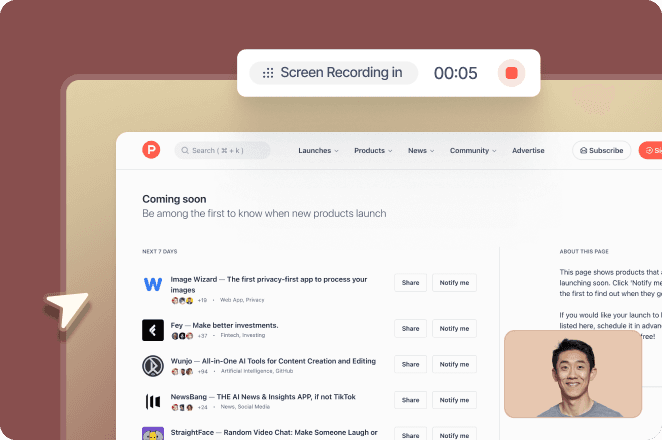
Record yourself doing the task with Trupeer's screen recorder, talking through each step.
Trupeer turns the raw recording into a polished training video. You can replace your voice with an AI voiceover, so pauses and retakes disappear.
Generate the written SOP from the same recording. The SOP creator turns the recording into step-by-step documentation with screenshots.
This way, the video and the written SOP come from the same source, so they match from day one. For a software-focused workflow, see screen recording to training video and convert a screen recording into an SOP.
How to Prepare Your SOP for Video: Actions, Decisions and Exceptions
Whether AI writes the script or you do, the best SOP training videos are built from three things pulled out of the document:
Actions: what the person physically or digitally does, in order.
Decisions: the points where they have to choose, like "if the refund is over the limit…".
Exceptions: what can go wrong, and what to do when it does.
Everything else, like purpose statements, definitions, revision history and approval blocks, stays in the SOP.
Worked example: a 6-page "Customer Refund" SOP includes a purpose section, definitions, roles and responsibilities, eight procedure steps, two approval thresholds, an escalation path and a revision table. Pulled apart, it becomes:
Actions: verify the order, check the refund reason, issue the refund in the billing system, notify the customer, log the case.
Decisions: refunds under the limit are processed directly; refunds over the limit need a manager's approval.
Exceptions: a disputed charge goes to the payments team; a missing order number means the case is paused and the customer is contacted.
That turns into a simple seven-scene outline:
Why refunds must follow this process (customer trust and audit trail)
Verify the order and refund reason
Decision: under or over the approval limit
Issue the refund in the billing system
Exceptions: disputed charges and missing order numbers
Notify the customer and log the case
Recap: the three things you must never skip
The six pages become a lesson of a few minutes, and nothing that matters for doing the job is lost.
How to Write an SOP Training Video Script
SOP language is written to be read and audited. Training narration has to be heard and remembered. The difference is clear when you compare them:
SOP text: "5.3 The processor shall verify that the refund amount does not exceed the authorized threshold prior to initiating the transaction. Refer to Appendix B."
Narration that trains: "Before you issue the refund, check the amount. If it's under five hundred dollars, you can process it yourself. If it's over, stop and send it to your manager for approval first. This limit protects both you and the customer, because larger refunds need a second pair of eyes."
A few rules for SOP training scripts:
Write for the ear. Short sentences, everyday words, and "you" instead of "the processor".
One purpose per scene. One step, one decision or one exception per scene.
Give the reason behind every critical step, so people follow it under pressure.
Say the decision out loud. "If… then… otherwise…" is easier to follow when heard than a cross-reference to an appendix.
Name the common mistake. "The most common error here is…" is often the most valuable line in the lesson.
Use the real names of your systems, forms and buttons, exactly as they appear on screen.
How to Review SOP Training Videos for Accuracy and Compliance
An SOP training video teaches with authority, so a wrong step spreads fast. Build the review into your process:
The process owner approves the script before the video is generated, not after it's published.
Match the video to an SOP version. Note the SOP number, version and effective date in the video description or lesson title, so anyone can check which version it teaches.
Keep a review record. Note who approved the video and when, alongside the SOP's own approval history.
Follow your quality process in regulated industries. If your SOPs are controlled documents, for example under GxP, ISO or similar requirements, route the training video through the same review and approval steps your quality team uses for training materials.
How to Publish SOP Training Videos and Keep Them in Sync
A training video is only useful if people can find it when they need it, and only safe if it matches the current SOP.
Publish where people learn and where they work:
In your LMS, with each video as its own lesson and a short quiz afterwards. Trupeer connects with learning platforms such as 360Learning.
Next to the SOP. Link the video from the SOP, and the SOP from the video, so the two always travel together.
At the point of work. Embed videos in your knowledge base or intranet, so people can rewatch a step while doing the task.
Keep them in sync when the SOP changes:
Update and approve the SOP first, so the source of truth stays correct.
Edit the matching scenes in the video script. Trupeer's AI-powered video editor regenerates the voiceover and captions, and everything else stays the same.
Have the process owner approve the changes.
Replace the old video everywhere it's published, and update the version reference.
For multilingual teams, use video translation to create versions in 120+ languages with dubbed voiceover and subtitles, then regenerate them whenever the source video changes.
How to Measure Whether SOP Training Works
Completion rates show who watched. These measures show whether the procedure is actually being followed:
Quiz results on application questions, like "What do you do if the refund is over the limit?"
Error and rework rates on the procedure before and after the video was introduced.
Time to competency for new hires performing the task on their own.
Repeated questions to supervisors or support about the same steps.
Audit findings related to the procedure.
If a measure doesn't improve, look at the scene that covers that step. It often needs a clearer reason or a more visible decision point.
Common Mistakes When Turning an SOP Into a Training Video
Converting the whole manual into one video. It becomes too long to finish or update. Fix: one task, one role, one video.
Reading the SOP aloud. Formal SOP language is hard to follow by ear. Fix: rewrite it for the ear, with "you" and short sentences.
Hiding the decisions. Learners miss the branch points that cause most errors. Fix: give each decision its own scene.
Skipping exceptions. People freeze or improvise when something goes wrong. Fix: cover the most common exceptions and what to do.
No process-owner review. Wrong steps get taught with authority. Fix: approve the script against the SOP before publishing.
No version link. Nobody knows which SOP version the video teaches. Fix: reference the SOP number, version and effective date.
Video and SOP drift apart. The SOP changes, but the video doesn't. Fix: update both in the same sitting, using a tool where you edit the script instead of re-recording.
Frequently Asked Questions
What is SOP to video?
SOP to video means turning a written standard operating procedure into a training video that explains the procedure step by step, with narration, visuals and captions. The written SOP stays the source of truth; the video is how people learn it.
Can AI turn an SOP into a training video?
Yes. Tools like Trupeer read the SOP, write a lesson script that keeps the steps in order, and add an AI voiceover, captions and an optional AI trainer. The process owner reviews and edits the script before the video is published.
Should a training video replace the written SOP?
No. The written SOP remains the controlled, approved reference, especially for audits. The training video teaches the procedure and should link back to the SOP version it's based on.
How long should an SOP training video be?
Long enough to cover one task for one role. If a video is running long, it usually covers more than one task and should be split into a short series.
How do I keep SOP training videos up to date?
Update the SOP first, then edit the matching scenes in the video script, have the process owner approve the change, and replace the old video everywhere it's published. With a script-based tool like Trupeer, this takes minutes instead of a new recording.
Can I create SOP training videos in other languages?
Yes. Create the video once, then translate it into 120+ languages with dubbed voiceover and subtitles. Ask a native speaker on the team to review each version, especially for safety and compliance procedures.
Can I turn a video into an SOP instead?
Yes. If the procedure happens in software, record yourself doing it and use Trupeer's SOP creator to generate a step-by-step SOP with screenshots from the recording.
Is there a free way to turn an SOP into a training video?
Yes. You can turn an SOP into a training video with Trupeer for free, with no credit card required. Free plans have limits on things like video length and exports, and paid plans add longer videos, AI avatars, translation and team features.
Key Takeaways
The steps: pick one task and role, pull out actions, decisions and exceptions, script it for the ear, add voice and captions, have the process owner review it, then publish it next to the SOP.
The written SOP stays the source of truth. The training video is how people learn it.
The fastest method is AI: upload the SOP to Trupeer, choose the SOP and process style, review the script and publish.
For software procedures, record the task once and get both a training video and a written SOP from the same recording.
Link every video to an SOP version, and update both together when the procedure changes.
Measure what matters: errors, time to competency and repeated questions, not just completion.
Conclusion
Your SOPs already hold the knowledge your team needs. Turning them into training videos makes that knowledge easy to learn, the same way for every person, on every shift and in every language.
Start with one SOP your new hires struggle with. Upload it to Trupeer's Document to Training Video tool for free, or record a software procedure once and let the SOP creator build the written version for you.