Trupeer Blog
요약
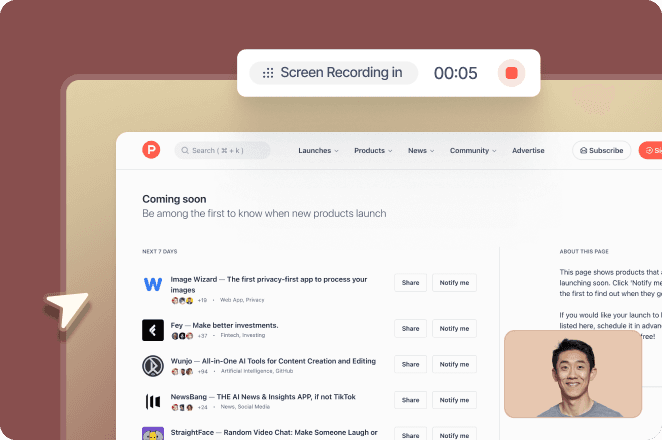
Imagine you're a healthcare provider implementing a new patient portal. You've invested significant resources into developing this tool, yet patients aren't using it effectively. This scenario is common, and the consequences can be costly. When patients struggle with portals, it leads to increased call volumes, miscommunications, and reduced patient satisfaction. According to a recent survey,
only 30% of patients found their healthcare portal easy to use
. The solution? An effective video training strategy that enables patients to navigate and use the portal confidently. This article will guide healthcare providers on crafting a patient portal training video strategy that engages and educates patients, improving portal adoption and utilization.
For more insights on creating effective training resources, explore our training video production guide.
Why does a patient portal training video strategy matter?
Patient portal training video strategy matters because it directly impacts patient engagement and satisfaction. Many healthcare providers face challenges when introducing digital tools, leading to underutilized resources and frustrated patients. Without proper training, patients are likely to encounter difficulties handling portals, resulting in increased support calls and potential delays in accessing important health information. Healthcare providers are under pressure to deliver patient-centered care while managing operational costs. An effective training video strategy can help bridge the gap between technology and patient experience.
For healthcare providers, the stakes are high. Ineffective patient portal usage can lead to miscommunication, reduced patient adherence to treatment plans, and lower satisfaction scores. These consequences not only affect patient health outcomes but also impact the provider's reputation and financial performance. Training videos offer a scalable solution to these challenges. They provide a consistent, accessible, and engaging way to educate patients, ultimately improving portal adoption rates and enhancing the overall healthcare experience. To understand how training videos fit into your strategy, review our training videos use case.
What are the benefits of patient portal training videos?
Patient portal training videos offer numerous advantages for healthcare providers looking to enhance patient engagement and satisfaction.
Improved Patient Engagement. Training videos provide an accessible and engaging way for patients to learn how to use the portal, leading to increased interaction with healthcare resources.
Reduced Support Calls. By addressing common questions and issues through video, patients are less likely to call support, reducing the burden on healthcare staff.
Increased Portal Adoption. Videos demonstrate portal features and benefits, encouraging more patients to adopt and regularly use the tool.
Consistent Messaging. Video ensures that every patient receives the same quality instruction, reducing the risk of miscommunication.
Cost-Effective Training. Videos are a one-time investment that can be reused, minimizing the need for repetitive live training sessions.
Scalability. Videos can reach a large audience without additional effort, making them ideal for large healthcare systems.
To create effective videos, ai/blog/best-training-video-software">best training video software tools available today. An AI-powered video tool can simplify production.
Which Trupeer features help you create effective patient portal training videos?
Trupeer offers several features tailored to help healthcare providers produce impactful patient portal training videos.
AI Screen Recording with Auto-Zoom and Click Detection
Trupeer's AI screen recording feature captures high-quality video demonstrations of the patient portal interface. The auto-zoom functionality highlights important sections of the screen, while click detection draws attention to user interactions. This ensures patients focus on critical elements, making it easier for them to follow along. The feature requires no additional software installation, allowing providers to start recording directly from their browser. This smooth integration simplifies the video creation process, enabling healthcare teams to produce detailed training materials quickly and efficiently.
Silent Screen Recording with Automatic AI Narration
Trupeer's silent screen recording capability allows healthcare providers to capture video content without background noise or distractions. The automatic AI narration then provides a professional voiceover, explaining each step in the video. With over 65+ natural voices and adjustable pace and tone, providers can tailor the narration to match their brand's voice. This feature is particularly beneficial for creating clear, concise training videos that patients can easily understand, reducing the need for additional support. Explore the potential of AI training video technology for more insights.
AI Avatars / Talking-Head Video
Enhance your training videos with Trupeer's AI avatars and talking-head video options. This feature allows providers to incorporate virtual presenters, making the videos more engaging and relatable. Choose from a stock library of avatars or create custom avatars using the HeyGen integration. By adding a human touch to the video, patients are more likely to connect with the content and retain the information presented. This can lead to higher patient satisfaction and increased portal usage. For documentation needs, Trupeer offers an AI documentation platform that integrates smoothly with video content.
Automatic SOP Generation from Any Recording
Trupeer's automatic SOP generation feature turns any video recording into a detailed, editable document. This is especially useful for healthcare providers who want to offer patients both video and text-based instructions. The SOPs are exportable in multiple formats, including HTML, PDF, and SCORM, ensuring compatibility with various systems. This dual-format approach caters to different learning preferences, increasing the likelihood of successful portal adoption. Providers can also keep documentation up-to-date automatically, reducing the administrative burden and ensuring patients always have access to the latest information.
AI Translation into 40+ Languages with Lip-Sync
Trupeer's AI translation feature allows healthcare providers to produce training videos for a diverse patient population. With translation capabilities in over 40 languages and synchronized lip-sync, the videos maintain their original quality and engagement level. This feature ensures that non-English speaking patients receive the same high-quality training, promoting inclusivity and accessibility. By offering multilingual video content, providers can cater to a broader audience, enhancing patient engagement and satisfaction. Implementing a searchable knowledge base can further support diverse patient needs.
How do you create a patient portal training video step by step with Trupeer?
How do you create a patient portal training video step by step with Trupeer?
Step 1: Capture the Portal Interface
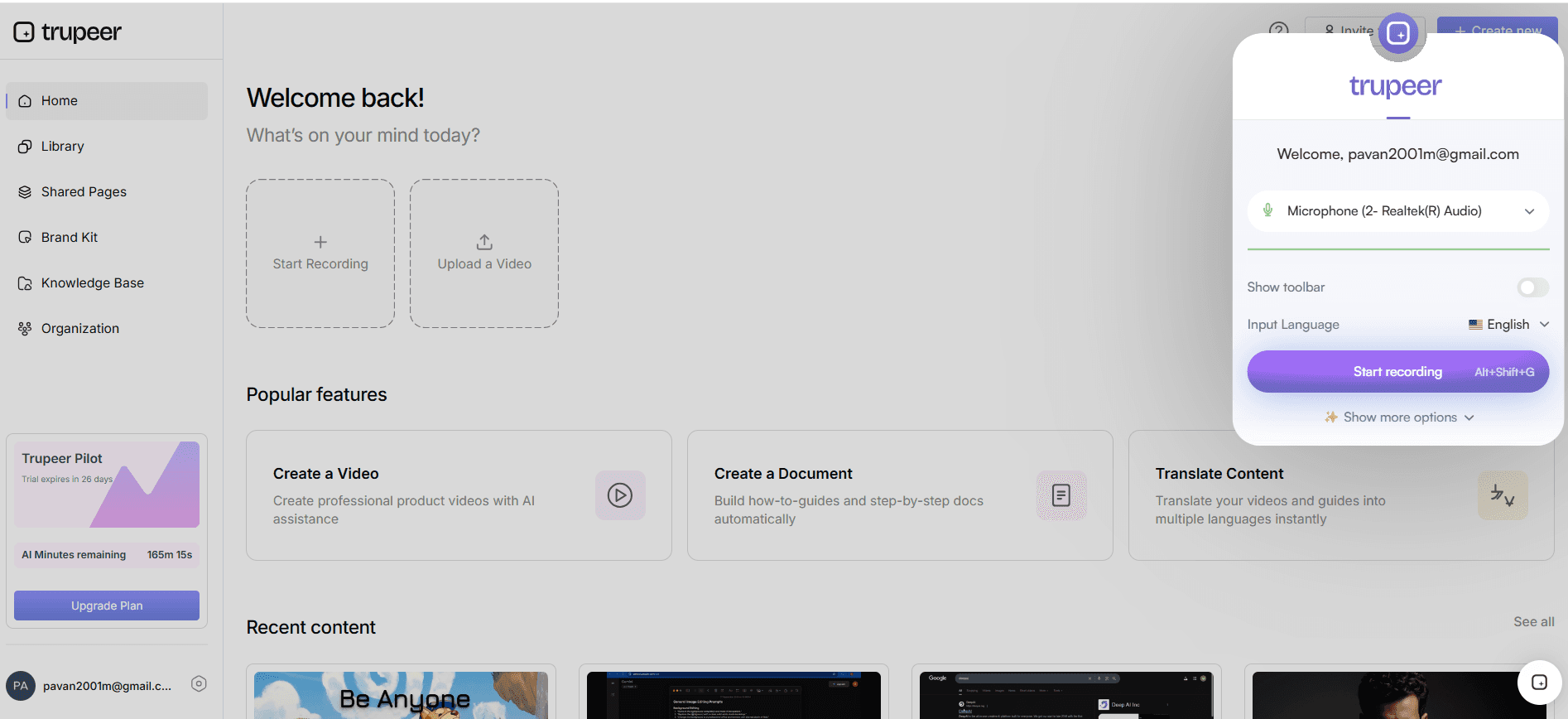
Begin by using Trupeer's AI screen recording feature. Open the patient portal in your browser and activate the screen recorder directly from Trupeer's interface. The browser-based recorder makes installation unnecessary. As you navigate the portal, Trupeer will automatically zoom in on key elements and detect clicks, ensuring the recording captures every critical action. This enhances viewer understanding by focusing on significant interactions. The entire recording process is smooth, and you can pause or stop as needed. This initial step typically takes around 10 to 15 minutes, depending on the complexity of the portal features being demonstrated.
Step 2: Add AI Narration
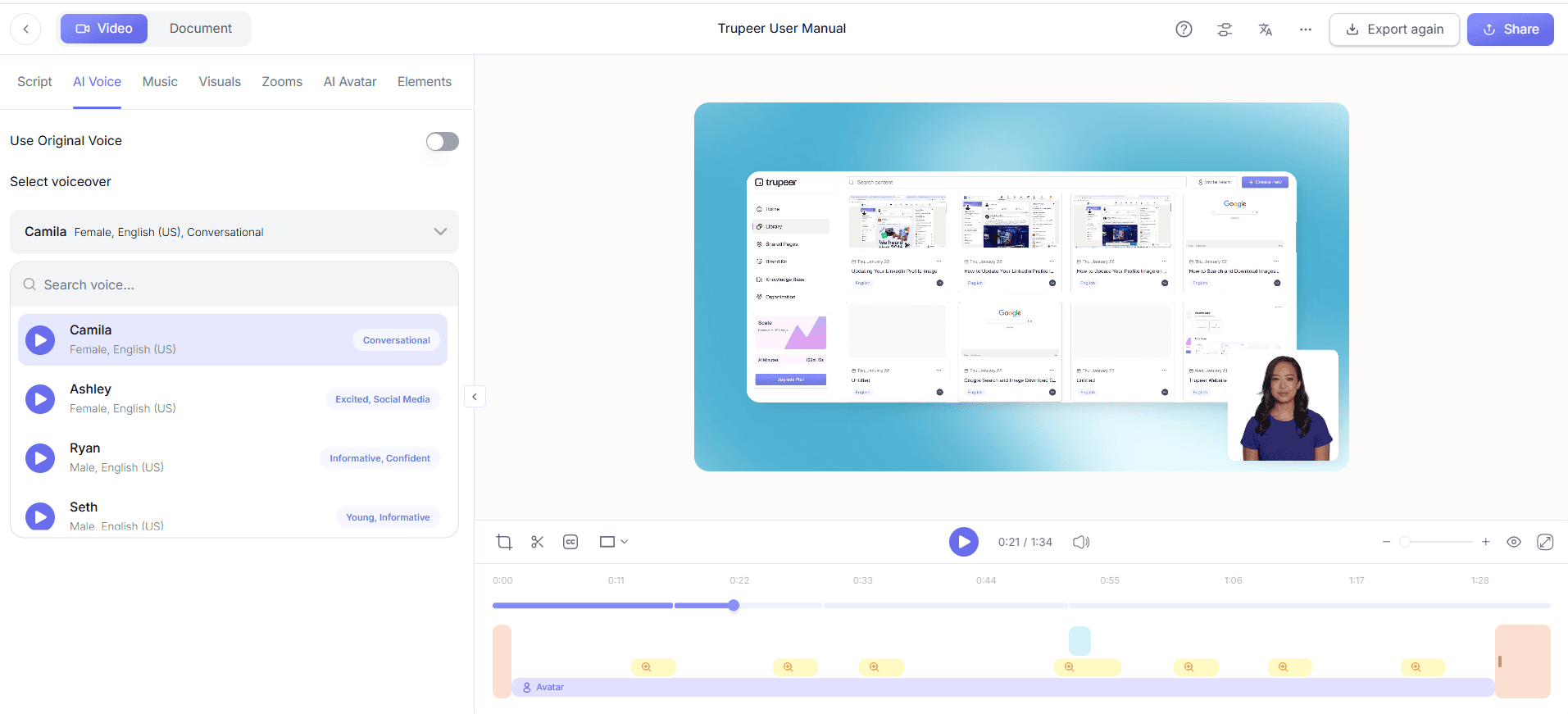
Once the recording is complete, enhance it with Trupeer's automatic AI narration. Select the AI voice that best suits your brand's tone from the available 65+ natural voices. Adjust the pace and tone if necessary to match your desired delivery style. Trupeer will then overlay this narration onto your video, providing clear and professional explanations throughout the recording. This step helps in making the content more accessible and engaging for patients who prefer auditory learning. The narration process is quick, usually completing within a few minutes, and it adds significant value by helping patients follow along more easily.
Step 3: Incorporate AI Avatars
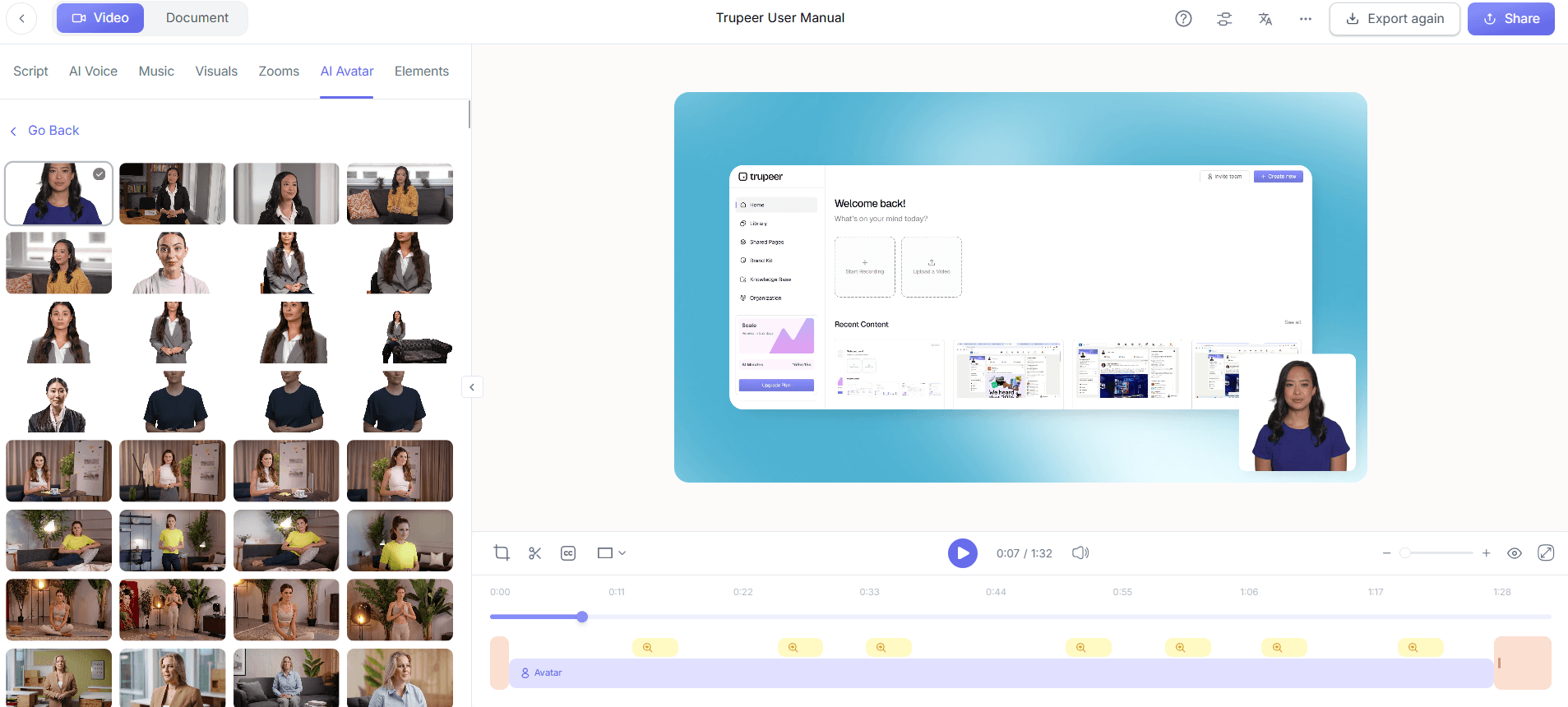
To make the training video more engaging, add an AI avatar using Trupeer's library or the HeyGen integration for custom avatars. These avatars appear as virtual presenters, offering a personal touch to your training content. Select an avatar that aligns with your brand's image and overlay it on the video. This addition can enhance viewer engagement and retention, as it introduces a human element to the digital interface demonstration. The avatar integration is straightforward and can be done in a few clicks, taking about 5 to 10 minutes to finalize and review.
Step 4: Generate Supporting Documentation
Use Trupeer's automatic SOP generation to create a detailed, edit-ready document from your video. This document can serve as a written guide for patients who prefer text-based instructions or as supplementary material alongside the video. Export the SOP into formats like HTML, PDF, or SCORM to ensure compatibility with various systems. This dual-format approach caters to diverse patient needs and reinforces learning. The SOP generation is efficient, typically taking 5 minutes, and it updates automatically with any changes to the underlying video content, ensuring ongoing accuracy. Teams weighing tools often start with a Loom alternatives comparison before standardizing on a workflow.
Step 5: Translate for Diverse Audiences
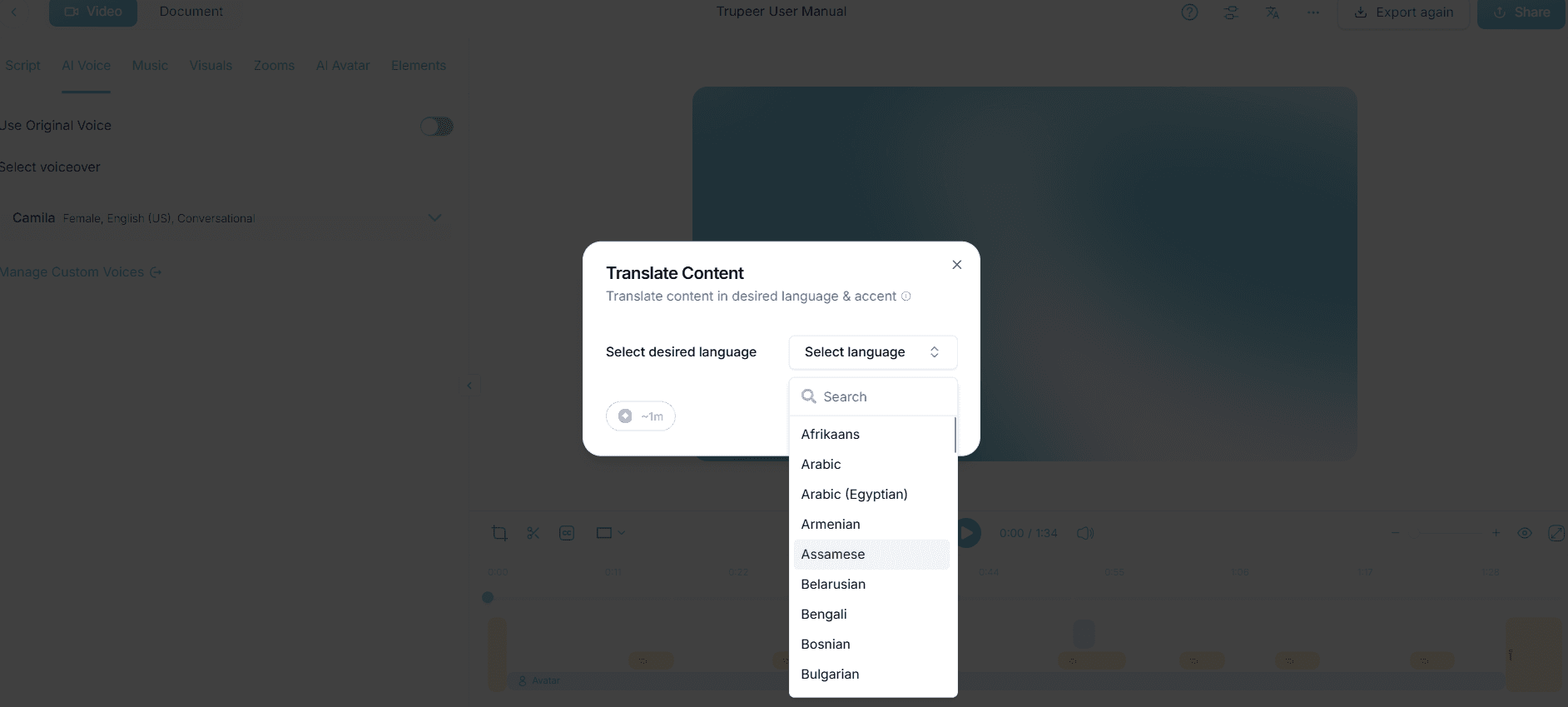
To cater to non-English speaking patients, use Trupeer's AI translation feature. Select the desired languages from the available 40+ options, and Trupeer will translate the video content while maintaining lip-sync accuracy. This ensures that the training video remains engaging and effective across different linguistic groups. The translation process is smooth and can be completed within 10 minutes, allowing you to offer inclusive training resources that enhance patient satisfaction and engagement, regardless of language barriers.
Step 6: Distribute via a Knowledge Base
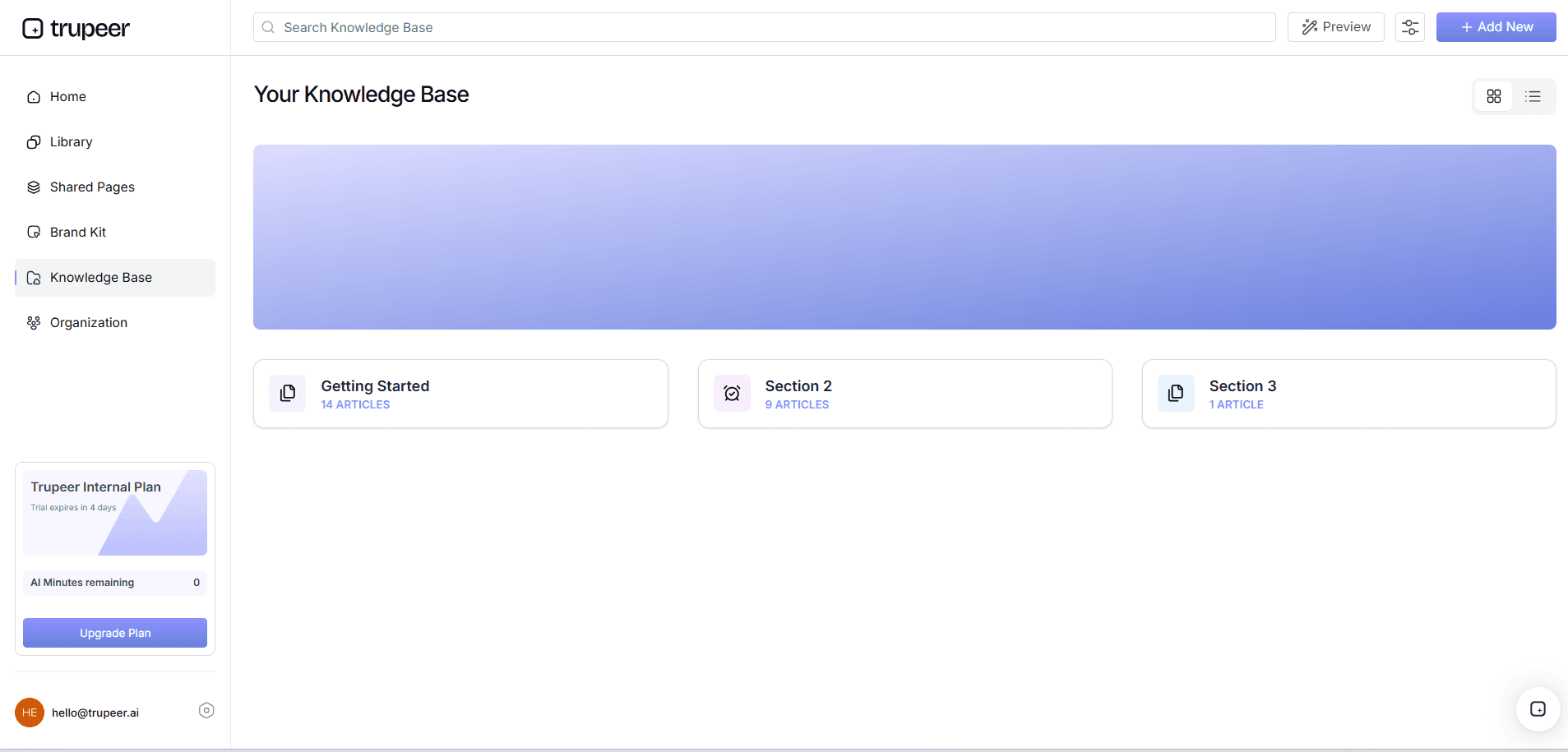
Finally, host the training video on Trupeer's AI-searchable knowledge base. This platform allows patients to easily access and navigate the training content with timestamp deep-links that direct them to specific sections of the video. This feature helps patients quickly find answers to their questions without watching the entire video, improving the overall user experience. Set up custom-domain hosting with SSO for secure access, ensuring that only authorized patients can view the content. The entire distribution setup takes about 15 to 20 minutes and significantly enhances the video's accessibility and usability.
What tips help you create effective patient portal training videos?
Crafting patient portal training videos requires strategic planning and execution. Here are some practical tips to optimize your video training strategy, ensuring maximum engagement and learning outcomes for your patients.
Keep Videos Short and Focused. Aim for a duration of 2-3 minutes to maintain patient attention and cover specific tasks or features in each video.
Use Clear and Simple Language. Avoid medical jargon and technical terms that might confuse patients. Instead, use straightforward language to enhance understanding.
Include Visual Cues. Use on-screen highlights and annotations to guide patients through complex actions, reinforcing the verbal instructions provided.
Test with Patient Feedback. Before finalizing, test the video with a small group of patients to gather feedback on clarity and effectiveness, then make necessary adjustments.
Regularly Update Content. Keep the training material current by revisiting and updating the videos as portal features evolve or based on patient feedback.
Provide Multiple Support Channels. Accompany videos with FAQs, chat support, or direct contact information for patients who may need additional help.
use Professional Tools. Use a training video editing software tool to ensure high-quality production values.
When SOPs come into the same conversation, a Scribe alternatives comparison helps clarify the scope.
Frequently asked questions
How do you ensure patient portal training videos are effective?
To ensure effectiveness, focus on clarity, engagement, and accessibility. Start by keeping videos concise, ideally under three minutes per topic. Use clear language and visual cues to guide patients. It's crucial to test videos with a patient group to receive feedback and make improvements. Regularly updating content ensures it remains relevant and accurate. also, providing supplementary materials like written guides or FAQs can reinforce learning. By combining these strategies, healthcare providers can create patient portal training videos that truly educate and enable patients.
What are the common challenges in creating training videos?
Common challenges include ensuring clarity, maintaining engagement, and addressing diverse patient needs. Clarity can be compromised by using too much jargon or complex language. Keeping videos engaging requires a balance of visual and auditory elements that capture attention. Another challenge is creating content that is accessible to patients with different language preferences or technology skills. By using tools like Trupeer's video localization tool, providers can create multilingual content that addresses these challenges effectively.
Why should healthcare providers invest in training videos?
Healthcare providers should invest in training videos because they enhance patient engagement, reduce support costs, and improve outcomes. Videos offer a scalable way to educate a large patient base consistently. They can reduce the burden on support staff by addressing common questions in a visual format. Training videos also help patients understand and use digital tools more effectively, leading to better health management. As technology becomes integral to healthcare, investing in training videos ensures providers meet patient needs efficiently.
Can training videos replace in-person instruction?
Training videos can complement but not entirely replace in-person instruction. Videos offer a consistent and scalable way to deliver information, making them ideal for initial training and ongoing reference. However, complex issues or personalized patient interactions may still require in-person guidance. Videos serve as an excellent first step in patient education, providing a foundation that can be built upon in personal consultations. By combining both approaches, healthcare providers can offer comprehensive support.
Does Trupeer support video analytics for training videos?
Yes, Trupeer provides analytics features to track viewer engagement, identify drop-off points, and generate heatmaps. These insights help healthcare providers understand how patients interact with training videos. By analyzing this data, providers can identify which parts of the video are most effective or where patients lose interest. This information is invaluable for refining and improving future training content. Trupeer's analytics help ensure that training videos achieve their intended educational outcomes efficiently.