How to Create SOPs at Scale: Framework, Workflow and Checklist
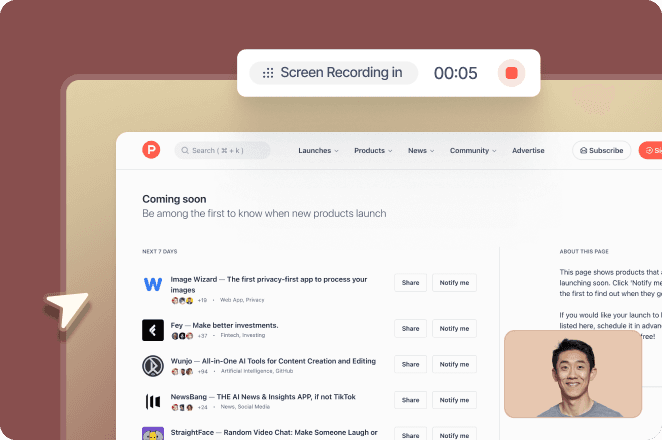
Creating SOPs at scale means shifting from writing procedures one at a time to running SOP production as a repeatable process: a single inventory of what needs documenting, capture instead of authoring, a fixed format, a review queue, and a named owner per procedure with a review cadence.
The reason this needs a different approach is that the constraint changes. Producing five SOPs is a writing task, and a competent writer solves it. Producing five hundred is an operations problem, and writing ability is no longer the bottleneck. Authoring capacity, reviewer availability, format consistency, findability and decay all become limiting factors before volume does.
This guide covers the seven-step framework, the four bottlenecks that break SOP programmes somewhere past the hundred-procedure mark, how to triage what does not need an SOP at all, a full checklist, and the metrics that tell you whether the programme is working.
One distinction worth making at the outset. This guide is about producing new procedures at volume as an ongoing capability. If the task is migrating an existing back catalogue of Word and PDF documents, that is a different exercise with a defined end point: see how to digitise and modernise thousands of legacy SOPs and how to audit and prioritise which legacy SOPs to digitise first.
Traditional SOP creation versus SOP creation at scale
The difference is not that one is faster. It is that almost every part of the workflow changes, because a scalable SOP creation process has different constraints from a writing task.
Traditional SOP creation | SOP creation at scale |
One document written at a time | A repeatable SOP creation process run as a production workflow |
Interview the process owner, write it up afterwards | Capture the process while it is being performed |
Authors create the documentation | Process owners review documentation they did not have to write |
Output limited by authoring headcount | Output limited by the number of process owners available |
Format decided document by document | One template and one level of detail locked before volume starts |
Review handled by email chain | Managed review queue with named reviewers and a service level |
Stored in a folder hierarchy | Searchable at step level and readable by internal AI assistants |
Updated when somebody notices it is wrong | Named owner, review cadence and automatic change triggers |
Measured in documents produced | Measured in coverage, currency and consultation |
A worked example. Suppose a single procedure takes four hours to write up, which is a fair average for a system-based process with screenshots. Creating hundreds of SOPs on that basis is straightforward arithmetic: 100 procedures is 400 hours of authoring, and 500 procedures is 2,000 hours, before any review or maintenance. At that volume the question is no longer whether somebody can write a good SOP. It is whether there is a production system that can capture, review, publish and maintain hundreds of procedures without accumulating a permanent backlog.
The rest of this guide is that system.
How to create SOPs at scale in seven steps
Build a process inventory first: list every activity that might need a procedure, at activity level, before writing a single document.
Triage ruthlessly: decide what does not need an SOP. Most inventories are cut by a third at this step.
Replace authoring with capture: record the person doing the work rather than interviewing them and writing it up afterwards.
Fix the format before you scale volume: one template, one level of detail, one naming convention, agreed and locked.
Run review as a queue: a defined workflow with states and owners, not an email chain per document.
Solve discovery: search at step level, not a folder tree. An SOP nobody can find has no operational value.
Assign ownership and a review cadence per procedure, on the day it is published rather than later.
Steps two, four and seven are the ones teams skip when under time pressure, and they are the three that determine whether the programme survives its second year.
Why SOP creation breaks at scale
SOP programmes rarely fail at the start. They fail somewhere between the fiftieth and the two-hundredth procedure, and they fail for four fairly predictable reasons.
The authoring bottleneck
In the conventional model, someone interviews a process owner, watches them work, and then writes the procedure. That write-up is the expensive part. It typically takes several hours per procedure, and the number of people who can do it well is small.
This makes total output a function of authoring headcount. Doubling the target means doubling the authors or doubling the timeline, and neither is usually available. Worse, the authors are often the same people who understand the processes, so the work competes directly with operations.
The review bottleneck
Every procedure needs sign-off from someone who knows whether it is correct, and those people are busy doing the work the procedure describes. At ten documents, review is a conversation. At two hundred, it is a queue, and an unmanaged queue is where SOP programmes visibly stall.
The failure signature is a large number of procedures sitting in draft. The documentation exists, nobody has approved it, and because it is unapproved nobody uses it, so the effort produces no operational benefit at all.
Decay outpaces creation
Procedures go out of date. Systems get upgraded, controls change, org structures shift. Each published SOP creates a small ongoing maintenance liability, and those liabilities accumulate.
Past a certain volume, the maintenance load exceeds the creation capacity, and the library starts decaying faster than it grows. This is the point at which a well-intentioned programme becomes a net negative, because staff learn that the documentation cannot be trusted and stop consulting it. An SOP library that is 40 per cent out of date is arguably worse than none, because nobody knows which 40 per cent.
Discovery failure
A library of five hundred procedures organised in folders is not usable at the point of need. Someone mid-task with a specific question will not browse a hierarchy. If they cannot find the answer in roughly thirty seconds, they ask a colleague, which is exactly the behaviour the SOP was meant to replace.
This is the most commonly overlooked bottleneck, because it is invisible in the programme metrics. Documents created looks healthy. Documents consulted tells a different story.
Step 1: Build the process inventory before writing anything
The first deliverable of an SOP programme is not an SOP. It is a list.
Inventory at activity level rather than function level. "Payroll" is not an inventory item. "Off-cycle payment approval for the UK entity" is. The finer granularity is what makes triage and prioritisation possible, and it exposes the activities that only one person can perform.
For each activity, capture:
Frequency: daily, weekly, monthly, annual, or ad hoc
Number of people who perform it, and whether it is a single point of knowledge
Consequence of getting it wrong: financial, regulatory, customer, or negligible
Systems involved, since system-heavy activities are the hardest to describe in text
Whether any documentation exists today, and whether anyone trusts it
Named owner, meaning a person rather than a team
The last column matters more than it appears. Activities without a named owner tend to be the ones nobody documents and nobody maintains. A process documentation template gives a workable structure for capturing this.
Step 2: Decide what does not need an SOP
The instinct at scale is to document everything. It is the wrong instinct, because every procedure produced is a procedure to maintain.
A workable filter, applied in this order:
High frequency and high consequence: document first, in full, with exception paths. This is the core of the library.
Low frequency and high consequence: document thoroughly. Nobody remembers how to do the annual regulatory submission, and the cost of error is high.
High frequency and low consequence: a job aid or quick reference is usually enough. A full procedure is over-engineering.
Low frequency and low consequence: leave undocumented. Accept the cost of asking a colleague on the rare occasion it comes up.
Single point of knowledge, any quadrant: document regardless of frequency or consequence, because the risk is not the task, it is the concentration.
Being explicit about the fourth category is what makes the programme sustainable. A stated decision not to document something is a legitimate output, and it is very different from an accidental gap.
It is also worth deciding format at this stage rather than later. See work instruction versus SOP for where the line sits between the two.
Step 3: Replace authoring with capture
This is the step that removes the authoring bottleneck, and it is the difference between a programme that scales and one that does not.
In the conventional model the person who knows the process explains it, and someone else writes it down. Two problems follow. The write-up records the writer's interpretation, so anything they did not fully understand comes out vague. And the write-up is slow, which caps total output.
The alternative is to make the performance of the work the source record. The process owner does the task while their screen is recorded, narrating as they go. That recording is then converted into a structured procedure with steps and screenshots, which the owner reviews rather than writes.
Three things change as a result. Output stops depending on authoring capacity, because recording a process takes roughly as long as performing it, which is what makes it possible to create SOPs in bulk rather than one at a time. Screen-level detail survives, because it was captured rather than described. And the process owner's role shifts from explaining to reviewing, which takes a fraction of the time and is a far easier ask of a busy person.
Capture the exception paths in the same session. Ask directly what happens when the input is wrong, the approval is missing, or the system throws an error. Exceptions generate most escalations and are almost never volunteered unprompted.
Step 4: Fix the format before you scale volume
Format inconsistency is cheap to prevent and expensive to retrofit. Two hundred procedures written to four different standards is a normalisation project nobody has budget for.
Lock these decisions before volume production starts:
One template: fixed sections in a fixed order, so a reader knows where to look regardless of which procedure they open.
One level of detail: agree whether procedures are written for a new joiner or for a trained operator. Mixing the two makes the library feel unreliable.
One naming convention: predictable enough that a title can be guessed, which matters more than it sounds for search.
Defined metadata: owner, last reviewed date, next review date, systems referenced, and process area. This is what makes bulk maintenance possible later.
A stated screenshot standard: when to include one, what to redact, and how to handle screens containing customer data.
The metadata is the part most often skipped and the part that later determines whether maintenance is feasible. Without a next-review date on every document, there is no way to generate a review queue, and maintenance becomes reactive. A standard operating procedure template or SOP manual template is a reasonable base. For regulated environments, ISO-compliant work instruction format sets out the required elements.
Step 5: Run review as a queue, not an email chain
Review is where volume programmes stall, and the fix is structural rather than motivational.
Define explicit states and make the current state visible: drafted, in review, changes requested, approved, published. Assign a named reviewer per procedure, not a team inbox. Set a review service level, for example five working days, and escalate on breach rather than waiting.
Two practical measures reduce the load considerably. Batch review by process area so one reviewer sees ten related procedures in a single sitting rather than ten separate requests across three weeks. And separate technical accuracy review, which needs the process owner, from editorial review, which does not. Conflating the two sends trivial wording questions to the busiest person available.
Track the size of the draft backlog as a headline metric. A growing backlog means the programme is producing faster than it can approve, and unapproved documentation delivers no value.
Step 6: Solve discovery
A procedure has value only at the moment someone needs it. That moment is usually mid-task, under time pressure, with a narrow and specific question.
Folder hierarchies fail this test. They require the searcher to know where something was filed, which is a different question from the one they actually have. What works at scale:
Search that returns the relevant step rather than the whole document
Procedures indexed by system and by process area, so "how do I do this in SAP" resolves
Consistent titling, so an intuitive guess produces the right result
Access at the point of work, rather than requiring a separate portal login
Machine-readable access, so internal AI assistants and agents can answer from the same source
The last point is increasingly the one that matters. If a support agent or an internal assistant can answer from the SOP library directly, the library becomes the answer layer rather than a reference archive. On the mechanics, see how to auto-ingest and index SOPs into a knowledge base.
Step 7: Plan maintenance from day one
Maintenance is the difference between a library and an archive, and it has to be designed before the library gets large enough to need it. SOP management at scale is mostly this step: the work of keeping several hundred procedures current.
Four mechanisms carry most of the load:
Named owner per procedure: a person, not a team. Team ownership means no ownership.
Review cadence by criticality: quarterly for high-consequence procedures, annually for the rest. A single blanket cadence either overloads reviewers or lets critical procedures drift.
Change triggers: a system upgrade, a control change or a process redesign should generate a review task automatically, rather than relying on someone remembering.
Version history: so it is possible to establish which version was in force on a given date, which matters for audit and for incident investigation.
Publish the last-reviewed date on every procedure, visibly. It sets reader expectations honestly and creates mild useful pressure to keep documents current. Further detail in how to maintain and version control work instructions.
SOP at scale checklist
Before production starts
Process inventory complete at activity level, with frequency, consequence and owner per item
Triage applied, with explicit decisions on what will not be documented
Single points of knowledge flagged and scheduled first
Template agreed and locked, with fixed sections in fixed order
Level of detail agreed: written for a new joiner or a trained operator
Naming convention defined and documented
Metadata fields defined, including next review date
Redaction standard agreed for screens containing customer or personal data
Review workflow states defined, with named reviewers and a review service level
During production
Capture sessions recorded rather than written up from notes
Exception paths captured in the same session as the main path
Draft backlog tracked weekly as a headline metric
Review batched by process area rather than handled document by document
Technical accuracy review separated from editorial review
Metadata populated at publication, not retrofitted later
Translated versions produced where sites operate in another language
After publication
Named owner recorded for every published procedure
Review cadence set by criticality, not one blanket interval
Change triggers wired to generate review tasks automatically
Last-reviewed date visible to readers on every document
Search tested with real questions from real users, not with document titles
Consultation rate monitored, not only documents produced
Annual audit of the library for procedures that are out of date or now redundant
Scaling across sites and languages
A single-site library and a multi-site library are different problems. Two questions decide the structure.
First, is the process genuinely identical across sites? Often it is not, and pretending otherwise produces a procedure nobody follows because it does not match local reality. The workable pattern is a global core procedure with documented local variants, rather than either one universal document or fully independent per-site libraries.
Second, what language do people actually work in? Producing everything in English and assuming parity of comprehension is a decision rather than a default. Working English usually covers the main path and is least reliable exactly where precision matters: exception handling, control steps, regulatory wording.
The practical constraint is that translation has to stay tied to the source document. Anything requiring manual retranslation on every revision will drift, and outdated translated documentation is worse than none because it is trusted.
How technology changes SOP production at scale
The bottleneck in conventional SOP production is the write-up. Someone observes the work, then spends hours converting what they saw into a document. That single dependency caps output and introduces the interpretation gap described earlier.
Screen recording combined with automated documentation removes it, and this is what it means in practice to automate SOP creation rather than simply write faster. The process owner performs the task once while recording. The recording is converted into a step-by-step procedure with screenshots, which the owner then reviews rather than authors. Recording time is roughly equal to task time, so output scales with the number of process owners rather than the number of technical writers.
Capture alone is not sufficient. A library of two-hour recordings is not documentation, because nobody can navigate it at the point of need. The conversion and indexing steps are what turn captured material into something usable: structured steps, screenshots, search at step level, and machine-readable access for internal assistants.
Trupeer AI is one implementation of this pattern. Screen recordings become SOPs, work instructions and training videos, held in a searchable knowledge base with version history and role-based access. The SOP creator, SOP generator and convert screen recording to SOP pages cover the specific workflows, and process documentation software covers the broader use case.
How to tell whether the programme is working
Documents produced is the metric most SOP programmes report and the least informative one, because it measures effort rather than outcome. More useful:
Coverage of critical activities: proportion of high-frequency, high-consequence activities with a current approved procedure. The single best indicator of programme health.
Draft backlog size and age: unapproved documentation delivers nothing. A growing backlog signals a review capacity problem, not a writing problem.
Currency rate: proportion of the library within its review cadence. Below roughly 80 per cent, readers stop trusting the library as a whole.
Consultation rate: how often procedures are actually opened, and which ones never are. Procedures nobody consults are either undiscoverable or unnecessary.
Question deflection: whether questions to senior staff and process owners fall as coverage rises. If they do not, the library is not answering real questions.
Time to competency for a new joiner: the end test. If a new hire still needs a person to explain the process, the documentation is not doing its job.
Coverage and currency together are the pair to watch. High coverage with low currency is a library people have already stopped trusting. On quantifying the business case, see the ROI of SOP digitisation.
Common mistakes
Documenting everything: every procedure created is a procedure to maintain. Triage is not laziness, it is capacity management.
Starting with the easy processes: the well-understood, multi-person activities are the least risky and the least valuable to document first. Start with single points of knowledge.
Treating format as a later problem: normalising two hundred inconsistent documents costs more than agreeing a template on day one.
Leaving ownership unassigned at publication: an unowned procedure is at its most accurate the day it is published and degrades from there.
Measuring production instead of consumption: documents created is an activity metric. Coverage, currency and consultation are outcome metrics.
Documenting the happy path only: exceptions consume most of the effort and generate most of the escalations.
Where the programme spans a shared services or delivery centre operation, the governance and ownership questions are more acute again. See global business services for how the model changes there, and how to run a process documentation workshop with stakeholders for getting the inventory built in the first place.
Bringing it together
The ability to document processes at scale is limited by four things, and writing ability is not one of them. The limits are authoring capacity, review capacity, decay and discoverability.
Each has a structural fix. Capture the work instead of writing it up, which removes the authoring cap. Run review as a managed queue with named reviewers and a service level. Design maintenance before the library is large, with owners, cadences and change triggers. And treat discoverability as a first-class requirement rather than a filing decision.
Scalable SOP creation is therefore less about writing throughput and more about the system around it. The programmes that hold up over several years tend to be the ones that documented less than they could have, to a fixed standard, with an owner on every procedure.
Frequently Asked Questions
How do you create SOPs at scale?
Treat SOP production as a repeatable process rather than a series of writing tasks. Build a process inventory at activity level, triage to decide what genuinely needs documenting, capture the work by recording process owners rather than writing procedures up from notes, lock a single template and level of detail before volume starts, run review as a queue with named reviewers and a service level, make procedures searchable at step level, and assign an owner plus a review cadence to every procedure at publication.
Why do SOP programmes fail once they get large?
Four bottlenecks, and none of them is writing ability. Authoring capacity caps output, because the write-up is slow and few people do it well. Review capacity stalls the queue, leaving procedures stuck in draft where they deliver nothing. Decay eventually outpaces creation, so the library degrades faster than it grows. And discovery fails, because nobody browses a folder tree mid-task.
What is the fastest way to create an SOP?
Record the person performing the task while they narrate what they are doing, then convert that recording into a structured procedure with steps and screenshots for the owner to review. This is faster than interviewing and writing up because recording time is roughly equal to task time, and it keeps the screen-level detail that a written summary tends to lose.
How many SOPs should an organisation have?
Fewer than most inventories suggest. Document high-frequency high-consequence activities in full, and low-frequency high-consequence activities thoroughly since nobody remembers the annual process. Use a job aid rather than a full procedure for high-frequency low-consequence work, and consciously leave low-frequency low-consequence activities undocumented. Document any single point of knowledge regardless of where it falls, because the risk is the concentration rather than the task.
Who should write SOPs?
The process owner should be the source and the approver, but they should not have to be the author. Requiring busy operational staff to write documents is what limits most programmes. Capturing them performing the work and asking them to review the result shifts their contribution from hours of writing to minutes of checking, which is a far more realistic ask.
How often should SOPs be reviewed?
Set the cadence by criticality rather than applying one interval to everything. Quarterly review suits high-consequence procedures, annual review suits the rest. Cadence alone is not enough, so wire change triggers as well: a system upgrade, a control change or a process redesign should generate a review task automatically rather than depending on someone remembering.
What is the difference between an SOP and a work instruction?
An SOP describes a process end to end, including who is involved, the sequence and the controls. A work instruction covers how to perform one task within it, usually at screen or step level. At scale the distinction matters for maintenance: work instructions change whenever a system changes, while SOPs change only when the process itself changes, so they warrant different review cadences.
How do you stop SOPs going out of date?
Assign a named person, not a team, as owner of every procedure at the point of publication. Record a next-review date as structured metadata so a review queue can be generated automatically. Wire change triggers from system upgrades and control changes. Display the last-reviewed date to readers. And track currency, meaning the proportion of the library within its review cadence, as a reported metric alongside coverage.
What should an SOP template include?
Purpose and scope, the named owner, the systems involved, prerequisites, numbered steps with screenshots where the task is system-based, exception paths and how to handle them, escalation contacts, and structured metadata covering version, last-reviewed date and next-review date. The metadata is the part most often omitted and the part that makes bulk maintenance possible later.