Trupeer Blog
Summarise
Anyone who's ever tried to document enterprise software processes like SAP, ServiceNow, or Salesforce knows it's no small feat. These platforms are dynamic, constantly evolving with updates that can make existing documentation obsolete overnight. In a company where simplified operations are paramount, outdated documentation can lead to costly misunderstandings and inefficiencies. For instance, a simple error in an SAP workflow documentation could delay a product shipment, costing tens of thousands in lost revenue. That's why having up-to-date, precise documentation is crucial. According to a 2025 Gartner report,
businesses with well-documented software processes see a 25% reduction in workflow errors.
This isn't just about keeping track of processes; it's about ensuring your team can adapt quickly and maintain productivity in a fast-paced corporate landscape. The stakes are high for IT teams, project managers, and end-users who rely on these systems to function smoothly. When your documentation is clear and current, the entire organization benefits from enhanced performance and reduced friction. Teams weighing tools often start with a Loom alternatives comparison before standardizing on a workflow.
Why does documenting complex enterprise software processes matter?
Documenting complex enterprise software processes is essential for maintaining operational efficiency and ensuring that all team members are aligned. When dealing with systems like SAP, ServiceNow, and Salesforce, each with its unique configurations and workflows, having a clear and accessible documentation system can significantly reduce errors and misunderstandings. For instance, SAP's intricate modules require precise documentation of each step in the workflow to prevent misconfigurations that could halt operations. A well-documented process allows teams to follow established protocols without second-guessing, minimizing the risk of costly errors.
Also, these systems often get frequent updates and new functionalities. Without proper documentation, teams could struggle to implement these changes effectively. This is where documentation plays a critical role in onboarding new employees and training existing staff. With a solid documentation framework, new team members can quickly get up to speed, and experienced staff can stay informed about the latest system updates. The result is a simplified operations workflow that supports business growth and adaptability. also, having a comprehensive documentation strategy is vital for compliance audits, as many industries require proof of process controls. By maintaining detailed and accurate documentation, organizations can demonstrate compliance with industry regulations, so avoiding potential fines and maintaining their reputation.
What are the benefits of documenting complex enterprise software processes?
Implementing a solid documentation strategy for enterprise software processes offers several tangible benefits. Here's what you can expect:
Improved Process Clarity. Detailed documentation enhances understanding of complex workflows, ensuring every team member knows their role and responsibilities, which reduces errors and inefficiencies.
Enhanced Training Efficiency. New hires and existing employees can access user guide software to get up to speed quickly, reducing the time spent on training and accelerating productivity.
Adaptability to Changes. With an AI-powered video tool, documentation can be easily updated to reflect changes in software, ensuring the team is always working with the most current information.
Compliance and Audit Preparedness. Accurate documentation provides the necessary records for audits, helping organizations demonstrate compliance with industry standards and avoid penalties.
Reduction in Support Queries. When documentation is clear and accessible, users can often find answers to their questions without needing to contact support, freeing up your support team to focus on more complex issues.
Increased Team Collaboration. With shared access to documentation, team members can collaborate more effectively, ensuring everyone is on the same page and working towards common goals.
Which Trupeer features help you document complex enterprise software processes?
Trupeer offers a suite of features designed to simplify the documentation of complex enterprise software processes. Here's how each feature can address your needs:
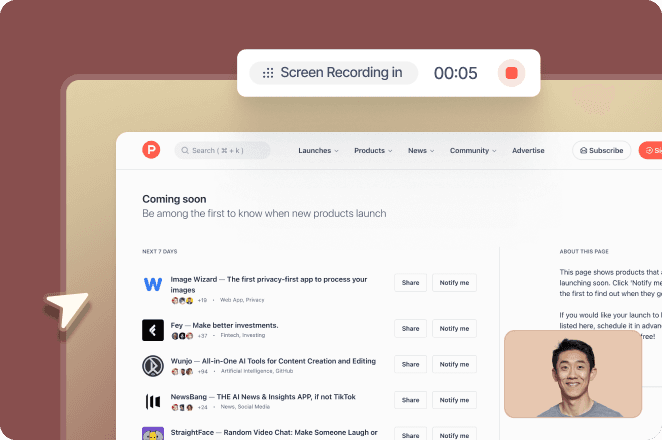
AI screen recording with auto-zoom and click detection
This feature allows you to capture detailed recordings of your software processes with precision. As you navigate through your SAP, ServiceNow, or Salesforce tasks, Trupeer automatically detects clicks and zooms into relevant areas of the screen. This ensures that every critical action is highlighted and documented, making it easier for viewers to follow along. With this capability, you won't miss any step in your workflow, providing a comprehensive visual guide for your team. The recordings can be paused or replayed, ensuring everyone understands the process thoroughly.
Silent screen recording with automatic AI narration
Trupeer's silent screen recording feature captures your screen activity without background noise, while its AI narration provides clear audio explanations. This is particularly useful for documenting complex workflows in a quiet office environment. The AI-generated voiceover can be customized to suit your brand’s tone, making the documentation not only informative but also consistent with your company’s style. The narration can be adjusted for pace and tone, helping to maintain viewer engagement throughout the documentation.
Automatic SOP generation from any recording
With Trupeer, every screen recording can be transformed into a detailed standard operating procedure (SOP). This feature uses AI to create edit-ready SOPs that outline each step of your documented process. This not only saves time but also ensures accuracy in the documentation of complex processes. The SOPs are exportable in multiple formats, including HTML and PDF, making it easy to share with your team or integrate into your existing documentation system.
AI translation into 65+ languages with lip-sync
For global organizations, Trupeer’s translation capabilities are invaluable. This feature allows you to translate your documentation into over 40 languages, complete with lip-sync for video content. This ensures your documentation is accessible to international teams, promoting consistency in understanding and execution of processes across different regions. The translated content maintains the same level of clarity and detail as the original, ensuring nothing is lost in translation.
AI-searchable knowledge base with timestamp deep-links
Trupeer's AI-searchable knowledge base is a big shift for accessing documentation quickly. By indexing each recording with timestamp-level deep links, team members can jump directly to the part of the process they need to reference. This reduces the time spent searching for information and allows users to quickly find solutions to their problems. As a result, your team can work more efficiently, with the confidence that they have access to the most accurate and up-to-date information.
How do you document complex enterprise software processes step by step with Trupeer?
Step 1: Record the Process
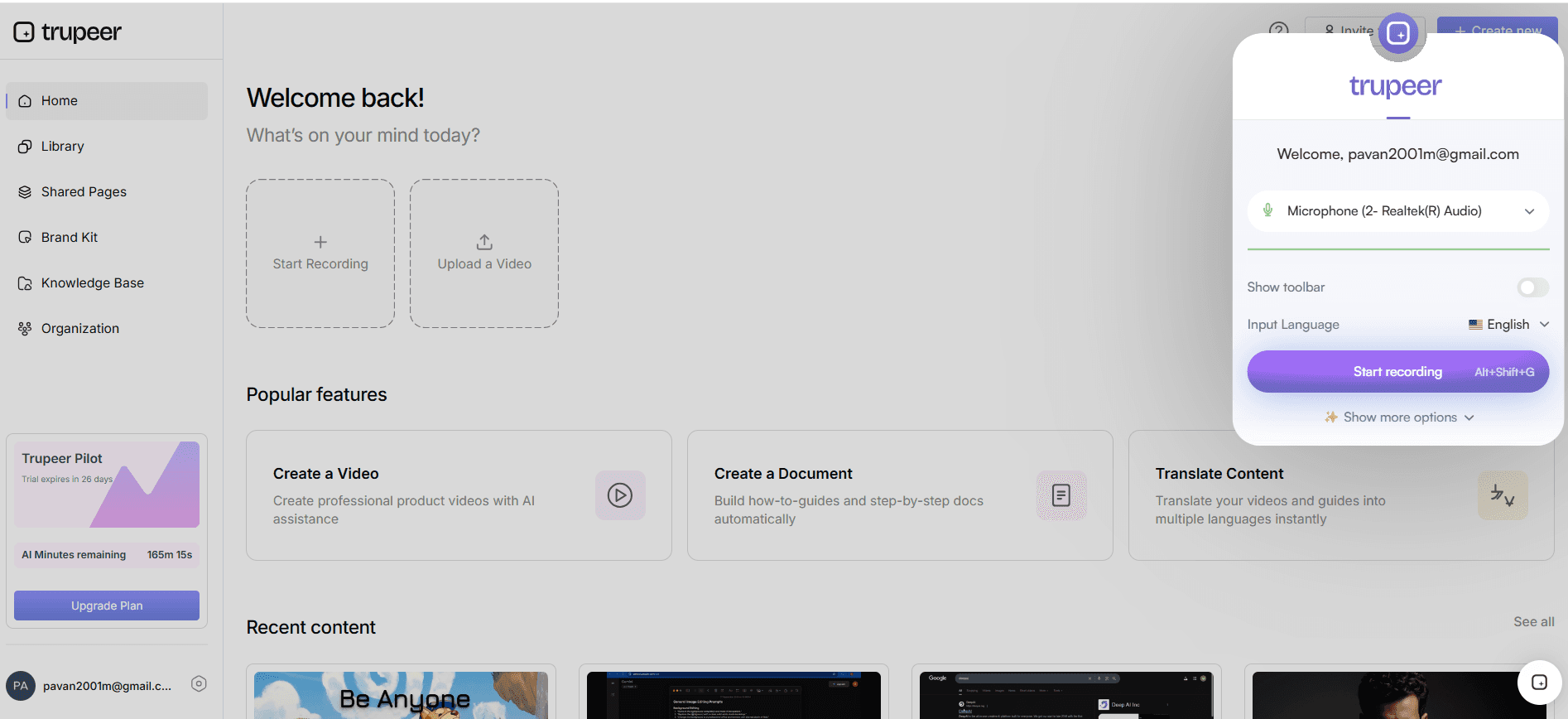
Begin by using Trupeer's AI screen recording with auto-zoom and click detection. Open the Trupeer app on your desktop and select the screen recording option. As you navigate through your SAP, ServiceNow, or Salesforce workflow, Trupeer will automatically zoom in on important areas and detect clicks. This feature ensures you capture every crucial action and detail, providing a comprehensive visual guide. The recording process is smooth, and you can pause or resume as needed to ensure no steps are missed. Typically, recording a full workflow might take around 15 to 30 minutes, depending on complexity.
Step 2: Add AI Narration
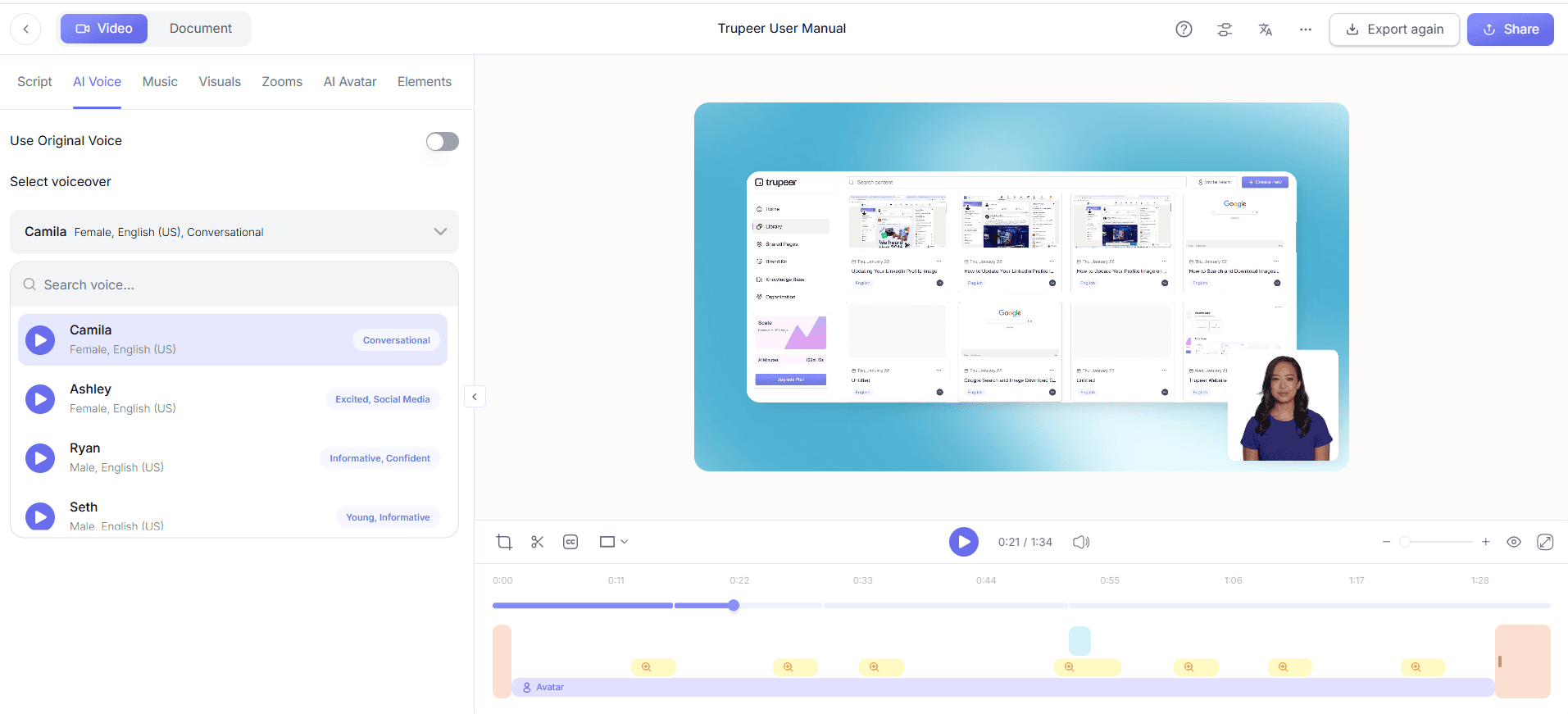
After recording, enhance your video with Trupeer's silent screen recording complemented by automatic AI narration. Select the AI narration option, and choose a voice that matches your brand's tone. Trupeer's AI will generate a professional voiceover, providing clear explanations of each step. This feature is particularly useful for clarifying complex processes without background noise. Adjust the pace and tone of the narration to keep viewers engaged. The process of adding narration is quick, typically taking only about 5 minutes for a complete video.
Step 3: Generate SOPs
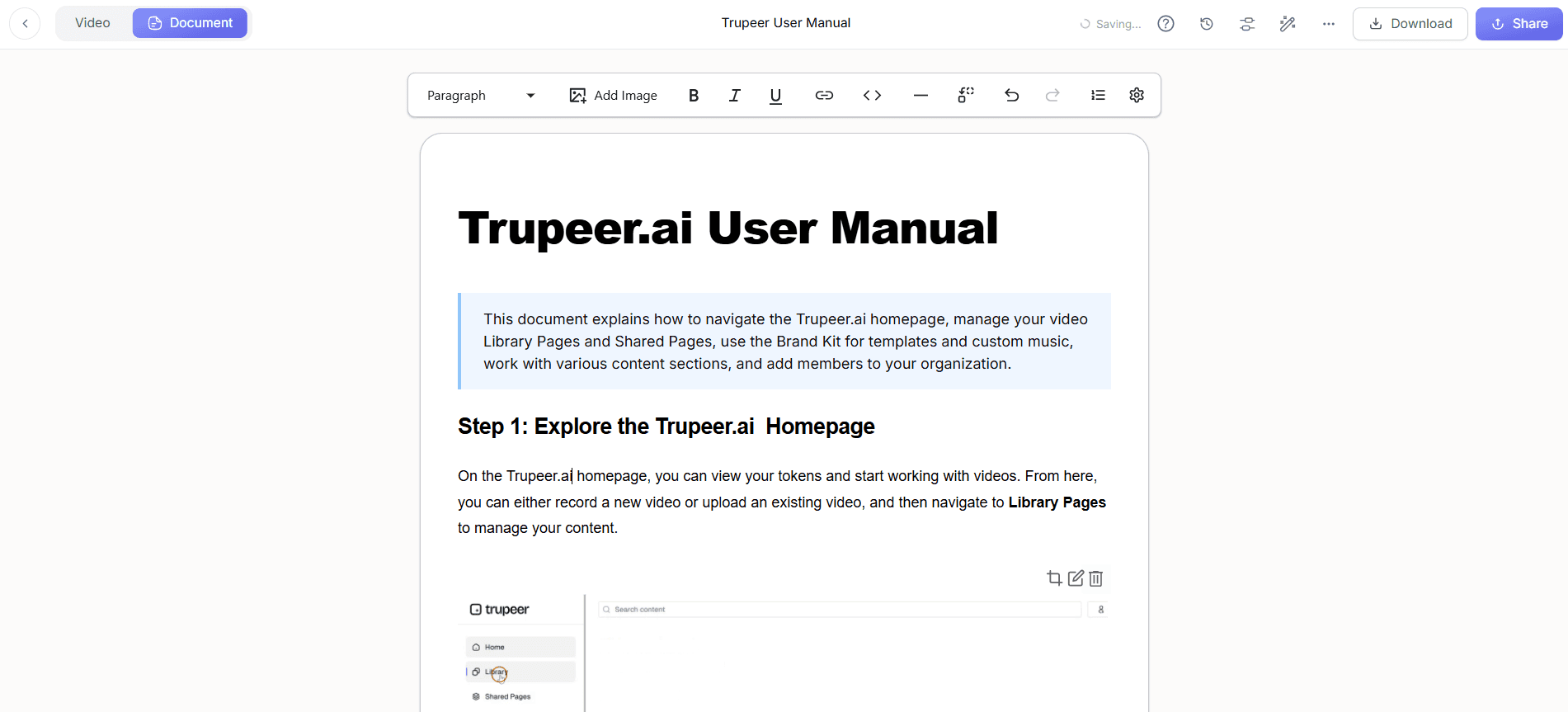
Turn your recording into a detailed standard operating procedure using Trupeer's automatic SOP generation. Once your video is complete, click on the SOP generation option. Trupeer will analyze the recording and produce an edit-ready SOP, outlining each step with precision. This feature saves time and ensures accuracy in your documentation. Export the SOP in your preferred format, such as HTML or PDF, for easy sharing and integration into your documentation system. Generating an SOP usually takes less than 10 minutes. For a deeper look, our guide on best documentation software covers the adjacent playbook.
Step 4: Translate for Global Teams
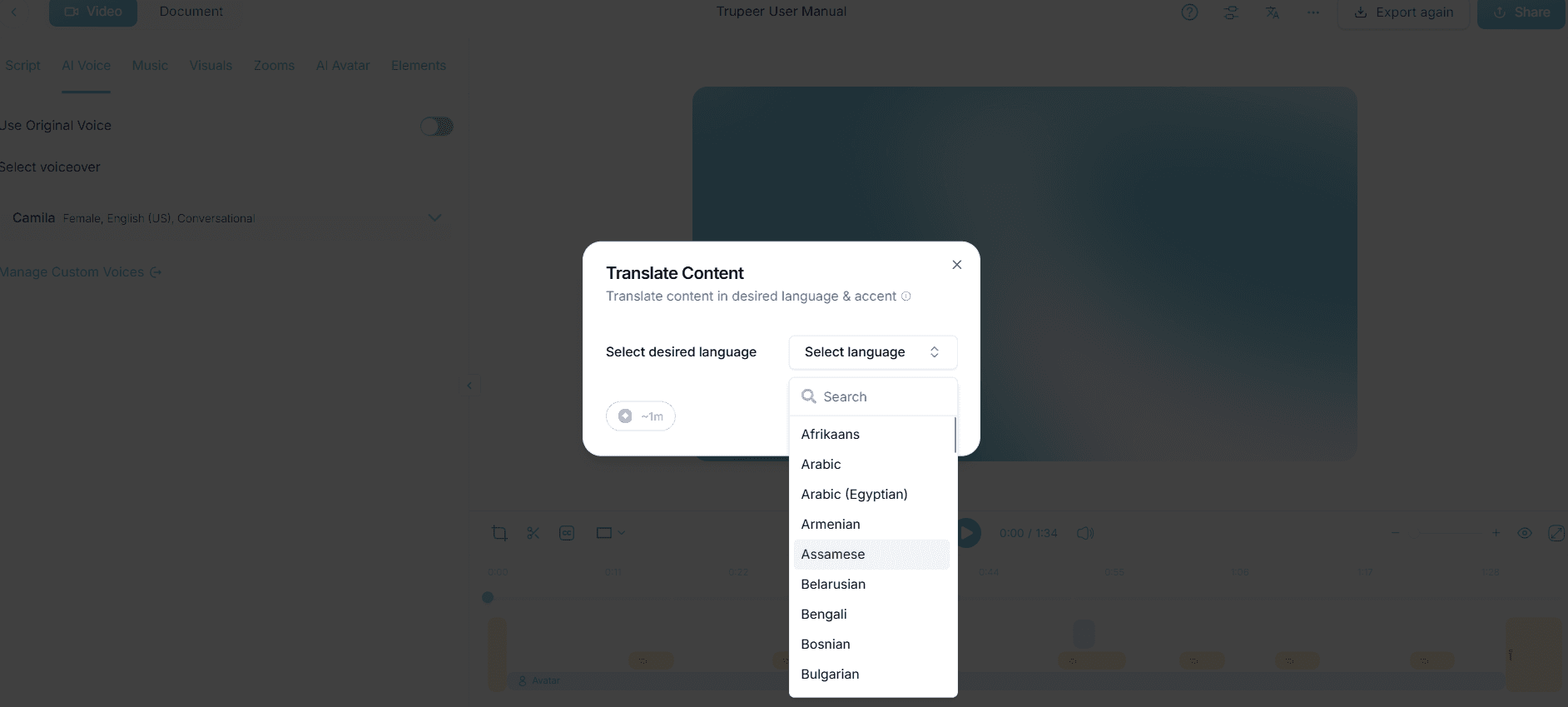
If your organization operates internationally, use Trupeer's AI translation into 40+ languages with lip-sync. Select the translation option and choose the target languages. Trupeer will translate the documentation while ensuring that lip-sync is maintained for video content. This feature ensures consistency in understanding across different regions. The translation process is efficient, typically completing within minutes, and ensures that your global teams have access to the same high-quality documentation.
Step 5: Create a Knowledge Base
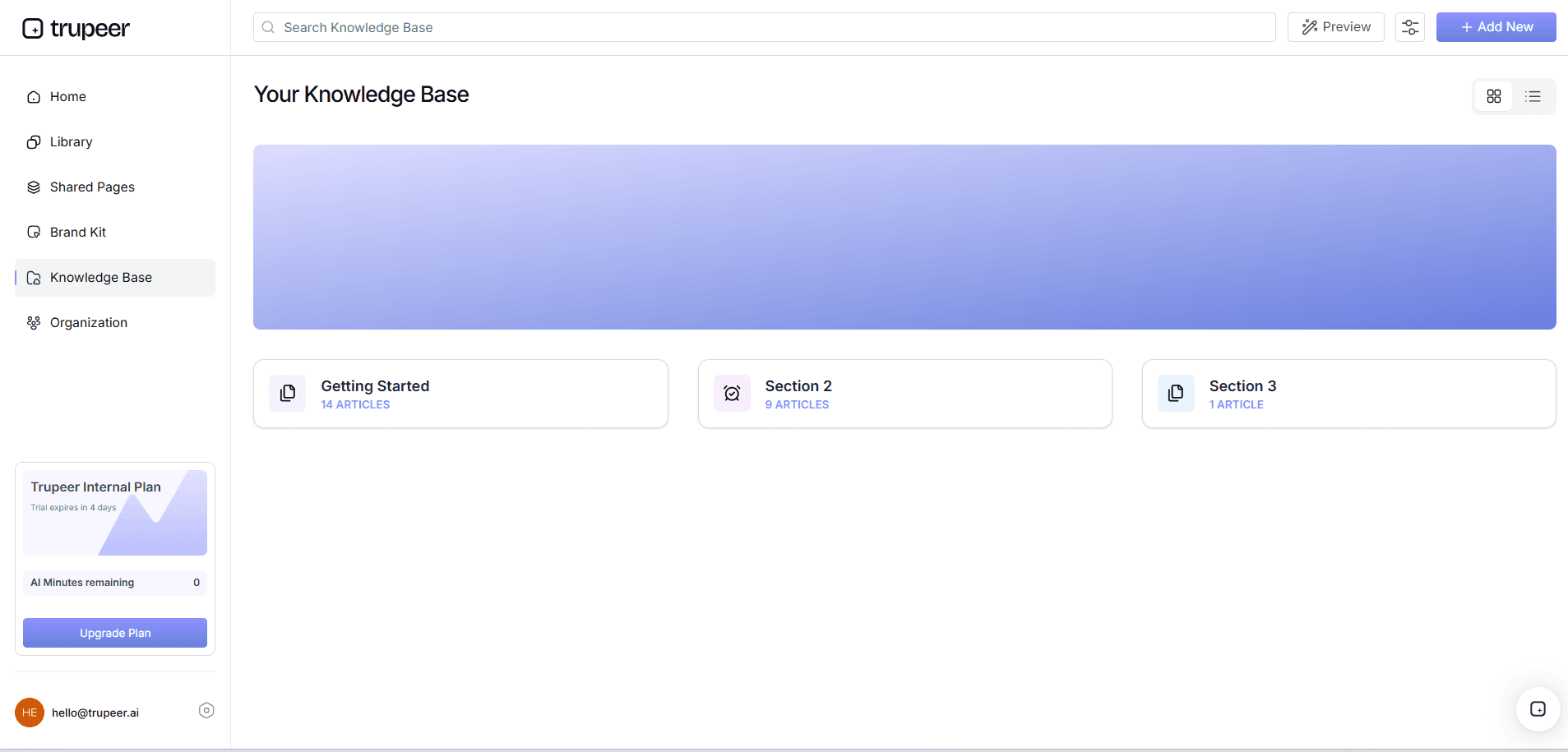
Organize your documentation in Trupeer's AI-searchable knowledge base with timestamp deep-links. Upload your recordings and SOPs, and Trupeer will index each one with precise timestamps. This allows team members to search for specific steps and access them directly, enhancing efficiency. The searchable knowledge base is invaluable for quick problem-solving and reduces the time spent searching for information. Setting up a knowledge base is straightforward and can be done within a day, depending on the volume of content.
Step 6: Monitor and Review
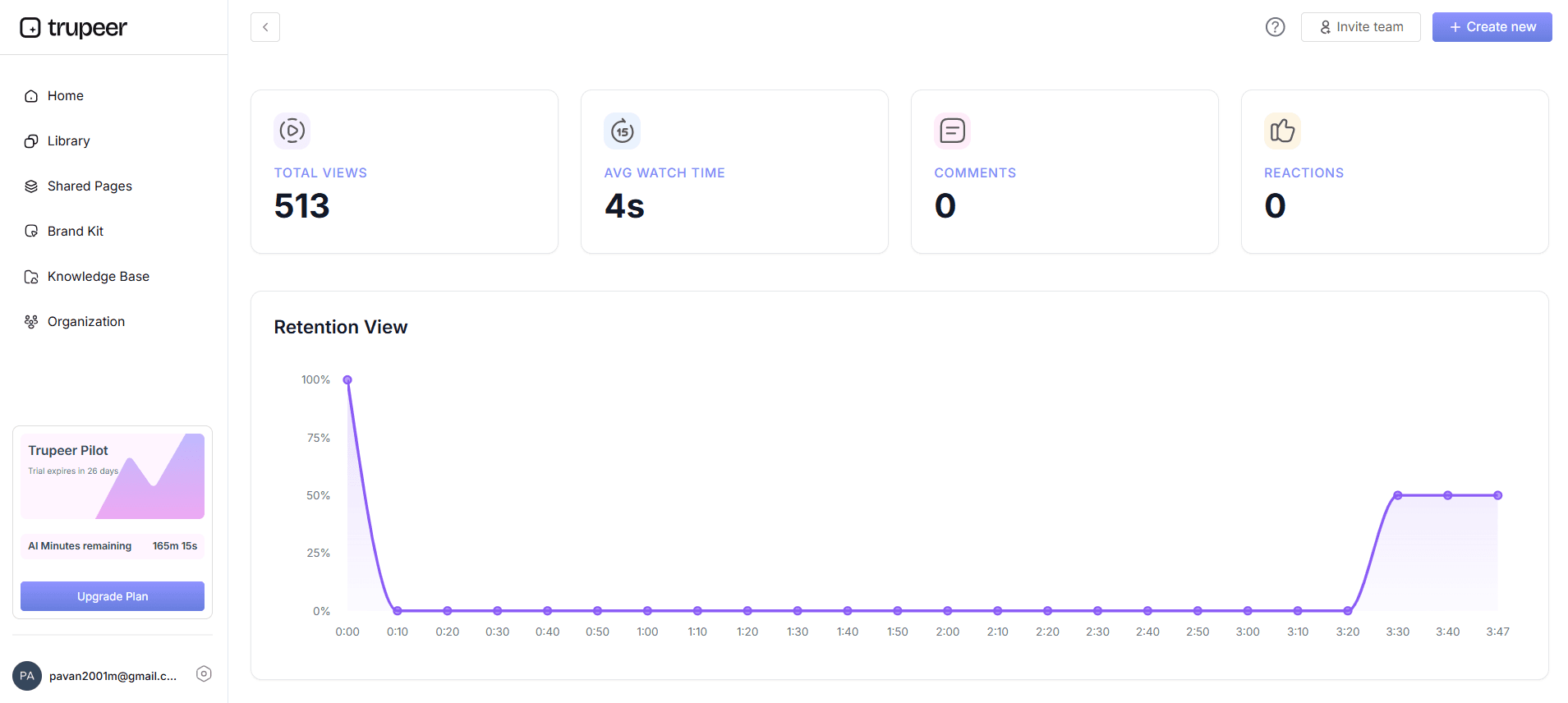
Finally, use Trupeer's viewer engagement analytics to monitor how your documentation is being used. Access the analytics dashboard to view metrics such as viewer engagement, drop-off points, and heatmaps. These insights help you understand which parts of your documentation are most effective and where improvements might be needed. Use this data to refine your documentation and ensure it remains relevant and useful. Reviewing analytics is an ongoing process, but initial insights can be gathered within a week of deployment.
What tips help you document complex enterprise software processes?
Ensuring your documentation process is efficient and effective requires implementing strategic tips. Here are some practical suggestions to enhance your documentation:
Standardize Formats. Use a consistent template for all documentation to ensure uniformity and ease of understanding across different departments.
Incorporate Visuals. Enhance engagement by including screenshots or video clips in your documentation, which can clarify complex processes better than text alone.
Regular Updates. Schedule periodic reviews to update documentation as software systems evolve, ensuring your records remain current and accurate.
Engage Stakeholders. Involve key stakeholders in the documentation process to ensure the content meets the needs of all users and incorporates diverse perspectives.
use Feedback. Collect feedback from users to identify areas of improvement and make necessary adjustments to your documentation strategy.
use Automation Tools. Implement Scribe alternative comparison tools to automate repetitive documentation tasks, saving time and reducing human error.
Educate Your Team. Provide training on how to use your document management software effectively, ensuring everyone can contribute to and benefit from the documentation.
Frequently asked questions
How can I ensure my documentation stays current with software updates?
Regularly scheduled reviews and using tools like Trupeer's automatic SOP generation can help keep your documentation up-to-date. By setting periodic reviews, such as quarterly or biannually, you can ensure that any changes in software are reflected in your documentation. Tools that auto-update documentation tied to recordings allow for real-time updates, minimizing the risk of outdated information. Engaging a dedicated team or assigning a documentation lead can further simplify this process, ensuring that documentation remains aligned with the latest software developments.
What is the best way to train new employees using documentation?
Using a combination of video and written documentation is most effective for training new employees. Video tutorials created with Trupeer’s AI screen recording and narration provide a visual and auditory learning experience that can enhance comprehension. Pair these with detailed written SOPs for reference. New employees can follow along with videos and refer to SOPs for detailed steps. This multi-format approach caters to different learning styles, ensuring a comprehensive understanding. also, hosting these resources in an AI-searchable knowledge base allows new hires to easily access and revisit content as needed.
Can documentation help in reducing support ticket volume?
Yes, comprehensive and easily accessible documentation can significantly reduce support ticket volume. When users have access to detailed guides and FAQs, they can often resolve their issues without external help. Trupeer’s AI-searchable knowledge base with timestamp deep-links allows users to find specific solutions quickly, reducing reliance on support teams. By addressing common queries and issues in your documentation, you enable users to solve problems independently. Consistently updated documentation ensures that users have the correct information, which further minimizes the need for support intervention.
Does Trupeer support multilingual documentation?
Yes, Trupeer provides solid support for multilingual documentation through its AI translation capabilities. With the ability to translate content into over 40 languages, including lip-sync for video content, Trupeer ensures that your documentation is accessible to a global audience. This feature is particularly useful for multinational organizations looking to maintain consistency across different regions. The translation process is quick and maintains the accuracy and quality of the original content, making it an ideal solution for teams operating in diverse linguistic environments.
What are the advantages of using video localization tools in documentation?
Video localization tools like Trupeer’s AI video translation enhance the accessibility and effectiveness of your documentation. By providing content in multiple languages, you ensure that all team members, regardless of their native language, can understand and follow processes accurately. This reduces the risk of miscommunication and errors, particularly in multinational teams. Video localization also supports compliance with regional regulations that may require documentation in local languages. Such tools simplify the translation process, maintaining the quality and intent of the original content while broadening your reach.
How can a small team document complex custom-software workflows while staying compliant?
Record the workflow as you do it and let the tool write it up. Trupeer AI generates accurate step-by-step documentation from a screen recording, keeps it versioned and updatable, and lets you host it privately with access controls so complex processes are captured without exposing sensitive data.