Trupeer Blog
تلخيص
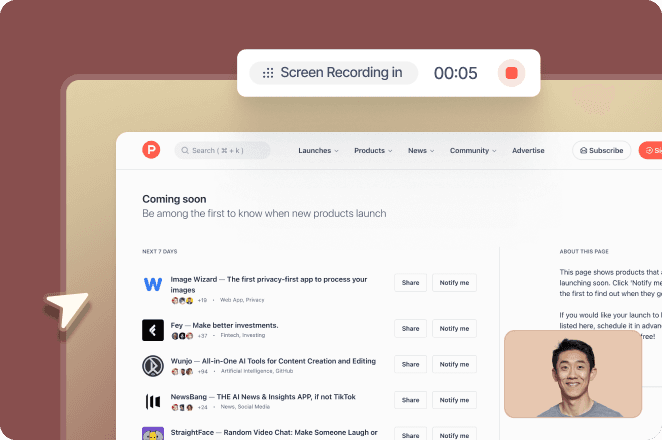
تخيّل أن فريقك لديه مكتبة ضخمة من مقاطع التدريب والندوات عبر الإنترنت والاجتماعات المسجّلة. قد يكون العثور على معلومات محددة داخل هذه المقاطع مهمة شاقة. ماذا لو أمكنك إنشاء وكيل ذكاء اصطناعي يجيب عن الأسئلة مباشرةً من مكتبة الفيديو لديك، مع تحديد الطابع الزمني الدقيق وتقديم السياق اللازم؟ سيؤدي ذلك إلى تغيير طريقة وصول فريقك إلى المعلومات ومعالجتها، وتوفير ساعات لا تُحصى وتحسين الإنتاجية. ووفقًا لمسح حديث،
يقضي الموظفون في المتوسط 20% من أسبوع عملهم في البحث عن معلومات داخلية
. إن تقليل هذا الوقت يمكن أن يعزز الكفاءة بشكل كبير. إن بناء وكيل ذكاء اصطناعي لمكتبة الفيديو الخاصة بك ليس مجرد مسألة امتلاك مهارات تقنية؛ بل هو تعزيز قدرات فريقك بشكل استراتيجي للوصول إلى المعلومات بسرعة ودقة. سواء كنت في التدريب أو دعم العملاء أو أي دور يتضمن استخدامًا مكثفًا للفيديو، يمكن لهذا الحل أن يغيّر طريقة عملك. وعندما تدخل SOPs إلى نفس المحادثة، فإن مقارنة بدائل Scribe تساعد على توضيح نطاق العمل. وهنا تحديدًا يصبح طبقة سياق وكيل الذكاء الاصطناعي مفيدًا، وهو النوع من المحتوى الذي يمكن لـ Trupeer توليده مباشرةً من تسجيل شاشة بسيط.
لماذا يهم بناء وكيل ذكاء اصطناعي لمكتبة الفيديو الخاصة بك؟
في العديد من المؤسسات، ينمو محتوى الفيديو بشكلٍ أسي. غالبًا ما يتم تسجيل جلسات التدريب وتفاعلات العملاء والاجتماعات الداخلية وتخزينها. تحمل هذه المقاطع رؤى قيّمة، لكنها تطرح أيضًا تحديًا: كيف يمكن استرجاع معلومات محددة بسرعة. إن عدم القدرة على الوصول إلى هذه المعلومات بكفاءة قد يعيق اتخاذ القرار ويبطئ سير العمليات. على سبيل المثال، قد تحتاج فرق دعم العملاء إلى الرجوع إلى التفاعلات السابقة لحل المشكلات الحالية، لكن تمحيص ساعات من التسجيلات ليس أمرًا عمليًا. يمكن لوكيل ذكاء اصطناعي قوي أن يفهرس هذه المقاطع ويقدّم إجابات في الوقت الفعلي، مما يبسط سير العمل ويعزز الإنتاجية.
كما أن المخاطر مرتفعة عند تطبيق أنظمة فعّالة لاسترجاع المعلومات. فالشركات التي لا تستخدم أصول الفيديو الخاصة بها قد تتأخر عن المنافسين الذين يستفيدون من التكنولوجيا بشكل أفضل. من خلال دمج وكيل ذكاء اصطناعي، يمكن للشركات ضمان أن محتوى الفيديو لديها لا يبقى مؤرشفًا فحسب، بل يساهم بشكل فعّال في أهداف المؤسسة. وتعد هذه الإمكانية مهمة بشكل خاص في الصناعات التي تكون فيها المعلومات الدقيقة وفي الوقت المناسب أمرًا حاسمًا، مثل الرعاية الصحية والتمويل والتعليم. يمكن لـ سير عمل اعتماد الذكاء الاصطناعي أن يساعد في ضمان أن مكتبة الفيديو الخاصة بك تصبح أصلًا استراتيجيًا بدلًا من مورد يُنسى.
ما فوائد بناء وكيل ذكاء اصطناعي لمكتبة الفيديو الخاصة بك؟
يوفر إنشاء وكيل ذكاء اصطناعي لمكتبة الفيديو الخاصة بك عدة فوائد مقنعة يمكن أن تؤثر بشكل كبير في مؤسستك.
تحسين استرجاع المعلومات. يمكن للذكاء الاصطناعي أن يفلتر بسرعة كميات كبيرة من الفيديو، ويقدّم إجابات دقيقة مع مراجع مرتبطة بالطابع الزمني. وهذا يقلل الوقت الذي يقضيه الموظفون في البحث عن المعلومات، مما يتيح لهم التركيز على مهام أكثر إنتاجية.
تحسين التدريب والإعداد الوظيفي. يمكن للموظفين الجدد الوصول إلى مكتبة استكشاف الفيديو التي يمكن البحث فيها بسهولة. وهذا يسرّع عملية الإعداد الوظيفي عبر توفير وصول فوري إلى محتوى الفيديو ذي الصلة.
دعم عملاء مبسّط. يمكن لفرق الدعم حل المشكلات بشكل أسرع عبر الرجوع إلى التفاعلات السابقة. تضمن أداة فيديو مدعومة بالذكاء الاصطناعي قدرتهم على العثور على المقاطع الصحيحة ومشاركتها مع العملاء بسرعة.
كفاءة التكلفة. يؤدي أتمتة عملية استرجاع محتوى الفيديو إلى توفير المال عبر تقليل الحاجة إلى معالجة البيانات يدويًا. يمكن لـ منصة فيديو بالذكاء الاصطناعي تقليل تكاليف العمل غير الضرورية.
زيادة التفاعل. يكون الموظفون أكثر استعدادًا للتفاعل مع محتوى الفيديو عندما يمكنهم العثور بسهولة على المعلومات ذات الصلة. وهذا يؤدي إلى تحسين الاحتفاظ بالمعرفة واتخاذ قرارات أكثر اطلاعًا.
قابلية التوسع. مع نمو مكتبة الفيديو لديك، يمكن لوكيل الذكاء الاصطناعي التوسع لاستيعاب محتوى جديد دون تكاليف تشغيلية كبيرة. وهذا يضمن استمرار الكفاءة وسهولة الوصول عبر المؤسسة.
ما ميزات Trupeer التي تساعدك في بناء وكيل ذكاء اصطناعي لمكتبة الفيديو الخاصة بك؟
تقدم Trupeer مجموعة من الميزات التي يمكن أن تساعد بشكل كبير في بناء وكيل ذكاء اصطناعي فعّال لمكتبة الفيديو الخاصة بك. تركز هذه الميزات على التقاط محتوى الفيديو وتحسينه وجعله متاحًا بسهولة.
تسجيل شاشة بالذكاء الاصطناعي مع تكبير تلقائي واكتشاف النقر
تلتقط ميزة تسجيل الشاشة بالذكاء الاصطناعي من Trupeer الفيديو بتفاصيل مذهلة، حيث تقوم بضبط مستوى التكبير تلقائيًا واكتشاف النقرات لإبراز التفاعلات الرئيسية. تعد هذه الإمكانية ضرورية لإنشاء محتوى فيديو سهل التصفح والفهم. ومن خلال التقاط هذه التفاصيل، تضمن أن وكيل الذكاء الاصطناعي لديه بيانات عالية الجودة لمعالجتها وتحليلها. يمكن أن تكون هذه الميزة مفيدة بشكل خاص لمواد التدريب، لأنها تُبرز الإجراءات الحاسمة التي تم تنفيذها أثناء التسجيل.
تعليق صوتي بالذكاء الاصطناعي بأكثر من 65 صوتًا طبيعيًا
توفر ميزة التعليق الصوتي بالذكاء الاصطناعي أكثر من 65 صوتًا طبيعيًا مع إمكانية ضبط السرعة والنبرة، مما يجعلها مثالية لإنشاء محتوى فيديو جذاب. وهذا يعزز إمكانية وصول مقاطع الفيديو لديك، حيث يمكن للمستخدمين اختيار التعليقات الصوتية التي تناسب تفضيلاتهم. سواء كنت تنتج مواد تعليمية أو مقاطع تدريب للشركات، تضمن هذه الميزة أن يكون محتواك واضحًا وجذابًا. ومن خلال تخصيص التعليق الصوتي لجمهورك، يمكنك تحسين الفهم والاحتفاظ بالمحتوى.
إنشاء SOP تلقائيًا من أي تسجيل
يحوّل إنشاء SOP تلقائيًا من Trupeer محتوى الفيديو إلى وثائق منظمة وجاهزة للتعديل. وهذا مفيد بشكل خاص للفرق التي تعتمد على عمليات موحّدة، لأنه يتيح إنشاء SOPs شاملة مباشرةً من مقاطع الفيديو. تضمن منصة التوثيق بالذكاء الاصطناعي التقاط جميع المعرفة الإجرائية وإتاحتها بسهولة، مما يقلل الوقت المستغرق في التوثيق اليدوي. يمكن لهذه الميزة تبسيط العمليات وضمان الاتساق في جميع الجوانب.
قاعدة معرفة قابلة للبحث بالذكاء الاصطناعي مع روابط عميقة دقيقة حسب الطابع الزمني
تقوم ميزة قاعدة المعرفة القابلة للبحث بالذكاء الاصطناعي بفهرسة كل فيديو بروابط عميقة بمستوى الطابع الزمني، مما يسهل الوصول إلى المقاطع المحددة من محتوى الفيديو. تعد هذه الإمكانية حاسمة لبناء وكيل ذكاء اصطناعي فعّال، لأنها تتيح للمستخدمين الانتقال مباشرةً إلى الأجزاء ذات الصلة من الفيديو. يمكن لهذه الميزة تعزيز الإنتاجية بشكل كبير عبر توفير وصول سريع إلى المعلومات الدقيقة المطلوبة. كما أنها تدعم بيئة تعلم أكثر تفاعلية، حيث يمكن للمستخدمين استكشاف المحتوى وفقًا لاحتياجاتهم.
تكامل HeyGen لصور رمزية مخصصة
مع تكامل HeyGen، يمكن للمستخدمين إنشاء صور رمزية مخصصة تضيف لمسة شخصية إلى محتوى الفيديو. تعد هذه الميزة مثالية لجعل مقاطع التدريب والعروض التقديمية أكثر جاذبية وقابلية للتواصل. يساعد أداة إنشاء فيديو صورة رمزية بالذكاء الاصطناعي مخصصة على الحفاظ على انتباه المشاهدين وزيادة التفاعل عبر إدخال عنصر بشري في تسجيلاتك. ومن خلال دمج الصور الرمزية، يمكنك جعل مقاطع الفيديو أكثر ديناميكية وجاذبية، مما قد يحسن الاحتفاظ بالمعلومات ورضا المشاهدين.
كيف تبني وكيل ذكاء اصطناعي يجيب عن الأسئلة من مكتبة الفيديو لديك خطوة بخطوة باستخدام Trupeer؟
الخطوة 1: التقاط محتوى فيديو عالي الجودة
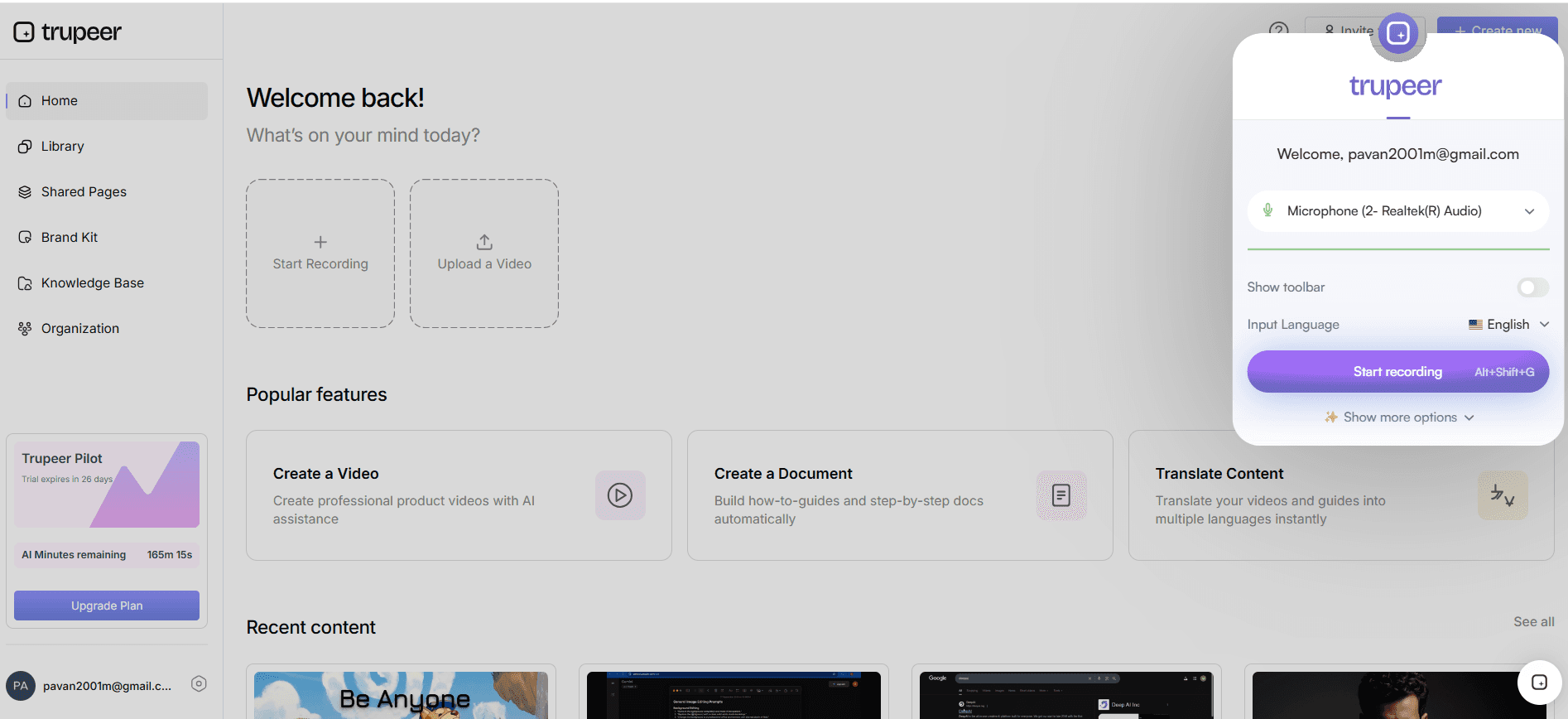
ابدأ بتسجيل فيديو باستخدام مسجل Trupeer المستند إلى المتصفح، والذي لا يتطلب أي تثبيت. ما عليك سوى فتح المسجل في المتصفح الذي تفضله، وتحديد منطقة الشاشة التي ترغب في التقاطها، ثم بدء التسجيل. يقوم تسجيل الشاشة بالذكاء الاصطناعي من Trupeer بضبط مستوى التكبير تلقائيًا واكتشاف النقرات لإبراز التفاعلات الرئيسية، مما يضمن أن تكون مقاطع الفيديو واضحة وجذابة. يتم حفظ كل جلسة تسجيل مباشرةً في السحابة، مما يسهل تخزين مكتبة الفيديو وإدارتها. تعد هذه الخطوة حاسمة لإنشاء مكتبة فيديو مفهرسة بشكل جيد يمكن لوكيل الذكاء الاصطناعي البحث فيها بفعالية.
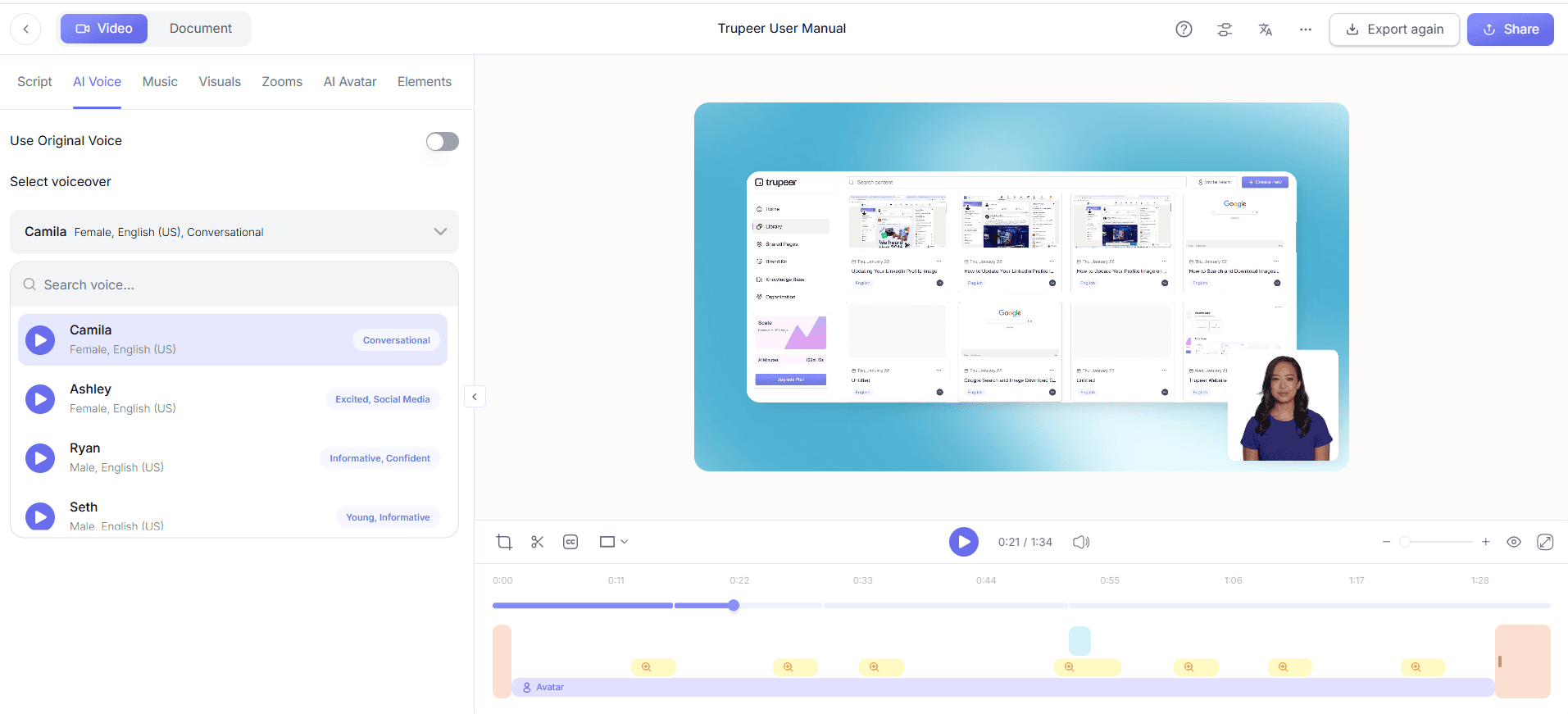
الخطوة 2: تحسين مقاطع الفيديو بتعليق صوتي بالذكاء الاصطناعي
بعد التقاط مقاطع الفيديو، تتيح لك Trupeer تحسينها باستخدام ميزة التعليق الصوتي بالذكاء الاصطناعي. اختر من بين أكثر من 65 صوتًا طبيعيًا واضبط السرعة والنبرة لتتناسب مع أسلوب العرض التقديمي. تعد هذه الميزة مفيدة بشكل خاص لجعل مقاطع التدريب أكثر سهولة في الوصول وأكثر جذبًا. لتطبيق تعليق صوتي، قم برفع الفيديو إلى Trupeer، وحدد خيار التعليق الصوتي، ثم اختر الصوت الذي تريده. يقوم الذكاء الاصطناعي بمعالجة الفيديو وتطبيق التعليق الصوتي خلال دقائق. تضمن هذه الخطوة أن تكون مقاطع الفيديو عالية الجودة وجاهزة للفهرسة بواسطة الذكاء الاصطناعي.
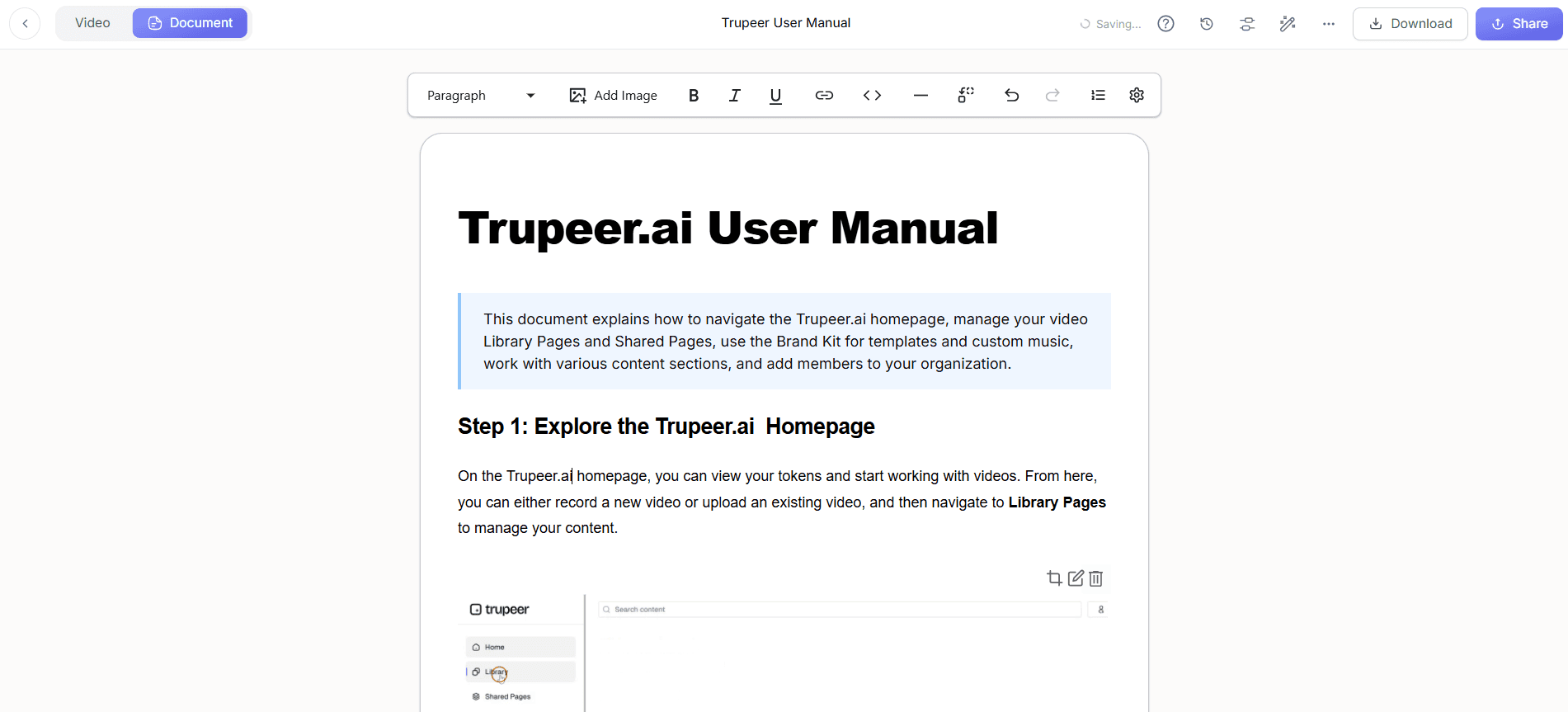
الخطوة 3: إنشاء SOP تلقائيًا
باستخدام محتوى الفيديو المحسّن، استخدم ميزة إنشاء SOP تلقائيًا من Trupeer لإنشاء توثيق منظم. تحوّل هذه الميزة محتوى الفيديو إلى SOPs قابلة للتعديل، مما يسهل توحيد العمليات عبر مؤسستك. لإنشاء SOP، اختر الفيديو وابدأ أداة إنشاء SOP. تقوم Trupeer بمعالجة الفيديو وتقديم مسودة SOP خلال دقائق. راجع SOP وعدّلها حسب الحاجة، ثم احفظها للرجوع إليها لاحقًا. تساعد هذه الخطوة على تنظيم محتواك، مما يسهل على وكيل الذكاء الاصطناعي الوصول إليه واستخدامه.
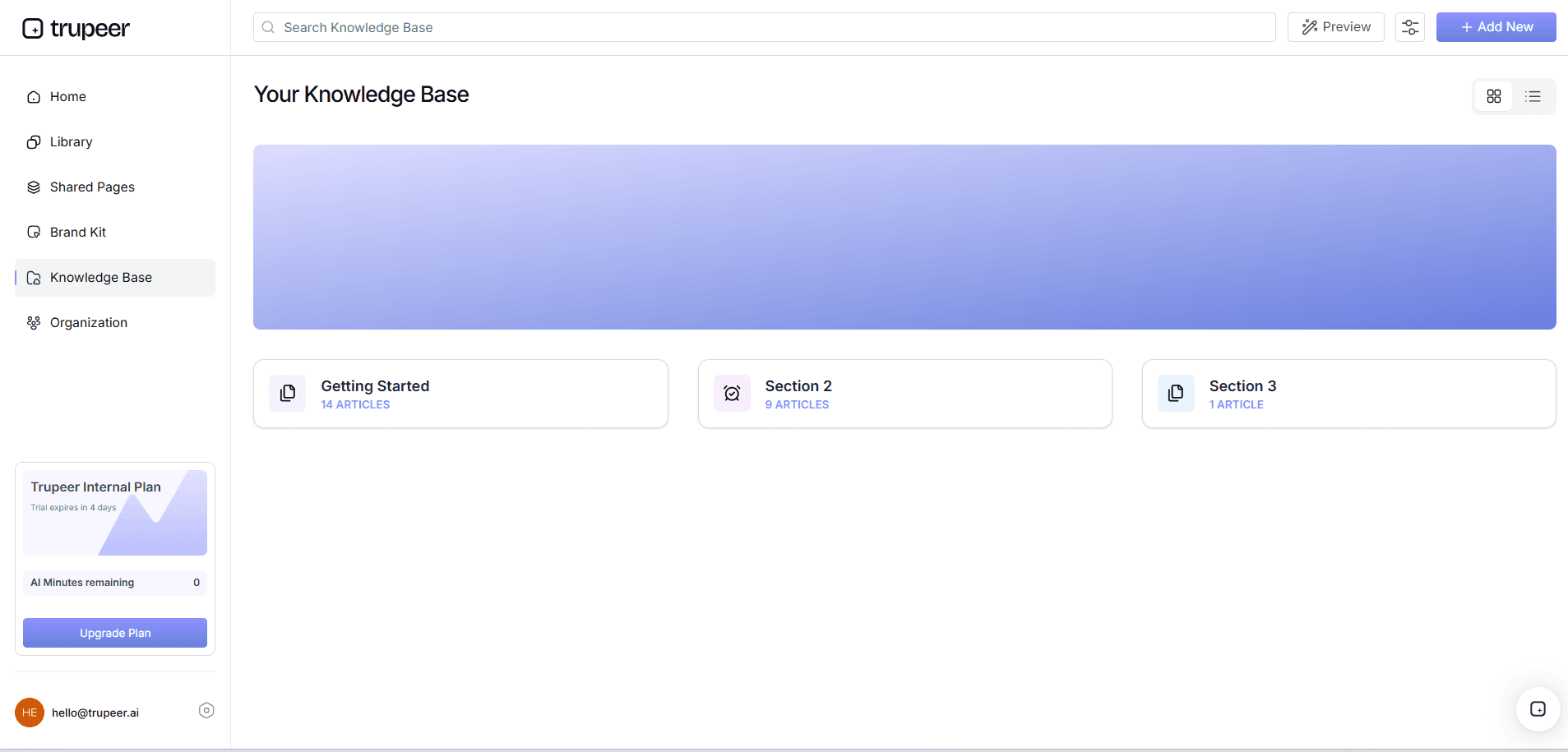
الخطوة 4: فهرسة مقاطع الفيديو في قاعدة المعرفة القابلة للبحث بالذكاء الاصطناعي
بعد ذلك، قم بدمج مقاطع الفيديو في قاعدة المعرفة القابلة للبحث بالذكاء الاصطناعي من Trupeer. تفهرس هذه الأداة كل فيديو بروابط عميقة بمستوى الطابع الزمني، مما يتيح للمستخدمين البحث والوصول إلى المقاطع المحددة بسهولة. قم برفع مقاطع الفيديو إلى هذه المنصة عبر تحديد خيار قاعدة المعرفة في Trupeer. تتم معالجة المحتوى وفهرسته خلال بضع ساعات، اعتمادًا على حجم المكتبة. بمجرد اكتمال العملية، تتحول مكتبة الفيديو إلى قاعدة بيانات قوية وقابلة للبحث. تعد هذه الخطوة ضرورية لتمكين وكيل الذكاء الاصطناعي من تقديم إجابات دقيقة مع سياق. غالبًا ما تبدأ الفرق التي تقيّم الأدوات في مقارنة بدائل Loom قبل توحيد سير العمل.
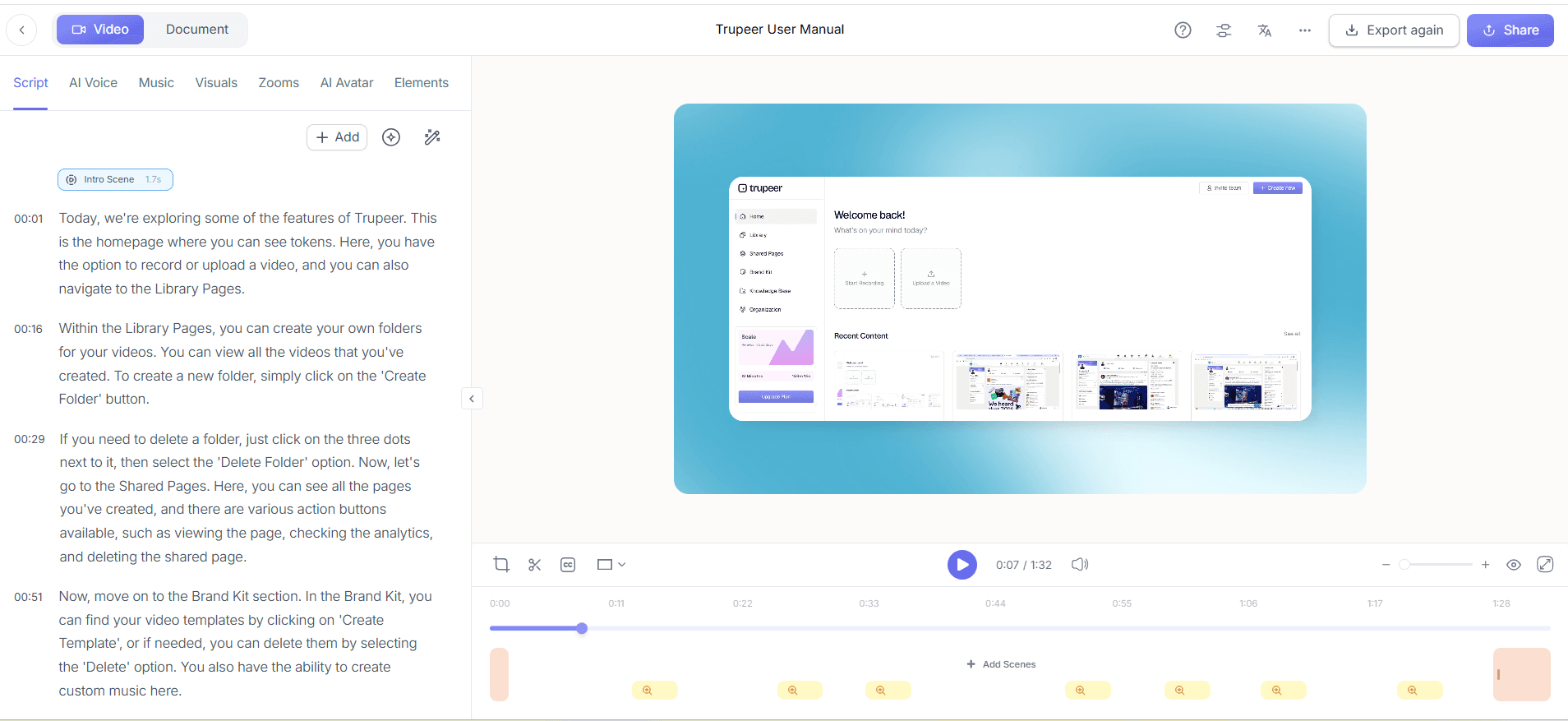
الخطوة 5: تخصيص التفاعل عبر تكامل HeyGen
عزز تفاعل المستخدمين من خلال دمج صور رمزية مخصصة في مقاطع الفيديو باستخدام تكامل HeyGen من Trupeer. تتيح لك هذه الميزة إنشاء صور رمزية شخصية يمكنها شرح المفاهيم أو سرد أجزاء من الفيديو. يمكنك الوصول إلى أداة HeyGen عبر Trupeer، وتحديد نمط الصورة الرمزية المفضل لديك، ثم تخصيصها لتناسب احتياجاتك. بمجرد أن تصبح الصورة الرمزية جاهزة، قم بإدراجها في محتوى الفيديو. يجعل هذا العنصر التفاعلي مقاطع الفيديو أكثر جذبًا، مما قد يؤدي إلى تحسين الاحتفاظ بالمعلومات ورضا المستخدمين.
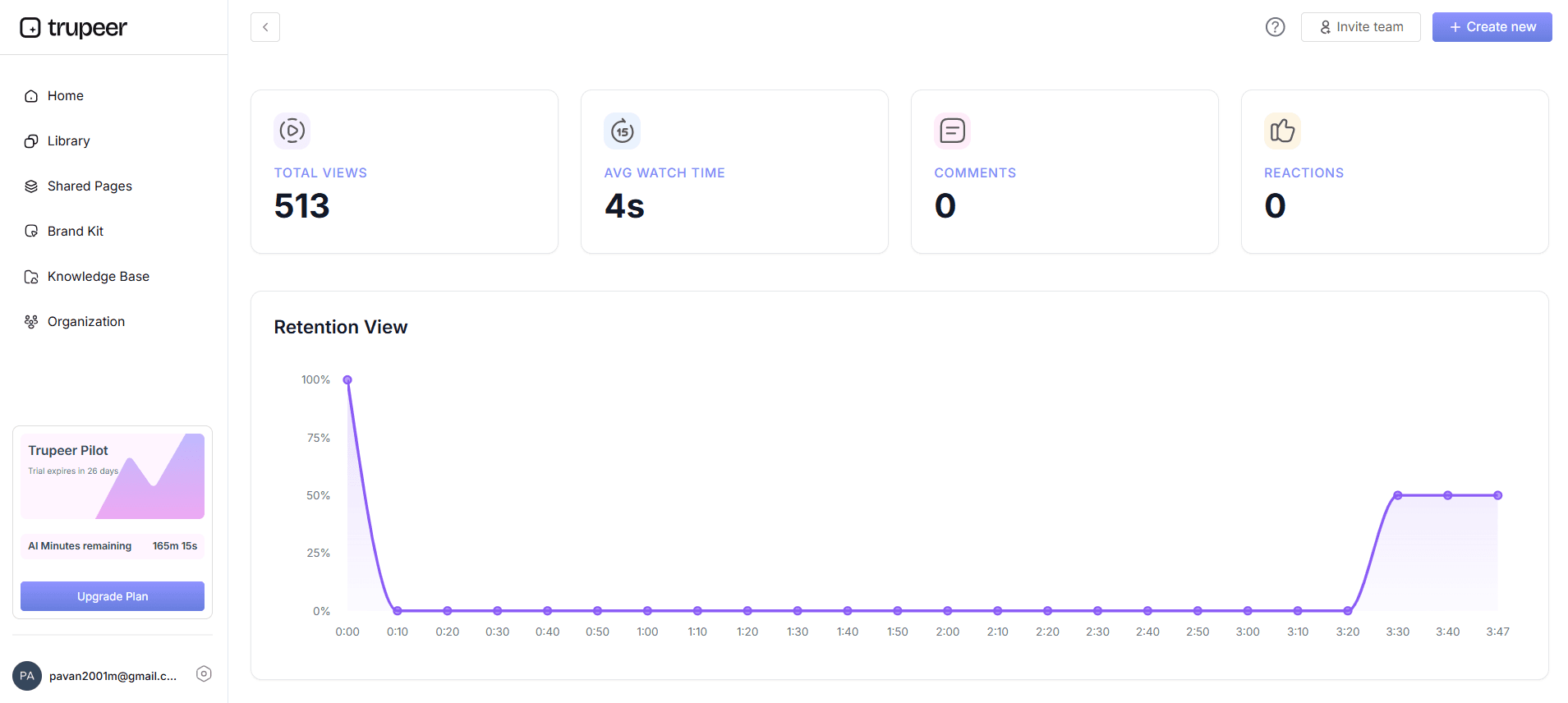
الخطوة 6: تحليل وتحسين تفاعل الفيديو
وأخيرًا، استخدم تحليلات تفاعل المشاهدين من Trupeer لمراقبة كيفية تفاعل جمهورك مع مكتبة الفيديو. توفر هذه الأداة رؤى حول سلوك المشاهدين، مثل معدلات التوقف ومخططات الحرارة، مما يتيح لك فهم أي محتوى هو الأكثر فعالية. يمكنك الوصول إلى هذه التحليلات عبر لوحة تحكم Trupeer. حلّل البيانات لتحديد الأنماط وتحسين محتوى الفيديو وفقًا لذلك. تعد حلقة التغذية الراجعة المستمرة هذه ضرورية لتحسين فعالية وكيل الذكاء الاصطناعي، وضمان تقديم معلومات دقيقة وذات صلة مع مرور الوقت.
ما النصائح التي تساعدك في بناء وكيل ذكاء اصطناعي يجيب عن الأسئلة من مكتبة الفيديو لديك؟
يتطلب بناء وكيل ذكاء اصطناعي فعّال الاهتمام بالتفاصيل والتخطيط الاستراتيجي. إليك بعض النصائح لتحسين قابلية استخدام مكتبة الفيديو لديك.
وحّد جودة المحتوى. تأكد من تسجيل جميع مقاطع الفيديو بجودة متسقة. يساعد استخدام إعدادات التسجيل والمعدات نفسها في الحفاظ على مستوى موحّد عبر مكتبتك.
رتّب مقاطع الفيديو حسب المواضيع. صنّف مقاطع الفيديو إلى مواضيع أو سمات محددة. وهذا يجعل من السهل على وكيل الذكاء الاصطناعي فهرسة المعلومات ذات الصلة واسترجاعها.
حدّث المحتوى بانتظام. راجع محتوى الفيديو وحدّثه بشكل دوري للتأكد من بقائه ذا صلة. قد تؤدي المعلومات غير المحدثة إلى إجابات غير دقيقة من وكيل الذكاء الاصطناعي.
استخدم التحليلات. استخدم تحليلات تفاعل المشاهدين لتحديد أي مقاطع الفيديو هي الأكثر فعالية وأيها يحتاج إلى تحسين. يمكن لهذا النهج المعتمد على البيانات تعزيز الجودة الإجمالية للمحتوى.
درّب فريق العمل على قدرات الذكاء الاصطناعي. علّم فريقك كيفية استخدام وكيل الذكاء الاصطناعي بفعالية. يمكن أن يؤدي التعرف على قدراته إلى تعظيم فائدة الأداة.
استخدم مكتبة تعليق صوتي متنوعة. إن توفير التعليقات الصوتية بلغات وأنماط متعددة يمكن أن يجعل مكتبة الفيديو أكثر سهولة في الوصول لجمهور أوسع. وهذا مهم بشكل خاص للفرق العالمية.
استكشف الصور الرمزية المخصصة. استخدم صورًا رمزية مخصصة لإضافة لمسة شخصية إلى مقاطع الفيديو لديك. يمكن أن يؤدي ذلك إلى تحسين التفاعل وجعل المواضيع المعقدة أكثر قابلية للتواصل وأسهل للفهم.
للاطلاع على نظرة أعمق، يغطي دليلنا حول تحرير فيديو بالذكاء الاصطناعي خطة العمل المجاورة.
الأسئلة الشائعة
كيف يجد وكيل ذكاء اصطناعي معلومات محددة داخل مكتبة فيديو؟
يعثر وكيل ذكاء اصطناعي على معلومات محددة عبر فهرسة محتوى الفيديو بروابط عميقة بمستوى الطابع الزمني. تتضمن هذه العملية تحليل مكونات الفيديو الصوتية والمرئية ووضع علامات على المقاطع الرئيسية. يستخدم الذكاء الاصطناعي معالجة اللغة الطبيعية لفهم سياق الحوارات داخل الفيديو. عندما يطرح المستخدم سؤالًا، يبحث الذكاء الاصطناعي في هذه العلامات المفهرسة لتحديد المقاطع ذات الصلة. تضمن هذه الطريقة إجابات دقيقة ومرتبطة بالسياق، مع تقليل الوقت الذي يُصرف في البحث عن المعلومات بشكل كبير.
ما أنواع مقاطع الفيديو التي يمكن فهرستها بواسطة وكيل الذكاء الاصطناعي؟
يمكن لوكيل الذكاء الاصطناعي فهرسة مجموعة واسعة من مقاطع الفيديو، بما في ذلك جلسات التدريب والندوات عبر الإنترنت والاجتماعات والدروس التعليمية. ومع ذلك، تعتمد فعالية عملية الفهرسة على جودة الفيديو ووضوح الصوت. تكون مقاطع الفيديو ذات الكلام الواضح والضوضاء الخلفية المحدودة مثالية للفهرسة الدقيقة. كما أن مقاطع الفيديو التي تتضمن نسخًا مكتوبة أو ترجمات يمكن أن تعزز قدرة الذكاء الاصطناعي على وضع علامات على المحتوى واسترجاعه بدقة. تجعل هذه المرونة وكيل الذكاء الاصطناعي مناسبًا لمختلف احتياجات المؤسسات.
هل يمكن لوكيل الذكاء الاصطناعي من Trupeer التعامل مع محتوى غير باللغة الإنجليزية؟
نعم، يمكن لوكيل الذكاء الاصطناعي من Trupeer التعامل مع محتوى غير باللغة الإنجليزية عبر ميزات الترجمة والدبلجة بالذكاء الاصطناعي. تتيح هذه القدرات ترجمة محتوى الفيديو إلى أكثر من 40 لغة، مع مزامنة الشفاه، لضمان إمكانية الوصول لجماهير متنوعة. تعد هذه الميزة مفيدة بشكل خاص للشركات متعددة الجنسيات أو المؤسسات التعليمية ذات الانتشار العالمي. ومن خلال استخدام أدوات ترجمة فيديو بالذكاء الاصطناعي من Trupeer، يمكن للمؤسسات ضمان أن مكتبة الفيديو لديها شاملة ومتنوعة.
لماذا تعد تحليلات تفاعل الفيديو مهمة لوكيل ذكاء اصطناعي؟
تعد تحليلات تفاعل الفيديو ضرورية لأنها توفر رؤى حول كيفية تفاعل المستخدمين مع محتوى الفيديو. ومن خلال فهم أي أجزاء من الفيديو هي الأكثر جذبًا أو أين يتوقف المشاهدون، يمكن للمؤسسات تحسين استراتيجية المحتوى لديها. تساعد هذه البيانات على ضمان أن وكيل الذكاء الاصطناعي يفهرس ويبرز أكثر الأجزاء صلة بالمحتوى والأكثر إفادة في مكتبة الفيديو. يمكن أن يؤدي تحليل بيانات التفاعل بشكل منتظم إلى تحسين جودة المحتوى وتقديم ردود أكثر فعالية مدعومة بالذكاء الاصطناعي، مما يعزز في النهاية رضا المستخدمين وإنتاجيتهم.
هل تقدم Trupeer دعمًا لتنفيذ وكيل ذكاء اصطناعي؟
نعم، توفر Trupeer دعمًا شاملاً لتنفيذ وكيل ذكاء اصطناعي داخل مكتبة الفيديو الخاصة بك. يتضمن هذا الدعم المساعدة في الإعداد وجلسات التدريب والدعم التقني المستمر لضمان دمج سلس. يمكن لفريق الدعم مساعدتك في تخصيص وكيل الذكاء الاصطناعي ليتناسب مع احتياجات مؤسستك المحددة، مما يضمن أقصى قدر من الكفاءة والفعالية. وبفضل خبرة Trupeer، يمكنك نشر وكيل ذكاء اصطناعي بثقة يعزز إمكانية الوصول وقابلية استخدام مكتبة الفيديو لديك، ويحقق نتائج أفضل عبر مؤسستك.
كيف توثق العمليات بحيث يمكن لوكيل ذكاء اصطناعي استخدامها؟
تحتاج الوكلاء إلى أدلة منظمة وحديثة، وليس ملفات PDF مخفية داخل مجلدات. يحافظ تكامل MCP من Trupeer على تنظيم التوثيق وتحديثه، بحيث يكون لدى الذكاء الاصطناعي محتوى موثوق يمكنه العمل عليه.
المدونات ذات الصلة