Trupeer Blog
Özetle

Paydaşları bir süreç dokümantasyonu atölyesinde bir araya getirmek zorlayıcı olabilir; ancak etkili ve kullanılabilir dokümantasyon oluşturmak için kritik öneme sahiptir. Diyelim ki şirketin operasyonel süreçlerini yeniden tasarlamakla görevli bir ekibin başındasınız. Amacınız, departmanlar genelinde verimsizlikleri azaltmak ve netliği artırmak. Ancak her paydaşın benzersiz bir bakış açısı ve farklı öncelikleri vardır. Yapılandırılmış bir yaklaşım olmadan atölye hızla kaotik ve verimsiz hale gelebilir.
İşte tam da bu noktada F&A süreç dokümantasyonu işe yarar ve Trupeer’ın, basit bir ekran kaydından doğrudan üretebildiği içerik türüdür.
Nitekim iş liderlerinin %67’si, süreç dokümantasyonundaki uyumsuzluğun proje gecikmelerine yol açtığını bildiriyor.
Bu yüzden net bir gündem ve ilgi çekici bir iş akışı şarttır. Doğru kurulumla, paydaşlardan değerli içgörüler çıkarabilir ve bunları uygulanabilir dokümantasyona dönüştürebilirsiniz. Bu blog, başarılı bir atölye yürütmek için izlemeniz gereken adımlarda size yol gösterecek; böylece paydaş katkılarından en iyi şekilde yararlanacaksınız. Bu fikirlerin pratikte nasıl uygulandığını görmek için süreç haritalama araçları makalemizi inceleyin.
Paydaşlarla birlikte süreç dokümantasyonu atölyesi yürütmek neden önemlidir?
Süreç dokümantasyonu atölyeleri, farklı bakış açılarını bir araya getirerek işlerin nasıl yürütülmesi gerektiğine dair tek bir görünüm oluşturduğu için hayati öneme sahiptir. Kurumlarda, özellikle karmaşık operasyonlara sahip olanlarda süreçler çoğu zaman bölümlere ayrılmış (silo) hale gelir; bu da verimsizliklere ve yanlış anlaşılmalara yol açar. Paydaşları atölye ortamında dahil etmek, bu siloların ortadan kaldırılmasını sağlar. Birden fazla departmanı etkileyen değişiklikleri uygulamak için herkesin aynı sayfada olması kritik önemdedir.
Ayrıca bu atölyeler, paydaşlar arasında sahiplenme ve hesap verebilirlik duygusu oluşturur. Ekip üyeleri dokümantasyon sürecine dahil olduğunda, dokümantasyonun oluşturulmasına katkı verdikleri için yeni prosedürlere uyma olasılıkları daha yüksektir. Bu iş birliğine dayalı yaklaşım, olası aksaklıkların daha erken tespit edilmesine yardımcı olur; bu da uzun vadede zaman ve kaynak tasarrufu sağlar. Paydaşlar ayrıca gerçek hayattan deneyimlerini paylaşabilir; bu da yukarıdan aşağıya bir bakış açısından görünmeyebilecek içgörüler sunar. Böylece dokümantasyon, gerçek operasyonel ihtiyaçlarla uyumlu hale gelir; daha pratik ve daha etkili olur.
Paydaşlarla birlikte süreç dokümantasyonu atölyesi yürütmenin faydaları nelerdir?
Paydaşları bir süreç dokümantasyonu atölyesine dahil etmek çok sayıda avantaj sağlar. İşte öne çıkan faydaların listesi:
Gelişmiş netlik ve uyum. Atölyeler, tüm paydaşların süreci anlamasını sağlar; böylece yanlış iletişim azalır ve hedefler hizalanır. Bu netlik, daha tutarlı ve etkili operasyonlara yol açar.
Artan verimlilik. Paydaşları dahil ederek gereksiz adımları tespit edebilir ve süreçleri sadeleştirebilirsiniz; bu da zaman ve kaynak tasarrufu sağlar. Bir AI dokümantasyon oluşturucu bu verimliliği daha da artırabilir.
Paydaş katılımının artması. Paydaşlar dokümantasyona katkı verdiğinde, sonuç üzerinde daha fazla sahiplenme hissederler; bu da süreçlere uyumu artırır.
Kapsamlı dokümantasyon. Farklı paydaşların girdisiyle dokümantasyon, sürecin gerekli tüm yönlerini kapsar; böylece daha sağlam ve güvenilir hale gelir. Bu noktada çok yönlü video üretim platformu özellikle faydalı olabilir.
Riskin azaltılması. Olası sorunları erken tespit etmek, süreç başarısızlığı riskini düşürür; aksaklıkları en aza indirir ve operasyonların sorunsuz sürmesini sağlar.
Sürekli iyileştirme. Atölyeler, devam eden geri bildirim ve yineleme süreçlerini teşvik eder; böylece süreçler iş ihtiyaçlarıyla birlikte gelişir ve zaman içinde etkili kalır.
Trupeer’ın hangi özellikleri, paydaşlarla birlikte süreç dokümantasyonu atölyesi yürütmenize yardımcı olur?
Trupeer, başarılı bir süreç dokümantasyonu atölyesi yürütmek için özellikle faydalı olan çeşitli özellikler sunar. Bunların çalışmalarınıza nasıl katkı sağlayabileceği şöyle:
Otomatik yakınlaştırma ve tıklama algılamalı AI ekran kaydı
Trupeer’ın AI ekran kaydı özelliği, ayrıntılı süreç adımlarını yakalamak için büyük bir sıçrama sağlar. Atölye sırasında bu aracı, tıklamalar ve girişler gibi önemli eylemlere otomatik olarak odaklanarak paydaş etkileşimlerini kaydetmek için kullanabilirsiniz. Böylece kritik hiçbir ayrıntı gözden kaçmaz. Otomatik yakınlaştırma özelliği, ekranın en ilgili bölümlerini öne çıkarır; kayıtları daha ilgi çekici ve takip etmesi daha kolay hale getirir. Bu özellik, süreç dokümantasyonunuz için görsel yardımcılar oluşturmanız gerektiğinde özellikle kullanışlıdır. Bu ayrıntıları yakalayarak, yazılı dokümantasyonu tamamlayan kapsamlı bir görsel rehber oluşturabilirsiniz.
Herhangi bir kayıttan otomatik SOP oluşturma
Trupeer’ın otomatik SOP oluşturma özelliğiyle, atölye kayıtlarını standart çalışma prosedürlerine dönüştürebilirsiniz. Bu özellik, video içeriğini düzenlemeye hazır bir dokümana çevirerek size önemli ölçüde zaman kazandırır. Konuşulan talimatları ve ekrandaki eylemleri yakalar; bunları tutarlı adımlara dönüştürür. Böylece dokümantasyon yalnızca doğru olmakla kalmaz, aynı zamanda takip etmesi de kolay olur. ayrıca bu SOP’ları MP4, HTML ve PDF gibi birden fazla formatta dışa aktarabilirsiniz; bu da farklı kullanım senaryoları için esneklik sağlar. Bu özelliği daha yakından keşfetmek için AI dokümantasyon platformumuzu inceleyin.
Dudak senkronlu 40+ dile AI çeviri
İş ortamında, dokümantasyonun birden fazla dilde erişilebilir olması kritik öneme sahiptir. Trupeer’ın AI çeviri özelliği, video içeriği için dudak senkronu dahil olmak üzere dokümantasyonunuzu 40’tan fazla dile çevirmenize olanak tanır. Bu yetenek, uluslararası ekiplere sahip kuruluşlar için hayati önemdedir; böylece dil fark etmeksizin tüm paydaşlar dokümantasyona erişebilir ve onu anlayabilir. İletişimi güçlendirir ve süreç dokümantasyonunun kapsayıcı ve kapsamlı olmasını sağlar. ai/tools/process-documentation-software">süreç dokümantasyon yazılımı sayfasına göz atın.
Zaman damgalı derin bağlantılarla AI ile aranabilir bilgi tabanı
Trupeer’ın AI ile aranabilir bilgi tabanı, tüm süreç dokümantasyonunuzu düzenler ve kolayca erişilebilir hale getirir. Zaman damgalı derin bağlantılar sayesinde paydaşlar, sorularını veya endişelerini yanıtlayan videodaki tam ana hızlıca bulabilir. Bu özellik, süreçlerin karmaşık ve çok boyutlu olduğu büyük kuruluşlarda özellikle faydalıdır. Bilgilerin bulunmasını kolaylaştırır; böylece yanıt aramak için harcanan süre azalır ve paydaşların görevlerine odaklanmasına olanak tanır. Bu yetenek, verimli bir video bilgi tabanını sürdürmenin kritik bir parçasıdır.
İzleyici etkileşim analitiği, terk oranı ve ısı haritaları
Paydaşların süreç dokümantasyonunuzla nasıl etkileşim kurduğunu anlamak, sürekli iyileştirme için esastır. Trupeer, izleyici etkileşim analitiği sunar; dokümantasyonun hangi bölümlerinin en çok görüntülendiğini ve nerelerde terk yaşandığını görmenizi sağlar. Isı haritaları, etkileşimin görsel bir temsili olarak öne çıkar; açıklama veya iyileştirme gerektirebilecek bölümleri belirlemenize yardımcı olur. Bu veriye dayalı yaklaşım, dokümantasyonunuzu paydaş ihtiyaçlarını karşılayacak şekilde geliştirmenizi sağlar; böylece genel süreç verimliliği artar. Bu içgörülerden yararlanarak, kitlenizle gerçekten etkileşim kuran dokümantasyon oluşturabilirsiniz.
Trupeer ile paydaşlarla birlikte süreç dokümantasyonu atölyesini adım adım nasıl yürütürsünüz?
Adım 1: AI Ekran Kaydı ile Başlatın
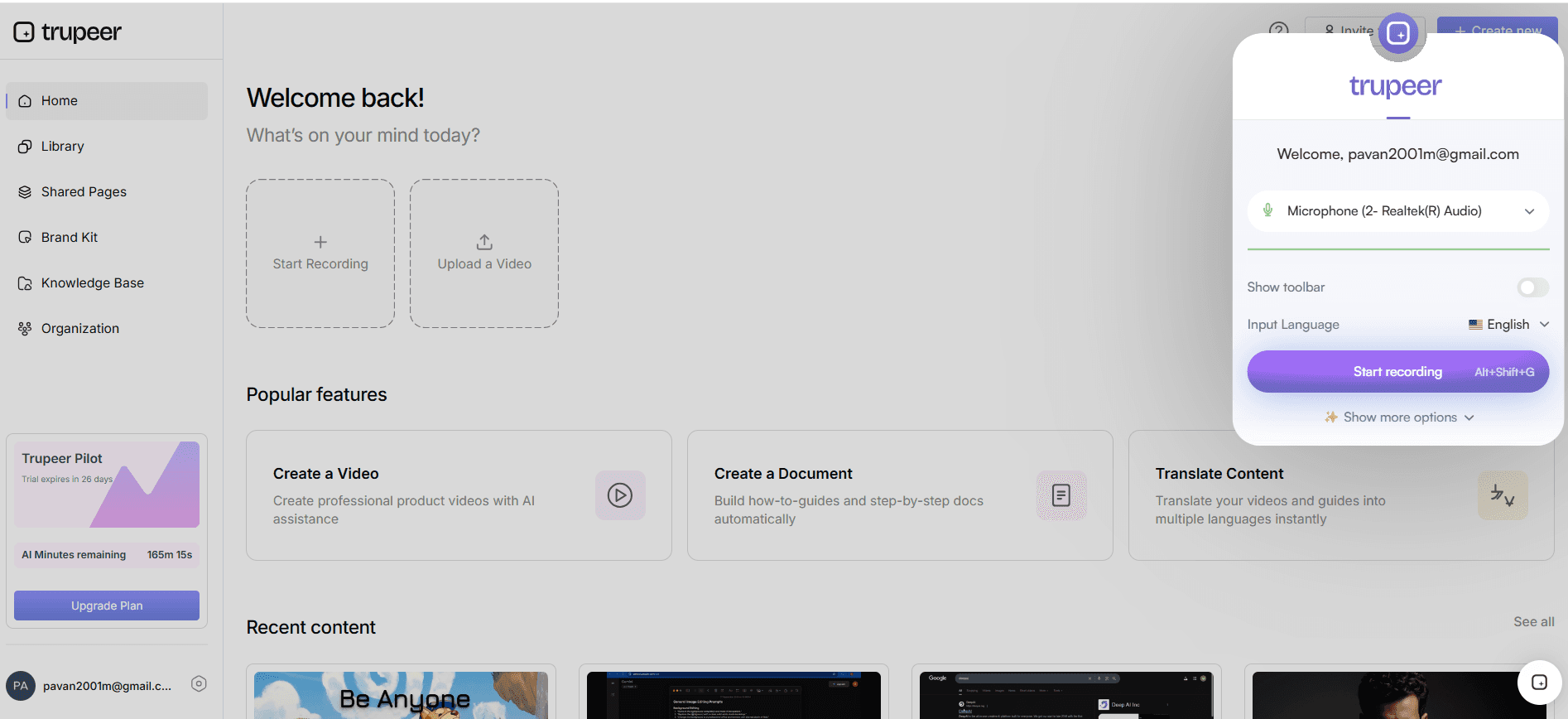
Trupeer’ın otomatik yakınlaştırma ve tıklama algılamalı AI ekran kaydını kullanarak atölyenizi başlatın. Bu özellik, atölye sırasında gerçekleşen her etkileşimi yakalamanızı sağlar; fare tıklamaları ve klavye girişleri gibi kritik eylemlere odaklanır. Başlamak için, Trupeer kontrol panelindeki "Kaydı Başlat" düğmesine tıklayarak tarayıcı tabanlı kaydediciyi açın. AI ekran kaydı, ilgi alanlarını vurgulamak için yakınlaştırmayı otomatik olarak ayarlar; böylece daha sonra takip etmek daha kolay olur. Bu ilk adım genellikle kurulum için yaklaşık 5 dakika sürer ve oturum boyunca hiçbir ayrıntının gözden kaçmamasını sağlar.
Adım 2: Anlık Geri Bildirim Yakalamak
Paydaşlar tartışıp girdi sağlarken, Trupeer’ın otomatik AI anlatımlı sessiz ekran kaydını kullanın. Bu özellik, konuşmayı yakalar ve oturumun anlatımlı bir versiyonunu oluşturur. Bunu etkinleştirmek için, kayıt ayarlarında "AI Narration" seçmeniz yeterlidir. AI, konuşulan önemli noktaları özetleyen bir seslendirme oluşturur; böylece bu içgörülere daha sonra geri dönmek daha kolay hale gelir. Bu adım, atölye ile eş zamanlı çalışabilir ve not almaya odaklanmak yerine etkileşime odaklanmanıza olanak tanır. Genellikle anlatım için AI işleme, kayıt durduktan sonraki birkaç dakika içinde gerçekleşir. Araçları değerlendiren ekipler çoğu zaman standart bir iş akışına geçmeden önce Loom alternatifleri karşılaştırması ile başlar.
Adım 3: Taslak SOP’lar Oluşturun
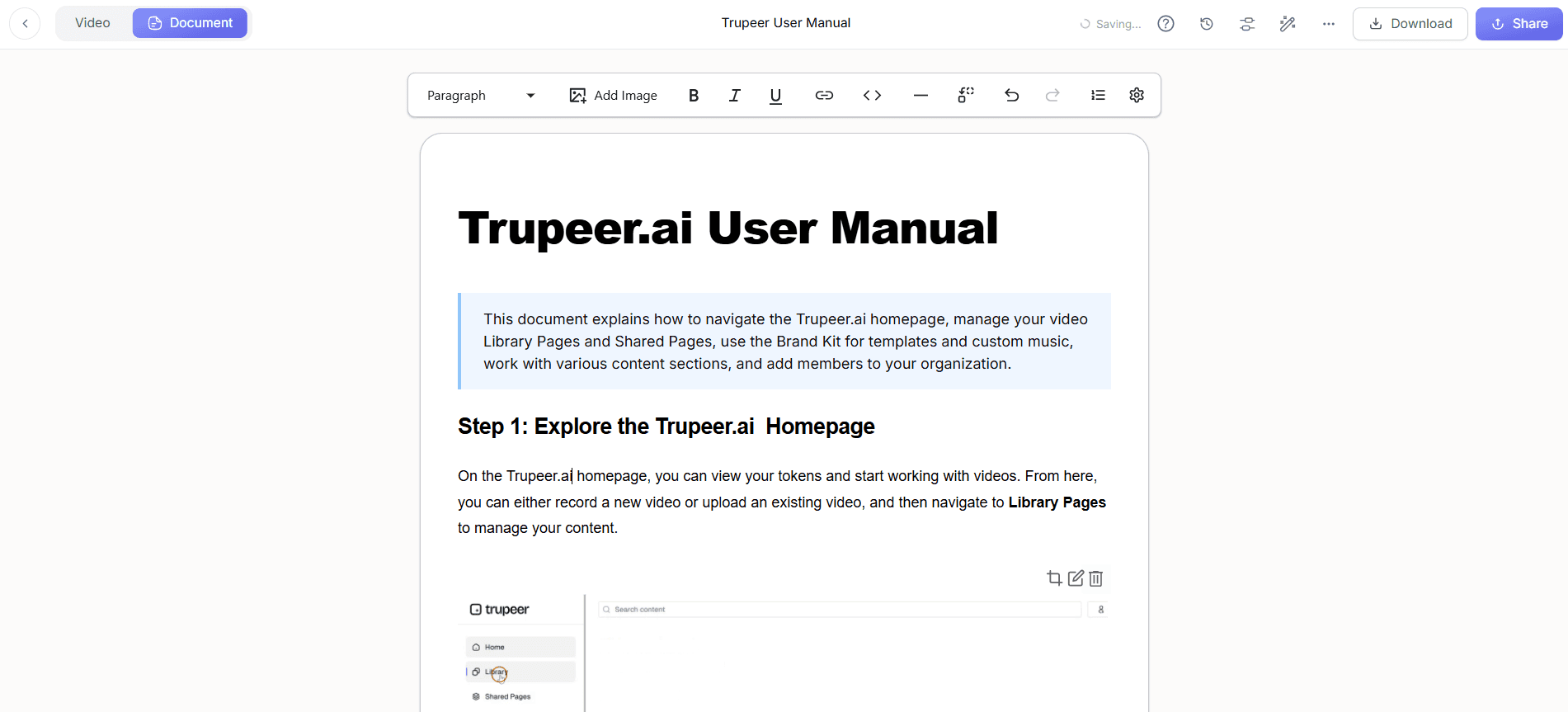
Kayıttan sonra Trupeer’ın otomatik SOP oluşturma özelliğini kullanın. Bu araç, yakalanan videoyu atölye sırasında konuşulan temel adımları vurgulayan bir taslak SOP’a dönüştürür. Bu işlemi başlatmak için kontrol panelinizde "SOP Oluştur" seçeneğine tıklayın. Taslak birkaç dakika içinde hazır olur; süreci özetleyen, düzenlenebilir ve yapılandırılmış bir doküman sunar. Bu, atölyedeki tüm ayrıntılar SOP’a doğrudan dahil edildiği için hem zaman kazandırır hem de doğruluğu artırır. Bu yetenek, paydaş girdisini hızlıca uygulanabilir dokümantasyona dönüştürmek için özellikle faydalıdır.
Adım 4: Küresel Paydaşlar için Çevirin
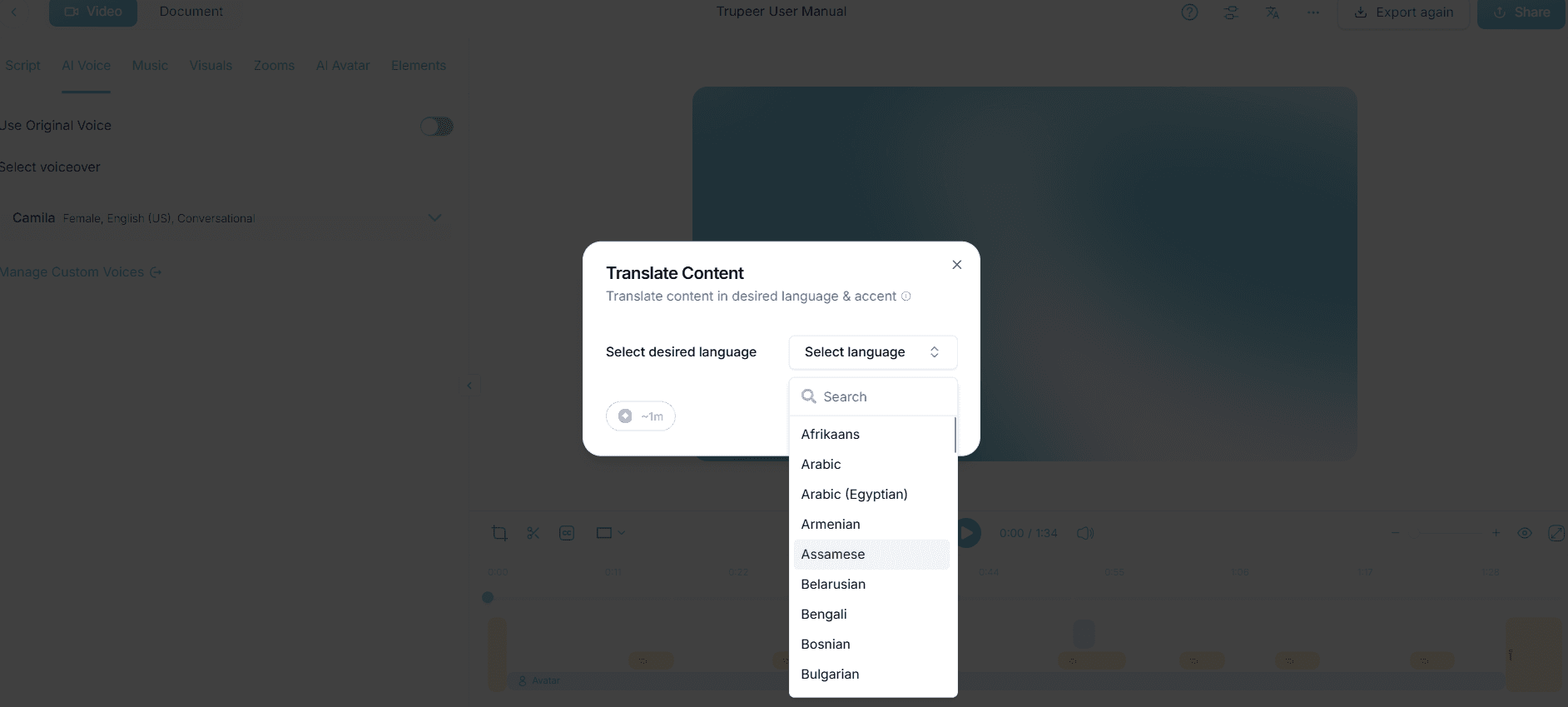
Uluslararası ekiplere sahip şirketler için dokümantasyonu çevirmek kritik öneme sahiptir. SOP’larınızı tüm paydaşlar için erişilebilir kılmak üzere Trupeer’ın dudak senkronlu 40+ dile AI çeviri özelliğini kullanın. Oluşturulan SOP’tan "Çevir" seçeneğini belirleyin ve istenen dilleri seçin. Çeviri süreci yalnızca birkaç dakika sürer; AI, çevrilen içeriğin orijinalin bağlamını ve tonunu korumasını sağlar. Bu adım, küresel ekipler arasında kapsayıcılığı ve anlaşılabilirliği destekler; dokümantasyonu evrensel olarak uygulanabilir ve aksiyon alınabilir hale getirir.
Adım 5: Bilgi Tabanı Üzerinden Dağıtın
SOP’larınız tamamlandıktan sonra Trupeer’ın AI ile aranabilir bilgi tabanını kullanarak bunları dağıtın. Bu yetenek, paydaşların dokümantasyona kolayca erişmesini sağlar. Bunun için SOP’u bilgi tabanına yükleyin: "Doküman Ekle" seçeneğine tıklayın ve ilgili etiketleri ile meta verileri doldurun. AI, içeriği indeksler; böylece anahtar kelimeler ve zaman damgalarıyla aranabilir hale gelir. Bu sayede paydaşlar belirli bilgileri hızlıca bulur; kesintiler azalır ve üretkenlik artar. Bu adımın kurulumu genellikle 10 dakika sürer.
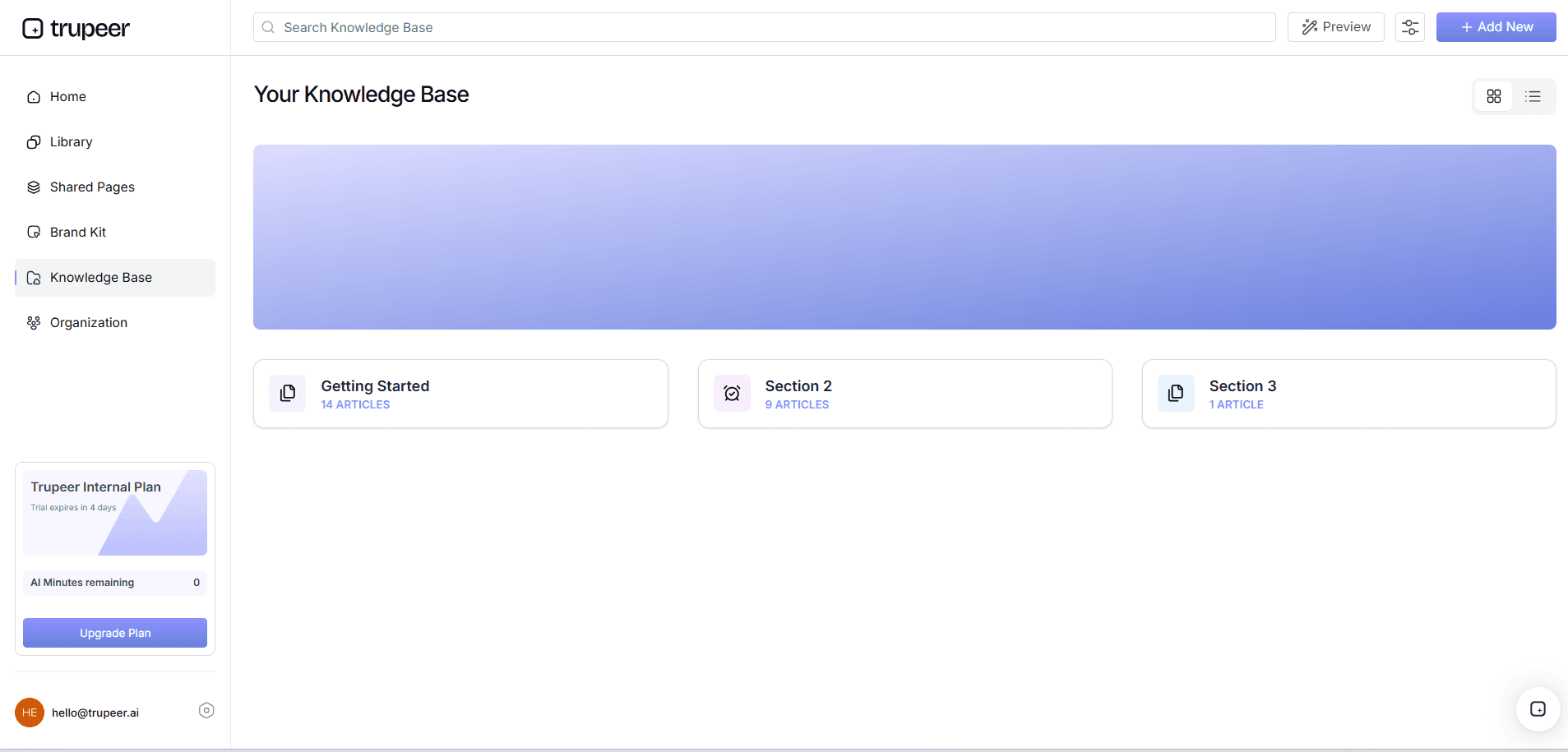
Adım 6: Analitik ile Etkileşimi İzleyin
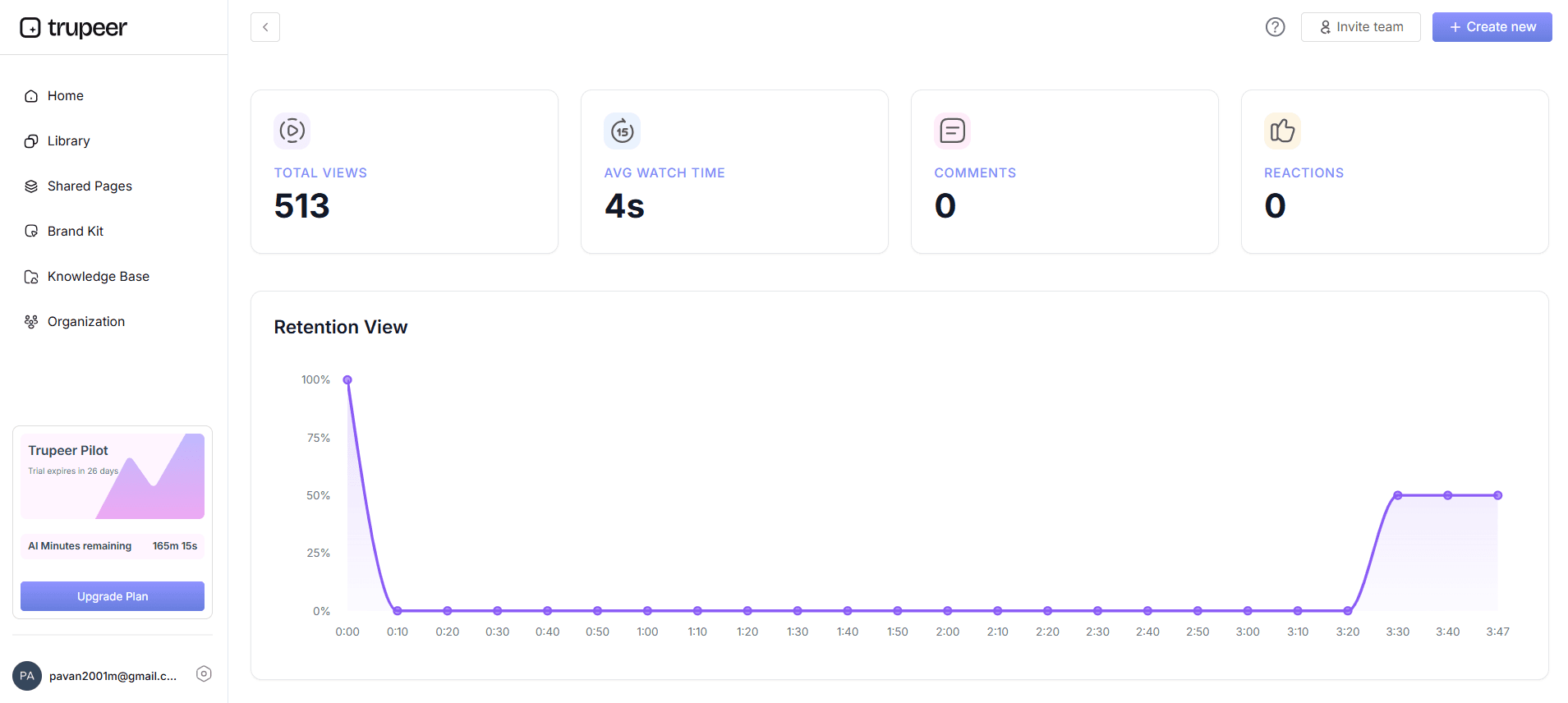
Son olarak, paydaşların dokümantasyonla nasıl etkileşim kurduğunu izlemek için Trupeer’ın izleyici etkileşim analitiğini kullanın. Kontrol panelinizdeki "Analitik" sekmesine giderek terk oranları ve ısı haritaları gibi etkileşim metriklerini görüntüleyin. Bu içgörüler, paydaşların zorlanabileceği veya ilgisini kaybedebileceği alanları belirlemenize yardımcı olur. Bu veriyi analiz ederek dokümantasyonu geliştirebilir ve iyileştirebilirsiniz; böylece etkili ve kullanıcı dostu kalır. Bu tür sürekli analiz, paydaş ihtiyaçlarını karşılayan ve sürekli iyileştirmeyi destekleyen yüksek kaliteli süreç dokümantasyonunu sürdürmek için gereklidir.
Paydaşlarla birlikte süreç dokümantasyonu atölyesi yürütmenize yardımcı olacak ipuçları nelerdir?
Etkili bir süreç dokümantasyonu atölyesi yürütmek dikkatli planlama ve uygulama gerektirir. Atölyenizin verimli olmasını ve uygulanabilir sonuçlar üretmesini sağlamak için bazı ipuçları:
Önceden hazırlanın. Atölye gündemini taslaklayın ve gerekli olabilecek tüm materyalleri önceden hazırlayın. Bu, oturumun sorunsuz ilerlemesini ve plan doğrultusunda kalmasını sağlar.
Tüm katılımcıları dahil edin. Çeşitli içgörüler toplamak için tüm paydaşlardan aktif katılımı teşvik edin. Herkesin sesinin duyulmasını sağlamak için round-robin paylaşım gibi yöntemleri kullanın.
Görsel yardımcılar kullanın. Karmaşık süreçleri anlamalarına yardımcı olmak için diyagramlar ve akış şemaları gibi görsel yardımcılar kullanın. Bu, iyileştirme alanlarını belirlemeyi kolaylaştırır.
Gerçek zamanlı dokümante edin. Atölye sırasında tartışmaları ve kararları kaydedin. Bu, tüm girdilerin doğru şekilde yakalanmasını ve daha sonra referans alınabilmesini sağlar.
Hızlıca takip edin. Atölye özetini; temel çıkarımlar ve aksiyon maddeleri dahil olmak üzere 24 saat içinde gönderin. Bu, hesap verebilirliği güçlendirir ve ivmeyi korur.
Geri bildirim döngüleri kullanın. Dokümantasyonu sürekli olarak iyileştirmek için geri bildirim döngüleri uygulayın. SOP’ları geliştirmek ve güçlendirmek için paydaşları taslaklar hakkında geri bildirim vermeye teşvik edin.
Teknolojiden yararlanın. Dokümantasyon sürecini sadeleştirmek için SOP’lar için Scribe alternatiflerini kullanın; doğruluk ve verimliliği sağladığınızdan emin olun.
Sık sorulan sorular
Atölye sırasında paydaş katılımını nasıl sağlayabilirim?
Etkileşimi sağlamak için atölyeyi etkileşimli ve kapsayıcı olacak şekilde tasarlayın. Katılımı teşvik etmek için grup çalışması oturumları ve etkileşimli anketler gibi yöntemleri kullanın. Atölyenin hedefleri ve her katılımcının girdisinin sonuca nasıl katkı sağlayacağı konusunda net beklentiler belirleyin. ayrıca oturumu düzenli tutmak için kolaylaştırıcılar ve not tutucular gibi roller atayın. ai/tools/operations-process-documentation-software">iş birliğine dayalı özellikleri destekleyen operasyon süreç dokümantasyon yazılımı aracı; paydaşların dokümantasyon sürecine doğrudan katılmasını sağlar.
Bir süreç dokümantasyonu atölyesini kolaylaştırmak için hangi araçlar yardımcı olabilir?
Bir süreç dokümantasyonu atölyesinin kolaylaştırılmasını çeşitli araçlar güçlendirebilir. Trupeer’ın kayıt ve dokümantasyon araçları paketi, paydaş girdisini yakalamak ve düzenlemek için oldukça etkilidir. Ayrıntılı kayıt için AI ekran kaydı ve yapılandırılmış dokümanlar oluşturmak için otomatik SOP oluşturma gibi araçları kullanın. Google Docs veya Microsoft Teams gibi gerçek zamanlı düzenleme özelliklerine sahip iş birliği platformları da, paylaşılan notlar ve tartışmalar için alanlar sunarak atölye etkinliklerini destekleyebilir. Bu araçlar, odağınızı korumanıza ve her katkının yakalanıp değerlendirilmesini sağlamanıza yardımcı olur.
Süreç dokümantasyonunu çevirmek neden önemlidir?
Süreç dokümantasyonunu çevirmek, farklı ve küresel ekiplere sahip kuruluşlar için kritik öneme sahiptir. Bu, dil fark etmeksizin tüm paydaşların aynı bilgilere erişmesini sağlar; kapsayıcılığı ve anlaşılabilirliği artırır. Çeviri, ana dili olmayan konuşmacıların süreçleri tam olarak kavramasını engelleyebilecek bariyerleri ortadan kaldırır; bu da hatalara veya verimsizliklere yol açabilir. dil yetenekleri olan bir video yerelleştirme aracı kullanmak, görsel ve metinsel içeriğin doğru şekilde çevrilmesini ve kültürel açıdan hassas olmasını sağlar.
AI araçları gerçekten süreç dokümantasyonu doğruluğunu artırabilir mi?
Evet, AI araçları süreç dokümantasyonu doğruluğunu önemli ölçüde artırabilir. Bilgilerin yakalanmasını ve düzenlenmesini otomatikleştirerek insan hatası riskini azaltırlar. Örneğin AI ses tanıma, paydaş tartışmalarını doğru şekilde metne döker; AI destekli SOP oluşturucular ise kayıtlar üzerinden doğrudan yapılandırılmış dokümanlar üretir. Bu araçlar, dokümantasyon genelinde tutarlılık sağlar ve süreçler geliştikçe doğruluğu korumak için kritik olan gerçek zamanlı güncellemeye olanak tanır. Manuel hataları azaltıp dokümantasyon hızını artırarak AI araçları daha güvenilir ve daha doğru çıktılara katkı sağlar.
Trupeer diğer iş araçlarıyla entegre oluyor mu?
Evet, Trupeer süreç dokümantasyonunu ve dağıtımını güçlendirmek için çeşitli iş araçlarıyla sorunsuz entegrasyon sunar. Video kütüphanenizde özel avatarlar için HeyGen ve AI ajan sorguları için MCP gibi platformlarla entegre olur. Bu entegrasyonlar, Trupeer’ın işlevselliğini genişletmenizi; böylece onu kendi iş ihtiyaçlarınıza uyarlanabilir hale getirmenizi sağlar. Trupeer’ı diğer uygulamalarla bağlayarak iş akışlarını sadeleştirebilir ve genel verimliliği artırabilirsiniz; mevcut teknoloji yığınınıza sorunsuz şekilde uyum sağlayacak şekilde adım adım süreç dokümantasyon aracı ile birlikte çalışır.
Bir süreci bir kez nasıl dokümante eder ve her yerde yeniden kullanırsınız?
Süreci bir kez yakalayın ve bir rehber, bir video ve bir bilgi tabanı makalesi olarak yeniden kullanın. Trupeer’ın AI dokümantasyon aracı, yazıyı doğrudan bir kayıttan üretir ve sürüm geçmişi onu canlı sürece uyumlu tutar.