Trupeer Blog
Summarise

Imagine you're managing a growing tech company's internal training resources. Your team has amassed countless hours of video tutorials, webinars, and explainer videos. But when a new employee needs to find specific information, they spend more time searching than learning. This is where an AI semantic search within a video knowledge base becomes invaluable. According to a recent study, employees spend
up to 20% of their workweek searching for internal information
, leading to significant productivity losses. AI semantic search changes this process by understanding the context and intent behind search queries, making it easier than ever to locate precise segments within video content. If you've ever wondered how AI-powered search can transform your knowledge base, this is for you. To see some of the best practices in action, explore some best knowledge base examples.
Why does AI semantic search in a video knowledge base matter?
In many organizations, video content is a treasure trove of valuable insights and training resources. However, without an effective search mechanism, finding relevant information within these videos can be daunting. Traditional keyword searches often fall short because they can't grasp the subtle meanings behind a query. This results in employees wasting precious time sifting through irrelevant content. For a business, time is money. The inefficiency in locating information directly affects productivity and, so, the bottom line. When employees spend excessive time searching for information, they're not focusing on their primary tasks, which can hinder overall business growth.
AI semantic search addresses these challenges by providing a more intelligent way of understanding and interpreting search queries. Unlike traditional methods, semantic search considers the context, synonyms, and relationships between terms, offering results that are more aligned with user intent. This capability is crucial in dynamic environments like customer support, where quick access to accurate information can make or break a customer's experience. In fact, improving search capabilities is often a key component in enhancing a customer success workflow. By integrating AI semantic search into your video knowledge base, you enable your team to work more efficiently, respond faster to customer inquiries, and make informed decisions backed by easily accessible data. This is exactly where video knowledge base with semantic search becomes useful and it's the kind of content Trupeer can generate directly from a simple screen recording.
What are the benefits of AI semantic search in a video knowledge base?
Implementing AI semantic search in your video knowledge base offers several distinct advantages that simplify operations and enhance user experience.
Improved Search Accuracy. Semantic search significantly increases search accuracy by understanding the context and intent behind queries, reducing the time spent on fruitless searches.
Enhanced User Experience. By delivering more relevant results, users enjoy a smoother, more satisfying search experience, which can increase engagement and retention.
Faster Decision-Making. Access to precise information quickly enhances decision-making processes, allowing teams to act on insights without delay.
Increased Productivity. With less time spent searching for information, employees can focus on their core tasks, boosting overall productivity. This aligns with the rationale behind having a knowledge base one.
Cost Efficiency. By reducing the time and resources spent on locating information, companies can save money, making a strong case for investing in an AI-powered video tool.
Better Resource Utilization. Semantic search ensures that all video content is used effectively, maximizing the return on investment for video production.
Which Trupeer features help you enhance AI semantic search in a video knowledge base?
Trupeer offers several features that enhance AI semantic search capabilities, making it easier to manage and extract value from your video knowledge base.
AI-searchable knowledge base
Trupeer's AI-searchable knowledge base indexes every recording with timestamp-level deep links. This means users can jump directly to the most relevant parts of a video, saving time and effort. By using semantic search, Trupeer can understand the context of your queries, providing results that align closely with your intent. This feature is particularly beneficial in environments where precise information retrieval is critical, such as legal or medical settings, where every second counts.
Auto chapters and segment detection
With auto chapters and segment detection, Trupeer automatically breaks down videos into logical segments. This not only aids in the semantic search process but also helps users navigate through long-form content more efficiently. Each segment is indexed, allowing the AI to match search queries to specific parts of a video, further enhancing the accuracy of search results. This feature ensures that users don't have to scrub through entire videos to find the information they need.
Automatic SOP generation from any recording
Trupeer's ability to generate automatic SOPs from any recording is a big shift for documentation. By creating structured, edit-ready SOPs, this feature ensures that all procedural knowledge is easily accessible and searchable. When combined with semantic search, it allows users to find step-by-step guides quickly, simplifying processes and reducing the learning curve for new employees. Trupeer's AI documentation platform is designed to keep information organized and easily retrievable.
AI voiceover in 65+ natural voices
Trupeer enhances the accessibility of your video knowledge base with AI voiceover capabilities. Offering over 65+ natural voices with adjustable pace and tone, it ensures that content is not only searchable but also accessible to diverse audiences. This feature is particularly useful in multilingual environments, where voiceovers can be adapted to different languages, further broadening the reach of your content. By integrating these voiceovers with semantic search, Trupeer enriches the user experience, allowing for more personalized and engaging interactions with video content.
AI avatars / talking-head video
Trupeer's AI avatars and talking-head video feature adds a human touch to your video knowledge base. This enhances engagement and helps convey complex information more clearly. By using AI-generated avatars, you can maintain a consistent brand voice across all your video content. When combined with semantic search capabilities, these avatars facilitate a more intuitive interaction with your knowledge base, making it easier for users to find and understand the content they need. With Trupeer's knowledge base generator, video content becomes more dynamic and accessible.
How do you enhance AI semantic search in a video knowledge base step by step with Trupeer?
Step 1: Capture Video Content
Begin by using Trupeer's browser-based recorder for screen captures. This tool doesn't require installation, making it accessible for team members regardless of their technical expertise. Simply open the recorder, select the screen area to capture, and start recording. Trupeer's AI screen recording with auto-zoom and click detection captures user interactions cleanly, focusing on relevant actions. This ensures that the video is concise and includes key elements. Expect the recording to auto-focus on active areas, eliminating unnecessary footage. Once complete, the recording is automatically saved and ready for the next step.
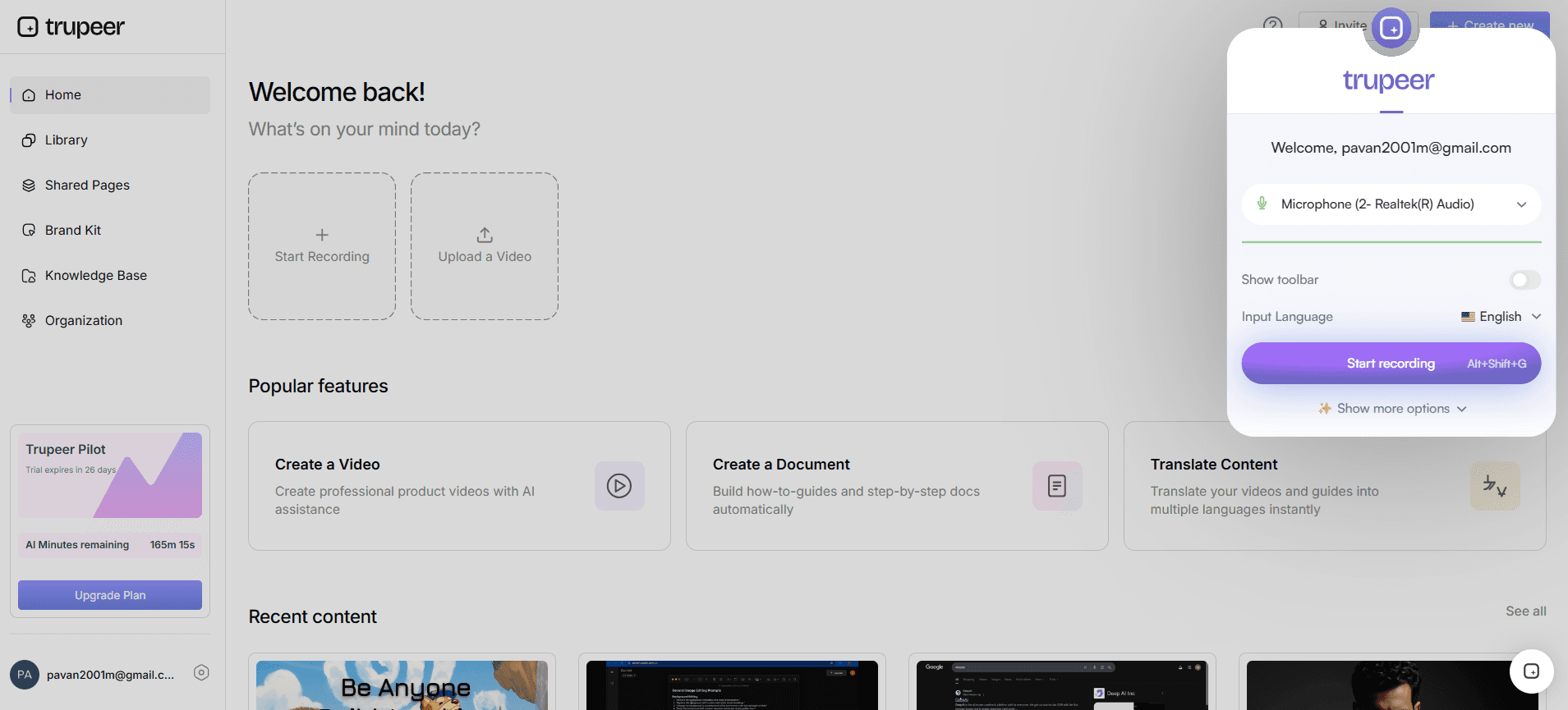
Step 2: Enhance Video with AI Editing
Next, enhance your recording using Trupeer's AI editing capabilities. Open your video in Trupeer's editor and use its automatic filler-word removal to clean up pauses and verbal fillers like "um" and "ah." This feature simplifies content, making it more digestible. also, apply AI voiceover with one of the 65+ natural voices available. Adjust the pace and tone to suit your audience. This process takes just a few minutes and drastically improves the video’s professionalism and clarity, ensuring the content remains engaging and accessible to viewers.
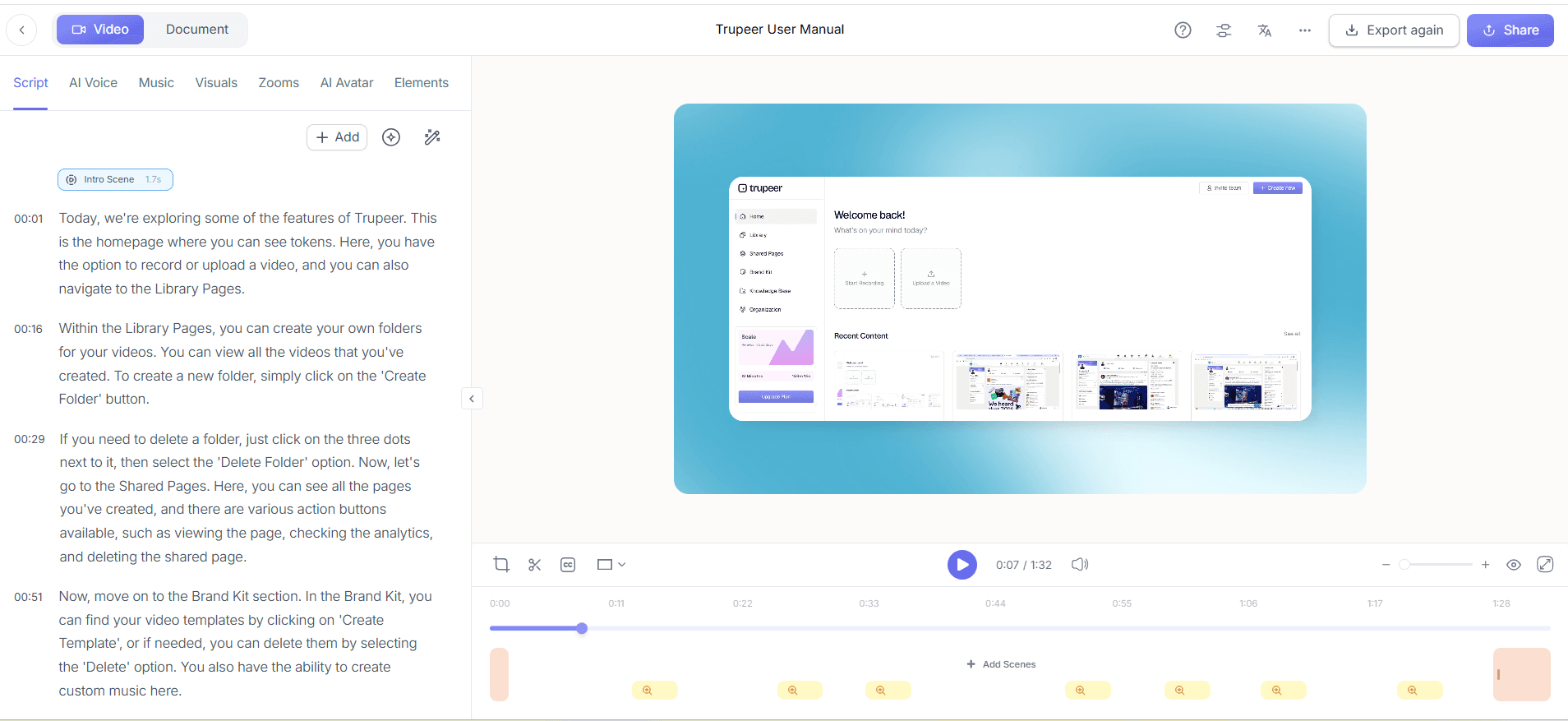
Step 3: Generate SOPs from Videos
Convert your enhanced videos into structured SOPs using Trupeer's automatic SOP generation feature. Select the video from your library and initiate the SOP generator. Trupeer analyzes the video and creates an edit-ready SOP, highlighting key steps and instructions. This document is exportable in multiple formats such as HTML and PDF, making it easy to share across teams. The generated SOPs are tied to the original recording, ensuring they stay updated if the video content changes, thus maintaining accuracy and relevance over time.
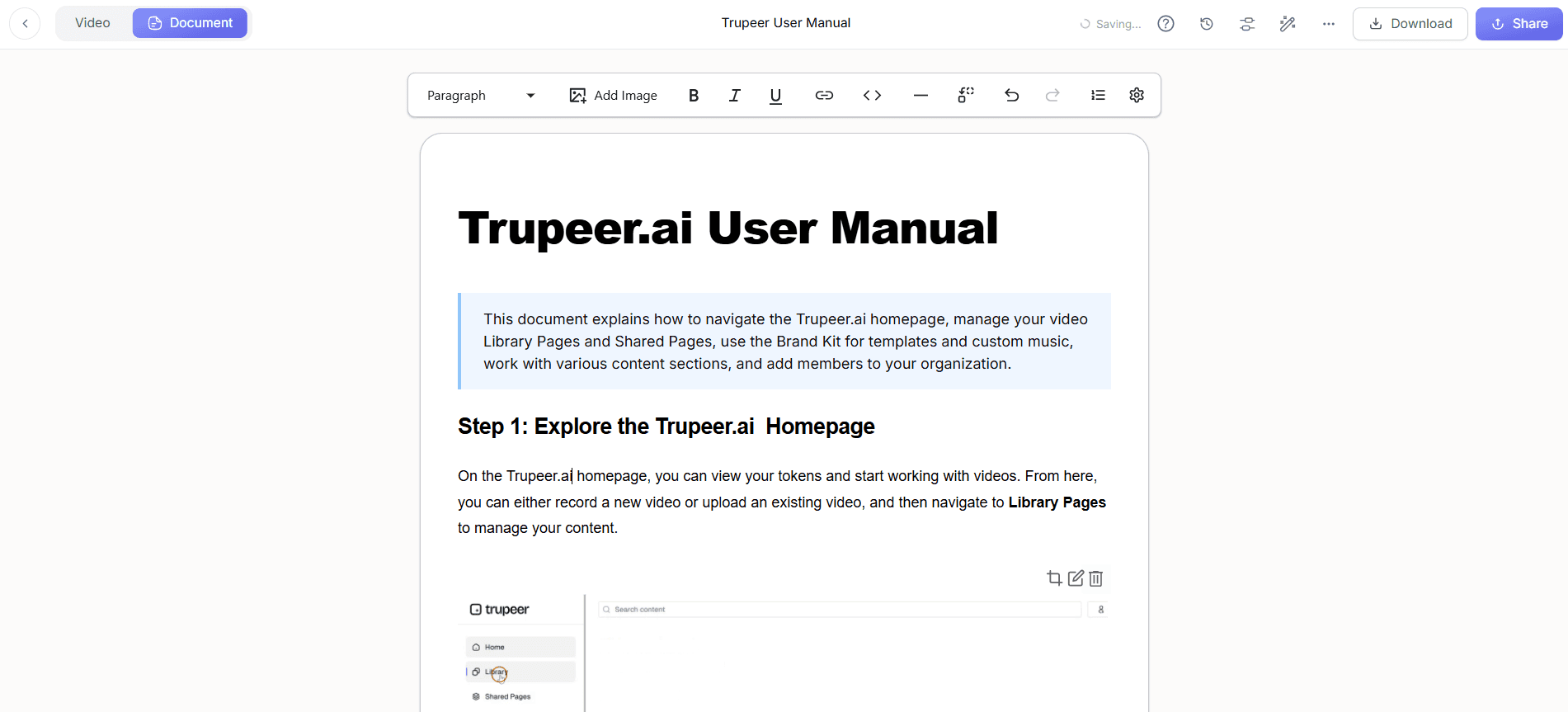
Step 4: Segment Videos with Auto Chapters
Use Trupeer's auto chapters and segment detection to break down lengthy videos into manageable parts. This feature automatically detects logical breaks and creates chapters, making navigation straightforward for users. Access this by opening the video and selecting the auto-chapter function. Trupeer then analyzes the content, typically completing this within minutes, depending on video length. Each chapter is timestamped, allowing viewers to jump directly to sections of interest, enhancing the user experience and making the semantic search even more effective.
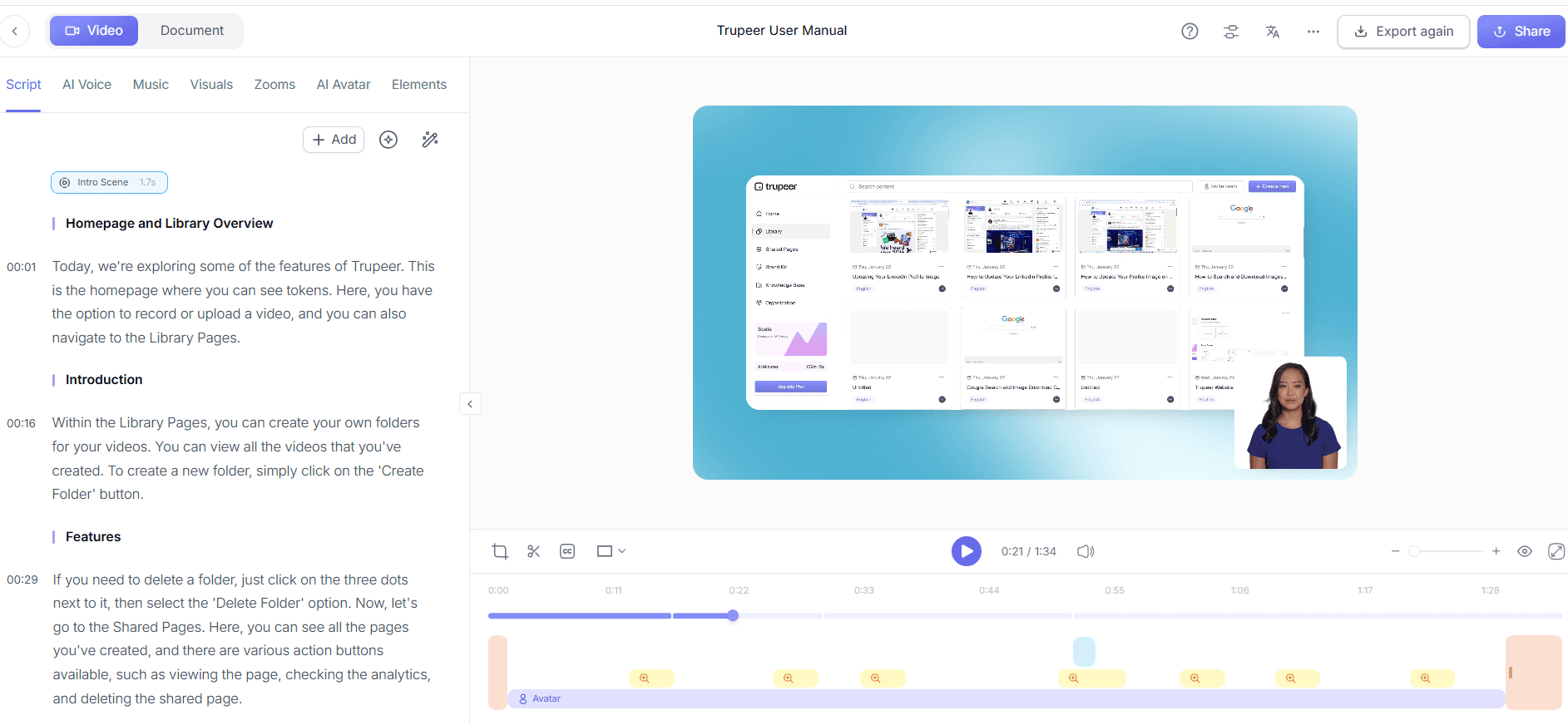
Step 5: Integrate AI Translation and Dubbing
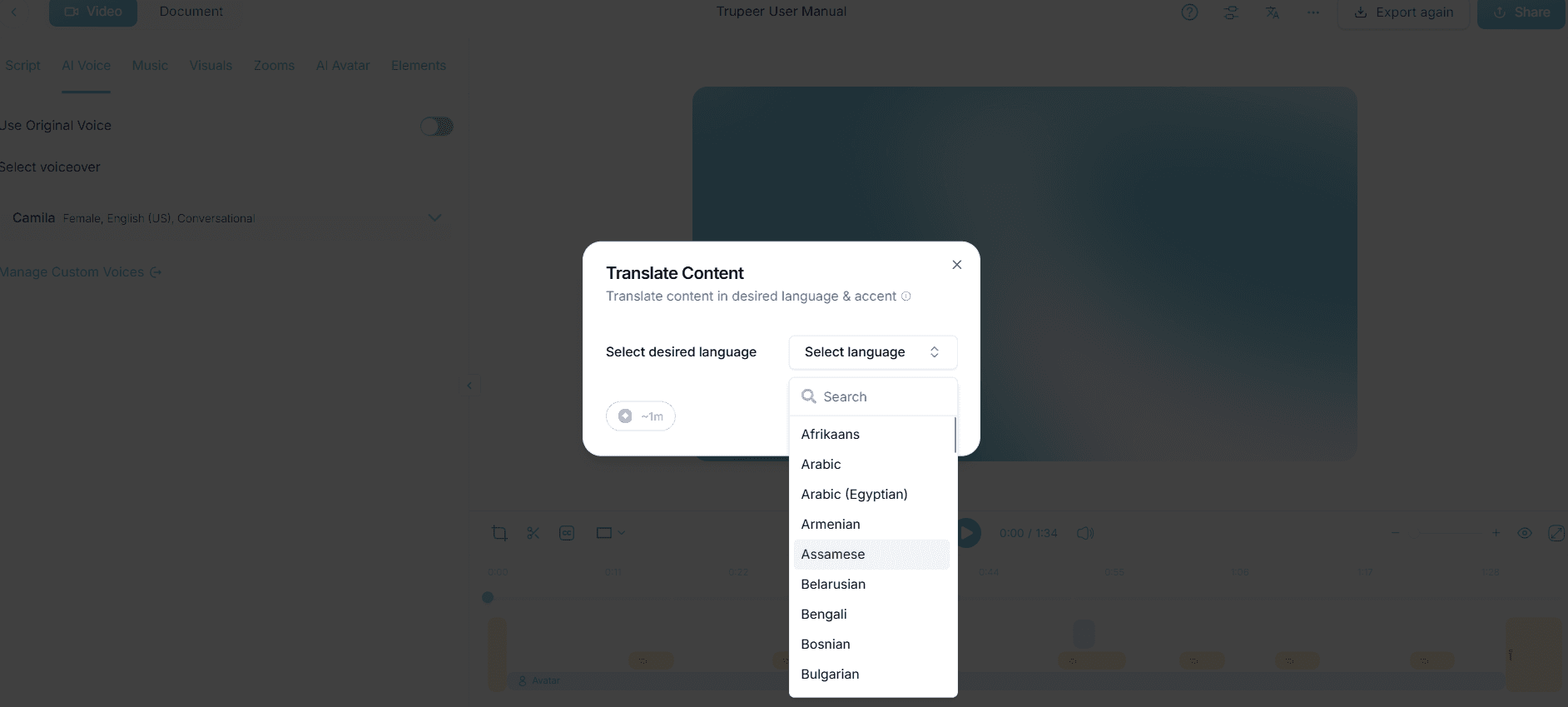
To cater to a diverse audience, use Trupeer's AI translation and dubbing features. Choose the video, select the translation option, and pick from over 40 available languages. Trupeer not only translates but also syncs lip movements with the dubbed language. This process is automated and can be completed in under an hour, offering non-English-speaking audiences an equally engaging experience. This capability broadens the reach of your knowledge base, ensuring accessibility and inclusivity in global markets.
Step 6: Publish to AI-Searchable Knowledge Base
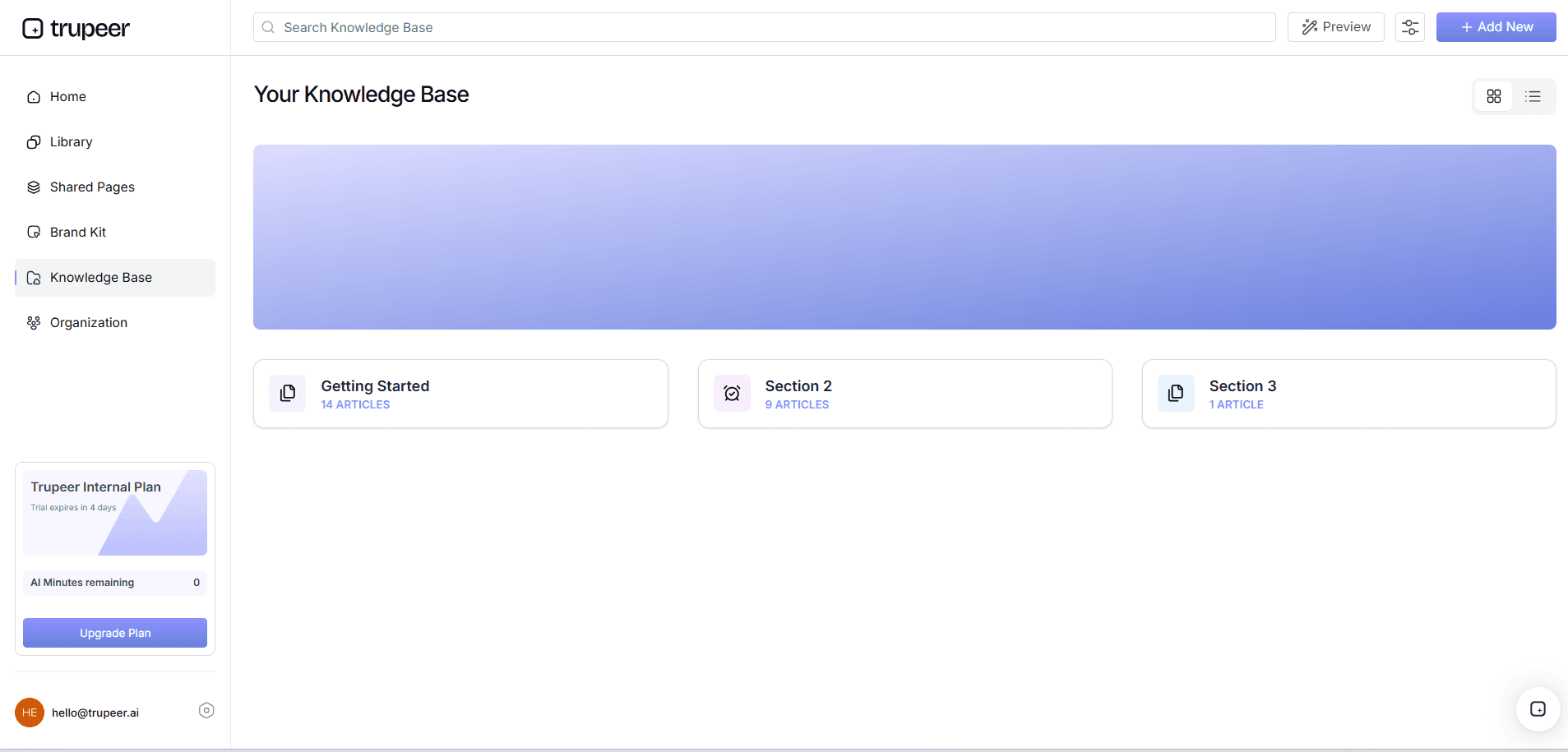
Finally, upload your refined video content to Trupeer's AI-searchable knowledge base. Navigate to the knowledge base section, and upload your videos. Trupeer indexes each video with deep-link timestamps, making them easily searchable. This integration allows users to find specific video segments using semantic search, enhancing the efficiency and effectiveness of information retrieval. The entire process, from upload to indexing, is smooth and ensures your video knowledge base is both comprehensive and user-friendly. Teams weighing tools often start with a Loom alternatives comparison before standardizing on a workflow.
What tips help you enhance AI semantic search in a video knowledge base?
To maximize the benefits of AI semantic search in your video knowledge base, it's essential to adopt strategies that ensure both the content and search capabilities are optimized. Here are some tips to help you get the most out of your system:
Regularly Update Content. Ensure that videos and their accompanying metadata are current. Outdated content can lead to inaccurate search results, diminishing the effectiveness of your knowledge base.
Use Consistent Tagging. Implement a standardized tagging system for all videos. This enhances search efficiency, making it easier for the AI to understand relationships between different pieces of content.
use AI Features. use Trupeer's AI capabilities, like voiceover and translation, to make content accessible to broader audiences. This inclusion can improve the semantic search's ability to cater to diverse user needs.
Encourage User Feedback. Solicit feedback from users regarding the search functionality. Understanding their challenges can help refine search algorithms and improve content organization.
Maintain High-Quality Video Production. High-quality videos with clear audio and visuals improve the AI’s ability to analyze and index content accurately, leading to better search results.
Integrate with Other Tools. Use tools like a internal knowledge base wiki software to consolidate resources, providing a unified search experience across platforms.
Standardize Video Formats. Consistent video formats help the AI process and index videos more effectively, ensuring search results are accurate and reliable.
For global audiences, adding AI video translation extends the same workflow across 40+ languages with lip-sync.
Frequently asked questions
How does AI semantic search differ from keyword search?
AI semantic search differs from keyword search by understanding the context and meaning of queries rather than relying solely on exact keyword matches. While keyword search looks for specific terms, semantic search interprets the intent behind a query, providing results that are more aligned with the user's needs. This approach is particularly beneficial in complex searches, where users might use different words to describe the same concept. By understanding synonyms and related concepts, AI semantic search delivers more relevant and comprehensive results, greatly enhancing the search experience.
What types of video content benefit most from AI semantic search?
Training videos, webinars, and explainer videos benefit significantly from AI semantic search. These types of content often contain complex information that users need to access quickly. Semantic search allows users to navigate directly to specific segments of interest, rather than watching entire videos. This capability is especially useful in corporate training and educational settings, where time-efficient information retrieval is crucial. By indexing content with semantic relevance, users can quickly find the precise information they need, improving learning outcomes and productivity. When SOPs come into the same conversation, a Scribe alternatives comparison helps clarify the scope.
Can AI semantic search handle multiple languages?
Yes, AI semantic search can handle multiple languages, especially when integrated with translation features like those offered by Trupeer. With capabilities such as AI translation into 40+ languages, semantic search can process queries in various languages and deliver accurate results. This multilingual support ensures that users worldwide can access and benefit from the video knowledge base, breaking language barriers and broadening the content's reach. By understanding language context and nuances, semantic search provides a cohesive experience for diverse audiences.
Does integrating AI semantic search require technical expertise?
No, integrating AI semantic search with Trupeer does not require extensive technical expertise. Trupeer's platform is designed to be user-friendly, with intuitive interfaces that guide users through setup and integration. Most features are automated, reducing the need for manual configurations. This accessibility ensures that organizations of all sizes can implement semantic search capabilities without the need for specialized IT resources. By focusing on ease of use, Trupeer allows teams to use advanced AI features smoothly, enhancing their video knowledge base.
Is AI semantic search suitable for small businesses?
Yes, AI semantic search is suitable for small businesses. It offers significant advantages by improving the efficiency of information retrieval, which is crucial for small teams where resources are limited. By reducing the time spent searching for information, small businesses can enhance productivity and focus on growth strategies. Trupeer's platform is scalable, making it an ideal choice for businesses of all sizes. The benefits of quicker access to relevant information and improved decision-making processes apply equally to small enterprises as they do to larger organizations.
Why does nobody use your wiki, and what works instead?
Wikis go unused when they are hard to search, outdated, and disconnected from work. Trupeer's branded knowledge base is searchable and current, with analytics showing what gets read.
Artigos relacionados