Trupeer Blog
Samenvatten
Every knowledge transfer plan depends on the same small group of people: the subject matter experts (SMEs) who actually know how the work is done. And in almost every transition, those people are the hardest to get time with. They're still running the process, handling escalations and covering for colleagues. Asking them to also run KT sessions and write documentation is often where the plan starts to slip.
If your SMEs can only give you a couple of hours a week, the answer isn't to wait for their calendars to clear. It's to change how KT works, so that every hour of SME time produces as much usable knowledge as possible.
This guide explains why SME availability is the real bottleneck in knowledge transfer, and how an async, recording-first approach lets you run KT when SMEs only have two hours a week.
Why SME Availability Is the Bottleneck in Knowledge Transfer
KT plans usually assume SMEs have more time than they do. In practice, several things limit how much they can give:
They still own the work. SMEs keep running the process during transition, and service levels don't pause for KT.
Live sessions need everyone at once. Scheduling SMEs and the receiving team in the same slot, often across time zones, is slow.
Documentation competes with the day job. Writing a detailed SOP can take a day or more, and that time rarely exists.
Questions arrive in interruptions. The receiving team messages SMEs whenever they're stuck, breaking their focus.
Repetition wastes time. The same process gets explained several times to different people or groups.
The result is predictable: KT moves at the pace of the busiest person on the team, and documentation lags behind.
Why Traditional KT Wastes SME Time
Traditional knowledge transfer leans on live sessions and manual documentation. Both use SME time inefficiently:
A live session is used once. When a KT session isn't recorded, anyone who missed it, or joins later, needs it repeated.
Notes lose detail. The receiving team writes down what it understood, not what the SME actually did, so follow-up questions pile up.
Writing is the slowest part. Turning a process into a screenshot-by-screenshot SOP is time-consuming, and it often falls to the SME.
Q&A is unstructured. Questions arrive one by one through chat and email, rather than in a single batch the SME can answer at once.
If an SME only has two hours a week, every one of those hours needs to produce something reusable.
The Async KT Model: Record Once, Reuse Many Times
Async knowledge transfer separates the SME's contribution from everyone else's schedule. Instead of teaching live, the SME records short walkthroughs of the real work in their own time. Those recordings become the source for SOPs, training videos and the knowledge base, and the receiving team learns from them whenever it suits them.
The shift is simple:
From teaching to recording: the SME demonstrates each task once, on screen, while explaining it.
From writing to reviewing: documentation is generated from the recording, and the SME only checks it.
From interruptions to batched Q&A: questions are collected and answered in one short slot each week.
From one audience to every audience: one recording serves every current and future learner.
What SMEs Can Do in 2 Hours a Week
Here's an example of how an SME might use a two-hour weekly KT budget in an async model. Adjust the split to suit your processes.
Around 60 minutes recording. Several short walkthroughs, each covering one task from start to finish in the live system, including exceptions.
Around 30 minutes reviewing. Checking AI-generated SOPs and videos from the previous week's recordings and correcting anything that's wrong or missing.
Around 30 minutes of batched Q&A. One office-hours slot to answer the receiving team's questions, ideally also recorded so the answers can be added to the knowledge base.
Compared with a weekly two-hour live session, this produces a set of reviewed, reusable SOPs and videos every week, rather than one session that may need repeating.
How to Run Knowledge Transfer When SMEs Have No Time
Step 1: Build a Process Inventory and Prioritize
List every process in scope, with its volume, risk and the SME who knows it best. Start with processes that are critical or held by only one person. Break large processes into tasks that can each be recorded in a short walkthrough.
Step 2: Assign a KT Coordinator
Give one person, not the SME, ownership of the KT plan. The coordinator schedules recordings, tracks what's been captured, uploads recordings, collects questions and chases reviews. This removes most of the admin from the SME's plate.
Step 3: Give SMEs a Simple Recording Brief
Make recording easy. Share a short brief for each task covering what to show and what to say:
Do the task in the real system, start to finish.
Say what you're doing and why at each step.
Show or describe the common exceptions and what you do about them.
Mention any checks you make before moving on.
Use test or masked data where possible.
Step 4: Let SMEs Record on Their Own Schedule
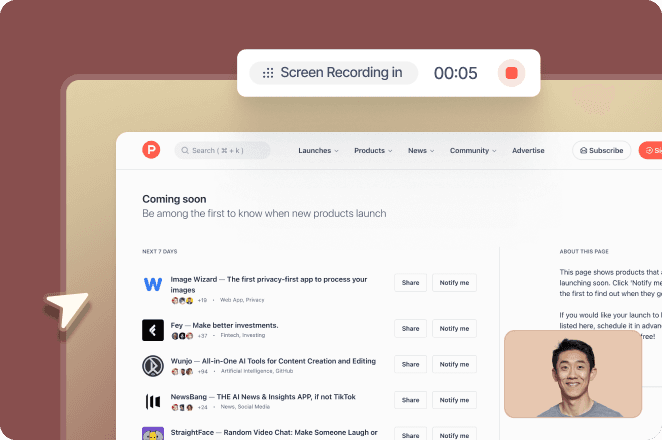
SMEs record whenever they have a gap, whether that's between meetings, at the start of the day or while doing the real task. A tool like Trupeer's AI screen recorder lets them capture a walkthrough without any editing. Existing MS Teams or Zoom recordings of process discussions can be uploaded too.
Step 5: Generate SOPs and Videos From Every Recording
Upload each recording as soon as it's done. Trupeer turns it into a step-by-step SOP with screenshots and written instructions, plus a narrated video, using your template and brand kit. The SME never has to write documentation from scratch.
Step 6: Have the Receiving Team Do the First Review
Before the SME sees a draft, ask a member of the receiving team to work through it and note anything unclear. This catches obvious gaps early and turns vague confusion into specific questions, so the SME's review time goes on what matters.
Step 7: Batch Questions Into One Weekly Slot
Collect questions in one shared list during the week. The SME answers them in a single short session, which is recorded and used to update the SOPs. This replaces a steady stream of interruptions with one predictable slot.
Step 8: Publish to One Knowledge Base
Publish every approved SOP and video in a searchable knowledge base, organized by process. Before asking the SME anything, the receiving team checks there first. If teams work in different languages, use translation to create versions for each location from the same source.
When You Still Need Live Time With SMEs
Async KT handles most of the work, but some situations still need the SME in the room:
Complex judgement calls that depend on context and are easier to explain in conversation.
Shadowing and reverse shadowing, where the receiving team works alongside the SME on real cases.
Processes that run rarely, such as year-end tasks, which may need a live walkthrough when they happen.
Final sign-off on critical SOPs before go-live.
Because the basics are already recorded, these live sessions can focus on the difficult parts.
How to Measure KT Progress With Limited SME Time
When SME time is scarce, track output per SME hour, not hours spent. Useful measures include:
Processes recorded each week, per SME.
SOPs reviewed and approved each week.
Open questions and how quickly they're answered.
Coverage: the share of in-scope processes with an approved SOP and video.
Repeat questions, which point to gaps in the documentation.
How Trupeer Helps When SMEs Have No Time
Trupeer is built to get the most knowledge out of the least SME time:
Record in minutes: SMEs capture walkthroughs with the AI screen recorder, with no scripting or editing.
No writing: every recording becomes a step-by-step SOP and a narrated video, so SMEs only review.
Consistent output: templates and brand kits make every SOP look the same, whoever recorded it.
Self-serve learning: the receiving team learns from a searchable knowledge base instead of waiting for the SME.
Multiple languages: translation creates SOPs, voiceovers and captions in each team's language.
Quick updates: re-record only the step that changed, without redoing the whole SOP.
Genpact used this approach for a company-wide Workday rollout, recording existing MS Teams process sessions and SME walkthroughs and turning them into 500+ SOPs and training videos in five languages in 3 months, for a program that would otherwise have taken 12. Read the Genpact customer story.
Async KT Checklist
Processes are inventoried, prioritized and broken into recordable tasks.
A KT coordinator owns scheduling, uploads, questions and tracking.
SMEs have a short recording brief for each task.
SMEs record on their own schedule, within an agreed weekly time budget.
Every recording is turned into an SOP and video within days.
The receiving team reviews drafts before the SME does.
Questions are batched into one weekly slot, and the answers are recorded.
Approved content is published in one searchable knowledge base.
Progress is tracked as output per SME hour.
For related guides, see knowledge retention before SME attrition, process documentation for outsourcing, vendor-to-vendor transition knowledge transfer and our tribal knowledge transfer strategy.
Conclusion
SMEs will never have as much time for knowledge transfer as the plan assumes. Instead of waiting for their calendars, change the model: let them record the real work in short, async walkthroughs, generate documentation from those recordings, and keep their time for reviewing and answering the questions that matter.
With that approach, two hours a week is enough to keep KT moving. Start free with Trupeer and turn your SMEs' spare minutes into SOPs and videos your team can learn from.
Frequently Asked Questions
How do you do knowledge transfer when SMEs are busy?
Switch to an async, recording-first approach. SMEs record short walkthroughs of the real work on their own schedule, documentation is generated from the recordings, and SMEs only review drafts and answer batched questions.
What is async knowledge transfer?
Async knowledge transfer is a KT approach where the SME records demonstrations and explanations in their own time, and the receiving team learns from the recordings, SOPs and videos whenever it suits them, instead of everyone attending live sessions.
How much SME time does knowledge transfer need?
It depends on the scope, but with an async approach a small weekly time budget, such as two hours, can produce several reviewed SOPs and videos each week, because SMEs record and review rather than teach live and write.
How should SMEs spend limited KT time?
Mostly on recording walkthroughs of the real work, then reviewing AI-generated drafts and answering batched questions. Admin, uploads and first-pass reviews should be handled by a KT coordinator and the receiving team.
What should an SME include in a KT recording?
The task done start to finish in the real system, what they're doing and why at each step, common exceptions and how they handle them, and any checks they make before moving on.
When is live knowledge transfer still needed?
For complex judgement calls, shadowing and reverse shadowing, rarely run processes such as year-end tasks, and final sign-off on critical SOPs. Recording the basics first means live time can focus on these.
Who should coordinate knowledge transfer?
A dedicated KT coordinator, not the SME. The coordinator schedules recordings, tracks coverage, uploads recordings, collects questions and chases reviews.
How can AI help with knowledge transfer?
AI documentation tools like Trupeer turn SME recordings into step-by-step SOPs and narrated videos, so experts don't have to write documentation, and publish them in a searchable knowledge base the receiving team can use on its own.
Gerelateerde blogs