Trupeer Blog
요약
Imagine your top engineer, the one who knows the intricate details of every system, decides to leave the company. It's not just a position that's vacated, but an entire library of know-how that exits with them. This is what a knowledge base one can help mitigate. Tribal knowledge, or the information stored only in employees' minds, can be a ticking time bomb for businesses. It's often unrecorded, undocumented, and unshared, leaving your organization vulnerable to knowledge gaps when key individuals exit. In fact, companies can lose up to 42% of their competitive edge due to unrecorded intellectual capital.
42% of competitive edge can be lost due to unrecorded intellectual capital.
Conducting a tribal knowledge audit isn't just about capturing what's known; it's about preserving the insights that drive your operations forward. This method involves systematically identifying and documenting the implicit knowledge within your team, transforming it into accessible resources that can be shared and used across the organization. If you're a team leader or an operations manager, failing to do so could result in costly training sessions, decreased productivity, and an increase in errors that could have been avoided. By capturing this tribal knowledge, you safeguard your company against unexpected disruptions and ensure that your operational workflow remains smooth and efficient.
Why does tribal knowledge audit matter?
Tribal knowledge audit matters because it addresses a critical business vulnerability: the loss of invaluable knowledge when employees leave. When individuals depart, they often take with them years of experience and insight, which are not always documented. This gap can significantly impact the continuity and efficiency of operations, particularly in sectors reliant on specialized knowledge. Without a structured approach to capturing this implicit knowledge, businesses face operational disruptions, increased training costs, and a longer ramp-up time for new employees.
Also, as organizations grow and evolve, the complexity of their operations increases. A tribal knowledge audit ensures that the expertise needed to navigate these complexities does not reside solely in the minds of a few individuals but is instead documented and accessible. This is especially crucial for operations use case, where smooth workflows and consistent knowledge are paramount. By conducting a tribal knowledge audit, stakeholders can proactively address the risks associated with knowledge loss, ensuring that their teams have the information they need to maintain productivity and drive innovation. This proactive approach not only safeguards the organization's intellectual capital but also enables employees by providing them with the resources needed to excel in their roles.
What are the benefits of conducting a tribal knowledge audit?
Conducting a tribal knowledge audit offers numerous benefits, transforming implicit knowledge into a strategic asset for your organization.
Prevent knowledge loss. By systematically capturing and documenting tribal knowledge, you ensure that critical insights remain within the organization, reducing the risk of operational disruptions when key employees leave.
Enhance training efficiency. A well-documented knowledge base simplifies the onboarding process for new employees, shortening training periods and accelerating productivity. This aligns with instructional design principles for effective learning.
Boost productivity. Making knowledge easily accessible to all employees eliminates the time spent searching for information, allowing teams to focus on their core tasks and improve overall efficiency.
Facilitate innovation. When knowledge is shared and easily accessible, it builds collaboration and innovation, as employees can build on existing ideas and insights to develop new solutions.
Support decision-making. Leaders benefit from a comprehensive view of organizational knowledge, enabling informed decision-making that supports strategic goals and objectives.
Reduce dependency on individuals. By capturing and sharing knowledge across the organization, you minimize the risk of over-reliance on specific individuals, promoting a more resilient and adaptable workforce.
For global audiences, adding AI video translation extends the same workflow across 40+ languages with lip-sync.
Which Trupeer features help you conduct a tribal knowledge audit?
Trupeer offers an array of features designed to simplify the process of capturing and documenting tribal knowledge, turning implicit know-how into accessible resources.
Automatic SOP generation from any recording
Trupeer's Automatic SOP generation feature transforms recorded sessions into structured, edit-ready Standard Operating Procedures (SOPs). This capability is particularly useful for capturing procedural knowledge that might otherwise remain unwritten. By converting video content into actionable documentation, it ensures that critical processes are easily accessible and can be consistently replicated by team members. This feature also supports multi-format export options such as MP4, HTML, PDF, and SCORM, allowing for versatile use across different platforms and training environments.
AI-searchable knowledge base with timestamp deep-links
Trupeer's AI-searchable knowledge base indexes every recording with timestamp-level deep links, making it easy to locate specific pieces of information quickly. This feature enhances the discoverability of captured knowledge, ensuring that employees can access the exact information they need without sifting through entire videos or documents. The knowledge base supports custom-domain hosting with SSO, which ensures secure and smooth access for all authorized users.
Silent screen recording with automatic AI narration
With Trupeer's Silent screen recording feature, users can capture workflows discreetly and effectively. The automatic AI narration adds a layer of explanation to the recorded sessions, turning silent video captures into informative resources that can be easily understood by others. This feature is ideal for capturing subtle tasks that require detailed explanation, ensuring that nothing is lost in translation when shared with other team members.
Multi-format export: MP4, HTML, PDF, SCORM
Trupeer supports a variety of export formats, allowing users to convert recordings and documentation into MP4, HTML, PDF, and SCORM files. This flexibility ensures that the captured knowledge can be used in different contexts, whether for training, compliance, or operational use. The multi-format export capability also facilitates easy sharing and integration with other systems, enhancing the overall utility of the documented knowledge.
Collaborative review and approval workflows
The collaborative review and approval workflows in Trupeer enable teams to refine and validate captured knowledge before it is finalized. This feature allows multiple stakeholders to provide input and ensure that the documentation is accurate and comprehensive. By incorporating feedback from various team members, the resulting documentation is more solid and reflective of real-world practices. This collaborative approach not only improves the quality of the documentation but also encourages team involvement and buy-in.
How do you conduct a tribal knowledge audit step by step with Trupeer?
Step 1: Initiate AI screen recording
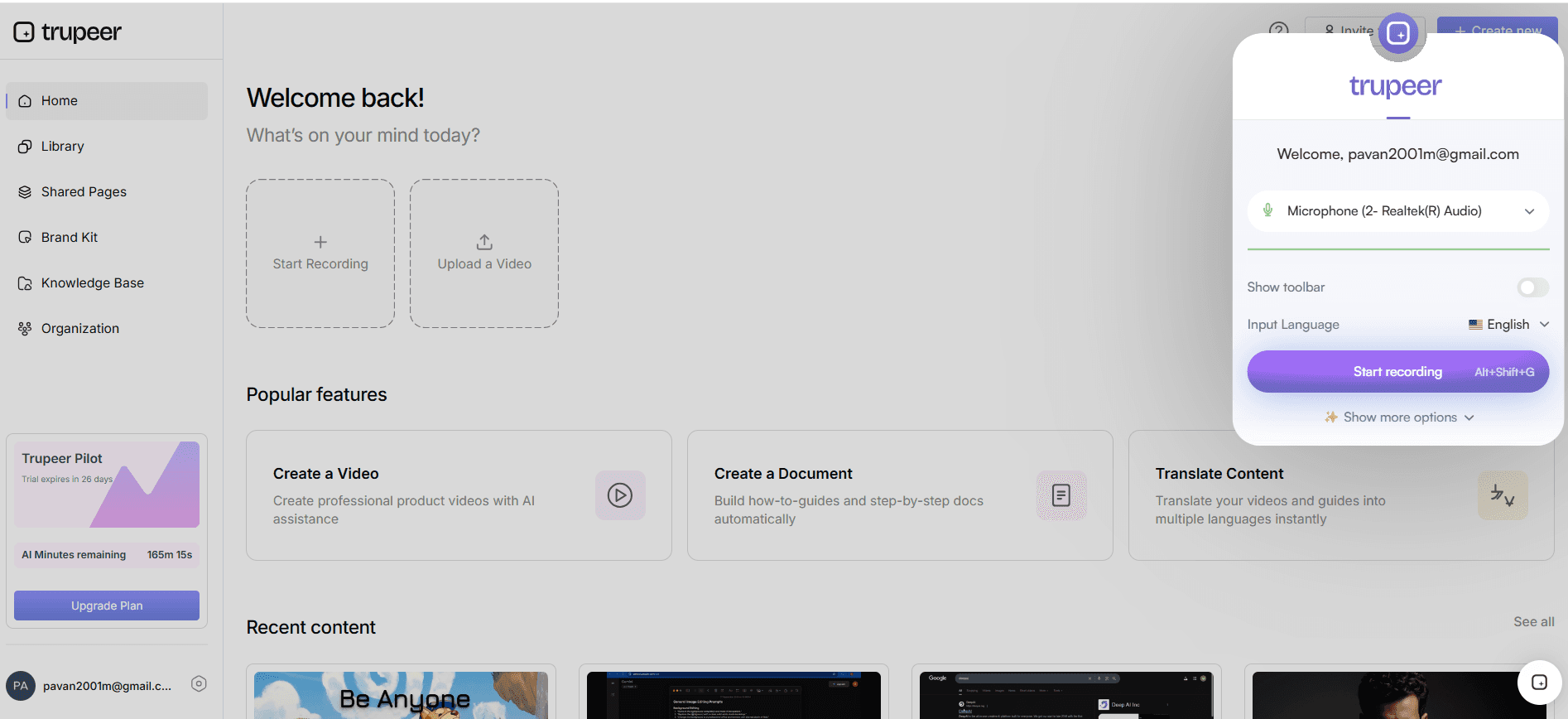
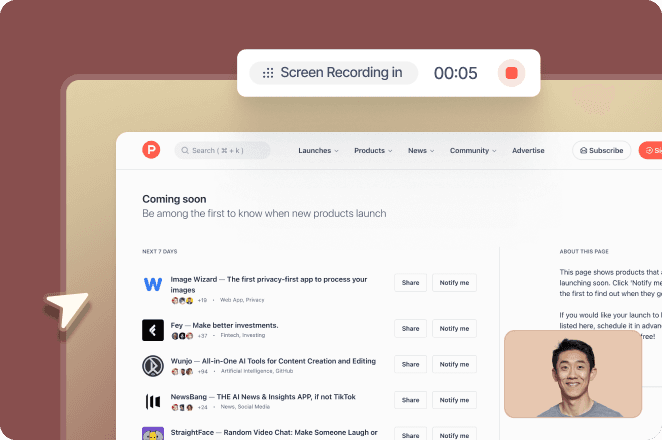
Begin your tribal knowledge audit by using Trupeer's AI screen recording with auto-zoom and click detection. This feature allows you to smoothly capture the detailed workflows of your team members. To start, open the Trupeer browser-based recorder or desktop app. Click 'Record' and the tool will automatically zoom into areas of interest and highlight mouse clicks, ensuring that critical actions are captured without manual intervention. This recording ensures that no detail is overlooked, providing a comprehensive visual and contextual documentation of the task.

Step 2: Employ silent screen recording with AI narration
After capturing the visuals, enhance your recordings with Trupeer's silent screen recording with automatic AI narration. This feature adds context to the workflows by providing a narrative overlay that explains each captured action. To use this, simply select 'AI Narration' after recording. Trupeer will generate a voiceover that describes the actions in the video. This is especially useful for complex processes that require additional clarification, making the recorded content more informative and accessible for team members.

Step 3: Generate automatic SOPs
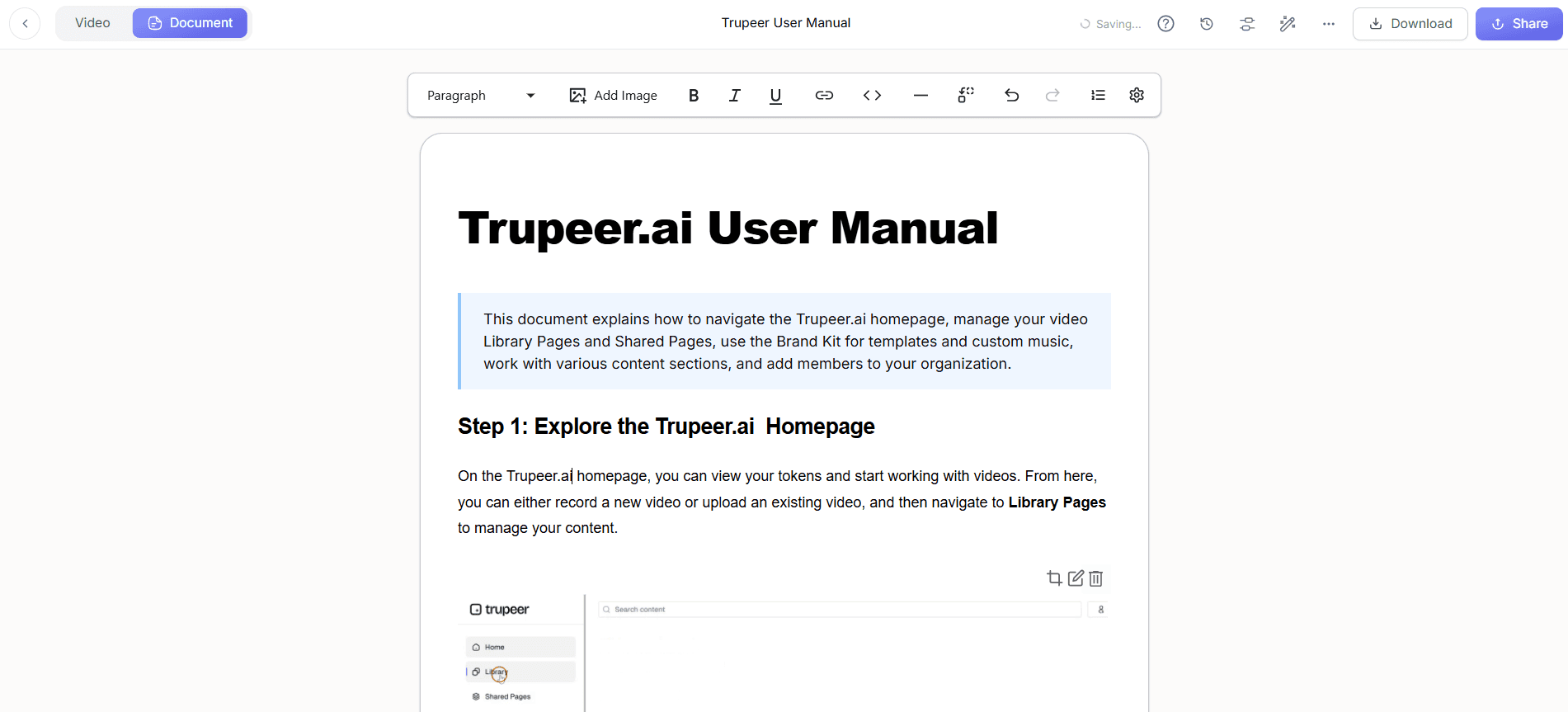
With recordings in hand, use Trupeer’s automatic SOP generation from any recording. Navigate to the 'SOP Generator' and select the desired recording. Trupeer will analyze the video and produce an edit-ready SOP document. This document is exportable in multiple formats such as HTML and PDF, allowing for widespread distribution and easy access. The SOP generator captures step-by-step instructions directly from the video, ensuring accuracy and consistency in documentation.

Step 4: use AI voiceover and translation
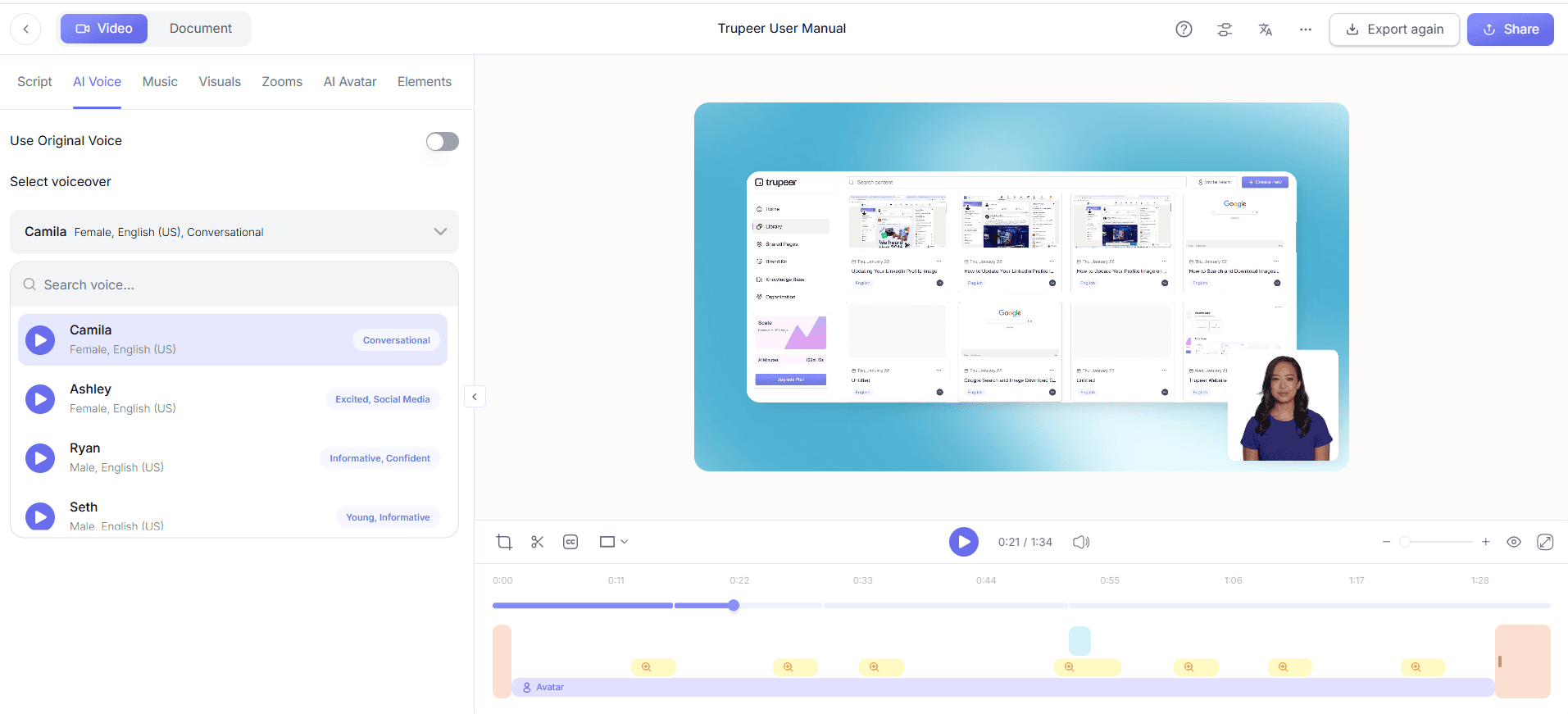
To cater to diverse teams, deploy Trupeer's AI voiceover in 65+ natural voices and AI translation into 40+ languages. Post-SOP generation, select 'Voiceover' and choose from the available languages and voices to create a multilingual version of your SOP. The AI translation feature syncs lip movements, making it ideal for global teams needing localized training materials. This step broadens the reach of your documentation, ensuring that language barriers do not impede knowledge dissemination.

Step 5: Organize in AI-searchable knowledge base
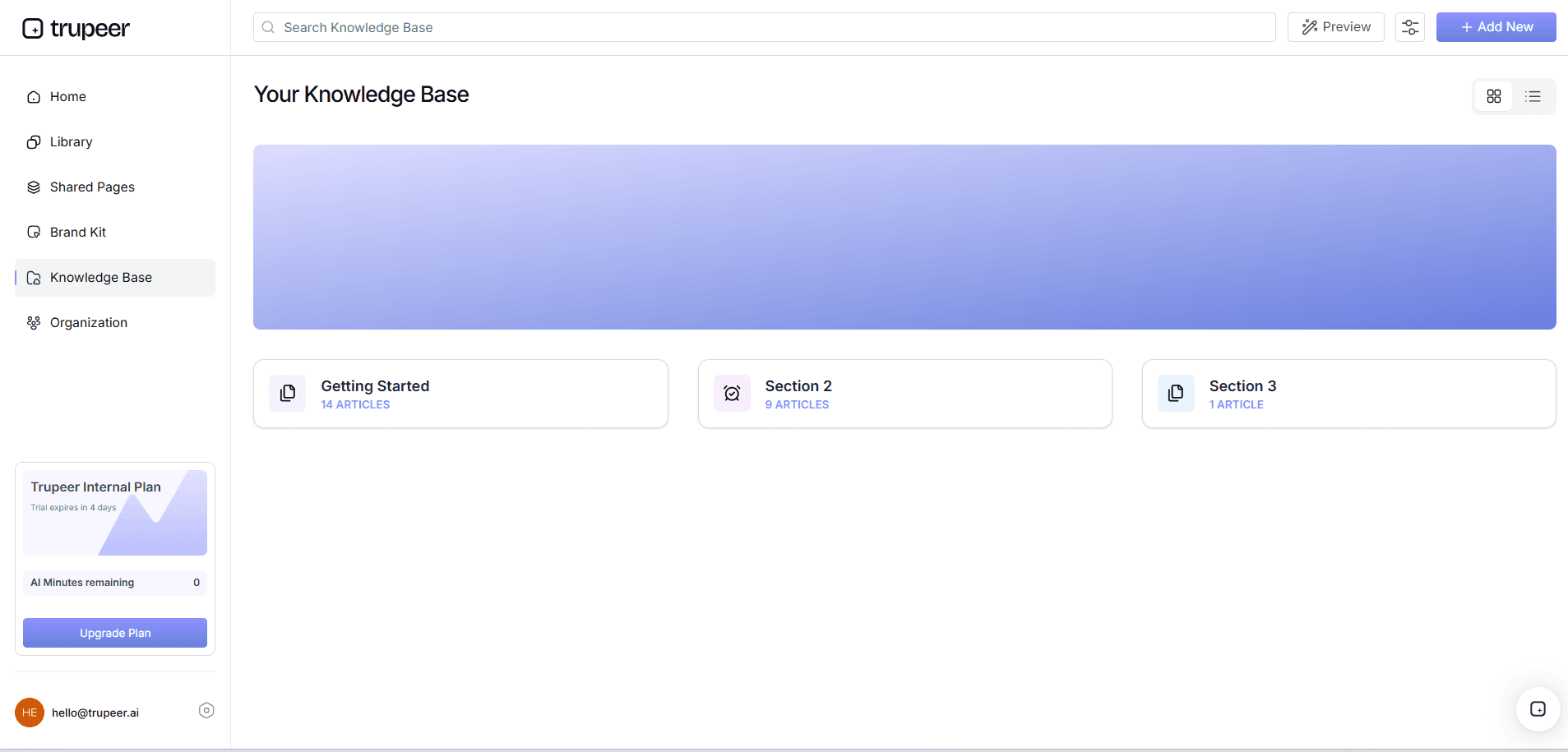
Once your SOPs are generated, organize them within Trupeer’s AI-searchable knowledge base. Go to 'Knowledge Base' and upload your documents. Trupeer indexes each document with timestamp deep-links, allowing users to search and find specific sections efficiently. This structure supports a centralized repository of knowledge where team members can quickly locate information, reducing the time spent on searching and increasing productivity. Teams weighing tools often start with a Loom alternatives comparison before standardizing on a workflow.

Step 6: Review with collaborative workflows
Finally, ensure that the captured knowledge is accurate and comprehensive by using Trupeer’s collaborative review and approval workflows. Invite stakeholders to review the documentation by clicking 'Share' and selecting 'Collaborate'. Multiple team members can comment and suggest edits, which helps refine the documentation. This collaborative process ensures that the final output is vetted by experts, resulting in reliable and trustworthy knowledge resources.

What tips help you conduct a tribal knowledge audit?
Conducting a tribal knowledge audit requires strategic planning and execution. Here are some practical tips to maximize the effectiveness of your audit process.
Prioritize critical knowledge areas. Focus first on capturing knowledge from departments or roles where turnover is high or expertise is specialized. This ensures that the most valuable information is documented and preserved.
Use comprehensive tools. Opt for platforms like Trupeer that offer a range of features such as AI narration and translation. This approach ensures that all aspects of knowledge capture are covered efficiently.
Engage subject matter experts. Involve key personnel in the audit process to provide insights and validate the accuracy of the documentation. Their input is crucial for capturing subtle details.
Review and update regularly. Tribal knowledge is dynamic; therefore, ensure that your documentation is periodically reviewed and updated to reflect any changes in processes or technology.
use a Scribe alternative comparison. Evaluate different tools to find the best fit for your organization’s needs, ensuring that the chosen solution aligns with your documentation goals.
Standardize documentation formats. Consistency aids comprehension. Use templates and brand kits within Trupeer to ensure that all documentation follows a uniform style and structure.
Capitalize on free knowledge management software. Test free versions to understand the features and limitations before committing to a full subscription.
Frequently asked questions
How can Trupeer help reduce knowledge loss in my organization?
Trupeer assists in reducing knowledge loss by capturing and documenting implicit knowledge through AI screen recording, SOP generation, and a searchable knowledge base. These features ensure that critical information is not lost when employees leave, providing a repository that remains accessible to the organization. By systematically documenting workflows and procedures, Trupeer preserves the knowledge capital of your business, facilitating continuity and reducing the risks associated with staff turnover.
What makes Trupeer's AI narration feature unique?
Trupeer's AI narration feature stands out due to its ability to automatically provide context to silent screen recordings. It generates a narrative overlay that explains actions in the video, making it easier for viewers to understand complex processes. The narration is customizable with adjustable pace and tone, ensuring that it matches the intended audience's preference. This feature is particularly beneficial for creating engaging and informative training materials that require minimal manual intervention.
Can Trupeer support multilingual documentation?
Yes, Trupeer supports multilingual documentation through its AI translation and dubbing features. These tools enable the conversion of documents and videos into over 40 languages, complete with lip-sync for dubbed content. This allows organizations to reach a broader audience and ensures that language barriers do not hinder knowledge sharing. For teams operating globally, this feature is indispensable for maintaining consistent communication and training.
Does Trupeer provide analytics for documentation usage?
Trupeer offers comprehensive analytics that track viewer engagement, drop-off points, and heatmaps. These insights help you understand how your documentation is being used and identify areas for improvement. By analyzing these metrics, you can optimize your training and knowledge-sharing strategies to better meet the needs of your audience. This data-driven approach ensures that your documentation remains relevant and effective over time.
Is it possible to integrate Trupeer with other tools for knowledge management?
Yes, Trupeer can be integrated with other tools to enhance knowledge management capabilities. Its features such as AI-searchable knowledge base and multi-format export options allow smooth integration with existing systems. also, Trupeer's compatibility with AI agents like Claude enables sophisticated querying of video libraries, simplifying information retrieval. This integration capability ensures that Trupeer complements your existing tech stack, enhancing overall organizational efficiency. Teams ship this workflow end-to-end using Trupeer's AI video platform, which turns raw recordings into polished output without an editor.