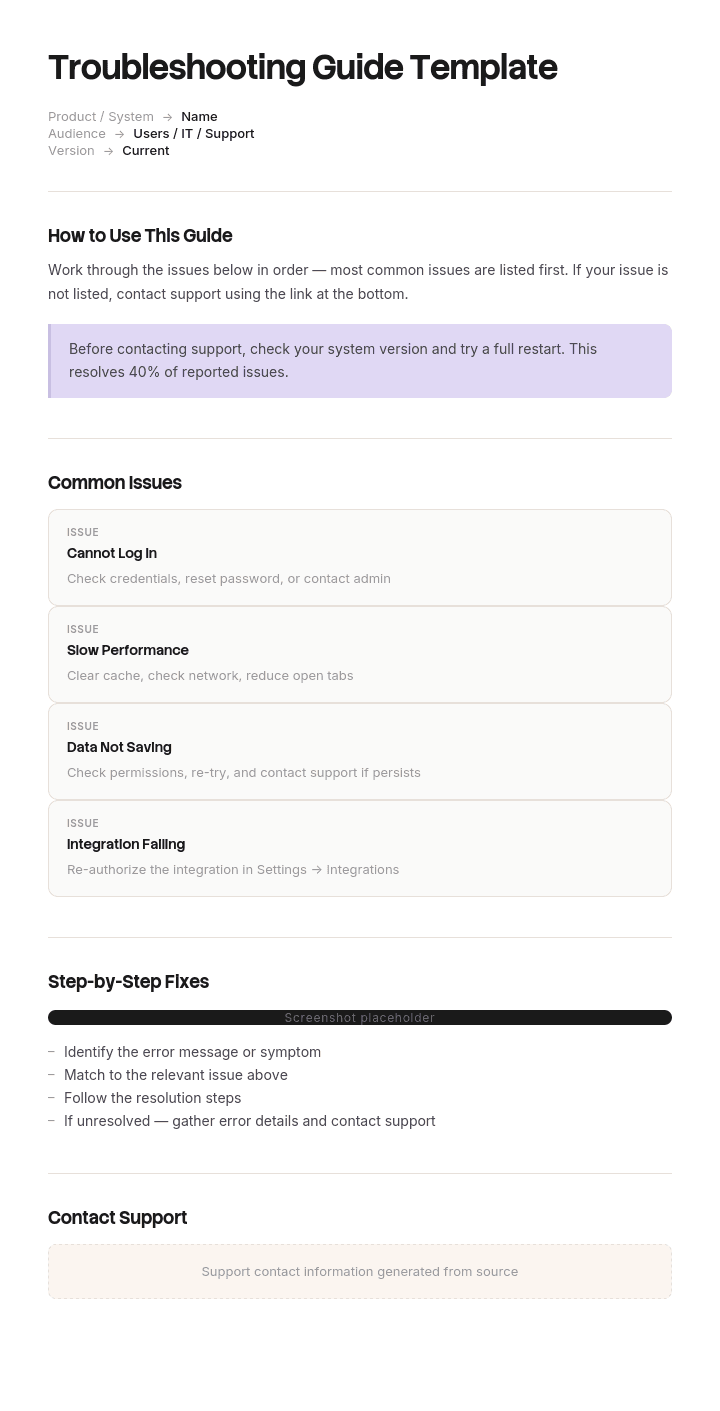
使用此模板
一份清晰的故障排除指南可以节省数小时的支持时间,并减少客户的挫败感。使用 Trupeer,您可以从免费模板开始,结合您的 品牌规范 进行自定义,并将故障排除流程转换为用户可实时跟随的在线视频演练,从而节省编写故障排除指南的时间。
什么是免费故障排除指南模板?
免费故障排除指南模板是一种可重复使用的结构,用于帮助他人诊断并解决问题:包括症状、可能原因、用于区分它们的检查,以及对应的解决方案。
它是文档家族中唯一一类“任务是收窄范围”的文档。流程(procedure)告诉你如何做某件事。参考(reference)告诉你某件事是什么。故障排除指南从一个不希望出现的情况开始,并需要从那里找到原因——这是一项不同的任务,因此也需要不同的结构。
几乎所有已发布的模板都忽略了这一点,因为它们都被构建为“问题列表 + 旁边的解决方案”,而列表要求读者事先就知道自己遇到的是哪个问题。
格式取决于用途。免费故障排除指南模板的 Word 文件适合指南本身。免费故障排除指南模板的 Excel 版本适合其背后的症状与原因矩阵。免费故障排除指南模板的 PDF(或任何故障排除指南 PDF)适合用户携带或打印的版本——这在设备故障发生时尤为重要,因为用户往往会在别处阅读或打印它。
故障排除指南是“倒着写”的
这里存在一个结构性错误。一旦你看到了,你会在每一份你打开的指南里都看到它。
故障排除指南由知道答案的人编写。工程师已经诊断过同样的故障两百次了,所以他们知道是空气滤清器。因此他们会这样写:如果空气滤清器堵塞,烤箱将无法达到设定温度,且风扇声音会比平时更大。
这句话完全准确。它是从原因推到症状。
读者已经有的是症状。他的烤箱无法达到设定温度,但他不知道空气滤清器与此有什么关系。要找到这条内容,他必须先怀疑指南将要告诉他的那件事。
同样的故障在组织方式上也会以“模块/子系统”形式出现。指南会按子系统、部件或模块来组织,因为维护这些设备的人就是这样思考的。水系统、加热、控制板、门机构。要使用这种组织方式的指南,你必须先决定自己属于哪个子系统——而这正是诊断中最关键的部分,也是读者无法自行完成的部分。
因此,指南会按“原因”建立索引,并由“症状”进入;而这两者之间的空白,正是读者放弃并去联系他人的地方。
统计只需要两分钟。阅读你的标题,并把每一个标记为“原因”或“症状”。在大多数指南中,“原因”会占据明显优势。
如何在 Trupeer 中自定义此模板
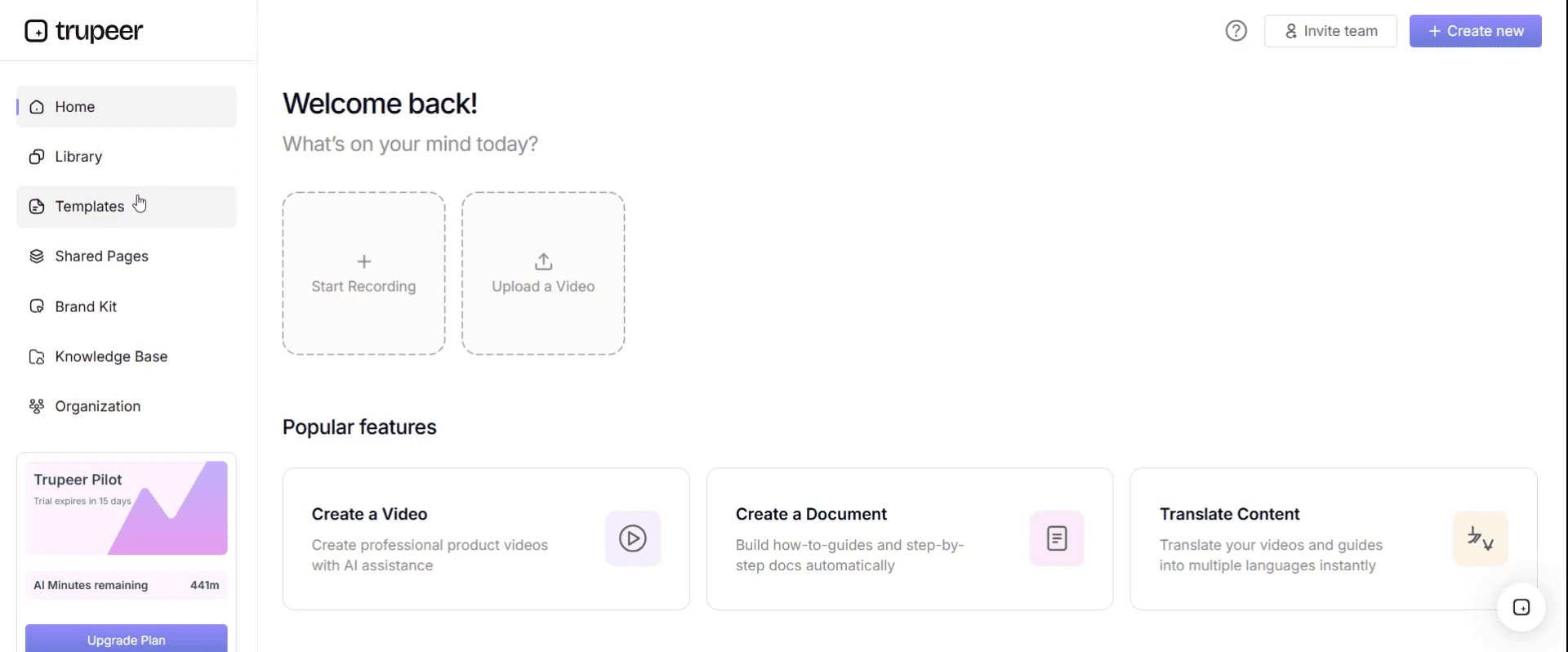
步骤 1:打开模板(Templates)部分
从主导航进入“模板(Templates)”部分。
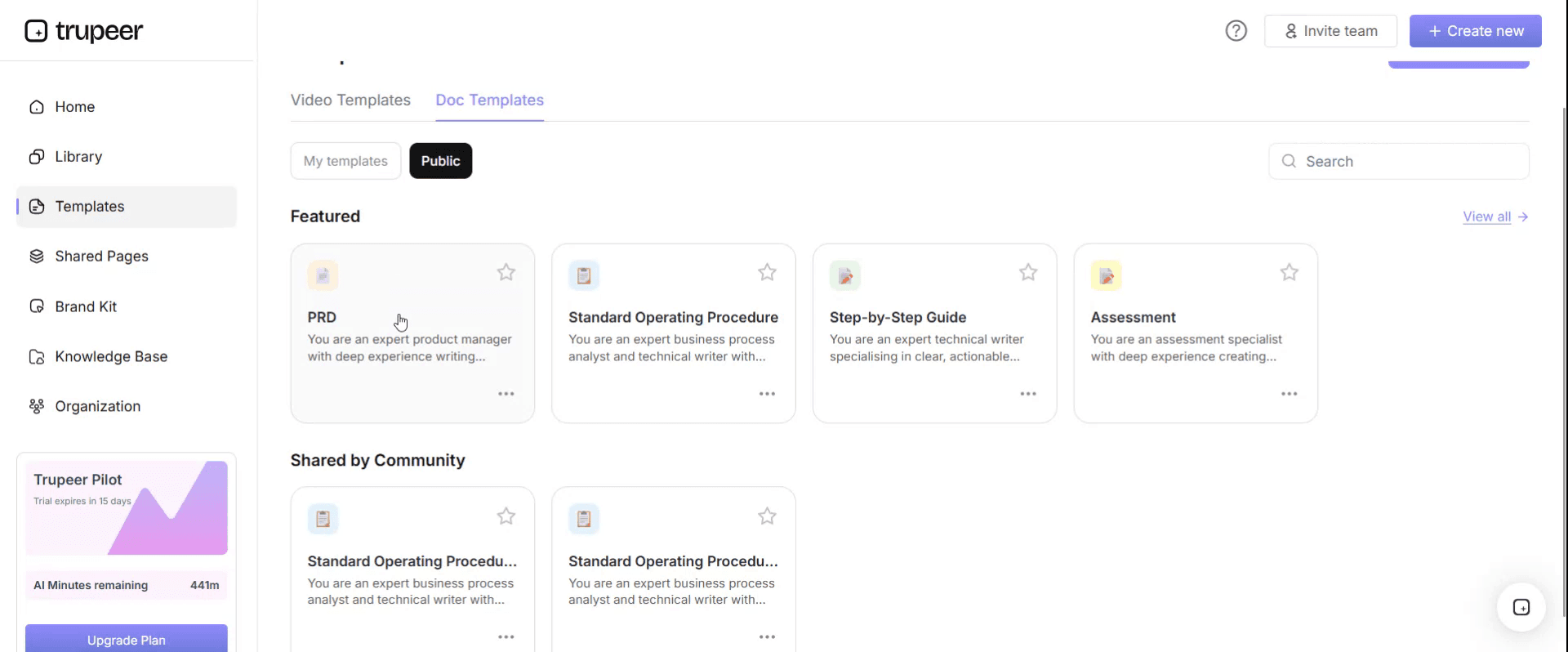
步骤 2:选择并打开一个模板
点击任意你想要编辑的模板以将其打开。
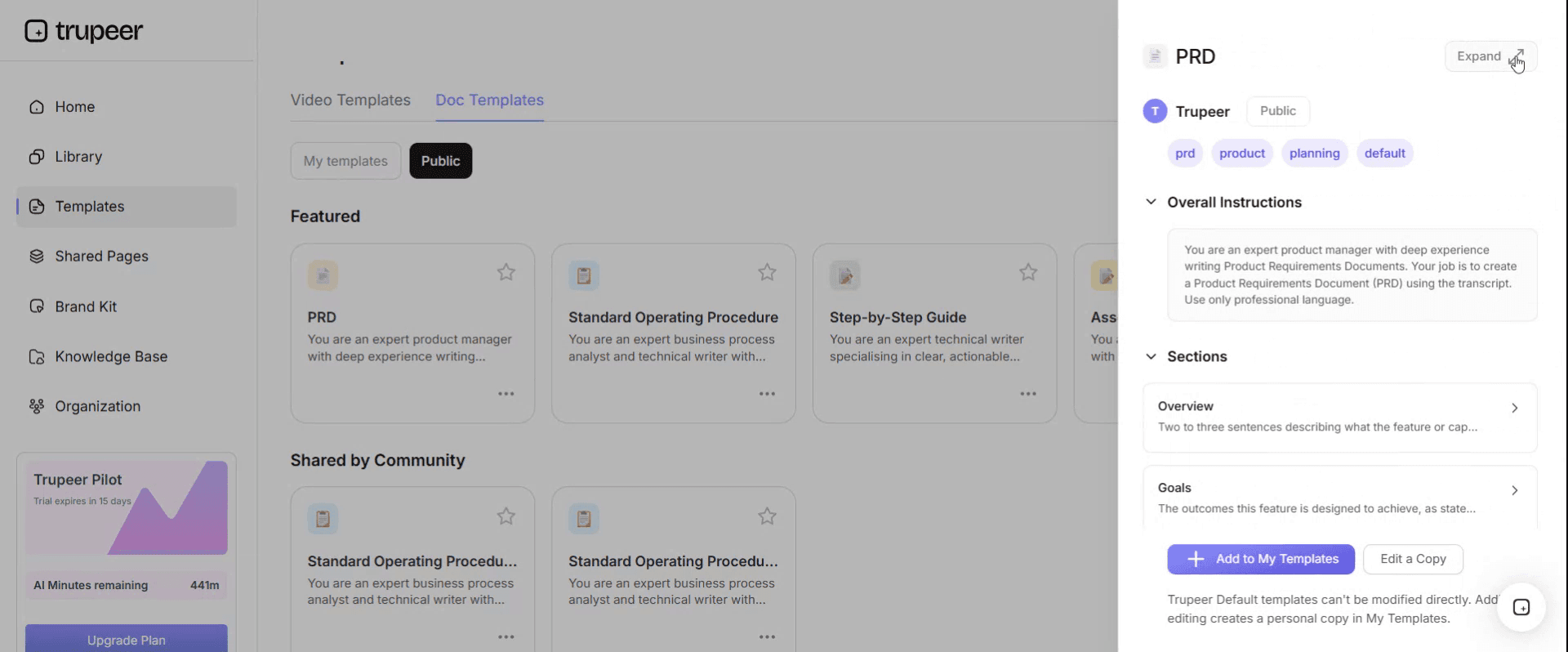
步骤 3:展开模板视图
如有需要,可展开模板视图以清晰查看完整布局与细节。
步骤 4:编辑模板
点击“编辑(Edit)”开始修改所选模板。
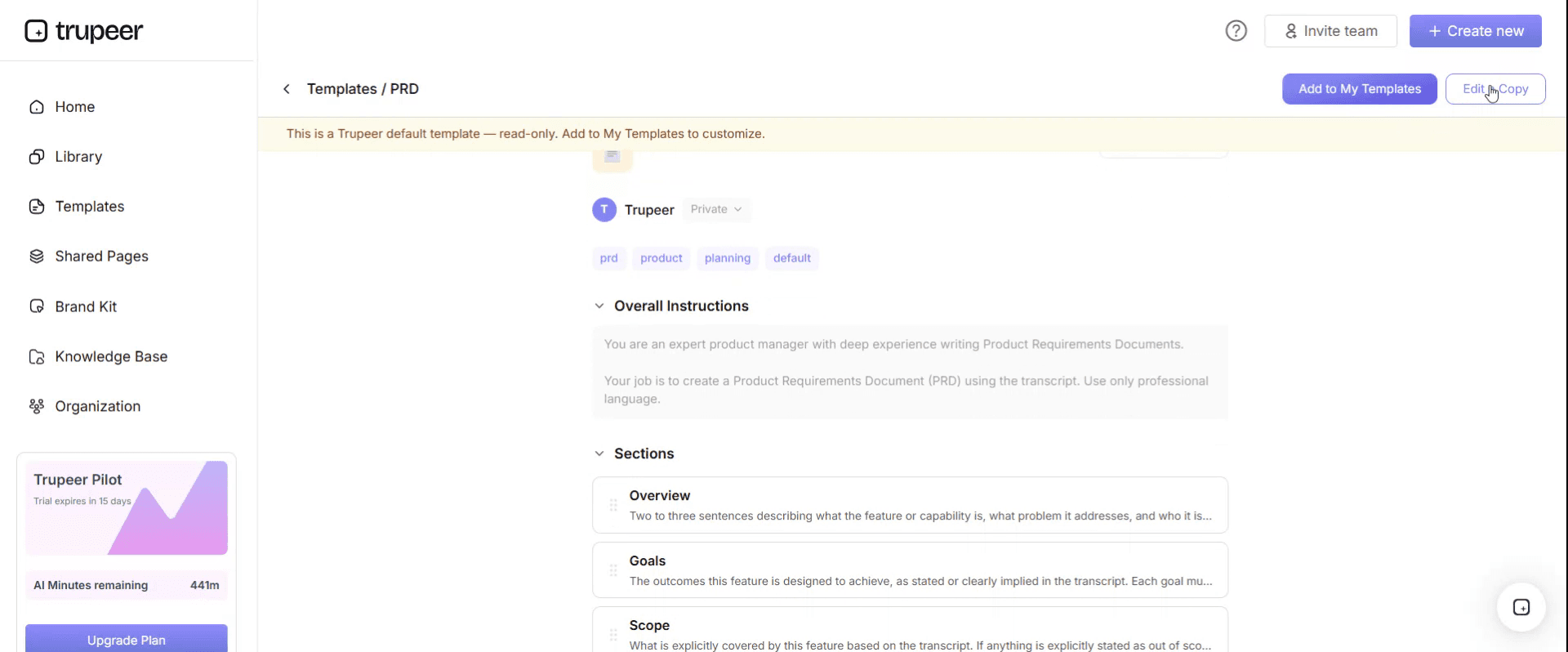
在编辑器中,你可以:
添加新的章节
定义或更新格式规则
添加徽标,并调整其位置及相关设置
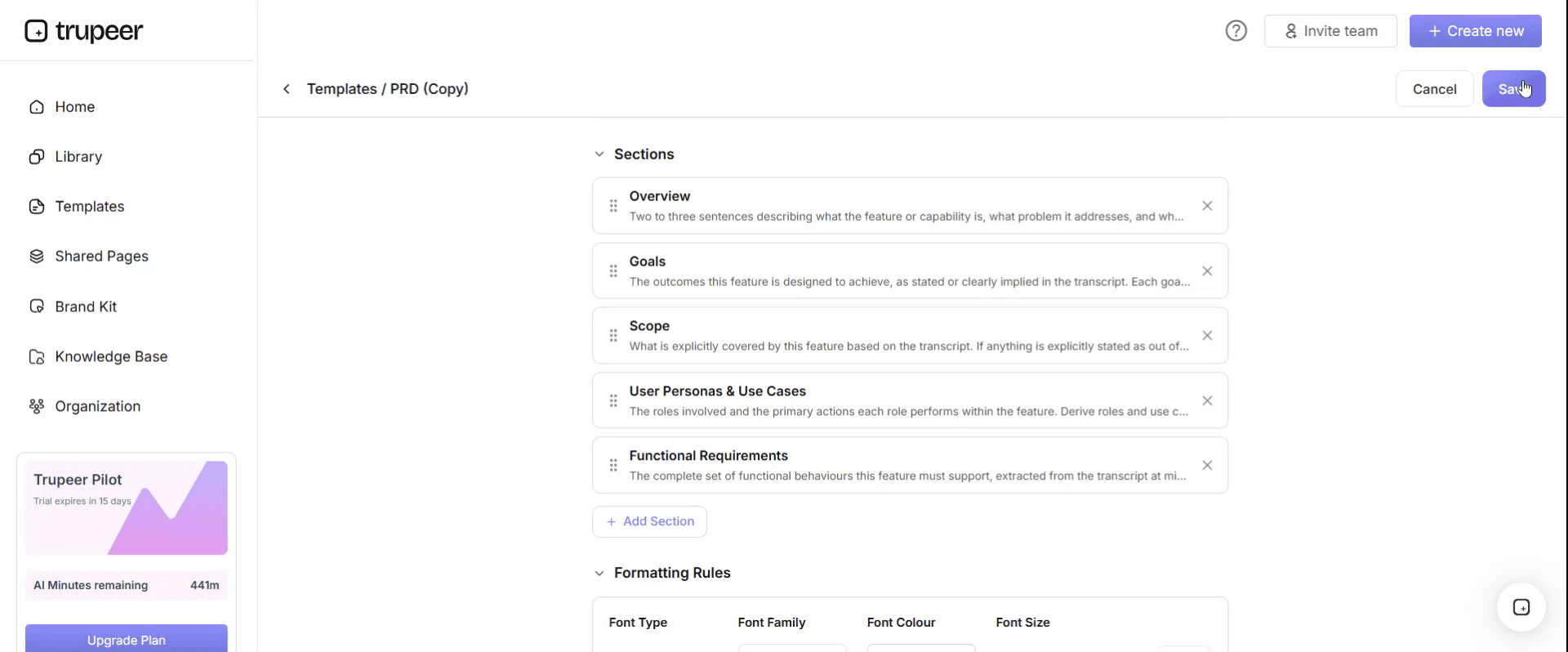
步骤 5:保存你的自定义模板
完成所有必要更改后,点击“保存(Save)”将更新后的模板存为你自己的版本。
步骤 6:预览并微调模板
当你想查看自定义模板的效果时,打开“预览(Preview)”。
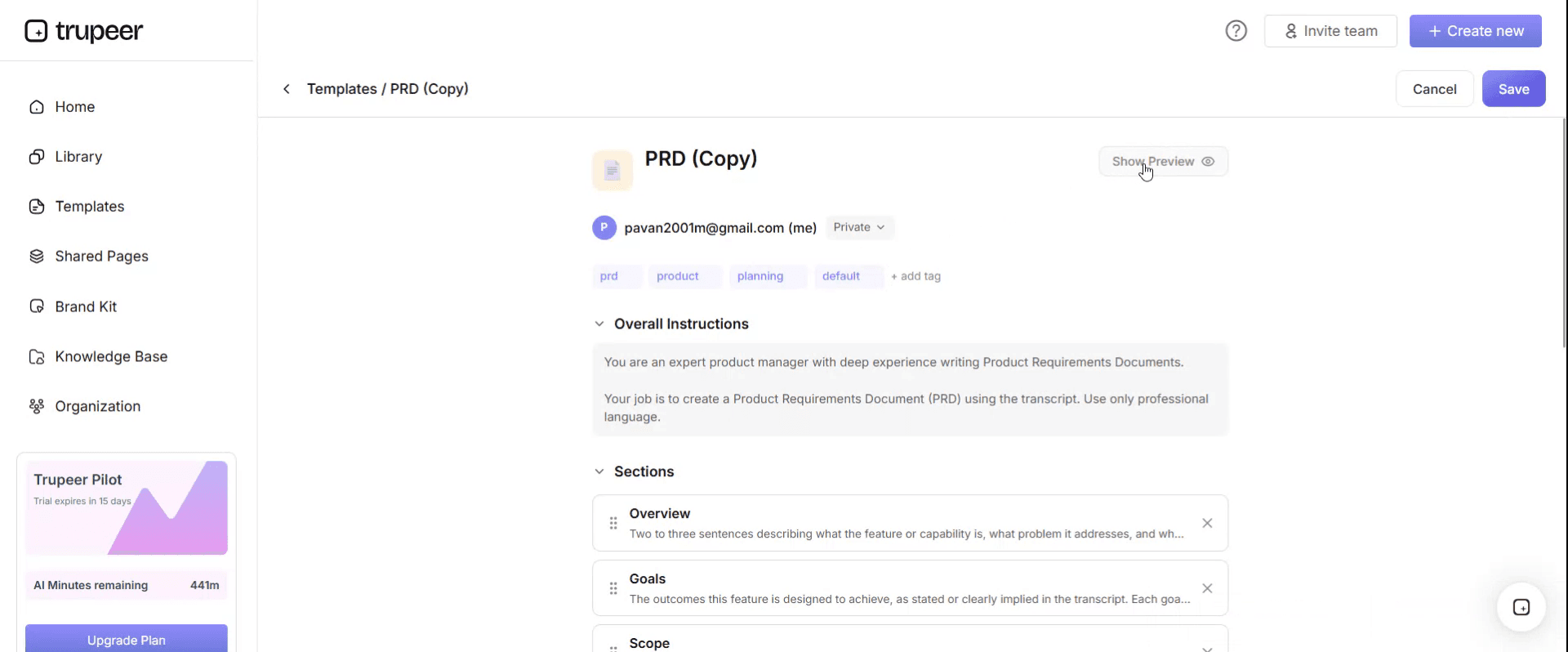
在预览界面中,如有需要,你还可以继续直接进行调整,确保模板呈现得完全符合你的预期。
使用故障排除指南模板,你可以:
节省编写时间:跳过空白页面,使用为故障排除内容构建的结构。
减少支持工单:清晰的故障排除帮助用户自助解决。
保持品牌一致:使用 Trupeer 的品牌套件应用你的徽标、字体和颜色。
更快解决问题:内置诊断流程帮助支持人员和用户快速推进。
标准化支持:为每一份故障排除指南使用同一模板。
触达全球用户:一键将故障排除指南翻译为 65+ 种语言。
按症状建立索引,按排除顺序排列
两条规则——也是整个方法。
每个入口点都是症状(用拥有该症状的人的话来描述)。不是“气流不足”,而是“烤箱无法升温到足够高”。不是“身份验证失败”,而是“它显示我的密码不正确”。措辞与结构同样重要,因为读者在搜索或浏览时,会把内容与自己对所见情况的描述进行匹配。
当某个症状有多种常见说法时,把它们全部列出来。客户会说食物出来是湿的,工程师会说蒸汽发生器过度产汽,而两者都应该指向同一个入口。
在每个症状内部,按“排除的程度”对检查进行排序。这也是指南与大多数列表形式差异最明显的地方。
如果在某个症状下列出“可能原因”却有九个,那对读者帮助不大。读者需要的是一个顺序,而正确的第一步检查是:用最少的努力排除最多的可能性。一次两分钟的检查能解决三分之一的情况,就应该放在第一步——无论它属于哪个子系统。一次耗时四十分钟、用于确认某个罕见问题的拆检,就应该放在最后——尽管从逻辑上它可能紧随其后。
排序规则等于“频率 × 易操作性”。这是否是最常见的原因?要确认或排除它需要多么低的成本?按这个乘积从高到低排序,指南就会开始做专家在脑中完成的工作。
接下来会有两点结果。来自不同子系统的检查会被放在相邻位置——这会让维护设备的人不太舒服,但会帮助修理的人更快找到路径。并且每个检查都需要说明它排除了什么,而不仅仅是它意味着什么,因为这才告诉读者下一步该去哪里。
如何排序检查
每个检查都要记录三件事。
要做什么,以及你会看到什么。与任何流程一样,关注可观察到的结果,而不是印象。
每个结果会排除什么。如果滤清器是干净的,就能完全排除气流受限,因此跳过第 4 和第 5 步。如果滤清器堵塞,就先清洁并重新测试,再继续往下。明确“排除项”才会让指南成为诊断工具,而不是一份清单。
根据每个结果,下一步去哪里。要明确写出。处于诊断过程中的读者手里已经有了结果,需要下一条指令,而不是一段需要他自行解读的文字。
第三个要素正是流程图天然提供的,而表格则必须仔细编写才能提供。它也是最常见的遗漏:那些列出检查项却让读者自行判断“阴性结果意味着什么”的指南。
还有一条值得采用的额外规则:如果某个检查需要拆解某些部件,那么在它之前设置停止点。超过该点之后的任何操作都会消耗真实的时间,读者也应该知道他们正在从“便宜的检查”进入“昂贵的检查”。
故障排除指南模板必须包含什么
九个组成部分。第二个和第五个是大多数模板最常省略的。
组件 | 它做什么 |
|---|---|
症状索引 | 用读者的话描述每个症状,并附上同义词,作为入口。 |
按排除顺序排列的检查 | 按“频率 × 易操作性”排序,而不是按子系统。 |
每个检查的预期结果 | 读者会看到什么——写清楚,以便它可以失败。 |
每个结果会排除什么 | 诊断内容,以及为什么它是指南而不是清单。 |
根据每个结果,下一步去哪里 | 明确的路径指引:无论结果为正还是为负。 |
停止点 | 在任何昂贵、不可逆或需要不同能力的操作之前。 |
升级(Escalation) | 何时停止诊断、联系谁,以及需要提前准备哪些信息。 |
安全警告 | 紧挨着它所涉及的步骤立即出现,而不是集中放在前面。 |
版本与最后验证时间 | 包括该指南适用的设备或软件版本。 |
升级(Escalation)这一行很值得占用空间。没有停止点的指南会鼓励某人继续超出其能力范围;而“需要提前准备的信息”这一条款,会把求助电话变成有用的交接,而不是对困惑的描述。
当设备涉及电气、压力、高度或其他受监管的危险时,指南应与风险评估并行,并由具备资质的人进行审阅。本页面中的任何内容都不能替代该流程。
免费故障排除指南模板:可复制的结构
用真实示例填充,而不是占位符。设备是一台商用组合式烤箱。
从这里复制。
症状索引。用读者的话描述,并附上同义词。
烤箱无法升温到足够高。也有人这样描述:烹饪时间太长、食物未熟透、温度指示灯一直亮着。
食物出来是湿的。也有人这样描述:蒸汽太多、食物发软、蒸汽无法关闭。
烤箱无法开机。机身下方有漏水。门无法密封。显示屏上有错误代码,请查看代码索引。
症状:烤箱无法升温到足够高。按“频率 × 易操作性”排序的检查。
# | 检查 | 你应该看到 | 如果是 | 如果否 |
|---|---|---|---|---|
1 | 拆下并检查空气滤清器,2 分钟 | 滤清器肉眼可见清洁,光线可透过 | 滤清器没问题。已排除气流受限,进入 2。 | 清洁或更换,进行 15 分钟加热循环并重新测试。可解决约三分之一的此类来电。 |
2 | 用纸条在四个点检查门密封,3 分钟 | 纸条在四个点都能夹住 | 密封良好,进入 3。 | 更换密封条。继续之前先重新测试。 |
3 | 读取显示屏风扇转速,并与铭牌额定值对照,2 分钟 | 在额定值的 10% 以内 | 风扇没问题,进入 4。已排除电机和叶轮故障。 | 风扇或叶轮故障,请查看第 7 部分。 |
4 | 在端子排处检查加热元件电阻,8 分钟。先隔离。 | 铭牌上的三项都在允许公差范围内 | 元件正常,进入 5。 | 更换失效元件。 |
5 | 停止点。超过此处需要拆下后面板,并约 40 分钟。继续之前先与客户确认。 | |||
6 | 控制板温度传感器校准,40 分钟 | 读数与已校准探头相差在 3 度以内 | 传感器正常,升级至技术支持 | 重新校准或更换传感器 |
警告:第 4 步之前。在本地隔离器处进行隔离,并在打开端子排之前上锁。如果尚未验证已完成隔离,此步骤涉及带电电气部件。
升级(Escalation)。第 6 步之后升级至技术支持。准备好:序列号、显示屏上的错误历史、1 至 6 步的结果,以及现场的水质硬度读数。
版本。版本 9。适用于 2019 年及之后的机型,固件 4 或更高版本。更早的机型:请查看旧版指南。最后一次在 3 月对真实设备进行了验证。
从这里复制。
注意:第 1 步是滤清器,第 3 步是风扇,而它们在制造商自己的文档中属于不同的子系统。这是刻意安排的,也是本练习的重点。
故障排除指南示例:首次修复率 61%
Marchbank Catering Equipment 服务约 4200 个商用厨房现场,拥有 38 名驻场工程师。
他们的组合式烤箱故障排除指南共 62 页,技术质量非常出色。它由两位资深工程师编写,并且按子系统进行有条理的组织:水系统、加热、控制板、门机构、蒸汽发生器。
首次修复率为 61%。在开始任何实际维修之前,平均驻场时间为 47 分钟。
这两个数字多年来一直稳定,并被认为反映了设备故障的难度。
随后,一位工程经理跟随 6 位工程师一周,观察指南实际是如何被使用的。
工程师到达现场时会先带着症状,因为这是客户报告的内容。烤箱无法升温到足够高。食物出来是湿的。似乎有东西在漏。要使用按子系统组织的指南,你必须先决定自己属于哪个子系统,而这个决定就是诊断中最关键的部分。
经验丰富的工程师会完全跳过指南,凭记忆工作,因此首次修复率是 61%,而不是更低。较新的工程师会按指南呈现的顺序逐个子系统排查,这意味着在遇到“加热问题”的投诉时,他们会先检查水系统。
第二个发现更尖锐。导致烤箱无法达到温度的最常见原因是空气滤清器堵塞,占了约三分之一的来电,而这项检查只需要两分钟。它出现在第 41 页的气流部分,而该部分位于水系统和加热之后。
因此,在整份文件中,最有价值的检查——差距非常大——被任何遵循该结构的人排到了第 4 或第 5 步。
改写并没有加入任何新的技术内容。用客户语言补充了 14 个入口症状,并附上同义词。在每个症状内部,检查按“频率 × 易操作性”排序。为每个检查的两种结果提供明确的路径指引,并在任何需要超过 10 分钟的操作之前设置停止点。
首次修复率从 61% 提升到 79%。在开始维修之前的平均诊断时间从 47 分钟降到 18 分钟。
最重要的节省来自复访。每次复访的成本约为 140 英镑,再加上在本就紧张的排程中占用一个时段带来的损失;而在第一季度,改写带来的减少就已经把成本回收了数倍。
这 62 页里包含了每个问题的正确答案。它是为编写它的人组织的。
如何用六个步骤创建故障排除指南
要创建故障排除指南内容,请从工单队列或通话记录开始,用这些内容最初被报告时的原话来写。不要从设备手册开始——手册是按部件组织的。
统计每个症状出现的频率。频率决定哪些症状需要更详细的处理,而大多数指南会把空间平均分配给所有内容。
针对每个症状,列出可能原因,这是专家觉得容易的部分。
按“频率 × 易操作性”对检查排序。这是产生重新排序的步骤。与其凭感觉做,不如用数据来做,因为专家会系统性地低估“看起来很无聊的原因”出现的频率。
写清每个结果会排除什么,以及下一步去哪里。两种结果都要写。只有正向路径的检查会让读者卡在原地,无法继续。
用缺乏经验的人在真实故障上测试。他们犹豫的每一个点都是缺陷,而修复应该写在文档里,而不是写在解释里。
第 4 步体现价值,第 1 步让这一切成为可能。两者都依赖你们组织已经拥有的数据,但很少用于这个目的。
流程图还是表格?
两者都可以,并且适用于不同的场景。
一个 流程图 能自然表达诊断逻辑,因为分支正是流程图的用途。当诊断确实是一个具有多个层级的决策树时,流程图是更好的格式;而当人们想到故障排除时,大多数人脑中浮现的也是这种格式。
代价在于维护。流程图比表格更难编辑,因此流程图更容易过时,而过时的流程图比过时的段落更难修正。它们的扩展性也较差:如果一个图表覆盖 14 个症状,每个症状又有 6 个检查,那么在任何实际查看的尺寸下都会难以阅读。
每个 症状一张表,并为每个检查设置列:检查项、预期结果,以及每种结果对应的下一步去向——能承载同样的信息,而且更容易维护。这就是上面示例中的格式;对大多数指南而言,它也是更好的默认选择。
对于任何规模的指南,最实用的答案是:每个症状一张表;只有在分支确实足够复杂、需要流程图的那 2 到 3 个症状上,才使用流程图。
故障排除指南、运行手册(runbook)还是 FAQ?
三类文档有重叠,但进入方式不同。
故障排除指南(troubleshooting guide)从症状开始,并逐步收窄到原因。它的结构是诊断性的,读者并不知道哪里出了问题。
运行手册(runbook)是一串用于已知任务或已知故障的执行步骤。读者知道自己在做什么,需要按顺序获得步骤;运行手册模板(runbook template) 也涵盖了如何处理过程中途的交接。
FAQ回答的是某人提出的一个问题,这个问题可能与故障有关,也可能无关。它的单位是“问题”,而不是“症状”,因此不会收窄范围。
快速参考指南(quick reference guide)适用于已经知道要做什么的人,只需要提醒某个具体细节;而 快速参考指南 页面则讲解如何让它更容易被找到。
最常见的混淆发生在前两者之间。假设你已经知道原因的指南,如果标题用错了,它就会变成一个运行手册(runbook)但标题不对;对不知道原因的人来说,它将毫无用处。
免费故障排除指南模板无法解决什么
没人统计过的症状。任何免费的故障排除指南模板都不会包含你的通话数据,而且排序完全取决于这些数据。
从未被记录下来的专家直觉。你最优秀工程师的第一步检查,是你拥有的最有价值内容;但他们不会想到把它写下来,因为在他们看来这显而易见。
从下载内容继承来的结构。最好的免费故障排除指南模板是你能按症状建立索引的那一个;而大多数模板如果不重写,就无法做到。
从手册写出来的指南。设备手册是按部件组织的,因为设备就是这样被构建的。复用这种结构就必然会得到“按原因索引的故障问题”。
在读者层级无法修复的故障。有些诊断会以升级结束,而指南应该尽早说明,而不是让某人花一小时才得出这个结论。
先捕捉专家最先检查什么
上面整个方法都依赖于知道哪一步检查能排除最多可能性,而这项知识掌握在两到三个人手里,他们并不容易把它写下来。
问一位经验丰富的工程师:他们如何诊断一台无法升温到足够高的烤箱?你会得到一份可能原因清单,因为问题听起来就是在问这个。看着他们做,你会发现不同的东西:他们在把工具包放下之前就先检查滤清器——因为两百次的来电教会了他们从哪里开始。这种排序就是内容,而在他们自己的描述里是看不见的。
Trupeer AI 会直接捕捉这一点。执行诊断的人在录制的同时进行记录,输出会是一份逐步的书面演练,并配有已捕捉并放置好的图片;同时,这些内容会与视频一起以你的品牌呈现。录制中的顺序就是要写下来的顺序,因为那是他们实际做过的,而不是他们会说“他们会怎么做”。
记录下来。做成品牌内容。翻译它。用 Trupeer 来呈现。
接下来有三点。对同一故障录制两到三位工程师,你会看到他们的差异,而最快的那个人的顺序通常就是最适合标准化的。视频用于帮助准备接听电话的较新工程师;书面指南用于让他们在现场直接使用——都来自同一份录制。并且当服务网络覆盖多种语言时,同一份录制会在每种语言中生成相同的指南,因此诊断顺序不会因国家而变化。
这些材料放在你的 知识库 中,同时也可作为面向新工程师的 培训(指南就是为这群人而存在)。分步骤的维修流程应放在下方的 工作指引 中。让你的文档保持一致,只需要先设置一次 品牌套件,而文档模板的设置也在 文档模板设置指南 中有说明。
常见问题
是否有免费的故障排除指南模板 Word 版本?
Word 适合指南,因为它将症状索引与表格结合在一起,并且随着故障与修复方案的变化需要不断更新。免费的故障排除指南模板 Word 文件是正确的可编辑工作格式。
为每个症状建立一张表,而不是为所有内容建一张表;并设置表格不要跨页拆分。诊断表如果被拆在页面折叠处,读者就会丢失位置,而且他们通常会用一只手拿着文档。
是否有免费的故障排除指南模板 Excel 版本?
Excel 更适合承载指南背后的分析,而不是指南本身。免费的故障排除指南模板 Excel 文件是正确的载体:为每个故障保存一行,并包含其症状、原因、频率与检查时间;同时按“频率 × 易操作性”进行排序。
这种排序会决定检查的顺序。先在电子表格中完成分析,再在文档中撰写指南,因为读者需要的是用文字表达的路径指引,而单元格很难很好地处理这些内容。
是否有免费的故障排除指南模板 PDF?
PDF 适合用户携带、打印或离线保存的版本。对大多数文档来说这点不如这里重要,因为故障可能出在用户原本会用来阅读它的那台设备上。
导出一份免费的故障排除指南模板 PDF:在第一页包含症状索引,并为每个症状添加书签,这样读者可以直接跳转而不是滚动浏览。并包含版本信息,以及该指南适用的设备或软件版本。
我在哪里能找到值得复制的故障排除指南 PDF?
设备制造商会发布这些资料,而来自制造商服务文档中的故障排除指南 PDF 是目前最有用的来源,因为它是为按小时计费的工程师编写的。
阅读它们主要看两件事。入口点是症状还是部件——大多数人会弄错。以及每个检查是否说明它的结果会排除什么——这部分正是诊断型文档与“可能原因清单”之间的区别。
是否有我可以改编的故障排除指南示例?
上面填充好的结构就是一个示例,而且它刻意只聚焦在单一症状,而不是整份完整指南,因为症状才是模式所在。
如果你要找来自你们组织的故障排除指南示例,最快的路径是:选取你们最常见的三个来电,把它们写得规范一些——按症状建立索引,并按排除顺序排列。这三个通常能覆盖相当可观的来电量,而这项练习也会让你知道其余内容还需要怎么做。
如何从零开始创建故障排除指南内容?
从通话记录开始,而不是从手册开始。拉取过去三个月里报告的故障,把它们按“客户所说的内容”而不是按“最终查明的错误”来分组,然后统计频率。
接着选取排名靠前的症状,并把它写得规范。要创建真正有效的故障排除指南内容,关键在于两个决策:入口点是症状;检查的顺序按“排除的内容”来排列。其他一切都属于格式问题。
是否有值得使用的免费故障排除指南模板免费下载?
这种表格结构搭建需要 20 分钟,而每个已发布版本本质上都是“问题与解决方案列表”,因此免费故障排除指南模板的免费下载并不会省太多。
用一个问题来判断它们。标题是“症状”还是“原因”?如果是“原因”,那么采用该模板就会继承本页面描述的故障,而读者在找到它之前必须先知道答案。
最好的免费故障排除指南模板是什么?
最好的免费故障排除指南模板是:无论你用它做什么,都能按症状建立索引,并记录每个检查会排除什么——在实践中,这意味着使用普通表格,而不是经过设计的布局。
如果你在比较不同选项,请检查是否有一列用于记录:当某个检查结果为阴性时,读者应该去哪里。几乎没有模板提供这一列,而缺少它正是为什么读者会做完三次检查后仍然需要再打电话给别人。

