2026年3月24日

AI Documentation Writing Tool: The Complete Guide for 2026

AI Documentation Writing Tool: The Complete Guide for 2026

AI Documentation Writing Tool: The Complete Guide for 2026

AI Documentation Writing Tool: The Complete Guide for 2026

Discover the best AI documentation writing tools in 2026. Learn how AI helps create manuals, user guides, and technical documentation faster.

Discover the best AI documentation writing tools in 2026. Learn how AI helps create manuals, user guides, and technical documentation faster.

内容目录

Trupeer AI 使您能够从粗略的屏幕录制中快速创建 AI 产品视频和文档

即时 AI 产品视频和文档,从粗略的屏幕录制中生成

免费开始

免费开始

Summarise with:

Claude

ChatGPT

Gemini

Perplexity

Grok

Buyer's Overview

Documentation teams often find themselves bogged down by the repetitive tasks of formatting and structuring, consuming a staggering 60-70% of their time instead of focusing on content quality. This inefficiency not only leads to delays but also impacts the overall clarity and accuracy of the documentation. AI documentation writing tools have emerged as a transformative solution to this problem, automating the mundane aspects and freeing up teams to concentrate on crafting precise and clear content.

According to a recent study, 73% of companies that implemented AI in their documentation processes reported a significant reduction in time spent on formatting.

This guide is tailored for documentation teams, technical writers, and content managers who seek to optimize their workflows. By exploring the most innovative AI documentation tools, you'll discover how to enhance productivity and maintain up-to-date content across various platforms and formats.

Best AI Documentation Tools: Head-to-Head Comparison

Feature

Trupeer

Scribe

Tango

Document360

Notion AI

Confluence AI

GitBook AI

Archbee

Core Features

AI Writing

Yes

Yes

Yes

Limited

Yes

Limited

Yes

No

Auto Step Capture

Yes

Yes

No

No

Limited

Yes

Yes

Limited

AI Capabilities

Screenshot Annotation

Yes

No

Yes

Yes

Limited

No

Yes

Yes

AI Voiceover

Yes

Limited

No

No

No

Yes

Limited

No

Video Generation

Yes

Yes

Limited

No

Limited

No

No

Yes

Professional Features

Smart Templates

Yes

No

Yes

Limited

Yes

No

Yes

Yes

Multi-language

Yes

Limited

Yes

Yes

Yes

No

Limited

No

Integrations

API Integration

Yes

Yes

Limited

Yes

Yes

Yes

No

Limited

Free Tier

Yes

No

Yes

Limited

Yes

No

No

Yes

  1. Trupeer

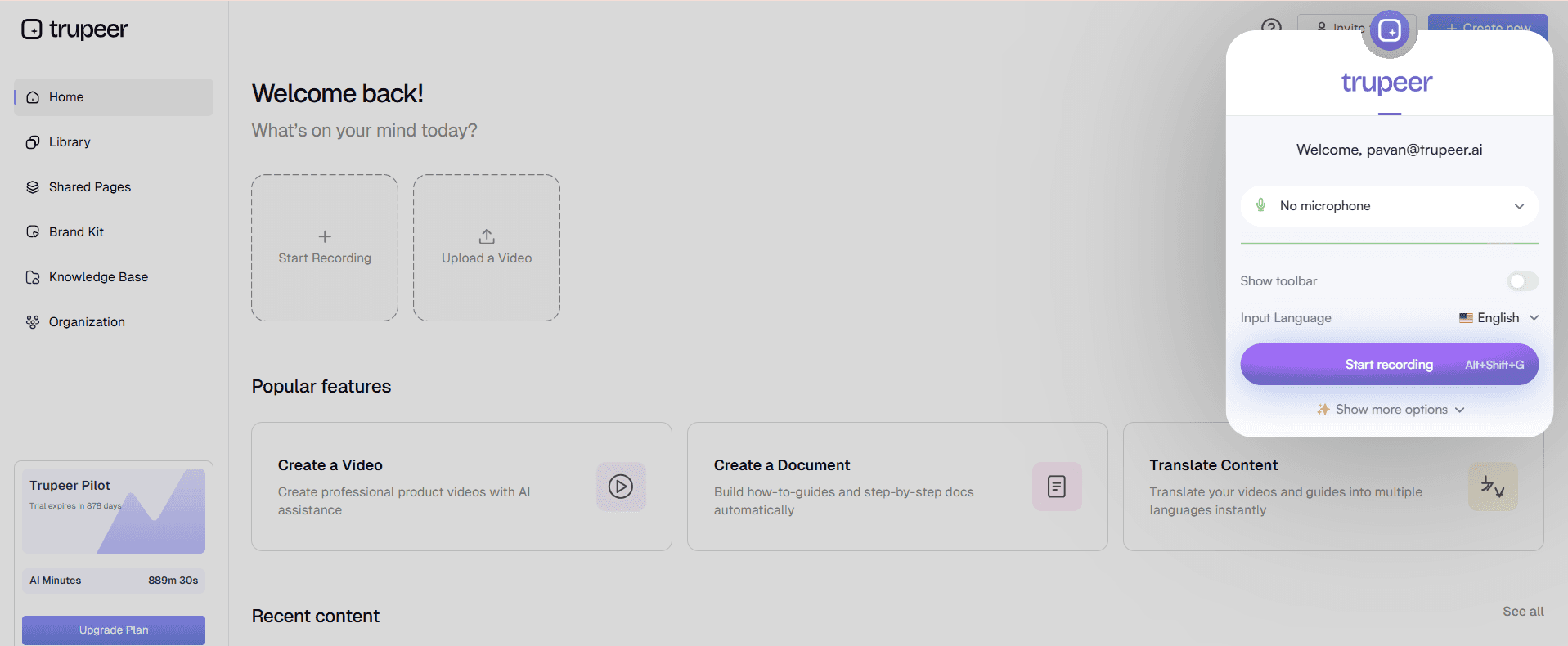
Trupeer

Trupeer stands out as a comprehensive AI-driven tool designed for documentation teams that prioritize efficiency and accuracy. It offers a seamless user experience with its intuitive interface and robust AI capabilities. Ideal for teams that need a quick turnaround on documentation tasks without compromising on quality.

Trupeer excels in its ability to automate step capture and generate AI voiceovers, making it perfect for teams that frequently produce tutorial videos and need to maintain consistency across various media formats. It's particularly beneficial for SaaS companies and tech-driven organizations looking to streamline their documentation processes.

Key Features

  • AI-powered document writing and editing

  • Automated step capture from screen activity

  • Smart screenshot annotation tools

  • AI voiceover generation for tutorials

  • Video documentation and generation

  • Multi-language support for global teams

  • Smart templates for rapid document creation

  • Comprehensive API integration capabilities

"Trupeer has transformed our documentation process, allowing us to focus more on creating quality content rather than formatting. It's become an indispensable tool for our team."

Pros

Cons

Comprehensive AI features that save time.

Learning curve for new users.

Supports over 20 languages.

Advanced features are locked behind paywalls.

Excellent for video and voiceover integration.

Limited offline capabilities.

Free tier available for small teams.

Occasional AI inaccuracies require manual edits.

Pricing

Free tier available with basic features, paid plans start at $29/month, offering advanced AI capabilities and integrations.

  1. Scribe

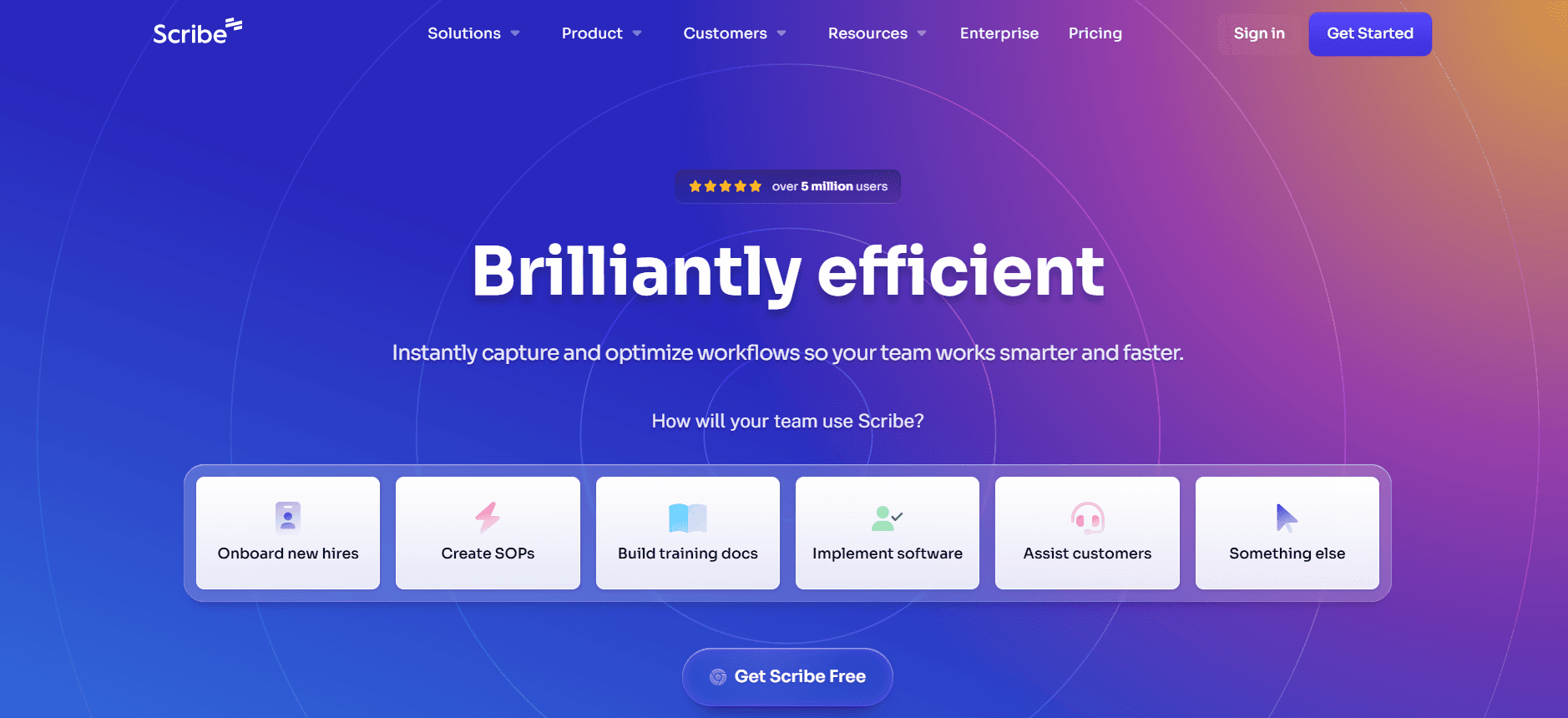
Scribe is tailored for teams that need to document processes and workflows efficiently. It's particularly useful for teams involved in HR, compliance, and internal training. Scribe's strength lies in its ability to automate the capture of processes as they happen, making it a top choice for organizations prioritizing process documentation.

While Scribe excels in capturing steps and creating detailed guides, it may fall short for those seeking advanced AI writing capabilities. However, its ease of use and focus on process documentation make it a valuable tool for specific use cases.

Key Features

  • Automated process capture

  • Intuitive documentation editor

  • Template-based document creation

  • Basic AI writing support

  • Integration with popular productivity tools

  • Customizable document formats

  • Multi-user collaboration features

  • Secure data storage and backup

Pros

Cons

Excellent for capturing and documenting workflows.

Limited AI writing features.

Easy to use with minimal training.

No video or voiceover capabilities.

Strong integration with other platforms.

Higher cost for advanced features.

Focus on process documentation.

Limited language support.

Pricing

No free tier, with paid plans starting at $19/user/month, providing access to core features and integrations.

  1. Tango

Tango

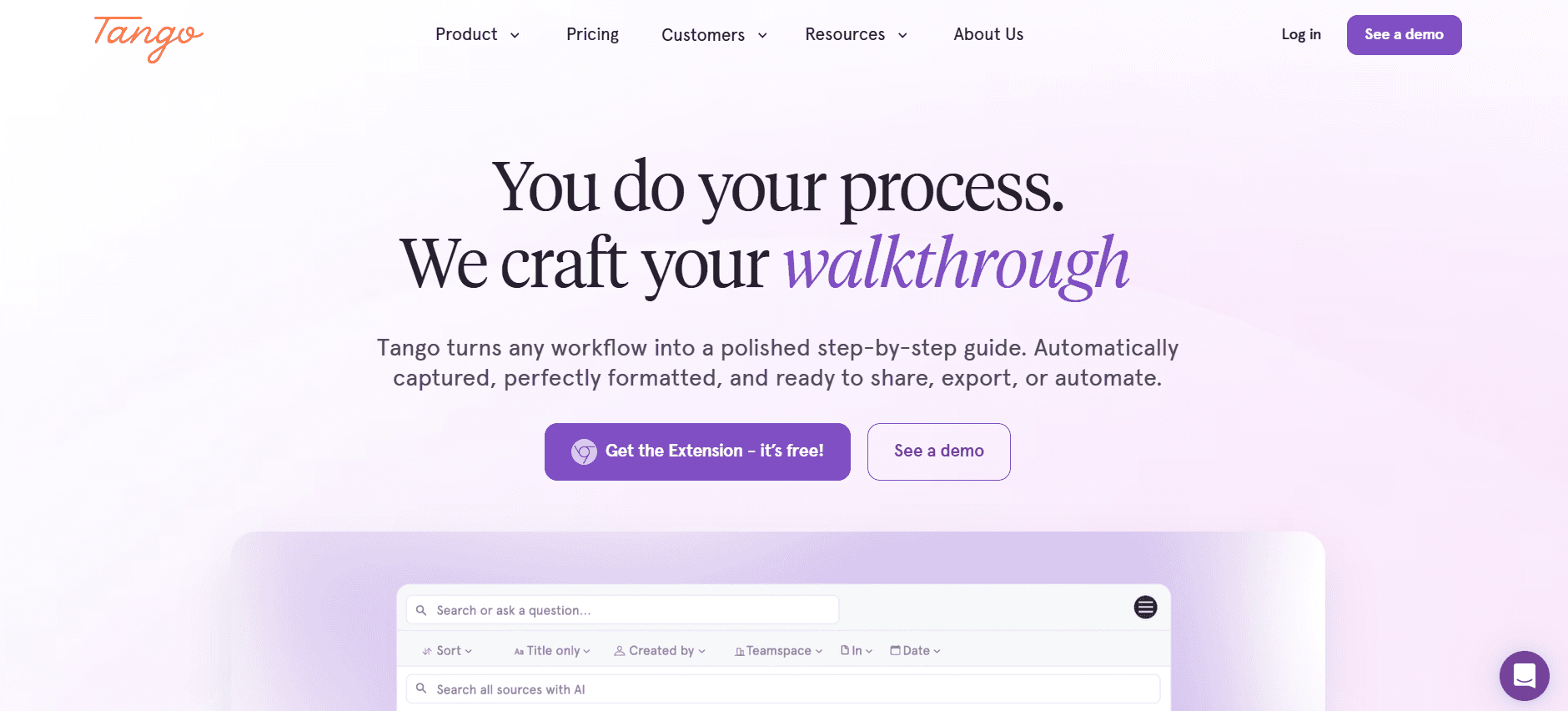
Tango is a versatile documentation tool that serves teams requiring visual aids and step-by-step guides. It's ideal for technical writers and product teams who need to create clear, visual documentation. Tango's unique strength is its ability to integrate screenshots and annotations directly into document workflows.

While it's a powerhouse for visual documentation, it lacks advanced AI capabilities for writing and editing. However, its focus on visual clarity and ease of use makes it an attractive option for teams producing user-facing documentation.

Key Features

  • Screenshot and annotation tools

  • Step-by-step guide creation

  • Visual documentation templates

  • Basic AI writing support

  • Team collaboration features

  • Integration with various CMS platforms

  • Custom branding options

  • Secure document sharing

Pros

Cons

Excellent for visual and step-by-step guides.

Lacks advanced AI writing features.

User-friendly interface.

Limited video capabilities.

Strong integration with CMS platforms.

Higher pricing for premium features.

Great for team collaboration.

Limited language support.

Pricing

Free tier available with basic features, premium plans start at $25/user/month for enhanced capabilities.

  1. Document360

Document360

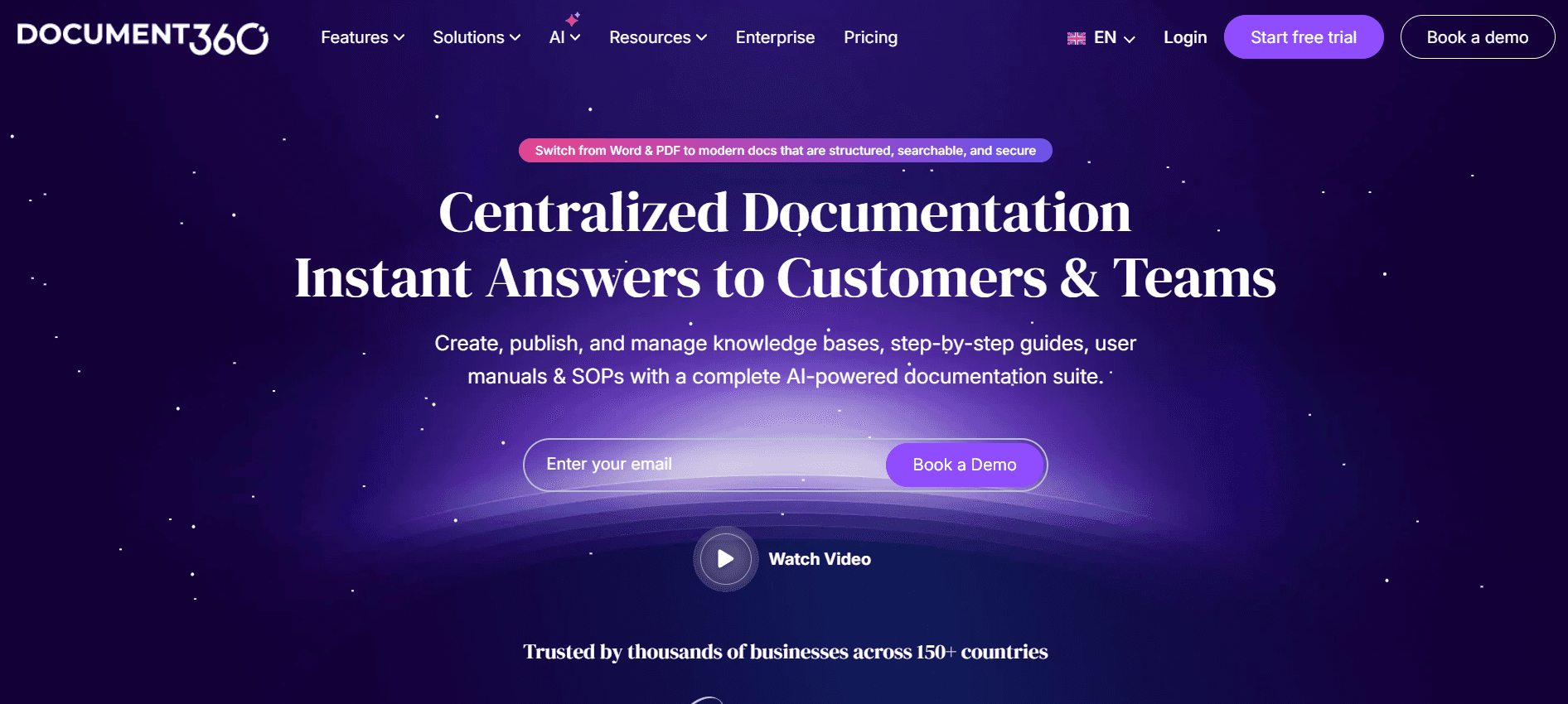
Document360 caters to teams that require a centralized knowledge base for internal and external documentation. It’s particularly well-suited for companies that need to maintain a comprehensive library of information accessible to both employees and customers. Its strength lies in its robust search functionality and easy-to-use editor.

While Document360 excels in knowledge management, it offers limited AI writing features, which may not suffice for teams looking for comprehensive AI capabilities. However, its focus on knowledge base management makes it an ideal choice for content-heavy organizations.

Key Features

  • Comprehensive knowledge base management

  • Intuitive document editor

  • Robust search and navigation

  • Version control and rollback features

  • Basic AI writing support

  • Customizable templates

  • Integration with multiple third-party tools

  • Analytics and reporting features

Pros

Cons

Excellent for knowledge base management.

Limited AI capabilities.

Strong search and navigation features.

No advanced multimedia support.

Easy to use with a clean interface.

Higher cost for enterprise features.

Great integration with other platforms.

Limited language support.

Pricing

Limited free tier available, paid plans start at $99/project/month for full feature access.

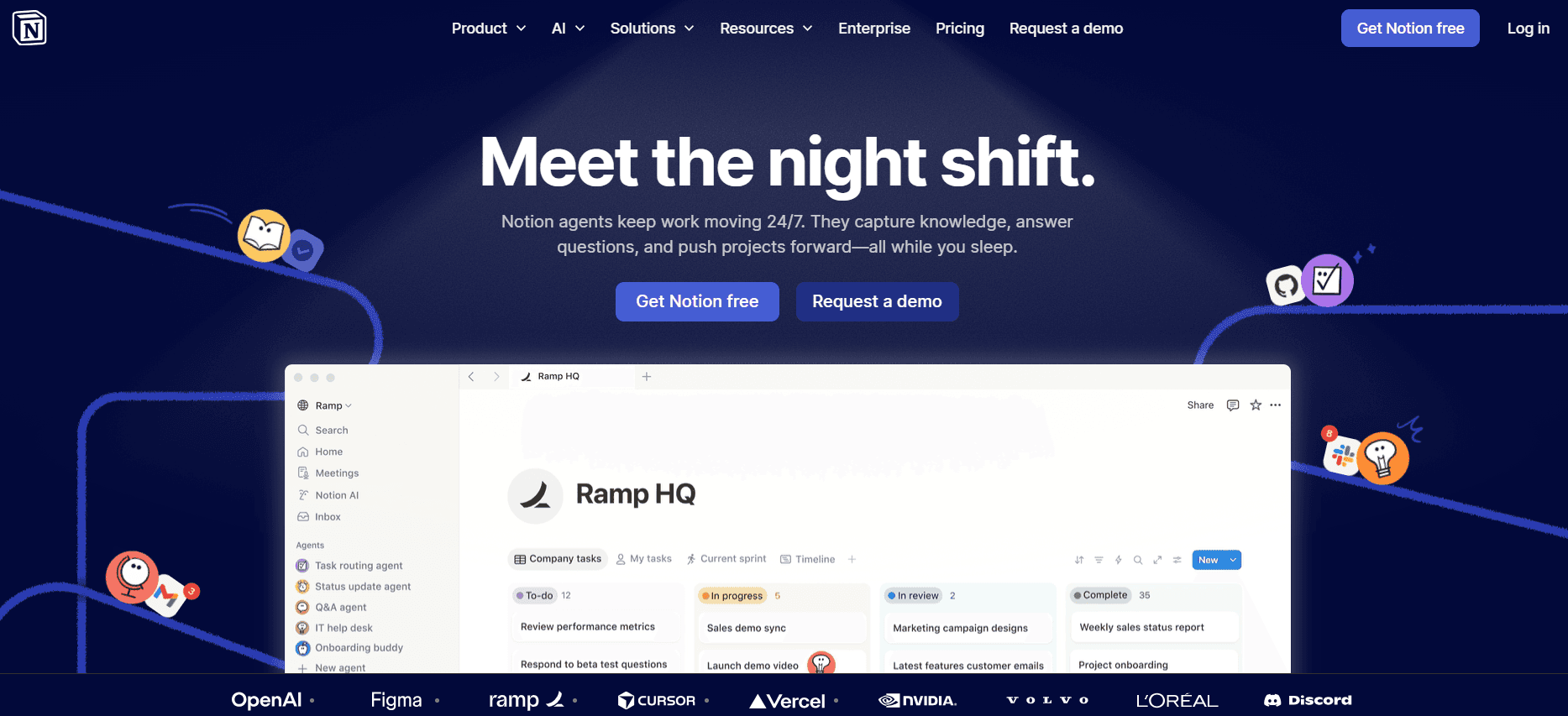
  1. Notion AI

Notion AI

Notion AI offers a versatile platform that combines document creation with project management features. It's ideal for teams looking to consolidate their documentation and task management in one place. Notion AI's standout feature is its ability to adapt to various workflows, making it a flexible choice for diverse teams.

While Notion AI provides strong document editing features, its AI capabilities are limited when compared to specialized tools. However, its integration of project management and documentation makes it a unique option for teams needing an all-in-one solution.

Key Features

  • Integrated project management tools

  • Customizable document templates

  • Collaboration and sharing features

  • Basic AI writing support

  • Flexible workspace customization

  • Integration with other productivity tools

  • Secure data storage

  • Multi-device synchronization

Pros

Cons

Combines documentation and project management.

Limited advanced AI features.

Highly customizable interface.

No video or voiceover capabilities.

Strong integration with productivity tools.

Complexity increases with features.

Free for personal use.

Higher cost for team plans.

Pricing

Free for personal use, team plans start at $10/user/month for additional features.

  1. Confluence AI

Confluence AI

Confluence AI is geared towards teams that need a strong collaboration platform with documentation capabilities. It's ideal for larger organizations that require seamless integration with existing Atlassian products. Confluence AI excels in fostering collaboration and maintaining a centralized documentation hub.

However, its AI capabilities are limited, primarily focusing on enhancing collaboration rather than content generation. For teams already using Atlassian products, Confluence AI offers a cohesive experience but may not satisfy those seeking advanced AI features.

Key Features

  • Robust collaboration tools

  • Seamless integration with Atlassian suite

  • Basic AI writing support

  • Customizable document workflows

  • Version control and history tracking

  • Centralized documentation repository

  • Access controls and permissions

  • Integration with third-party apps

Pros

Cons

Excellent for team collaboration.

Limited AI features.

Seamless integration with other Atlassian products.

High cost for full-feature access.

Strong version control features.

No video or voiceover capabilities.

Centralized document management.

Steep learning curve for new users.

Pricing

No free tier, with paid plans starting at $5/user/month, offering basic features and integrations.

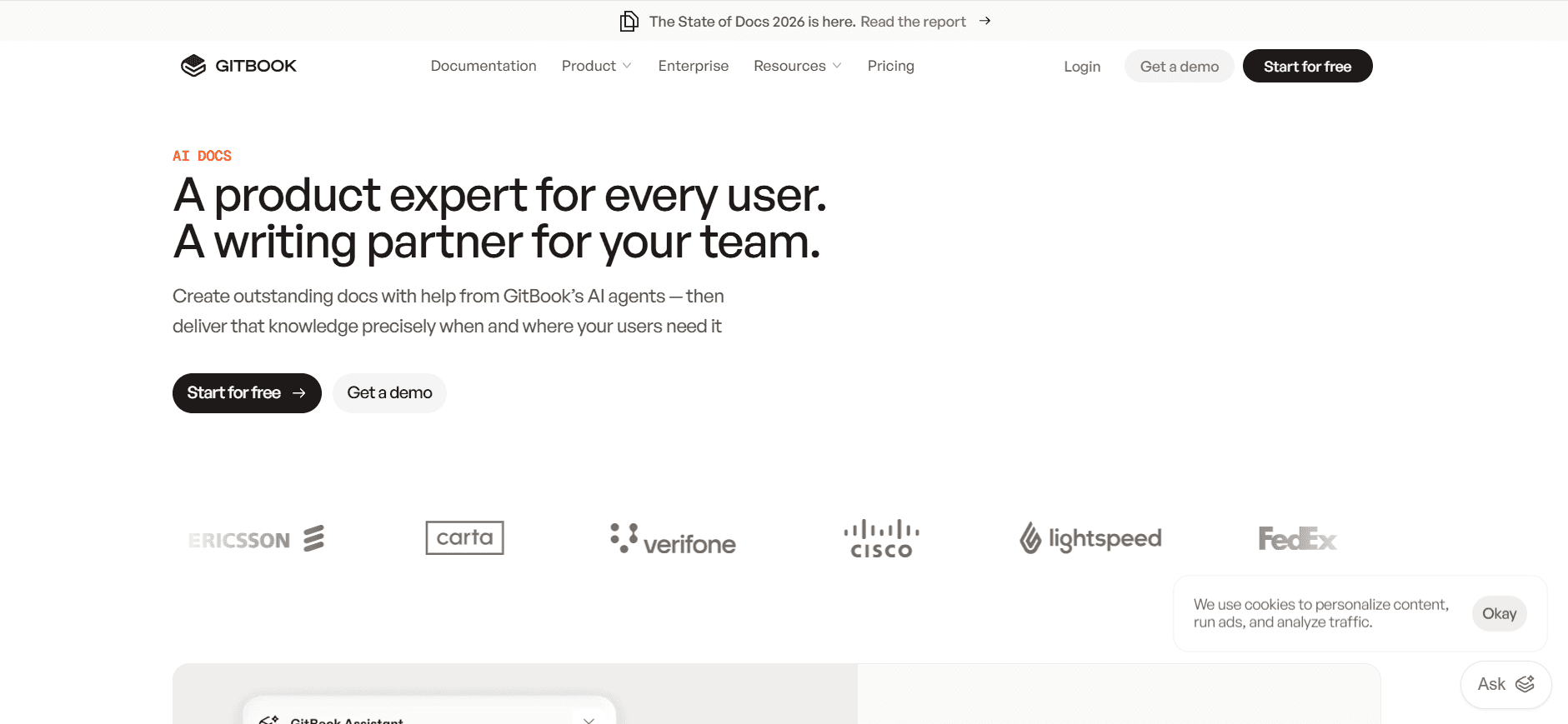
  1. GitBook AI

GitBook AI

GitBook AI is tailored for technical documentation, making it a go-to solution for engineering and API documentation teams. It provides a clean, developer-focused interface with the ability to integrate Git workflows, ensuring that documentation stays in sync with code changes.

While it offers strong documentation capabilities, its AI features are limited. GitBook AI is best suited for tech teams looking to maintain detailed, up-to-date documentation without the need for extensive multimedia features.

Key Features

  • Developer-friendly interface

  • Integration with Git workflows

  • Version control and collaboration features

  • Basic AI writing support

  • Customizable themes and templates

  • Collaboration tools for tech teams

  • API documentation support

  • Single-source publishing capabilities

Pros

Cons

Ideal for technical and API documentation.

Limited multimedia capabilities.

Strong integration with developer tools.

Limited AI features.

Version control and collaboration tools.

No voiceover or video support.

Customizable themes for branding.

Higher cost for team features.

Pricing

No free tier, with paid plans starting at $8/user/month, offering core documentation features and integrations.

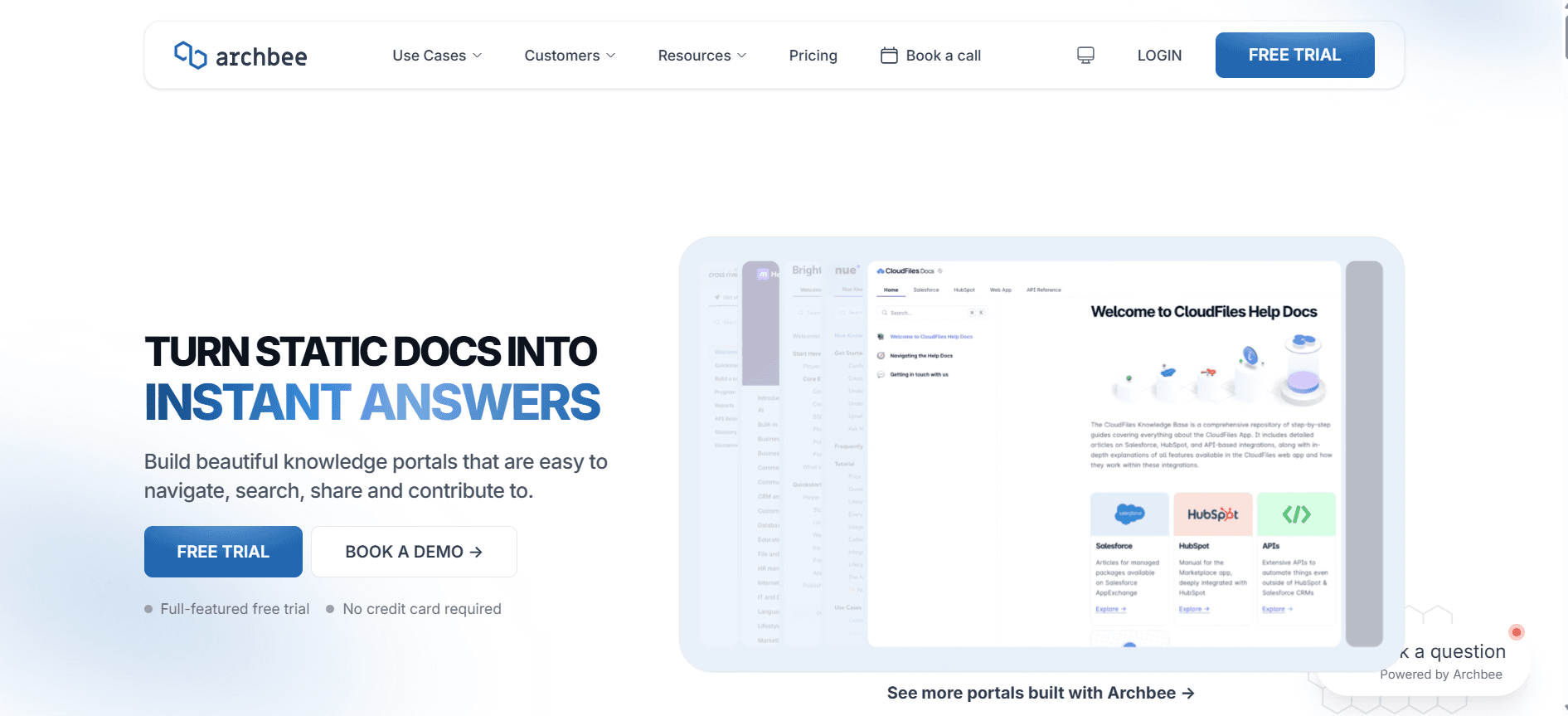
  1. Archbee

Archbee

Archbee is designed for tech-savvy teams that need a flexible documentation tool with a focus on API and software documentation. It provides real-time collaboration features and integrates seamlessly with developer tools, making it a strong choice for agile development teams.

Though it offers excellent integration with technical workflows, its AI capabilities are limited. Archbee is best for tech teams that prioritize collaborative documentation over AI-driven content generation.

Key Features

  • Real-time collaboration

  • Integration with developer workflows

  • API documentation support

  • Basic AI writing support

  • Customizable templates and themes

  • Version control and rollback features

  • Secure document sharing

  • Single-source publishing

Pros

Cons

Great for API and software documentation.

Limited AI capabilities.

Strong collaboration features.

No multimedia support.

Integration with developer tools.

Complex interface for non-tech users.

Customizable themes.

Higher pricing for advanced features.

Pricing

Free tier available with limited features, premium plans start at $15/user/month for full access.

AI Documentation Challenges: What Teams Struggle With

Creating First Drafts Takes Too Long

  • Even experienced writers can spend excessive time drafting initial content.

  • Manual research and data collection are time-consuming and prone to errors.

  • Frequent revisions are often needed, delaying completion.

  • Lack of automated tools makes the process inefficient.

Keeping Documentation Current with Every Product Sprint

  • Documentation teams struggle to sync updates with rapid product changes.

  • Manually updating documents can lead to inconsistencies.

  • Teams often face bottlenecks without real-time integration tools.

  • Delayed updates can affect user experience and product adoption.

Inconsistent Formatting Across Different Team Members

  • Diverse styles lead to confusion and unprofessional-looking documents.

  • Lack of unified templates increases the time needed for standardization.

  • Frequent formatting revisions consume valuable team resources.

  • Inconsistency can undermine brand identity and user trust.

No Automatic Screenshot or Step-Capture Capabilities

  • Manual capturing of screenshots is tedious and error-prone.

  • Step-by-step documentation without automation is inefficient.

  • Teams spend excessive time editing and annotating images.

  • Lack of automation leads to outdated or incomplete guides.

Translation and Localization Create Bottlenecks for Global Teams

  • Manual translation processes are time-intensive and costly.

  • Inconsistent localization can lead to miscommunication across regions.

  • Delays in translation affect global product launches and updates.

  • Quality assurance becomes a challenge without standardized processes.

Challenge

Traditional Process

Business Impact

Time Cost

Draft Creation

Manual writing and revisions

Reduced productivity

High

Updating Documentation

Manual syncing with changes

Inconsistent documentation

Moderate

Formatting Consistency

Manual template application

Unprofessional appearance

High

Screenshot Capture

Manual capture and editing

Outdated information

High

Translation & Localization

Manual translation processes

Delayed market entry

Very High

Must-Have Features in AI Documentation Tools

AI Writing and Auto-Completion

AI writing capabilities significantly reduce the time spent on drafting documents by providing auto-complete suggestions and content generation. This feature is crucial for teams that need to produce large volumes of content quickly. With AI, writers can focus on refining ideas rather than starting from scratch, leading to more efficient content creation and higher overall quality.

Tools like Trupeer excel in this area, offering advanced AI algorithms that understand context and provide relevant suggestions, making them invaluable for documentation teams.

Automated Step Capture from Screen Activity

The ability to automatically capture screen activity and translate it into documentation is a game-changer for teams producing tutorials and guides. This feature helps eliminate the need for manual screenshot capture and annotation, saving time and reducing errors. Automated step capture ensures that documentation accurately reflects the user interface, which is essential for technical accuracy and user comprehension.

Tango and Trupeer both provide robust solutions for automated step capture, ensuring that documentation workflows are streamlined and efficient.

Smart Screenshot Annotation

Smart annotation tools enhance screenshots with notes and highlights, providing clarity and context. This feature is particularly useful for teams creating user manuals, as it allows for visual explanations without cluttering the document with text. By automating annotations, teams can maintain a consistent style and quality, enhancing the overall readability of the documentation.

Trupeer and Document360 offer strong annotation tools that integrate seamlessly into their platforms, making them a preferred choice for teams requiring detailed visual documentation.

AI Voiceover Generation for Video Docs

AI voiceover generation allows teams to create professional-sounding audio for video documentation without requiring voice talent. This feature is especially useful for teams producing tutorial videos or product demos, as it enhances the accessibility and professionalism of the content. It enables quick localization with multiple language options, which is vital for global reach.

Trupeer’s AI voiceover capabilities stand out, offering natural-sounding voice options and easy integration with video content.

One-Click Export in Multiple Formats

The ability to export documentation in various formats, such as PDF, HTML, and Markdown, is essential for teams that distribute content across different platforms. One-click export ensures that documents are ready for various uses without additional formatting work, allowing teams to focus on content quality rather than technical adjustments. This feature supports collaboration and sharing, ensuring consistency across all user touchpoints.

Tools like Notion AI and GitBook AI provide robust export options, supporting diverse distribution needs and ensuring that content maintains its formatting integrity across platforms.

How to Choose AI Documentation Tools Based on Your Use Case

Product Documentation Teams at SaaS Companies

SaaS companies require meticulously detailed and up-to-date product documentation. These teams need tools that can keep pace with continuous updates and enhance user understanding.

  • Rapid product development cycles mean documentation must be updated frequently.

  • Complex features require clear, detailed documentation with visual aids.

  • Global user base demands multi-language support for broader reach.

  • Tools that offer automated updates and seamless integration with development workflows.

  • Support for visual documentation such as video generation and screenshot annotation.

  • Multi-language capabilities for global distribution.

Tool

Auto Updates

Visual Support

Multi-Language

Trupeer

Yes

Yes

Yes

Document360

No

Limited

Yes

Technical Writers and Content Operations

Technical writers need tools that enhance their writing process and ensure content consistency across documents. They also benefit from features that reduce the time spent on drafting and editing.

  • Maintaining consistent tone and style across multiple documents.

  • Managing large volumes of technical content efficiently.

  • Ensuring accuracy and clarity in complex technical descriptions.

  • AI-driven writing and editing tools for consistent content production.

  • Templates and style guides that enforce consistency across documents.

  • Automated proofreading and suggestions to enhance clarity.

Tool

AI Writing

Templates

Proofreading

Scribe

Limited

Yes

No

Trupeer

Yes

Yes

Yes

Engineering and API Documentation

Engineering teams require documentation tools that integrate with their existing development workflows and provide detailed API documentation capabilities.

  • Keeping documentation synchronized with code changes.

  • Ensuring API documentation is comprehensive and accurate.

  • Facilitating collaboration among technical teams.

  • Integration with version control systems to automate updates.

  • Support for API documentation standards like OpenAPI.

  • Collaboration tools for seamless teamwork.

Tool

Code Integration

API Support

Collaboration

GitBook AI

Yes

Yes

Limited

Archbee

Yes

Yes

Yes

HR and Compliance Documentation

HR and compliance teams need documentation tools that ensure regulatory compliance and facilitate easy access to policies and procedures.

  • Ensuring all documentation meets legal and regulatory standards.

  • Keeping policies and procedures easily accessible to employees.

  • Maintaining up-to-date records of compliance statuses.

  • Document management systems with compliance tracking features.

  • Easy access and search functionalities for quick retrieval.

  • Automated reminders for policy updates and reviews.

Tool

Compliance Tracking

Search Functionality

Update Reminders

Document360

Yes

Yes

No

Trupeer

Limited

Yes

Yes

Best Practices for Using AI Documentation Tools

Before Implementation

  • Assess your current documentation process to identify pain points.

  • Research and select a tool that aligns with your specific needs and goals.

  • Define clear objectives and success metrics for using the tool.

  • Prepare your team with training sessions on the tool's features and benefits.

  • Plan for initial setup and customization to match your existing workflows.

During Use

  • Encourage consistent use across your team to maximize benefits.

  • Regularly update templates and style guides to maintain consistency.

  • Monitor usage metrics to identify areas for improvement.

  • Utilize feedback loops to refine and optimize processes.

  • Ensure all team members are comfortable with the tool and its features.

After Implementation

  • Review and adjust your documentation strategy based on tool performance.

  • Continuously evaluate new features and updates for potential adoption.

  • Document lessons learned and best practices for future reference.

  • Share success stories and improvements with stakeholders.

  • Maintain regular training and support to keep the team engaged and proficient.

Frequently Asked Questions

What is an AI documentation tool?

AI documentation tools use artificial intelligence to automate and enhance the creation, management, and updating of documentation. They help teams save time by automating repetitive tasks and improving the accuracy and consistency of content.

Who can benefit from using these tools?

Documentation teams, technical writers, content managers, and any organization needing efficient and accurate documentation can benefit. These tools are especially valuable for industries with complex products or services.

Do these tools require technical expertise to use?

Most AI documentation tools are designed to be user-friendly, requiring minimal technical expertise. They often include intuitive interfaces and comprehensive support resources to assist users.

Can these tools integrate with other software?

Yes, many AI documentation tools offer integration capabilities with various software, including project management tools, version control systems, and content management systems, to streamline workflows and ensure consistency.

Are there free versions available?

Some tools offer free tiers with limited features, allowing teams to evaluate their functionality before committing to a paid plan. However, advanced features typically require a subscription or one-time purchase.

What factors influence the pricing of these tools?

Pricing is often based on the number of users, the range of features, and the level of support provided. Enterprise solutions tend to offer more comprehensive features and customization options at a higher cost.

How long does it take to implement these tools?

Implementation time varies depending on the complexity of the tool and the existing infrastructure. It can range from a few days for simple setups to several weeks for more complex integrations requiring customization.

What support is available during implementation?

Many vendors offer extensive support during the implementation phase, including training resources, customer support teams, and online documentation to assist with setup and troubleshooting.

Closing

Choosing the right AI documentation tool can significantly enhance your team's efficiency, allowing you to focus on delivering high-quality content that meets your organization's needs. By understanding your specific requirements and aligning them with the features and capabilities of each tool, you can make an informed decision that drives productivity and innovation.

Explore the possibilities with Trupeer, a leading AI documentation tool that offers comprehensive features tailored to meet the demands of modern documentation teams. Discover how Trupeer can transform your documentation process and empower your team by visiting Trupeer today.

开始免费使用我们的AI视频+文档生成器制作视频

开始免费使用我们的AI视频+文档生成器制作视频

Experience the new & faster way of creating product videos.

Instant AI Product Videos and Docs from Rough Screen Recordings.

Get started for free

免费开始

Experience the new & faster way of creating product videos.

Instant AI Product Videos and Docs from Rough Screen Recordings.

Get started for free

免费开始

Experience the new & faster way of creating product videos.

Instant AI Product Videos and Docs from Rough Screen Recordings.

Get started for free

免费开始