4.8/5
تسجيل الشاشة لتدريب الموظفين
سجّل مرة واحدة. درّب كل موظف. وفّر مئات الساعات مع تسجيلات شاشة مصممة لتدريب القوى العاملة.
جرّب مجانًا
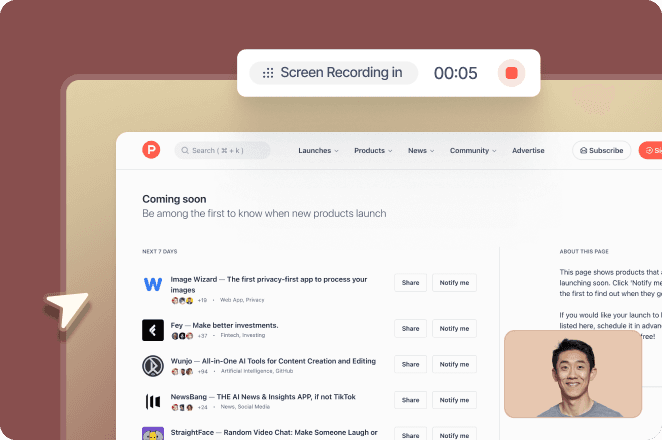
تسجيل الشاشة لتدريب الموظفين يتيح لك التقاط العمليات الظاهرة على الشاشة، وسرد التعليمات، وتوزيع محتوى تدريبي مصقول على كل موظف - الجدد وذوو الخبرة على حد سواء. ابنِ مكتبة تدريب تنمو مع مؤسستك.
سجّل استعراضات البرامج، وعروض العمليات، وإجراءات الامتثال مع تعليق صوتي وكاميرا الويب
أنشئ مكتبة تدريب قابلة لإعادة الاستخدام تلغي جلسات التدريب المباشر المتكررة
تتبع معدلات الإكمال، ومقاييس التفاعل، ونتائج الاختبارات لكل موظف
أنشئ تسميات توضيحية ونصوصًا تلقائيًا لإمكانية الوصول وسهولة البحث
صدّر بصيغ متوافقة مع أنظمة إدارة التعلم (LMS) أو شارك عبر رابط للتوزيع الفوري
ما هو تسجيل الشاشة لتدريب الموظفين؟
تسجيل الشاشة لتدريب الموظفين هو ممارسة التقاط شاشتك - مع السرد الصوتي وخيار فيديو كاميرا الويب - لإنشاء محتوى تعليمي يعلّم الموظفين كيفية استخدام البرامج، واتباع العمليات، والالتزام بسياسات الشركة. وهو يستبدل النموذج التقليدي لجلسات التدريب المباشر بقيادة مدرّب، وهي جلسات مكلفة في الجدولة، ومستحيلة التوسع، وغير متسقة في الجودة.
كيف يعمل تسجيل الشاشة لتدريب الموظفين؟
البدء في تسجيل الشاشة لتدريب الموظفين لا يستغرق سوى بضع دقائق.
الخطوة 1: التسجيل أو الرفع
ابدأ تسجيل شاشة مباشرة من متصفحك، أو ارفع ملف فيديو موجودًا تريد تحويله.
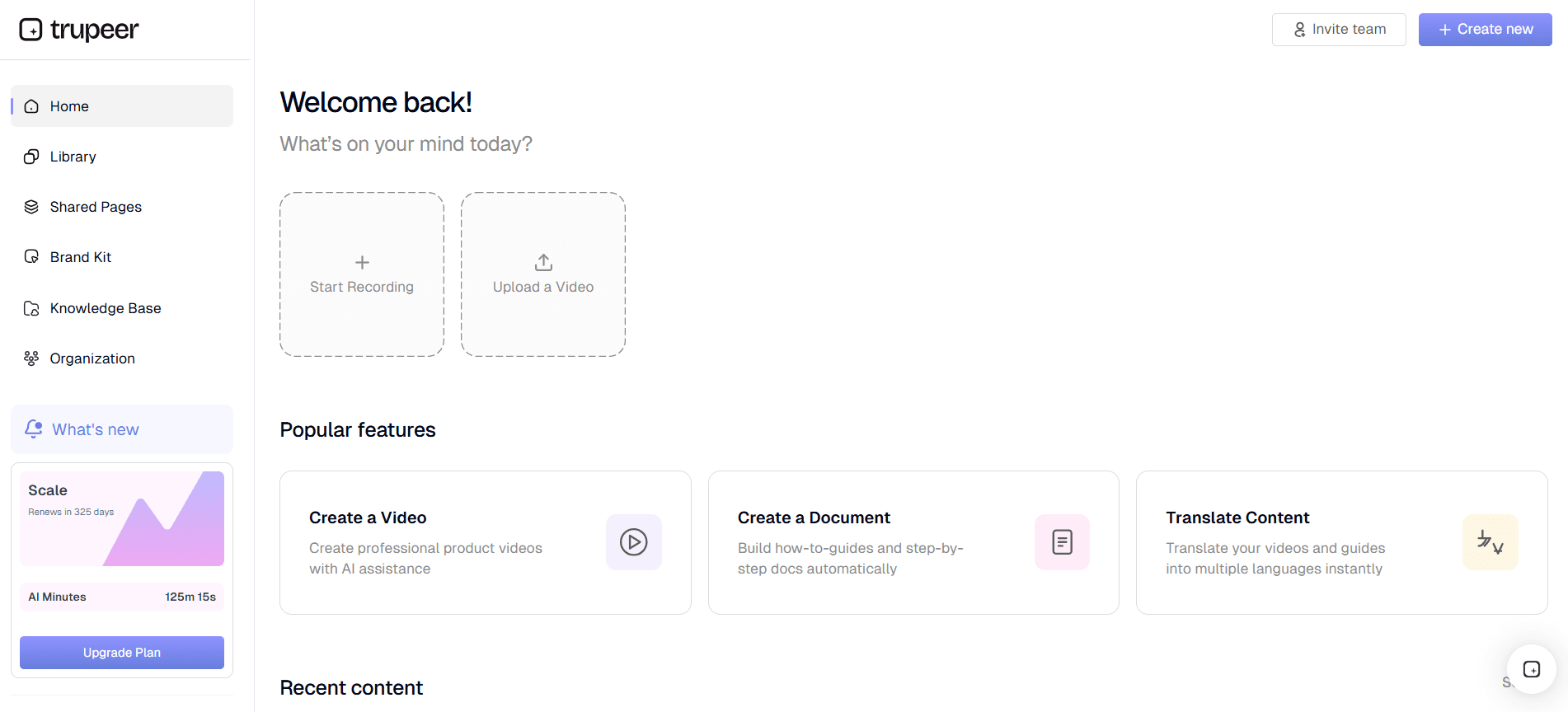
الخطوة 2: معالجة الذكاء الاصطناعي
يحلل الذكاء الاصطناعي تسجيلك، ويزيل الكلمات الحشو، ويضيف تأثيرات التكبير، ويولّد الوثائق المكتوبة تلقائيًا.
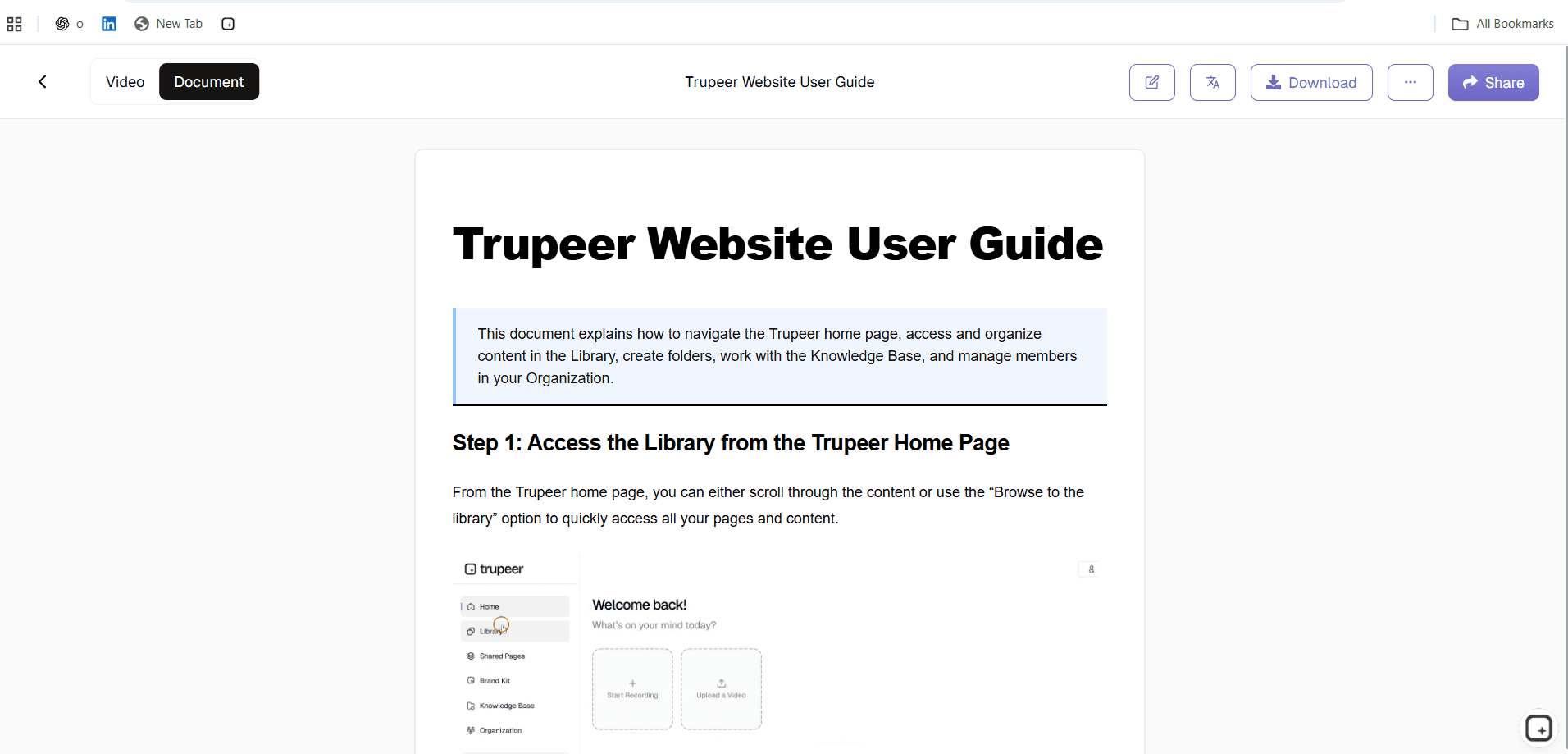
الخطوة 3: التخصيص والمشاركة
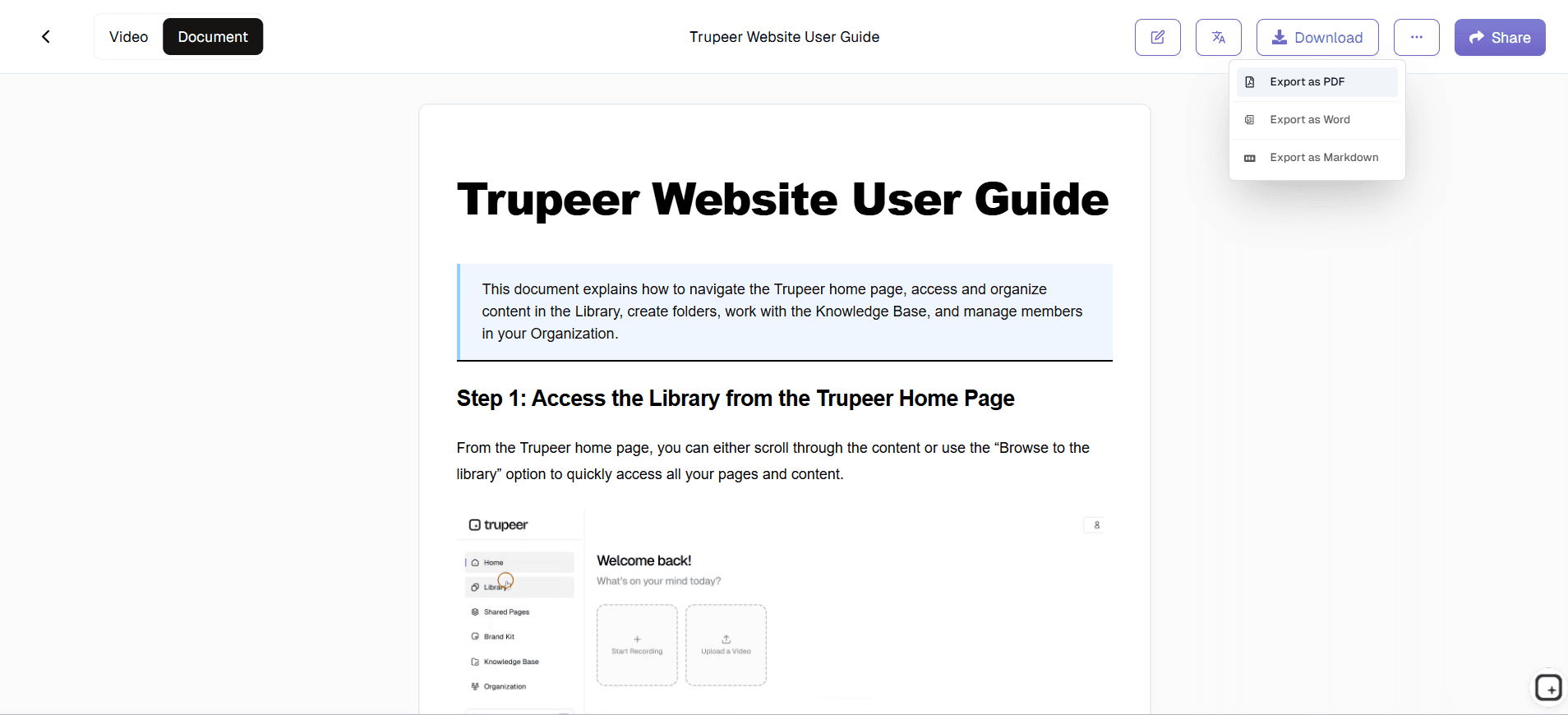
حرّر الناتج، وطبّق حزمة العلامة التجارية الخاصة بك، وشاركه عبر رابط أو ضمّنه في موقعك الإلكتروني. التحديثات سهلة بالقدر نفسه.
الميزات الرئيسية لتسجيل الشاشة لتدريب الموظفين
مسارات تدريب قائمة على الدور: أنشئ مسارات تدريب مخصّصة لأدوار مختلفة - يتعلم مندوبو المبيعات نظام CRM، ويتعلم المهندسون خط أنابيب النشر، ويتعلم فريق الموارد البشرية نظام تتبع المتقدمين. يحصل كل دور على قائمة تشغيل منسقة من تسجيلات الشاشة ذات الصلة بأدواته اليومية، مما يلغي نهج المقاس الواحد الذي يناسب الجميع والذي يبدد وقت المتعلمين على محتوى غير ذي صلة.
تعليق صوتي مع إزالة الضوضاء الخلفية: سجّل السرد في أي بيئة - مكتب منزلي، مساحة مفتوحة، مقهى - وتقوم أداة إزالة الضوضاء المدمجة بإزالة نقرات لوحة المفاتيح، وأزيز المكيف، وأحاديث المحيط.
التحكم في الإصدارات لمحتوى التدريب: عندما يغيّر تحديث برمجي واجهة المستخدم أو يُعدّل خطوة من خطوات العملية، حدّث فقط الجزء المتأثر من تسجيلك التدريبي بدلًا من إعادة التسجيل من الصفر. يحفظ سجل الإصدارات كل نسخة، لذا يمكنك الرجوع عند الحاجة والحفاظ على سجل تدقيق لتطور محتوى التدريب.
المكتبة المركزية للتدريب مع البحث: خزّن جميع تسجيلات التدريب في مكتبة منظّمة قابلة للبحث. يبحث الموظفون بالكلمة المفتاحية أو اسم الأداة أو الموضوع ويعثرون فورًا على الفيديو والطابع الزمني الذي يجيب عن سؤالهم. تحافظ الوسوم والفئات وقوائم التشغيل على هيكلة المكتبة مع نموها من عشرات التسجيلات إلى آلاف التسجيلات.
لماذا تختار تسجيل الشاشة لتدريب الموظفين؟
القضاء على الجلسات المباشرة المتكررة: توقف عن جدولة الجلسة نفسها كلما بدأ فوج جديد. سجّل مرة واحدة، ودع الفيديو يتولى تهيئة كل موظف قادم.
ضمان الاتساق عبر المؤسسة: يتلقى كل موظف تعليمات متطابقة - دون اختلاف بحسب المدرب الذي قدّم الجلسة، أو مزاجه في ذلك اليوم، أو الخطوات التي نسي ذكرها.
الحفاظ على المعرفة المؤسسية: عندما يغادر موظف مخضرم، تبقى مقاطع التدريب المسجّلة على الشاشة. تبقى معرفة العمليات الحرجة داخل الشركة، لا لدى الفرد.
تقليل الوقت اللازم للوصول إلى الإنتاجية: الموظفون الجدد الذين يتعلمون من تسجيلات شاشة منظمة يصلون إلى الكفاءة أسرع من أولئك الذين يعتمدون على التظليل العشوائي والوثائق المجزأة.
تسجيل الشاشة للفرق الداخلية
1. تقوم الفرق الداخلية بتسجيل كل عملية يُطرح عنها السؤال أكثر من مرتين - من تعويض سفر العمل إلى إنشاء تذكرة Jira - لبناء أسئلة شائعة بالفيديو تقضي على المقاطعات المتكررة.
2. يسجل مديرو الأقسام تحديثات العمليات ربع السنوية كتسجيلات شاشة، لضمان أن يرى كل عضو في الفريق التغيير موضحًا مباشرة بدلًا من قراءته في بريد إلكتروني قد لا يفتحه أبدًا.
3. تستخدم الفرق متعددة الوظائف تسجيلات الشاشة لتدريب بعضها بعضًا على أدواتها الخاصة - يعرض التسويق على المبيعات كيفية استخراج تقارير الحملات، ويعرض المالية على العمليات كيفية تقديم أوامر الشراء.
4. تستخدم لجان التدريب الداخلية تحليلات المشاهدة لتحديد فجوات المعرفة عبر الفرق، وتوجّه الاستثمار التدريبي المركّز إلى حيث سيحقق أكبر أثر. اقرن الفيديو بالأدلة المكتوبة من أداة دليل العمليات من Trupeer.
تسجيل الشاشة لفرق SaaS
1. تستخدم شركات SaaS تسجيل الشاشة لتدريب الموظفين على منتجها نفسه - لضمان أن كل عضو في الفريق، من الدعم إلى المبيعات إلى الهندسة، يستطيع عرض المنتج بثقة.
2. تتلقى الفرق المواجهة للعميل تدريبًا مسجّلًا على الشاشة حول الإصدارات الجديدة من الميزات قبل إطلاقها، حتى تتمكن من الإجابة عن أسئلة العملاء من اليوم الأول دون ارتباك.
3. تنشئ فرق تهيئة الموظفين الجدد في SaaS مقاطع تدريب داخلية تعلّم الموظفين الجدد منهجية نجاح العملاء الخاصة بالشركة، كاملةً مع تسجيلات شاشة للتفاعلات الفعلية مع العملاء واستخدام الأدوات.
4. تسجل فرق عمليات الإيرادات تدريبًا على أدوات المبيعات وإدارة خط الأنابيب وتدفقات التنبؤ، ما ينشئ مكتبة تمكين قابلة للتوسع تنمو مع المؤسسة. التقط العروض التوضيحية باستخدام مسجل الشاشة من Trupeer.
تسجيل الشاشة للشركات الناشئة
1. توثق الشركات الناشئة العمليات مبكرًا بتسجيلات الشاشة حتى ينتقل تبادل المعرفة بسلاسة مع تضاعف حجم الفريق مرتين وثلاثًا وأربعًا خلال مراحل النمو.
2. في الشركات الناشئة سريعة الحركة حيث تتغير العمليات أسبوعيًا، تكون تسجيلات الشاشة سريعة الإنتاج وسهلة التحديث - مما يحافظ على حداثة مواد التدريب دون موارد مخصصة للتعلم والتطوير.
3. يسجّل مؤسسو الشركات الناشئة مقاطع التدريب الخاصة بهم للموظفين الأوائل، مما يرسخ الثقافة والتوقعات وسير العمل من خلال محتوى أصيل وشخصي.
4. تتجنب الشركات الناشئة محدودة السيولة منصات التدريب الباهظة باستخدام برنامج تسجيل الشاشة لبناء مكتبة فيديو مستضافة على منصات مجانية أو منخفضة التكلفة إلى جانب أدواتها الحالية.
تسجيل الشاشة للمؤسسات الكبيرة
1. تنشر الشركات الكبرى التدريب المسجّل على الشاشة على نطاق واسع عبر عشرات الآلاف من الموظفين، باستخدام تكامل LMS والتصدير المتوافق مع SCORM لإدارة التوزيع والتتبع وإصدار الشهادات.
2. تنشئ الشركات العالمية مجموعة واحدة من محتوى التدريب المسجّل على الشاشة وتوزعها مع تسميات توضيحية مترجمة تلقائيًا بعشرات اللغات، محافظةً على الاتساق مع احترام احتياجات التوطين.
3. تستخدم الصناعات المنظمة - المالية، والرعاية الصحية، والتصنيع - تسجيل الشاشة لإنشاء سجلات تدريب قابلة للتدقيق ترضي الجهات التنظيمية وفرق الامتثال الداخلية.
4. تنتج فرق إدارة التغيير في المؤسسات تدريبًا مسجّلًا على الشاشة لكل عملية انتقال رئيسية للنظام، مما يضمن تقليل التراجع في الإنتاجية أثناء فترات الانتقال وتسريع التعافي.
تسجيل الشاشة للفرق عن بُعد
1. يصل الموظفون عن بُعد في مناطق زمنية مختلفة إلى التدريب نفسه المسجّل على الشاشة في الوقت الأنسب لهم، مما يلغي كابوس التنسيق لجلسات مباشرة عبر القارات.
2. يستخدم المديرون عن بُعد تسجيلات الشاشة لتقديم توجيه مخصّص - بتسجيل شرح مرئي لتحسين سير عمل محدد بدلًا من محاولة شرحه عبر الدردشة أو مكالمة مجدولة على عجل.
3. تصبح تهيئة الموظفين عن بُعد سلسة عندما يكون لدى الموظفين الجدد مكتبة كاملة من التدريب المسجّل على الشاشة بانتظارهم في اليوم الأول، تغطي كل شيء من إعداد الأدوات إلى أعراف الفريق.
4. تحافظ الفرق الموزعة على اتساق التدريب رغم التباعد الجغرافي، لأن المحتوى المسجّل على الشاشة يكون نفسه لموظف في أوستن ومقاول في أمستردام.
تسجيل الشاشة للمطورين
1. يسجل مديرو الهندسة تدريبًا على الأطر الداخلية، ومعايير مراجعة الشيفرة، وإجراءات النشر، مما يخلق تجربة تهيئة للمطورين تقلل عبء بدء العمل عن المهندسين المخضرمين.
2. تنتج فرق المنصة تدريبًا مسجّلًا على الشاشة لأدوات المطور الداخلية، وخطوط أنابيب CI/CD، وسير عمل البنية التحتية ككود - أدلة مرئية تكمل أدلة التشغيل المكتوبة.
3. تسجل فرق الأمن تدريبًا قائمًا على الشاشة حول ممارسات الترميز الآمن، موضحةً الثغرات الشائعة وإصلاحاتها في قاعدة الشيفرة الفعلية بدلًا من الأمثلة المجردة.
4. تدرب فرق إنتاجية المطورين المهندسين على إضافات بيئة التطوير المتكاملة (IDE)، وسير عمل التصحيح، وأدوات التحليل باستخدام تسجيلات شاشة تعرض الاستخدام الواقعي بدلًا من التوثيق النظري.
تسجيل الشاشة لفرق التهيئة والدعم
1. تبني فرق تهيئة الموظفين الجدد مناهج تدريب تمتد لعدة أسابيع بالكامل من تسجيلات الشاشة، حيث تبني قائمة تشغيل كل أسبوع على ما قبله - من نظرة عامة على الشركة إلى إتقان الأدوات إلى التعمق الخاص بالدور.
2. يسجل قادة فريق الدعم تدريبًا قائمًا على الشاشة للتعامل مع التذاكر المصعّدة، موضحين الاستخدام الدقيق للأداة، وقوالب التواصل، وعملية اتخاذ القرار التي تؤدي إلى الحل.
3. يتتبع مديرو التهيئة تقدم الموظف الجديد عبر لوحات إكمال مقاطع التدريب، محددين من يسير وفق الخطة ومن يحتاج إلى دعم إضافي قبل مراجعات فترة التجربة.
4. تحلل فرق جودة الدعم تسجيلات الشاشة لجلسات التدريب إلى جانب تفاعلات الدعم الفعلية لتقييم ما إذا كان التدريب ينعكس على الأداء في العالم الحقيقي. ابدأ مكتبة التدريب الخاصة بك باستخدام مسجل الشاشة من Trupeer.
تستند إضافة كروم لتسجيل الشاشة هذه إلى Screenity، التي أنشأتها أصلًا Alyssa X وجرى ترخيصها بموجب GNU GPLv3، مع تحسينات طوّرها فريق Trupeer. الشيفرة المصدرية متاحة هنا: https://github.com/trupeer-ai/trupeer-chrome-capture.
الميزات الرئيسية
تتبع الإنجاز
راقب الموظفين الذين أكملوا التدريب، ودرجات اختباراتهم، ومقاييس التفاعل.
المسارات حسب الدور
أنشئ قوائم تشغيل تدريبية مخصصة مصممة خصيصًا لأدوار وظيفية وأقسام محددة.
إزالة الضوضاء
تعمل ميزة تحسين الصوت المدمجة على إزالة ضوضاء الخلفية للحصول على جودة تعليق صوتي احترافية.
كيف يعمل
الخطوة 1
افتح التطبيق ذي الصلة، ووضّح الخطوات الرئيسية.
الخطوة 2
سجّل جولة عبر الشاشة
الخطوة 3
تعديل ومشاركة
الأسئلة الشائعة
كيف يساعد تسجيل الشاشة في تحسين تدريب الموظفين مقارنةً بالجلسات المباشرة؟
توفّر تسجيلات الشاشة شرحًا متسقًا لكل موظف، وتلغي عبء تنسيق الجداول، وتُنشئ أصولًا قابلة لإعادة الاستخدام تنمو مع مؤسستك. يمكن للموظفين الإيقاف المؤقت، والإرجاع، وإعادة المشاهدة - وهو أمر مستحيل في جلسة مباشرة.
هل يمكنني تتبّع ما إذا كان الموظفون قد أكملوا تدريبهم فعلاً؟
نعم. توفر المنصة تتبع الإكمال على مستوى الفرد والفريق والقسم، بما في ذلك الوقت المستغرق في المشاهدة، ودرجات الاختبارات، والطوابع الزمنية - وهو مثالي لتقارير الامتثال ومراجعات الأداء.
كيف أتعامل مع محتوى التدريب عندما يتم تحديث برنامجنا؟
يتيح لك التحكم في الإصدارات تحديث أقسام فردية من التسجيل دون إعادة التسجيل من البداية. يمكنك استبدال المقاطع المتأثرة، وإعادة التعليق الصوتي لخطوات محددة، وإعادة النشر مع الحفاظ على سجل التدريب.
هل يمكنني إنشاء مسارات تدريب مختلفة لأدوار وظيفية مختلفة؟
بالتأكيد. نظِّم تسجيلات الشاشة في قوائم تشغيل ومسارات تعلّم خاصة بكل دور، مع التأكد من أن كل موظف يتلقى تدريبًا ذا صلة بأدواته ومسؤولياته اليومية دون الاضطرار إلى متابعة محتوى غير ذي صلة.
هل هذا مناسب للتدريب على الامتثال واللوائح التنظيمية؟
نعم. تتحقق الاختبارات المضمنة من الفهم، وتُنشئ تتبّع الإكمال تقارير جاهزة للتدقيق، ويحافظ سجل الإصدارات على سجلّ موثّق لمحتوى التدريب ومشاركة الموظفين للامتثال التنظيمي.