Trupeer Blog
Summarise
تخيل أنك جزء من فريق التعلم والتطوير (L&D) مُكلَّف بإنتاج عشرات مقاطع الفيديو التدريبية كل شهر. إن الاتساق في الصوت والنبرة أمر بالغ الأهمية، لكن تسجيل كل نص مع الراوي نفسه يستغرق وقتًا لا تملكه ببساطة. أنت بحاجة إلى حل سريع وموثوق لاستنساخ الأصوات دون التضحية بالجودة. وهنا تأتي إمكانات Trupeer في الذكاء الاصطناعي، إذ توفر عملية مبسطة لاستنساخ صوت في 10 دقائق. يمكن لسير العمل السريع لاستنساخ الصوت أن يعزز بشكل كبير قدراتك في إنتاج الفيديوهات التدريبية، مما يتيح لفريقك التركيز على المهام الإبداعية والاستراتيجية بدلًا من السرد المتكرر. ووفقًا للبيانات الحديثة، أفادت فرق التعلم والتطوير التي تستخدم استنساخ الصوت بالذكاء الاصطناعي بانخفاض في وقت الإنتاج بنسبة 40%. هذه العملية لا توفر الوقت فحسب، بل تضمن أيضًا أن تحافظ كل مادة تدريبية على صوت متسق، مما يعزز تفاعل المتعلمين والاحتفاظ بالمعلومات. بالنسبة لفرق التعلم والتطوير التي تسعى إلى توسيع إنتاجها، فإن إتقان استنساخ الصوت السريع ليس مجرد ميزة مرغوبة، بل ضرورة.
لماذا يهم استنساخ الصوت السريع؟
يُعد استنساخ الصوت السريع أمرًا أساسيًا للشركات التي تسعى إلى الحفاظ على صوت علامتها التجارية متسقًا عبر مقاطع الفيديو التدريبية المتعددة. في المشهد التنافسي للتدريب المؤسسي، تُعد المرونة والاتساق في تقديم المحتوى أمرين في غاية الأهمية. تحتاج الفرق إلى التكيّف بسرعة مع متطلبات التدريب الجديدة دون المساس بالجودة. ومع تزايد حالة استخدام تبنّي الذكاء الاصطناعي في الظهور، تبحث المزيد من الشركات عن دمج الذكاء الاصطناعي لتبسيط عملياتها. ومن خلال اعتماد استنساخ الصوت السريع، يمكن للمؤسسات ضمان أن تكون موادها التدريبية متسقة، وفي الوقت نفسه تُنتج في جزء يسير من الوقت والتكلفة مقارنة بالطرق التقليدية.
كما يمكّن استنساخ الصوت السريع فرق التعلم والتطوير من الاستجابة بسرعة للتغييرات في سياسات الشركة أو تحديثات المنتجات أو اتجاهات السوق. هذه المرونة ضرورية للحفاظ على القدرة التنافسية وضمان أن يكون الموظفون دائمًا مزودين بأحدث المعارف والمهارات. في عالم تحتاج فيه المعلومات إلى أن تُنشر بسرعة ودقة، يوفر استنساخ الصوت السريع ميزة كبيرة. فهو يتيح للفرق إنشاء محتوى ملائم وفي الوقت المناسب، دون التأخير المرتبط بجدولة المواهب الصوتية أو إدارة جداول ما بعد الإنتاج الطويلة.
ما فوائد استنساخ الصوت السريع؟
يقدّم استنساخ الصوت السريع مزايا عديدة لإنتاج الفيديوهات التدريبية. فيما يلي بعض الفوائد الرئيسية التي تبرز أثره في الكفاءة والجودة.
تسريع الجداول الزمنية للإنتاج. من خلال تقليل الوقت اللازم لتسجيل التعليقات الصوتية وتحريرها، يمكن للفرق إنتاج المحتوى التدريبي بسرعة أكبر بكثير. وهذا أمر بالغ الأهمية للالتزام بالمواعيد النهائية الضيقة وتوسيع حجم المحتوى المنتج.
صوت علامة تجارية متسق. إن الحفاظ على صوت موحد عبر جميع المواد التدريبية يعزز هوية العلامة التجارية ويحسن تفاعل المتعلمين. غالبًا ما تدمج أدوات أفضل برامج الفيديو التدريبية استنساخ الصوت لضمان هذا الاتساق.
حل فعّال من حيث التكلفة. يلغي استنساخ الصوت الحاجة إلى توظيف ممثلين صوتيين في كل مشروع. وهذا يقلل التكاليف بشكل ملحوظ، ويفتح المجال لتخصيص الميزانية لموارد أساسية أخرى.
تجربة متعلم محسّنة. يساعد الصوت المتسق المتعلمين على التركيز بشكل أفضل على المحتوى، مما يقلل العبء المعرفي ويحسن الاحتفاظ بالمعلومات. ويمكن لاستخدام منصة فيديو بالذكاء الاصطناعي أن يثري هذه التجربة أكثر.
إنشاء محتوى قابل للتوسع. مع نمو المؤسسات، يزداد الطلب على المواد التدريبية. يتيح استنساخ الصوت السريع للفرق توسيع إنتاج المحتوى بكفاءة دون ضغط إضافي.
التكيّف السريع مع التغيير. عند الحاجة إلى تحديثات، يتيح استنساخ الصوت إجراء المراجعات والتوزيع بسرعة، مما يبقي المحتوى التدريبي محدثًا بأقل جهد ممكن.
ما الميزات في Trupeer التي تساعدك على استنساخ صوت في 10 دقائق؟
تقدّم Trupeer مجموعة من الميزات المصممة خصيصًا لتسهيل استنساخ الصوت السريع، مع ضمان الكفاءة وجودة المخرجات العالية. تتكامل هذه الإمكانات بسلاسة في سير عمل إنتاج الفيديوهات التدريبية، لتوفر حلاً شاملاً لفرق التعلم والتطوير.
استنساخ الصوت بالذكاء الاصطناعي من عينة قصيرة
تُعد ميزة استنساخ الصوت بالذكاء الاصطناعي لدى Trupeer من أبرز الإمكانات التي تتيح للمستخدمين إنشاء نسخة رقمية من صوت باستخدام عينة صوتية قصيرة فقط. هذه الميزة مفيدة بشكل خاص لإنتاج الفيديوهات التدريبية، لأنها تتيح للفرق الحفاظ على صوت متسق عبر جميع المحتويات دون الحاجة إلى وجود المتحدث الأصلي. عملية الاستنساخ مباشرة: ارفع مقطعًا قصيرًا من الصوت المطلوب، وسيقوم الذكاء الاصطناعي في Trupeer بتحليله واستنساخه بسرعة. تستغرق هذه العملية عادة أقل من 10 دقائق، ما يجعلها حلًا مثاليًا لبيئات الإنتاج السريعة. وباستخدام هذه الميزة، يمكن للفرق ضمان أن تكون التعليقات الصوتية في الفيديوهات التدريبية موحّدة، مما يعزز تجربة التعلم بشكل عام.
تعليق صوتي بالذكاء الاصطناعي بأكثر من 50 صوتًا طبيعيًا
إلى جانب استنساخ الأصوات الحالية، تقدّم Trupeer مكتبة تضم أكثر من 50 صوتًا طبيعي الإحساس بالذكاء الاصطناعي. يتيح ذلك للفرق اختيار الصوت الذي يناسب نبرة وأسلوب المحتوى التدريبي على أفضل وجه. ويمكن ضبط كل صوت بالذكاء الاصطناعي من حيث السرعة والنبرة، ما يوفر تخصيصًا إضافيًا يلائم احتياجات المشروع المحددة. هذه المرونة ضرورية لإنشاء مواد تدريبية جذابة ومتنوعة. سواء كنت تستهدف نبرة رسمية أو تقديمًا أكثر عفوية، فإن إمكانات التعليق الصوتي في Trupeer تضمن أن يتوافق السرد تمامًا مع أهداف المحتوى لديك. كما تدعم هذه الميزة المشاريع التي تتطلب أصواتًا متعددة، مما يوسّع الإمكانات الإبداعية دون تكاليف إضافية.
صور رمزية بالذكاء الاصطناعي / فيديو بوجه متحدث
يضيف دمج Trupeer للصور الرمزية بالذكاء الاصطناعي وفيديوهات الوجوه المتحدثة بُعدًا بصريًا إلى المحتوى المستنسخ صوتيًا. تتيح هذه الميزة إنشاء عروض تقديمية جذابة وواقعية يمكنها جذب انتباه المتعلمين والحفاظ عليه. ومع مكتبة جاهزة وخيارات لصور رمزية مخصصة، تصبح الأداة مرنة بما يكفي لتلبية احتياجات العلامة التجارية المتنوعة. العملية بسيطة: ارفع نسخة الصوت المستنسخة، واختر صورة رمزية، ودع Trupeer يزامن الصوت مع حركات شفتي الصورة الرمزية. هذا المزيج من العناصر الصوتية والبصرية لا يعزز تجربة التعلم فحسب، بل يجعل المحتوى أيضًا أكثر رسوخًا وتأثيرًا في الذاكرة.
إزالة الكلمات الحشو تلقائيًا
أحد التحديات في إنتاج الفيديو هو الحفاظ على صوت مصقول واحترافي. وتعالج Trupeer ذلك من خلال ميزة إزالة الكلمات الحشو تلقائيًا. فهي تنظف الصوت بكفاءة عبر إزالة الكلمات الحشو الشائعة مثل "um" و"ah"، وكذلك فترات التوقف الطويلة. هذه الأداة لا تقدر بثمن للحفاظ على سرد سلس واحترافي، وهو أمر مهم بشكل خاص في المحتوى التعليمي حيث تكون الوضوح أولوية. ومن خلال أتمتة هذا الجزء من عملية التحرير، توفر Trupeer الوقت وتضمن أن يكون المنتج النهائي جذابًا وسهل المتابعة. وتُعد هذه الميزة جزءًا من منصة التوثيق بالذكاء الاصطناعي الأوسع لدى Trupeer، والتي تعزز جودة المحتوى بشكل عام.
الفصول التلقائية واكتشاف المقاطع
تُبسّط ميزة الفصول التلقائية واكتشاف المقاطع في Trupeer تنظيم المحتوى التدريبي. فمن خلال تحديد الأجزاء الرئيسية من مقاطع الفيديو وتقسيمها تلقائيًا، تتيح سهولة التنقل وتعزز قدرة المتعلم على استيعاب المعلومات. وتُعد هذه الميزة مفيدة بشكل خاص للجلسات التدريبية الطويلة، حيث يمكن أن يؤدي تقسيم المحتوى إلى أقسام يسهل التعامل معها إلى تحسين الفهم والاحتفاظ بالمعلومات بشكل كبير. وبالاقتران مع قاعدة المعرفة القابلة للبحث بالذكاء الاصطناعي من Trupeer، تتيح وصولًا فعالًا إلى موضوعات أو أقسام محددة، ما يجعلها أداة لا غنى عنها لأي فريق تعلم وتطوير يسعى إلى تحسين مواده التدريبية.
كيف تستنسخ صوتًا في 10 دقائق خطوة بخطوة مع Trupeer؟
الخطوة 1: ابدأ بتسجيل الشاشة بالذكاء الاصطناعي
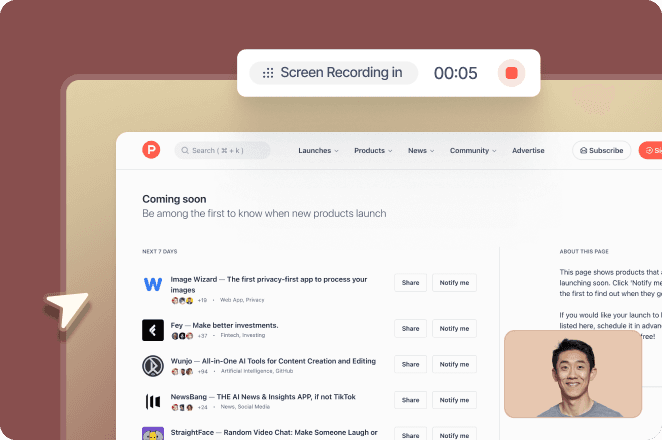
ابدأ باستخدام ميزة تسجيل الشاشة بالذكاء الاصطناعي في Trupeer لالتقاط العينة الصوتية الأولى. هذه الخطوة ضرورية للحصول على مقطع صوتي عالي الجودة يستطيع الذكاء الاصطناعي تحليله. افتح تطبيق Trupeer واختر خيار تسجيل الشاشة بالذكاء الاصطناعي. تأكد من إعداد الميكروفون بشكل صحيح، ثم سجّل نصًا قصيرًا، ويفضل أن يكون بين 30 ثانية ودقيقة واحدة. توفر هذه المدة بيانات كافية ليتمكن الذكاء الاصطناعي من استنساخ الصوت بفعالية. بعد التسجيل، أوقف الجلسة واحفظ الملف. تعالج Trupeer التسجيل تلقائيًا، وتحسن جودة الصوت عبر إزالة ضوضاء الخلفية وتوحيد مستويات الصوت. في حال وجود أخطاء أو كانت الجودة غير مرضية، أعد التسجيل مع تعديل إعدادات الميكروفون أو البيئة المحيطة.
الخطوة 2: ارفع عينة الصوت
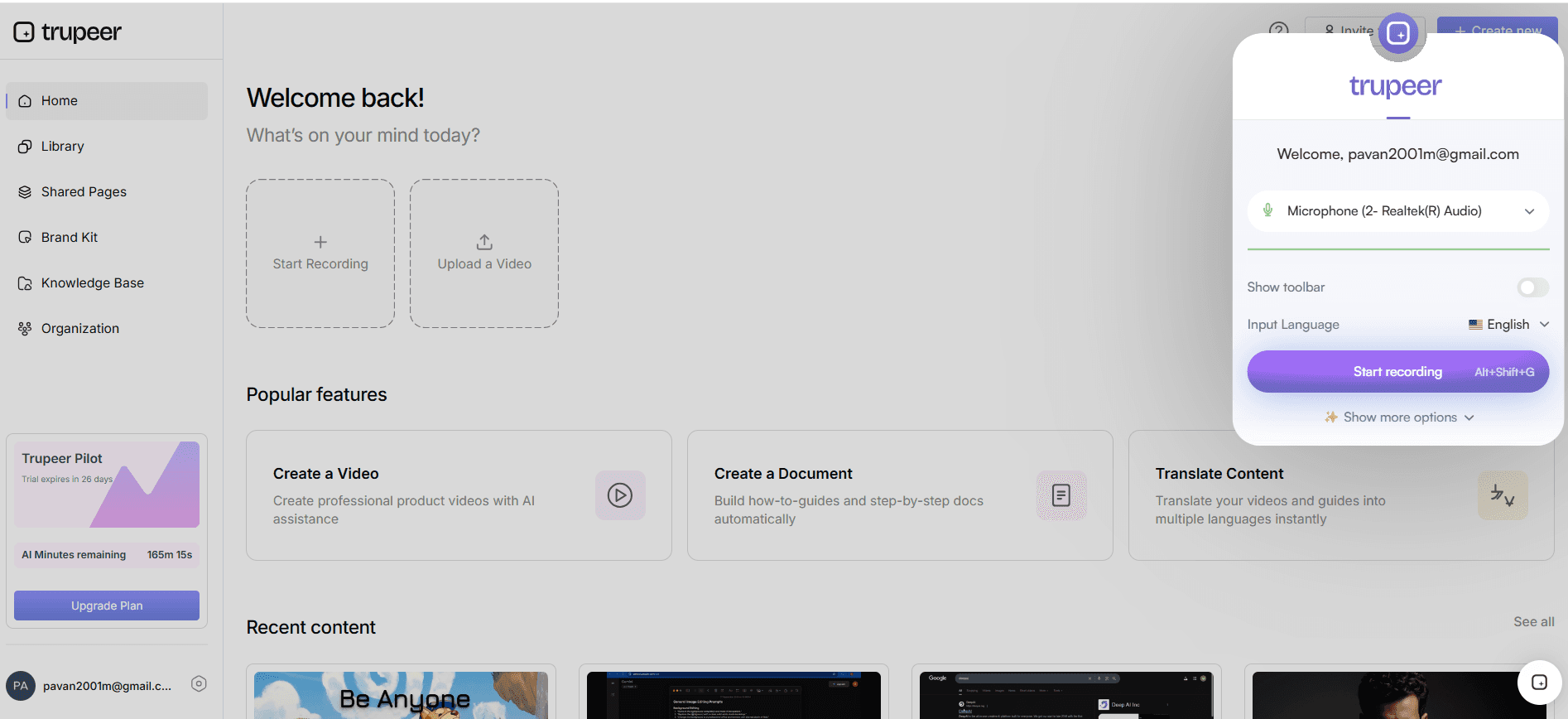
بعد ذلك، ارفع عينة الصوت المسجلة إلى وحدة استنساخ الصوت بالذكاء الاصطناعي في Trupeer. انتقل إلى قسم استنساخ الصوت وانقر على زر الرفع. ثم اختر ملف الصوت المحفوظ وابدأ عملية الرفع. يقوم نظام Trupeer بسرعة بتحليل خصائص الصوت مثل النبرة والحدة والسرعة. يستغرق هذا التحليل عادة نحو 2-3 دقائق. وخلال هذه الفترة، تستعد نماذج الذكاء الاصطناعي لتقليد الصوت بدقة. إذا فشل الرفع أو اعتُبرت العينة قصيرة جدًا، فستتلقى تنبيهًا لإعادة الرفع أو تسجيل عينة جديدة. تأكد من أن اتصال الإنترنت مستقر لتجنب أي انقطاع أثناء هذه الخطوة.
الخطوة 3: أنشئ نسخة الصوت بالذكاء الاصطناعي
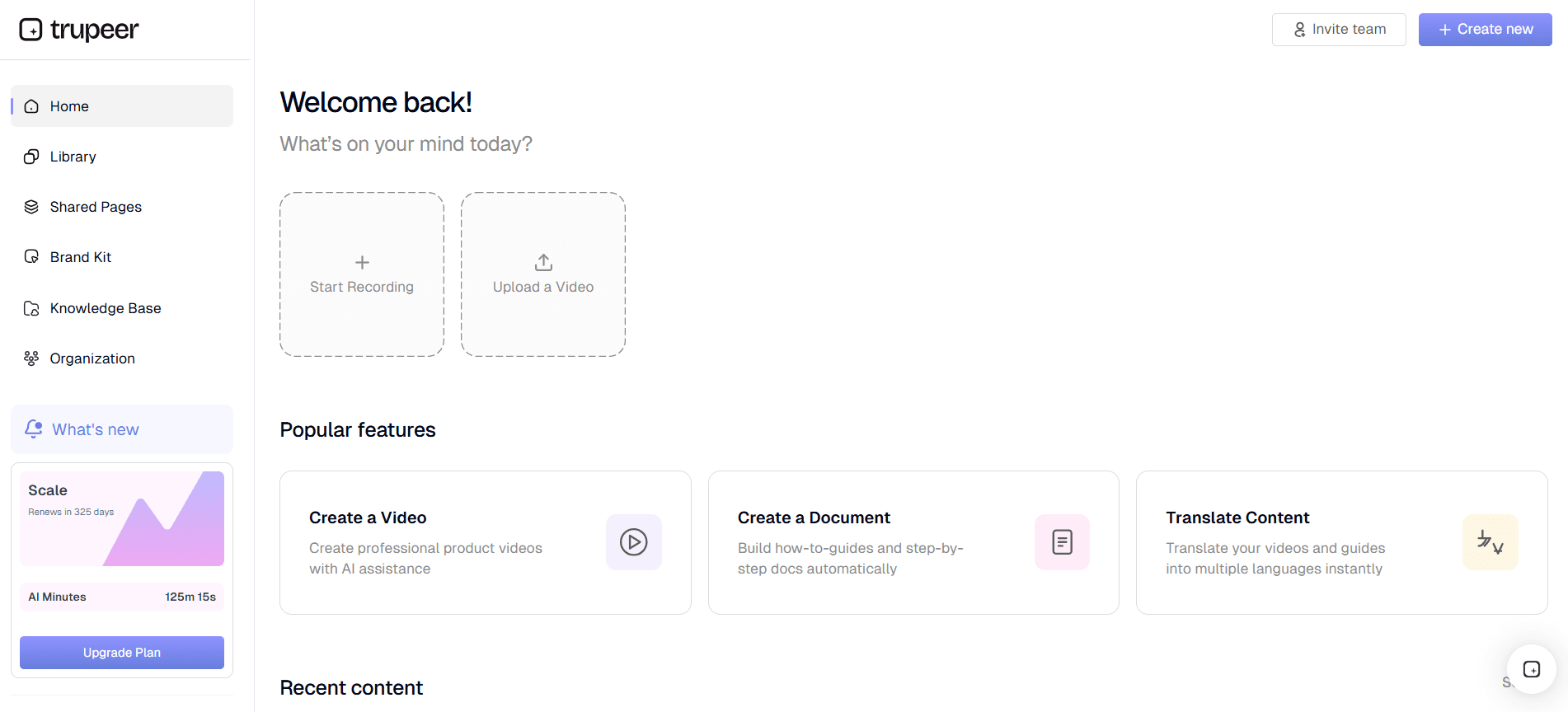
بعد التحليل، انتقل إلى إنشاء نسخة الصوت بالذكاء الاصطناعي. توفر Trupeer واجهة يمكنك من خلالها معاينة الصوت المستنسخ. انقر على زر "إنشاء نسخة الصوت". سيقوم الذكاء الاصطناعي بتوليف الصوت، وإنشاء نسخة رقمية تحاكي المتحدث الأصلي. تكتمل هذه العملية خلال 5 دقائق. استخدم ميزة المعاينة للاستماع إلى الصوت المستنسخ. يمكن إجراء تعديلات على السرعة والنبرة لضمان توافق النسخة مع متطلباتك. وإذا كانت النتيجة غير مرضية، لديك خيار ضبط المعلمات أو إعادة رفع عينة أوضح. كما توفّر Trupeer أيضًا تحويل الصوت إلى فيديو بالذكاء الاصطناعي في دقائق التي تتولى هذه الخطوة دون أي إعداد إضافي.
الخطوة 4: دمجها مع التعليق الصوتي بالذكاء الاصطناعي
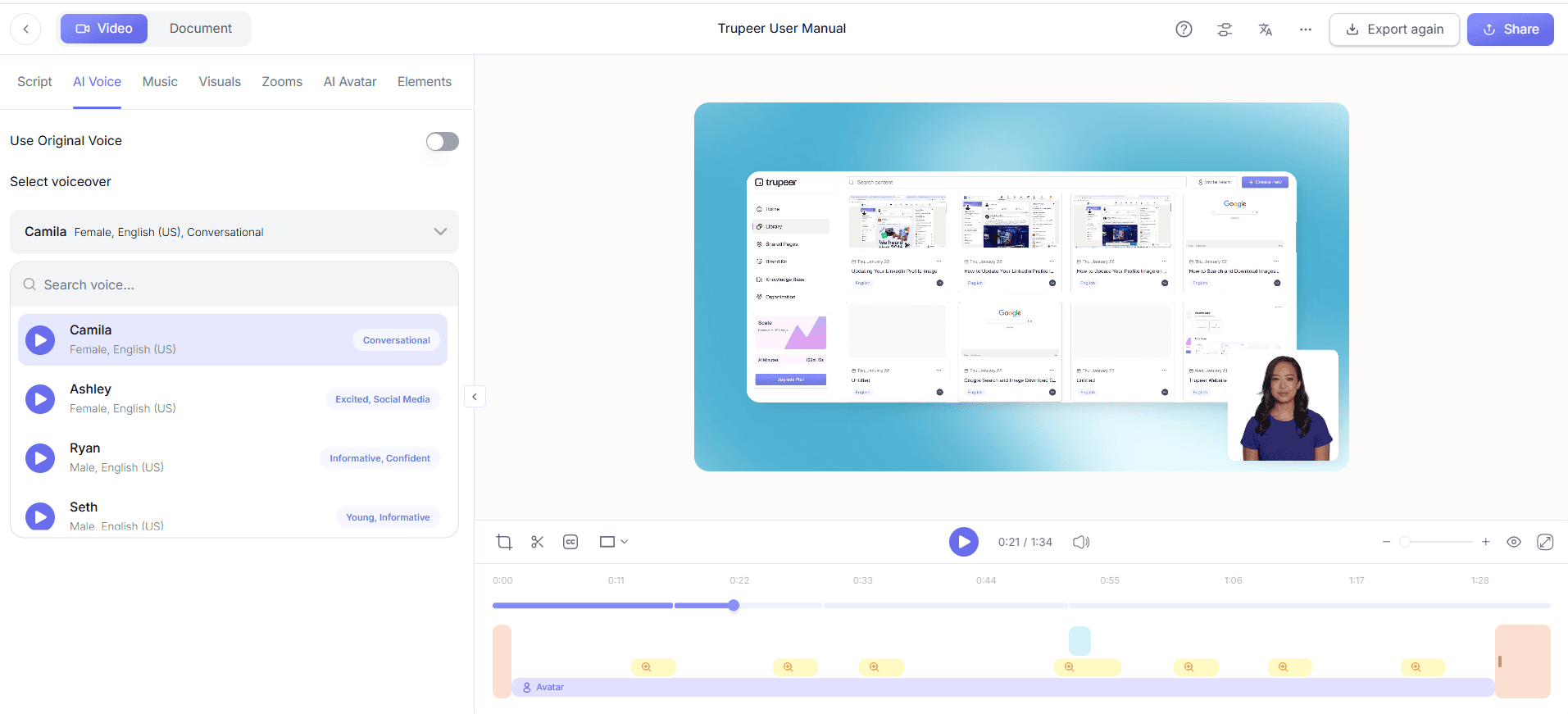
ادمج الصوت المستنسخ مع ميزة التعليق الصوتي بالذكاء الاصطناعي في Trupeer لتحسين الفيديوهات التدريبية. اختر خيار التعليق الصوتي بالذكاء الاصطناعي وأدخل النص التدريبي الخاص بك. ستطبق Trupeer الصوت المستنسخ تلقائيًا لسرد النص. تتيح هذه العملية إجراء تعديلات فورية على أسلوب الإلقاء، مثل تغيير سرعة الكلام أو التشديد على بعض الكلمات. ومع مكتبة تضم أكثر من 65 صوتًا طبيعيًا، يمكنك أيضًا اختيار مزج الصوت المستنسخ مع أصوات أخرى لإنتاج محتوى أكثر حيوية. التكامل سلس ويضمن أن يكون الناتج النهائي جاهزًا للاستخدام الفوري في إنتاج الفيديو.
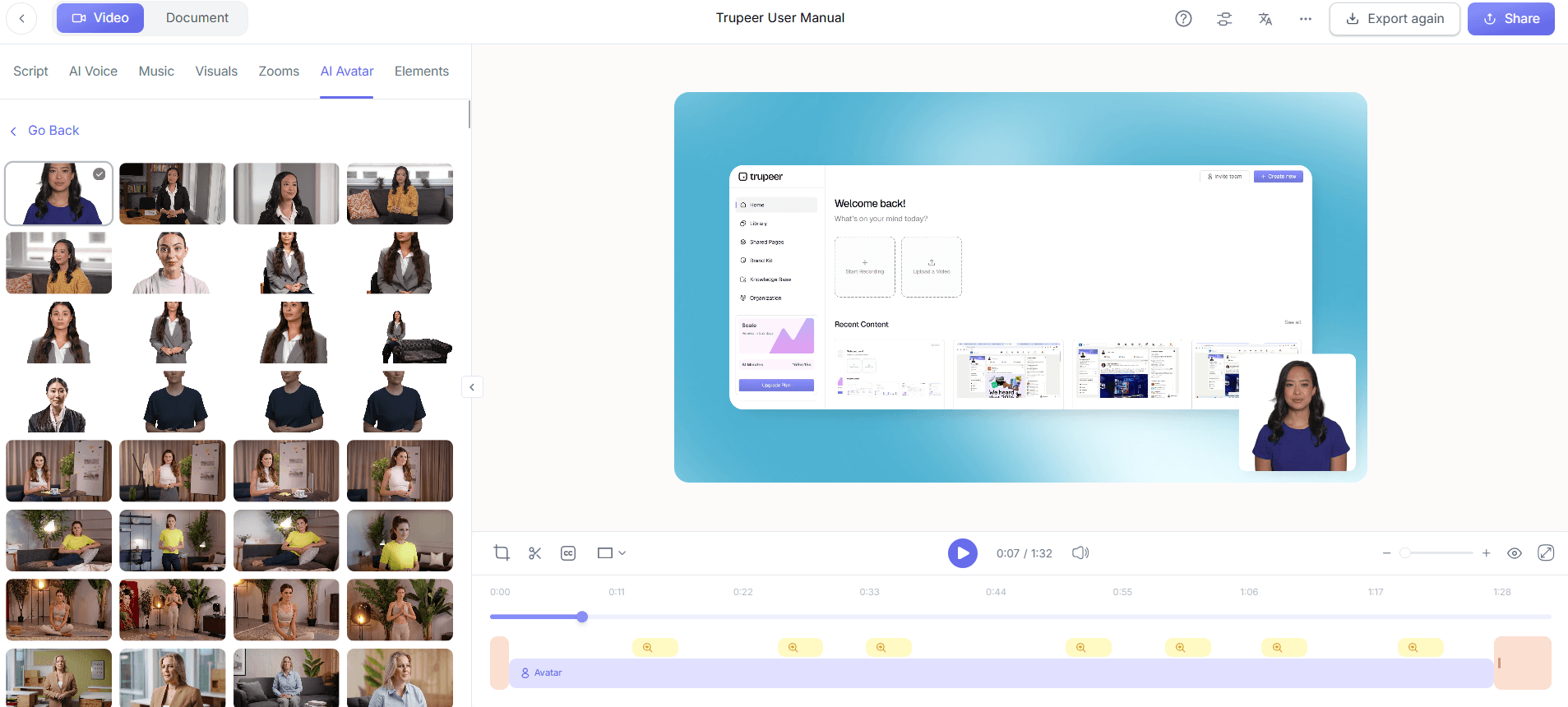
الخطوة 5: أنشئ صورًا رمزية بالذكاء الاصطناعي لتعزيز التفاعل البصري
لإضافة عنصر بصري، استخدم صور Trupeer الرمزية بالذكاء الاصطناعي لمرافقة التعليق الصوتي. انتقل إلى قسم الصور الرمزية بالذكاء الاصطناعي، واختر صورة رمزية مناسبة، ثم قم بمزامنتها مع الصوت المستنسخ. يطابق النظام تلقائيًا حركة الشفاه مع التعليق الصوتي، ما يخلق عرضًا متناسقًا. تعزز هذه الخطوة التفاعل في الفيديوهات التدريبية من خلال توفير حضور بصري واقعي. ولا يستغرق إكمالها سوى بضع دقائق بفضل إمكانات التكامل في Trupeer. وإذا لم يتوافق اختيار الصورة الرمزية مع علامتك التجارية، ففكّر في رفع صور رمزية مخصصة باستخدام تكامل HeyGen في Trupeer لإضافة لمسة شخصية. وغالبًا ما تبدأ الفرق التي تقارن الأدوات بإلقاء نظرة على مقارنة بدائل Loom قبل اعتماد سير عمل موحّد.
الخطوة 6: أتمم الفيديو وصدّره
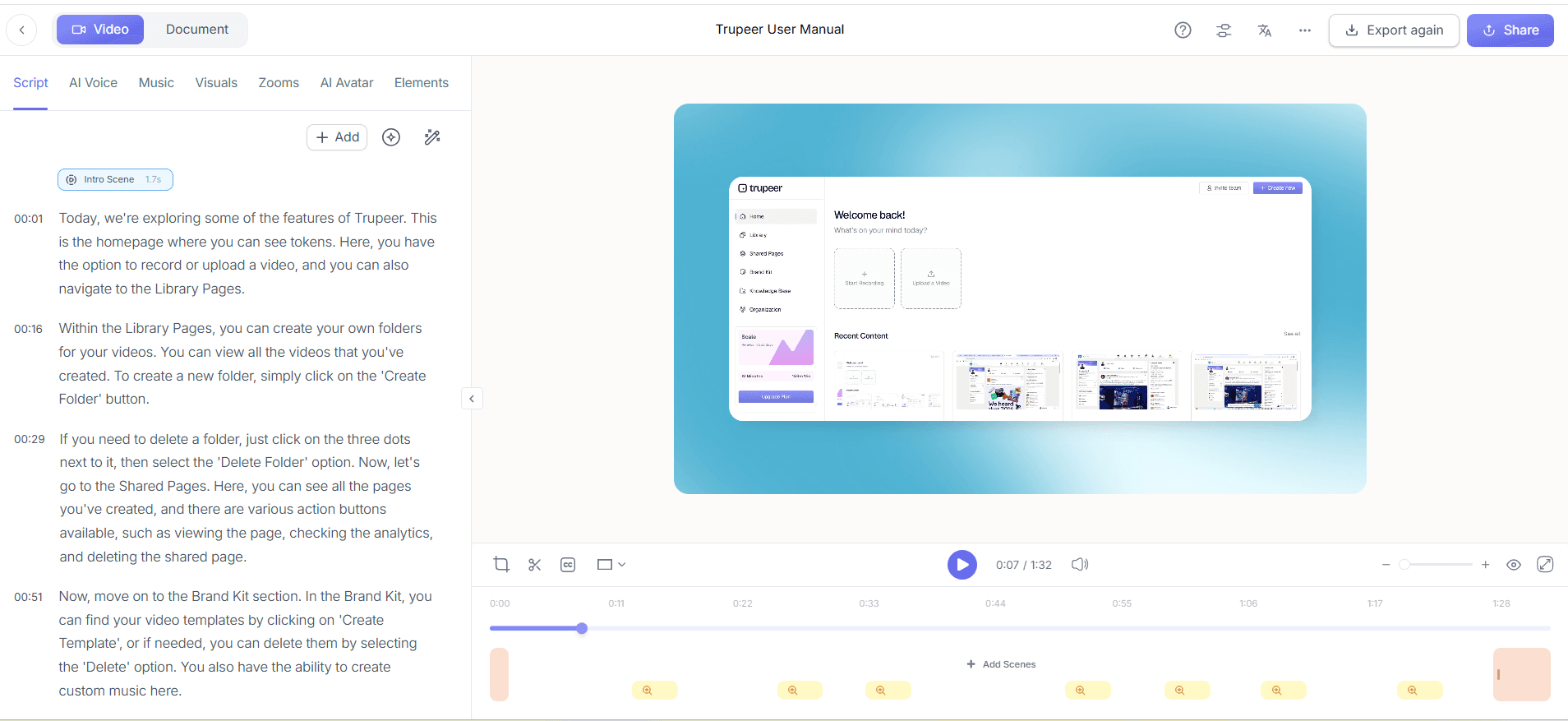
أتمم الفيديو التدريبي بمراجعة المحتوى للتأكد من عدم وجود أي اختلافات. استخدم الفصول التلقائية واكتشاف المقاطع في Trupeer لتنظيم الفيديو في أقسام منطقية. تساعد هذه الميزة في إنشاء تجربة مشاهدة منظمة، مما يسهل على المتعلمين التنقل. وعند الرضا عن النتيجة، صدّر الفيديو بالتنسيق المطلوب مثل MP4 أو HTML أو SCORM. توفّر Trupeer خيارات تصدير متعددة الصيغ لتلبية احتياجات التوزيع المتنوعة. تتم عملية التصدير بسرعة، وعادة ما تستغرق أقل من 5 دقائق. تضمن هذه الخطوة الأخيرة أن يكون الفيديو التدريبي جاهزًا للنشر، مع تعليق صوتي متسق وعالي الجودة.
ما النصائح التي تساعدك على استنساخ صوت في 10 دقائق؟
يتطلب استنساخ الصوت بنجاح في 10 دقائق فقط تحضيرًا استراتيجيًا والأدوات المناسبة. فيما يلي نصائح عملية لضمان أن تكون عملية استنساخ الصوت لديك فعالة وكفؤة.
اختر بيئة هادئة. يقلل التسجيل في مكان هادئ من ضوضاء الخلفية، مما يضمن أن يتمكن الذكاء الاصطناعي من تحليل خصائص الصوت بوضوح اللازمة للاستنساخ الدقيق.
استخدم معدات عالية الجودة. استثمر في ميكروفون جيد لالتقاط عينة صوت نظيفة. هذا يقلل الحاجة إلى تصحيح الضوضاء ويحسن جودة النسخة النهائية.
حضّر نصًا واضحًا. جهّز نصًا موجزًا للتسجيل الأولي. يساعد النص المُعد جيدًا في الحفاظ على الاتساق ويمنح الذكاء الاصطناعي عينة بيانات قوية.
جرّب أساليب كلام مختلفة. اختبر نبرات وسرعات مختلفة أثناء التسجيل. يساعد هذا الذكاء الاصطناعي على إنشاء نسخة صوتية متعددة الاستخدامات قادرة على التعامل مع محتوى متنوع.
وحّد العمل باستخدام مقارنة بديل Scribe. يساعد استخدام أدوات متسقة على تبسيط سير العمل، مما يجعل عملية الاستنساخ أسرع وأكثر موثوقية.
استخدم مولّد الفيديوهات التدريبية. يضمن ذلك دمج التعليق الصوتي بسلاسة في الفيديو، مع الحفاظ على انسياب عملية الإنتاج.
حدّث عينات الصوت بانتظام. قم بتحديث عينات صوتك دوريًا لضمان بقاء النسخة المستنسخة دقيقة وملائمة لأي تغييرات تطرأ على صوت المتحدث بمرور الوقت.
الأسئلة الشائعة
ما مدى دقة استنساخ الصوت بالذكاء الاصطناعي؟
يُعد استنساخ الصوت بالذكاء الاصطناعي دقيقًا جدًا، بشرط استخدام عينة واضحة. تستطيع تقنية Trupeer محاكاة نبرة الصوت وسرعته وتغيّر طبقاته بدقة ملحوظة. تعتمد عملية الاستنساخ على خوارزميات متقدمة تحلل معلمات صوتية متعددة، مما يضمن أن يبدو الصوت المستنسخ طبيعيًا وأصيلًا. ومع ذلك، قد تختلف الدقة حسب جودة التسجيل الأولي والعوامل البيئية أثناء الالتقاط. ولأفضل النتائج، من الضروري استخدام معدات صوت عالية الجودة وبيئة خالية من الضوضاء. هذا الإعداد يقلل التشوهات التي قد تؤثر في قدرة الذكاء الاصطناعي على استنساخ الصوت بدقة.
هل يمكنني استخدام الأصوات المستنسخة بلغات مختلفة؟
نعم، يمكن تكييف الأصوات المستنسخة للغات مختلفة باستخدام ميزات الترجمة والدبلجة بالذكاء الاصطناعي في Trupeer. بعد استنساخ الصوت، يمكن لـ Trupeer ترجمة النص ومزامنته مع الصوت المستنسخ لإنشاء فيديوهات تدريبية متعددة اللغات. هذا مفيد بشكل خاص للمؤسسات العالمية التي تحتاج إلى إنتاج محتوى بلغات متعددة. تضمن أداة توطين الفيديو من Trupeer أن يظل المحتوى المدبلج دقيقًا من حيث مزامنة حركة الشفاه، مما يعزز تجربة المشاهدة للجمهور غير الناطق بالإنجليزية. ومع ذلك، تعتمد فعالية هذه العملية على تعقيد اللغة والفروق الدقيقة في الصوت الأصلي.
ماذا لو لم يكن الصوت المستنسخ يبدو صحيحًا؟
إذا لم يكن الصوت المستنسخ مطابقًا لتوقعاتك، فيمكن إجراء عدة تعديلات. أولًا، راجع التسجيل الأولي للتحقق من الوضوح ووجود ضوضاء الخلفية. وإذا لزم الأمر، أعد تسجيل العينة في بيئة أكثر هدوءًا وبمعدات أفضل. كما تتيح لك Trupeer تعديل النبرة والسرعة، مما يوفر مرونة لتحسين النسخة. كما يمكنك تجربة نصوص مختلفة أو أطوال عينات متنوعة لتزويد الذكاء الاصطناعي بمجموعة بيانات أكثر شمولًا. يمكن أن تساعد هذه الخطوات في تحسين جودة الصوت المستنسخ وضمان توافقه مع احتياجات مشروعك.
هل تدعم Trupeer مكتبات أصوات مخصصة؟
نعم، تدعم Trupeer إنشاء مكتبات أصوات مخصصة واستخدامها. هذه الميزة مفيدة للمؤسسات التي تحتاج إلى مجموعة من الأصوات لتلبية متطلبات العلامة التجارية أو المحتوى المحددة. من خلال رفع عدة عينات صوتية، يمكن للفرق بناء مكتبة مخصصة توفر خيارات صوتية متنوعة لمشروعات مختلفة. تجعل واجهة Trupeer إدارة هذه المكتبات سهلة، مما يسمح بالاختيار السريع ودمج الأصوات في الفيديوهات التدريبية. يضمن هذا التخصيص بقاء المحتوى متسقًا مع هوية العلامة التجارية ومناسبًا لتفضيلات الجمهور المختلفة.
هل استنساخ الصوت بالذكاء الاصطناعي مجدٍ من حيث التكلفة؟
يُعد استنساخ الصوت بالذكاء الاصطناعي حلًا اقتصاديًا لإنتاج محتوى تدريبي متسق وقابل للتوسع. ومن خلال الاستغناء عن الحاجة إلى ممثلين صوتيين محترفين في كل مشروع، يمكن للمؤسسات خفض التكاليف بشكل كبير. يبسّط نظام Trupeer العملية، مما يقلل من الوقت والاستثمار المالي المطلوبين لإنتاج التعليق الصوتي. كما أن القدرة على إنتاج أصوات مستنسخة بسرعة بلغات مختلفة دون توظيف إضافي تعزز وفورات التكلفة أكثر. ومع مرور الوقت، تتراكم هذه الوفورات، مما يسمح للفرق بتخصيص الميزانية لمجالات حيوية أخرى مثل تطوير المحتوى والعناصر التفاعلية.
المدونات ذات الصلة