Trupeer Blog
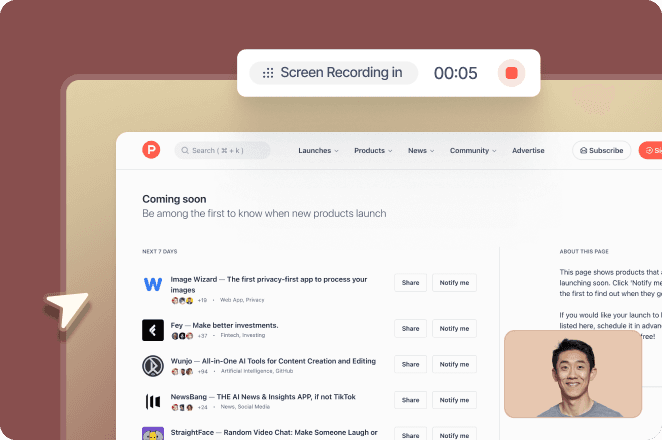
Weekly team meetings can be a goldmine of valuable insights and information. Yet often, their potential goes untapped once the meeting concludes. Imagine if you could transform these recordings into powerful training materials, enhancing your team's skills while saving time and resources. A staggering
85% of professionals believe that repurposing existing content can significantly boost productivity and engagement.
With the right approach, you can smoothly convert your Zoom meeting recordings into reusable training assets. This is particularly beneficial for organizations where continuous learning and efficient knowledge transfer are crucial. Whether you're in L&D or HR, or a team lead aiming to bolster team performance, this method offers scalable solutions for training and development.
Why does turning meeting recordings into training assets matter?
Organizations today face the challenge of efficiently training their workforce while managing costs. Weekly meetings often contain critical discussions, strategic insights, and expert knowledge that, if captured and repurposed, can serve as valuable training content. However, many companies overlook this opportunity, resulting in a reliance on traditional training methods that can be both time-consuming and costly. By converting meeting recordings into training materials, businesses can tap into an existing resource, reducing the need for repetitive live training sessions.
For teams, especially those spread across different locations, accessing consistent and high-quality training content can be difficult. This is where repurposing meeting recordings becomes essential. It ensures that all employees, regardless of their location, receive the same level of training and information. This approach not only saves time but also ensures that everyone is aligned with the company's goals and strategies. also, it allows for on-demand learning, giving employees the flexibility to learn at their own pace and revisit complex topics as needed. This training videos use case highlights how using existing recordings can simplify the learning process.
What are the benefits of repurposing meeting recordings into training assets?
Transforming meeting recordings into training materials offers numerous advantages that extend beyond mere cost savings. Here are some key benefits:
Cost Efficiency. Using existing recordings eliminates the need for additional resources to create training content, thus reducing expenses. A single meeting can produce multiple training material outputs, maximizing your investment.
Consistency in Training. By standardizing the content delivered across teams, you ensure that every employee receives the same information, reducing discrepancies and enhancing understanding company-wide.
Time Savings. Reusing recordings cuts down on the time required to develop new training sessions from scratch. This means quicker deployment of training across the organization.
Enhanced Engagement. Interactive and visually engaging content can be created from recordings, making training sessions more appealing and effective for employees.
Accessibility and Flexibility. Employees can access training whenever they need, allowing them to learn at their own pace and according to their schedules. This flexibility boosts participation rates.
Scalability. As your organization grows, the ability to scale training efficiently becomes critical. An AI video platform helps in quickly updating and distributing training content to a larger audience.
Which Trupeer features help you turn meeting recordings into training assets?
Trupeer offers a range of tools designed specifically to transform your meeting recordings into valuable training content. how these features can assist your team.
AI screen recording with auto-zoom and click detection
Trupeer's screen recording for employee training tool is equipped with advanced AI capabilities that automatically detect clicks and zoom in on relevant screen areas. This feature ensures that your recordings are clear and focused on the essential parts of the meeting. It simplifies the process of capturing the most critical content, making it easier to later extract and transform into training materials. By focusing on key actions and interactions, this feature helps create engaging and instructive content that mirrors the original meeting dynamics.
Automatic filler-word removal
Incorporating Trupeer's automatic filler-word removal feature simplifies the editing process by eliminating unnecessary words like "um" and "ah," which often clutter recordings. This capability enhances the clarity and professionalism of your training content. By removing these distractions, the training material becomes more concise and easier to follow, leading to better comprehension and retention among employees.
AI voiceover in 65+ natural voices
With Trupeer, you can enhance your training videos using AI voiceover technology, which offers over 50 natural-sounding voices. This feature allows you to choose a voice that best fits your company's tone and style. The ability to adjust pace and tone ensures that your training content remains engaging and aligned with your organizational brand. This level of customization helps in crafting a training experience that resonates with your audience, making the content more relatable and impactful.
Automatic SOP generation from any recording
Trupeer's AI documentation platform can automatically generate standard operating procedures (SOPs) from any meeting recording. This capability is particularly beneficial for creating step-by-step guides and instructional materials. The generated documentation is edit-ready and can be easily exported in various formats, such as HTML, PDF, or SCORM, allowing for smooth integration into your existing training systems. This not only speeds up the documentation process but also ensures accuracy and consistency across all training materials.
AI-searchable knowledge base with timestamp deep-links
Trupeer's AI-searchable knowledge base indexes every recording with timestamp-level deep links, making it easy for employees to find specific segments of the training material quickly. This feature enhances the usability of your training content by allowing users to navigate directly to the parts they need to review, without having to sift through entire videos. It enables employees to access information efficiently, promoting a culture of self-directed learning and continuous improvement.
How do you turn weekly team meeting recordings into reusable training assets step by step with Trupeer?
Step 1: Capture the Meeting
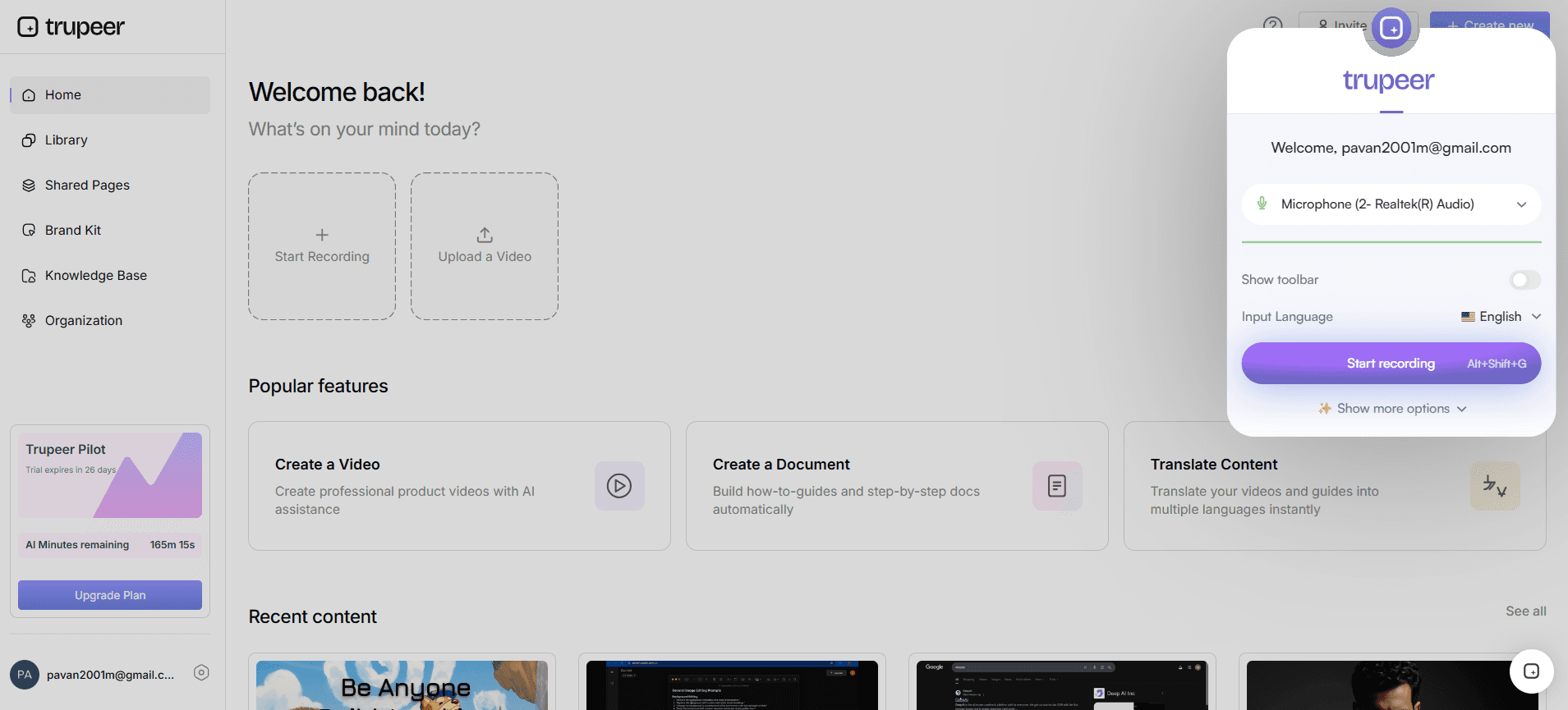
Start by using Trupeer's browser-based recorder to capture your weekly team meeting. This tool requires no installation, making it quick to set up. Simply open the Trupeer recorder in your browser, hit "Record," and let the AI screen recording with auto-zoom and click detection do its job. This feature ensures that important points are highlighted, creating a focused and comprehensive recording. The automatic detection of clicks and zooming on key areas ensures that the final output is engaging and clear. This step usually takes as long as your meeting, plus a few minutes for setup.
Step 2: Enhance the Recording
Once your meeting is recorded, it's time to enhance it using Trupeer's AI editing capabilities. Start by enabling the automatic filler-word removal feature. This removes all "ums," "ahs," and long pauses, which makes the content more concise and professional. Next, add an AI voiceover in a natural voice that suits your organizational style. You can select from over 65+ natural voices and adjust the pace and tone to match your brand. This process is automated and takes roughly 15-20 minutes, depending on the length of your recording.
Step 3: Generate SOPs and Documentation
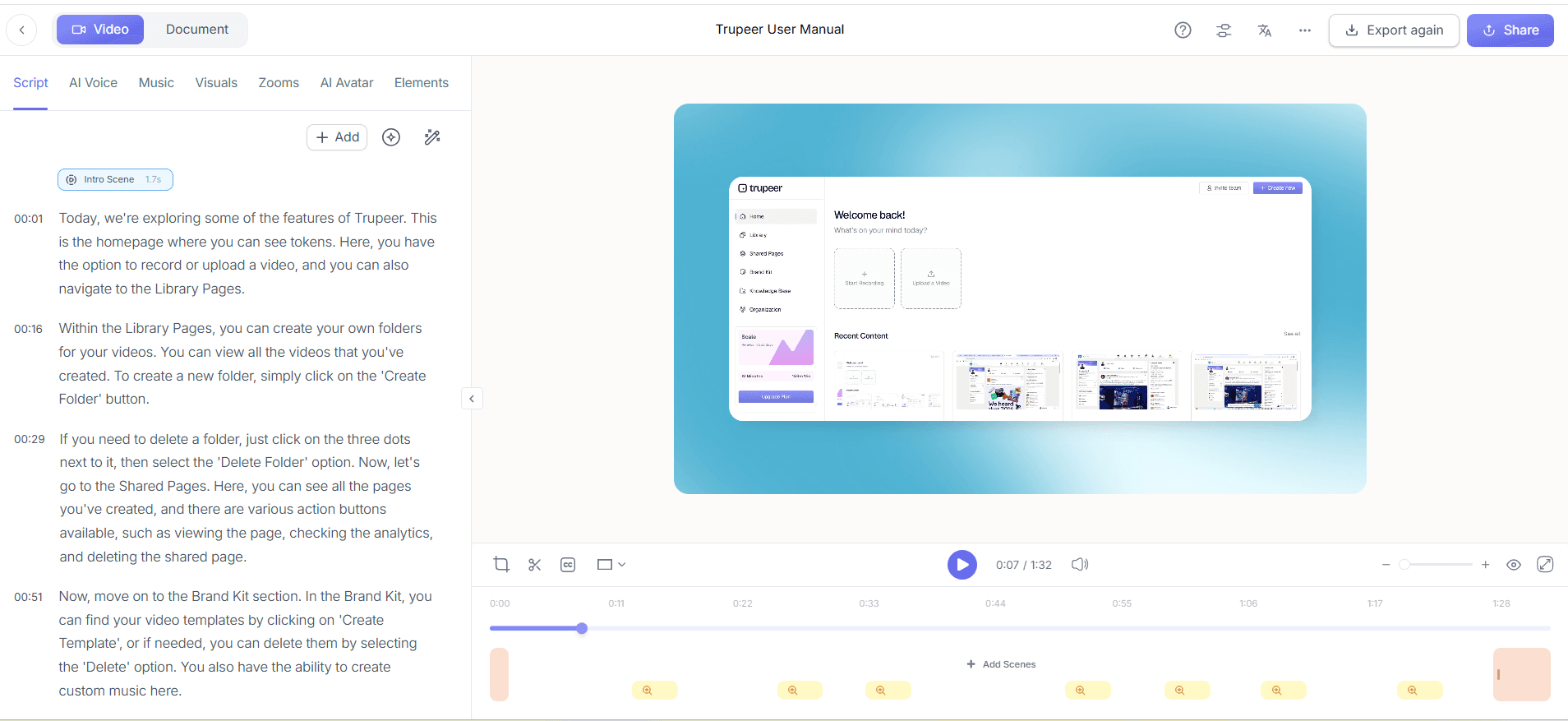
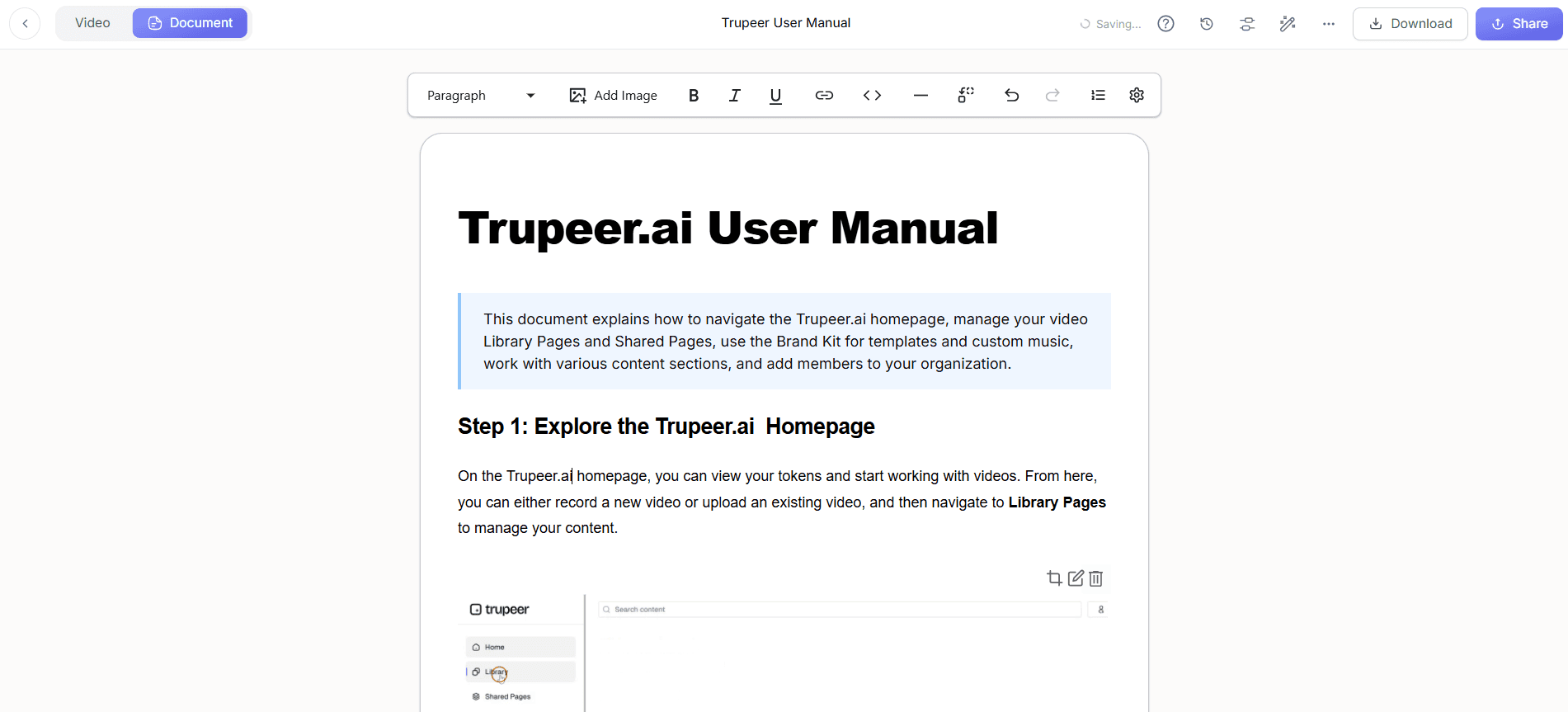
Convert your enhanced recording into structured training content by using Trupeer's automatic SOP generation feature. This tool generates editable SOPs from your video, providing a written guide alongside the visual content. Export the SOPs in your preferred format, such as HTML or PDF, for easy distribution. The AI documentation platform ensures the documentation is consistent with the video, making it a reliable reference. This step takes about 10 minutes and ensures your training assets are ready for distribution.
Step 4: Translate and Localize Content
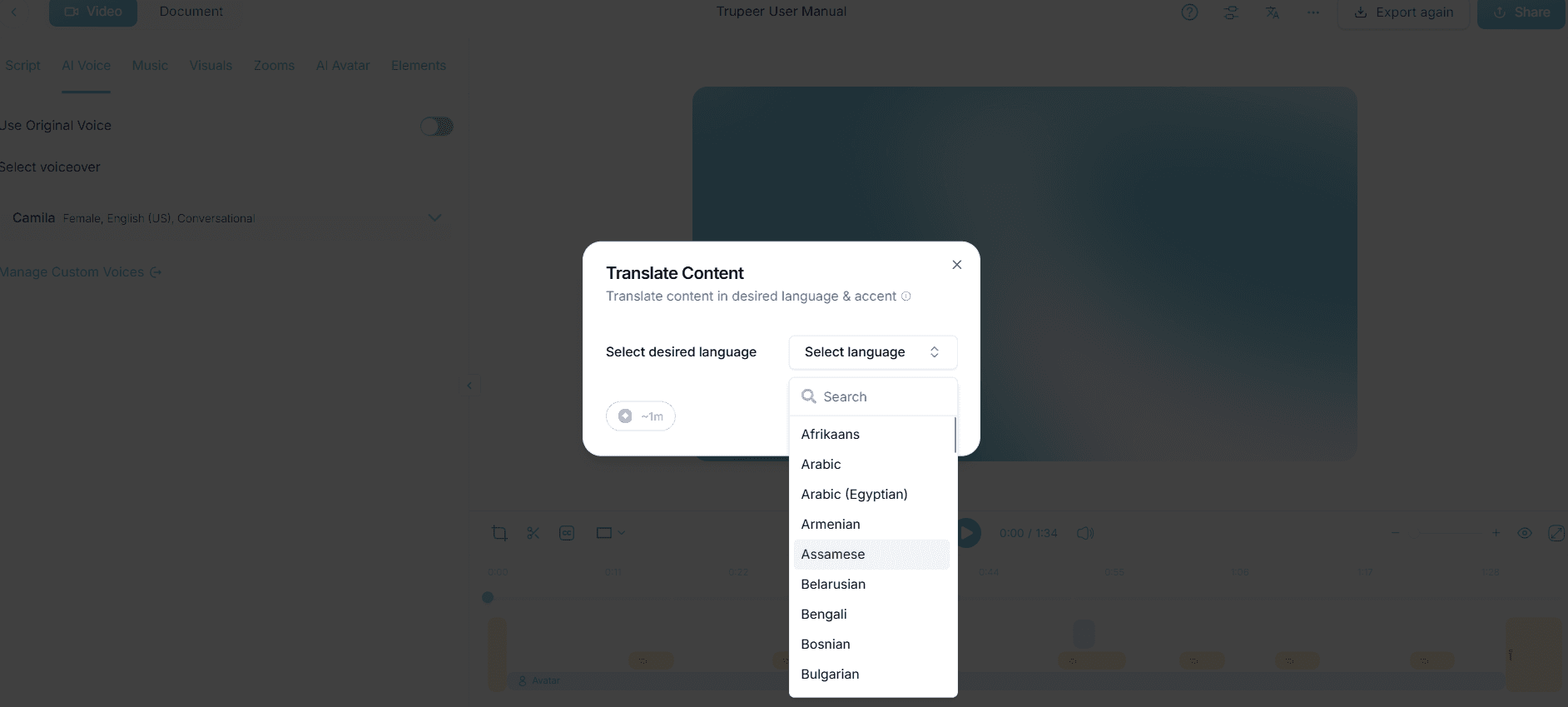
Ensure your training material is accessible to all employees, regardless of language. Use Trupeer's AI translation feature to translate your video and documentation into over 40 languages. The platform also offers AI dubbing with lip-sync, making it possible to create non-English versions of your videos. This localization step is crucial for global teams and takes around 30 minutes, depending on the complexity and length of the content. You can even adjust the dubbed voices to match the original tone, ensuring consistency across languages.
Step 5: Distribute Training Assets
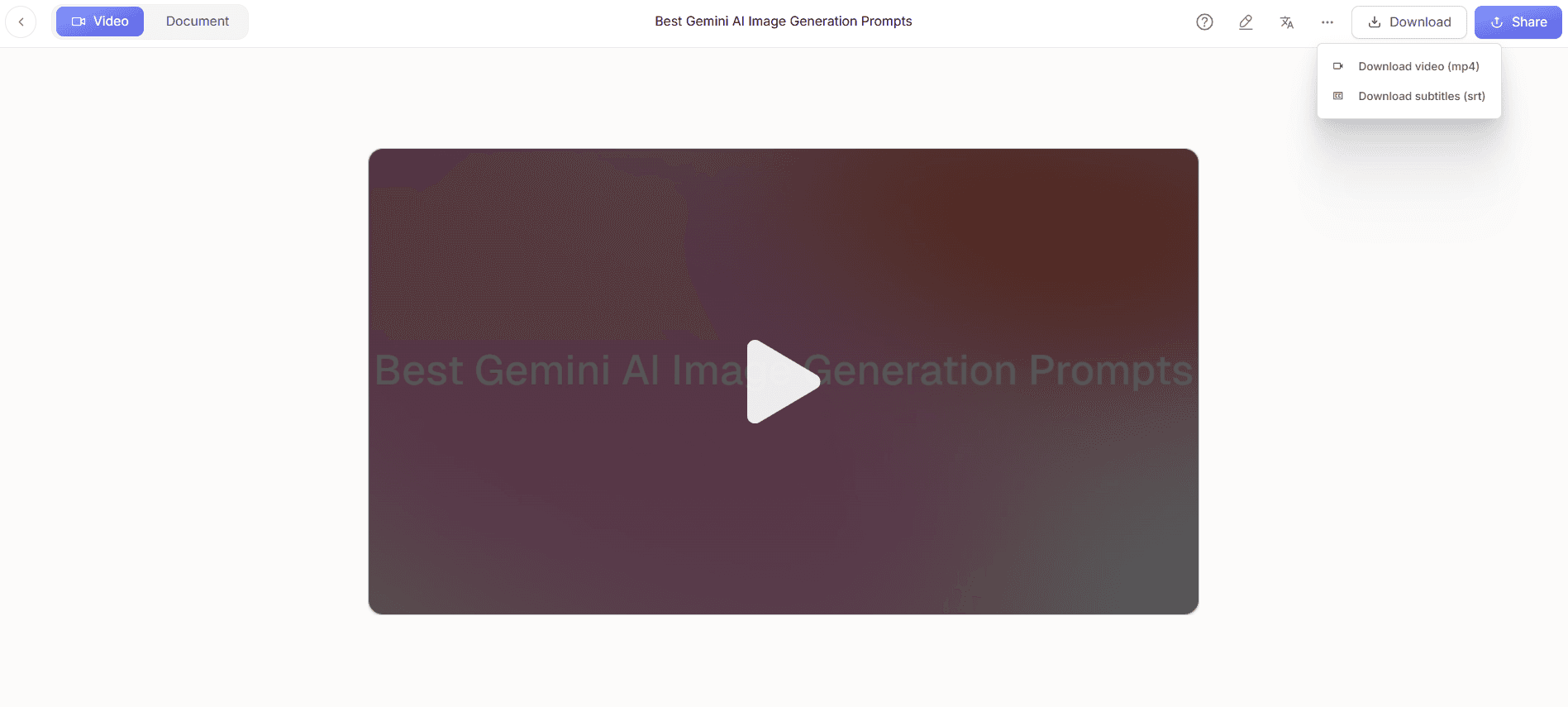
With your training content ready, it's time to distribute it effectively. Use Trupeer's AI-searchable knowledge base to host and index your videos. This feature allows employees to quickly find specific training topics via timestamp deep-links. You can also use the custom-domain hosting with SSO for secure access. This setup not only ensures easy distribution but also protects your content. Embedding video widgets for in-app guidance can further enhance accessibility. This step is typically completed within 20 minutes.
Step 6: Analyze Engagement
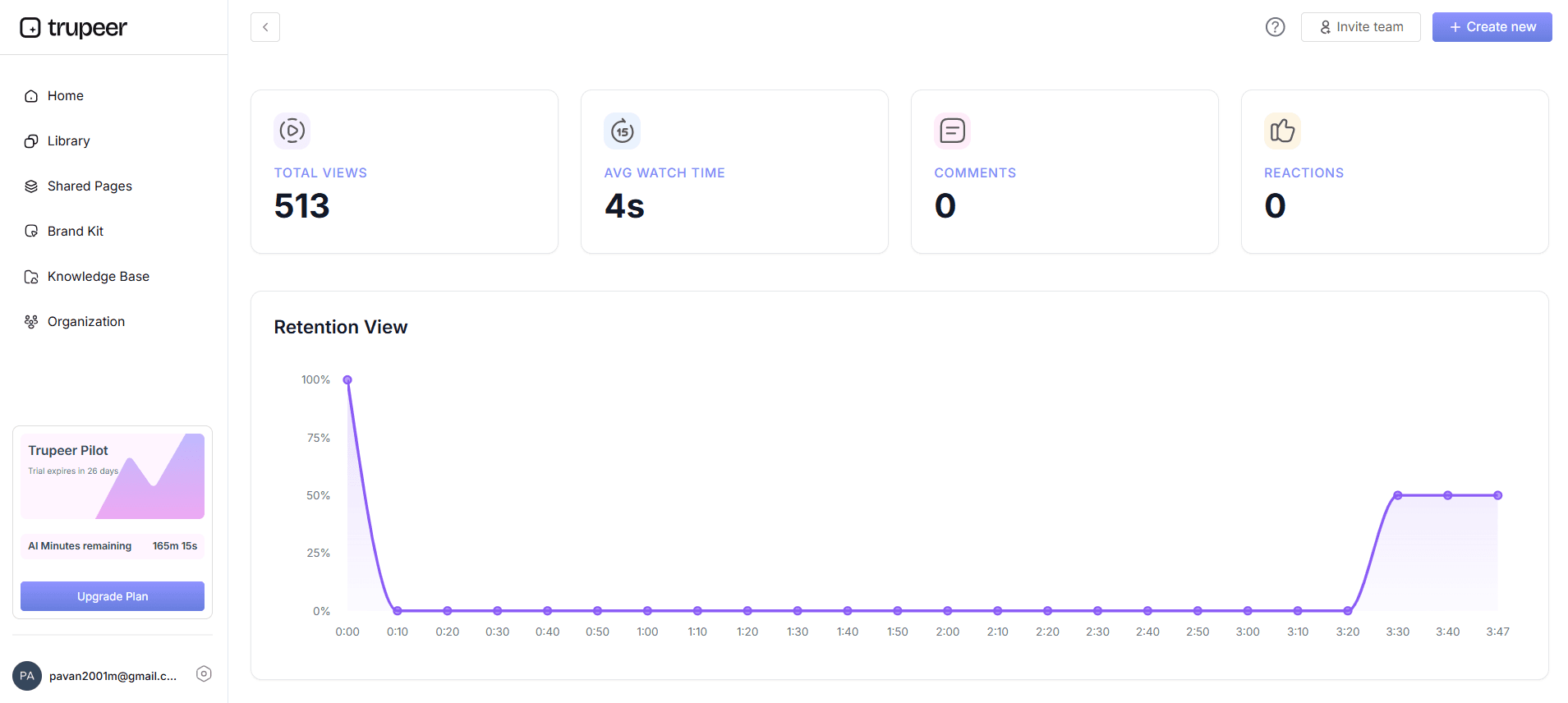
After distributing your training assets, it's important to analyze their impact. Trupeer provides detailed viewer engagement analytics, including drop-off rates and heatmaps. These insights help you understand which parts of the training are most engaging and which need improvement. Use the collaborative review and approval workflows to gather feedback from stakeholders. This step is ongoing and provides continuous feedback, allowing you to refine and improve your training materials over time. Teams weighing tools often start with a Loom alternatives comparison before standardizing on a workflow.
What tips help you turn meeting recordings into training assets?
Creating effective training materials from meeting recordings requires a strategic approach. Here are some tips to maximize the impact of your efforts:
Set Clear Objectives. Define what you want to achieve with your training assets before you start the process. This ensures that your content meets specific learning goals.
Keep Content Concise. Focus on the most important parts of the meeting. Use AI editing tools to remove unnecessary segments and keep your training materials engaging.
Standardize Formats. Use consistent templates and styles across all training materials to ensure a professional look, which enhances credibility and recognition.
Use Multiple Formats. Offer training content in different formats such as video, text, and interactive modules. This caters to different learning preferences and increases accessibility.
Encourage Feedback. Implement feedback mechanisms to gather input from users. This helps in continuously improving the quality and relevance of your training materials.
Update Regularly. Ensure your training assets reflect the latest information and best practices by reviewing and updating them periodically.
use AI Tools. use an AI training video tool to simplify the creation and distribution process. This enhances efficiency and ensures high-quality outputs.
Frequently asked questions
How do I ensure the quality of training materials from meeting recordings?
Quality assurance starts with capturing clear and focused recordings. Use Trupeer's AI editing tools to remove distractions and enhance clarity. Automatic filler-word removal and AI voiceovers enhance professionalism. Regularly review and update your content to maintain accuracy and relevance. Feedback from users is invaluable, so incorporate it to refine and improve materials continuously. Advanced analytics from platforms like Trupeer can also provide insights into how engaging your content is, guiding further enhancements.
What formats can I export my training materials in?
Trupeer allows you to export training materials in multiple formats to suit different needs. You can choose from MP4 for video content, HTML for web-based modules, PDF for text-based guides, and SCORM for integration with learning management systems. This flexibility ensures that your training materials can be accessed on various platforms and devices, catering to a wide range of learning environments and preferences.
Can meeting recordings be used for multilingual training?
Yes, meeting recordings can be effectively transformed into multilingual training assets. Trupeer's AI translation and dubbing features allow you to convert your content into over 40 languages, complete with lip-sync for videos. This ensures that your training materials are accessible to a global workforce, breaking down language barriers and promoting inclusive learning. Proper localization enhances comprehension and engagement, ensuring that all employees receive the same quality of training.
Does Trupeer support interactive training content?
Trupeer supports the creation of interactive training content by allowing you to embed quizzes, feedback forms, and interactive elements within your videos. This engagement strategy enhances learning by actively involving participants in the training process. Interactive content is more likely to be retained, as it encourages learners to apply knowledge in practical scenarios. Using an Scribe alternative comparison can also help determine the best interactive features for your needs.
Is it possible to integrate AI tools with existing training systems?
Integration with existing systems is crucial for smooth training delivery. Trupeer facilitates this by offering SCORM-compatible exports, allowing for easy integration with most learning management systems. also, Trupeer's video translation platform ensures that your multilingual content integrates smoothly, maintaining consistency across different platforms. This capability simplifies the process of incorporating AI-enhanced materials into your current training infrastructure, enhancing accessibility and reach.
Artigos relacionados