Trupeer Blog
Resumir
Every SAP S/4HANA programme now has an AI question. Vendors promise agents that read your custom code, write your functional specs, configure your system and test it. Some of those promises are real, some are early and almost none of the tools cover the whole transformation. A CIO who buys "an AI tool for S/4HANA" without knowing which phase it serves can end up with three tools that overlap and a gap nobody noticed.
This guide maps the best AI tools for SAP S/4HANA transformation by lifecycle phase: assessment and process discovery, knowledge capture, fit-gap and design, custom code and clean core, implementation and configuration, and enablement and support. For each tool, you'll see what it's built for, where it fits and what it doesn't do, so you can assemble a stack without paying twice for the same layer or leaving one out. Trupeer is one of the tools on this list, and we've tried to be honest about where it fits and where it doesn't.
Buyer's overview: what AI tools for SAP S/4HANA transformation actually do

AI tools for SAP S/4HANA transformation fall into a few distinct layers:
Process intelligence: understanding how processes run today, from system data or recordings.
Delivery automation: turning requirements and workshops into fit-gap analysis, specifications, configuration guides and test scripts.
Code and clean core: analysing, documenting and modernising custom ABAP code.
Implementation agents: executing configuration, integration and migration work.
Knowledge capture and enablement: turning what SMEs know into documentation, training and a knowledge base users can rely on after go-live.
Most tools are strong in one or two layers. The last layer, the people side of the programme, is the one most AI tools for SAP S/4HANA transformation don't cover. For how your choice of greenfield or brownfield changes that people workload, see S/4HANA greenfield vs brownfield.
Our top picks at a glance

Tool | Main layer | Best for |
|---|---|---|
Trupeer | Knowledge capture, enablement and knowledge base | Capturing SME knowledge from screen recordings and turning it into SOPs, training videos and a searchable knowledge base |
Nova Intelligence | Custom code and clean core | Documenting and modernising custom ABAP code towards clean core |
Qorelo | Delivery automation and fit-gap | Turning workshops, documents and legacy systems into SAP Activate deliverables |
Tessera Labs | Implementation agents | Multi-agent execution of ERP transformation work such as code remediation and data harmonisation |
lab0 | Implementation agents | Early-stage agents that automate enterprise software implementation work |
Laminar | Process mapping and governed change | Mapping processes from system history and implementing governed changes |
SAP Joule for Consultants and Developers | Design and development assistance | SAP-native AI help for project consultants and ABAP developers |
Comparison chart: which phase each tool covers

Phase | Trupeer | Nova | Qorelo | Tessera | lab0 | Laminar | SAP Joule |
|---|---|---|---|---|---|---|---|
Process discovery and mapping | Recorded walkthroughs | Workshop and system context | System-history mapping | ||||
Knowledge capture from SMEs | Core strength | Partial | |||||
Fit-gap and design | Fit-to-standard for custom code | Core strength | Consultants | ||||
Custom code and clean core | Core strength | ABAP analysis | Code remediation | Developers | |||
Configuration and implementation | Configuration guides | Core strength | Core strength | Core strength | |||
Testing | UAT evidence recordings | Unit tests | Test scripts | Validation and approvals | |||
Training and enablement | Core strength | ||||||
Knowledge base and post-go-live support | Core strength |
Coverage is based on each vendor's public descriptions as of October 2026. Capabilities in this space change quickly, so check current features with each vendor.
Phase 1: Process discovery and mapping
Laminar
What it does: Laminar is an enterprise transformation platform that maps business processes from real system history rather than workshops, diagnoses how applications are configured, and uses AI agents to draft configuration and code changes that a named person approves. It works across platforms including SAP, Salesforce, ServiceNow, Workday and Oracle, and pairs its software with specialist delivery experts on outcome-based pricing.
Best for: organisations that want a data-driven picture of how processes actually run, plus governed execution of changes.
What it doesn't cover: SME knowledge that never shows up in system data, and end user training and documentation.
SAP Signavio
SAP's own process intelligence and modelling suite is often part of RISE with SAP programmes and adds AI-assisted process modelling and analysis. It's the default choice for process modelling inside the SAP ecosystem, but like Laminar it describes processes rather than teaching people how to perform them.
Phase 2: Knowledge capture from SMEs
Trupeer
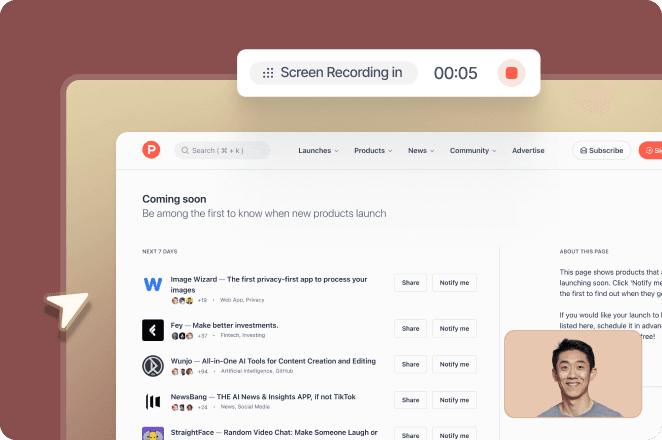
What it does: Trupeer turns screen recordings of people doing their work into step-by-step SOPs, narrated training videos and a searchable knowledge base. On an S/4HANA programme, SMEs record today's processes, including exceptions and workarounds, before anything changes; the recordings support requirements, testing and training. After go-live, the same approach produces role-based training for the new system and keeps it current. Content can be translated into 65+ languages from one source.

Best for: capturing tacit SME knowledge before it's lost, producing end user training and SOPs for every role, and running a knowledge base that stays current after go-live.
What it doesn't cover: Trupeer doesn't analyse or write ABAP code, configure SAP, run fit-gap analysis or migrate data. It's built to sit alongside the delivery and code tools in this list, not replace them.
Proof point: Genpact used Trupeer for a company-wide Workday rollout, turning recorded process sessions into more than 500 training collaterals across 20 workstreams in five languages, in 3 months instead of 12. Read the Genpact customer story.
Phase 3: Fit-gap analysis and design
Qorelo
What it does: Qorelo is a Berlin-based AI delivery platform built for SAP transformation programmes. Its agents take context from workshops, meeting recordings, project documents and legacy SAP ECC or S/4HANA systems, and generate the SAP Activate deliverable set: process flows, fit-to-standard analysis, functional specifications, configuration guides and test scripts. It's listed on the SAP Store, and the company announced a seed round in June 2026.
Best for: SAP delivery teams and consultancies that want to speed up the functional documentation and fit-gap work between workshops and build.
What it doesn't cover: end user training, enablement and the knowledge base users rely on after go-live. Qorelo produces project deliverables; Trupeer produces the content end users learn from.
For the requirements side of this phase, see ERP requirements gathering from process recordings.
SAP Joule for Consultants
SAP's AI assistant for project consultants draws on SAP's own documentation and best practices to help with design decisions. It's a natural starting point for teams already on SAP's AI stack, but it works from SAP's knowledge rather than your organisation's own process knowledge.
Phase 4: Custom code and clean core
Nova Intelligence
What it does: Nova Intelligence offers a multi-agent AI platform for SAP clean core modernisation. It documents custom code, dependencies and business logic in a searchable inventory, analyses custom code against SAP standard functionality, and generates clean core applications in modern frameworks such as RAP and CAP, with unit tests. It works with partners including Kyndryl.
Best for: organisations with large volumes of custom ABAP code that need to understand it, reduce it and move towards clean core.
What it doesn't cover: business user training and process documentation for end users.
SAP Joule for Developers
SAP's AI capabilities for ABAP and SAP Build help developers explain, write and test code, including converting classic ABAP to cloud-ready code. It's useful for day-to-day development, while specialist platforms like Nova focus on landscape-wide analysis and modernisation.
Phase 5: Implementation and configuration agents
Tessera Labs
What it does: Tessera Labs provides a multi-agent AI platform that automates ERP transformation work, including code remediation, data harmonisation and process orchestration, across SAP, Salesforce, Workday and Oracle. The company raised a Series A led by Andreessen Horowitz.
Best for: large enterprises that want AI agents to execute significant parts of an SAP ECC to S/4HANA migration, with governance built in.
What it doesn't cover: the end user training, SOPs and knowledge base needed for people to adopt the new system.
lab0
What it does: lab0 is an early-stage company from Y Combinator's Spring 2026 batch building AI agents that automate enterprise software implementation, including the integration, configuration and workflow work usually done by system integrators. Its public material highlights ServiceNow deployments alongside ERP.
Best for: teams willing to work with a very early vendor to compress implementation work.
What it doesn't cover: knowledge capture, training and enablement. Given how new it is, check its SAP depth and references carefully.
Phase 6: Training, enablement and the knowledge base

This is the layer most AI tools for SAP S/4HANA transformation don't cover, and it's where many programmes struggle: users who can't do their jobs in the new system on day one, SOPs that describe the old process, and support teams flooded during hypercare.
Trupeer is built for this layer. Key users record each task in the training or quality system, and Trupeer turns each recording into a step-by-step guide and a short video. Teams package them by role, publish them in a searchable knowledge base, translate them for every country and update them by editing the script when screens or rules change. See what to create in SAP Fiori end user training materials.
For the post-go-live side, see how to keep training documentation current after go-live.
SAP Enable Now is SAP's own authoring and in-app help tool and is widely used for SAP training. Teams weighing it against recording-based tools can compare options in our SAP Enable Now competitors guide.
The layer most AI tools for S/4HANA don't cover

Code tools make the system cleaner. Delivery tools make the project faster. Implementation agents make the build cheaper. None of them make sure the finance clerk, the buyer or the warehouse supervisor can do their job on Monday morning, or that the knowledge in an experienced SME's head survives the programme. That people layer covers:
Capturing what SMEs know before they leave or the old system is switched off.
Role-based training built on your own configured system.
SOPs and a knowledge base that users and support teams trust.
Keeping content current as SAP releases and your configuration change.
It's also the layer that decides whether the programme's value shows up after go-live; see RISE with SAP change management.
Challenges of using AI tools in SAP S/4HANA transformation
Overlapping tools: several vendors claim fit-gap, documentation or code analysis, so map them by phase before buying.
Governance: AI agents that change systems need approvals, audit trails and rollback.
Data access and residency: many tools need deep access to SAP systems and project data.
Vendor maturity: several tools in this list are early-stage; check references in SAP programmes like yours.
Measuring value: vendor time savings come from their own case studies, so set your own baseline.
Must-have features in AI tools for SAP S/4HANA transformation
Clear mapping to SAP Activate phases and deliverables.
Grounding in your own system, code and processes, not just generic SAP knowledge.
Governance: approvals, traceability and audit logs.
Security and data residency that meet your requirements.
Integration with your SAP landscape and tools such as SAP Cloud ALM.
Outputs your team can review and edit, not black boxes.
How do you choose AI tools for SAP S/4HANA transformation?

Map your programme by phase and mark where effort, risk and delays are highest.
Pick one tool per layer where you need help, rather than several that overlap.
Check the people layer explicitly: who captures SME knowledge, builds training and runs the knowledge base?
Run a pilot on one process area with clear success measures.
Check how outputs connect: requirements to design, design to tests, tests to training.
Best practices for an AI-assisted S/4HANA programme
Record SME knowledge early, before design workshops and before people move on.
Keep humans accountable for design decisions and system changes, with AI drafting.
Trace requirements end to end, from source to test to training.
Build training from the configured system, close to go-live, and keep it current afterwards.
Plan for continuous change, since cloud ERP keeps changing after go-live.
Frequently asked questions
What are the best AI tools for SAP S/4HANA transformation?
It depends on the phase. Nova Intelligence focuses on custom code and clean core, Qorelo on fit-gap and SAP Activate deliverables, Tessera Labs and lab0 on implementation agents, Laminar on process mapping and governed change, SAP Joule on design and development assistance, and Trupeer on knowledge capture, training and the knowledge base.
Can AI tools replace SAP consultants?
Not today. Most tools draft deliverables, analyse code or execute defined tasks, while people stay accountable for design decisions, governance and change management.
Which AI tools help with SAP clean core?
Nova Intelligence and SAP Joule for Developers focus on understanding and modernising custom code towards clean core; Qorelo and Tessera Labs also analyse custom code as part of wider delivery.
Which AI tool helps with S/4HANA end user training?
Trupeer turns recordings of your configured system into role-based guides, videos and a searchable knowledge base, and keeps them current after go-live. SAP Enable Now is SAP's own training authoring tool.
How do AI tools help with fit-gap analysis?
Delivery platforms such as Qorelo turn workshop inputs, documents and legacy system data into fit-to-standard analysis and specifications, which consultants then review.
Are AI implementation agents ready for SAP?
Several vendors, such as Tessera Labs and lab0, are building them, and some are used in live programmes. They're developing quickly, so check references, governance and SAP depth carefully.
Do I need more than one AI tool for an S/4HANA programme?
Usually yes, because each tool covers different layers. Aim for one tool per layer you need, without overlaps.
Where does Trupeer fit in an SAP S/4HANA transformation?
In knowledge capture before and during the programme, and in training, SOPs and the knowledge base during and after go-live. It doesn't write code or configure SAP.
Closing: build a stack that covers every layer
The best AI tools for SAP S/4HANA transformation are the ones that fit the phases where your programme needs help, and together leave no gap. Most stacks cover code, design and build well. Make sure yours also covers the people who'll run the new system. Explore Trupeer's SAP training video generator or book a demo to see how Trupeer covers the knowledge capture and enablement layer.
Artigos relacionados