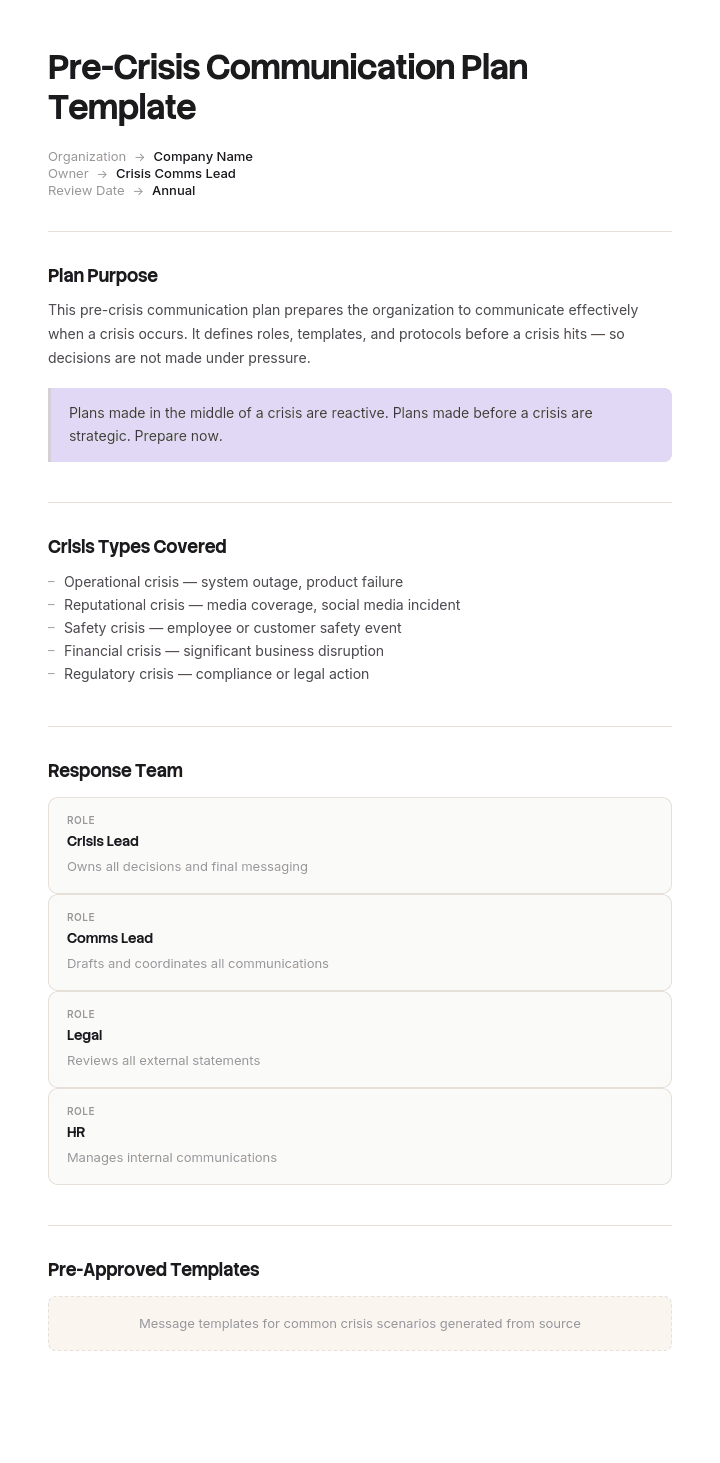
Gebruik deze sjabloon
De beste tijd om crisiscommunicatie te plannen is voordat er een crisis ontstaat. Met Trupeer kun je uren besparen op crisisvoorbereiding door te beginnen met een gratis sjabloon voor een pre-crisiscommunicatieplan, dit aan te passen met je brand guidelines en het plan om te zetten in videobriefings die leiders kunnen bekijken tijdens tabletop-oefeningen.
Wat is een sjabloon voor een pre-crisiscommunicatieplan?
Crisiscommunicatie wordt meestal beschreven in drie fasen: pre-crisis, wat betekent alles wat je doet voordat er iets gebeurt; de respons zelf; en daarna het herstel.
Een pre-crisiscommunicatieplan dekt de eerste van die fasen. Het is geen beschrijving van hoe je gaat reageren. Het is het geheel aan beslissingen dat wordt genomen terwijl iedereen nog rustig is, zodat de respons niet op hen hoeft te wachten.
Dat onderscheid is belangrijk, omdat de twee documenten op verschillende manieren tekortschieten. Een responsplan dat net niet klopt, wordt op het moment zelf aangepast door competente mensen. Een pre-crisisplan dat zijn beslissingen mist, kan helemaal niet worden aangepast, omdat het ontbrekende deel gezag is, en gezag niet kan worden geïmproviseerd om negen uur ’s avonds op een zondag.
Drie beslissingen leveren bijna alle waarde: wat activatie triggert, wie mag spreken zonder goedkeuring te vragen, en wat er mag worden gezegd voordat de feiten zijn bevestigd. De rest van een crisisplan is een contactlijst.
Waarom het eerste uur van een crisis draait om beslissen
Lees de tijdlijn van elke organisatie die traag reageerde en je zult zelden iemand vinden die zich onredelijk gedraagt. Je ziet een reeks mensen die elk iets verstandigs doen, wat samen zes uur kost.
Iemand merkt het op. Ze zijn niet zeker of dit telt. Ze melden het bij een manager. De manager zegt: houd het in de gaten. Het groeit. Iemand anders merkt het onafhankelijk ook op. Uiteindelijk wordt er iemand gevonden die senior genoeg is om een statement te autoriseren, en tegen die tijd is de vraag veranderd van wat moeten we zeggen naar waarom zei niemand iets.
Het knelpunt zit niet in schrijven. Het opstellen van een holding statement kost twintig minuten. Het knelpunt zit in de beslissing om iets als een crisis te behandelen, en die beslissing is sociaal kostbaar. Escaleren betekent dat je voor mensen die het misschien niet eens zijn, stelt dat het serieus is, met het risico alarmistisch over te komen als het uiteindelijk niets blijkt te zijn.
Dus mensen wachten op zekerheid, en zekerheid komt nadat het venster is gesloten.
Een pre-crisisplan haalt die beslissing weg door die vooraf vast te leggen, op papier, op basis van observeerbare omstandigheden in plaats van op basis van een oordeel.
Zo pas je dit sjabloon aan in Trupeer
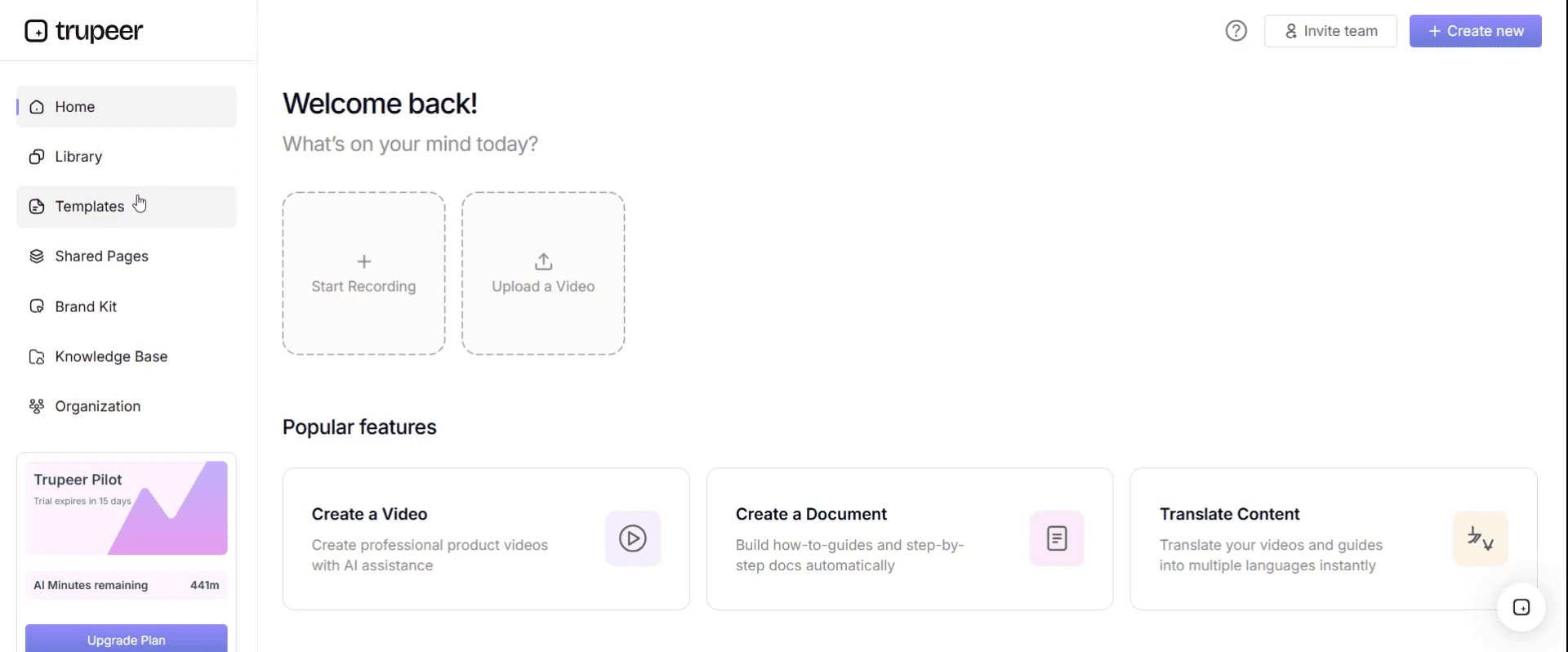
Stap 1: Open het gedeelte Templates
Ga in het hoofdmenu naar het gedeelte Templates.
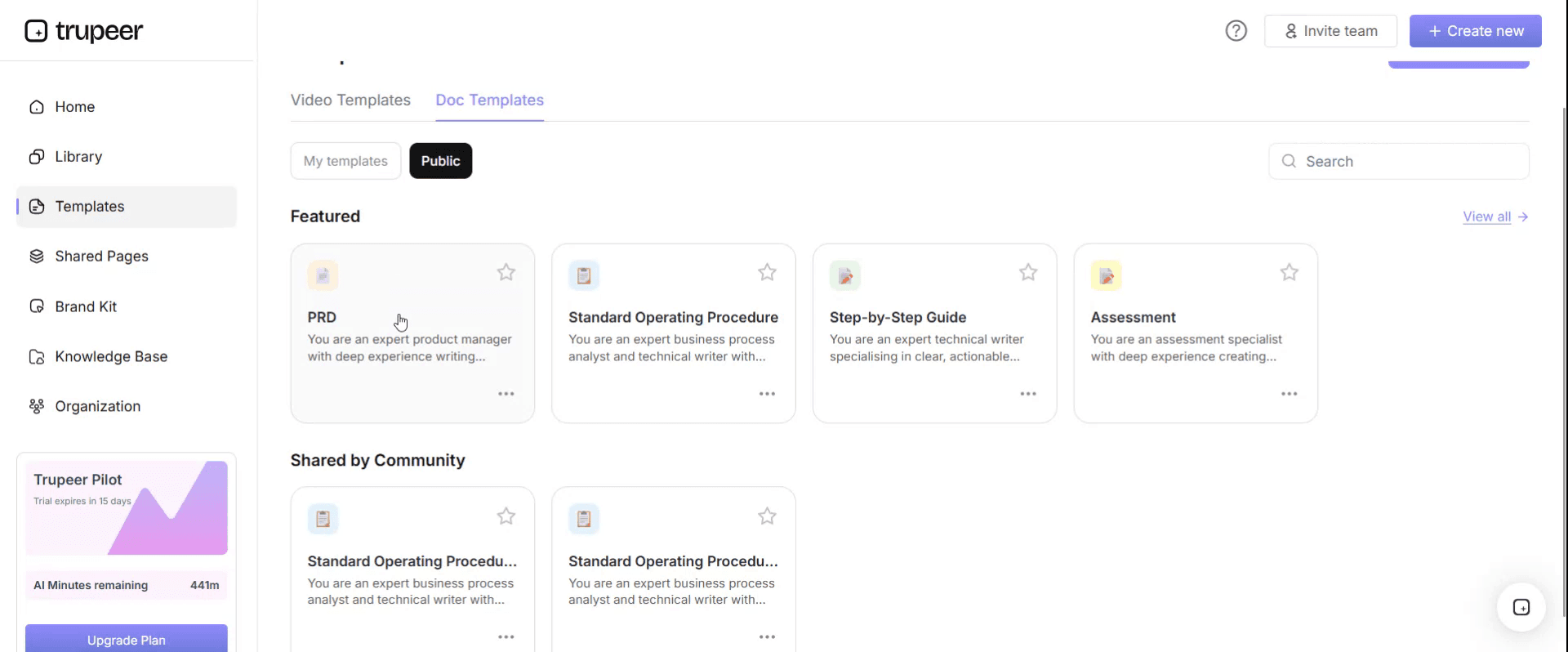
Stap 2: Selecteer en open een sjabloon
Klik op een willekeurig sjabloon waarmee je wilt werken om het te openen.
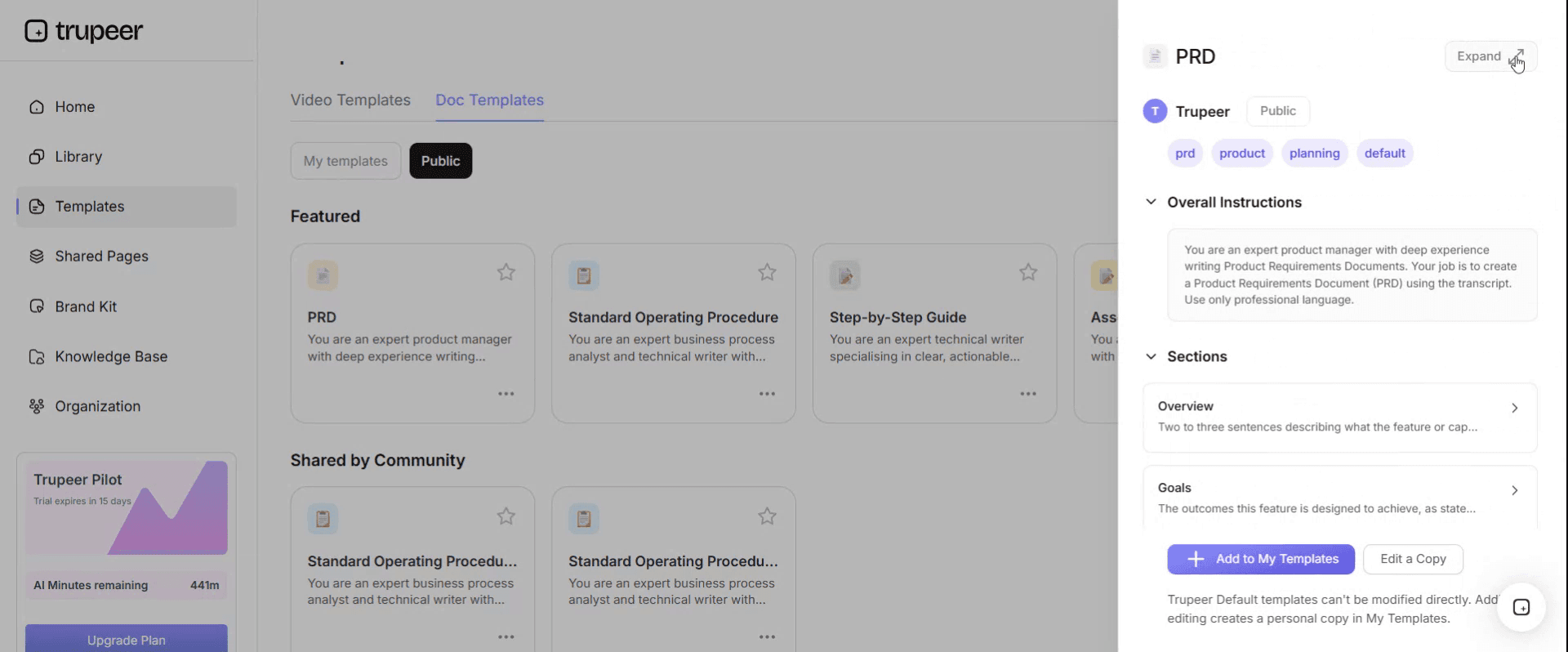
Stap 3: Breid de sjabloonweergave uit
Als dat nodig is, breid je de sjabloonweergave uit om de volledige indeling en details duidelijk te zien.
Stap 4: Bewerk het sjabloon
Klik op Edit om te beginnen met het aanpassen van het geselecteerde sjabloon.
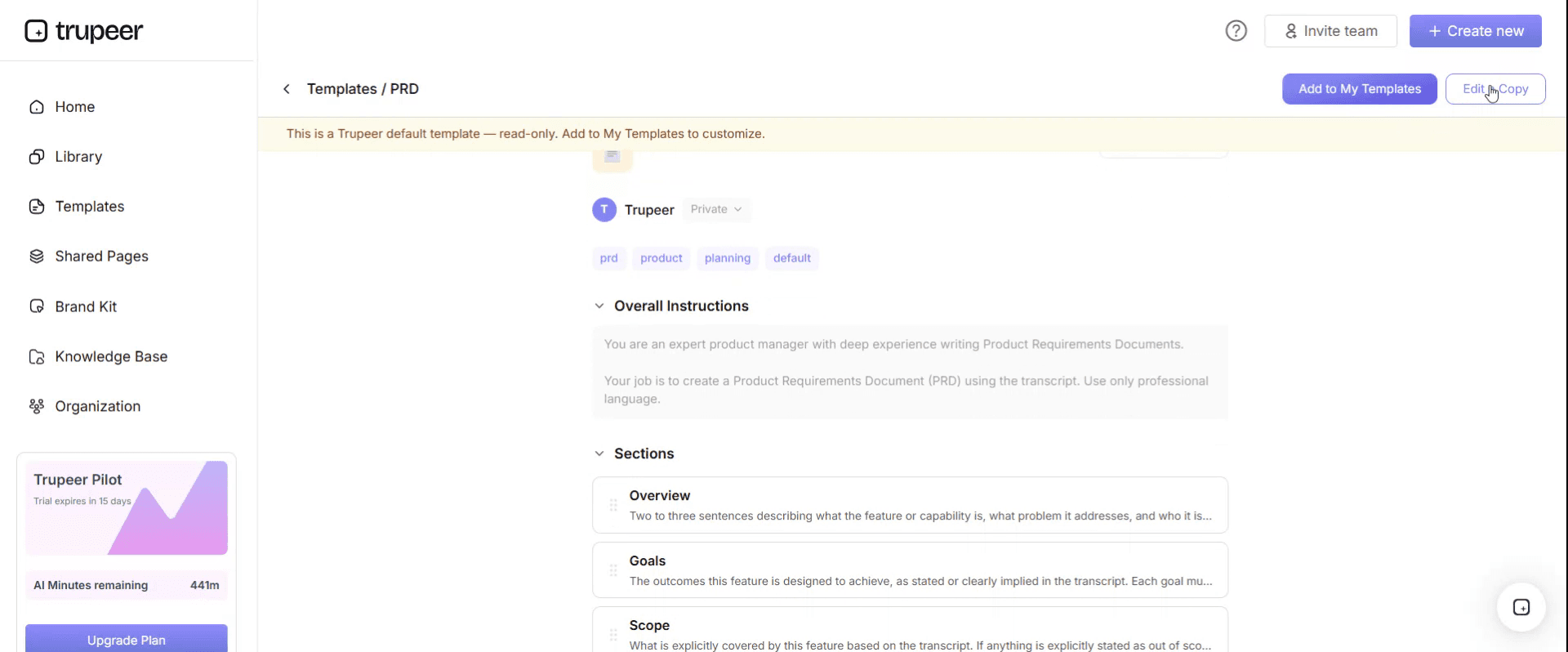
In de editor kun je:
Nieuwe secties toevoegen
Opmaakregels definiëren of bijwerken
Een logo toevoegen en de positie en gerelateerde instellingen aanpassen
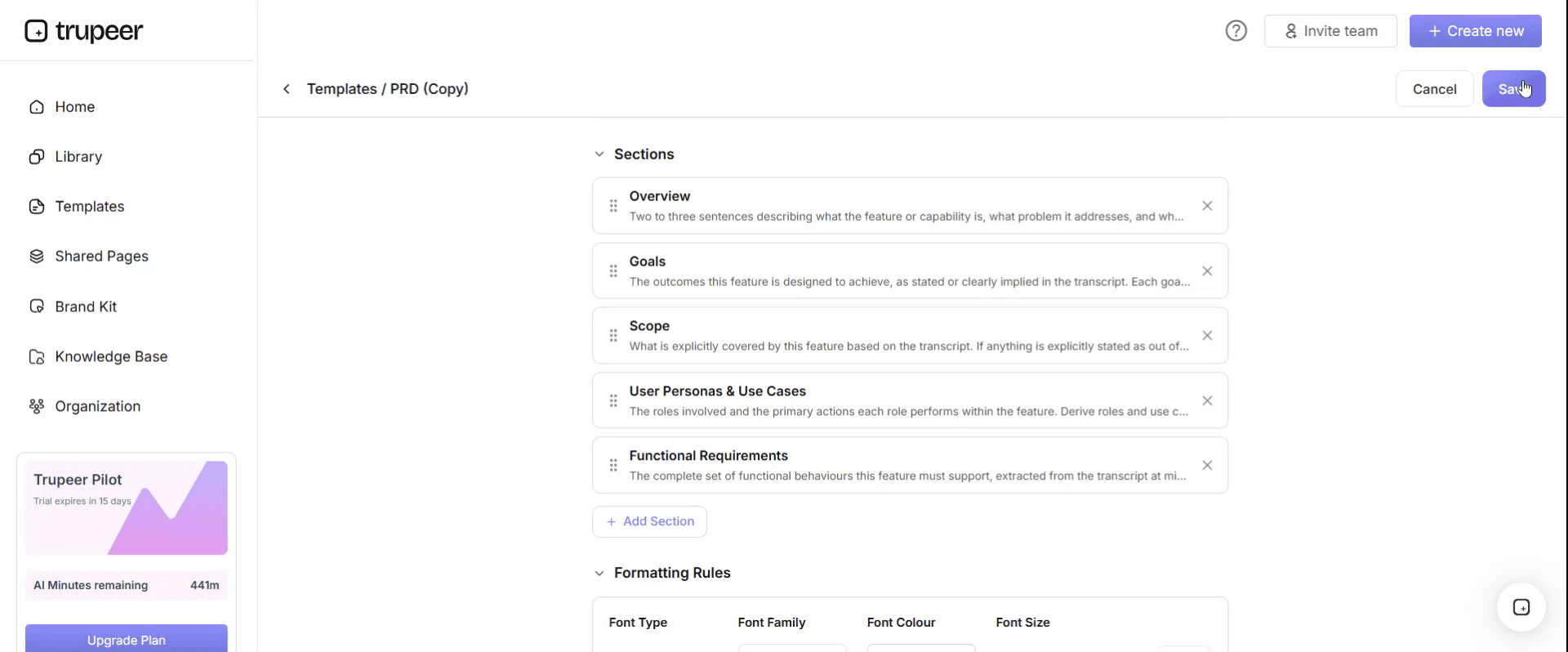
Stap 5: Sla je aangepaste sjabloon op
Nadat je alle noodzakelijke wijzigingen hebt doorgevoerd, klik je op Save om het bijgewerkte sjabloon op te slaan als je eigen sjabloon.
Stap 6: Bekijk en verfijn het sjabloon
Als je wilt zien hoe je aangepaste sjabloon eruitziet, open je de Preview.
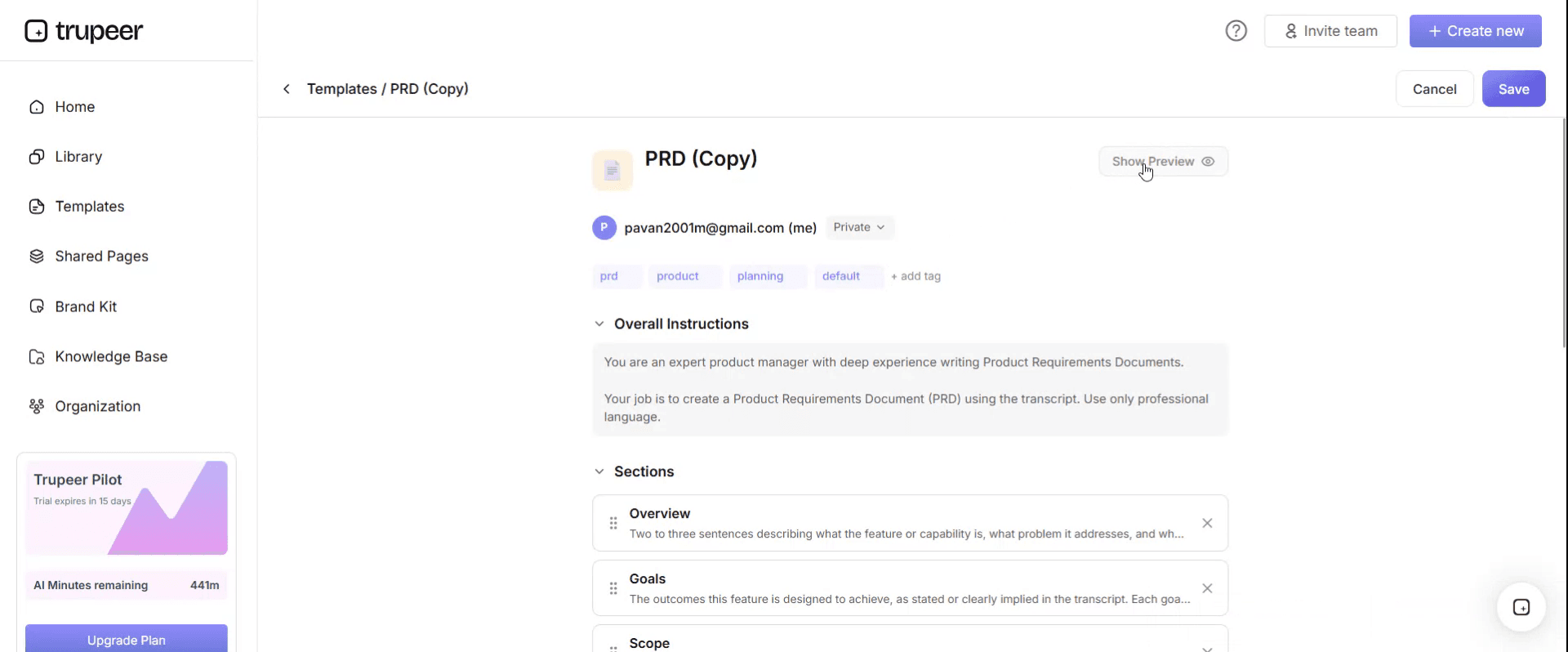
Vanaf het preview-scherm kun je indien nodig direct doorgaan met het maken van aanpassingen, zodat het sjabloon precies verschijnt zoals jij het wilt.
Met een pre-crisiscommunicatieplan kun je:
Uren besparen wanneer het ertoe doet: Vooraf gebouwde statements verkorten de responstijd tijdens echte crises.
Gestructureerd reageren: Ingebouwde escalatieroutes voorkomen paniekerige beslissingen onder druk.
In lijn blijven met je merk: Pas je logo, fonts en tone toe met de brand kit van Trupeer.
Het merk beschermen: Gecoördineerde communicatie beschermt je reputatie wanneer de crisis toeslaat.
Leiders trainen vóór crises: Koppel het plan aan videobriefings voor tabletop-oefeningen.
Wereldwijde stakeholders bereiken: Vertaal crisiscommunicatie naar 65+ talen met één klik.
De activatie-trigger heeft geen crisisplansjabloon
Bekijk de crisiscommunicatiesjablonen die in omloop zijn en ze geven je een stakeholdermatrix, een kanaallijst, een lijst met woordvoerders, berichtprincipes en een escalatiecontactboom. Allemaal nuttig. Bijna geen van hen zegt wanneer het plan start.
Zonder dat is het plan precies tijdens de uren waarin het het meest waardevol zou zijn, inactief, omdat het activeren ervan een oordeel is dat iemand moedig genoeg moet zijn om te maken.
Een activatie-trigger vervangt een oordeel door een voorwaarde. Niet “wanneer er een significant incident plaatsvindt”, wat hetzelfde oordeel is in andere woorden, maar iets dat observeerbaar is door iedereen die op dat moment dienst heeft.
Een media-aanvraag van de nationale pers. Een genoemde toezichthouder die contact opneemt. Een klantpost die een vooraf vastgestelde betrokkenheidsdrempel overschrijdt. Een retailer, distributeur of grote klant die vraagt naar een incident. Een systeemstoring die een vooraf vastgestelde duur overschrijdt. Een veiligheidsincident op locatie waarbij een medewerker betrokken is.
Zo opgeschreven stopt activatie met een mening te zijn. De duty manager beslist niet of dit een crisis is. Ze constateren dat een voorwaarde op de lijst is vervuld en volgen de instructie ernaast.
Zo schrijf je triggers, en maak afschalen gratis
Het tweede deel is net zo belangrijk als het eerste. Als activeren duur is en afschalen gênant, activeert niemand.
Gebruik niveaus, waarbij het laagste niveau bijna niets kost.
Niveau | Voorbeelden van triggers | Wie kan het activeren | Wat gebeurt er |
|---|---|---|---|
1, Monitor | Social post over veiligheid of service die een vooraf vastgesteld betrokkenheidsniveau overschrijdt; elke media-aanvraag over een incident; ongebruikelijk volume aan klachten | Elke duty manager | Genoemde groep wordt op de hoogte gebracht, monitoring start, holding statement gevonden, geen externe actie |
2, Activeer | Aanvraag van nationale of vakpers; contact van een toezichthouder; een grote klant die vragen stelt; storing die een vooraf vastgestelde duur overschrijdt | Duty manager of comms lead | Kernteam bijeengeroepen, holding statement uitgegeven indien nodig, woordvoerder bevestigd |
3, Volledige respons | Bevestigde schade, recall, datalek, overlijden, of aanhoudende nationale berichtgeving | Executive on call | Volledig team ingeschakeld, juridische afdeling betrokken, alle kanalen gecoördineerd |
Twee regels zorgen ervoor dat de niveaus werken.
Niveau 1 is bewust goedkoop. Het informeert een kleine groep en start monitoring. Het roept niemand bijeen, vereist geen executive en wordt niet geregistreerd op iemands naam.
En afschalen is expliciet geen mislukking. Schrijf die zin in het plan. Leg het aantal activaties van Niveau 1 vast dat werd afgeschakeld zonder verdere actie en beschouw een gezond aantal als bewijs dat het systeem werkt, niet als valse alarmen. Een organisatie met nul afschalingen in een jaar is niet rustig; het is niet aan het activeren.
Pre-goedgekeurde crisis holding statements die je vandaag kunt schrijven
Het tweede waardevolle pre-crisisartefact is een kleine set holding statements, opgesteld en goedgekeurd voordat er iets gebeurt.
Het argument ervoor is eenvoudig rekenwerk. Ongeveer tachtig procent van een eerste statement is elke keer hetzelfde: we zijn op de hoogte, we onderzoeken, dit is wat we doen, hier kun je updates krijgen, en dit is wie je kunt benaderen. Alleen de details veranderen. Dat tachtig procent opstellen onder druk, met juridische afdeling in de kamer en een executive die over iemands schouder meekijkt, kost uren. Dat opstellen op een rustige dinsdag kost veertig minuten.
Schrijf er één voor elk type crisis dat je echt kunt voorzien. Voor de meeste organisaties zijn dat er vijf of zes: een product- of servicefout, een veiligheidsincident, een datalek, een onderbreking in levering of service, een kwestie rond het gedrag van een medewerker, en een incident op locatie of in een faciliteit.
Elk statement moet lege plekken hebben voor de feiten en geen lege plekken voor de positie. Wat je bereid bent te zeggen over hoe serieus je het neemt, wat je doet, en waar mensen updates kunnen krijgen, moet al vastliggen en zijn goedgekeurd.
Laat ze goedkeuren door degene die anders live zou moeten goedkeuren, en leg die goedkeuring vast met een datum. Een niet-goedgekeurde conceptversie is geen holding statement; het is een document dat iemand nog steeds moet vrijgeven.
Wie mag spreken voordat iemand het heeft goedgekeurd?
Noem een keten, niet een persoon. De meest voorkomende fout bij een echt incident is dat de genoemde woordvoerder op een vliegtuig zit, met verlof is, of in een operatiekamer.
Drie namen, in volgorde, elk met het gezag om een Niveau 1- of Niveau 2-holding statement uit te geven zonder verdere goedkeuring. Opgeschreven, vooraf overeengekomen door degene die het risico draagt, en beoordeeld wanneer iemand in de keten van rol verandert.
Scheid het gezag om iets te zeggen van het gezag om iets te zeggen. De keten kan het vooraf goedgekeurde holding statement uitgeven met de feiten ingevuld. Verder gaan, een toezegging doen, verantwoordelijkheid accepteren of spreken voor de camera is een andere beslissing en blijft bij de executive.
Die splitsing maakt het mogelijk dat een organisatie binnen het uur kan reageren zonder zichzelf bloot te stellen. Het eerste statement hoeft bijna nooit meer te zeggen dan een erkenning, en de pre-goedkeuring dekt precies dat.
Noem ook wie tegen wie spreekt. Pers, toezichthouder, klanten, medewerkers en leveranciers zijn vijf verschillende doelgroepen met vijf verschillende eerste boodschappen, en een plan dat voor allemaal één woordvoerder aanwijst, vormt meteen een knelpunt.
Gratis sjabloon voor een pre-crisiscommunicatieplan: de structuur om over te nemen
Kopieer vanaf hier. Houd het bij vier of vijf pagina’s en houd een samenvatting van één pagina apart.
Kop. Eigenaar. Versie en datum. Datum laatst getest. Waar de huidige versie staat, inclusief een offline kopie.
Activatie-triggers. De tabel met niveaus hierboven, met je eigen voorwaarden en drempels.
Gezagsketen. Drie namen in volgorde, wat elk mag uitgeven zonder goedkeuring, en wat bij de executive blijft.
Kernteam. Wie wordt bijeengeroepen op Niveau 2 en Niveau 3, met mobiele nummers, en een vastgestelde verwachting van hoe snel ze reageren buiten kantooruren.
Doelgroepen en eerste boodschappen. Pers, toezichthouder, klanten, medewerkers, leveranciers en een eventuele sectorspecifieke instantie. Eén regel per doelgroep over wie ze benadert en waar de eerste boodschap over gaat.
Holding statements. Vijf of zes, vooraf goedgekeurd, met de goedkeuringsdatum op elk.
Kanalen. Welke kanalen je beheert, wie toegang heeft tot elk, en de back-up voor elk. Neem op wat je doet als je website of e-mail het is dat niet werkt.
Feiten die je nodig hebt. Een korte lijst met informatie die een eerste statement altijd nodig heeft, en waar je die snel vandaan haalt. Batchrecords, incidentlogs, aantallen getroffen klanten.
Wat we niet zullen doen. Speculeren over de oorzaak, individuen noemen, commentaar geven op juridische kwesties, een leverancier de schuld geven. Dit vooraf afspreken voorkomt dat het onder druk gebeurt.
Afschalen. Wie het afroept, wat wordt vastgelegd, en de expliciete verklaring dat afschalen geen mislukking is.
Kopieer naar hier.
De voedselproducent die elf uur nodig had om te reageren
Rothwell Foods maakt gekoelde producten voor supermarkten. Op zaterdagmorgen plaatste een klant een foto van een vreemd voorwerp dat in een van hun producten was gevonden.
Rothwell had een crisiscommunicatieplan. Vierendertig pagina’s, geschreven drie jaar eerder, jaarlijks beoordeeld, met een stakeholdermatrix, een kanaallijst, een lijst met woordvoerders en een escalatieboom.
Het had geen activatie-trigger, geen pre-goedgekeurd holding statement en geen gezag onder de chief executive om een openbaar statement te doen.
De post ging online om 07:33. De duty quality manager zag het rond kwart over acht en was niet zeker of dit telde. Hij belde de operations director om half negen, die zei: houd het in de gaten. Om tien voor twaalf mailde de consumentenredactie van een nationale krant de algemene inbox. Om twintig over één bereikte de operations director de communications lead, die in het buitenland met verlof was. De chief executive werd bereikt om twintig voor vier en er werd een belmoment gepland. Het eerste openbare statement ging om tien over zes ’s avonds de deur uit.
Elf en een half uur vanaf de eerste post. Tegen die tijd had het ongeveer driehonderdvijftigduizend indrukken bereikt en hadden twee retailers contact opgenomen.
Eén retailer schorste bestellingen voor negen dagen in afwachting van onderzoek, ter waarde van ongeveer tweehonderd en tienduizend pond. Het voorwerp werd later bevestigd als niet afkomstig uit het proces van Rothwell, een conclusie die binnen ongeveer vier uur uit batchrecords had kunnen worden bereikt.
De review wees uit dat niemand de schuld had. Elke individuele persoon had op elk moment redelijk gehandeld. De volledige vertraging zat in het beslissen of de situatie escalatie vereiste en in het vinden van iemand die mocht spreken.
Alle wijzigingen waren pre-crisis. Drie activatieniveaus met observeerbare triggers. Niveau 1 kan door elke duty manager worden opgeroepen, kost niets, en wordt expliciet niet geregistreerd op iemands naam. Zes holding statements vooraf goedgekeurd door legal en de chief executive. En een genoemde keten van drie mensen die is toegestaan om een Niveau 1- of Niveau 2-statement uit te geven zonder verdere goedkeuring.
Veertien maanden later ontstond een vergelijkbare situatie: een vraag over allergenenlabeling kreeg traction op social media. Niveau 1 werd door een duty manager opgeroepen tweeëntwintig minuten na de eerste post. Niveau 2 werd opgeroepen toen een vakpublicatie e-mailde. Het holding statement ging twee uur en zeven minuten na de eerste post de deur uit. Geen enkele retailer schorste iets, en de oorspronkelijke post bereikte ongeveer elfduizend betrokkenheden in plaats van driehonderdvijftigduizend.
In dezelfde periode waren er negen activaties van Niveau 1, waarvan er zeven binnen twee uur werden afgeschakeld zonder verdere actie. Die verhouding was het punt, niet het probleem.
Zo schrijf je een crisiscommunicatieplan, stap voor stap
Maak een lijst van de crises die je echt kunt voorzien, op basis van je eigen risicoregister, je incidentgeschiedenis en het recente nieuws in je sector. Vijf of zes typen dekken de meeste organisaties.
Schrijf de triggers op voordat je iets anders doet, als observeerbare omstandigheden in plaats van als oordelen, en test elk ervan door de vraag te stellen of een duty manager om twee uur ’s nachts kan zien of het is vervuld.
Stel de niveaus in en maak het laagste niveau echt goedkoop.
Stel de holding statements op en laat ze goedkeuren, met datums.
Noem de gezagsketen, drie lagen diep, en spreek de splitsing af tussen het uitgeven van een holding statement en het zeggen van iets daarbuiten.
Bouw als laatste de contact- en kanaalinformatie. Dit is het onderdeel waarmee elk sjabloon begint en het onderdeel dat het snelst veroudert, dus het hoort in een appendix die je kunt bijwerken zonder het plan opnieuw goed te keuren.
Test het daarna, wat verderop wordt behandeld en de stap is die bijna niemand afrondt.
Voorbeelden van crisiscommunicatieplannen per sector
De structuur blijft hetzelfde over sectoren heen en de triggers veranderen aanzienlijk.
Scholen en universiteiten. Triggers zijn meestal veiligheid, safeguarding of een incident op de campus, en de eerste doelgroep zijn ouders of studenten in plaats van de pers. Snelheid van interne melding is belangrijker dan een extern statement, en het kanaalplan moet werken wanneer het netwerk op de locatie niet werkt.
Zorgaanbieders. Verplichtingen voor meldingen aan toezichthouders hebben vaak hun eigen klokken die onafhankelijk van communicatie lopen, en die klokken moeten als triggers op zichzelf terugkomen.
Voedsel en consumentenproducten. Recall-procedures en meldingen aan retailers domineren, en de vakdoelgroep is vaak commercieel belangrijker dan de consumentendoelgroep.
Horeca en restaurants. Incidenten zijn sterk lokaal en sterk visueel, en de drempel voor triggers op social engagement moet lager liggen dan de meeste organisaties instellen.
Nonprofits. Meldingen aan financiers en trustees zijn doelgroepen die commerciële sjablonen volledig weglaten, en beide moeten meestal worden benaderd voordat het openbare statement wordt gedaan.
Technologie en services. De duur van een storing is de natuurlijke trigger, en de statuspagina is een kanaal dat onafhankelijk van de systemen moet werken die niet beschikbaar zijn.
Welke sector het ook is, de pre-crisisbeslissingen zijn identiek. Alleen de triggervoorwaarden en de volgorde van doelgroepen veranderen.
Wat de fasen crisisrespons en herstel nodig hebben
Deze pagina gaat over de voorbereiding. Er zijn twee dingen die je over de fasen aan weerszijden hiervan kunt zeggen.
Tijdens de respons is de taak van het plan om vindbaar en kort te zijn. Degene die het oppakt heeft het misschien niet zelf geschreven, kan thuis zitten en heeft mogelijk geen toegang tot het netwerk. Een samenvatting van één pagina, geprint en ook offline opgeslagen, met de niveaus, de gezagsketen en de locatie van de holding statements, is meer waard dan het volledige document.
Daarna: voer binnen twee weken een review uit terwijl de tijdlijn nog te reconstrueren is. Herbouw het minuut voor minuut op basis van berichten en logs, niet op basis van herinnering, omdat de nuttige bevinding bijna altijd een gat tussen twee gebeurtenissen is, en niet iemands beslissing. Werk vervolgens de triggers bij, want een echt incident is het beste bewijs dat je ooit zult krijgen over of je drempels correct zijn ingesteld.
Voor de doorlopende communicatie die volgt op een crisis, dus het opnieuw opbouwen van een boodschap richting klanten en de markt, dekken onze brand campaign communication plan en marketing communication plan template het geplande deel van dat werk.
Kan ik een sjabloon voor een crisiscommunicatieplan krijgen in Word of Excel?
Word voor het plan en print het. Dit is een van de weinige documenten waarbij een papieren kopie niet sentimenteel is: als je incident je netwerk, je gebouw of je e-mail betreft, is een intranetpagina precies op het moment dat je het nodig hebt niet toegankelijk. Bewaar een geprinte kopie bij de on-call rota en een kopie op persoonlijke apparaten.
Excel voor twee dingen. De contactmatrix, dus doelgroepen, eigenaren, kanalen en nummers buiten kantooruren, die constant verandert en gesorteerd moet worden. En het activatielog, waarin elke Niveau 1 en hoger wordt vastgelegd met de trigger die is vervuld, wie het afriep en de uitkomst. Dat log vertelt je of je drempels juist zijn.
PDF voor de goedgekeurde versie en voor de samenvatting van één pagina, die het document is dat mensen daadwerkelijk moeten kunnen meenemen.
Zo houd je het crisisplan bruikbaar als niemand het leest
Elk crisisplan heeft hetzelfde onderliggende probleem. Het wordt één keer geschreven, opgeborgen en tijdens een incident voor het eerst gelezen door iemand die het nooit eerder heeft geopend.
Twee gewoonten lossen het grootste deel daarvan op, en beide zijn goedkoop.
Test het twee keer per jaar, als een tabletop van dertig minuten in plaats van een volledige oefening. Lees een scenario voor, vraag welke tier van toepassing is aan de duty manager, en kijk of ze het holding statement kunnen vinden. De meeste fouten komen naar boven in de eerste tien minuten en bijna allemaal zijn het locatie- en gezagsproblemen, niet inhoudelijke problemen.
En maak van het plan iets dat mensen al eerder hebben gezien voordat ze het nodig hebben. Een korte opgenomen walkthrough van wat er gebeurt op elk niveau, wie er wordt gebeld en waar de statements staan, werkt aanzienlijk beter dan mensen vragen om vierendertig pagina’s te lezen. Trupeer AI zet die walkthrough om in een geschreven handleiding en een video op basis van één opname, zodat de on-call rota vier minuten kan kijken in plaats van te beloven het plan later te lezen.
Leg het vast. Branded het. Vertaal het. Trupeer it.
Dezelfde content staat in je knowledge base met consistente branding, en wanneer het incident klanten direct bereikt, dekt onze help desk response template de tekst voor de frontlinie die moet overeenkomen met wat het holding statement zegt. Voor het governance eromheen dekken onze policy and procedure templates goedkeuring en review. Setup-instructies staan in de document template setup guide.
Veelgestelde vragen
Is er een gratis sjabloon voor een crisiscommunicatieplan in Word?
De structuur hierboven plakt direct in Word of Google Docs, inclusief de niveaus voor triggers en de gezagsketen die standaard-sjablonen weglaten. Er is geen afgeschermde download en geen formulier. Print de voltooide versie en bewaar de samenvatting van één pagina bij je on-call rota, omdat het scenario waarin je het intranet niet kunt bereiken een echt scenario is.
Is er een gratis sjabloon voor een crisiscommunicatieplan in PDF?
Exporteer het goedgekeurde plan en de samenvatting van één pagina naar PDF en bewaar beide ergens waar je zonder je bedrijfsnetwerk bij kunt. Houd de werkversie bewerkbaar, omdat contactgegevens en drempels meerdere keren per jaar veranderen en een verouderde contactlijst de meest voorkomende praktische fout is.
Is er een gratis sjabloon voor een crisiscommunicatieplan in Excel?
Excel is geschikt voor de contactmatrix en het activatielog, niet voor het plan. Het log is belangrijker dan mensen verwachten: één rij per activatie met de trigger die is vervuld, wie het afriep, het niveau en de uitkomst. Als je het jaarlijks bekijkt, zie je of je drempels te hoog staan, wat meestal de richting is.
Waar kan ik een voorbeeld van een crisiscommunicatieplan in PDF vinden?
Verschillende publieke instanties, nutsbedrijven en universiteitssystemen publiceren hun eigen versie, en die zijn het lezen waard voor de structuur. Lees ze voor de volgorde van doelgroepen en de formulering van triggers, niet voor de inhoud, omdat de drempels in elk gepubliceerd voorbeeld bij het risicoprofiel van die organisatie horen en niet bij dat van jou.
Wat is het verschil tussen pre-crisis en crisiscommunicatie?
Pre-crisis is de voorbereiding: triggers, gezag, holding statements, kanalen en testen. Crisiscommunicatie is de respons zelf. Het onderscheid is de moeite waard om te behouden, omdat de voorbereiding is waar bijna alle haalbare verbeteringen zitten, en het deel is dat je rustig en goedkoop kunt doen.
Wie moet eigenaar zijn van het crisiscommunicatieplan?
Communicatie is eigenaar van het document, en een executive is eigenaar van de gezagsbeslissingen erin. Die splitsing is belangrijk, omdat de onderdelen die het plan laten werken, dus wie mag spreken en wat ze mogen zeggen, niet kunnen worden gedelegeerd aan een communicatiefunctie. Als geen enkele executive de gezagsketen heeft ondertekend, werkt het plan niet.
Hoe vaak moet het crisisplan worden getest?
Twee keer per jaar als een korte tabletop, plus een review na elke echte activatie. Volledige grootschalige oefeningen zijn waardevol en zeldzaam; walkthroughs van dertig minuten met scenario’s vinden de meeste van dezelfde problemen en worden daadwerkelijk ingepland. Werk de contact-appendix elk kwartaal bij, omdat dat het snelst veroudert.
Hoe lang moet een crisiscommunicatieplan zijn?
Vier of vijf pagina’s plus appendices, met een samenvatting van één pagina die de niveaus, de gezagsketen en waar de holding statements staan bevat. Plannen van dertig pagina’s komen vaak voor en worden tijdens een incident door niemand gelezen. Als er maar één pagina overblijft, maak dan de samenvatting daarvan.