Trupeer Blog
Synthétiser
Gérer les normes de documentation au sein d’une grande équipe peut donner l’impression de garder des chats. Chaque membre de l’équipe a son propre style, et tenter de maintenir la cohérence est un défi. Avec l’IA, vous pouvez définir et faire respecter des normes de documentation sans devenir un goulot d’étranglement. Imaginez que vous ayez une équipe de 100 personnes, chacune produisant chaque semaine une documentation critique. Les incohérences peuvent entraîner des erreurs, de la confusion, voire des incidents coûteux. Une
étude a montré que 75 % des entreprises subissent des perturbations opérationnelles en raison d’une documentation incohérente.
l’utilisation de l’IA pour automatiser et standardiser votre processus de documentation signifie que vous pouvez garantir la qualité et la cohérence sans ralentir la productivité de votre équipe. Cette approche est parfaite pour les organisations qui cherchent à se développer efficacement tout en maintenant des normes élevées. Lorsque les SOP entrent dans la même conversation, une comparaison des alternatives à Scribe aide à clarifier le périmètre.
Pourquoi faire respecter les normes de documentation au sein d’une grande équipe est-il important ?
Faire respecter les normes de documentation au sein d’une grande équipe est essentiel pour maintenir l’efficacité opérationnelle. Lorsque la documentation n’est pas cohérente, cela entraîne de la confusion, des erreurs et des inefficacités. Les parties prenantes, qu’il s’agisse de membres de l’équipe ou de partenaires externes, s’appuient sur une documentation cohérente pour prendre des décisions éclairées. Par exemple, si une équipe de 50 ingénieurs utilise des formats différents pour le même type de rapport, cela devient difficile pour la direction de synthétiser rapidement les informations. La standardisation garantit que tout le monde est sur la même longueur d’onde, réduisant ainsi le risque de mauvaise communication.
De plus, une documentation standardisée est essentielle à des fins de conformité et d’audit. Des secteurs comme la santé et la finance ont des exigences réglementaires strictes. Une documentation incohérente peut entraîner des problèmes de conformité, pouvant aboutir à de lourdes amendes ou à des défis juridiques. Pour les entreprises qui cherchent à étendre l’adoption de l’IA, l’utilisation d’outils comme le cas d’usage d’adoption de l’IA, la mise en place de normes de documentation pilotées par l’IA peut simplifier ce processus en automatisant les contrôles de cohérence et en signalant les non-conformités. Cela permet non seulement de gagner du temps, mais aussi de նվազuire le risque d’erreur humaine, en garantissant que l’organisation reste conforme aux normes du secteur.
Quels sont les avantages de la standardisation de la documentation pilotée par l’IA ?
La standardisation de la documentation pilotée par l’IA offre de nombreux avantages qui améliorent l’efficacité et la cohérence de l’équipe.
Cohérence sur l’ensemble des documents. L’IA garantit que chaque document suit le même format et le même style, réduisant les erreurs et améliorant la lisibilité. C’est essentiel pour les équipes utilisant le meilleur logiciel de documentation, afin que même les documents complexes conservent une apparence uniforme.
Gain de temps. L’automatisation du processus de documentation avec l’IA réduit le temps passé aux vérifications manuelles. Cela permet aux employés de se concentrer sur des tâches plus stratégiques plutôt que sur des tâches répétitives.
Conformité améliorée. Les outils d’IA peuvent vérifier automatiquement les documents par rapport aux réglementations du secteur, garantissant la conformité sans effort manuel. C’est particulièrement avantageux pour les équipes des secteurs réglementés, où les enjeux sont élevés.
Collaboration renforcée. Avec une seule plateforme vidéo IA, les équipes peuvent partager et modifier des documents en temps réel, créant un environnement plus collaboratif.
Réduction des coûts de formation. Les nouveaux membres de l’équipe peuvent être intégrés plus rapidement grâce à une documentation standardisée, ce qui réduit le temps et les ressources nécessaires à l’onboarding. L’IA garantit que chaque document qu’ils consultent respecte les normes définies.
Évolutivité. À mesure que votre équipe grandit, maintenir manuellement les normes de documentation devient intenable. L’IA s’adapte sans effort à la taille de votre équipe, garantissant la cohérence sans ressources supplémentaires.
Quelles fonctionnalités de Trupeer vous aident à faire respecter les normes de documentation au sein d’une grande équipe ?
Trupeer propose plusieurs fonctionnalités spécialement conçues pour aider à faire respecter efficacement et rapidement les normes de documentation au sein d’une grande équipe.
Génération automatique de SOP à partir de n’importe quel enregistrement
La capacité de Trupeer à générer automatiquement des procédures opérationnelles standard (SOP) à partir de n’importe quel enregistrement simplifie la création de documents cohérents et standardisés. Cette fonctionnalité est idéale pour les équipes qui produisent régulièrement de la documentation de processus. Elle élimine les approximations liées à la mise en forme, en garantissant que chaque SOP suit des modèles prédéfinis. Cela permet non seulement de gagner du temps, mais aussi de réduire les erreurs, en permettant à votre équipe de se concentrer sur ses activités principales. En utilisant la plateforme de documentation IA de Trupeer, les équipes peuvent créer et mettre à jour automatiquement des SOP, tout en maintenant un style cohérent dans tous les documents.
Mise à jour automatique de la documentation liée à l’enregistrement source
Cette fonctionnalité garantit que toute mise à jour apportée à l’enregistrement d’origine se reflète automatiquement dans la documentation associée. Elle est particulièrement utile pour les équipes dynamiques dont les processus évoluent fréquemment. Vous n’aurez pas à vous soucier de la circulation de documents obsolètes parmi les membres de l’équipe. Au lieu de cela, Trupeer maintient tout à jour, réduisant ainsi le risque d’utiliser des instructions dépassées. Ce type de synchronisation en temps réel est essentiel pour préserver l’exactitude et la pertinence de la documentation, rendant le flux de travail de votre équipe plus fluide et plus efficace.
Export multiformat : MP4, HTML, PDF, SCORM
La capacité d’export multiformat de Trupeer signifie que vous pouvez répondre à divers besoins sans effort supplémentaire. Que votre équipe ait besoin d’un PDF pour un usage hors ligne ou d’un document HTML pour une publication web, Trupeer a ce qu’il vous faut. Cette flexibilité garantit que la documentation est accessible à toutes les parties prenantes dans le format de leur choix. La possibilité d’exporter au format SCORM signifie également que votre documentation peut s’intégrer facilement aux plateformes d’e-learning, ce qui en fait un outil polyvalent pour la formation et la conformité.
Base de connaissances interrogeable par l’IA
La fonctionnalité de base de connaissances interrogeable par l’IA de Trupeer permet aux membres de l’équipe de trouver rapidement les informations dont ils ont besoin sans parcourir plusieurs documents. Cet outil indexe chaque enregistrement avec des liens profonds au niveau des horodatages, ce qui facilite la localisation de parties spécifiques d’une vidéo ou d’un document. Il améliore la productivité en réduisant le temps consacré à la recherche d’informations et garantit que les membres de l’équipe travaillent toujours avec les données les plus récentes.
Flux de travail collaboratifs de révision et d’approbation
Les flux de travail collaboratifs de révision et d’approbation de Trupeer simplifient le processus de finalisation et d’approbation des documents. Cette fonctionnalité permet à plusieurs membres de l’équipe de relire, commenter et approuver des documents au sein d’une plateforme centralisée. Elle réduit les allers-retours habituellement associés aux processus d’approbation de documents, accélérant ainsi les délais de traitement. En utilisant l’application de documentation, les équipes peuvent s’assurer que tous les retours sont intégrés efficacement, ce qui aboutit à un document final soigné et professionnel.
Comment utiliser l’IA pour faire respecter les normes de documentation au sein d’une grande équipe, étape par étape, avec Trupeer ?
Étape 1 : configurez votre projet
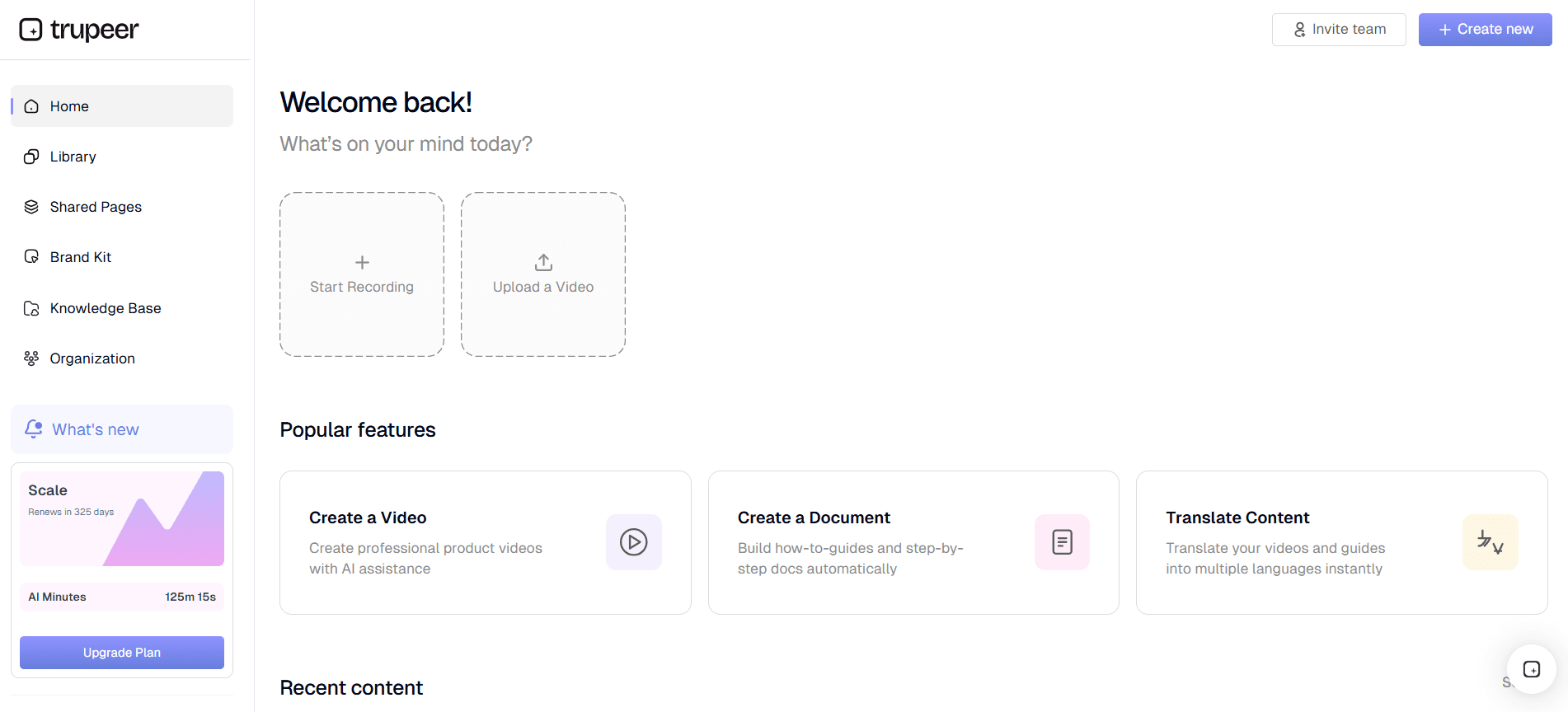
Commencez par accéder à l’enregistreur basé sur le navigateur de Trupeer. Vous n’aurez pas besoin d’installer de logiciel, ce qui facilite le démarrage. Connectez-vous à votre compte Trupeer, accédez au tableau de bord et cliquez sur « Créer un nouveau projet ». Ici, vous définirez le périmètre du projet, en fixant les paramètres des normes de documentation que vous souhaitez faire respecter. Par exemple, vous pouvez préciser le format et les directives de style. Trupeer utilisera ces paramètres tout au long du processus de documentation. La configuration prend environ 5 à 10 minutes. Assurez-vous que toutes les personnes concernées connaissent ces normes afin d’éviter des écarts par la suite.
Étape 2 : capturez les processus via l’enregistrement d’écran par l’IA
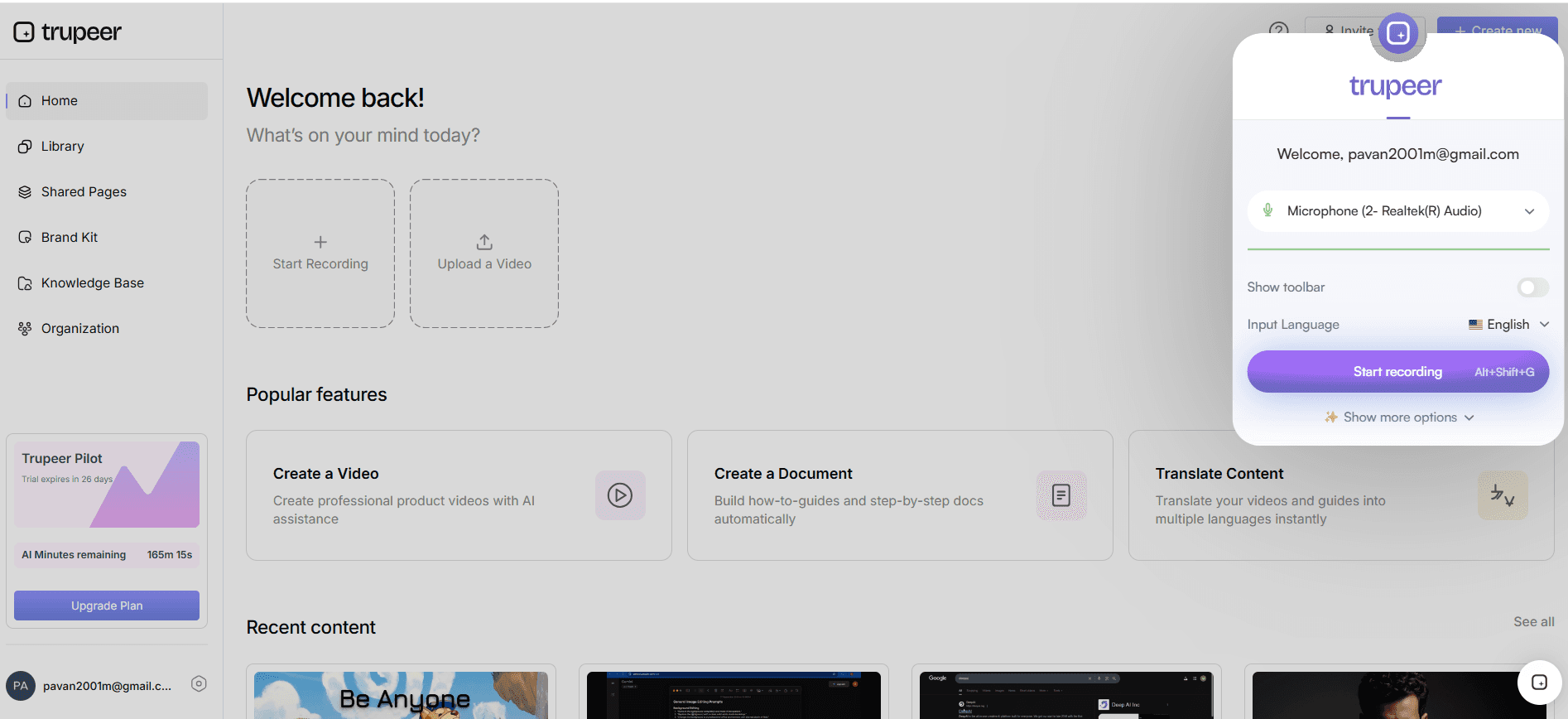
Utilisez l’enregistrement d’écran par l’IA de Trupeer, avec zoom automatique et détection des clics, pour capturer les processus avec précision. Lancez l’enregistrement en cliquant sur « Enregistrer » dans le tableau de bord de votre projet. L’IA mettra automatiquement en évidence les interactions importantes à l’écran, garantissant la capture des étapes critiques sans surcharge visuelle. Cette fonctionnalité est idéale pour créer une documentation visuelle alignée sur des normes prédéfinies. L’enregistrement peut être mis en pause ou arrêté d’un clic, et ce processus prendra généralement aussi longtemps que la tâche documentée, soit entre 30 minutes et une heure. Cela garantit à l’équipe une référence claire et cohérente. Les équipes qui évaluent les outils commencent souvent par une comparaison des alternatives à Loom avant de standardiser un flux de travail.
Étape 3 : générez automatiquement les SOP
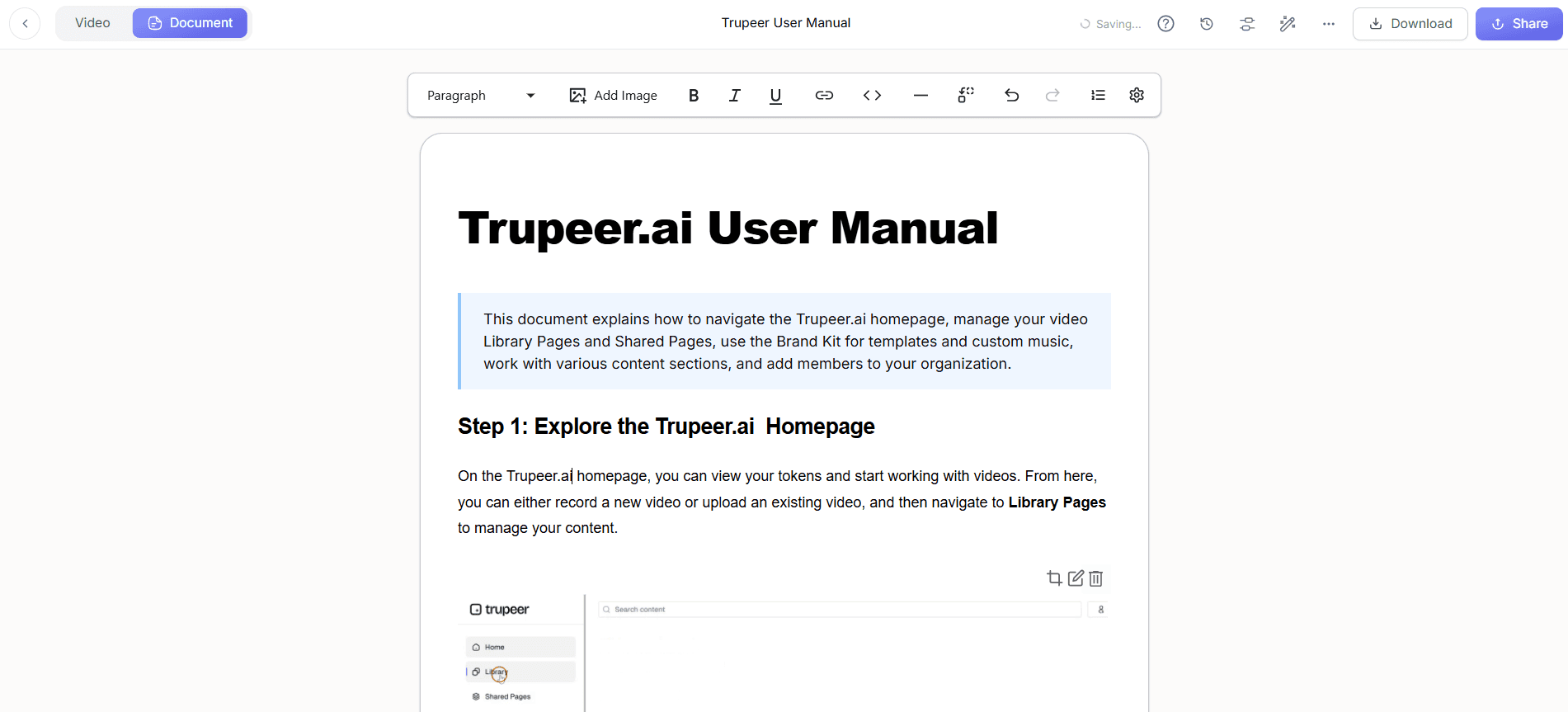
Après avoir capturé l’enregistrement d’écran, Trupeer vous permet de générer automatiquement des SOP. Une fois l’enregistrement terminé, cliquez sur « Générer la SOP » dans le menu des options. L’IA de Trupeer créera un document SOP modifiable à partir des images capturées. Cette fonctionnalité aligne la SOP sur les normes de documentation que vous avez définies précédemment, garantissant ainsi la cohérence. Le processus allant de l’enregistrement à la génération de la SOP prend environ 15 minutes. Relisez le document généré pour vous assurer que tous les détails nécessaires sont inclus, puis ajustez au besoin les écarts mineurs.
Étape 4 : relisez et corrigez pour plus d’exactitude
Maintenant, utilisez les flux de travail collaboratifs de révision et d’approbation de Trupeer. Invitez les membres de l’équipe à relire la SOP en sélectionnant « Partager pour révision ». Cette fonctionnalité permet à plusieurs relecteurs de commenter et de proposer des modifications directement dans la plateforme Trupeer. Allouez une période précise, par exemple 48 heures, pour la phase de relecture. Cela garantit un retour rapide et maintient le processus de documentation en mouvement. Répondez rapidement à tout retour et assurez-vous que la SOP respecte toutes les normes définies avant de la finaliser. Cette étape est cruciale pour maintenir une documentation de haute qualité, sans erreur.
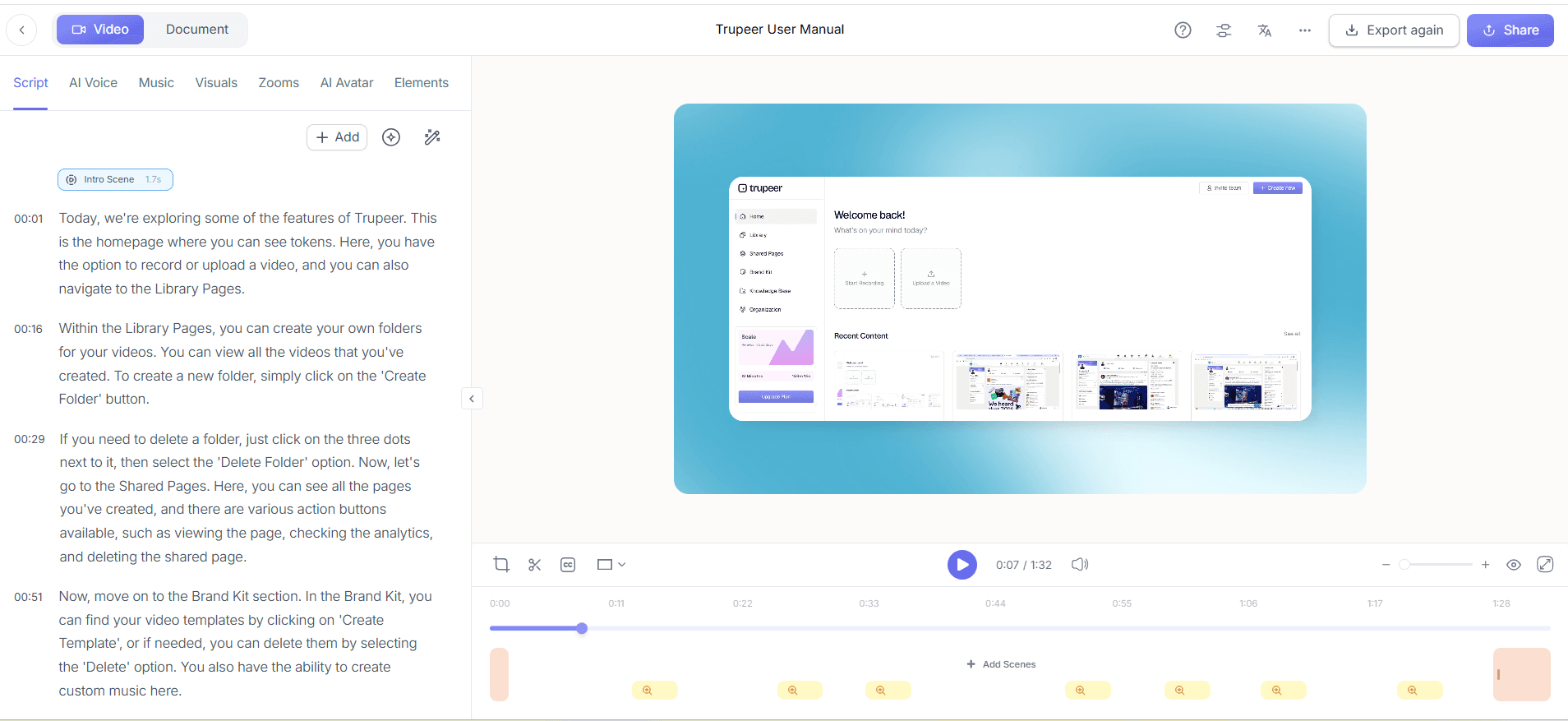
Étape 5 : exportez la documentation dans plusieurs formats
Une fois la SOP finalisée, utilisez la fonctionnalité d’export multiformat de Trupeer pour enregistrer le document dans des formats comme PDF, HTML ou SCORM. Allez dans le menu « Exporter », sélectionnez le format souhaité, puis cliquez sur « Télécharger ». Cette flexibilité garantit que la documentation est accessible à toutes les parties prenantes, qu’elles aient besoin d’une copie hors ligne ou d’un format adapté aux plateformes en ligne. Cette étape prend généralement environ 5 minutes. Assurez-vous que les documents exportés sont distribués de manière appropriée, en accord avec les canaux de communication de votre équipe.
Étape 6 : intégrez-la à la base de connaissances interrogeable par l’IA
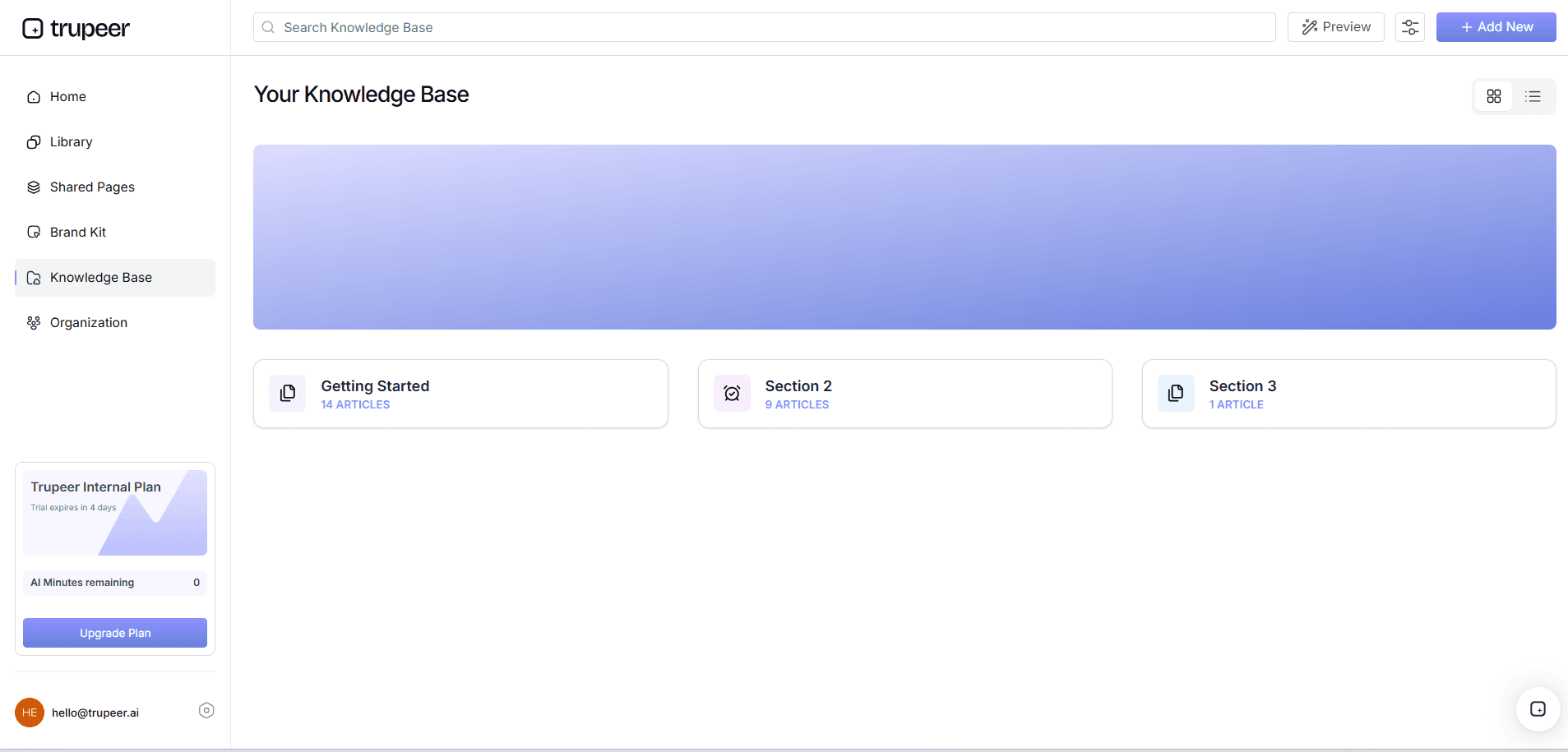
Enfin, intégrez votre documentation finalisée dans la base de connaissances interrogeable par l’IA de Trupeer. Accédez à la section « Base de connaissances » et téléversez votre document. Cette fonctionnalité indexe le document avec des liens profonds au niveau des horodatages issus de l’enregistrement, ce qui permet aux membres de l’équipe de localiser rapidement des informations précises. Le processus d’intégration est rapide, prenant environ 10 minutes, et garantit que la documentation reste une ressource vivante, mise à jour en temps réel avec toute évolution ou amélioration future.
Quels conseils vous aident à faire respecter les normes de documentation au sein d’une grande équipe ?
La mise en place de l’IA pour faire respecter les normes de documentation nécessite une planification et une exécution stratégiques. Ces conseils vous aideront à maximiser l’efficacité de votre processus de documentation à l’échelle d’une grande équipe.
Définissez des normes claires. Établissez des normes de documentation claires et concises avant la mise en œuvre. Cela réduit la confusion et garantit que chaque membre de l’équipe comprend ce qui est attendu.
Utilisez efficacement les outils d’IA. Exploitez pleinement les fonctionnalités de l’IA, telles que la génération automatique de SOP, afin de gagner du temps et d’assurer la cohérence. Ces outils minimisent les erreurs manuelles et simplifient les processus.
Cycles de révision réguliers. Planifiez des cycles de révision réguliers pour évaluer et mettre à jour la documentation. Cela garantit que vos normes évoluent en fonction des changements de processus ou de réglementation.
Formez votre équipe. Proposez une formation sur l’utilisation efficace des outils de documentation IA. La familiarité avec ces outils améliore la productivité et le respect des normes.
Mécanisme de retour. Mettez en place un mécanisme de retour continu pour l’amélioration. Encouragez votre équipe à partager des pistes pour améliorer les processus de documentation.
Intégrez avec les systèmes existants. Assurez-vous que vos outils d’IA s’intègrent bien aux systèmes existants afin de maintenir la continuité du flux de travail. Cela évite les perturbations et améliore l’efficacité.
Surveillez la conformité. Utilisez des analyses pour surveiller le respect des normes de documentation. Cela aide à identifier les domaines nécessitant des améliorations et garantit la responsabilisation.
Pour aller plus loin, notre guide sur générateur de documentation IA couvre le playbook associé.
Questions fréquemment posées
Comment l’IA améliore-t-elle la qualité de la documentation ?
L’IA améliore la qualité de la documentation en automatisant la standardisation et la détection des erreurs. Les outils d’IA analysent les documents par rapport à des normes prédéfinies, garantissant la cohérence et réduisant les erreurs humaines. Cette automatisation signifie que les documents sont plus précis et respectent les directives établies, ce qui est particulièrement bénéfique pour les grandes équipes. L’IA fournit également des suggestions intelligentes, améliorant la qualité du contenu en renforçant la clarté et la lisibilité. En intégrant l’IA, les organisations peuvent s’assurer que leur documentation est non seulement cohérente, mais aussi de haute qualité, en phase avec les attentes internes et externes.
Quels outils d’IA sont les meilleurs pour faire respecter les normes de documentation ?
Les meilleurs outils d’IA pour faire respecter les normes de documentation sont ceux qui offrent des fonctionnalités d’automatisation complètes. Des outils comme Trupeer, qui proposent la génération automatique de SOP, des exports multiformats et un outil de localisation vidéo, sont particulièrement efficaces. Ces capacités aident à maintenir la cohérence et la qualité dans tous les documents. De plus, les outils dotés de flux de travail collaboratifs et de mises à jour en temps réel garantissent que tous les membres de l’équipe restent alignés et que la documentation demeure à jour. Choisir un outil qui s’intègre bien aux systèmes existants améliorera encore l’efficacité et le respect des normes.
L’IA peut-elle gérer la documentation multilingue ?
Oui, l’IA peut gérer la documentation multilingue grâce à des fonctionnalités avancées de traduction et de doublage. Des outils comme Trupeer permettent une traduction dans plus de 40 langues, garantissant que la documentation est accessible aux équipes internationales. La traduction pilotée par l’IA conserve le contexte et le style d’origine du document, ce qui constitue souvent un défi avec une traduction manuelle. Cette capacité est essentielle pour les organisations opérant dans plusieurs régions, car elle garantit cohérence et précision dans toutes les langues. En automatisant ce processus, les équipes gagnent du temps et des ressources tout en maintenant des normes de documentation de haute qualité dans le monde entier.
L’IA nécessite-t-elle une supervision manuelle dans la documentation ?
Bien que l’IA réduise considérablement le besoin de supervision manuelle, un certain niveau de relecture humaine reste important pour garantir l’exactitude et le contexte. Les outils d’IA automatisent de nombreux aspects de la documentation, tels que la standardisation et la détection d’erreurs, mais la supervision humaine garantit que les sujets subtils ou complexes sont représentés avec précision. Cette supervision est particulièrement cruciale pour les documents qui nécessitent une compréhension approfondie de contenus spécialisés. En somme, l’IA agit comme un puissant assistant, mais l’intervention humaine garantit que le document final répond à toutes les exigences et attentes nécessaires.
La documentation pilotée par l’IA est-elle adaptée aux secteurs réglementés ?
La documentation pilotée par l’IA est tout à fait adaptée aux secteurs réglementés en raison de sa capacité à garantir la conformité avec des normes strictes. Les outils d’IA peuvent vérifier en continu la documentation par rapport aux exigences réglementaires, en signalant automatiquement tout écart. Cela réduit le risque de non-conformité et les sanctions associées. De plus, la capacité de l’IA à maintenir des enregistrements cohérents et précis est inestimable dans des secteurs tels que la santé et la finance. En utilisant l’IA, les organisations peuvent s’assurer que leurs processus de documentation sont solides, fiables et conformes à toutes les normes réglementaires nécessaires.
Articles de blog associés