Trupeer Blog
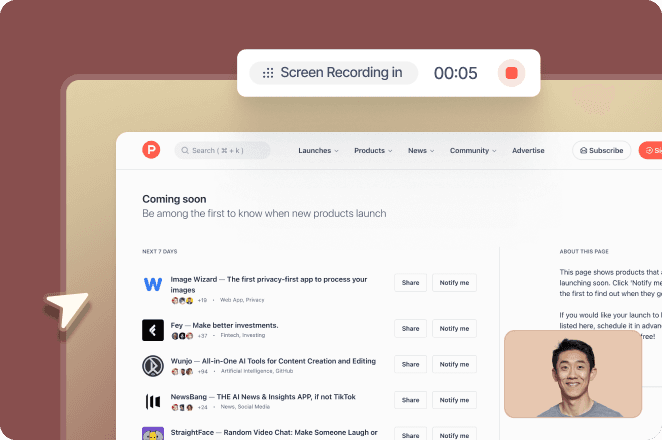
Imagine launching a new product feature, only to find your documentation still lags behind, causing confusion among your users and support teams. It's a scenario many product managers and technical writers are all too familiar with. The gap between deploying a feature and updating documentation can lead to increased customer support tickets and longer onboarding times. According to a recent study,
companies that automate their documentation pipeline see a 30% reduction in time to update user guides and manuals.
This is significant for any product team aiming to maintain momentum and ensure users are consistently informed. If you're part of a product team struggling to keep documentation in sync with your releases, setting up an automated documentation pipeline could be your solution. Such a pipeline simplifies the creation, editing, and distribution process, ensuring that documentation evolves alongside your product. By using tools like Trupeer's product tour software, you can bridge the gap between development and user guidance, enhancing both efficiency and user satisfaction.
Why does setting up an automated documentation pipeline matter?
For product teams, the pace of development often outstrips the ability to document changes effectively. Without a simplified process, documentation can quickly become outdated, leading to a host of operational inefficiencies. Stakeholders, from product managers to customer service teams, face the challenge of aligning with the latest product features and updates. An automated documentation pipeline addresses this by synchronizing documentation updates with product releases, reducing the lag that traditionally exists.
This alignment is crucial not just for internal teams but also for customer-facing operations. Consider the typical operations workflow where new features must be communicated to users promptly. Delays in documentation can result in confused customers, increased support queries, and ultimately, a negative user experience. By automating the documentation process, you ensure that every aspect of your product's capabilities is accurately reflected in real-time, offering a smooth transition from development to user adoption. This proactive approach not only improves customer satisfaction but also enhances internal efficiency, allowing product teams to focus on innovation rather than playing catch-up with documentation.
What are the benefits of automating a documentation pipeline?
Automating your documentation pipeline offers multiple advantages that directly impact both product teams and end-users. Here are six key benefits:
Consistency in Documentation. Automation ensures that documentation remains consistent across all platforms and updates simultaneously with product changes, reducing discrepancies and user confusion.
Time Efficiency. An automated pipeline reduces the time spent manually updating documents, allowing teams to reallocate resources to product video creation and other strategic initiatives.
Enhanced Accuracy. With automation, there's less room for human error, which means the documentation is more reliable and trustworthy for users.
Scalability. As your product evolves, an automated system can easily scale to accommodate new features without the need for additional documentation resources.
Improved User Experience. Timely and accurate documentation leads to a better user experience, reducing friction and enhancing the overall satisfaction with your product.
Resource Optimization. By using an AI video platform, teams can efficiently use their resources, focusing on strategic growth rather than manual updates.
Which Trupeer features help you set up an automated documentation pipeline?
Trupeer offers a suite of features tailored to simplify and automate your documentation process, ensuring your team can focus on what truly matters: innovation and user engagement.
AI screen recording with auto-zoom and click detection
Trupeer's AI screen recording automates the capture of user interactions with precise click detection and automatic zoom adjustments. This feature is essential for creating detailed, step-by-step documentation that captures the exact user journey. By using this tool, you can record a product walkthrough that highlights key interactions, making it easier for users to follow along. The auto-zoom ensures that important elements are always in focus, providing clarity and enhancing the instructional quality of your documentation. This capability is particularly useful during the initial stages of capturing documentation content, setting a strong foundation for subsequent editing and enhancement.
Automatic SOP generation from any recording
Once your screen recording is complete, Trupeer's automatic SOP generation feature kicks in, transforming the captured footage into a structured, edit-ready document. This feature analyzes the recording to generate standard operating procedures, complete with step-by-step instructions and visual aids. This functionality significantly reduces the time traditionally spent on manual documentation creation, allowing teams to focus on refining and enhancing the content. The SOPs generated are exportable in multiple formats, making it easy to integrate them into existing documentation systems.
AI voiceover in 65+ natural voices
Trupeer enhances recorded content with AI-generated voiceovers, available in over 65+ natural voices. This feature allows you to add professional narration to your documentation videos, making them more engaging and accessible. You can adjust the pace and tone of the narration to match your brand's voice, ensuring consistency across all materials. By incorporating voiceovers, you enhance the instructional value of your documentation, catering to auditory learners and providing an alternative to text-heavy guides.
AI-searchable knowledge base
Trupeer's AI-searchable knowledge base is a powerful tool that indexes every piece of documentation, making it easily accessible through a simple search. This feature enables users to find specific information quickly, thanks to timestamp-level deep links that direct them to the exact part of the video or document they need. By providing a centralized repository of searchable content, you enhance the usability and accessibility of your documentation, ensuring users can always find the information they need without sifting through irrelevant content.
Collaborative review and approval workflows
Trupeer facilitates efficient collaboration with its review and approval workflows, allowing multiple stakeholders to contribute to and approve documentation before it goes live. This process ensures that all content is vetted for accuracy and completeness, reducing the likelihood of errors slipping through. It also builds a collaborative environment where feedback can be easily integrated, leading to higher-quality documentation. By simplifying the review process, Trupeer helps teams maintain high standards while accelerating the time to publication.
How do you set up an automated documentation pipeline step by step with Trupeer?
Step 1: Capture Your Screen
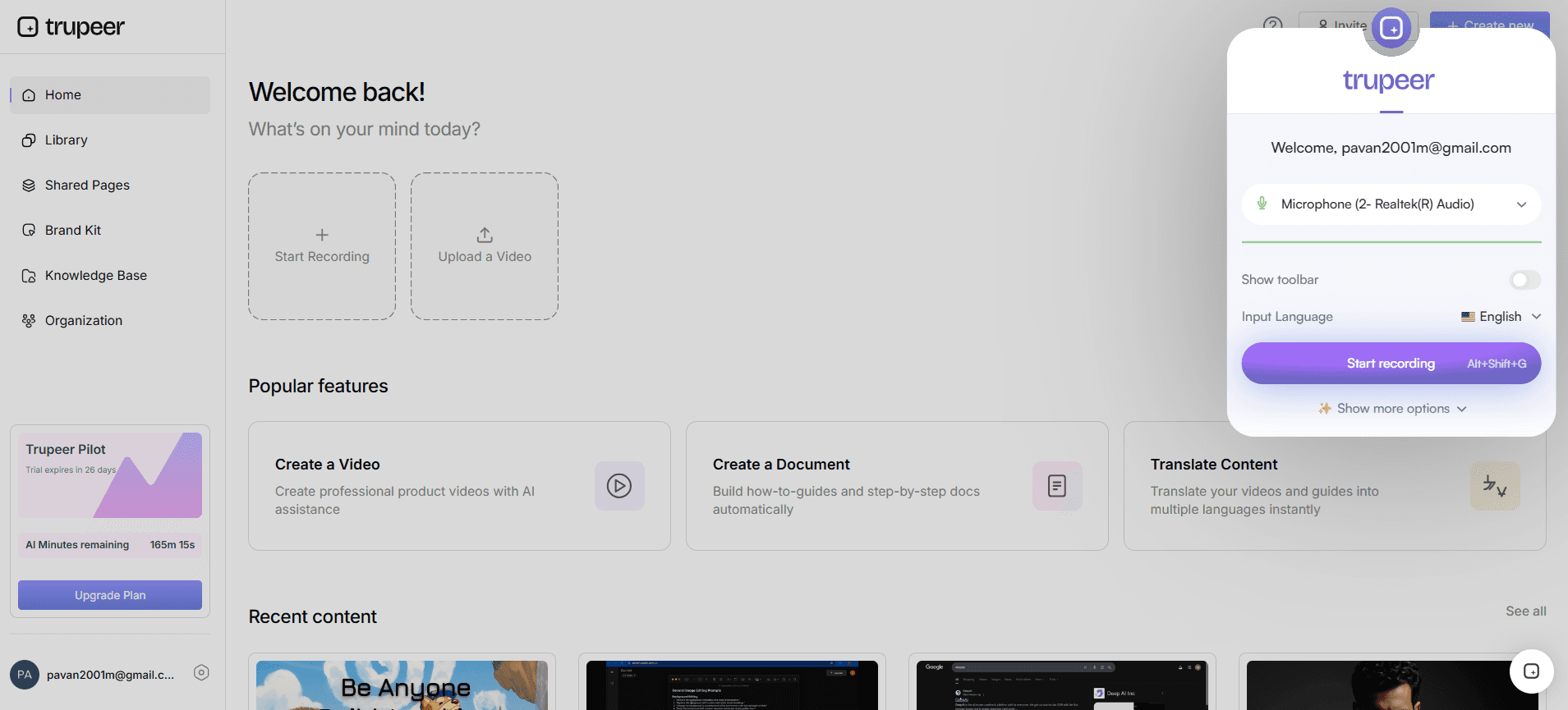
Start by using Trupeer's AI screen recording with auto-zoom and click detection. Open the browser-based recorder, which requires no installation, making it accessible from any device. Click the "Record" button to begin capturing your screen, and Trupeer will automatically detect and highlight clicks, zooming in on key actions. This feature is crucial for creating detailed instructional content that clearly demonstrates user interactions. The recording process typically takes as long as your walkthrough, so plan your session accordingly. Once finished, click "Stop" to save the recording in Trupeer's cloud storage, ready for further processing.
Step 2: Generate Automatic SOPs
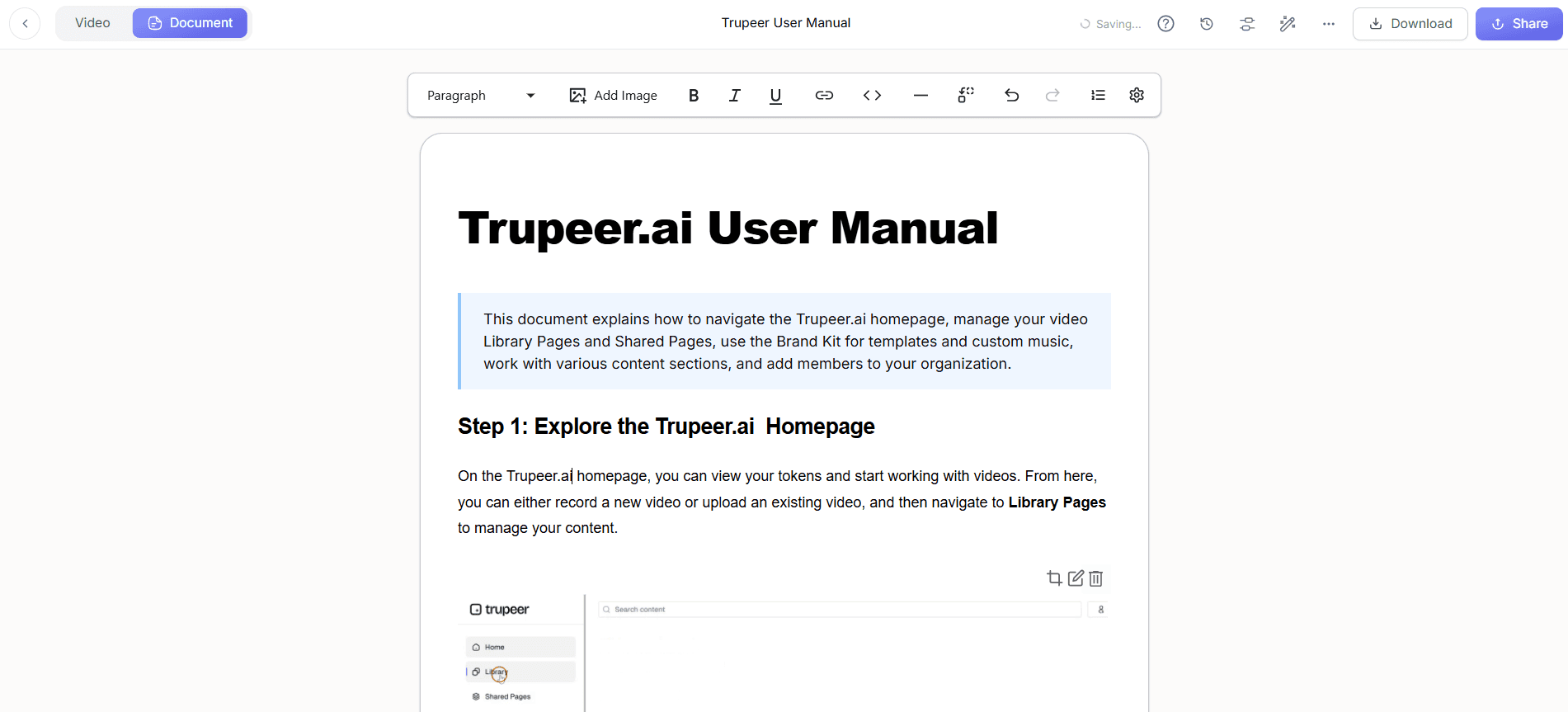
With your recording complete, you can automatically generate a standard operating procedure (SOP) using Trupeer's capabilities. Navigate to the "Documentation & SOPs" section and select your latest recording. Trupeer will analyze the footage, converting it into a structured SOP document. This process includes extracting key steps and generating accompanying text descriptions. The automatic SOP generation takes just a few minutes, offering a ready-to-edit document that captures every critical action from your recording. Ensure your SOP includes all necessary steps by reviewing the generated content for accuracy and completeness.
Step 3: Enhance with AI Voiceover
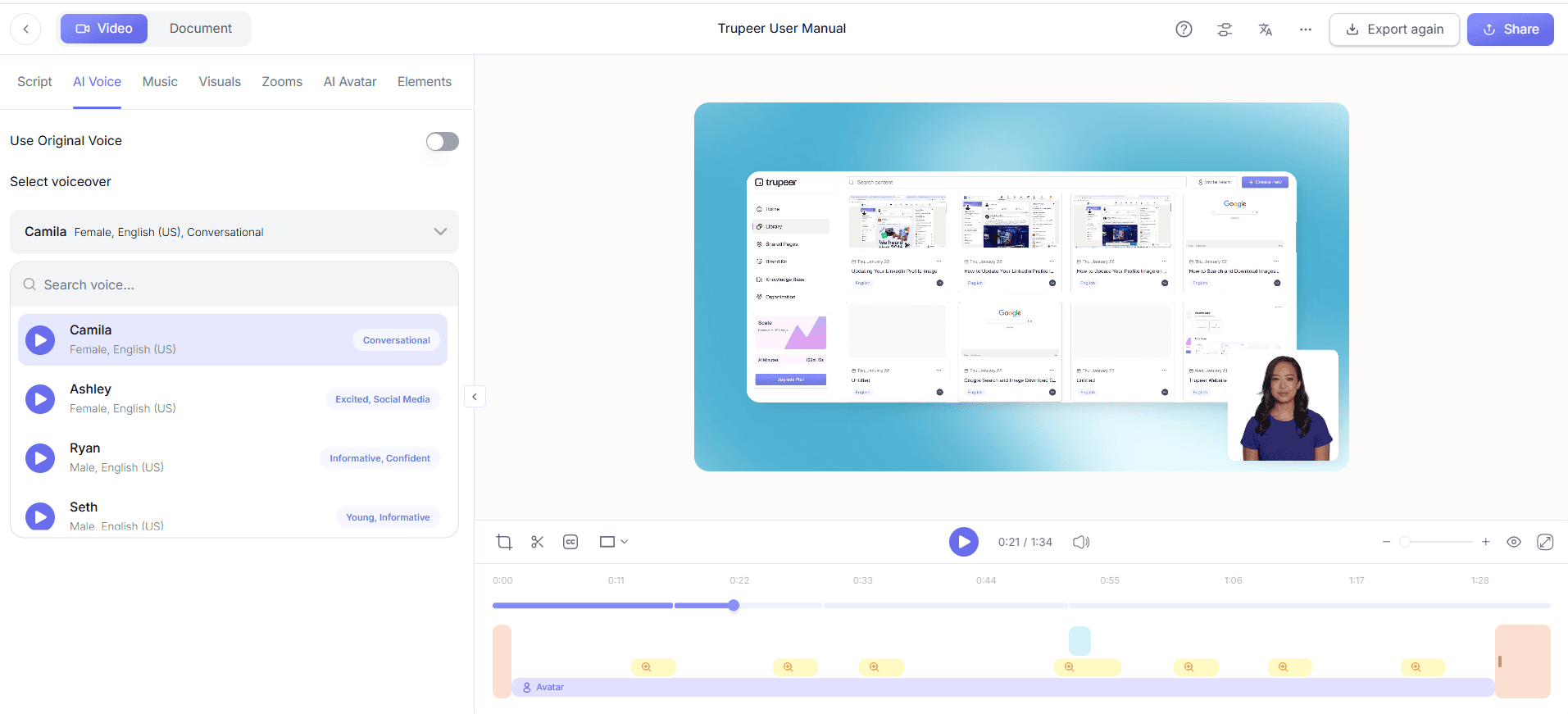
Now, enhance your documentation video by adding a professional AI voiceover. Choose from over 65+ natural voices available in Trupeer, adjusting the pace and tone to match your brand's voice. Access the "Editing & Enhancement" tab, select your recording, and click "Add Voiceover." This feature improves the instructional value of your documentation, catering to users who prefer auditory guidance. The voiceover process is quick, taking only a few minutes to complete, and ensures your content is engaging and accessible to a wider audience. Teams weighing tools often start with a Loom alternatives comparison before standardizing on a workflow.
Step 4: Create an AI-Searchable Knowledge Base
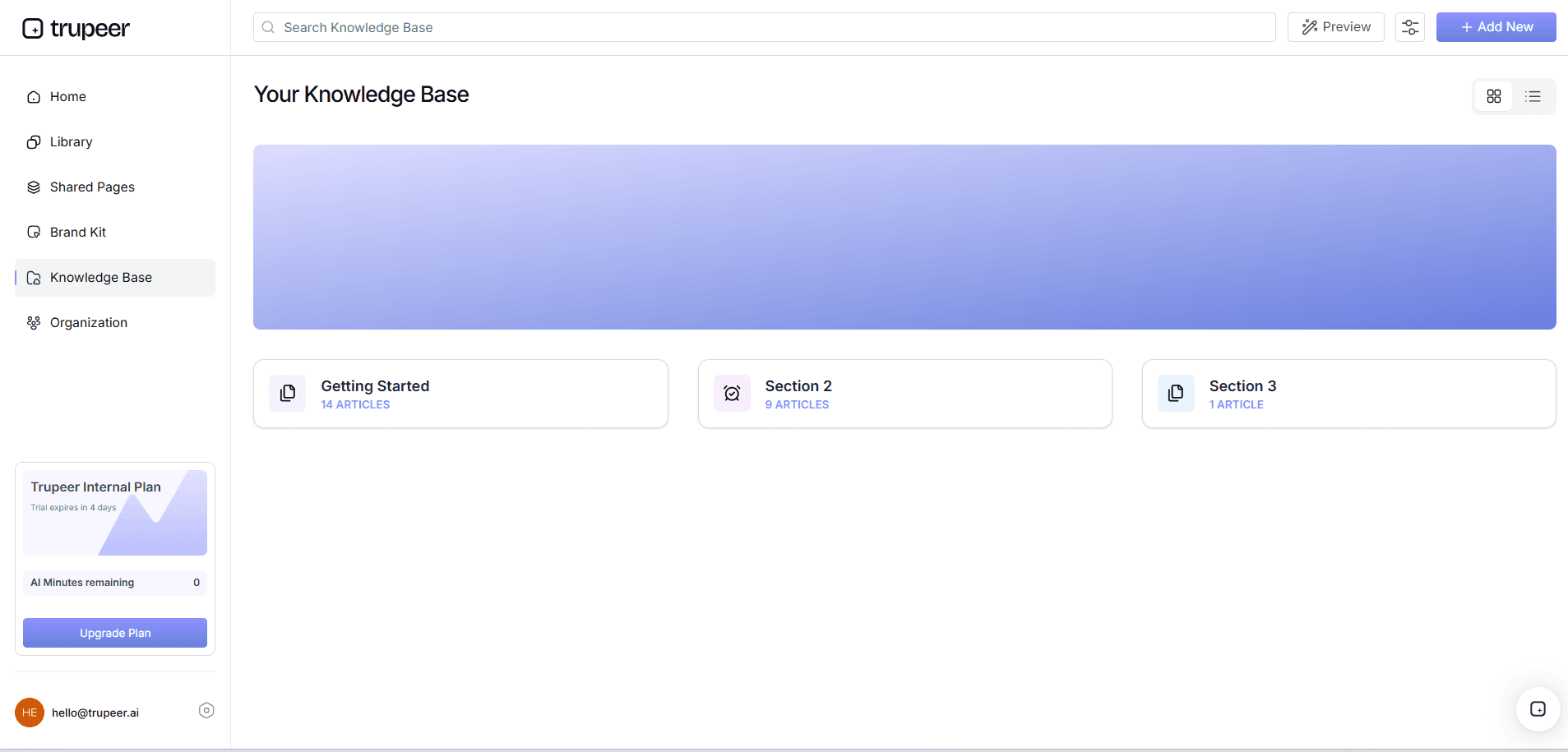
To make your documentation easily accessible, integrate it into Trupeer's AI-searchable knowledge base. Upload your enhanced recordings and SOPs to the "Knowledge Base" section, where Trupeer indexes them with timestamp-level deep links. Users can then search for specific topics and be directed to the exact moment in the video or document. This feature is invaluable for teams needing quick access to precise information. The indexing process is fast, usually taking less than an hour, depending on the volume of content being uploaded.
Step 5: use Collaborative Workflows
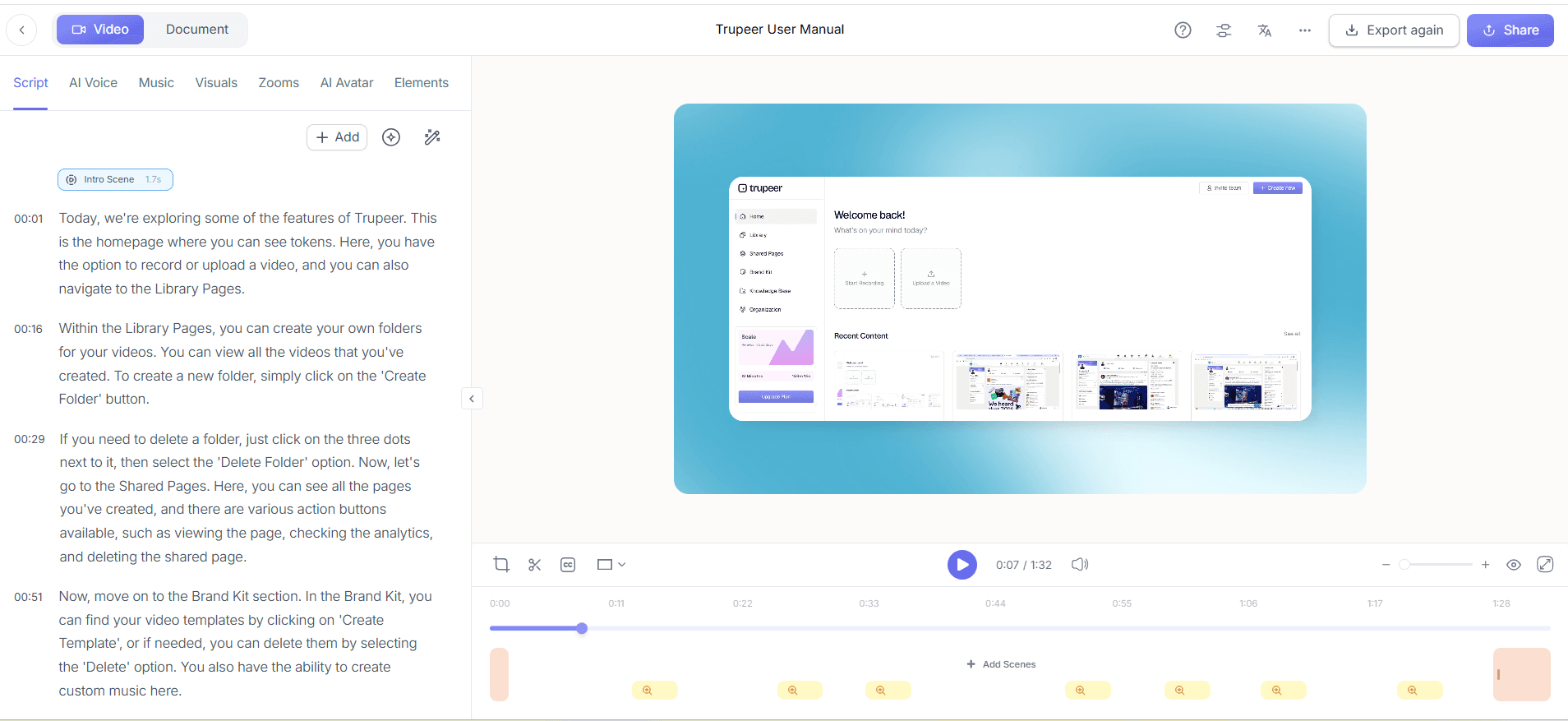
Engage your team in the review process using Trupeer's collaborative workflows. Share your documentation drafts with stakeholders for feedback. Navigate to the "Collaborative Review" section, select your document, and add team members to the review list. They can provide comments, suggest edits, and approve changes before publication. This collaborative approach ensures that all perspectives are considered, and the final version meets your organization's quality standards. The review process is simplified, allowing for efficient iterations before final approval.
Step 6: Distribute and Monitor Engagement
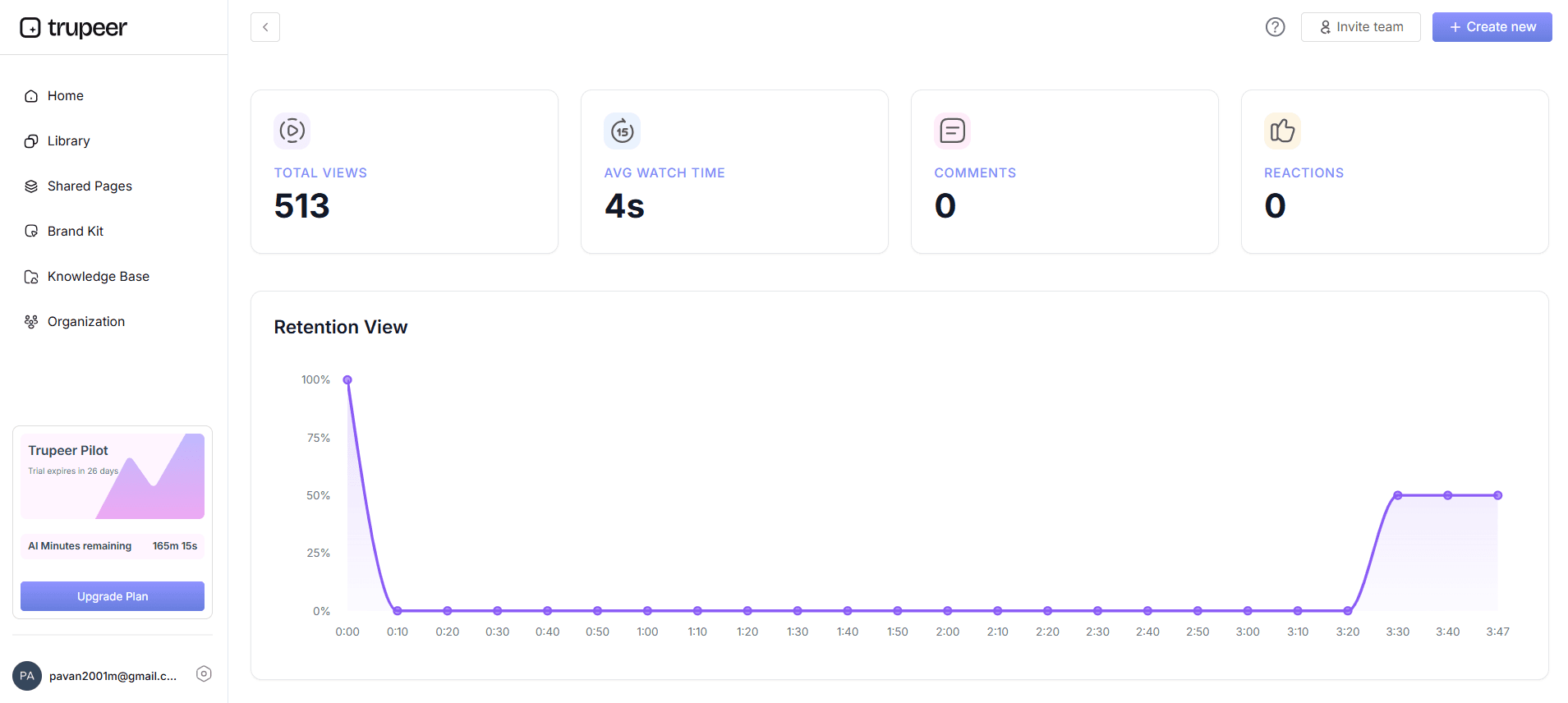
Once your documentation is finalized, distribute it using Trupeer's distribution features. Host the content on a custom domain with single sign-on (SSO) for secure access or create shared pages for client-facing portals. Trupeer's viewer engagement analytics provide insights into user interactions, tracking drop-off points and heatmaps. This data helps you refine future documentation by understanding what engages your audience. Regularly monitor these analytics to ensure your documentation remains effective and adjust your strategy as needed.
What tips help you set up an automated documentation pipeline?
Establishing an efficient documentation pipeline with Trupeer requires strategic planning and execution. Here are some tips to optimize your process:
Define Clear Objectives. Set specific goals for your documentation to ensure it aligns with your product and user needs.
Standardize Recording Practices. Use Trupeer's auto-zoom feature to maintain consistency across all recordings, enhancing clarity and ease of understanding.
use Team Feedback. Incorporate insights from team members during the collaborative review to improve content quality and accuracy.
Monitor Analytics Regularly. Use Trupeer's analytics to track engagement and refine your documentation strategy based on user interactions.
Stay Updated with Features. Keep abreast of new Trupeer functionalities to continuously enhance your documentation process.
use Workflow Templates. simplify your process by employing workflow documentation software templates to expedite SOP creation.
Ensure Multilingual Support. Take advantage of Trupeer's translation features to make your documentation accessible to a global audience.
When SOPs come into the same conversation, a Scribe alternatives comparison helps clarify the scope.
Frequently asked questions
How does Trupeer automatically generate SOPs from recordings?
Trupeer uses AI to analyze screen recordings and extract key actions, creating structured SOPs. The process involves detecting important steps, generating text descriptions, and organizing them into a coherent document. This automation significantly reduces the time and effort required to produce SOPs manually, ensuring consistency and accuracy. The generated SOPs can be edited and exported in various formats, making them versatile and easy to integrate into existing workflows.
What makes Trupeer's AI voiceover feature unique?
Trupeer's AI voiceover feature offers over 50 natural-sounding voices with customizable pace and tone. This allows you to tailor the narration to match your brand's voice, enhancing the professionalism of your documentation. The voiceover process is quick, adding an auditory layer to your content that improves engagement and accessibility. It caters to different learning preferences, providing an alternative to text-heavy documents and making your materials more inclusive.
Can Trupeer's knowledge base improve documentation accessibility?
Yes, Trupeer's AI-searchable knowledge base significantly enhances documentation accessibility. By indexing content with timestamp-level deep links, it allows users to find specific information quickly. This feature reduces the time spent searching through extensive documentation, providing direct access to the relevant sections. It improves user experience by ensuring that critical information is always readily available, supporting efficient knowledge retrieval.
Does Trupeer support multilingual documentation?
Absolutely, Trupeer supports multilingual documentation through its AI translation capabilities. It can translate content into over 40 languages, complete with lip-sync for video content. This feature ensures that your documentation is accessible to a global audience, breaking language barriers and enhancing reach. Using its video localization tool, you can cater to diverse markets without compromising on quality or consistency.
Is it possible to customize Trupeer's documentation templates?
Yes, you can customize Trupeer's documentation templates to fit your specific needs. The platform allows for the integration of brand kits and branded templates, ensuring consistency with your organization's visual identity. This customization capability helps maintain a cohesive look across all documentation, which is crucial for brand recognition and professionalism. By tailoring templates, you can ensure that your documentation not only meets functional needs but also aligns with your brand's aesthetic and strategic goals.
Articles de blog associés