Trupeer Blog
Imagine you're overseeing a team responsible for maintaining the standard operating procedures (SOPs) at a mid-sized manufacturing company. A single misstep in following an outdated SOP can result in significant inefficiencies, not to mention compliance issues. In the past year, your team has digitized over 200 SOPs to simplify operations, but without a clear versioning and ownership strategy, chaos ensues.
Inconsistent SOP versions can lead to a 30% increase in error rates, directly impacting productivity and compliance.
Assigning version numbers and owners to digitized SOPs is not just a formality, but a necessity for maintaining operational integrity and ensuring accountability. This process is crucial for teams that need to stay agile and compliant in 2026.
Why does assigning version numbers and owners to digitized SOPs matter?
In any business, especially those dealing with complex operations like manufacturing or pharmaceuticals, SOPs are the backbone of day-to-day activities. They're the detailed instructions that ensure tasks are performed consistently and correctly. However, without proper version control and ownership assignment, SOPs can quickly become a source of confusion instead of clarity. Imagine a scenario where multiple teams are working with different versions of the same SOP. The potential for error is immense, and the lack of accountability makes it difficult to determine who is responsible for updating and maintaining these documents. This is where operations workflow consistency comes into play, ensuring everyone is on the same page.
Assigning version numbers to digitized SOPs allows for precise tracking of changes and updates. This is essential for compliance audits and quality assurance processes. When an SOP is updated, the version number changes, providing a clear historical record of modifications. This not only aids in internal audits but is also critical during external inspections where proof of compliance is required. On the other hand, assigning ownership to each SOP ensures that there is a designated person responsible for its accuracy and relevancy. This accountability reduces the risk of outdated procedures being used, which could lead to safety hazards or regulatory penalties. The combination of version control and ownership creates a solid framework that supports continuous improvement and operational excellence.
What are the benefits of assigning version numbers and owners to digitized SOPs?
Assigning version numbers and owners to digitized SOPs provides several tangible benefits that enhance operational efficiency and reliability.
Improved Compliance. With clear version control, regulatory compliance becomes more straightforward. Auditors can easily verify that the procedures being followed are up-to-date and compliant with industry standards.
Enhanced Accountability. Each SOP having a designated owner means there's someone responsible for its accuracy. This reduces errors and ensures timely updates, building a culture of accountability.
simplified Operations. Consistent SOPs mean that all team members are following the same procedures, which reduces variability and errors. This can be further explored through create effective video sops for visual consistency.
Efficient Change Management. With version control, tracking changes becomes effortless, simplifying the process of implementing new procedures and ensuring everyone is informed of updates.
Better Training Processes. New employees can be trained using the most current SOP versions, reducing the learning curve and ensuring they are up to speed quickly. An AI video platform can facilitate this by providing visual tutorials.
Reduced Risk and Liability. Accurate and up-to-date SOPs minimize the risk of accidents or non-compliance incidents, protecting the company from legal liabilities.
Which Trupeer features help you assign version numbers and owners to digitized SOPs?
Trupeer offers several features that facilitate the effective assignment of version numbers and owners to digitized SOPs, enhancing their management and utilization.
Automatic SOP generation from any recording
Trupeer's automatic SOP generation feature transforms any recording into an edit-ready SOP document. This capability ensures that the latest procedures are easily documented and updated with version numbers. By converting recordings into written SOPs, this feature eliminates the manual effort involved in documentation and reduces errors. With automatic updates tied to the recording, team members always have access to the current version, ensuring compliance and consistency across departments.
Auto-updating documentation tied to the underlying recording
This feature is a big shift for maintaining the accuracy of SOPs. Whenever a procedure is updated and recorded, the associated SOP is automatically updated with the new version number. This ensures that all stakeholders are working with the most up-to-date information, reducing the risk of following outdated procedures. The integration with recordings means changes are documented smoothly, providing an audit trail that is invaluable for compliance purposes.
Multi-format export: MP4, HTML, PDF, SCORM
Trupeer allows SOPs to be exported in multiple formats, catering to different platforms and user preferences. This flexibility ensures that SOPs are accessible to all team members, regardless of their preferred method of consumption. Whether it's a PDF for easy printing or an HTML file for online access, Trupeer ensures the right format is available. The version number is consistently displayed across all formats, maintaining clarity and reducing confusion.
AI-searchable knowledge base with timestamp deep-links
Trupeer's AI-searchable knowledge base indexes every SOP, making it easy to find and reference specific procedures. With timestamp deep-links, users can quickly navigate to the exact part of a recording or document that pertains to their needs. This feature ensures that all team members have access to the correct version of an SOP, complete with its version number and owner details. This is especially useful in large organizations where multiple SOPs are in use simultaneously.
Collaborative review and approval workflows
Before an SOP is finalized and assigned a version number, it often goes through several iterations. Trupeer's collaborative review and approval workflows simplify this process, allowing multiple stakeholders to provide input and approve changes. This ensures that the final version is accurate and has been vetted by all necessary parties. The workflow also clearly identifies the SOP owner, ensuring accountability from the start.
How do you assign version numbers and owners to digitized SOPs step by step with Trupeer?
Step 1: Capture the Procedure
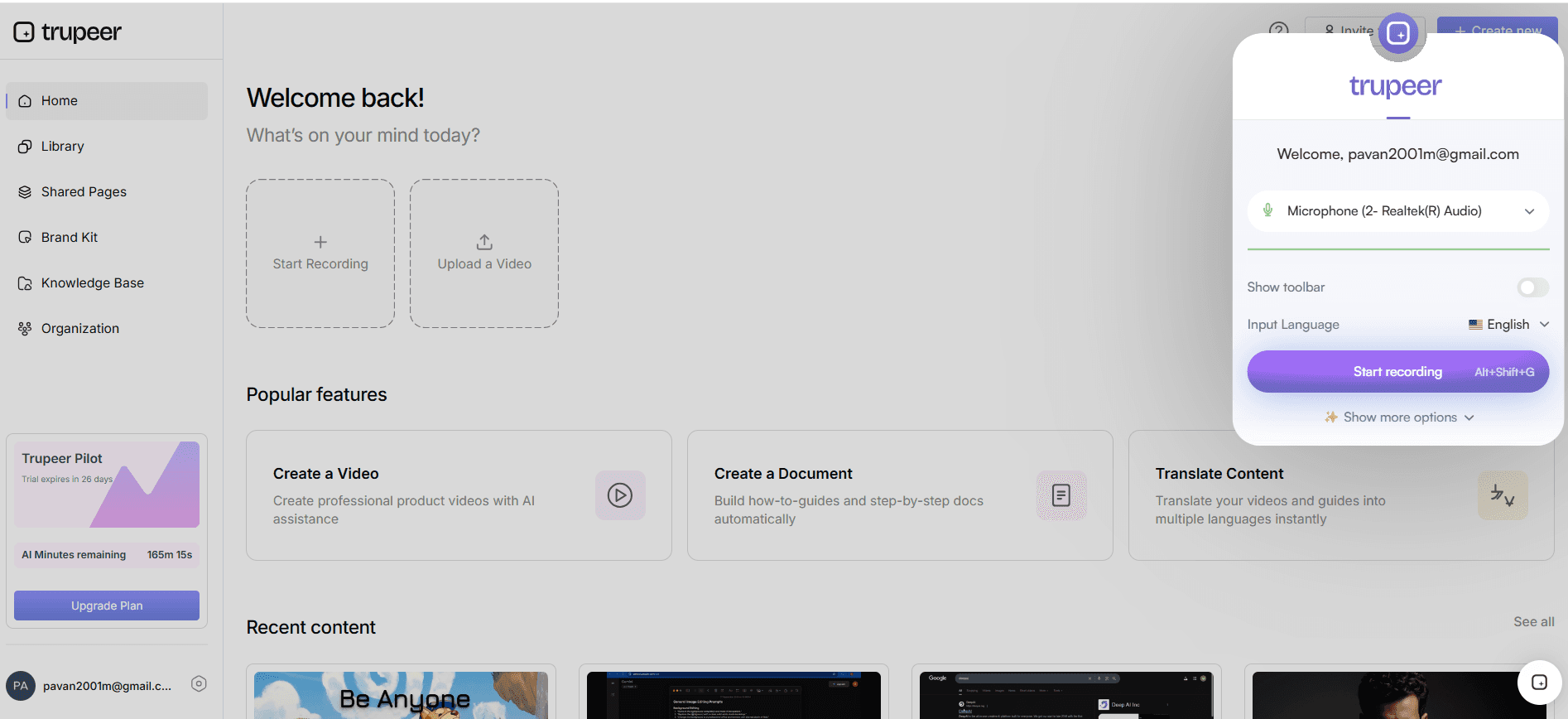
Begin by using Trupeer's AI screen recording with auto-zoom and click detection to capture the procedure that will form the basis of your SOP. This feature automatically focuses on crucial actions, ensuring that no detail is missed. To initiate the recording, open the Trupeer browser-based recorder, which requires no installation, and hit "Start Recording". As you perform the procedure, Trupeer captures every click and screen change. This step is crucial for creating a detailed and accurate SOP that reflects the actual process. Once the recording is complete, click "Stop" to save the video, which can then be reviewed and edited for clarity.
Step 2: Generate the SOP Document
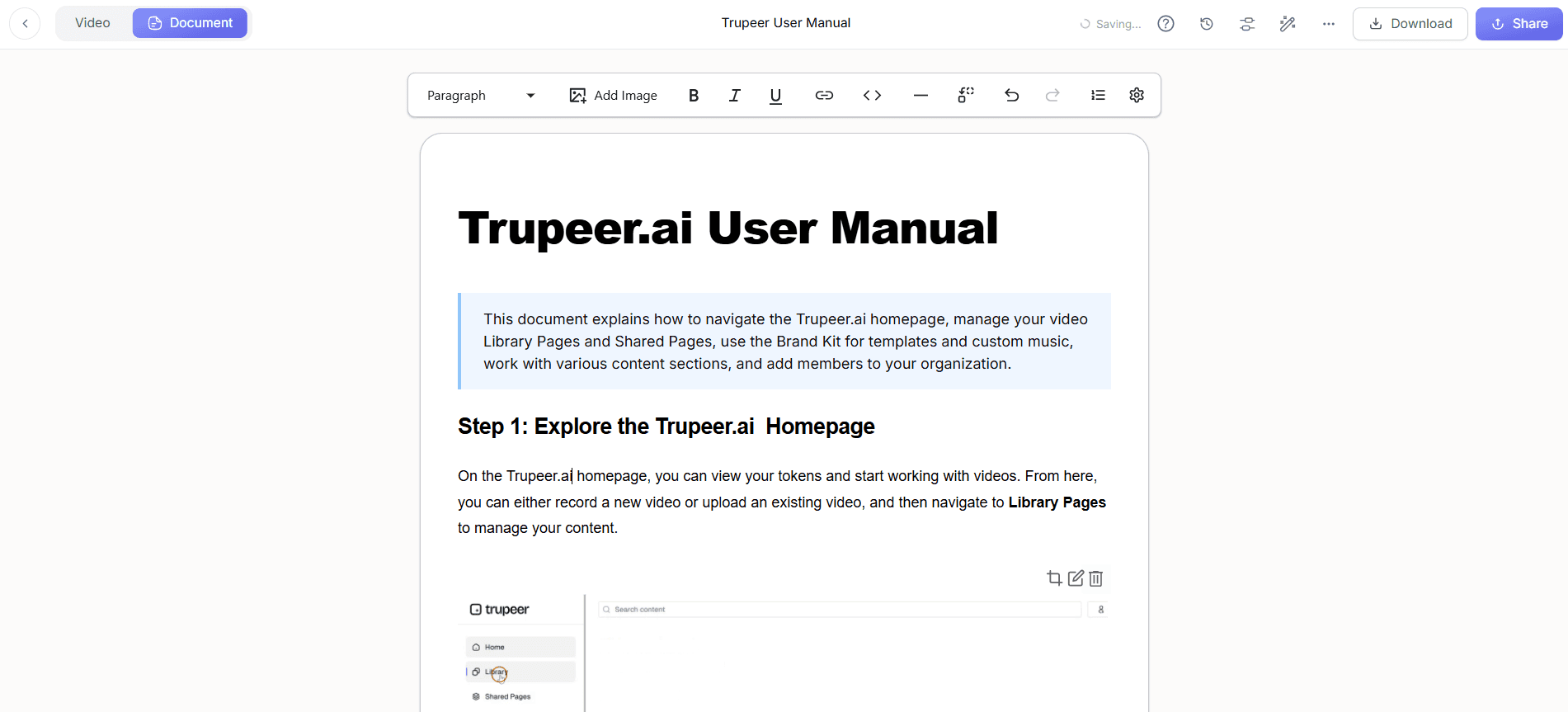
With the recording in hand, use Trupeer's Automatic SOP generation feature. Navigate to the recording in your Trupeer dashboard, and select "Generate SOP". This converts the video into a text-based document, automatically capturing each step. The generated document is edit-ready, allowing you to refine the wording and ensure accuracy. This process typically takes a few minutes, depending on the length of the recording. The SOP includes timestamps linked to the video, providing a visual reference for each step. This integration ensures that the SOP is not only textually accurate but visually detailed as well.
Step 3: Assign Version Numbers
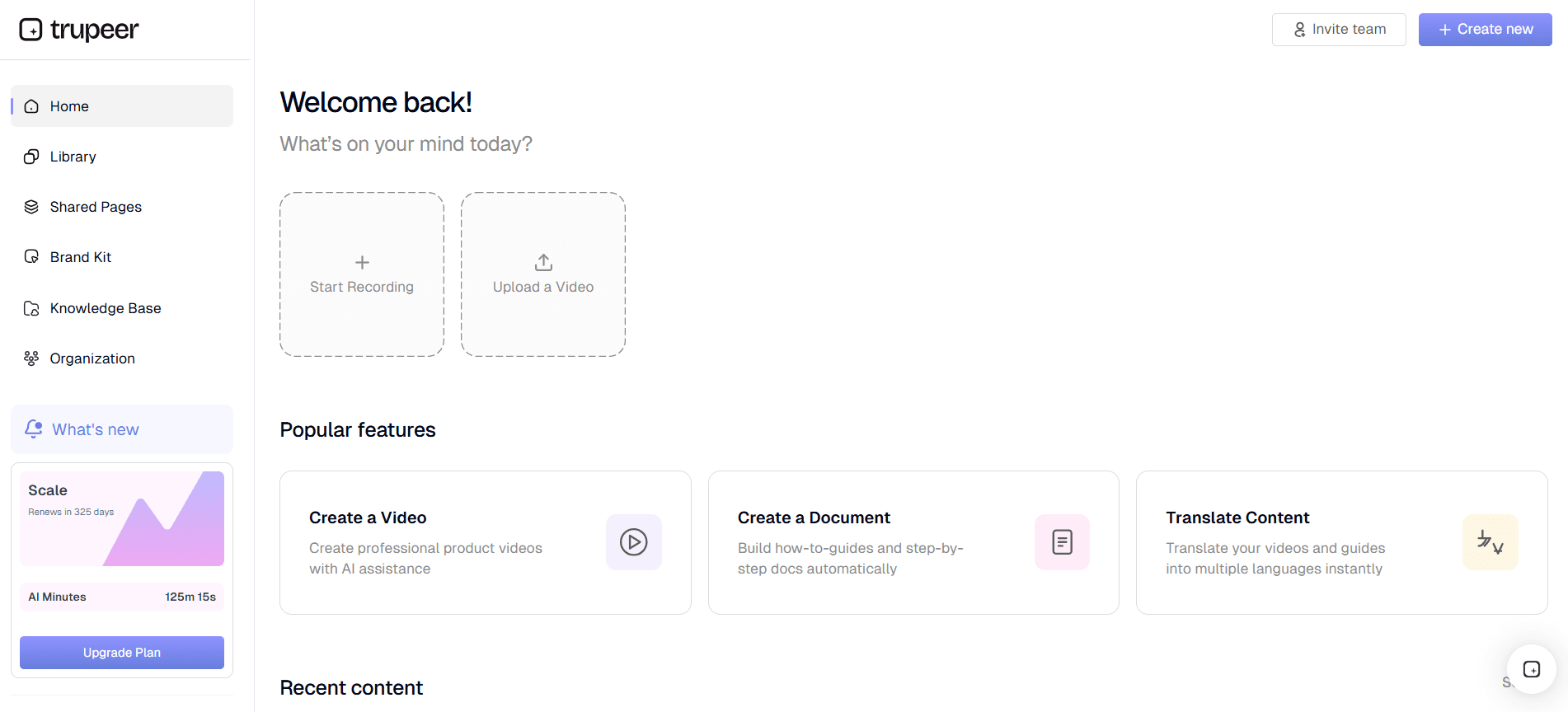
Once the SOP document is generated, assign a version number using the Trupeer platform. Go to the document's settings and select "Version Control". Enter the version number, starting with "1.0" for new SOPs. This number will increment with major updates, while minor revisions might be marked as "1.1" or "1.2". Assigning version numbers is crucial for tracking changes over time. It ensures that team members always know which version is the most current, reducing the risk of errors from outdated procedures. This step helps maintain a clear historical record of modifications.
Step 4: Designate an SOP Owner
Every SOP needs an owner responsible for its accuracy and updates. In Trupeer, go to the "Owner Assignment" section of the SOP settings. Here, you can select a team member from a dropdown list to designate as the SOP owner. This individual will receive notifications for any required updates and will be accountable for ensuring the SOP is up-to-date. Assigning ownership is a critical step that builds accountability and ensures that no SOP is neglected. The owner can also delegate tasks, keeping the document current and relevant.
Step 5: Review and Approve the SOP
Before finalizing the SOP, use Trupeer's collaborative review and approval workflows. Invite stakeholders to review the document by clicking "Invite Reviewers" in the SOP dashboard. Reviewers can add comments, suggest edits, and approve the document. This collaborative approach ensures that all relevant parties have input, which enhances the SOP's accuracy and comprehensiveness. After all feedback is addressed, the SOP can be approved by clicking "Finalize". This step is essential for ensuring buy-in from all stakeholders and maintaining high standards of quality and compliance. Teams weighing tools often start with a Loom alternatives comparison before standardizing on a workflow.
Step 6: Distribute the SOP
With the SOP finalized, it's time to distribute it to the relevant team members. Use Trupeer's multi-format export feature to convert the SOP into the required format, such as PDF or HTML. Select "Export" from the SOP dashboard and choose the desired format. Once exported, distribute the document via email or upload it to Trupeer's AI-searchable knowledge base. This ensures that every team member has access to the latest version, complete with version number and assigned owner. Distribution is key to ensuring that everyone follows the same procedures, minimizing errors and maintaining consistency.

What tips help you assign version numbers and owners to digitized SOPs?
To effectively manage digitized SOPs, it's important to implement strategies that ensure their accuracy and availability. Here are some tips to enhance your SOP management process.
Standardize Versioning Formats. Use a consistent format like "Major.Minor" to clearly differentiate between updates.
Establish Update Schedules. Regularly review and update SOPs, ideally on a quarterly basis, to ensure they remain relevant.
Use Collaborative Tools. use tools like Trupeer's Scribe alternative comparison for team collaboration and feedback.
Train Owners on Responsibilities. Ensure that designated owners understand their role in maintaining SOP accuracy and currency.
Conduct Regular Audits. Perform periodic audits to verify that all SOPs are up-to-date and correctly versioned.
use AI Tools. use Trupeer's sop creator to automate and simplify SOP creation and updates.
Integrate with Existing Systems. Ensure that your SOP management tools integrate smoothly with other enterprise systems you use.
Frequently asked questions
How do you ensure SOPs are always up-to-date?
To keep SOPs current, implement a regular review schedule and use automated tools like Trupeer's auto-updating documentation. This tool ties SOPs to their underlying recordings, ensuring updates are reflected in real-time. also, assign a dedicated owner to each SOP who is responsible for periodic checks and updates. Integrating these steps into your workflow ensures continuous accuracy and compliance, reducing the risk of outdated procedures leading to operational errors.
What is the best way to assign ownership of SOPs?
The best way to assign SOP ownership is to designate individuals based on their expertise and familiarity with the procedure. Use a platform like Trupeer to formally assign owners within the SOP dashboard, ensuring they receive notifications of required updates. Owners should be trained in their responsibilities, including how to update SOPs and collaborate with team members for review. This structured approach ensures accountability and maintains the integrity of your SOPs.
Why is version control important for SOPs?
Version control is crucial for maintaining a clear historical record of SOP changes, which is essential for compliance and quality assurance. It allows teams to track updates and ensures everyone is using the most current version. Without version control, there's a risk of multiple versions circulating, leading to confusion and errors. Proper versioning enables efficient audits and facilitates smoother transitions during procedural changes.
Can Trupeer support multiple formats for SOP distribution?
Yes, Trupeer supports multiple formats for SOP distribution, including PDF, HTML, and SCORM. This flexibility ensures that SOPs can be accessed in the format most convenient for your team. By exporting SOPs into various formats, you can accommodate different preferences and ensure accessibility across platforms. This capability enhances the distribution process, making it easier for team members to access the most current SOPs, regardless of their device or location.
Does Trupeer offer translation features for SOPs?
Yes, Trupeer offers AI translation into 40+ languages, which is particularly useful for global teams that need SOPs in different languages. The video localization tool ensures that translated SOPs retain their original meaning and intent, complete with lip-sync for video-based SOPs. This feature helps maintain consistency and accuracy across multilingual teams, allowing all employees to follow the same procedures, irrespective of language barriers.
Articles de blog associés