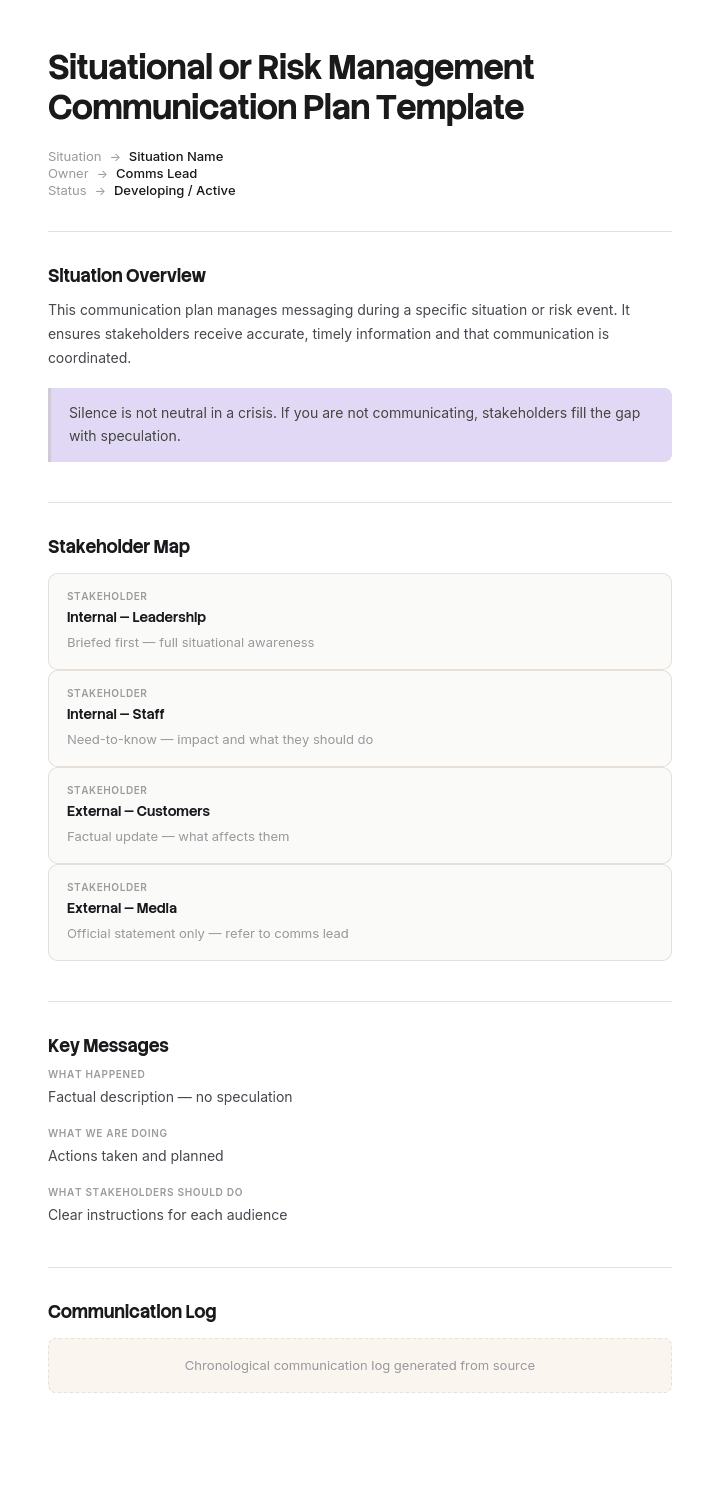
Usa esta plantilla
La forma en que una organización se comunica durante un riesgo o un incidente suele importar más que el incidente en sí. Con Trupeer, puedes ahorrar horas en la planificación de la comunicación de riesgos empezando con una plantilla gratuita de plan de comunicación situacional o de gestión de riesgos, personalizándola con tus directrices de marca y convirtiendo el plan en recorridos en vídeo que preparan a los líderes antes de que ocurran los incidentes.
¿Qué es una plantilla gratuita de plan de comunicación situacional o de gestión de riesgos?
Una plantilla gratuita de plan de comunicación situacional o de gestión de riesgos es una estructura reutilizable para decidir, con antelación, cómo se comunica tu organización sobre los riesgos: tanto los que podrían ocurrir como el que acaba de ocurrir.
No es un plan de gestión de riesgos, que identifica y mitiga los riesgos. Es la parte de comunicación, y existe porque la respuesta operativa a un riesgo materializado suele ser competente, mientras que la comunicación que lo rodea suele llegar tarde.
La plantilla no es el plan. Te proporciona secciones, que es la parte rápida. Lo que determina si el plan funciona es si responde a una pregunta que la mayoría de las plantillas publicadas nunca hacen: quién está autorizado para enviar un mensaje sin pedir permiso primero.
El formato sigue al uso. Un documento Word de plantilla gratuita de plan de comunicación situacional o de gestión de riesgos se ajusta al propio plan, que es prosa más tablas y se aprueba. La versión Excel de una plantilla gratuita de plan de comunicación situacional o de gestión de riesgos se ajusta a las listas de contactos y a la matriz de audiencia, que necesitan ordenación y filtrado. Elijas lo que elijas, las partes necesarias en un incidente real deben poder imprimirse y estar disponibles sin conexión, porque los incidentes tienen la costumbre de afectar a los sistemas en los que se guarda el plan.
La comunicación de riesgos tiene dos partes
La mayoría de las plantillas cubren una de estas y se detienen.
Comunicación de riesgo permanente. Informar a las personas sobre riesgos que aún no han ocurrido. Informar a un consejo sobre el registro de riesgos, avisar a un cliente de que un proveedor es frágil, decirle a un equipo que un sistema no tiene soporte. Es rutinaria, programada y, en gran medida, para asegurarse de que nadie se lleve una sorpresa más tarde.
Comunicación situacional. Lo que envías cuando un riesgo se materializa. No programada, crítica en el tiempo y leída por personas que ya están preocupadas.
Están conectadas de una forma fácil de pasar por alto. La calidad de la primera determina la dificultad de la segunda. Una organización que le ha dicho a sus clientes que un proveedor es frágil tiene una conversación muy distinta cuando el proveedor falla que otra que no ha dicho nada. La comunicación permanente te compra el beneficio de la duda, y no hay forma de adquirirlo después del evento.
Cúbrelas ambas. Un plan que solo aborda la crisis es un plan que empieza a funcionar en el peor momento posible.
Cómo personalizar esta plantilla en Trupeer
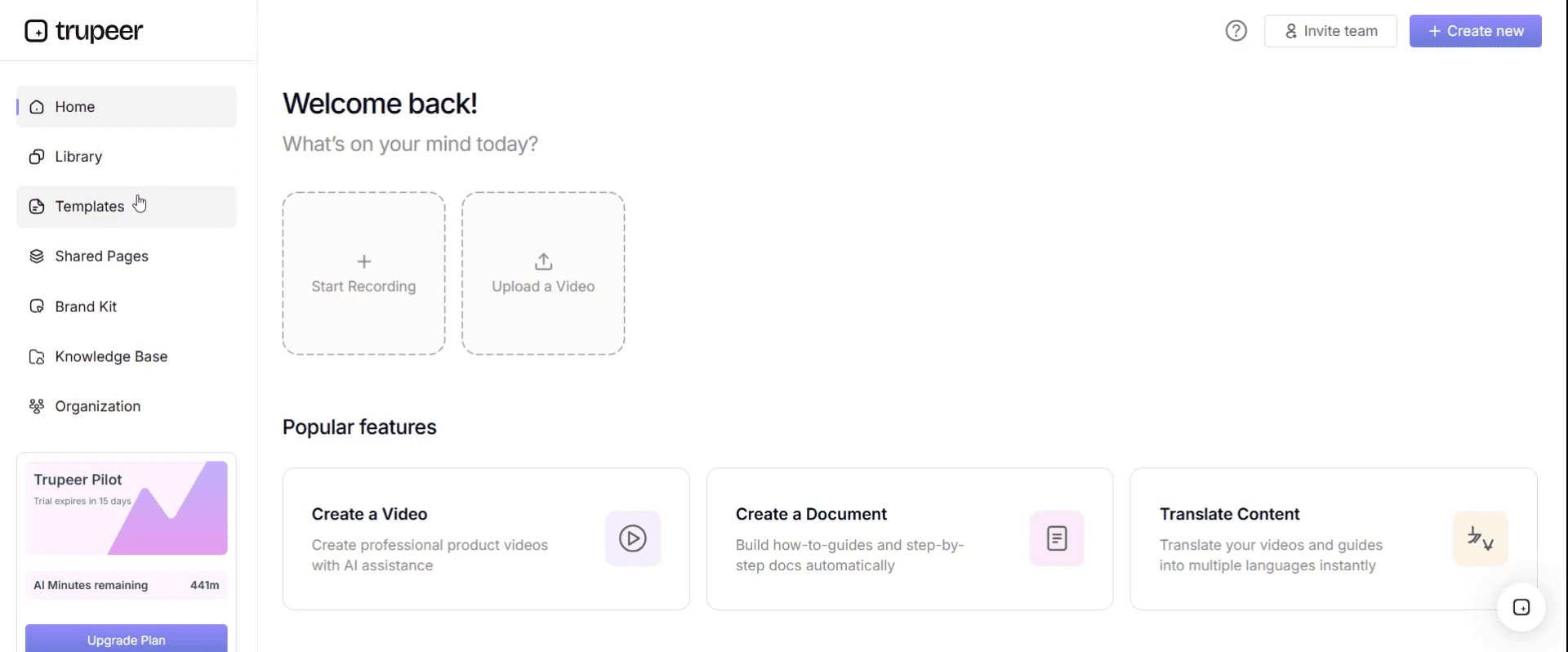
Paso 1: Abre la sección Plantillas
Ve a la sección Plantillas desde la navegación principal.
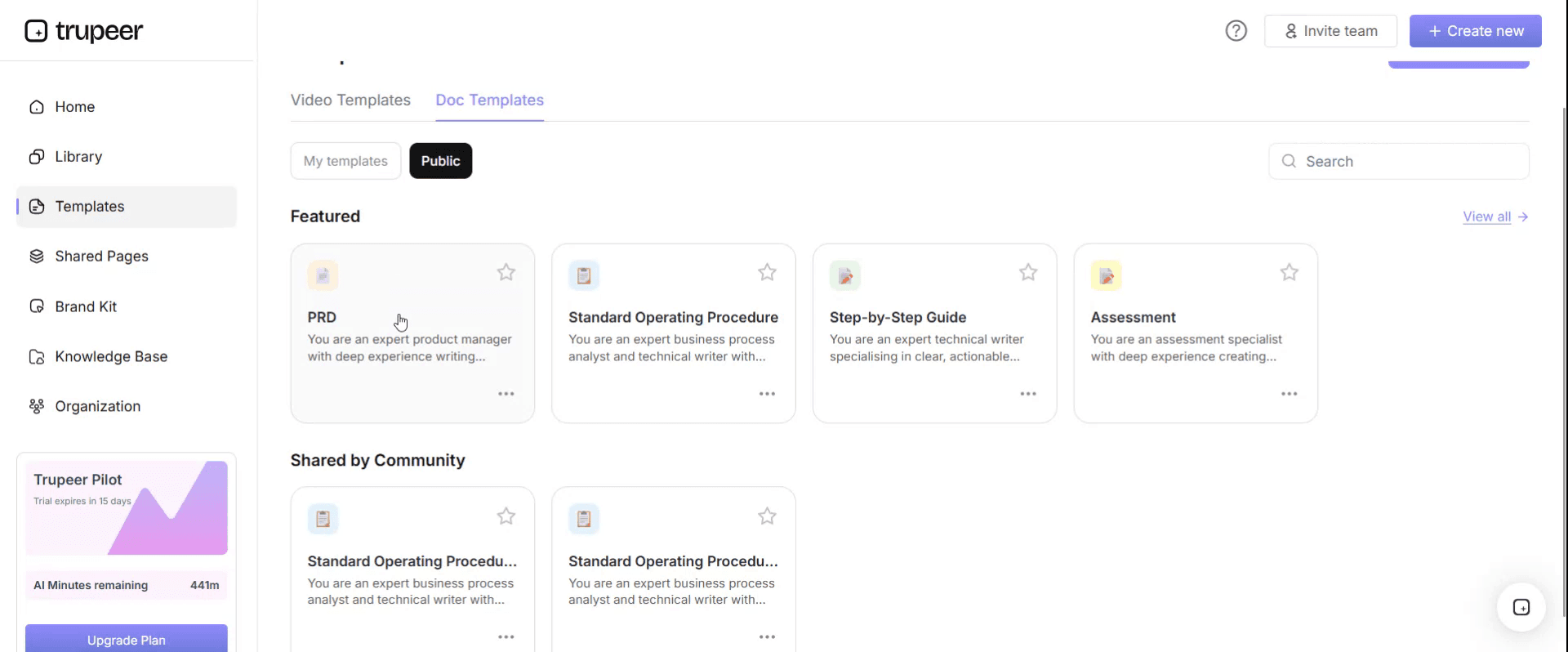
Paso 2: Selecciona y abre una plantilla
Haz clic en cualquier plantilla con la que quieras trabajar para abrirla.
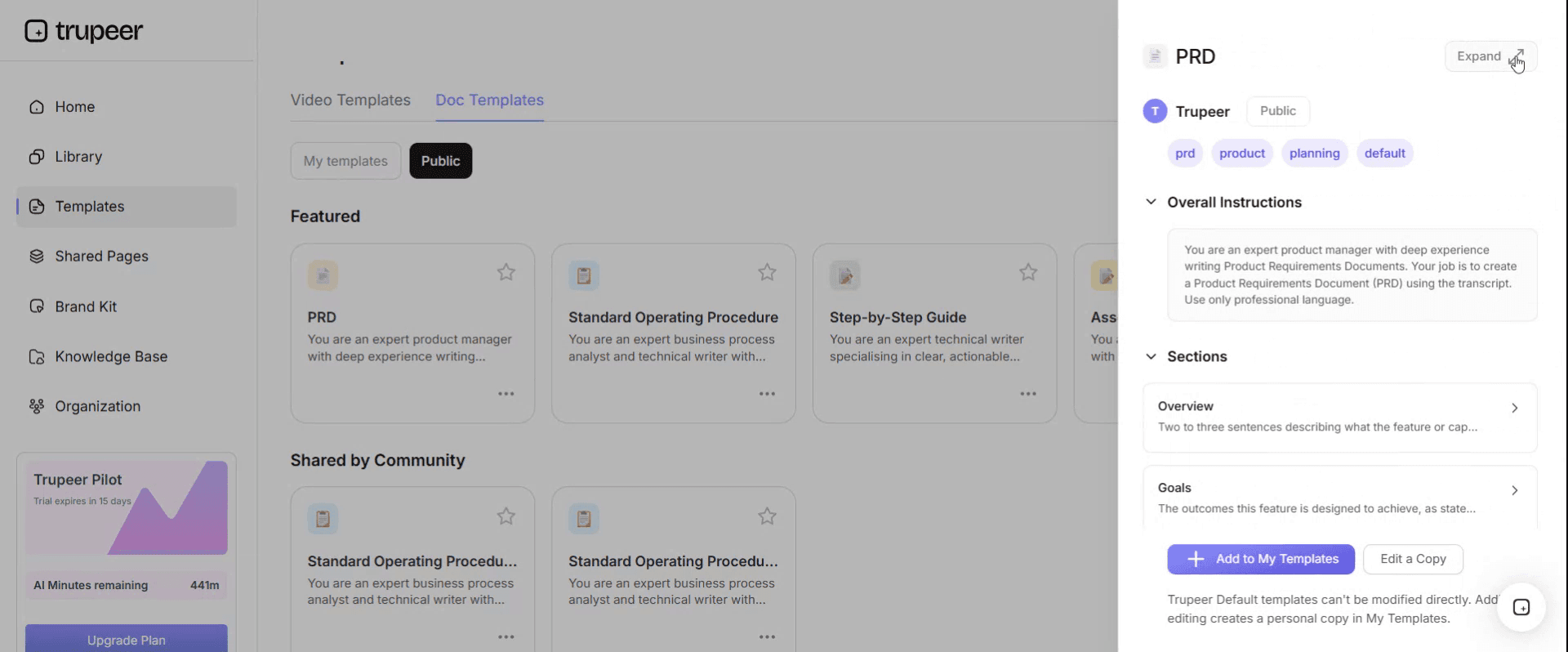
Paso 3: Amplía la vista de la plantilla
Si es necesario, amplía la vista de la plantilla para ver claramente el diseño completo y los detalles.
Paso 4: Edita la plantilla
Haz clic en Editar para empezar a modificar la plantilla seleccionada.
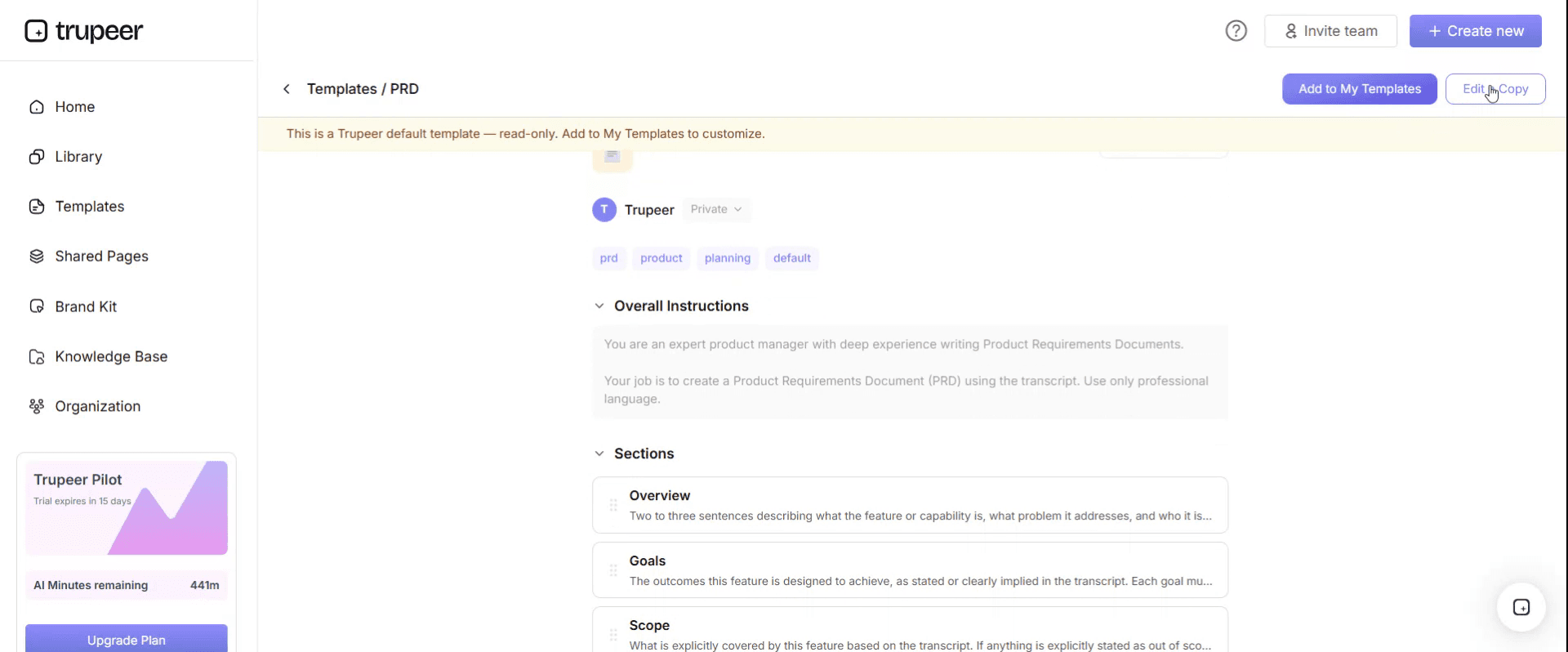
Dentro del editor, puedes:
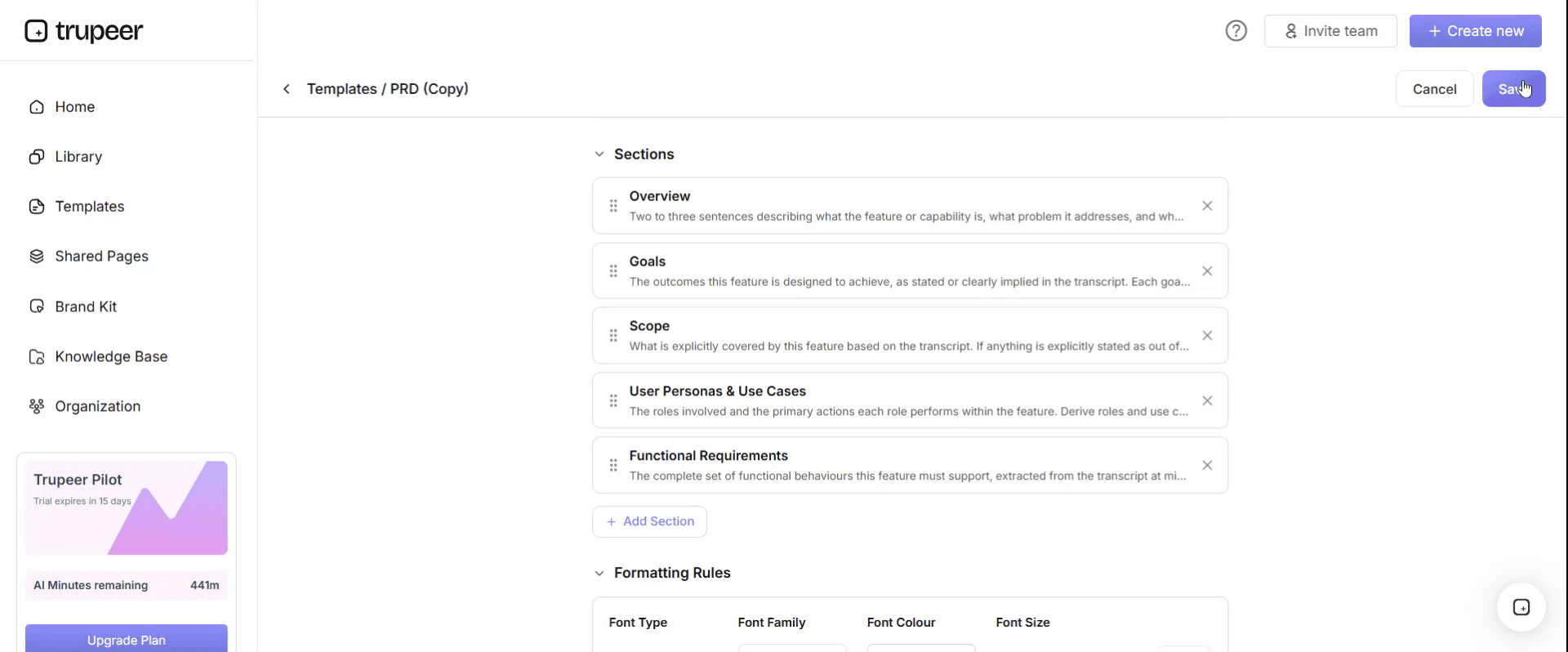
Añadir nuevas secciones
Definir o actualizar reglas de formato
Añadir un logotipo y ajustar su posición y la configuración relacionada
Paso 5: Guarda tu plantilla personalizada
Después de realizar todos los cambios necesarios, haz clic en Guardar para almacenar la plantilla actualizada como tuya.
Paso 6: Previsualiza y ajusta la plantilla
Cuando quieras ver cómo se ve tu plantilla personalizada, abre la Previsualización.
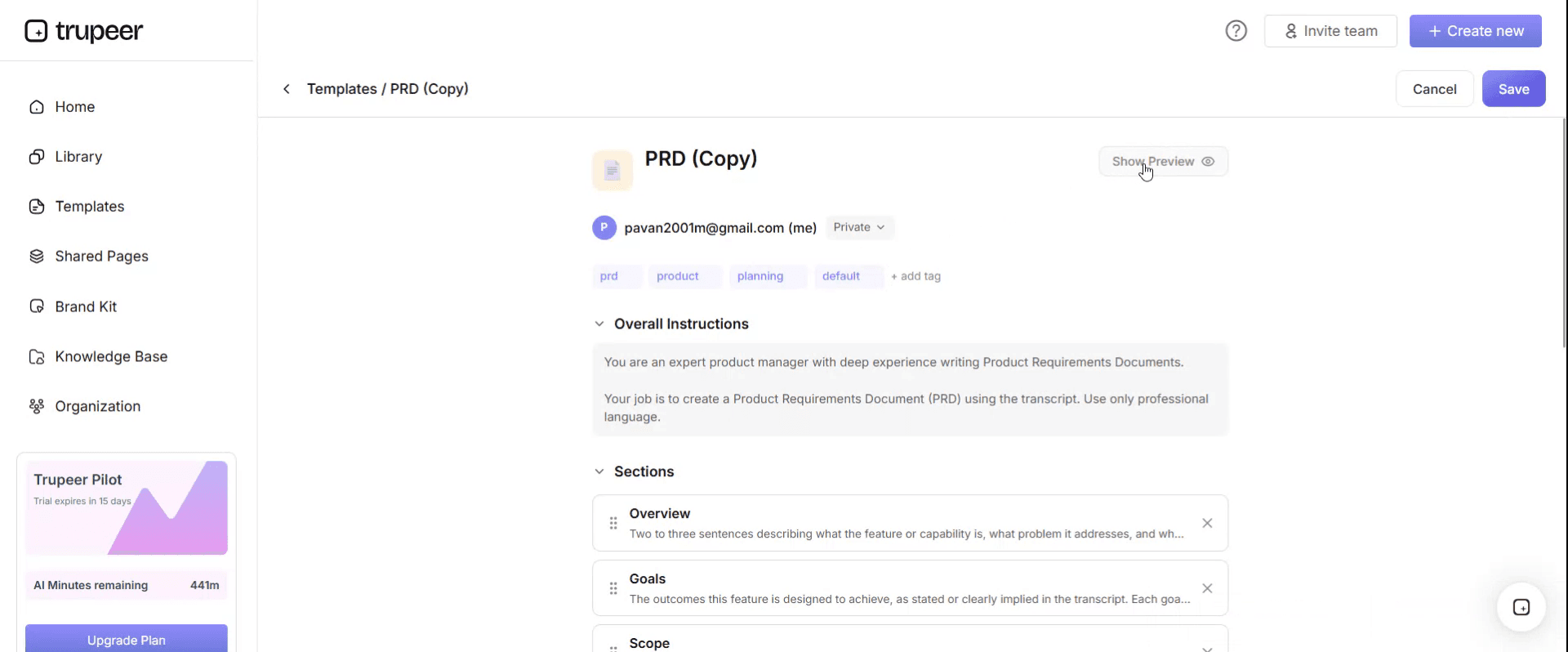
Desde la pantalla de previsualización, puedes seguir haciendo ajustes directamente si es necesario, asegurándote de que la plantilla aparezca exactamente como la quieres.
Con una plantilla de plan de comunicación de gestión de riesgos puedes:
Ahorra horas en la preparación: Omite la página en blanco con una estructura creada para las comunicaciones de incidentes.
Responde más rápido bajo presión: Las frases de contención y las rutas de escalado integradas reducen el tiempo de respuesta.
Mantén el estilo de tu marca: Aplica tu logotipo, tipografías y colores usando el kit de marca de Trupeer.
Protege la marca: Las comunicaciones planificadas con antelación protegen la reputación cuando cuentan los segundos.
Estandariza en todos los escenarios: Usa la misma plantilla para cada tipo de incidente.
Llega a equipos globales: Traduce las comunicaciones de riesgos a 65+ idiomas con un solo clic.
El único número que importa es el tiempo hasta el primer mensaje
Todo lo demás en un plan de comunicación de riesgos existe para reducir una sola cifra: el tiempo transcurrido entre que la organización sabe algo y que las personas afectadas lo escuchan de tu parte.
Esa cifra es la que determina si estás informando a las personas o poniéndote al día con ellas. Una vez que las personas afectadas se enteran por algún otro medio, toda la comunicación cambia de carácter. Ya no estás explicando una situación: estás explicando un silencio.
Mídelo. Cada vez que un riesgo se materializa, por pequeño que sea, registra cuándo supo la organización por primera vez y cuándo se envió el primer mensaje. Ese único par de marcas de tiempo te dice más sobre tu plan que cualquier revisión posterior al incidente.
Luego mira qué consumió realmente la brecha. En la mayoría de las organizaciones no es decidir qué decir, ni es redactar. Es esperar a que alguien lo apruebe.
Autoriza previamente quién puede hablar
Esta es la sección que la mayoría de las plantillas publicadas omiten y es la que cambia el número de arriba.
La disposición predeterminada en la mayoría de las organizaciones es que la comunicación externa requiere la aprobación de un responsable sénior. Esto tiene todo el sentido para la comunicación ordinaria, y por eso las crisis se comunican tarde: porque las personas que pueden aprobar son las que menos accesibles son a medianoche y las más probables de estar en la reunión que la crisis ha provocado.
Nadie envía el mensaje. No por confusión, sino porque una persona junior que envía una declaración no aprobada a los clientes está asumiendo un riesgo profesional, y esperar es la opción segura para el individuo y la opción costosa para la organización.
Soluciónalo con antelación, con una tabla.
Para cada nivel de gravedad, indica quién puede comunicar, a quién, qué debe decir, sin buscar aprobación. Dales frases de contención aprobadas previamente para que el juicio requerido sea qué situación aplica, en lugar de qué escribir. Y di explícitamente que enviar una frase de contención aprobada nunca es un asunto disciplinario, que suena innecesario y es la frase que hace que la gente actúe.
Dos principios mantienen esto a salvo.
La autorización previa cubre el acuse de recibo, no la explicación. Un responsable de turno puede decir que algo ha ocurrido, que lo están gestionando y cuándo llegará la próxima actualización. No puede especular sobre la causa, aceptar responsabilidad ni comprometerse con un plazo de resolución.
Y la autoridad debe recaer en quien esté presente, no en quien sea más sénior. Una posición de turno, como responsable de turno, es mucho más útil que un cargo, porque el turno, por definición, es contactable.
Qué debe contener una plantilla de plan de comunicación de gestión de riesgos
Nueve componentes. Los tres primeros son lo que la mayoría de las plantillas no tienen.
Componente | Qué hace |
|---|---|
Niveles de gravedad | Cómo se clasifican las situaciones, en términos observables, y quién las clasifica. |
Tabla de autorización previa | Quién puede decir qué, a quién, en cada gravedad, sin aprobación. |
Objetivos de tiempo | Tiempo máximo hasta el primer mensaje en cada gravedad y para cada audiencia. |
Matriz de audiencia | Cada audiencia, lo que necesita saber, a través de qué canal y en qué orden. |
Frases de contención | Redactadas con antelación para los riesgos de tu registro, listas para enviar con un nombre y un dato insertado. |
Rutas de contacto | Cómo se llega realmente a cada audiencia, con la ubicación de la lista y cuándo se probó por última vez. |
Escalado y traspaso | Quién se hace cargo a medida que evoluciona la situación y cómo ocurre un traspaso a mitad del incidente. |
Comunicación de riesgo permanente | La parte rutinaria. A quién se informa sobre qué riesgos y con qué frecuencia. |
Revisión y simulacro | Cuándo se prueba el plan y qué desencadena una revisión no programada. |
La fila de rutas de contacto merece énfasis. Los planes fallan por listas de contactos desactualizadas con más frecuencia que por cualquier otra cosa del documento. Una lista que nadie ha probado en dieciocho meses es una lista de personas que han cambiado de trabajo.
Plantilla gratuita de plan de comunicación situacional o de gestión de riesgos: la estructura para copiar
Rellenada con un ejemplo real en lugar de marcadores. La organización es una empresa de transporte de viajeros que gestiona contratos escolares y corporativos.
Copia desde aquí.
Niveles de gravedad. Observables y clasificados por el responsable de turno sin consulta.
Gravedad uno: el servicio a los clientes se detiene o se detendrá en cuatro horas. Gravedad dos: el servicio está degradado o se ve afectado un único contrato. Gravedad tres: disrupción interna sin impacto esperado en el cliente.
Tabla de autorización previa.
Gravedad | Quién puede comunicar | A quién | Qué decir | Se necesita aprobación |
|---|---|---|---|---|
Uno | Responsable de turno | Clientes afectados, directamente | Frase de contención aprobada uno, además de qué servicios se ven afectados y cuándo llega la próxima actualización | Ninguna. Informa al director de operaciones en paralelo, no primero. |
Uno | Director de operaciones | Todos los clientes, personal | Actualización más completa una vez establecidos los hechos | Ninguna |
Uno | Solo director general | Medios, cargos electos | Cualquier cosa | Su propio criterio |
Dos | Responsable de turno | Solo cliente afectado | Frase de contención aprobada dos | Ninguna |
Tres | Jefe de línea | Personal afectado | Cualquier cosa factual | Ninguna |
Enviar una frase de contención aprobada nunca es un asunto disciplinario, incluso si la situación resulta ser menos grave de lo que se evaluó inicialmente.
Objetivos de tiempo.
Gravedad uno: clientes afectados en treinta minutos desde que se informa al responsable de turno. Todo el personal en sesenta minutos. Gravedad dos: cliente afectado en sesenta minutos. Gravedad tres: fin del día laborable.
Matriz de audiencia.
Audiencia | Lo que necesitan primero | Canal | Orden |
|---|---|---|---|
Clientes afectados | Si su servicio funciona hoy y qué hacer | Llamada directa a un contacto designado y luego por escrito | Primero, siempre |
Padres, a través de los centros | Solo lo que el centro transmite | Los centros se comunican con los padres, no con nosotros | Inmediatamente después de los centros |
Conductores y personal | Dónde informar, qué decirle a cualquiera que pregunte | Mensaje de grupo y luego briefing | En sesenta minutos |
Aseguradora | Notificación | Teléfono y luego por escrito | En cuatro horas |
Medios | Solo si preguntan o si la situación es pública | Solo director general | Reactivo a menos que se indique lo contrario |
Frases de contención. Redactadas ahora, para los seis riesgos actualmente calificados como ámbar o superiores en el registro de riesgos. Cada una deja solo un nombre, un servicio y un tiempo por completar.
Rutas de contacto. La lista de contactos de clientes se conserva en el sistema de operaciones y se imprime semanalmente en la carpeta del responsable de turno. La lista de contactos del personal está en la aplicación de mensajería de grupo con una copia impresa de respaldo. Ambas se prueban trimestralmente enviando un mensaje de prueba y contando los fallos.
Escalado y traspaso. El responsable de turno es el responsable de la comunicación hasta que el director de operaciones se hace cargo, lo cual ocurre mediante una declaración explícita en lugar de una suposición. El registro del traspaso recoge lo que se ha enviado, a quién y lo que se prometió como siguiente paso.
Comunicación de riesgo permanente. El registro de riesgos se revisa con el consejo trimestralmente. Cualquier riesgo calificado como rojo se comunica a los clientes afectados dentro de los diez días laborables posteriores a su calificación, con lo que estamos haciendo al respecto.
Revisión y simulacro. Se revisa anualmente. Se simula dos veces al año con un escenario no anunciado. Se revisa inmediatamente después de cualquier gravedad uno y después de cualquier incidente en el que el tiempo hasta el primer mensaje superó el objetivo.
Copia para aquí.
Ejemplo: ocho horas y cuarenta minutos
Thornaby Transport, una empresa de transporte de viajeros con unos trescientos cuarenta empleados que gestiona contratos escolares y corporativos, tuvo inundaciones en su principal centro de operaciones, que figuraba en su registro de riesgos durante dos años, calificado como ámbar, con un plan de mitigación adjunto.
El centro se inundó el domingo por la noche de enero. Se vieron afectados cuarenta vehículos y veintidós contratos escolares no pudieron funcionar el lunes por la mañana.
La respuesta operativa fue buena. El responsable de turno lo supo a las once de la noche del domingo, empezó a recuperar vehículos y había organizado cobertura parcial con un operador vecino para las cuatro de la mañana.
El primer mensaje a los centros se envió a las siete cuarenta del lunes.
Para entonces, los padres estaban en las paradas de autobús. Los centros atendían llamadas que no podían responder. Un medio de comunicación local tenía la historia antes de que Thornaby contactara con sus propios clientes, y se emitió durante tres días.
El retraso no tenía nada que ver con no saber qué decir. La instrucción permanente era que cualquier comunicación externa requería la aprobación del director general, que no era contactable hasta las seis y media de esa mañana. El responsable de turno redactó un mensaje a las doce y media de la noche y no lo envió, porque enviar una declaración no aprobada a veintidós clientes no era un riesgo que estuviera dispuesto a asumir por su cuenta a la una de la mañana.
Transcurrieron ocho horas y cuarenta minutos entre saber y comunicar. Casi todo fue esperar permiso.
Se perdieron tres contratos en la siguiente ronda de licitaciones, con un valor aproximado de cuatrocientos diez mil libras al año entre los tres. Dos de los tres citaron la comunicación en lugar de la disrupción en sí.
Lo que tenía Thornaby era un registro de riesgos con el riesgo incluido y un plan de mitigación que cubría la recuperación de vehículos y centros alternativos. Lo que no tenían en ningún sitio era una declaración de quién estaba autorizado para decirle a un centro que su autobús no iba a llegar.
Escribieron la tabla de autorización previa después. Redactaron frases de contención para los seis riesgos calificados como ámbar o superiores, y cada una dejaba solo un nombre, un servicio y un tiempo por completar. Las listas de contactos pasaron a pruebas trimestrales después de que la primera prueba encontrara que nueve de los veintidós contactos de centros estaban desactualizados.
Catorce meses después, una avería en el suministro de combustible amenazó los servicios del lunes. El responsable de turno fue informado a las cuatro cuarenta y seis de la mañana. El primer mensaje a los centros afectados se envió a las cinco doce, veintiséis minutos después, sin que nadie tuviera que despertarse para pedir aprobación.
No se perdió ningún contrato y no hubo cobertura. La disrupción era comparable. La comunicación no.
Redactar frases de contención con antelación
Una frase de contención es lo que envías antes de saber mucho, y su propósito es establecer que sabes y que lo estás gestionando.
Redáctalas ahora, una por cada riesgo de tu registro calificado como ámbar o superior. Toma una tarde y elimina el tiempo de redacción del momento en el que redactar es caro.
Cuatro elementos y nada más. Qué ha ocurrido, en términos sencillos. Qué significa para la persona que lo lee, que es la parte que la mayoría de las organizaciones omite a favor de describir su propia actividad. Qué estás haciendo. Cuándo llega la próxima actualización, como una hora concreta en lugar de «pronto».
Tres cosas que dejar fuera. La causa, hasta que se establezca, porque las atribuciones tempranas suelen ser lo bastante erróneas como para ser peligrosas. Cualquier aceptación o negación de responsabilidad, que es asunto de tu aseguradora y de tus abogados. Y el lenguaje de disculpa más allá del pesar por la disrupción, que en algunas jurisdicciones y sectores tiene un peso legal que debería considerarse con antelación en lugar de a toda velocidad.
La hora de la próxima actualización es el elemento que más trabajo hace. Un lector que sabe que volverá a saber a las diez deja de llamar, deja de especular y espera. Un lector al que le dicen que sabrá pronto no hace ninguna de esas cosas.
Ten en cuenta que algunos incidentes conllevan deberes legales de notificación con sus propios plazos, incluidas las brechas de protección de datos, las lesiones en el lugar de trabajo y los informes regulatorios específicos del sector. Esas obligaciones se ejecutan en paralelo con la comunicación a clientes y no se cumplen con ella. Pide asesoramiento sobre cuáles aplican a tu caso, porque nada en un plan de comunicación las sustituye.
Cómo construir el plan en seis pasos
Extrae los riesgos de tu registro de riesgos existente. El plan de comunicación depende de él. Si no hay registro, ese es el primer trabajo, y una descarga gratuita de plantilla de plan de gestión de riesgos te pondrá en marcha más rápido que crear uno desde cero.
Define la gravedad en términos observables. Algo que un responsable de turno puede clasificar solo a medianoche sin llamar a nadie.
Escribe la tabla de autorización previa. Este es el paso que encontrará resistencia y el que cambia el resultado.
Establece objetivos de tiempo por gravedad. Un objetivo que nadie ha acordado no se cumplirá.
Escribe frases de contención para tus riesgos principales. Una tarde, una por riesgo.
Prueba las listas de contactos y luego ensaya. Sin avisar, en una hora inconveniente, porque es cuando ocurrirá.
El paso tres es todo el plan. Los pasos uno, dos, cuatro y cinco son preparación para ello, y el paso seis es lo que te dice si funciona.
¿Plan de comunicación de riesgos o plan de gestión de riesgos?
Se buscan de forma intercambiable y son documentos distintos, así que merece la pena aclarar cuál necesitas.
Un plan de gestión de riesgos identifica los riesgos, evalúa la probabilidad y el impacto, asigna responsables y establece medidas de mitigación y contingencia. Es el documento analítico y normalmente contiene un registro de riesgos. Un archivo Word de plantilla de plan de gestión de riesgos o un archivo Excel de plantilla de gestión de riesgos te dará esa estructura: descripción del riesgo, probabilidad, impacto, puntuación, responsable, mitigación, estado.
Un plan de comunicación de riesgos cubre a quién se informa, por quién y cuándo. Depende del plan de gestión de riesgos y toma de él la lista de riesgos.
Necesitas ambos, y en ese orden. Construir primero el plan de comunicación significa adivinar para qué riesgos prepararte. Construir solo el plan de gestión es lo que produjo el resultado de Thornaby: en el que se habían pensado todos los aspectos operativos del riesgo y no se había considerado la comunicación en absoluto.
Si lo que realmente buscas es el documento de evaluación en lugar del de comunicación, busca un plan de gestión de riesgos en vez de un plan de comunicación, ya que un PDF de ejemplo de plan de gestión de riesgos mostrará un registro y una matriz de puntuación en lugar de una matriz de audiencia.
Variantes
La estructura se mantiene y las audiencias y obligaciones cambian.
Comunicación de riesgos de proyecto. Las audiencias son internas: patrocinador, comité de dirección y equipo de entrega. La gravedad se refiere al proyecto más que a la organización, y la parte permanente importa más que la situacional, ya que los riesgos de proyecto suelen ser visibles antes de materializarse.
Disrupción operativa y de servicios. El caso de Thornaby. Primero los clientes, domina la velocidad y la autorización previa es esencial porque la disrupción no respeta el horario de oficina.
Incidentes de salud, seguridad y medioambiente. Se aplican deberes legales de notificación, a veces con plazos breves, y la comunicación interna al personal afectado tiene dimensiones legales. Esta variante debe construirse con un asesor de seguridad cualificado y debe alinearse con tus obligaciones de reporte de incidentes.
Incidentes de datos y ciber. Los plazos de notificación suelen estar regulados y son breves. El plan debe indicar quién determina si se ha producido una brecha notificable, porque esa determinación es un juicio legal y no uno técnico.
Financieros y regulatorios. Las normas de divulgación pueden regir qué se puede decir y cuándo, especialmente para entidades cotizadas. Pide asesoramiento antes de autorizar a cualquiera para comunicarse externamente en este contexto.
Riesgo de la cadena de suministro. La comunicación permanente lleva la mayor parte del peso. Cuando se informa a los clientes con antelación de que existe una dependencia de una única fuente, responden de forma muy distinta cuando falla.
En todas ellas, nada de esta página es asesoramiento legal, y cualquier plan que toque deberes de notificación regulados debe revisarse por un asesor cualificado en tu jurisdicción.
Qué no puede arreglar una plantilla gratuita de plan de comunicación de riesgos
Sin registro de riesgos. El plan de comunicación necesita una lista de riesgos para los que prepararte. Sin uno, estás redactando frases de contención para eventos imaginados.
Liderazgo que no quiere delegar autoridad. La tabla de autorización previa es el plan, y una organización que no lo concederá ha elegido una respuesta más lenta. Esa es una elección legítima y debe hacerse de forma consciente, no por defecto.
Listas de contactos no probadas. La primera prueba de Thornaby encontró que nueve de los veintidós contactos estaban desactualizados. Ninguna descarga gratuita de plantilla gratuita de plan de comunicación situacional o de gestión de riesgos descubrirá eso por ti.
Un plan que nadie ha ensayado. Los documentos que se leen una vez en la aprobación no se recuerdan a medianoche. El ensayo es lo que convierte un documento en una respuesta.
Muestra el método en lugar de describirlo
Las partes de este plan que fallan bajo presión son las mecánicas. Dónde vive la lista de contactos actual. Cómo enviar a todos los clientes afectados a la vez. Qué sistema contiene las frases aprobadas. Cómo contactar con el grupo fuera de horario.
Las instrucciones por escrito sirven mal para esto, porque una persona bajo presión de tiempo tiene que reconstruir una secuencia de pantallas a partir de la prosa, y cada segundo dedicado a eso se suma al número que importa.
Trupeer AI cierra esa brecha. Alguien realiza cada una de esas acciones una vez mientras graba, y el resultado es un recorrido escrito con capturas de pantalla ya capturadas y colocadas, junto con un vídeo corto, en tu propia marca. El responsable de turno lo ve durante su incorporación y lo tiene a su lado cuando importa.
Grábalo. Ponle marca. Tradúcelo. Trupeer it.
Dos puntos siguen específicamente para este plan. Mantén los recorridos disponibles sin conexión, además de en tu base de conocimiento, ya que un incidente que afecte a tus sistemas es uno de los escenarios para los que te estás preparando. Y si operas en distintas regiones o idiomas, la misma grabación produce el mismo procedimiento en cada una, así que el tiempo de respuesta no depende de qué equipo esté de turno.
El material también sirve como formación para todos los que se incorporan al turno del responsable, que es la población más probable de enfrentarse a esto y la menos probable de haberlo hecho antes. El nivel de detalle por paso pertenece en las instrucciones de trabajo debajo. La consistencia entre tus documentos es cuestión de configurar el kit de marca una vez, y la configuración se cubre en la guía de configuración de la plantilla de documento.
Preguntas frecuentes
¿Hay una plantilla gratuita de plan de comunicación situacional o de gestión de riesgos en versión Word?
Word se adapta al plan, porque es prosa más tablas, se aprueba y se distribuye. Crea el archivo Word de la plantilla gratuita de plan de comunicación situacional o de gestión de riesgos con la tabla de autorización previa y los objetivos de tiempo en las dos primeras páginas.
Luego, produce un extracto de una página para el turno del responsable que contenga solo las definiciones de gravedad, la tabla de autorización previa y las frases de contención. Nadie lee un plan de veinte páginas a medianoche, y el extracto es lo que realmente se usa.
¿Hay una versión de documento Word de la plantilla gratuita de plan de comunicación situacional o de gestión de riesgos?
Sí, y el archivo de Word de la plantilla gratuita de plan de comunicación situacional o de gestión de riesgos es lo mismo que un archivo de Word con una extensión más antigua.
Lo que importa más que el formato es dónde viven las copias. Mantén una impresa con el turno del responsable, porque un incidente que afecte a tu red o a tu edificio es precisamente el tipo de evento para el que existe este plan, y un plan guardado solo en un sistema al que no se puede acceder no es un plan.
¿Hay una versión Excel de la plantilla gratuita de plan de comunicación situacional o de gestión de riesgos?
Excel se adapta mejor a las tablas que al plan. Un archivo Excel de la plantilla gratuita de plan de comunicación situacional o de gestión de riesgos funciona bien para la matriz de audiencia y para las listas de contactos, que necesitan ordenación, filtrado y pruebas periódicas.
Mantén las definiciones de gravedad, la autorización previa y las frases de contención en un documento. Esas se leen bajo presión, y la prosa en celdas de una hoja de cálculo se lee mal en el mejor de los casos.
¿Hay una descarga gratuita de la plantilla gratuita de plan de comunicación situacional o de gestión de riesgos?
La mayor parte de lo que ofrece una descarga gratuita de la plantilla gratuita de plan de comunicación situacional o de gestión de riesgos es una matriz de audiencia, que es la parte fácil y probablemente veinte minutos de trabajo.
Comprueba una cosa en cualquier plantilla que consideres. ¿Tiene un lugar para registrar quién puede comunicar sin aprobación? Casi ninguna lo hace, y esa omisión es la razón por la que la mayoría de los planes no reducen el tiempo hasta el primer mensaje.
¿Es lo mismo un archivo Word de plantilla de plan de gestión de riesgos?
No. Un archivo Word de plantilla de plan de gestión de riesgos te da el documento analítico: riesgos identificados, puntuados por probabilidad e impacto, con responsables y mitigaciones. Responde a qué podría salir mal y qué estamos haciendo al respecto.
Un plan de comunicación responde a a quién informamos y cuándo. Necesitas ambos, y el plan de gestión viene primero, porque su registro proporciona la lista de riesgos para los que se prepara el plan de comunicación.
¿Dónde puedo conseguir una descarga gratuita de plantilla de plan de gestión de riesgos?
Hay muchas disponibles, y los organismos del sector público y los de estándares publican mejores que los sitios de plantillas comerciales, porque las suyas se crearon para usarse y no para descargarse.
Una descarga gratuita de plantilla de plan de gestión de riesgos normalmente te dará un registro con puntuaciones de probabilidad e impacto y una matriz. Lo que no te dará es ningún contenido de comunicación, así que trata ambos como documentos separados en lugar de esperar que uno cubra los dos.
¿Hay una versión Excel de plantilla de gestión de riesgos?
Sí, y Excel es realmente la herramienta adecuada para un registro de riesgos. Un archivo Excel de plantilla de gestión de riesgos te permite puntuar, ordenar por exposición, filtrar por responsable y hacer seguimiento del movimiento a lo largo del tiempo, todo lo cual un documento hace mal.
El registro es la entrada de este plan. Una vez que lo tienes, toma cada riesgo calificado como ámbar o superior y escribe una frase de contención para cada uno, que es el puente entre los dos documentos.
¿Dónde puedo encontrar un PDF de ejemplo de plan de gestión de riesgos?
Los departamentos gubernamentales, las universidades y las agencias públicas publican estos documentos, y un PDF de ejemplo de plan de gestión de riesgos de uno de ellos es más instructivo que una plantilla comercial porque cubre riesgos reales con responsables reales.
Léelos para ver cómo se describen los riesgos en lugar de para ver la matriz de puntuación. Los enfoques de puntuación varían y se transfieren mal. Una buena descripción del riesgo, lo bastante específica como para que alguien pueda reconocer el evento cuando ocurra, es la parte que merece la pena aprender y es lo que hace posible redactar una frase de contención con antelación.