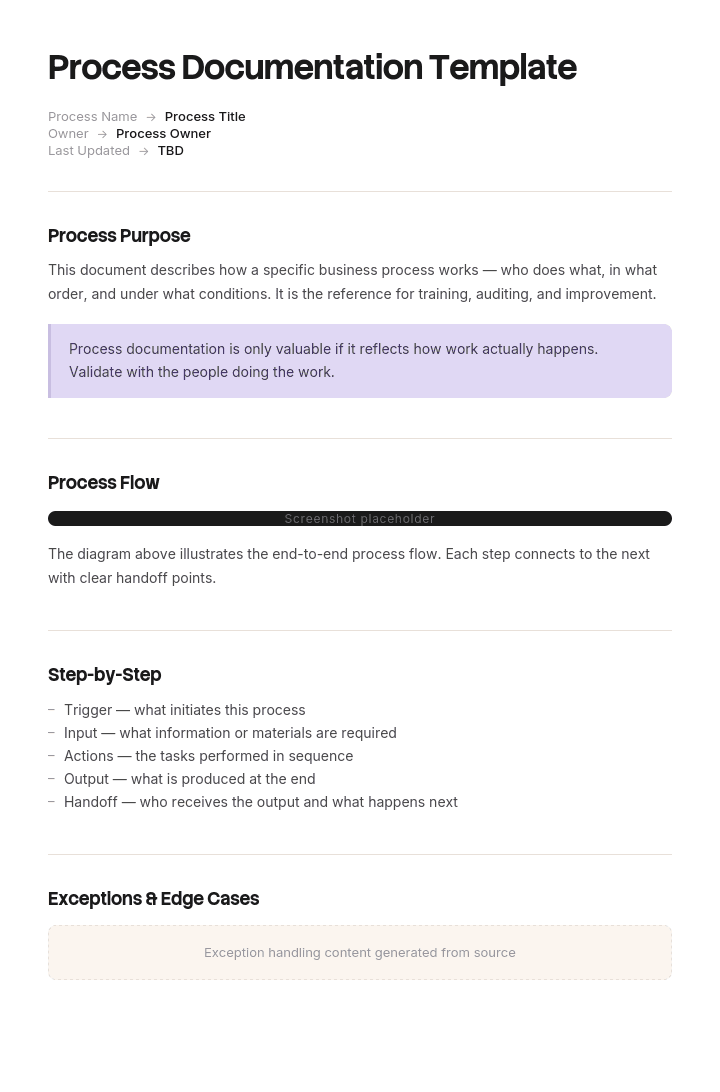
Verwenden Sie diese Vorlage
Prozessdokumentation macht aus Wissen aus dem Bauch heraus organisatorisches Wissen. Mit Trupeer können Sie stundenlanges Erfassen sparen, indem Sie mit einer kostenlosen Prozessdokumentationsvorlage starten, sie mit Ihren Brand Guidelines anpassen und aus schriftlichen Prozessdokumenten klare Video-Durchläufe erstellen, die Teams wirklich nutzen.
Was ist eine Prozessdokumentationsvorlage?
Prozessdokumentation ist der schriftliche Nachweis darüber, wie die Arbeit tatsächlich erledigt wird: die Schritte, wer sie ausführt, in welcher Reihenfolge, mit welchen Inputs und wie das fertige Ergebnis aussieht.
Eine Prozessdokumentationsvorlage ist die wiederverwendbare Struktur, um das festzuhalten. Kopfzeilenfelder, das Schrittformat und die umgebenden Informationen, die ein Dokument für jemanden nutzbar machen, der die Arbeit noch nie selbst gemacht hat.
Jede Vorlage, die Sie finden, bietet im Grunde dasselbe: einen Zweck, einen Geltungsbereich, eine Liste nummerierter Schritte mit Verantwortlichen und irgendwo Platz für ein Flussdiagramm. Diese Struktur ist in Ordnung. Was sie erzeugt, ist ein Dokument, das die Version des Prozesses beschreibt, in der alles nach Plan läuft – und nicht die Version, bei der jemand Hilfe braucht.
Warum der Happy Path der Teil war, den niemand gebraucht hat
Bitten Sie jemanden, einen Prozess zu dokumentieren, und er wird beschreiben, wie er funktioniert. Das ist die naheliegende Antwort auf die Frage – und der falsche Inhalt.
Die Person, die das Dokument später liest, kann in der Regel den Standardfall innerhalb einer Woche bewältigen. Sie sieht sich das Ganze zweimal an, versteht es dann, und es passt. Was sie jedoch nicht kann, ist die Reihenfolge zu handhaben, wenn eine Bestellnummer fehlt, der Kunde, dessen Preis nicht mit dem Vertrag übereinstimmt, der Teil, der abgekündigt wurde, oder das Konto, das gerade über sein Kreditlimit hinausgegangen ist.
Diese Situationen sind nicht selten. In den meisten operativen Prozessen machen sie nach Zeit betrachtet sogar den Großteil der Arbeit aus – selbst wenn sie nach Menge nur eine Minderheit darstellen, denn jede einzelne dauert mehrere Male länger als ein sauberer Fall.
Außerdem sind sie die schwierigsten Inhalte, um sie zu schreiben – aus einem Grund, das es sich lohnt zu verstehen. Die Person, die den Prozess dokumentiert, hat jede Ausnahme Hunderte Male erlebt und ist längst dazu übergegangen, sie nicht mehr als Entscheidungen wahrzunehmen. Auf die Frage, wie der Prozess funktioniert, beschreiben sie ehrlich und korrekt den Happy Path – denn genau das lädt die Frage ein.
So deckt das Dokument am Ende den Teil ab, der keiner Dokumentation bedurfte, und lässt den Teil weg, der der eigentliche Grund für die Übung war.
So passen Sie diese Vorlage in Trupeer an
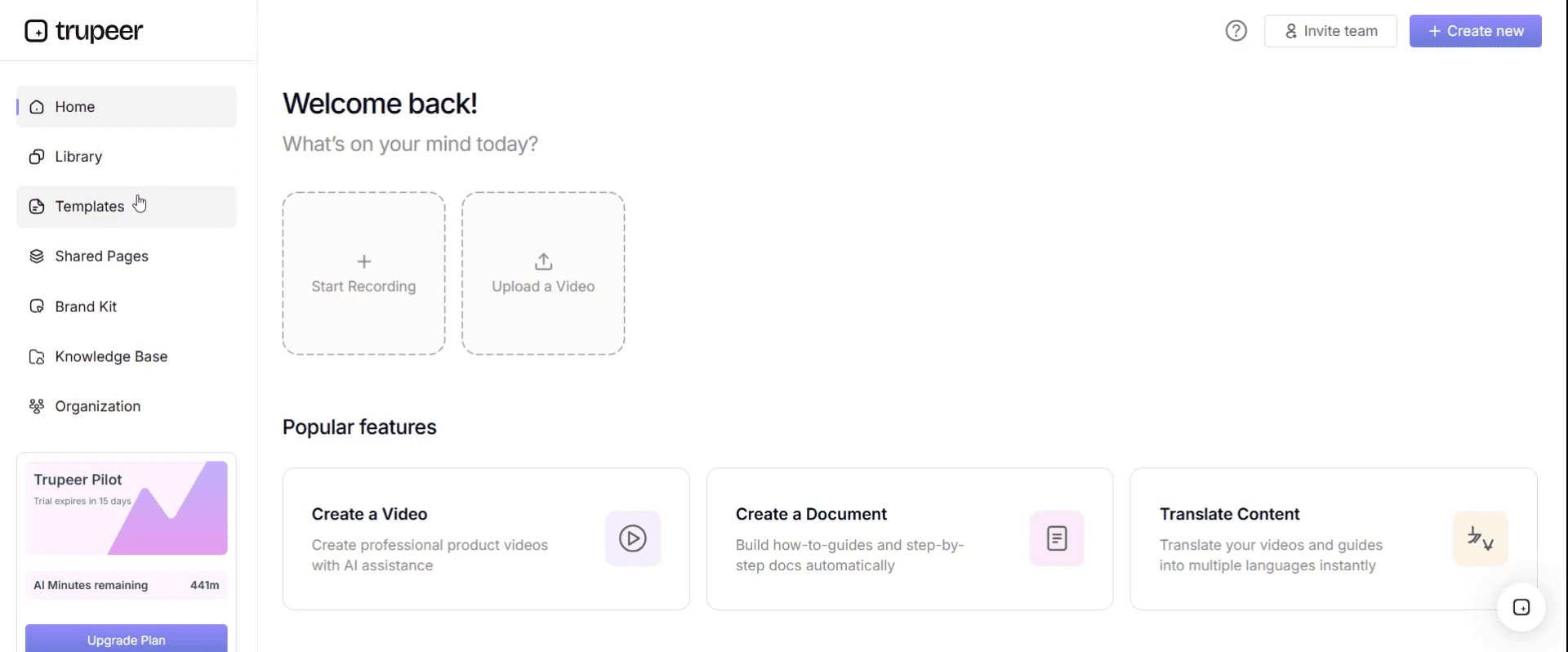
Schritt 1: Öffnen Sie den Bereich Vorlagen
Gehen Sie im Hauptmenü zum Bereich Vorlagen.
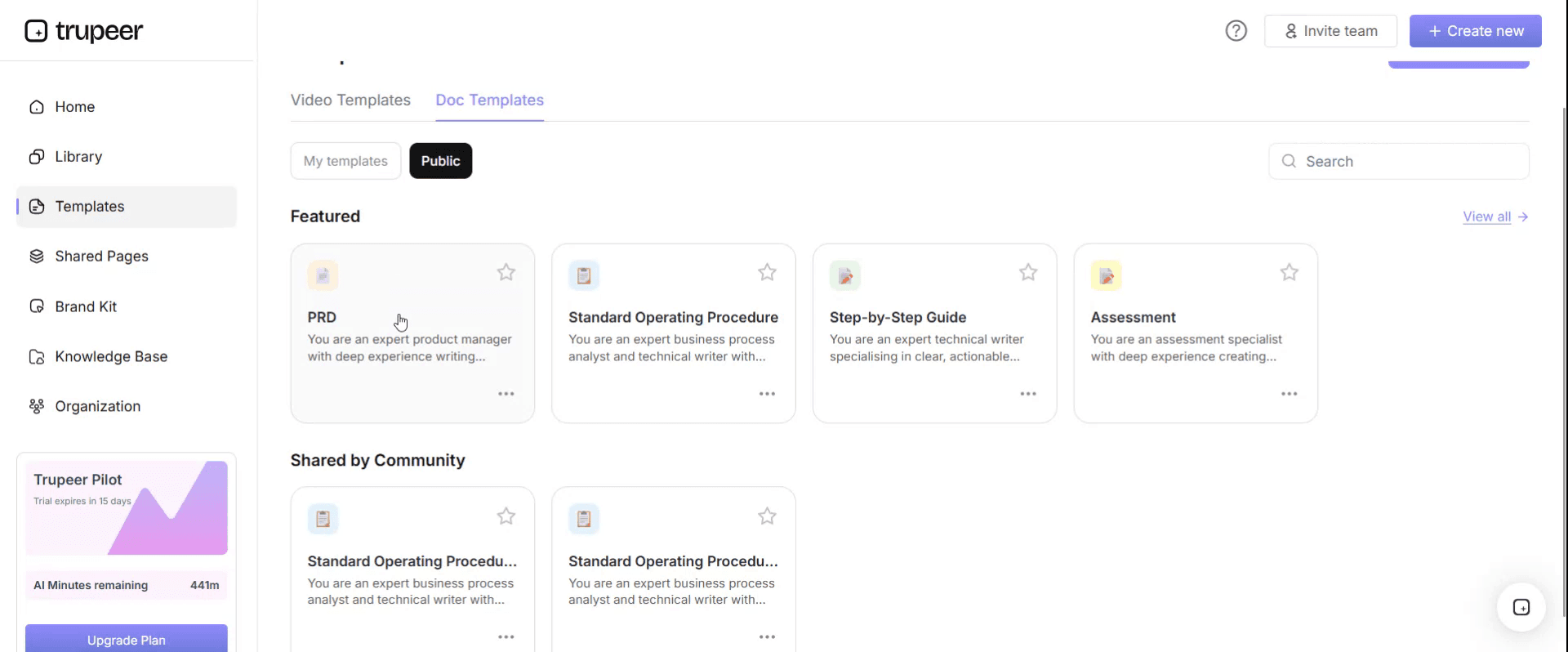
Schritt 2: Wählen und öffnen Sie eine Vorlage
Klicken Sie auf eine beliebige Vorlage, mit der Sie arbeiten möchten, um sie zu öffnen.
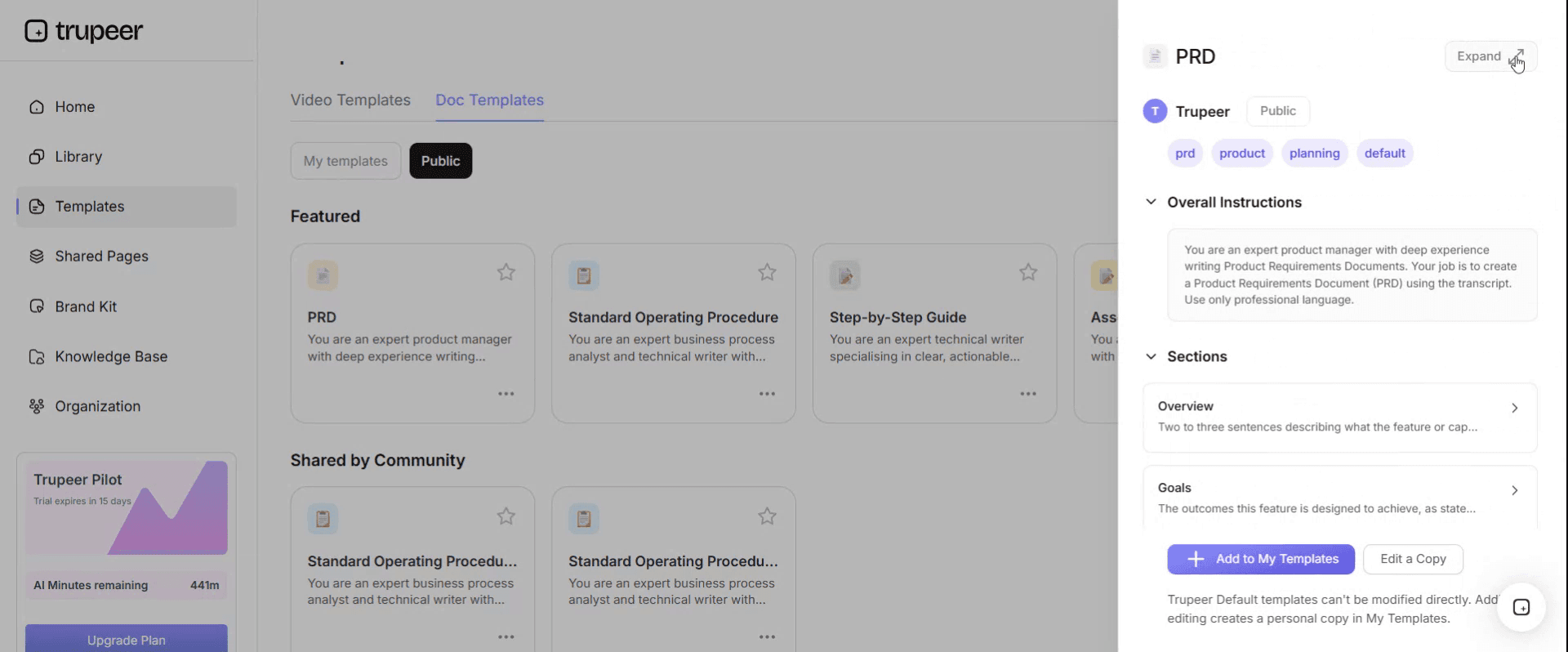
Schritt 3: Erweitern Sie die Vorlagenansicht
Falls nötig, erweitern Sie die Vorlagenansicht, um das vollständige Layout und die Details klar zu sehen.
Schritt 4: Bearbeiten Sie die Vorlage
Klicken Sie auf „Bearbeiten“, um mit der Modifikation der ausgewählten Vorlage zu beginnen.
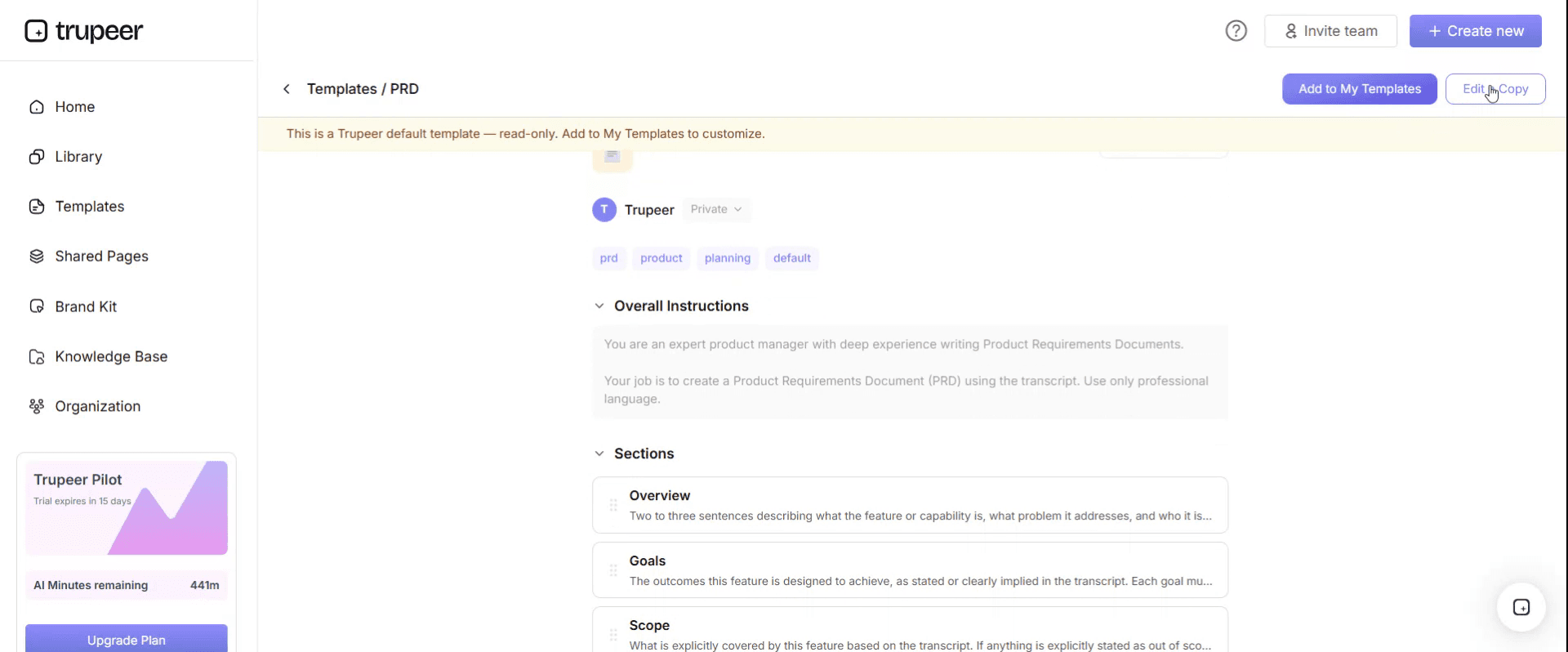
Im Editor können Sie:
Neue Abschnitte hinzufügen
Formatierungsregeln definieren oder aktualisieren
Ein Logo hinzufügen und Position sowie zugehörige Einstellungen anpassen
Schritt 5: Speichern Sie Ihre angepasste Vorlage
Nachdem Sie alle notwendigen Änderungen vorgenommen haben, klicken Sie auf „Speichern“, um die aktualisierte Vorlage als Ihre eigene zu speichern.
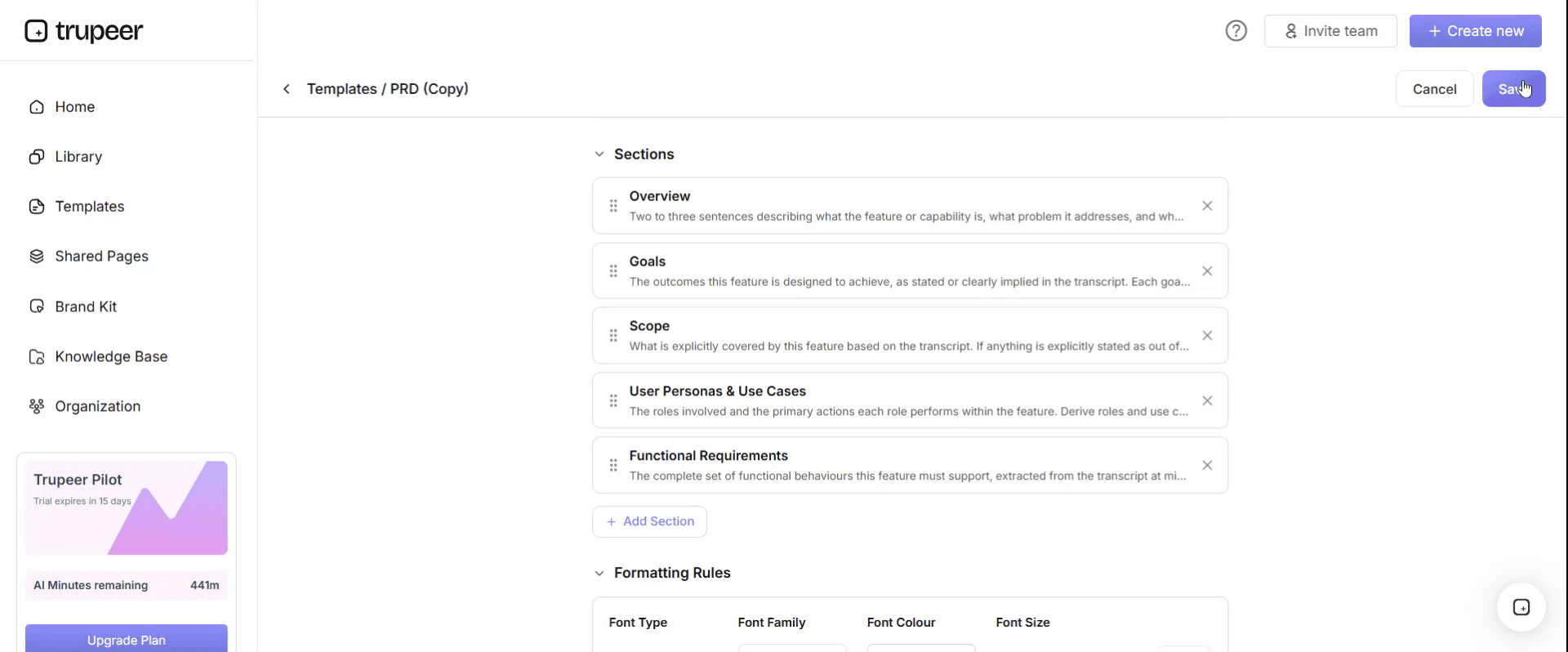
Schritt 6: Vorschau ansehen und die Vorlage feinjustieren
Wenn Sie sehen möchten, wie Ihre angepasste Vorlage aussieht, öffnen Sie die Vorschau.
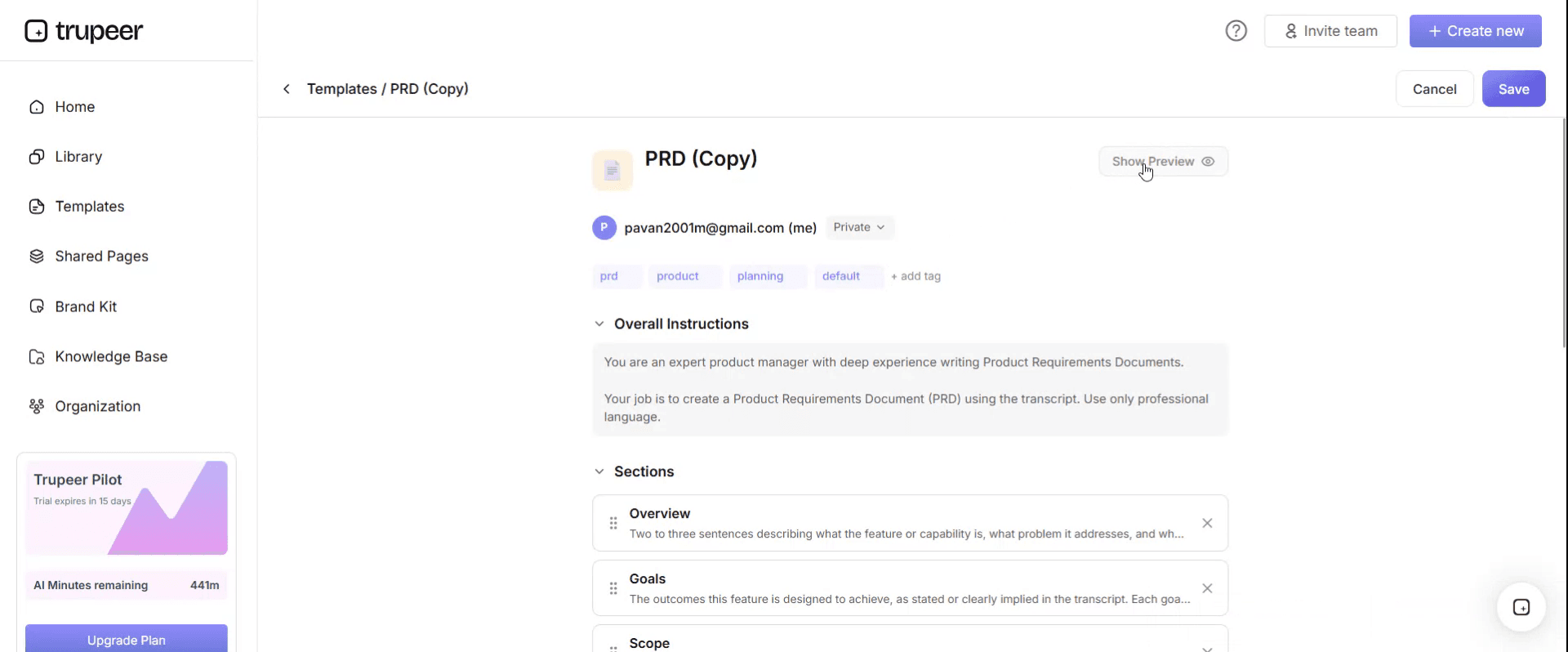
Ausgehend vom Vorschau-Bildschirm können Sie bei Bedarf weiterhin direkt Anpassungen vornehmen – damit die Vorlage genau so erscheint, wie Sie es möchten.
Mit einer Prozessdokumentationsvorlage können Sie:
Stunden bei der Dokumentation sparen: Überspringen Sie die leere Seite – mit einer Struktur, die für jeden Geschäftsprozess ausgelegt ist.
Wissen aus dem Bauch heraus erfassen: Dokumentieren Sie, wie die Arbeit tatsächlich erledigt wird – damit das Wissen bleibt, auch wenn Menschen das Unternehmen verlassen.
Im Brand bleiben: Nutzen Sie Ihr Logo, Ihre Schriften und Farben mit Trupeer’s Brand Kit – perfekt für prozessübergreifende Dokumente.
SOPs aus Prozessdokumenten erstellen: Nutzen Sie unseren AI SOP creator, um jeden Schritt in eine detaillierte Arbeitsanweisung zu verwandeln.
Verbesserungen erkennen: Die Dokumentation eines Prozesses ist der erste Schritt zu seiner Verbesserung – die Vorlage macht Ineffizienzen sichtbar.
Globale Teams erreichen: Übersetzen Sie Prozessdokumentationen mit einem Klick in 65+ Sprachen.
So ermitteln Sie Ihre Ausnahmequote, bevor Sie schreiben
Bevor Sie irgendetwas schreiben, finden Sie heraus, welcher Anteil der realen Arbeit dem Standardpfad folgt. Das dauert einen Nachmittag und verändert, was Sie schreiben.
Ziehen Sie eine Stichprobe aktueller Prozessdurchläufe. Dreißig sind ausreichend, um aussagekräftig zu sein; zweihundert sind besser, wenn die Daten leicht verfügbar sind. Nacheinander statt ausgewählt, denn ausgewählte Stichproben sind immer „sauberer“ als die Realität.
Stellen Sie für jeden Durchlauf eine einzige Frage: Lief das direkt durch – oder musste etwas entschieden, nachverfolgt, korrigiert oder eskaliert werden?
Sortieren Sie anschließend die Fälle, die nicht direkt durchliefen, in Gruppen und zählen Sie sie.
Es ergeben sich zwei Zahlen. Der Anteil der Durchläufe, die sauber liefen – das zeigt Ihnen, wie viel Arbeit ein Dokument zum Happy Path abdecken würde. Und die nach Rang sortierte Liste der Ausnahmetypen – das ist Ihre Reihenfolge beim Schreiben.
Die meisten Teams sind von beidem überrascht. Ein Prozess, den alle als unkompliziert beschreiben, läuft in der Praxis bei einem Drittel oder der Hälfte der Fälle sauber, und die Top drei Ausnahmetypen machen in der Regel den Großteil des Restes aus. Diese drei verdienen mehr schriftliche Aufmerksamkeit als alle vierzehn Standard-Schritte zusammen.
Die „und wenn nicht“-Zeile, die jeder Schritt braucht
Die leichteste Version dieser Disziplin kostet fast nichts und lässt sich auf ein Dokument anwenden, das Sie bereits haben.
Nehmen Sie jeden Schritt. Jeder Schritt impliziert eine Bedingung, die erfüllt sein muss: das Feld ist ausgefüllt, der Preis stimmt, der Bestand existiert, die Freigabe liegt vor. Schreiben Sie unter jeden Schritt genau eine Zeile, beginnend mit „und wenn nicht“.
Schritt: Prüfen Sie, ob die Bestellnummer vorhanden ist und im Format des Kunden vorliegt. Und wenn nicht: Fordern Sie sie per E-Mail beim Anforderer an (mithilfe der Vorlage), halten Sie die Bestellung in der Warteschlange zurück und fahren Sie nicht mit der Zuteilung fort.
Diese eine Zeile macht drei Dinge. Sie macht die Ausnahme sichtbar – oft ist es das erste Mal, dass sie überhaupt jemand aufschreibt. Sie zwingt zu einer Entscheidung darüber, was passieren soll – und häufig stellt sich heraus, dass das noch nicht abgestimmt ist. Und sie sagt dem Leser, was er stattdessen tun soll, statt ihn etwas erfinden oder jemanden unterbrechen zu lassen.
Wenn die Antwort auf „und wenn nicht“ länger als etwa zwei Zeilen ist, gehört sie in einen separaten Abschnitt zu Ausnahmen mit eigenen Entscheidungsregeln, und der Schritt verweist nur dorthin. Wenn die Antwort wirklich „einen Vorgesetzten fragen“ lautet, sagen Sie das explizit und nennen Sie die Rolle – denn eine nicht ausgesprochene Eskalation erzeugt genau die Unterbrechungen, die Sie vermeiden wollten.
Kostenlose Prozessdokumentationsvorlage: die Struktur zum Kopieren
Kopieren Sie von hier.
Kopfzeile. Prozessname, als Ergebnis formuliert statt als Abteilung. Verantwortlicher, als Rolle. Datum der letzten Verifizierung, also wann jemand den Prozess zuletzt anhand dieses Dokuments durchlaufen hat. Version. Geschätzte Häufigkeit und Menge.
Was dieser Prozess hervorbringt. Das fertige Ergebnis, so beschrieben, dass ein Leser erkennen kann, wann er es hat.
Trigger und Grenze. Was ihn auslöst, was ihn beendet und was unmittelbar auf beiden Seiten liegt, das dieses Dokument nicht abdeckt. Grenzen sind dort, wo doppelte und widersprüchliche Dokumente entstehen.
Wer beteiligt ist. Rollen statt Namen, mit jeweils klarer Verantwortlichkeit.
Inputs und Systeme. Was vorhanden sein muss, bevor Sie starten, und welche Systeme sowie Zugriffe benötigt werden.
Schritte. Nummeriert, jeweils eine Aktion, mit dem erwarteten Ergebnis und einer und wenn nicht-Zeile darunter.
Ausnahmen. Die nach Rang sortierte Liste aus Ihrer Stichprobe, jeweils mit Bedingung, Entscheidungsregel, wer freigeben kann und was als Nächstes passiert. Dieser Abschnitt wird in der Regel länger als die Schritte – und das ist richtig.
Was dieser Prozess nicht abdeckt. Explizit benannt, mit einem Hinweis darauf, wohin diese Fälle gehören.
Messwerte. Wie lange es normalerweise dauert, wie hoch das Volumen ist und welcher Anteil sauber durchläuft. Diese letzte Zahl lohnt sich zum Nachverfolgen, weil sie sich bewegt, wenn sich der Prozess ändert.
Kopieren Sie bis hierher. Die zwei Ergänzungen zu einer herkömmlichen Vorlage sind die „und wenn nicht“-Zeilen und der Abschnitt zu Ausnahmen. Alles andere finden Sie in jeder soliden Struktur.
Was in eine Prozessdokumentationsvorlage gehört
Die Kopfzeile, der Geltungsbereich, die Rollen, die Schritte und die Ausnahmen oben. Drei Felder sind es wert, gegen jeden zu verteidigen, der das Dokument kürzen möchte.
Zuletzt verifiziert, nicht zuletzt aktualisiert. Das Bearbeiten der Formulierung ist nicht dasselbe wie zu bestätigen, dass der Prozess weiterhin so abläuft. Ein Datum, das bedeutet, dass jemand zugesehen hat, wie es passiert, ist mehr wert als mehrere Daten, die nur bedeuten, dass jemand einen Tippfehler korrigiert hat.
Der Geltungsbereich. Die meisten doppelt vorhandenen Dokumentationen entstehen, weil zwei Teams überlappende Ausschnitte desselben Prozesses dokumentiert haben, ohne sich darauf zu einigen, wo jeweils Schluss ist.
Die Clean-Run-Rate. Das ist der einzige Messwert, der Ihnen sagt, ob das Dokument die Arbeit beschreibt oder eine idealisierte Version davon.
Drei Dinge sind es wert, weggelassen zu werden. Screenshots von Oberflächen, die sich ändern – denn sie machen das Dokument schneller veraltet als die Worte. Erklärungen, warum der Prozess existiert – die gehören in eine Richtlinie. Und Details zu Systemen, die in Ihrem IT-Dokumentation leben und stattdessen referenziert werden sollten, statt sie neu aufzuschreiben.
Der Distributeur, dessen Dokument 31% der Bestellungen abdeckte
Pellowe Trading, ein Business-to-Business-Distributeur, dokumentierte die Auftragsabwicklung, als zwei erfahrene Koordinatoren innerhalb eines Monats voneinander zurücktraten.
Die Dokumentation war nach jedem normalen Maß gründlich. Vierzehn Schritte, ein Flussdiagramm, Screenshots, zweiundzwanzig Seiten – freigegeben, bevor beide Koordinatoren gegangen waren.
Zwei Nachfolger starteten. Innerhalb von sechs Wochen war der Auftragsrückstand von etwa vierzig Bestellungen auf rund dreihundertzehn gestiegen, und der Finance-Close verzögerte sich um neun Tage.
Die Untersuchung zog zweihundert aufeinanderfolgende Bestellungen heran und prüfte, wie viele die dokumentierten vierzehn Schritte ohne Abweichung durchlaufen hatten.
Dreiundsechzig. Die anderen hundertunddreiunddreißig hatten mindestens eine Ausnahme getroffen.
Nach Rang sortiert waren diese Ausnahmen: eine fehlende oder falsch formatierte Kunden-Bestellnummer, vierundvierzig Mal. Ein Preis in der Bestellung, der nicht mit der Vertrags-Preisliste übereinstimmte, neunundzwanzig Mal. Ein abgekündigtes Teil, das einen Ersatz erforderte, zweiundzwanzig Mal. Ein überschrittenes Kreditlimit, achtzehn Mal. Eine Lieferadresse, die nicht auf dem Konto hinterlegt war, vierzehn Mal. Eine angeforderte Teillieferung, dreizehn Mal.
Keine der sechs Ausnahmen tauchte irgendwo in den zweiundzwanzig Seiten auf.
Die beiden ausscheidenden Koordinatoren hatten diese Fälle jeweils mehrere Male pro Woche über Jahre hinweg bearbeitet. Keiner hatte sie während der Übergabe angesprochen, und keiner hielt etwas zurück. Man hatte sie gefragt, wie der Bestellprozess funktioniert, und sie hatten diese Frage korrekt beantwortet.
Der Rückstand dauerte elf Wochen und erforderte eine befristete Einstellung, um ihn abzubauen. Zwei Kunden verlagerten ihre Konten. Das Finance-Team bezifferte die Kosten für verzögerte Rechnungsstellung plus die verlorene Marge auf ungefähr vierundsechzigtausend Pfund.
Die Überarbeitung dauerte vier Tage. Gleiche vierzehn Schritte, jeweils mit einer „und wenn nicht“-Zeile, plus ein separater Abschnitt zu Ausnahmen, der die sechs genannten Fälle abdeckte – mit den tatsächlichen Entscheidungsregeln: wer einen Preis-Override freigeben kann und bis zu welchem Wert, die Ersetzungsregel und wer sie genehmigt, sowie der Eskalationspfad beim Kreditlimit.
Geschrieben wurde das von den beiden neuen Koordinatoren und einer Person aus dem Finance-Bereich – basierend auf der Stichprobe von zweihundert Bestellungen, nicht auf dem Gedächtnis von irgendjemandem. Dieser Detailpunkt war entscheidend, weil die Personen, die es aus dem Gedächtnis hätten schreiben können, bereits gegangen waren, und die Stichprobe sich als bessere Quelle erwies als das, was sie sich hätten merken können.
Sechs Monate später war die mediane Zeit zur Bearbeitung von Ausnahmen pro Bestellung von zweiundzwanzig Minuten auf sieben gefallen, der Rückstand war unter fünfzig stabil, und eine frische Stichprobe von zweihundert Bestellungen zeigte, dass vierundachtzig Prozent ohne Eskalation an irgendwen direkt aus dem Dokument gelöst werden konnten.
So erstellen Sie Prozessdokumentation Schritt für Schritt
Ziehen Sie zuerst die Stichprobe und zählen Sie die Ausnahmen. Alles andere ist leichter, sobald Sie wissen, was Sie tatsächlich dokumentieren.
Beobachten Sie den Prozess bei der Ausführung – zweimal, wenn möglich durch unterschiedliche Personen. Zwei Personen, die denselben dokumentierten Prozess unterschiedlich ausführen, ist bereits ein Ergebnis.
Schreiben Sie den Geltungsbereich und das Ergebnis vor den Schritten auf, denn sie sind es, die verhindern, dass das Dokument ausufert.
Schreiben Sie die Schritte aus dem, was Sie beobachtet haben, statt aus dem, was der Prozess angeblich ist. Wenn sich das unterscheidet, notieren Sie die Abweichung, statt sie glattzubügeln – denn die Abweichung ist meistens entweder eine Verbesserung, die man übernehmen sollte, oder ein Problem, das man beheben sollte.
Fügen Sie die „und wenn nicht“-Zeile zu jedem Schritt hinzu. Rechnen Sie damit, dass das länger dauert als das Schreiben der Schritte selbst.
Schreiben Sie den Abschnitt zu Ausnahmen aus Ihrer nach Rang sortierten Liste – von oben nach unten – und stoppen Sie, sobald Sie die abgedeckt haben, die den Großteil des Volumens ausmachen. Perfekte Abdeckung ist nicht das Ziel und nicht erreichbar.
Lassen Sie anschließend jemanden, der die Arbeit nicht selbst gemacht hat, eine echte Instanz anhand des Dokuments ausführen, während Sie zuschauen und nichts sagen. Jede Frage, die er stellt, ist ein Mangel, und die Fragen werden sich in den Ausnahmen bündeln.
Die Auswirkungen schlechter Prozessdokumentation
Die sichtbaren Kosten sind die Onboarding-Zeit – und davon ist das wenigste.
Die größeren Kosten sind leiser. Unterbrechungen, bei denen die Menschen, die den Prozess kennen, ihre Woche damit verbringen, gefragt zu werden – was unsichtbar bleibt, weil es nie als Ticket auftaucht. Inkonsistenz, bei der zwei Personen aus demselben Input unterschiedliche Ergebnisse produzieren und niemand es bemerkt, bis ein Kunde es vergleicht. Key-Person-Risiko, bei dem der Prozess nicht laufen kann, wenn eine Person abwesend ist – und das bleibt verborgen, bis sie weg ist.
Und es gibt den „Decision Drift“. Wenn das Dokument nicht sagt, was zu tun ist, entscheiden Menschen für sich – vernünftig. Mit der Zeit driften diese Entscheidungen auseinander, bis es am Ende keinen einzigen Prozess mehr gibt, den man überhaupt noch dokumentieren könnte.
Das Muster in allen vier Fällen ist: Schlechte Dokumentation erzeugt keine Ausfälle. Sie erzeugt eine langsame Verschlechterung, die auf Arbeitsbelastung, Personal oder Systemprobleme zurückgeführt wird – weshalb sie selten von den Menschen behoben wird, die sie erleben.
Was macht eine gute Prozessdokumentationsvorlage aus?
Drei Dinge – und keines davon ist das Layout.
Sie fragt nach den Ausnahmen. Eine Vorlage mit einer Tabelle für Schritte und sonst nichts erzeugt jedes Mal ein Dokument zum Happy Path – weil genau das eingeladen wird.
Sie hat ein Feld „zuletzt verifiziert“ statt „zuletzt aktualisiert“, was verändert, was „Wartung“ bedeutet.
Und sie zwingt zu einer Aussage zum Geltungsbereich, damit derselbe Prozess nicht dreimal von drei Teams mit unterschiedlichen Rändern dokumentiert wird.
Darüber hinaus ist das Format viel weniger entscheidend als die meisten Vorlagenvergleiche vermuten lassen. Ein schlichtes Dokument, das die Ausnahmen abdeckt, ist besser als ein elegantes, das es nicht tut.
Prozessdokumentationsformate: Text, Flussdiagramm oder Checkliste
Drei Formate – und die Wahl sollte sich nach der Form der Arbeit richten, nicht nach Vorlieben.
Nummerierte Schritte passen zu linearen Prozessen mit bekanntem Start und Ende und wenigen Verzweigungen. Die meisten administrativen und operativen Prozesse passen hierher – und genau das nimmt die Vorlage oben an.
Flussdiagramm oder Swimlane eignet sich für Prozesse, die sich wirklich verzweigen, oder die mehrere Rollen mit Übergaben dazwischen durchlaufen. Eine Swimlane hat ihren Platz vor allem dann, wenn die Frage „Wessen Aufgabe ist dieser Teil?“ immer wieder auftaucht. Als Container für Details ist sie schlecht – daher kombinieren Sie sie mit der Textversion, statt sie zu ersetzen.
Checkliste eignet sich für Prozesse, bei denen Vollständigkeit wichtiger ist als Reihenfolge, und sie funktioniert gut als begleitendes Artefakt – nicht als Hauptdokument.
Eine hilfreiche Faustregel: Wenn Ihr Prozess mehr als etwa drei echte Entscheidungspunkte hat, zeichnen Sie ihn genauso gut wie Sie ihn schreiben. Wenn es weniger sind, ist das Flussdiagramm Deko und die nummerierte Liste ist das Dokument.
Prozessdokument, SOP oder Arbeitsanweisung: was ist es?
Drei Begriffe, die synonym verwendet werden – mit einer echten Unterscheidung darunter.
Prozessdokumentation beschreibt, wie Arbeit fließt – oft über Rollen hinweg – und ist beschreibend. Sie beantwortet, wie das hier gemacht wird.
Eine SOP ist verbindlich und vorschreibend. Sie legt den genehmigten Weg fest, eine Aufgabe auszuführen, sie wird kontrolliert, und Abweichungen davon sind Abweichungen. Unsere SOP-Vorlage deckt die Struktur ab.
Eine Arbeitsanweisung ist die granularste Form: Sie deckt eine einzelne Operation an einer Station durch eine Rolle ab. In regulierten oder Fertigungsumgebungen ist sie ein kontrolliertes Dokument – und unsere Vorlage für Fertigungsarbeitsanweisungen deckt das ab.
Der praktische Test ist die Konsequenz. Wenn das Verlassen des Dokuments einfach nur eine andere Art des Arbeitens ist, ist es Prozessdokumentation. Wenn das Verlassen eine Nichtkonformität ist, ist es eine SOP oder eine Arbeitsanweisung – und dafür braucht es Versionskontrolle, Freigabe und einen Review-Zyklus, den Prozessdokumentation nicht hat.
Wenn der Prozess nur im Kopf einer Person war und diese Person geht, ist die Dokumentationsübung im Grunde eine Übergabe – und unsere Knowledge-Transfer-SOP erklärt, wie das richtig gemacht wird, einschließlich warum das Fragen nach der Funktionsweise des Jobs den Happy Path hervorbringt.
Kann ich eine Prozessdokumentationsvorlage in Word oder Excel bekommen?
Word oder Google Docs für das Dokument. Schritte mit und wenn nicht-Zeilen sowie ein Abschnitt zu Ausnahmen sind Prosa mit Struktur – und sie lesen sich in einem Dokument besser als in Zellen.
Excel für zwei unterstützende Artefakte. Das Ausnahmeprotokoll, also Ihre Stichprobe mit einer Zeile pro Instanz und dem aufgezeichneten Ausnahmetyp – das erzeugt Ihre nach Rang sortierte Liste und kann später erneut ausgeführt werden, um zu sehen, ob sich etwas geändert hat. Und das Prozessregister, das jeden dokumentierten Prozess mit Verantwortlichem, Datum der letzten Verifizierung und Clean-Run-Rate auflistet – so verwalten Sie eine Bibliothek davon.
PowerPoint eignet sich für das Flussdiagramm oder die Swimlane-Ansicht, wenn Sie den Prozess präsentieren – nicht das Dokument selbst.
PDF für die Version, die ausgegeben wird, sobald sie verifiziert wurde – exportiert aus der Live-Kopie.
So dokumentieren Sie einen Prozess, ohne ihn zu schreiben
Der Ausnahmeinhalt ist der Teil, der nie geschrieben wird – und der Grund ist Zeit, nicht Zurückhaltung. Jemand muss sich zu der Person setzen, die es weiß, aufzeichnen, was sie tut, und dann einen Abend damit verbringen, Notizen in etwas Lesbares zu verwandeln.
Das Aufzeichnen entfernt den Großteil davon. Trupeer AI macht aus einer Bildschirmaufzeichnung eine schriftliche Prozedur mit den Schritten und Screens, die bereits erfasst sind – sodass die Person, die den Prozess kennt, ihn einmal ausführt, statt ihn zu beschreiben.
Der hilfreiche Trick ist, die Ausnahmen aufzuzeichnen – nicht den Standardfall. Beim nächsten Mal, wenn eine Preisabweichung oder eine fehlende Bestellnummer auftaucht, soll die Person, die das bearbeitet, sich selbst dabei aufzeichnen, wie sie es erledigt. Sechs Aufzeichnungen innerhalb von zwei Wochen decken ab, was ein ganzes Jahr Versuche, es aufzuschreiben, nicht abdecken würde.
Zeichnen Sie es auf. Machen Sie es zur Marke. Übersetzen Sie es. Trupeer es.
Das Ergebnis wird zu Guides und Dokumenten in Ihrer Knowledge Base mit konsistenter Markenführung. Der SOP creator deckt die Prozeduren ab, die kontrolliert werden müssen, und unsere Job-Aid-Vorlage deckt die kurze Referenz für den einen Schritt ab, den Menschen immer wieder falsch machen. Setup-Anleitungen finden Sie im document template setup guide.
Häufig gestellte Fragen
Gibt es eine kostenlose Prozessdokumentationsvorlage in Word?
Die Struktur oben wird direkt in Word oder Google Docs eingefügt – einschließlich der und wenn nicht-Zeilen und des Abschnitts zu Ausnahmen, die Standardvorlagen auslassen. Es gibt keinen gesperrten Download und kein Formular. Fügen Sie den Abschnitt zu Ausnahmen ein, bevor Sie die Schritte schreiben, denn das Schreiben der Schritte zuerst verbraucht tendenziell die verfügbare Zeit.
Gibt es eine kostenlose Prozessdokumentationsvorlage in Excel?
Excel eignet sich für das Ausnahmeprotokoll und das Prozessregister – nicht für das Dokument selbst. Das Protokoll besteht aus einer Zeile pro ausgewählter Instanz mit dem Ausnahmetyp, wodurch Ihre nach Rang sortierte Liste entsteht. Das Register listet jeden Prozess mit Verantwortlichem, Datum der letzten Verifizierung und Clean-Run-Rate auf – so erkennen Sie, welche Dokumente veraltet sind.
Gibt es eine kostenlose Prozessdokumentationsvorlage in PDF?
Exportieren Sie, sobald das Dokument von jemandem verifiziert wurde, der den Prozess anhand des Dokuments durchführt, und behalten Sie die Arbeitsversion bearbeitbar. Ausnahmen werden fortlaufend ergänzt, sobald neue auftauchen – daher wird ein eingefrorenes Prozessdokument schneller veraltet als die meisten.
Gibt es eine Prozessdokumentationsvorlage in PowerPoint?
Verwenden Sie Folien für das Flussdiagramm oder die Swimlane-Ansicht, wenn Sie einen Prozess Personen präsentieren, die ihn verstehen müssen – nicht ihn ausführen. Das ist der falsche Container für Details, bauen Sie es daher aus dem Dokument heraus statt anstelle davon.
Gibt es eine Schritt-für-Schritt-Vorlage für Prozesse in Word?
Das ist der Abschnitt „Schritte“ der Struktur oben: nummerierte Aktionen, jeweils eine pro Zeile, mit dem erwarteten Ergebnis und einer und wenn nicht-Zeile. Halten Sie es bei etwa zwölf Schritten, bevor Sie prüfen, ob es zwei Prozesse sind, und legen Sie alles, was länger als zwei Zeilen ist, in den Abschnitt zu Ausnahmen.
Wie lang sollte ein Prozessdokument sein?
So lang, wie die Ausnahmen es erfordern – was in der Regel bedeutet, dass die Schritte eine Seite oder zwei füllen und der Abschnitt zu Ausnahmen länger ist. Dokumente, die nur aus Schritten bestehen und keine Ausnahmen enthalten, sind tendenziell kurz und werden nicht genutzt. Beurteilen Sie die Länge danach, ob jemand Neues daraus eine echte Instanz abschließen kann – nicht anhand der Seitenanzahl.
Wer sollte Prozessdokumentation schreiben?
Wer den Prozess ausführt – basierend auf einer Stichprobe echter Instanzen statt auf dem Gedächtnis. Das ausgearbeitete Beispiel oben ist das Argument: Zwei Personen mit jahrelanger Erfahrung dokumentierten ihren eigenen Prozess gründlich und ließen jede Ausnahme weg – nicht aus Nachlässigkeit, sondern weil die Frage, die ihnen gestellt wurde, den Happy Path einlud.
Wie oft sollte Prozessdokumentation überprüft werden?
An Triggern statt an einem festen Zeitplan. Wenn sich das System ändert, wenn ein neuer Ausnahmetyp zweimal auftaucht, wenn die Person, die den Prozess verantwortet, geht, und wenn sich die Clean-Run-Rate bewegt. Das erneute Sampling von zwanzig Instanzen einmal pro Jahr dauert eine Stunde und sagt Ihnen mehr als ein geplanter Durchlauf zum Lesen.

