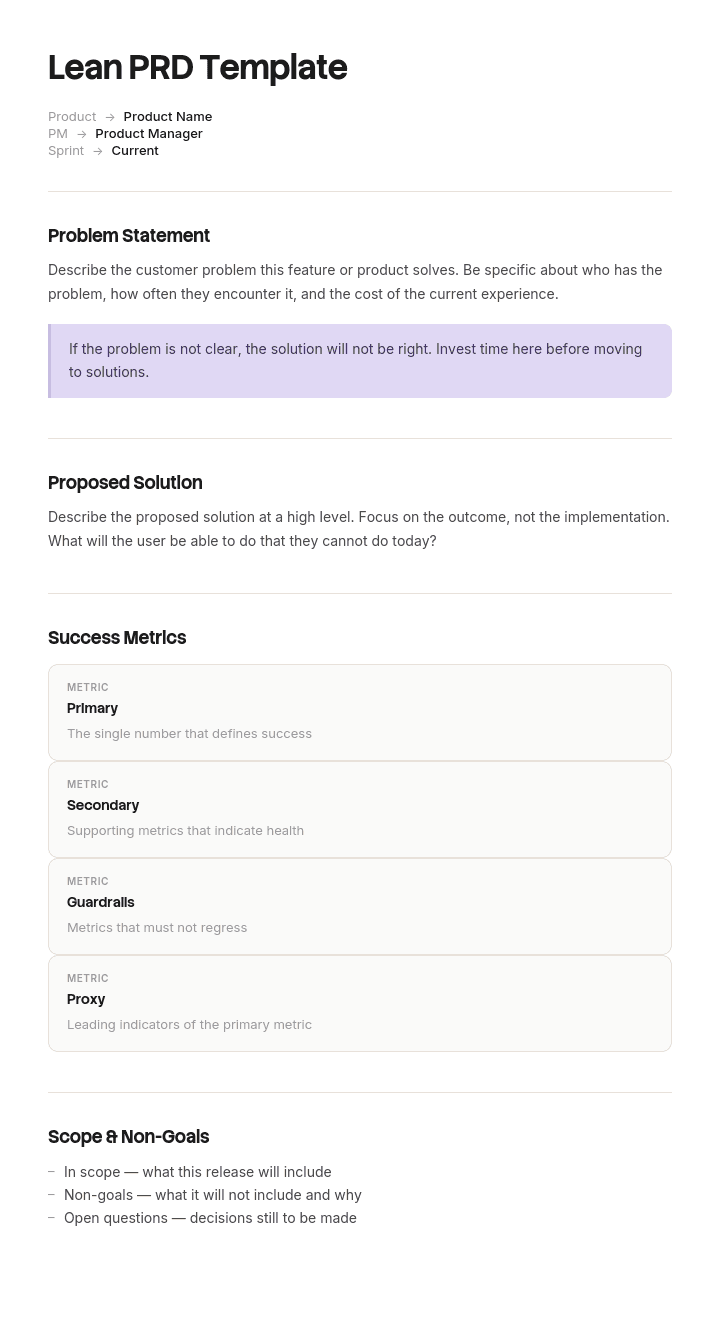
使用此模板
现代产品团队行动迅速——因此需要与之匹配的 PRD。使用 Trupeer,您可以从免费的精简 PRD 模板开始,结合您的 品牌规范 进行定制,并将精简 PRD 转化为视频演示,从而快速让跨职能团队达成一致。
什么是精简 PRD?它与 PRD 有何不同?
产品需求文档(PRD)会明确:要构建什么、为谁构建,以及什么必须成立,才能算作“完成”。精简 PRD 也做同样的事,但用一到两页完成,而不是十页;适用于那些离问题足够近、值得信任并能处理细节的团队。
通常的说法是:精简 PRD 更短。这个说法只是症状而非定义。追着“更短”去做,往往会得到一份糟糕的文档,因为您可以像删掉不重要的部分一样轻松地删掉重要的部分,从而把 PRD 变短。
真正有用的定义在于“约束的权威性”。PRD 是对团队施加的一组约束。精简 PRD 则是在仍能得到正确结果的前提下,使用最少的约束,并明确写出:哪些地方由团队自行决定。之所以更短,是因为传统 PRD 中填满的大部分内容,最后都变成了“没人有意见的规范”。
PRD 本质上是一份由团队共同做出的决策清单
阅读 PRD 中的任何一条需求,然后问:它在做什么。每一条都会从原本会在构建过程中做出选择的人那里,移除一个选项。
有些移除是必要的。比如,如果导入必须在笔记本电脑关闭后仍能存活,因为文件处理要花二十分钟或更久,而笔记本会进入睡眠,那么团队需要知道这一点——但这不是他们的决定。
大多数并非如此。映射界面上的列顺序、错误信息的措辞、校验是在上传前还是上传后运行:这些内容之所以会出现在 PRD 里,是因为模板里有对应的部分,而留空会显得像是粗心。每一条约束都会让团队要么毫无疑问地遵循——从而可能让产品变得更糟——要么通过协商把它移除,这会消耗数天。
因此,精简 PRD 在每一行进入文档之前只问一个问题:如果团队选择了任一选项,我会同样满意吗?如果是,就不要写。写的是“这是他们的选择”。正是这个问题让文档变短,而“短”只是副产品,不是目标。
如何在 Trupeer 中自定义此模板
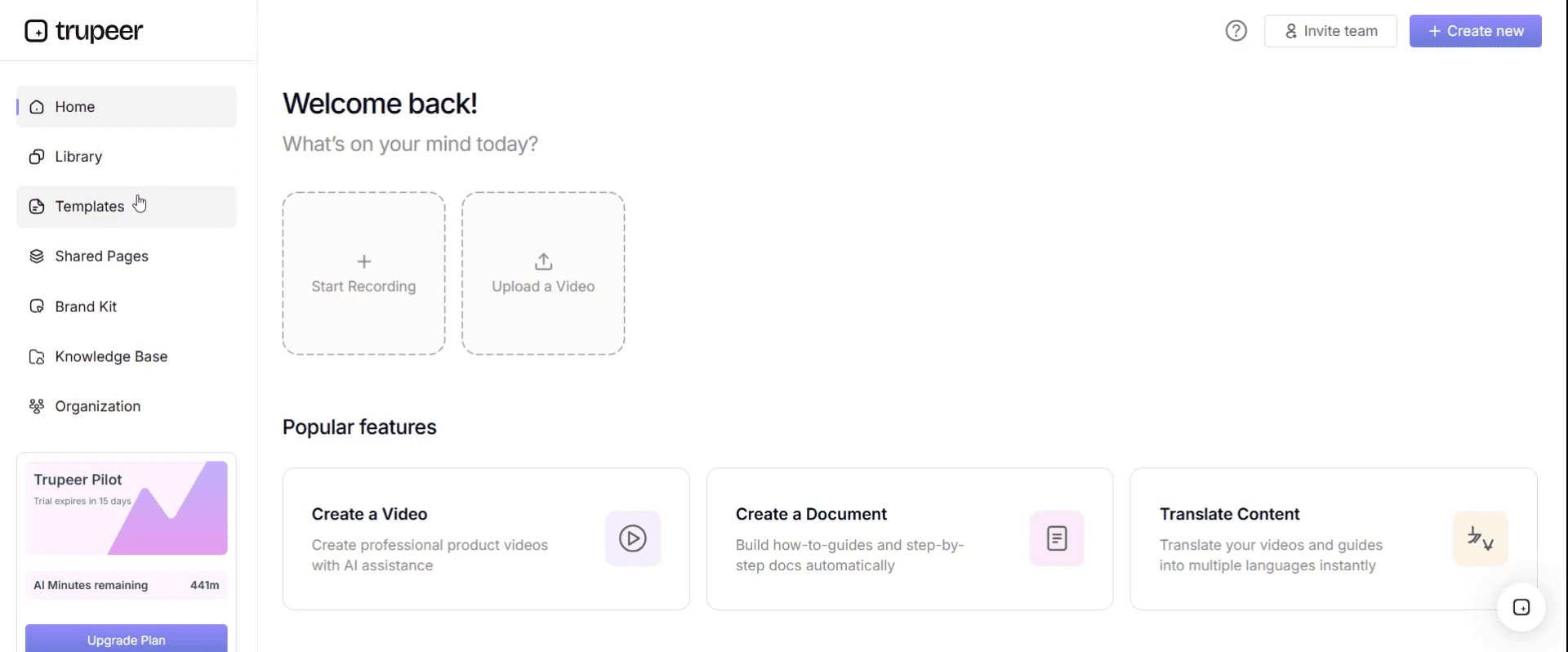
步骤 1:打开模板(Templates)
从主导航进入“模板”部分。
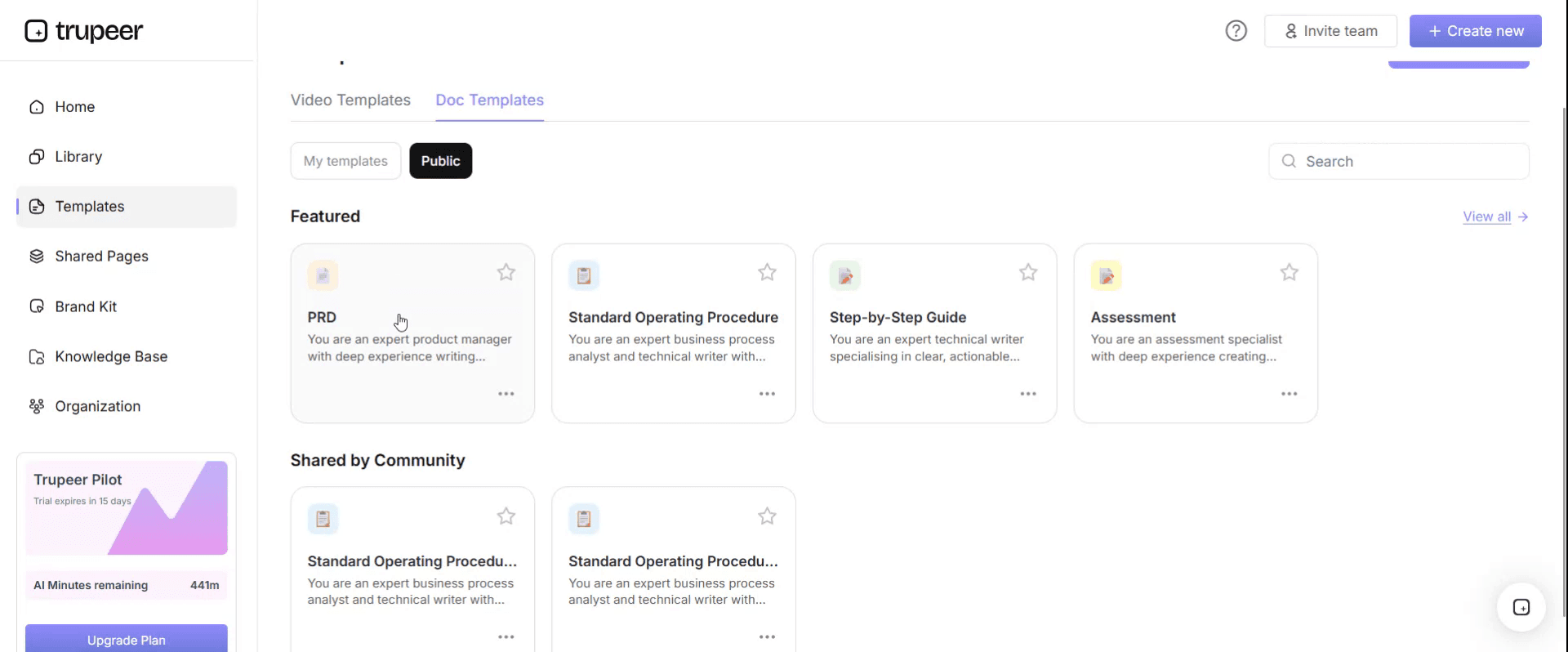
步骤 2:选择并打开模板
点击任意您想要使用的模板以打开它。
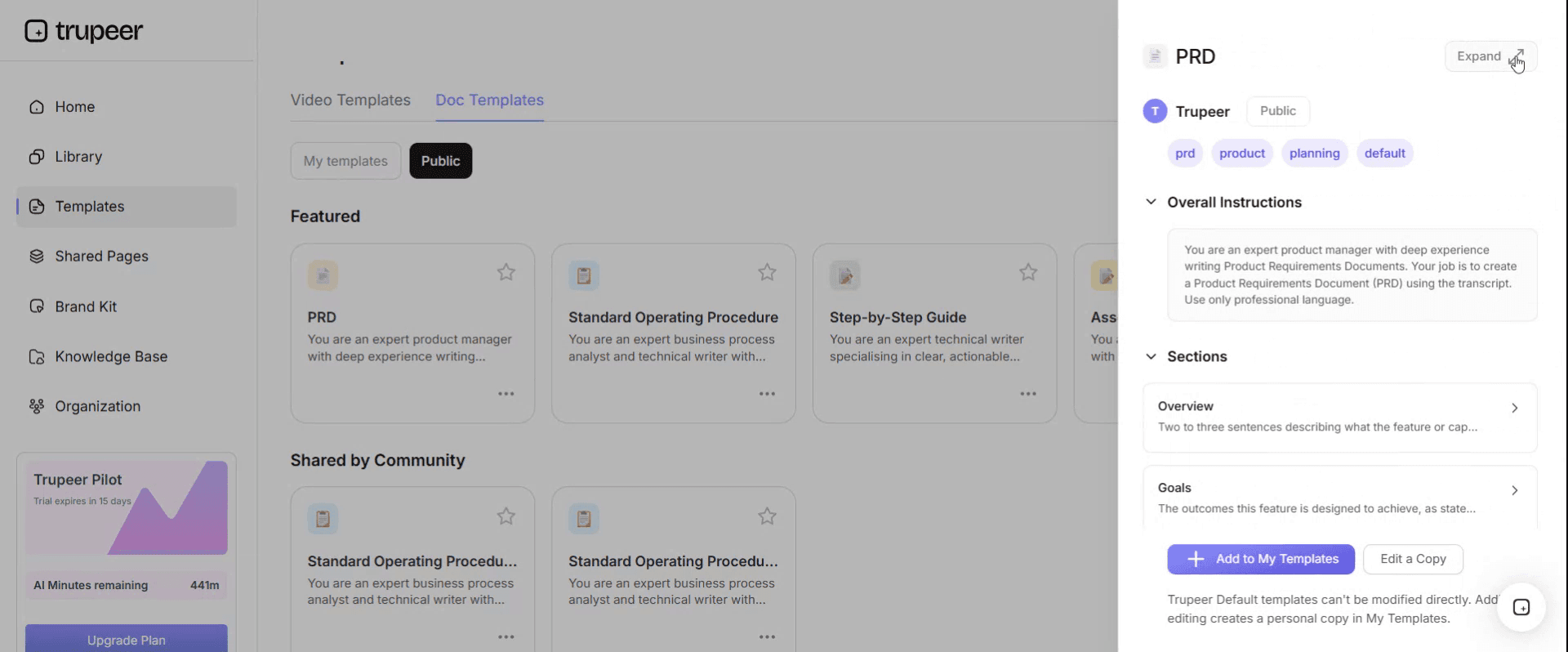
步骤 3:展开模板视图
如有需要,展开模板视图以清晰查看完整布局与细节。
步骤 4:编辑模板
点击“编辑(Edit)”开始修改所选模板。
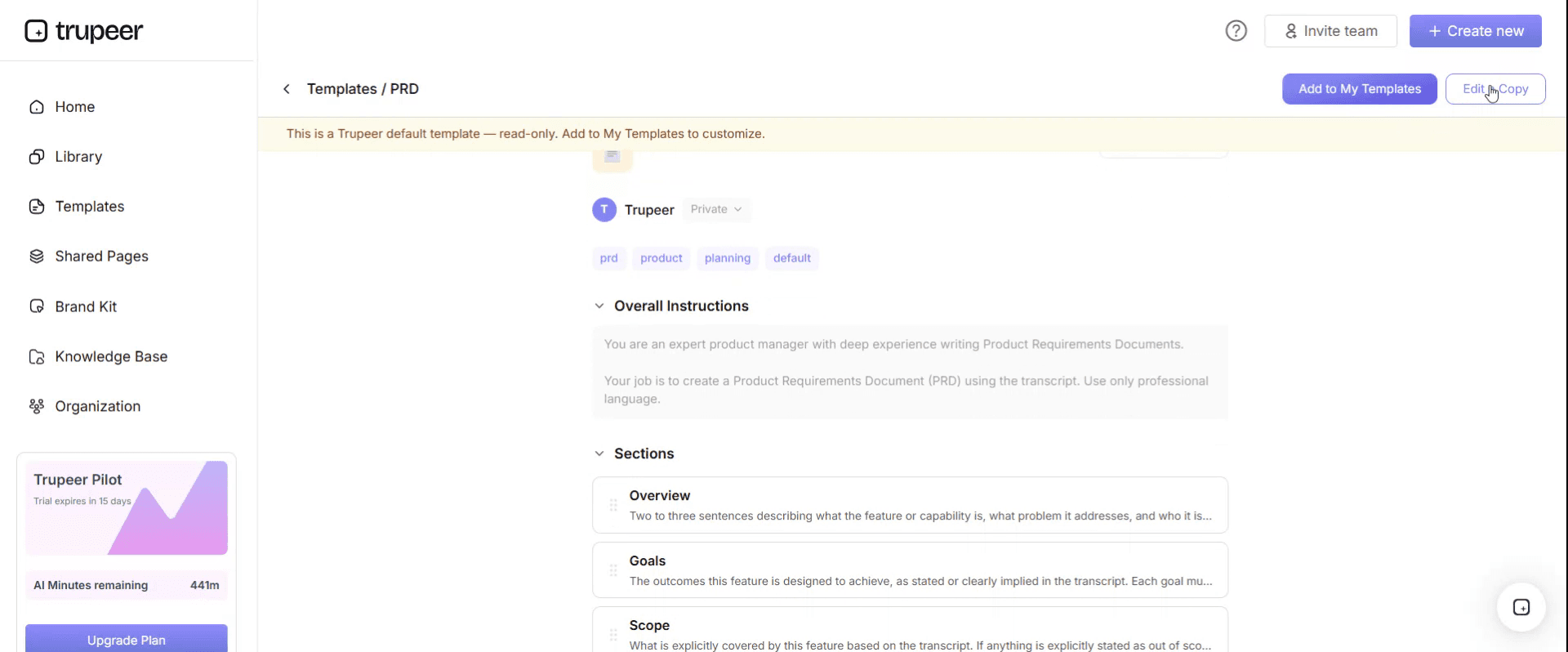
在编辑器中,您可以:
添加新的章节
定义或更新格式规则
添加徽标并调整其位置及相关设置
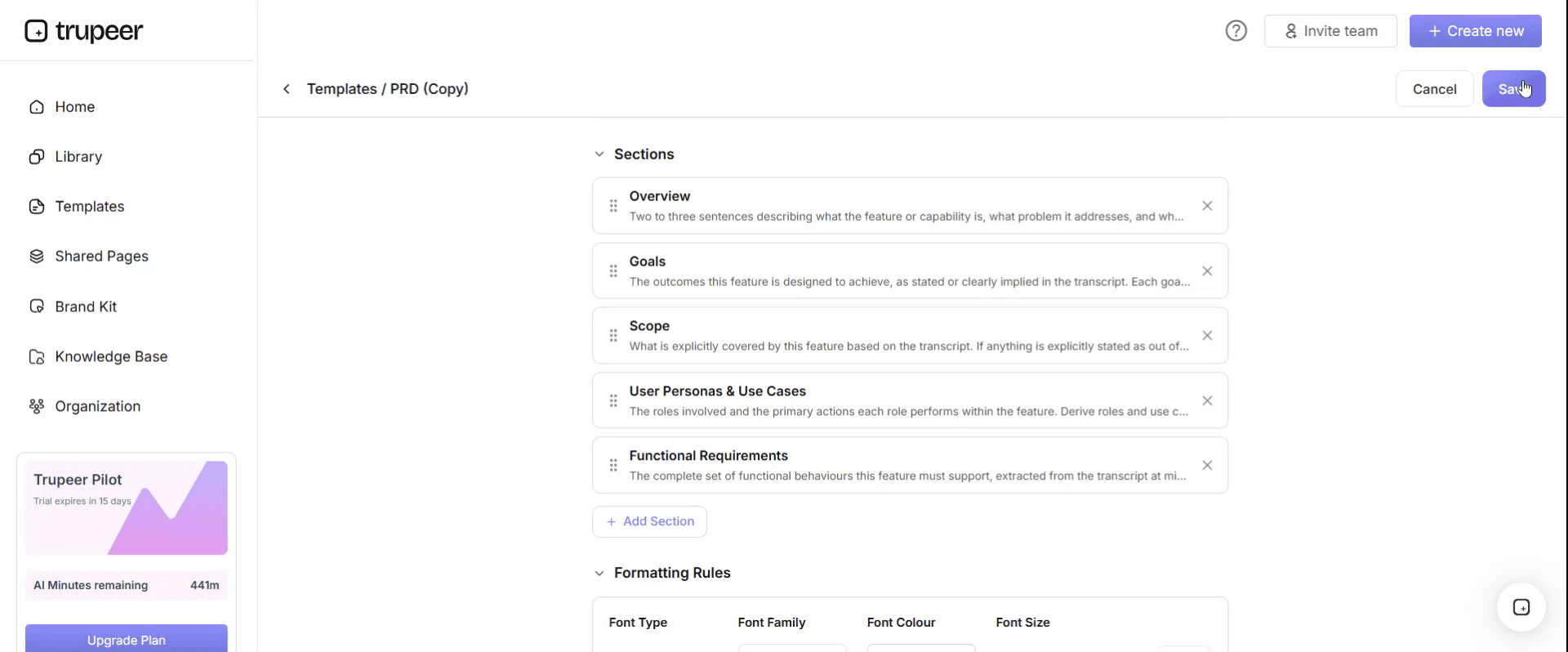
步骤 5:保存您的自定义模板
完成所有必要的更改后,点击“保存(Save)”,将更新后的模板存为您自己的版本。
步骤 6:预览并微调模板
当您想查看自定义模板的效果时,打开“预览(Preview)”。
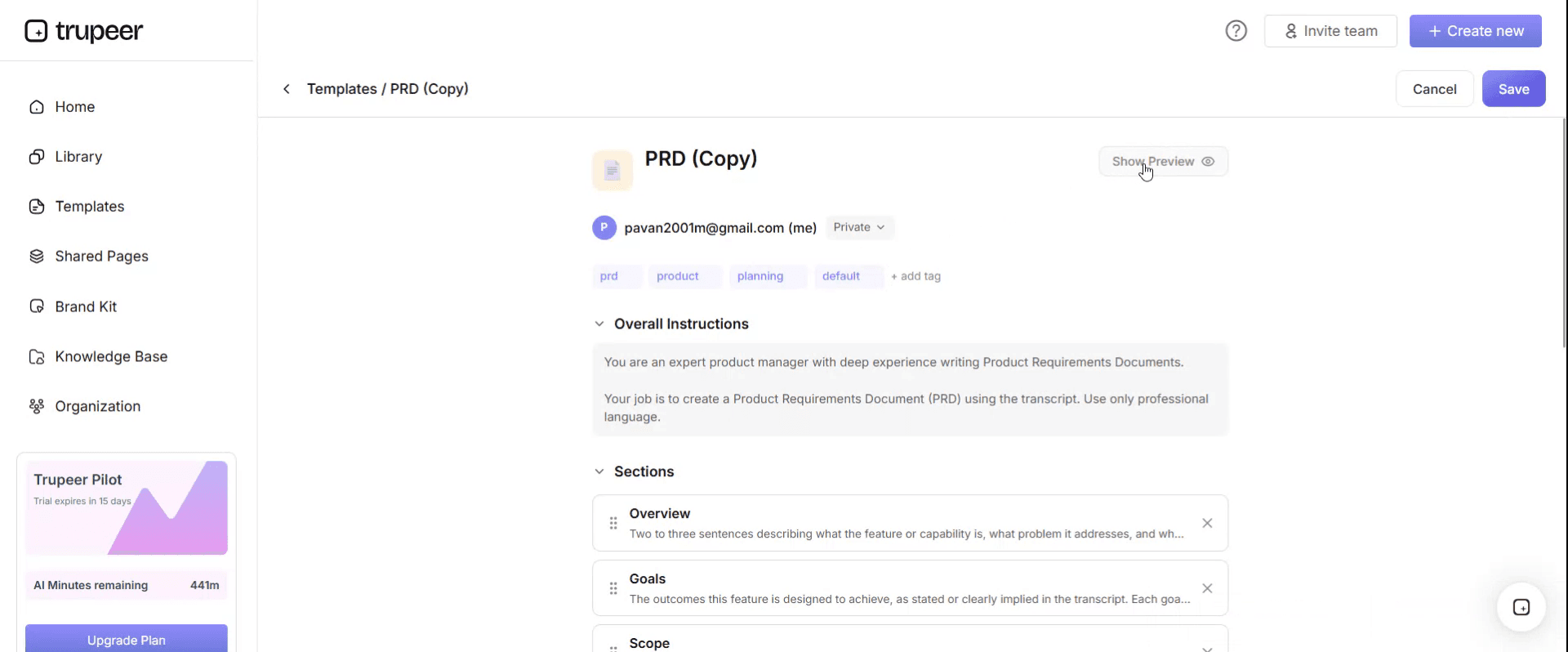
在预览界面中,如有需要,您仍可直接继续调整,确保模板呈现得正是您想要的样子。
使用精简 PRD 模板,您可以:
写作省时:跳过 20 页的格式,采用聚焦的一页精简结构。
更快对齐团队:内置问题与假设部分,强制产品表达更清晰。
保持品牌一致:使用 Trupeer 的品牌套件应用您的徽标、字体与配色。
快速迭代:随着规格演进,更新 PRD 并重新生成视频。
跨团队标准化:为每一项产品计划使用同一模板。
触达全球产品团队:一键将精简 PRD 翻译为 65+ 种语言。
如何把每一条需求标记为“受约束”或“团队决定”
两个标签:每一行都要用,绝无例外。
受约束(Constrained)。 必须以这种方式,并且原因如下。原因不是可选项,它正是让约束在变化中仍能成立的部分。有了原因的约束,在情况改变时可以被理性地挑战;没有原因的约束,会变成“大家都这么做”的传说,三年后也没人敢去碰。
团队决定(Team's call)。 我已经描述了结果。通往结果的方式由你们决定。如果你想听我的意见,就问,并把它当作意见来对待。
这个比例会告诉你一些东西。初稿通常会被大量约束,而给每一行都加上原因,往往就是它们崩塌的地方,因为诚实的原因经常是“它本来就在模板里”。
两条规则能让标签保持真实。第一,标注为“与产品其他部分保持一致(consistency with the rest of the product)”的约束,必须写出它与具体哪一项保持一致。第二,“团队决定”那一行是一种承诺:在构建过程中推翻其中一条,你就等于破坏了文档,因此下一条也不会再被相信。
让授权变得安全的“验收标准”
只有在您对“做什么(what)”说得足够准确时,才能把“怎么做(how)”交出去。这就是代价,而“验收标准”就是您为此付费的地方。
一句话,描述在这次交付之后将为真、但现在还不为真的状态,并写到让您和工程师都能独立判断:这件事是否已经发生。不要写指标目标——那是业务结果,应该放在别处。也不要写功能清单——那正是您试图避免写下来的东西。
好例子:客户可以上传最多五万行的文件,关闭浏览器,然后在返回时发现导入已正确完成。
坏例子:改进批量导入体验。
“验收标准”要放在最上方,在上下文与需求之前。如果您写不出它,说明您还没准备好写这份文档;诚实的下一步应该是沟通,而不是起草。
免费精简 PRD 模板:可复制的一页半
从这里复制。
验收标准(Acceptance line)。 一句话,如上。
为什么现在(Why now)。 两到三句话。是什么正在发生,让这件事值得在本季度做,而不是等到明年。这个部分通常会被删掉,但不应该删,因为它正是团队用来做你永远看不到的那些“小权衡”的依据。
适用对象(Who this is for)。 对用户最精确的描述,以及大致有多少人。这里给出数字可以避免大量过度工程。
受约束需求(Constrained requirements)。 编号。每一条都是一句话加上原因。目标是少于十五条。如果你写了三十条,其中大多数其实是“团队决定”的伪装。
团队决定(Team's call)。 一份简短清单,点名你们明确不在文档中指定的领域。点名很重要,因为未提及的领域会被读作“疏漏”,而不是“授权给团队”。
不构建(Not building)。 人们提出过但超出范围的事项,并且要写得足够具体,以便引发争议。没有人反对的“不构建”清单,等于没有做任何工作。
开放问题(Open questions)。 每条都要有名称和日期。没有负责人(owner)的问题会一直无人回答,直到它们变成阻塞项。
我们如何判断(How we will know)。 发布之后你会查看的衡量标准,以及时间点。只要一到两个,不要做成仪表盘。
从这里复制到这里。如果填充后的版本超过两页,先查看受约束清单。因为“填充”通常就藏在这里。
一个用于批量导入功能的精简 PRD 填写示例
验收标准(Acceptance line)。 客户管理员可以从 CSV 导入最多五万条客户记录,在导入过程中关闭浏览器,并在返回时发现导入已正确完成。
为什么现在(Why now)。 我们五个最大客户中有三个本季度将从竞争对手迁移过来,每家都有 1.2 万到 4 万条记录。今天他们要么分批粘贴每次五百条,要么把文件发给我们,我们再手动处理——上个月这占用了支持团队 11 天。
适用对象(Who this is for)。 入职(onboarding)期间的账户管理员,约每季度四十位,其中大多数只会做这一件事一次。
受约束需求(Constrained requirements)。
导入必须能在浏览器关闭后仍保持完成,因为这种规模的文件需要二十分钟或更久,而笔记本会进入睡眠。
校验失败的行不得阻塞通过的行,因为目前一条错误行就会让客户的整次运行作废。
客户必须能够下载带有原因说明的失败行文件,因为这正是他们在不依赖我们帮助的情况下修复问题的方式。
重复检测必须基于邮箱地址进行,并且要与产品其他部分识别客户的方式一致。
在开始导入之前,必须在屏幕上预览前十条已映射的行,因为最常见的支持工单是“列映射错误”,而且通常是在事实发生之后才发现。
团队决定(Team's call)。 映射界面布局、错误信息措辞、进度提示、校验运行的位置、五万行以上的文件大小上限,以及映射在两次导入之间是否会被记住。
不构建(Not building)。 计划内或周期性导入;直接从 Salesforce 或 HubSpot 导入;导入过程中编辑记录。这三项都有人提出过,而且三项都是独立的工作内容。
开放问题(Open questions)。 当客户会话过期时,进行中的导入会发生什么?负责人 Priya,截止 3 月 14 日。
我们如何判断(How we will know)。 到本季度末,支持团队处理的手动导入次数将降到每月少于一次。
五条受约束需求,六个领域明确授权给团队决定。这是一页。
用五个迭代(sprints)而不是三个迭代完成的 PRD
Halbrook 是一家约九十人的 B2B 软件公司,上述功能就是他们构建的。第一次尝试使用了他们的标准模板,结果写成了九页,包含四十一条编号需求。
文档规定了:映射界面上的列顺序、六条错误信息的措辞、十兆字节的文件大小上限、校验必须在客户端运行、弹窗布局,以及进度条必须显示百分比。
按三次迭代(sprints)估算。实际用了五次。
复盘(retrospective)追溯了差异。四十一条需求中有六条在构建过程中被重新协商;每一条都让来回沟通的成本在半天到三天之间,因为每一条都指定了团队有充分理由要用不同方式实现的方案。
其中最糟的是客户端校验。团队知道在超过几千行之后必须进行服务端处理,并在第一个迭代里就提出了这一点。要把文档改掉花了九天,因为 PM 在休假,没人觉得自己有权在已签署的 PRD 中推翻一条编号需求。
事后问起,PM 说她对其中六条里的五条都没有意见。它们之所以在那儿,是因为模板里有一个“用户界面(UI)”部分,而把它留空让她觉得有点草率。
她真正关心的那条需求——“导入必须在浏览器关闭后仍能完成”——在清单里排在第 34 条,并被当作“锦上添花”。没有它也照样上线;两个月后才以额外成本、约一个迭代的工作量把它补上。
下一个功能使用了本页的格式:一页半;十一条受约束需求,每条都有原因;六个领域标注为团队决定;一条验收标准。按三次迭代估算,并在三次迭代内交付;没有任何需求被重新协商。
确实有一个设计决策后来又回到了她那里:由团队标注为“团队决定”的某项内容,结果会影响验收标准。正是这场沟通,这个格式试图促成的就是它。
如何在一小时内写出精简 PRD
先写验收标准,并把这一个小时里不成比例的大部分时间花在它上面。只要它存在,后面的内容都会更容易;如果它写不出来,那就是信息。
接着写“不构建”清单第二步——在您仍记得大家都在要什么的时候写。等到以后再写会难得多,因为一旦您已经被“这个东西长什么样”所绑定,后面就更难脱离。
然后在不打标签的情况下,列出您能想到的每一条需求,给自己十分钟。写的时候不要边写边筛选。
现在给它们打标签。对每一条,写出为什么必须如此。凡是原因最后变成“我们通常就这么做”或根本写不出来的,都移到“团队决定”。这一步通常会把清单减半。
再根据您已经知道的内容,写“为什么现在”和“适用对象”。每项两分钟。
最后,把受约束清单当作工程师一样去读。任何地方您会问“为什么?”,但文档没有回答:要么补上原因,要么删掉这一行。
使用精简 PRD 模板时常见的错误
错误 | 看起来是什么样 | 应该怎么做 |
|---|---|---|
默认就写成规范 | 把每个模板章节都填满 | 问自己:无论哪种方式你都会同样满意吗 |
没有原因的约束 | 编号需求,但没有论据 | 补上原因,或把它移到团队决定 |
把关键的那条埋起来 | 第 34 条(编号为三十四)的关键需求 | 它应该放在验收标准里 |
空的“不构建”清单 | “未来考虑:无” | 写出人们提出过但被你拒绝的事项 |
推翻团队决定 | PM 在构建过程中否决某个实现方式 | 接受它,或承认标签写错并说明原因 |
用精简 PRD 做了不该做的工作 | 受监管、安全关键或合同约束的构建 | 使用完整规范并进行签署确认 |
把它当作合同 | 文档已签署并冻结 | 做版本管理,并记录变更内容与原因 |
最后两条值得展开说明。若工作受监管机构、一个安全论证(safety case)、带有明确交付物的客户合同,或无障碍/数据保护义务所约束,那么精简 PRD 并不合适。此类工作需要完整规范、对义务的可追溯性,以及由对其负责的人进行审查。当“怎么做(how)”本身就是被审计的对象时,你恰恰不能把“怎么做”交出去。
PRD 与 BRD、规格说明(spec)和用户故事(user story)有何不同
商业需求文档(BRD)位于 PRD 之上。它描述一个商业问题,以及解决方案在商业层面必须达成的目标——通常在还没有人决定要构建什么之前就已经确定。如果您在寻找 BRD 的样例,那是另一种文档形态,属于另一个阶段。
技术规格说明(technical specification)位于其下。它描述将如何构建该事物,并且由工程团队编写,而不是为工程团队编写。精简 PRD 会刻意把这部分大多数留空——这正是“团队决定”标签在做的事。
用户故事(user story)比它们都更小。一个故事是一小块工作。PRD 覆盖的是一组将包含许多故事的工作,而验收标准则说明这些故事合起来应当共同达成什么。
产品规格文档(product specification document)——有些组织会保留它——更接近于对“已经构建了什么”的描述,而不是“应该构建什么”。它会在发布之后继续维护,而 PRD 不会。
Confluence、Notion 与 Google Docs 中的精简 PRD 模板
Confluence 是最常见的载体,其内置的 PRD 模板是传统结构:包含目标、背景、假设、用户故事、需求与开放问题等章节。用上面这种结构替换它完全没问题,而且“状态(status)”与“负责人(owner)”的页面属性值得保留。
如果您希望把受约束需求作为数据库来管理,Notion 会更合适:因为标签会变成一个属性,您可以按属性筛选;而且跨季度的比例也能一眼看见,不需要手动统计。
Google Docs 对于“会被争论的文档”来说速度最快,因为争论发生在评论线程里。弱点是:争论随后会留在已解决但没人看的评论中。因此,在解决线程之前,把任何导致文档发生变化的决策都写进“需求的原因”里。
无论您使用哪种工具,格式本身的重要性都远不如:标签能否在评审会议中经得起审查。
Word、Excel 或 PDF 里能拿到精简 PRD 模板吗?
Word 或 Google Docs 适合直接承载文档本身:上面的结构可以原样粘贴进去,无需调整。这就是它应该存在的地方,因为 PRD 是“带有清单的散文”。
如果您要同时运行多个功能,Excel 适合用来管理受约束需求清单,并希望查看某个团队内标签比例。列包括:功能、需求、标签、原因,以及构建过程中是否被重新协商。最后一列是我见过唯一能改变他人行为的 PRD 指标。
PDF 适合用于附在决策记录上或在公司外共享的版本。保持工作版本可编辑,因为“开放问题”章节本来就应该在原地被回答。
用于精简 PRD 的 AI PRD 生成器值得用吗?
它们确实对“更偏记忆而非判断”的部分很有用。给一个好的生成器描述功能,它会产出结构化草稿,并包含您可能忘记的章节——这是一份合理的起点。
它们做不了的是“打标签”,因为关键问题是:无论哪种方式您都会同样满意吗?而只有您知道答案。若不加干预,生成器会产出一份自信地写满规范的文档,因为那正是它的训练数据所呈现的样子——而这正是本页所讨论的失败点。
实际用法是先生成长版本,然后用“标签问题”把它剪裁掉。这样比从空白开始写更快,也能把判断留在它该在的位置。
如何让 PRD 与实际交付保持关联
PRD 在工作开始的那天就不再被阅读,之后也不会再更新——这样也可以。但不可以的是:验收标准之后再也没有传达到团队之外的人。
需要它的人是支持团队(他们会收到工单)以及客户(他们需要知道发生了什么变化)。两者通常都会收到一条“一行变更日志”,但两者都不会得到那种会让一个迭代成本付出的“可恢复导入细节”。
Trupeer AI 能以更低成本弥补这一差距。无论是谁构建了功能,只需记录一次最终完成的内容,您就能获得书面演示、发布说明的视频,以及带有您自有品牌的 知识库文档。面向客户的版本结构会放在我们的 知识库文章模板 中。
记录它。打造它。翻译它。Trupeer 它。
对于“实际构建了什么”的内部留档,技术文档 会覆盖它;设置说明则在 文档模板设置指南 中。
常见问题
Word 里有免费的精简 PRD 模板吗?
上面的结构可以直接粘贴到 Word 或 Google Docs 中,无需重新排版。没有门槛式下载,这也意味着您和模板之间没有表单。把填好的版本保留为团队的“房屋格式”,因为价值来自于每份 PRD 看起来都一样,而不是来自于各个章节本身。
PDF 里有免费的精简 PRD 模板吗?
当文档要在团队之外共享或作为决策记录附件时,请导出您自己的版本。在开放问题仍未回答之前保持可编辑,因为在问题被回答之前就冻结的 PRD 往往会被忽略,而不是被遵循。
Excel 里有免费的精简 PRD 模板吗?
Excel 用于跨多个功能的需求登记表,而不是用于单个 PRD。功能、需求、受约束或团队决定、原因,以及构建过程中是否被重新协商。按季度复查最后一列,是最快找出哪些 PM 在过度指定的方式。
Google Docs 有 PRD 模板吗?
把上面的结构复制到一个 Google 文档中,并在团队驱动器里保存为模板。Google Docs 特别适合这种文档,因为争论发生在评论里;但需要注意的是:在评论线程中达成的决策,需要在该线程解决之前写入到“需求的原因”里。
最好的 PRD 模板是什么?
是您的工程师在复盘之前就会阅读的那一种,而不是在复盘期间阅读的那一种。结构的重要性远不如:需求是否带有原因,以及文档是否写明团队在哪里做决定。一个没有“论据”字段的十章节模板,无论看起来多完整,也会产出没人信任的文档。
在哪里能找到 PDF 格式的商业需求文档样例?
BRD 是更早阶段的另一种文档:它描述商业问题,以及解决方案必须达成的目标——通常在产品决策尚未做出之前就已经确定。当您需要 BRD 却去找 PRD,这种情况很常见,也会带来挫败感,因为 PRD 默认“构建决策”已经被做出。
精简 PRD 应该多长?
一到两页,受约束需求少于十五条。更长通常意味着规范又悄悄回来了;检验方法是:给每一条受约束的行都添加原因。无论最终留下什么,那才是真正的文档。
谁应该来写精简 PRD?
产品经理负责撰写,并与对结果负责的人就验收标准达成一致;在文档流转之前,由资深工程师审阅受约束清单。这个审阅环节能捕捉到大多数不必要的约束,并且只需要大约二十分钟。