Trupeer Blog
总结
Most companies handle the first day of onboarding well, the welcome email goes out, the laptop is ready, someone books a team lunch. Where onboarding breaks down is everything after: the tracking, the role-specific training, the check-ins that quietly slip, and the 90-day review that never happens. That gap is expensive. Research from the Brandon Hall Group found that organizations with a strong onboarding process improve new-hire retention by 82% and productivity by over 70% yet Gallup reports just 12% of employees strongly agree their company onboards new hires well.
This guide lays out the full employee onboarding process end to end, the 12 steps, a phase-by-phase checklist you can copy, a 30-60-90 day plan, and the metrics that tell you whether it's working. It's written to be run the same way for every hire, whether you onboard one person a quarter or fifty.
What is employee onboarding?
Employee onboarding is the structured process of integrating a new hire into your organization from the moment they accept the offer through their first 90 days, so they become productive, confident, and connected to the team. A complete onboarding process covers four phases: pre-boarding (paperwork and setup before day one), orientation (the first day and week), role-specific training, and review milestones at 30, 60, and 90 days.
Onboarding is broader than orientation. Orientation is a day or two of introductions and paperwork. Onboarding is the months-long arc that turns a signed contract into a contributing team member. The companies that get it right treat it as a repeatable system, not a scramble that depends on whichever manager happens to be free that week.
The employee onboarding process: 12 steps
Here's the full sequence, grouped by phase. Steps 1–3 happen before the offer is even out; steps 4–6 are pre-boarding; 7–9 cover the first day and week; 10–12 carry through the first 90 days.
Phase 1 - Before the offer
1. Define the role and success criteria. Before you advertise, write down what this person will own, who they'll work with, and what "good" looks like in 90 days. Vague roles produce vague onboarding. The clearer your success criteria here, the easier every later step becomes especially the 90-day review.
2. Standardize your hiring and interview structure. Decide your interview stages, your skills tests, and who's involved, and document them so every candidate gets the same experience. A documented hiring process is the first piece of a consistent onboarding process, it removes the improvisation that creates uneven first impressions.
3. Align with the wider team. The new hire will work across functions, so confirm with adjacent teams what they actually need from this role. This is also where you decide who the onboarding buddy will be and what the first projects look like.
Phase 2 — Pre-boarding (offer to day one)
4. Extend the offer and confirm the details. Make the offer (ideally by phone), align on salary and start date, account for any notice period or booked vacation, and reconfirm the expectations you set during interviews. Then close the loop with unsuccessful candidates promptly, it's the professional thing to do and it protects your employer brand.
5. Send paperwork and run compliance early. Get contracts, tax forms, eligibility verification, NDAs, and any required identity documents out the moment the offer is accepted. Running these early means any issue surfaces with time to fix it, not on day one. Bundle them into a single, clearly labeled package so nothing gets missed.
6. Set up accounts, tools, and the workstation. An employee without their tools can't contribute. Provision the laptop, create the email address, send software invites, and set permissions before day one. For remote hires, ship equipment with time to spare and get them onto your video and chat tools first, since that's the very first thing they'll log into.
This is the first place a short video earns its keep. A pre-boarding welcome video, a two-minute hello from the manager, plus a screen walkthrough of the tools they'll log into turns a cold first morning into a warm one. With Trupeer AI, you record the walkthrough once and it generates both the polished video and a written setup guide from the same recording, so the hire can watch or read, whichever they prefer.
Phase 3 — The first day and week
7. Run a structured first day. Make building access easy, start them an hour later than the team so you can get set up, and run a short tour plus introductions. Then get them logged in and into your training materials. A good first day is paced: orientation in the morning, a small real task in the afternoon, an end-of-day check-in to surface questions and set goals for week one, month one, and month three.
8. Assign an onboarding buddy. Pair the new hire with a peer who knows how the company works. A go-to person for the small questions how do I request time off, who owns this process removes hours of friction and quietly signals that the new person belongs.
9. Deliver role-specific training in the first week. This is where most onboarding processes thin out. Beyond the company-wide orientation, the hire needs to learn the specific tools, workflows, and SOPs of their actual job. Schedule daily check-ins through week one, set up a few cross-department introductions, confirm all paperwork is signed and payroll is set, and begin skills training so it becomes part of their normal rhythm rather than a someday task.
Role-specific training is the hardest part to scale, because it's different for every role and it goes stale the moment a tool changes. This is the core of what Trupeer AI was built for. Record a workflow once, a CRM walkthrough for a new rep, a deployment process for an engineer and Trupeer turns the raw screen recording into a clean, branded video with an AI voiceover and a step-by-step written SOP with screenshots. When the tool changes, you rewrite the script and regenerate the voiceover instead of re-filming. One recording becomes a reusable training asset that onboards the next ten hires without another hour of your time.
Phase 4 — The first 90 days
10. Run the 30-day review. Assess progress against the initial goals, adjust role expectations if needed, and keep skills training moving. This is your first real signal of whether the hire is tracking and your earliest chance to course-correct.
11. Run the 60-day check. By now the hire should be operating with less hand-holding. Use this milestone to deepen cross-team relationships, hand over more ownership, and identify any gaps before they harden into habits.
12. Run the 90-day review and gather feedback. The formal milestone: review performance against the goals you set in step 1, talk through career progression, and critically ask the hire how the onboarding itself felt. Their feedback is the raw material for improving the process for the next cohort. Effective onboarding takes a minimum of 90 days; the organizations that extend it this far see meaningfully higher retention.
The employee onboarding checklist
Use this as a copy-and-run checklist for every hire. It maps directly to the 12 steps above, grouped into four phases.
Phase 1 — Before the offer
Define the role, responsibilities, and 90-day success criteria
Document the interview structure and any skills tests
Align adjacent teams on what they need from the role
Choose the onboarding buddy and outline first projects
Phase 2 — Pre-boarding
Extend the offer; confirm salary, start date, and expectations
Notify unsuccessful candidates
Send contract, tax, eligibility, and NDA paperwork
Collect identity documents; run background and eligibility checks
Provision laptop and workstation
Create email, send software invites, set permissions
Set up remote hires on video and chat tools
Record/prepare a pre-boarding welcome video and setup guide
Phase 3 — First day and week
Confirm building/system access is ready
Run office (or virtual) tour and team introductions
Get the hire logged in and into training materials
Assign the first small, real task
Introduce the onboarding buddy
Hold an end-of-day check-in; set week/month/quarter goals
Schedule the 30, 60, and 90-day reviews now
Run daily check-ins through week one
Set up cross-department introductions
Confirm all paperwork signed and payroll active
Begin role-specific skills training
Phase 4 — First 90 days
30-day review: progress vs. goals, adjust expectations
60-day check: hand over more ownership, deepen relationships
90-day review: performance, career path, and progression
Collect new-hire feedback on the onboarding experience
Feed that feedback into the process for the next hire
A 30-60-90 day onboarding plan
The checklist tells you what to do; the 30-60-90 plan tells you what good looks like at each milestone. Set these targets with the hire on day one so everyone is measuring the same thing.
First 30 days — orientation and foundation. The hire understands the company, their role, and the core tools. They've completed initial training, shipped a few small tasks, and built relationships with their immediate team. Success here is confidence and clarity, not output.
Days 31–60 — building competence. The hire works with less supervision, owns recurring responsibilities, and contributes to team goals. They're collaborating across functions and starting to spot improvements rather than just following instructions.
Days 61–90 — independent performance. The hire operates independently, hits their core metrics, and is fully integrated into the team's culture and rhythm. By day 90 you should both be able to say, plainly, whether the hire is where they need to be.
The onboarding metrics that actually matter
You can't improve a process you don't measure. Track these:
Time-to-productivity — how long until the hire performs at the expected level. The single clearest measure of onboarding effectiveness.
30-day and 90-day retention — early churn is almost always an onboarding signal, not a hiring mistake.
Training completion and engagement — are people actually finishing the material, and where do they drop off?
New-hire satisfaction (eNPS at 30/90 days) — how the experience felt, captured while it's fresh.
Manager and buddy load — how much time the process consumes from experienced people, which tells you what's worth automating.
A practical advantage of video-based training here: when your onboarding content lives in a platform like Trupeer AI, you can see how much of each video is watched and where people drop off so your training-engagement metric is grounded in real behavior, not guesswork. That drop-off data also tells you exactly which explanation to strengthen for the next hire.
Where most onboarding processes break — and how to fix them
Three failure points show up again and again:
Inconsistency. When onboarding depends on whoever's free, every hire gets a different experience. The fix is documentation: record your core content once so the message is identical whether the head of engineering or a junior coordinator runs the day.
Content that goes stale. Onboarding decks and docs rot the moment a tool or policy changes, and nobody has time to re-film. The fix is making updates cheap rewrite a script and regenerate the voiceover instead of rebuilding from scratch.
Remote and hybrid gaps. Distributed hires miss the ambient learning that office hires absorb by osmosis. The fix is asynchronous, replayable content they can watch on their own schedule, in their own language which matters more as teams span time zones and markets.
How to run a consistent onboarding process with Trupeer AI
A strong process is the hard part; you've now got it. The execution problem running it identically for every hire without burning your team's hours, is what Trupeer AI solves. Here's how it maps to the steps above.
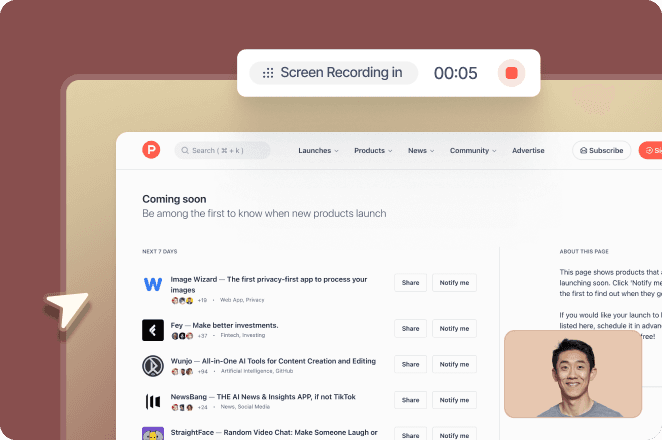
Record it once. Hit record, walk through a tool or process the way you would one-on-one, and Trupeer turns the rough screen recording into a polished, branded video, cleaning up the stumbles automatically.
Document it automatically. From that same recording, Trupeer generates a step-by-step written guide with screenshots. Every workflow becomes both a video and an SOP, in sync, from one take, exactly what steps 6, 7, and 9 need.
Voice it your way. Type a script and Trupeer narrates it with a natural AI voiceover, or clone your own voice. When a policy changes, rewrite the line and regenerate, no re-filming.
Send in an avatar. Use a lifelike AI avatar to introduce each module, so your onboarding library stays consistent even when a key team member is unavailable. Connect your own custom avatar through HeyGen if you want your actual presenter on screen without filming every update.
Translate it for every market. Localize your onboarding videos into 65+ languages with native-accent voiceovers, so a new hire in São Paulo gets the same quality of onboarding as one at HQ.
Organize and share it. Collect your videos and guides into a branded knowledge base with search, embed them in your onboarding portal or Notion, sync to your HRIS, or drop a secure link in Slack, so new hires reach what they need without learning a new tool.
Record it. Document it. Translate it. Trupeer it. Start free or book a demo.
Frequently asked questions
What is the employee onboarding process?
The employee onboarding process is the structured sequence that integrates a new hire into your organization, from offer acceptance through their first 90 days. It spans four phases: pre-boarding (paperwork and system setup), orientation (first day and week), role-specific training, and review milestones at 30, 60, and 90 days. A documented process ensures every hire gets the same quality experience regardless of who runs it.
What are the steps in the onboarding process?
A complete onboarding process has 12 steps across four phases: define the role and success criteria, standardize the interview structure, align with the wider team, extend the offer, send paperwork and run compliance, set up tools and the workstation, run a structured first day, assign an onboarding buddy, deliver role-specific training in week one, then run reviews at 30, 60, and 90 days.
How long does the employee onboarding process take?
Effective onboarding takes a minimum of 90 days. The first 30 days focus on orientation and foundation, days 31–60 on building competence, and days 61–90 on independent performance. Organizations that extend onboarding to a full 90 days and beyond see significantly higher new-hire retention than those that treat it as a first-week event.
What is the difference between onboarding and orientation?
Orientation is a short event — usually a day or two of introductions, paperwork, and a tour. Onboarding is the months-long process that includes orientation but extends through role-specific training and 30-60-90 day reviews. Orientation gets someone in the door; onboarding makes them productive and likely to stay.
What should a new employee onboarding process include?
It should include: a signed contract and completed compliance paperwork, a workstation and system access ready before day one, a structured first-day plan, an assigned onboarding buddy, daily check-ins through the first week, role-specific training, cross-department introductions, and formal reviews at 30, 60, and 90 days. Building the training content as reusable video and documentation makes the process consistent and far less manual to repeat.
How do you onboard a new employee remotely?
Remote onboarding follows the same 12 steps, with extra emphasis on asynchronous, replayable content. Ship equipment early, get the hire onto video and chat tools first, and replace in-person walkthroughs with recorded video guides they can watch and rewatch on their own schedule. Localized voiceovers and captions ensure hires in every region get an equally strong start.
What are the KPIs for employee onboarding?
The core onboarding KPIs are time-to-productivity, 30-day and 90-day retention rates, training completion and engagement, new-hire satisfaction (eNPS at 30 and 90 days), and the time the process consumes from managers and buddies. Video-based training platforms let you measure engagement precisely by tracking how much of each video is watched and where people drop off.
Can onboarding videos replace written documentation?
They work best together. The strongest onboarding gives new hires both a video walkthrough and a matching written guide for each process, so people can watch or read depending on the task and their preference. Tools like Trupeer AI generate both from a single screen recording, keeping the video and the written SOP in sync automatically.
相关文章
没有项目