Trupeer Blog
Özetle
Launching a self-serve hub for your customers isn't just flipping a switch. It's about ensuring every piece is in place for a smooth experience. Imagine your customers handling your hub with ease, finding answers instantly, and solving their issues independently. But, without the right content, search functionality, and analytics, your hub risks becoming a glorified demo rather than a fully functional product. In a survey conducted by Gartner,
75% of B2B buyers prefer self-service for order placement and reordering, highlighting the crucial role of a well-structured self-serve hub.
This statistic underscores the importance of a comprehensive solution that not only meets but anticipates customer needs.
For companies looking to enhance their customer education, a self-serve hub is invaluable. It enables users to find solutions quickly, reducing the strain on customer support teams. By preparing a detailed checklist before going live, you'll ensure that your hub isn't just another feature, it's a cornerstone of your customer engagement strategy. This guide is aimed at product managers, customer experience leads, and anyone involved in creating a top-tier self-serve experience.
Why does a self-serve launch checklist matter?
Creating a self-serve hub isn't merely about building a repository of information. It's about crafting an intuitive space where customers can easily locate and absorb the knowledge they need. When customers encounter friction in accessing information, it can lead to frustration and, ultimately, churn. A well-designed self-serve hub reduces these risks by enabling users to navigate your content efficiently.
The stakes are high for businesses looking to enhance their customer education workflow. Companies that implement effective self-serve hubs see significant reductions in support ticket volumes, often by up to 40%. This not only cuts costs but also frees up support staff to handle more complex issues, enhancing overall service quality. By investing in a thorough pre-launch checklist, you ensure the hub is equipped with all necessary features, setting the stage for success.
What are the benefits of a self-serve launch checklist?
A self-serve launch checklist offers several benefits that can transform your customer engagement strategy. It's not just about having a plan; it's about executing one that delivers measurable outcomes.
Improved customer satisfaction. A well-structured hub enables customers to find answers quickly, boosting satisfaction rates. This is especially true when using customer onboarding videos to guide new users.
Reduced support costs. By enabling customers to self-solve common issues, you decrease the volume of support tickets, which directly reduces operational costs.
Increased conversion rates. Customers who can easily access information are more likely to convert from free to paid plans. A clear, accessible hub ensures they understand the value of your offerings.
Better user retention. Regular updates and fresh content keep users engaged, reducing churn. This is where an AI-powered video tool can keep content dynamic and engaging.
Enhanced brand authority. A comprehensive hub positions your brand as a leader in your field, building trust with users and establishing long-term loyalty.
Efficient onboarding process. By integrating structured resources, new users can onboard with minimal friction, leading to quicker adoption of your product's features.
Which Trupeer features help you prepare for a self-serve launch?
Trupeer offers a suite of features designed to simplify the creation and management of your self-serve hub. These capabilities ensure that your content is accessible, engaging, and efficient.
AI screen recording with auto-zoom and click detection
This feature simplifies the process of creating detailed walkthroughs and tutorials. By automatically focusing on relevant screen areas and detecting clicks, you can produce high-quality instructional videos without the need for manual editing. This is crucial for ensuring that your users can follow along easily, enhancing their learning experience. This capability is particularly useful for creating intuitive auto-generated documentation that aligns with user actions on-screen.
AI voiceover in 65+ natural voices
Trupeer's AI voiceover capability offers over 50 natural-sounding voices, which can be adjusted for pace and tone. This flexibility allows you to tailor the audio to suit different types of content, from quick tutorials to detailed guides. By providing a consistent auditory experience, you build a stronger connection with your users, helping them to engage more deeply with your content. It’s an essential tool for keeping your hub content fresh and accessible to a global audience.
Automatic SOP generation from any recording
Creating standard operating procedures (SOPs) is often a time-consuming task. Trupeer automates this process, generating SOPs directly from your recordings. This feature helps maintain consistency across your documentation, ensuring that all instructions are clear and up-to-date. With the ability to export in multiple formats, including HTML and PDF, you can easily distribute SOPs to your team or clients, enhancing operational efficiency. Explore how this feature enhances your video knowledge base for comprehensive content delivery.
AI translation into 40+ languages
Reaching a global audience requires content that's not only informative but also accessible in multiple languages. Trupeer's AI translation capability enables smooth translation of your content into over 40 languages, complete with lip-sync for videos. This ensures that your international users receive the same high-quality experience as your native speakers, significantly broadening your reach. This feature is vital for companies aiming to establish a global presence without the overhead of manual translation efforts.
Viewer engagement analytics, drop-off, and heatmaps
Understanding how users interact with your content is crucial for continuous improvement. Trupeer's analytics tools provide detailed insights into viewer engagement, including drop-off points and heatmaps. These metrics allow you to identify which areas of your hub are most effective and where improvements are needed. By using this data, you can optimize your content strategy to better meet user needs, ensuring that your self-serve hub remains a valuable resource. Consider integrating a customer service AI writer to simplify responses based on these insights.
How do you prepare for a self-serve hub launch step by step with Trupeer?
Step 1: Capture Initial Content
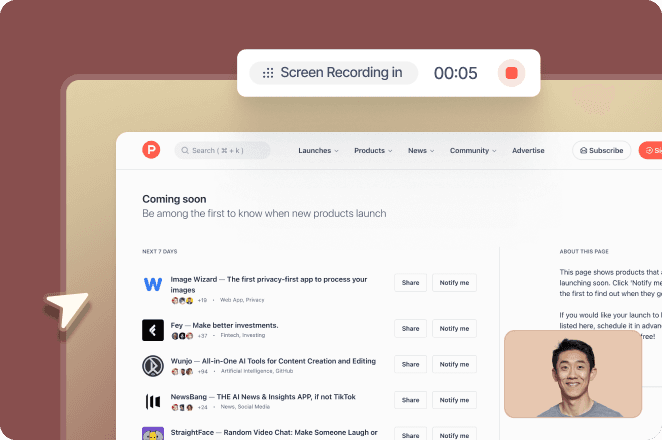
Start by using Trupeer's AI screen recording with auto-zoom and click detection to capture your content. Open the Trupeer recorder, choose the area of your screen you wish to record, and hit the record button. Trupeer will automatically focus on the active areas of your screen and detect clicks, ensuring that your tutorial is clear and engaging. This process typically takes as long as the session you're capturing, plus a few minutes for automatic processing. If you need to capture additional details, you can pause and resume recording as necessary. This feature is ideal for creating step-by-step guides, as it highlights important interactions automatically.
Step 2: Edit and Enhance Your Videos
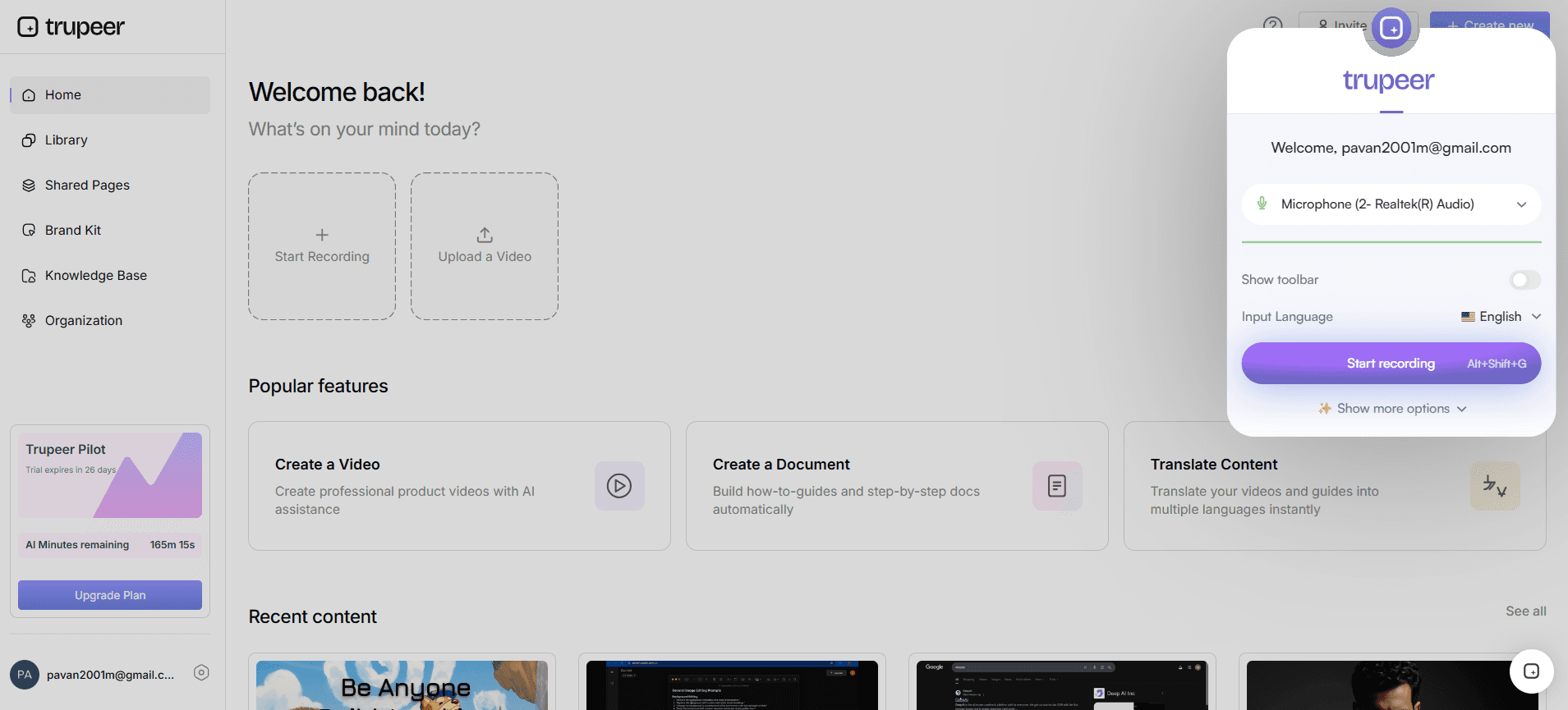
Once the recording is complete, move to the editing and enhancement phase. Trupeer's automatic filler-word removal and AI voiceover tools come into play here. Access the editing interface, and within a few clicks, you can remove pauses and filler words like "um" and "ah." Then, select from over 50 natural AI voices to add a professional voiceover to your video. Adjust the pace and tone to match your brand's style. This step is crucial for making sure your content is polished and professional. It typically takes just a few minutes to process these edits, allowing for quick turnaround times.
Step 3: Generate Documentation and SOPs
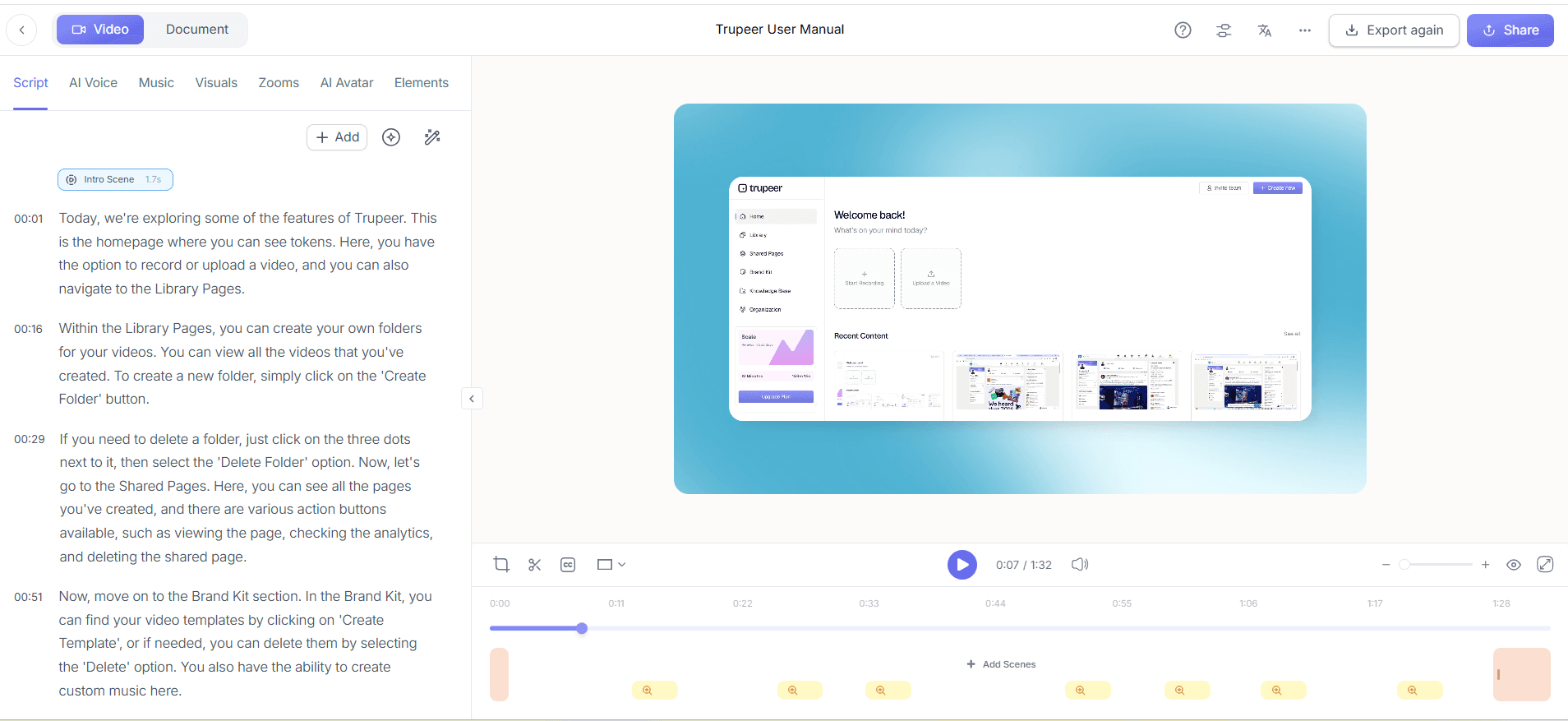
With your video content prepared, generate accompanying documentation using Trupeer's automatic SOP generation feature. Simply select your video and choose the SOP generation option. Trupeer will automatically create a detailed document based on the recording, which you can then review and edit for accuracy. This feature supports multiple export formats like HTML and PDF, making it easy to share internally or with clients. The process is efficient, often taking less than five minutes per video, and ensures consistency across your educational materials.
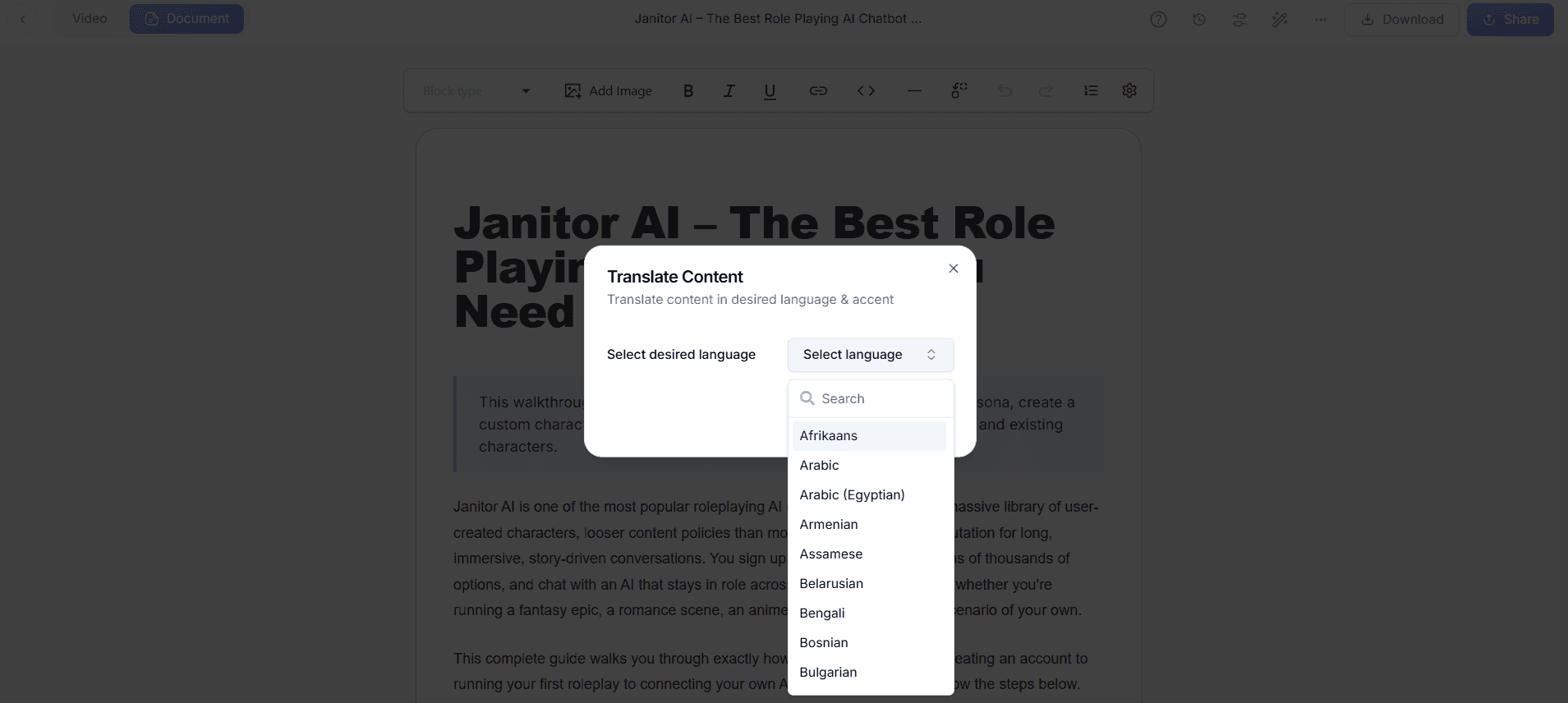
Step 4: Localize Your Content
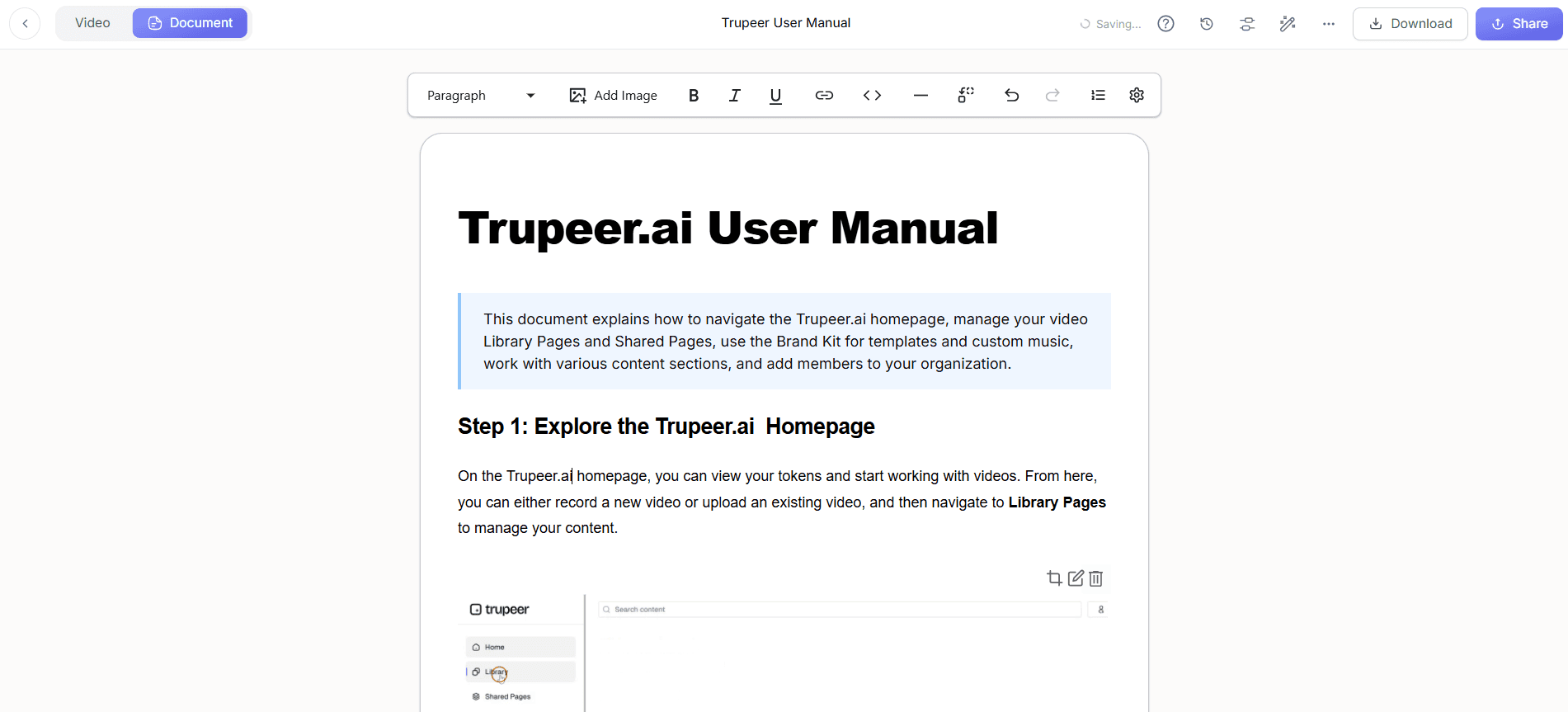
To cater to a global audience, use Trupeer's AI translation feature. Select the video or document you wish to translate, and choose from over 40 languages offered. Trupeer will not only translate the text but also sync the audio with the translated video, providing a smooth experience for non-English speakers. This step is critical for expanding your reach and ensuring that all users have access to the same quality content. The translation process is quick, typically completing within a few minutes, depending on the length of the content.
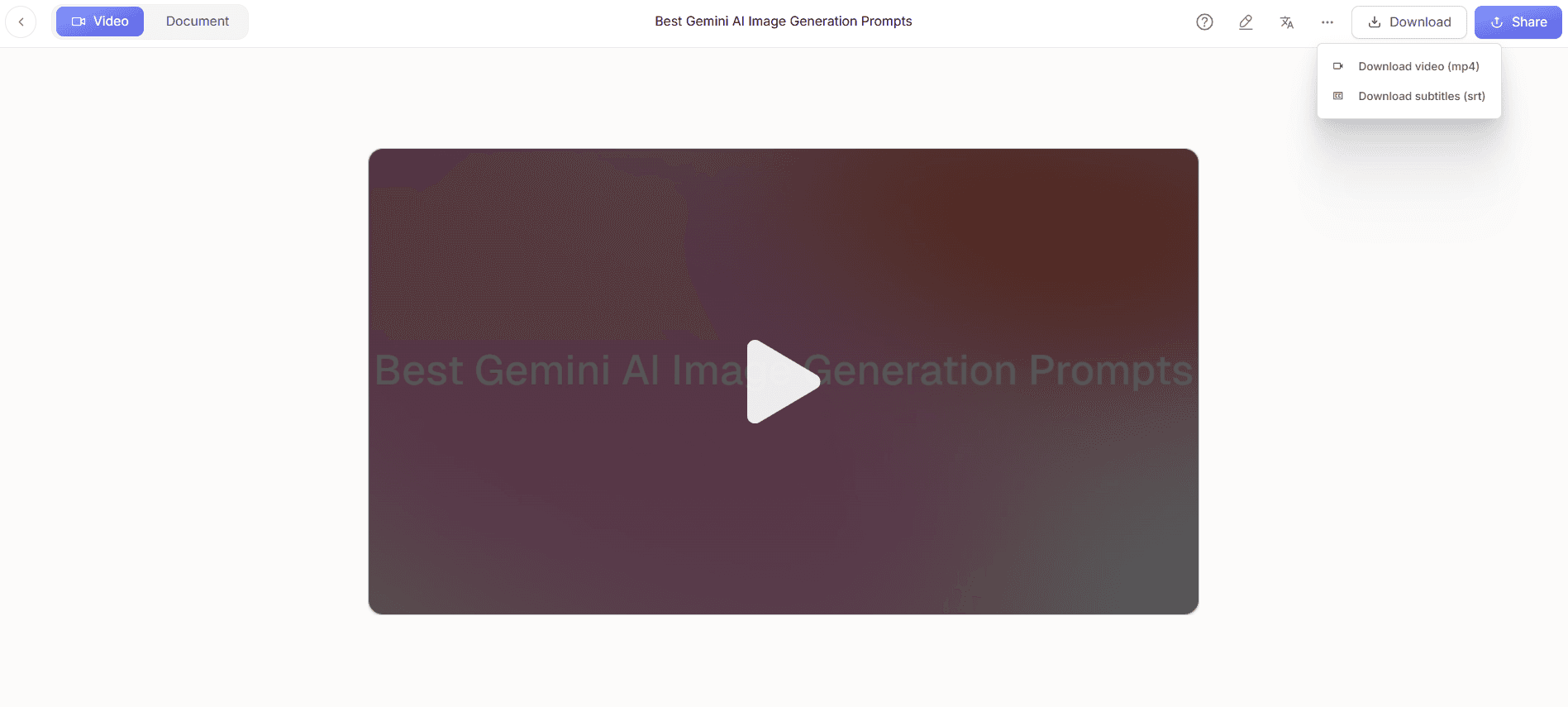
Step 5: Publish and Host Content
Once your content is ready and localized, it's time to publish it. Trupeer offers custom-domain hosting with SSO, ensuring that your self-serve hub is secure and easily accessible. Navigate to the hosting section, set up your custom domain, and configure SSO settings for smooth user access. This step not only enhances security but also provides a personalized user experience. The setup process is straightforward and can typically be completed in under an hour, making it easy to launch your hub efficiently. Teams weighing tools often start with a Loom alternatives comparison before standardizing on a workflow.
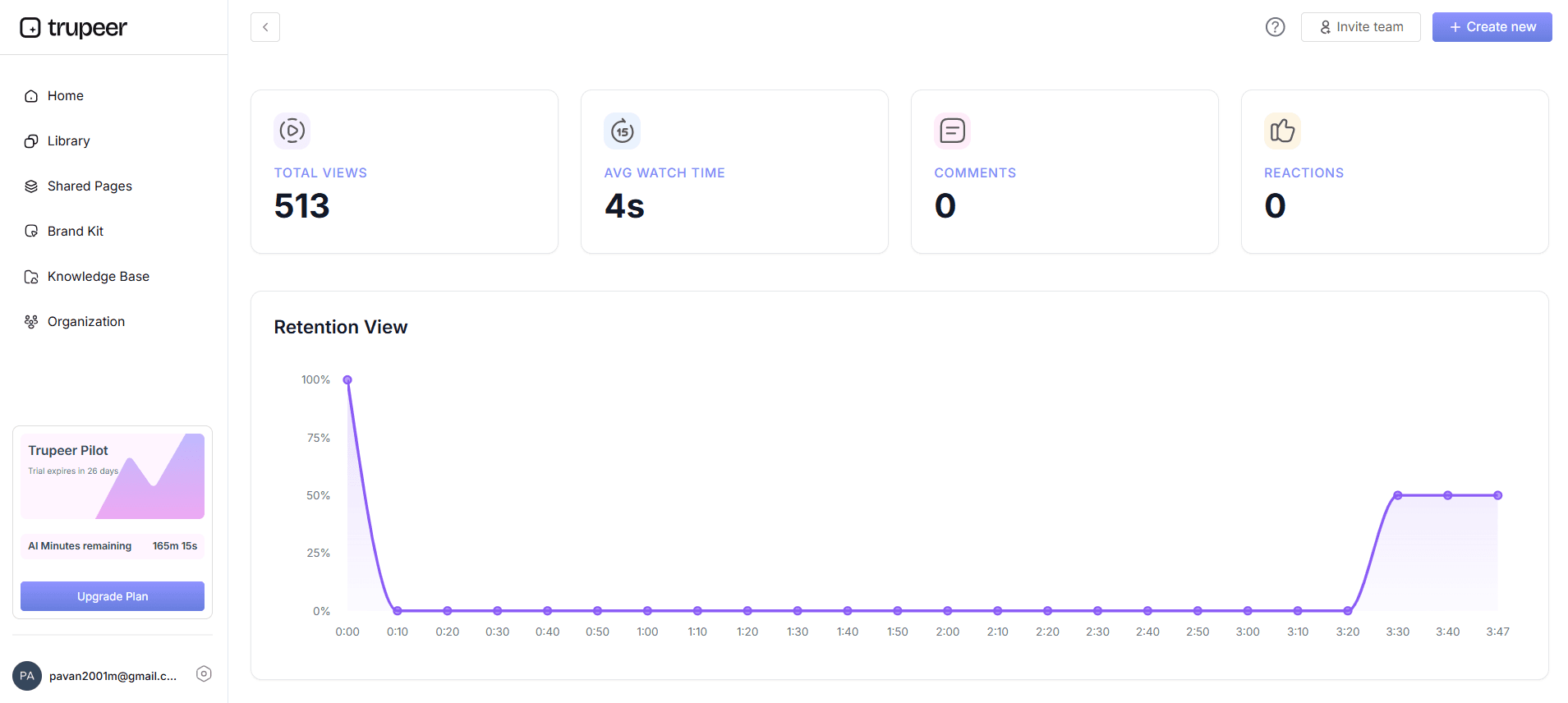
Step 6: Analyze Engagement and Optimize
After launching your hub, use Trupeer's viewer engagement analytics to track how users interact with your content. Access the analytics dashboard to view metrics such as drop-off rates and heatmaps. This data helps you understand which parts of your content are most engaging and where users lose interest. Use these insights to make informed decisions about future content updates and enhancements. Regularly reviewing this data ensures that your hub remains effective and continues to meet user needs, optimizing the overall user experience.
What tips help you prepare for a self-serve hub launch?
Successfully launching a self-serve hub involves more than just technology. Strategic planning and execution are key. Here are some tips to ensure your hub meets user expectations and enhances customer engagement.
Define clear objectives. Start by outlining what you aim to achieve with your self-serve hub. Clear goals guide content creation and feature selection.
Organize content logically. Structure your hub with intuitive navigation and search capabilities to help users find information quickly. A well-organized hub reduces user frustration.
Use engaging visuals. Incorporate videos and graphics to make content more engaging. Dynamic visuals keep users interested and improve comprehension.
Test before launch. Conduct user testing to identify potential issues. Testing ensures your hub functions as intended and provides a smooth user experience.
Offer multilingual support. Use tools like Trupeer's translation features to make your hub accessible to a global audience.
Gather user feedback. After launch, collect feedback to identify areas for improvement. Continuous improvement keeps your hub relevant and effective.
Monitor performance metrics. Regularly check analytics to understand user engagement and optimize content based on data-driven insights. ai/competitors/scribe-vs-trupeer">Scribe alternative comparison for additional insights.
Trupeer also ships a training video generator that handles this step without extra setup.
Frequently asked questions
How do I ensure my self-serve hub is user-friendly?
To ensure your self-serve hub is user-friendly, focus on intuitive design and easy navigation. Use familiar layouts and clear labels to help users find information quickly. Incorporate a solid search function and organize content into logical categories. Regular user testing can identify pain points and areas for improvement. also, using engaging multimedia content such as videos can enhance user experience and retention. By prioritizing user experience, you create a hub that is accessible and beneficial to your audience.
What content should I prioritize for my self-serve hub?
Prioritize content that addresses the most common customer questions and issues. Start with comprehensive FAQs, troubleshooting guides, and tutorials on key product features. Use data from customer service interactions to identify frequent topics. also, consider including customer onboarding materials and product updates to keep content current and relevant. Engaging multimedia, like step-by-step video guides, can also enhance understanding and engagement. Prioritizing this content ensures that your hub provides maximum value to users.
Why is localization important for a self-serve hub?
Localization is crucial for reaching a global audience and providing a personalized experience. By offering content in multiple languages, you ensure that all users, regardless of language, can access and benefit from your resources. Localization also demonstrates a commitment to inclusivity and can improve user satisfaction and retention. Trupeer's AI video translation feature simplifies this process by translating content efficiently and accurately, making it an essential component of your self-serve strategy.
Can analytics improve my self-serve hub's effectiveness?
Yes, analytics can significantly enhance your hub's effectiveness. By monitoring engagement metrics such as page views, drop-off rates, and search queries, you gain insights into user behavior and preferences. This data allows you to identify popular content and areas that may need improvement. Regular analysis enables data-driven decisions for content updates and feature enhancements, ensuring your hub remains relevant and valuable. Analytics are a powerful tool for optimizing user experience and achieving your hub's objectives.
Does Trupeer support integration with other tools?
Yes, Trupeer supports integration with various tools to enhance your hub's functionality. This includes integration with platforms like HeyGen for custom avatar creation and MCP integration for AI agents to query your video library. These integrations expand the capabilities of your self-serve hub, providing users with comprehensive and interactive experiences. By using these integrations, you can tailor your hub to better meet the needs of your audience and simplify your content management processes.
Related Blogs