Trupeer Blog
Release Notes Automation Tools: What Product Teams Use in 2025
In 2025, product teams are under immense pressure to deliver updates and new features rapidly while maintaining high-quality documentation. Release notes are critical for communicating these changes, yet many teams struggle to keep them accurate and up-to-date. A product manager at a mid-sized B2B SaaS company might oversee 10 to 15 product updates monthly, each requiring detailed release notes to ensure users understand the changes. The stakes are high, customers rely on these notes for smooth integration and to avoid disruptions. According to industry reports,
87% of users are more likely to upgrade if release notes are clear and comprehensive.
With automation tools becoming more sophisticated, product teams can now automate much of this process, freeing up time for other strategic tasks. These tools assist not just in creating the release notes but also in updating them as the product evolves. This blog aims to explore the tools available in 2025, their tradeoffs, and how Trupeer stands out among them. For a deeper look, our guide on client onboarding automation tools comparison covers the adjacent playbook.
Why does release notes automation matter?
Release notes automation is crucial for product teams striving to maintain efficiency and accuracy. In the fast-paced software development world, manually updating release notes can lead to errors and inconsistencies, impacting user experience and product adoption. Product managers, developers, and customer support staff all benefit from a simplified process that ensures clarity and up-to-date information. Automated release notes ensure that documentation keeps pace with the rapid development cycles typical landscape. This not only saves time but also reduces the cognitive load on team members who might otherwise spend hours manually updating documents.
From an operations workflow perspective, automating release notes synchronizes different departments, ensuring everyone is on the same page. Teams can focus on strategic tasks like feature development or customer engagement without getting bogged down in documentation details. also, automated release notes can drive customer satisfaction and retention. Users appreciate transparency and timely updates, which can directly influence their loyalty to the product. In essence, release notes automation plays a critical role in a product's success, impacting everything from internal efficiencies to customer perceptions.
What are the benefits of release notes automation?
Automating release notes offers multiple advantages that can significantly enhance product team productivity and user satisfaction.
Time Savings. Automating release notes frees up significant time for product managers and developers, allowing them to focus on innovation rather than routine documentation tasks.
Consistency and Accuracy. Automated tools ensure that release notes are consistently formatted and accurate, reducing the risk of errors that can occur with manual updates.
Improved User Experience. Clear and consistent release notes enhance the user experience, making it easier for customers to understand updates and adapt to changes, as seen in client onboarding automation platform use cases.
Enhanced Collaboration. By using AI-powered video tool, teams can collaborate more effectively, as everyone has access to the same up-to-date information.
Scalability. For companies experiencing rapid growth, automated release notes can easily scale with the product, ensuring documentation is maintained without additional overhead.
Compliance and Audit Trail. Automated tools provide a reliable audit trail, which is crucial for compliance purposes, ensuring that all changes are tracked and documented.
Which Trupeer features help you automate release notes?
Trupeer offers several innovative features that make automating release notes a smooth experience. From capturing screen recordings to generating documentation, Trupeer's capabilities are designed to simplify your workflow.
Automatic SOP generation from any recording
Trupeer's capability to automatically generate SOPs from any recording is a big shift for release notes automation. This feature allows product teams to convert video content directly into structured documentation, saving hours that would otherwise be spent manually transcribing and formatting. The resultant SOPs are ready for editing and export, ensuring that your release notes are both comprehensive and professional. With this tool, you can maintain a solid documentation trail that keeps pace with product updates, simplifying the entire process from capture to publication.
Auto-updating documentation tied to the underlying recording
The auto-updating documentation feature ties directly into Trupeer's recordings, ensuring that any changes made in the video are reflected in the corresponding documentation. This dynamic linking means that your release notes are always up-to-date without requiring manual intervention. It significantly reduces the effort involved in maintaining consistent documentation across multiple versions of a product. Teams can focus on strategic priorities, knowing that their documentation is accurate and aligned with the latest product iterations.
AI-searchable knowledge base with timestamp deep-links
Trupeer's AI-searchable knowledge base is a powerful tool for organizing and accessing release notes. By indexing every recording with timestamp-level deep links, users can quickly find specific information within a video, enhancing both internal and external user experiences. This feature ensures that all team members and customers have immediate access to relevant content, which is crucial for understanding complex updates and features.
AI translation into 40+ languages with lip-sync
Localization is critical for global product teams, and Trupeer's AI translation capability addresses this need effectively. With support for over 40 languages and lip-sync technology, your release notes can be translated quickly and accurately, ensuring that international users receive the same high-quality information as your primary audience. This feature is especially beneficial for companies looking to expand their reach, as it eliminates language barriers and builds a more inclusive user environment.
Automatic filler-word removal
In the area of release notes automation, clarity is key. Trupeer's automatic filler-word removal takes raw recordings and enhances them by eliminating unnecessary "ums" and "ahs." This feature ensures that your final documentation is concise and professional, reflecting well on your brand. By simplifying the editing process, teams can produce polished release notes in less time, which is particularly valuable for maintaining a consistent release schedule.
How do you automate release notes step by step with Trupeer?
Step 1: Capture Your Screen
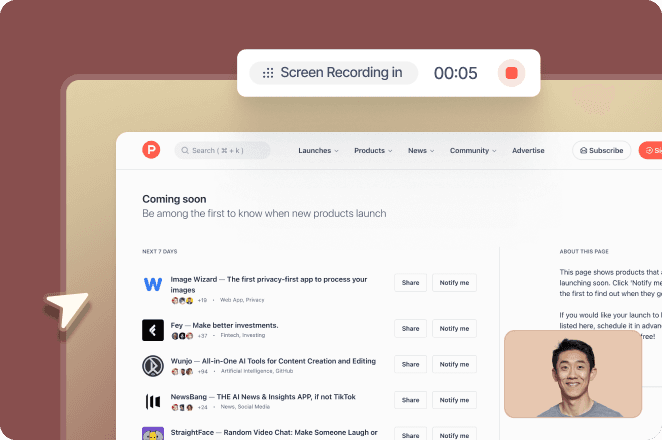
Begin by using Trupeer's AI screen recording with auto-zoom and click detection. This tool allows you to capture your product updates in real-time, highlighting key interactions automatically. Simply open the browser-based recorder or desktop app, and start recording your screen as you navigate through the new features or changes. The auto-zoom feature ensures that important areas of the screen are focused and clearly visible, while click detection highlights user interactions. This initial recording typically takes as long as your product walkthrough, which might be anywhere from 5 to 20 minutes, depending on complexity.
Step 2: Enhance the Recording
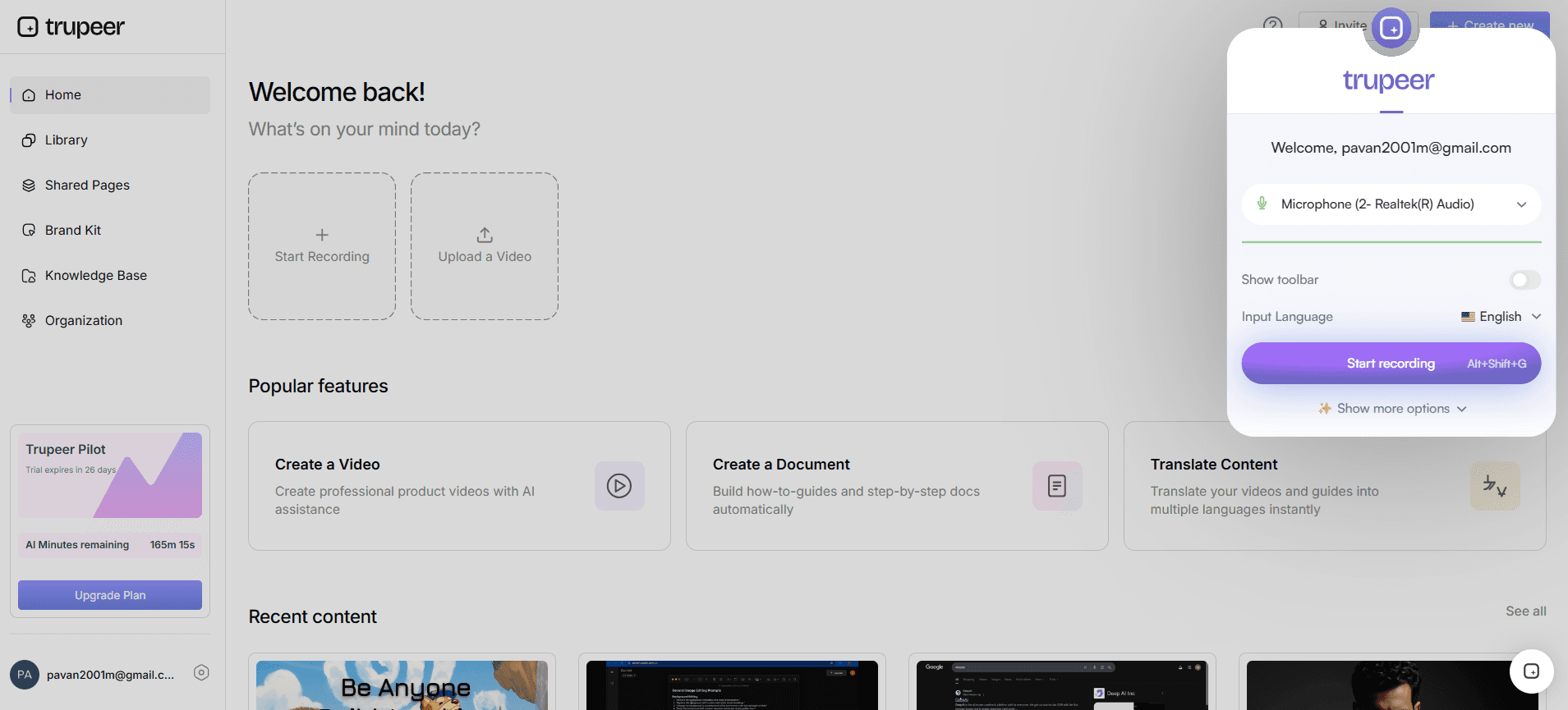
Once the recording is complete, use Trupeer's AI voiceover in 65+ natural voices to add narration. Choose a voice that best matches your brand's tone, and adjust the pace and tone for clarity. If you need a more personalized touch, you can use AI voice cloning from a short sample of your voice. This step transforms your raw recording into a polished presentation. The enhancement process is typically quick, taking only a few minutes to apply the voiceover and any optional AI avatars or talking-head videos for a more engaging experience.
Step 3: Generate Automatic SOPs
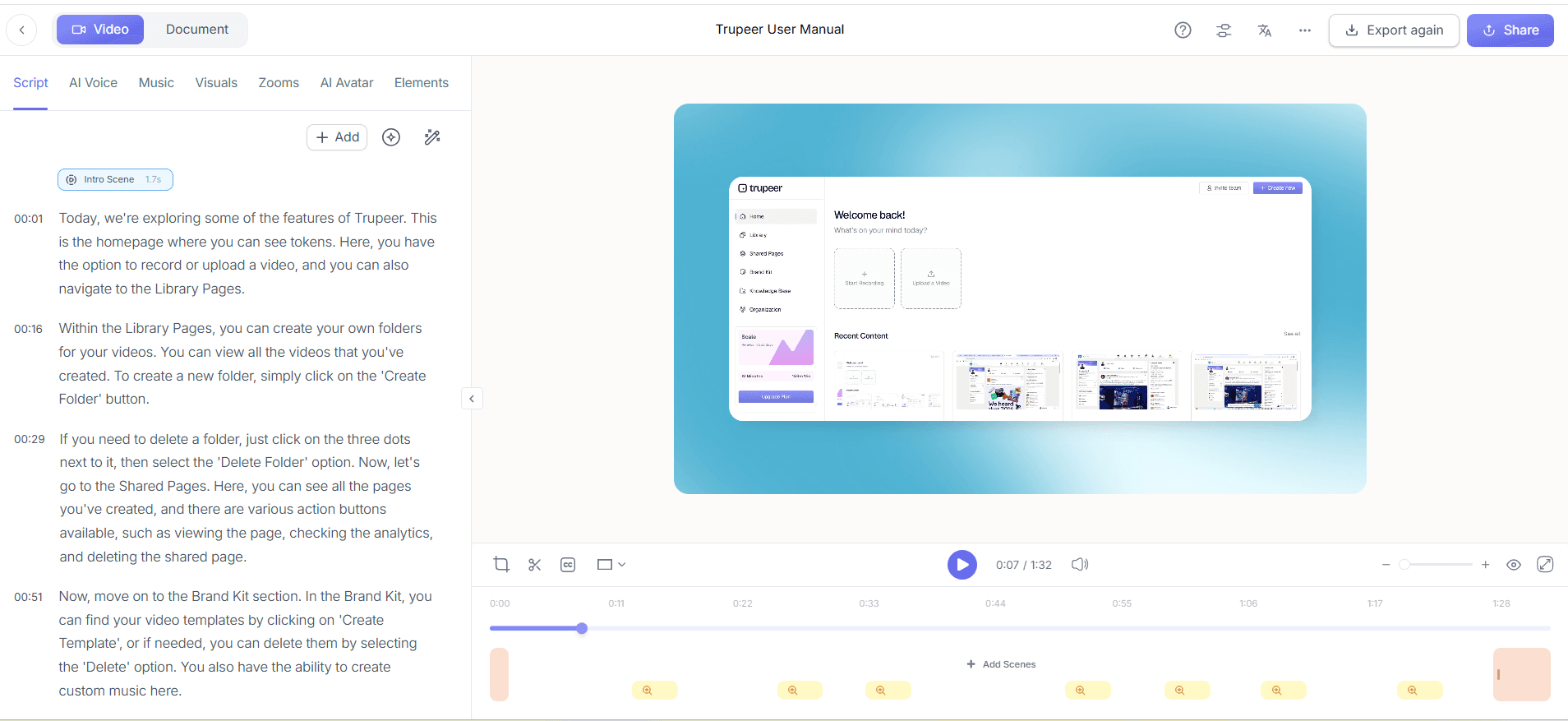
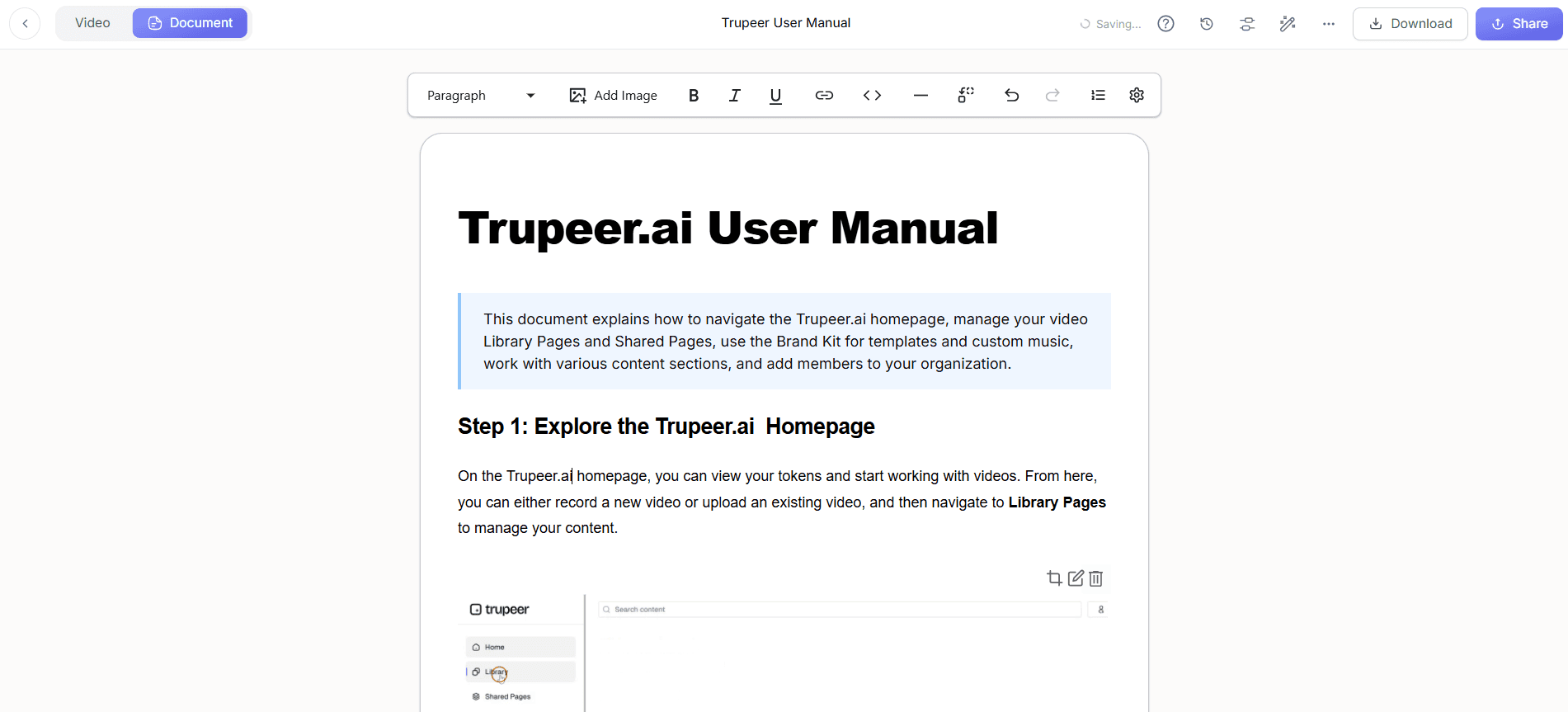
With your enhanced video ready, use Trupeer's automatic SOP generation to create a detailed document. This feature converts your video into an edit-ready SOP, which includes screenshots, transcriptions, and annotations. Simply click the "Generate SOP" button, and Trupeer will produce a comprehensive document that outlines each step demonstrated in your video. You can review and make any necessary edits before saving the document. The SOP generation process is efficient, usually taking less than 10 minutes, allowing you to quickly move on to the next steps in your workflow.
Step 4: Translate for Global Audiences
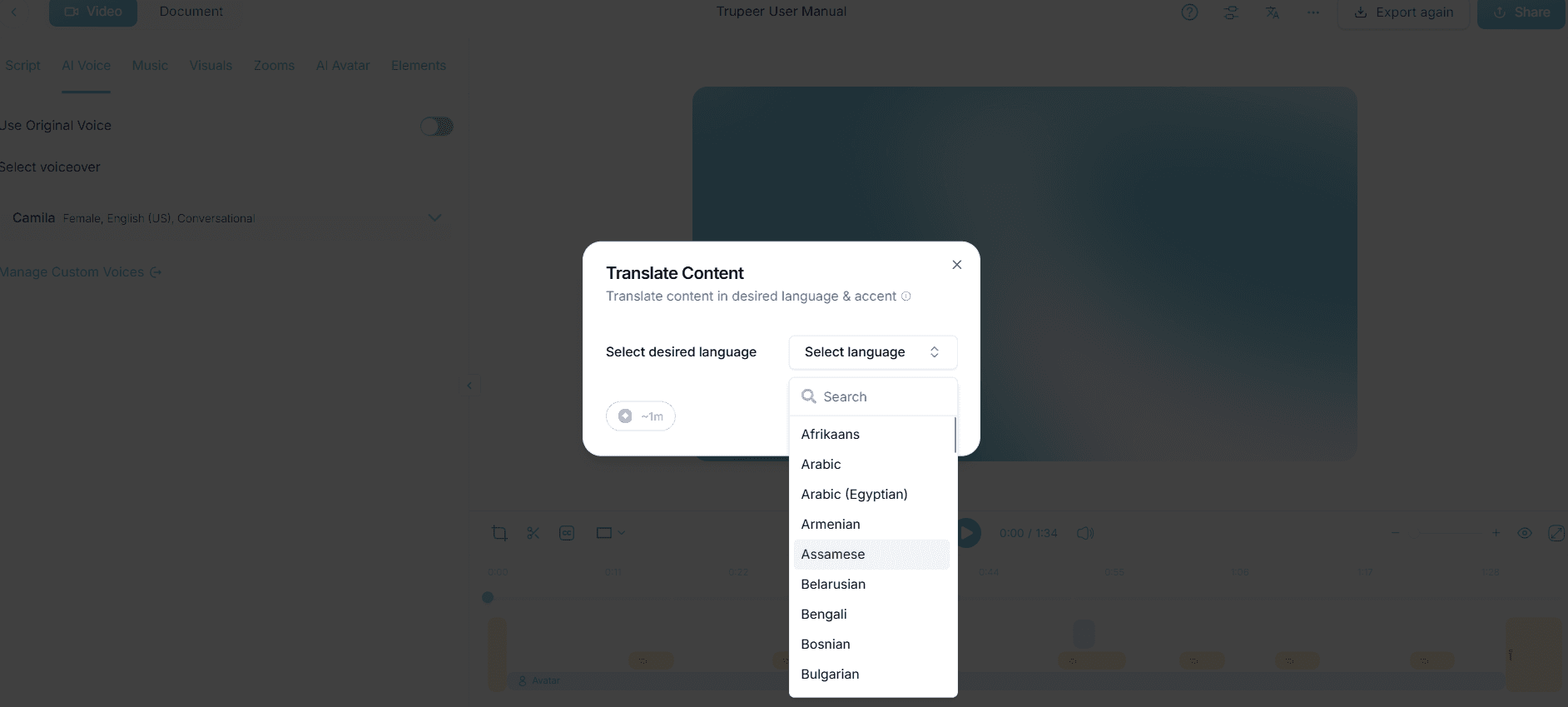
Next, use Trupeer's AI translation into 40+ languages with lip-sync to make your release notes accessible to a global audience. Select the languages needed for your user base, and Trupeer will automatically translate the content, syncing the audio with lip movements for a natural appearance. This ensures that non-English speaking users receive the same quality information. The translation process is swift, typically requiring just a few minutes per language, and significantly expands your document's reach without manual translation efforts.
Step 5: Create an AI-Searchable Knowledge Base Entry
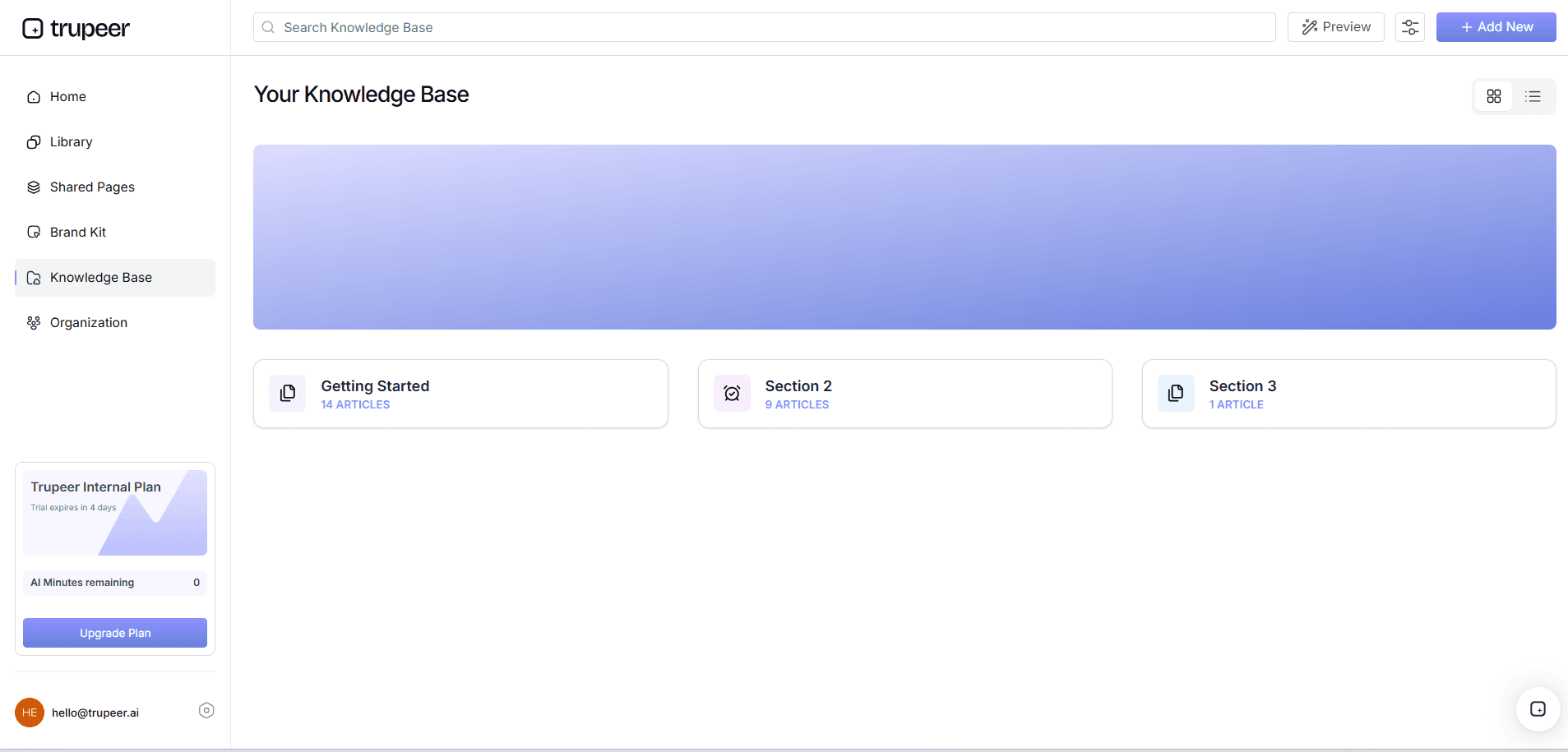
Now, integrate your documentation into Trupeer's AI-searchable knowledge base. This tool indexes every recording, creating timestamp-level deep links for easy navigation. Upload your video and associated SOP document to the knowledge base, ensuring users and team members can quickly locate specific information. This feature is particularly useful for complex updates, as it allows users to jump directly to the sections of the video that are most relevant to them. The indexing process is automatic and usually completes within a few minutes.
Step 6: Distribute and Monitor Engagement
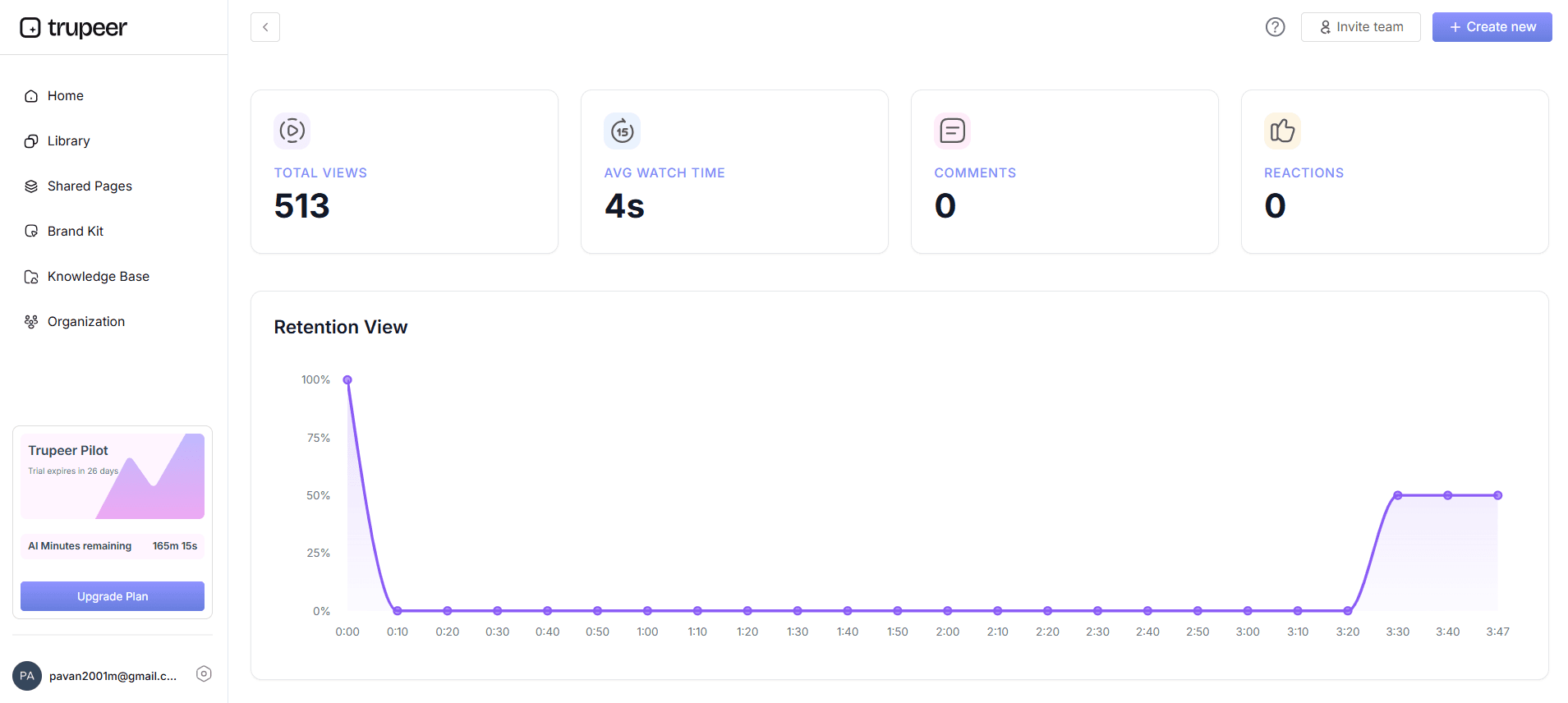
Finally, distribute your release notes using Trupeer's shared pages or client-facing portals. This feature allows you to host your documentation on a custom-domain with SSO, providing smooth access to your users. Monitor engagement through Trupeer's viewer analytics, which tracks user interactions, drop-offs, and heatmaps. This data helps you understand which parts of your release notes are most engaging or problematic, enabling continuous improvement. Typically, setting up distribution channels and reviewing analytics takes around 15-20 minutes, providing valuable insights into user behavior.
What tips help you automate release notes?
Automating release notes can significantly enhance your team's efficiency and user satisfaction. Here are some practical tips to maximize the effectiveness of your automation process using Trupeer.
Use AI screen recording for clarity. By using Trupeer's AI screen recording, you ensure that all critical interactions are highlighted, improving documentation clarity.
Standardize your voiceovers. Choose a consistent AI voice to maintain brand consistency across all your release notes. Trupeer's voice cloning can help with this.
use auto-updating documentation. This feature ensures your documents are always current with the latest product updates, reducing maintenance overhead.
Expand reach with AI translation. Make sure your release notes are accessible globally by translating them into multiple languages using Trupeer's translation tool.
Integrate with a knowledge base. Use an AI-searchable knowledge base to centralize your documentation, making it easily accessible for users and team members.
Monitor analytics for improvement. Use viewer engagement analytics to identify which parts of your release notes are most effective and which need refinement.
Ensure consistent visual branding. Apply Trupeer's brand kits and branded templates to maintain a cohesive look and feel across all documentation.
Teams weighing tools often start with a Loom alternatives comparison before standardizing on a workflow.
Frequently asked questions
How do release notes automation tools improve efficiency?
Release notes automation tools improve efficiency by reducing the time and effort required to create and maintain documentation. By automating tasks such as screen recording, voiceover, and translation, product teams can focus on development and strategic initiatives instead of manual documentation tasks. These tools ensure consistency and accuracy, which minimizes errors and rework. also, features like auto-updating documentation and AI-searchable knowledge bases facilitate quick access to information, further simplifying operations and enhancing team productivity.
What features should I look for in a release notes automation tool?
When selecting a release notes automation tool, look for features such as automated screen capture, AI voiceover, and translation capabilities. Tools that offer auto-updating documentation tied to recordings are beneficial for maintaining accuracy. Also, consider the availability of a searchable knowledge base for easy content access. Trupeer, for example, provides these features along with viewer engagement analytics to track how users interact with your release notes, allowing for data-driven improvements.
Can release notes automation tools integrate with existing software?
Yes, many release notes automation tools are designed to integrate with existing software ecosystems. They often provide APIs or direct integrations with popular platforms like GitHub, Jira, or Slack, enabling smooth data flow and communication across tools. Trupeer, for instance, allows integration with AI agents, making it easier to incorporate release notes into your current workflows. Integration capabilities ensure that teams can use existing systems while enhancing their documentation processes.
Why is localization important in release notes automation?
Localization is crucial because it ensures that all users, regardless of their language, can understand the product updates and use new features effectively. By providing release notes in multiple languages, you enhance user satisfaction and product adoption rates. Trupeer's AI video translation feature supports over 40 languages, including lip-sync, making it easier to deliver consistent and high-quality information to a global audience, ultimately broadening your product's reach and impact.
Does Trupeer provide analytics for release notes engagement?
Yes, Trupeer provides comprehensive analytics for release notes engagement. These analytics include viewer engagement metrics, drop-off points, and heatmaps, which help you understand how users interact with your documentation. By analyzing this data, you can identify areas for improvement and ensure your release notes are effective in conveying the intended information. The insights gained from these analytics enable teams to make informed decisions and continuously enhance their documentation strategy.

