Trupeer Blog
Resumir
Imagine que está à beira de lançar uma funcionalidade inovadora que pode redefinir a experiência do utilizador. Os programadores trabalharam incansavelmente, a equipa de marketing está pronta para a anunciar por todo o lado e os comerciais mal podem esperar para a demonstrar a potenciais clientes. Mas há um problema: a sua documentação não está pronta. A diferença entre o lançamento da sua funcionalidade e a documentação que a acompanha deixou a sua equipa em correria, e os utilizadores ficam sem saber.
A Gartner relata que 54% dos clientes sentem frustração quando as novas funcionalidades não têm documentação adequada.
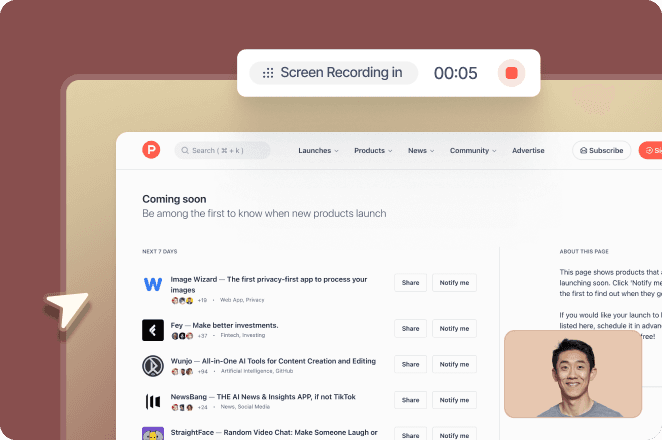
Esta lacuna não só dificulta a adoção como também sobrecarrega a sua equipa de suporte com um aumento de pedidos. Fechar esta lacuna é crucial para qualquer equipa de produto que pretenda manter o ritmo e a satisfação dos utilizadores. Não se trata apenas de velocidade; trata-se de sincronizar todos os componentes da sua estratégia de lançamento para garantir transições suaves e capacitar os utilizadores. É exatamente aqui que a documentação por cenários ramificados se torna útil e é o tipo de conteúdo que a Trupeer consegue gerar diretamente a partir de uma simples gravação de ecrã.
Reduzir a diferença na documentação não é apenas um desafio técnico; é uma prioridade estratégica que exige colaboração entre departamentos. Gestores de produto, autores técnicos e programadores têm todos um papel a desempenhar. Ao alinharem os seus esforços, as equipas podem garantir que a documentação é disponibilizada em simultâneo com as novas funcionalidades, melhorando a compreensão dos utilizadores e a satisfação dos clientes. Para empresas como a sua, onde a inovação é rápida e a concorrência é feroz, dominar este processo pode ser uma grande mudança. Se se vê constantemente a tentar pôr-se em dia, é altura de repensar a sua abordagem e adotar ferramentas que lhe permitam publicar documentação com funcionalidades sem esforço.
Para enfrentar este desafio, as empresas estão a recorrer a ferramentas avançadas e a processos simplificados. Uma análise mais atenta a soluções como colossyan features pricing mostra como a integração de plataformas baseadas em IA pode facilitar atualizações de documentação em tempo real, mantendo o ritmo dos lançamentos de funcionalidades. Com as estratégias e ferramentas certas, pode garantir que a sua documentação não é apenas uma reflexão tardia pós-lançamento, mas sim um componente central da sua estratégia de produto.
Porque é que reduzir a diferença na documentação é importante?
A diferença na documentação é mais do que um mero incómodo; é um obstáculo à adoção e à satisfação dos utilizadores. Quando os utilizadores encontram novas funcionalidades sem orientações claras, a frustração pode traduzir-se em menor envolvimento e num aumento de pedidos ao suporte. Para gestores de produto, isto significa não só responder às preocupações dos utilizadores, mas também gerir as partes interessadas internas que esperam lançamentos sem problemas. As lacunas na documentação podem levar a desalinhamentos entre equipas, causando atrasos e falhas de comunicação. num mercado em que cada dia conta, estes contratempos podem corroer a vantagem competitiva.
Para programadores e autores técnicos, a diferença na documentação interrompe o fluxo de trabalho e a eficiência. Os programadores podem acabar por explicar repetidamente funcionalidades que deveriam ter sido cobertas na documentação, enquanto os autores técnicos enfrentam pressão para produzir conteúdos de alta qualidade com prazos apertados. Esta tensão pode levar a burnout e rotatividade, complicando ainda mais o processo de documentação. Ao integrar ferramentas de documentação no fluxo de trabalho de operações, as equipas podem melhorar a colaboração e garantir que a documentação evolui em paralelo com o desenvolvimento do produto, reduzindo atritos e aumentando a eficiência global.
Além disso, reduzir a diferença na documentação é essencial para manter a reputação da marca e a lealdade dos clientes. As empresas conhecidas por disponibilizarem documentação clara e atempada têm maior probabilidade de reter utilizadores e atrair novos. Um processo de documentação simplificado não só apoia os utilizadores atuais como também funciona como ferramenta de marketing, evidenciando o compromisso da empresa com a transparência e a capacitação dos utilizadores. Ao abordar a diferença na documentação, as empresas podem criar uma cultura de melhoria contínua e inovação, posicionando-se como líderes nos seus setores.
Quais são os benefícios de reduzir a diferença na documentação?
Reduzir a diferença na documentação traz inúmeras vantagens que podem transformar a sua estratégia de produto e a experiência do utilizador. Aqui estão alguns benefícios-chave:
Maior satisfação do utilizador. A documentação atempada permite que os utilizadores compreendam e utilizem plenamente as novas funcionalidades, conduzindo a uma experiência mais satisfatória e reduzindo a frustração. Um gerador de documentação em IA abrangente pode garantir que os utilizadores têm acesso à informação de que precisam, quando precisam.
Menor carga para o suporte. Ao disponibilizar documentação clara e precisa no lançamento, minimiza o número de pedidos de suporte relacionados com novas funcionalidades, libertando a sua equipa para se concentrar em questões mais complexas.
Taxas de adoção mais rápidas. Quando os utilizadores têm acesso imediato a documentação bem escrita, conseguem adotar rapidamente as novas funcionalidades, melhorando a experiência geral e aumentando o envolvimento com o produto.
processos internos simplificados. Ao alinhar os prazos de documentação e de lançamento de funcionalidades, as equipas podem trabalhar com mais eficiência, reduzindo gargalos e melhorando a comunicação entre departamentos.
Reputação de marca reforçada. As empresas conhecidas por disponibilizarem documentação atempada e precisa são vistas como mais fiáveis e orientadas para o utilizador, o que pode melhorar a perceção da marca e a lealdade dos clientes.
Mais oportunidades de vendas. Uma plataforma de geração de vídeo pode criar conteúdos envolventes e informativos que destacam as novas funcionalidades, ajudando as equipas de vendas a ilustrar o valor e a fechar negócios com mais eficácia.
Que funcionalidades da Trupeer ajudam a reduzir a diferença na documentação?
A Trupeer oferece um conjunto de funcionalidades concebidas para colmatar a diferença entre o lançamento de uma funcionalidade e a documentação, garantindo que os seus utilizadores têm a informação de que precisam desde o primeiro dia. Veja como capacidades específicas da Trupeer podem ajudar:
Gravação de ecrã com IA com auto-zoom e deteção de cliques
Esta funcionalidade permite-lhe capturar walkthroughs detalhados de novas funcionalidades sem exigir uma introdução manual extensa. Ao detetar automaticamente os cliques e ajustar o nível de zoom, cria gravações polidas e profissionais que demonstram claramente a funcionalidade. Esta capacidade é essencial para produzir rapidamente documentação visual que pode ser partilhada com utilizadores e equipas internas. As gravações podem ser integradas facilmente na sua plataforma de documentação em IA, proporcionando aos utilizadores uma experiência de aprendizagem interativa que vai além da documentação tradicional baseada apenas em texto.
Geração automática de SOP a partir de qualquer gravação
A capacidade da Trupeer para gerar automaticamente procedimentos operacionais padrão (SOPs) a partir de gravações é uma grande mudança para as equipas de documentação. Esta funcionalidade permite-lhe converter conteúdo de vídeo em SOPs baseados em texto, prontos para serem editados e exportados em vários formatos. Garante que a documentação é consistente e corresponde à experiência real do utilizador, reduzindo discrepâncias entre guias escritos e a funcionalidade do produto. Ao incorporar funcionalidades de base de conhecimento em vídeo, pode disponibilizar aos utilizadores recursos tanto visuais como textuais, melhorando a compreensão e o envolvimento.
Narração por voz com IA em 65+ vozes naturais
Com a Trupeer, adicionar narrações profissionais às suas gravações é simples e eficaz. Escolha entre mais de 65+ vozes naturais para narrar os seus vídeos, garantindo que a sua documentação não é apenas informativa, mas também envolvente. Esta capacidade é particularmente útil para criar conteúdos acessíveis que se adaptam a preferências de utilizadores diversas. Quer o seu público prefira aprendizagem visual ou auditiva, a funcionalidade de narração por voz da Trupeer permite-lhe responder às necessidades sem custos adicionais de produção. Ao integrar isto na sua estratégia de documentação, pode aumentar o envolvimento dos utilizadores e a retenção de informação.
Documentação com atualização automática ligada à gravação subjacente
Esta funcionalidade garante que a sua documentação está sempre atualizada e alinhada com as mais recentes atualizações da funcionalidade. À medida que as gravações são atualizadas, a documentação também é, eliminando o risco de informação desatualizada confundir os seus utilizadores. Esta capacidade é crucial para manter a exatidão e a credibilidade na sua documentação. Ao utilizar a ferramenta de documentação em IA para documentação interna externa da Trupeer, pode simplificar o seu processo de documentação e garantir que os utilizadores têm sempre acesso à informação mais relevante.
Base de conhecimento pesquisável por IA com ligações profundas por timestamp
A base de conhecimento pesquisável por IA da Trupeer é uma ferramenta poderosa para melhorar a experiência do utilizador e reduzir a diferença na documentação. Ao indexar cada gravação com ligações profundas ao nível do timestamp, os utilizadores conseguem aceder rapidamente à informação específica de que precisam, quando precisam. Esta funcionalidade não só melhora a satisfação do utilizador como também reduz o tempo gasto a lidar com documentação extensa. Para as equipas, isto significa menos tempo a atualizar e organizar conteúdos, permitindo-lhes focar-se na criação de novos recursos valiosos. A ferramenta de documentação em IA para documentação interna externa garante que as partes interessadas internas e externas têm acesso simplificado a informação crítica.
Como reduzir a diferença na documentação passo a passo com a Trupeer?
Passo 1: Capturar a funcionalidade
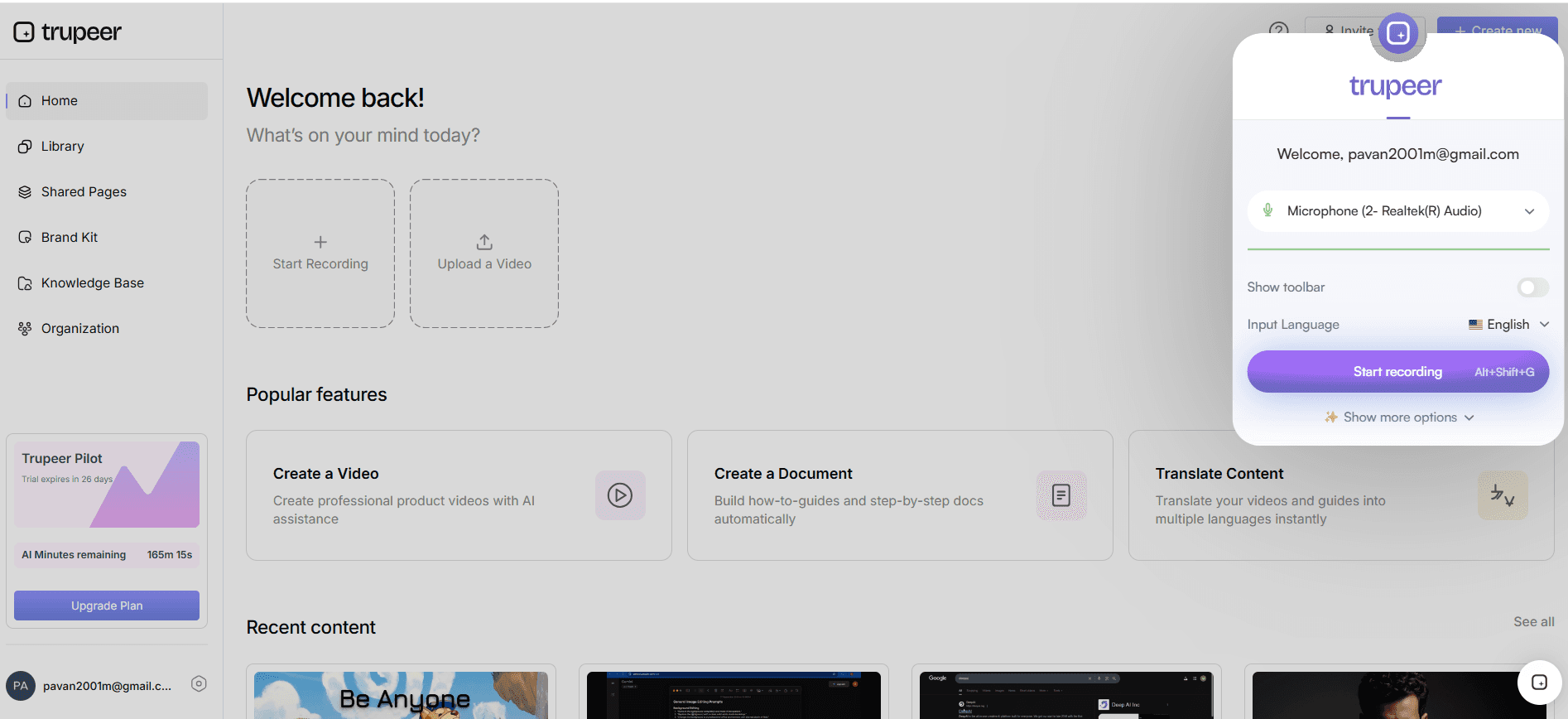
Comece por utilizar a gravação de ecrã com IA da Trupeer com auto-zoom e deteção de cliques. Abra a funcionalidade que pretende documentar e inicie a gravação. A Trupeer deteta automaticamente os cliques e aproxima-se deles, criando um walkthrough com aspeto profissional sem ajustes manuais. Esta funcionalidade garante que captura todas as ações essenciais, proporcionando aos seus utilizadores uma compreensão clara da funcionalidade. O processo de gravação é fluido e terá um vídeo completo pronto em apenas alguns minutos, dependendo da complexidade da funcionalidade. Depois de gravar, guarde o seu vídeo na plataforma da Trupeer para processamento adicional.
Passo 2: Gerar documentação
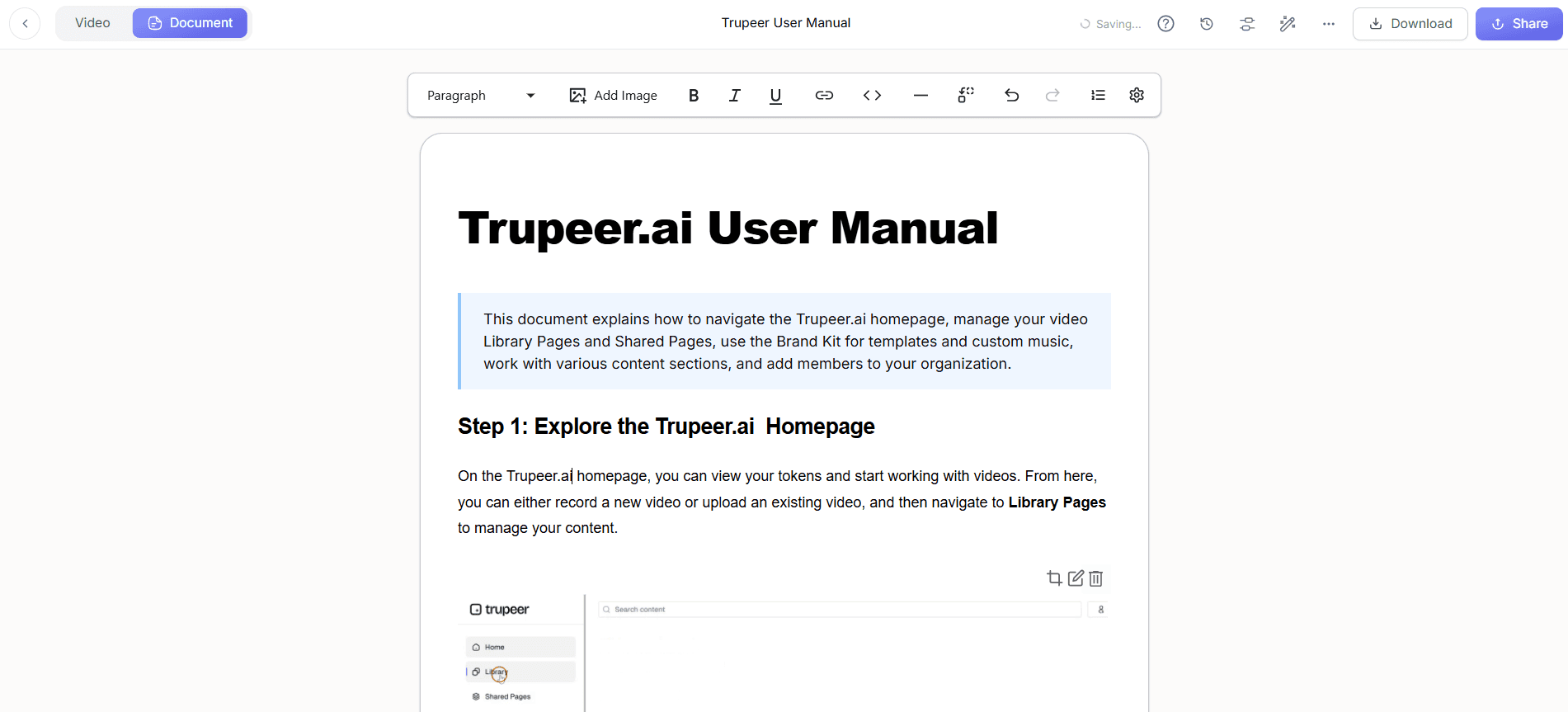
Em seguida, utilize a geração automática de SOP a partir da sua gravação. Depois de capturar a funcionalidade, selecione a opção para gerar um SOP diretamente a partir do vídeo. A Trupeer irá converter o conteúdo visual num documento de texto editável, descrevendo cada passo apresentado na gravação. Este documento pode servir como rascunho para a sua documentação final. O processo demora normalmente apenas alguns minutos e pode fazer quaisquer edições necessárias diretamente na plataforma. Este passo garante que a sua documentação é abrangente e corresponde exatamente à funcionalidade.
Passo 3: Melhorar com narração por voz com IA
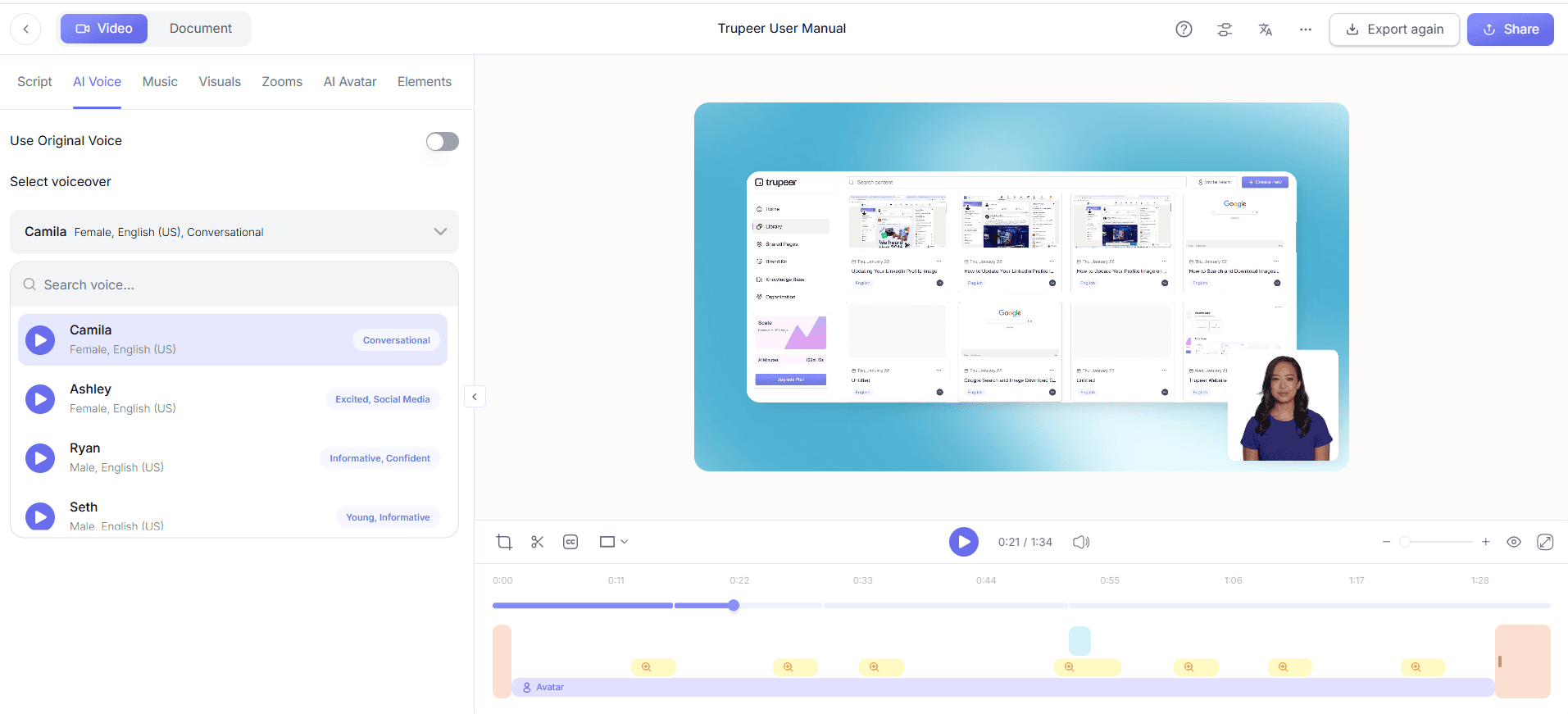
Para tornar a sua documentação mais envolvente, adicione uma narração por voz com IA utilizando a Trupeer. Escolha entre mais de 65+ vozes naturais para narrar o seu vídeo. Esta funcionalidade é particularmente útil para utilizadores que preferem aprendizagem auditiva. Basta selecionar a voz, ajustar a velocidade e o tom, se necessário, e aplicá-los à sua gravação. O processo de narração por voz é rápido, muitas vezes demorando menos de cinco minutos. Esta melhoria garante que a sua documentação se adapta a preferências de utilizadores diferentes, tornando-a mais acessível e envolvente. As equipas que avaliam ferramentas muitas vezes começam com uma comparação de alternativas ao Loom antes de padronizarem um fluxo de trabalho.
Passo 4: Sincronizar atualizações
Utilize a funcionalidade de documentação com atualização automática da Trupeer. Depois de gerar a sua documentação, certifique-se de que está ligada à gravação subjacente para que quaisquer atualizações futuras à funcionalidade sejam refletidas automaticamente na documentação. Esta sincronização é crucial para manter a exatidão ao longo do tempo. Com esta funcionalidade, cada atualização que fizer à gravação é espelhada automaticamente na documentação, eliminando atualizações manuais e garantindo que os utilizadores têm sempre acesso à informação mais atual.
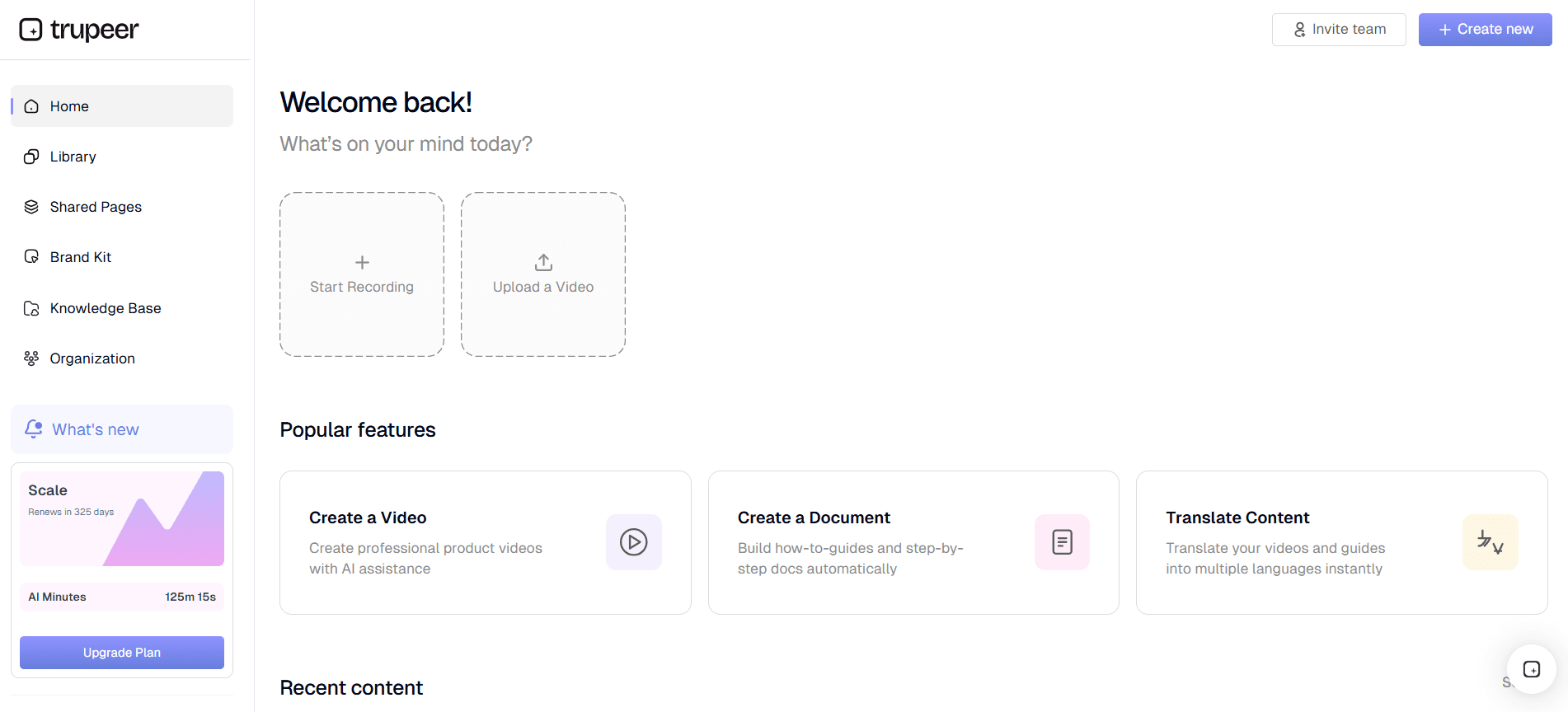
Passo 5: Criar uma entrada na base de conhecimento
Integre a sua documentação na base de conhecimento pesquisável por IA da Trupeer. Faça upload do seu tutorial e da sua documentação para a plataforma e a Trupeer irá indexá-los com ligações profundas ao nível do timestamp. Isto permite que os utilizadores pesquisem funcionalidades específicas e avancem diretamente para a parte relevante da documentação ou do vídeo. Este passo é vital para organizações grandes, onde os utilizadores procuram informação específica rapidamente. A base de conhecimento pesquisável reduz o tempo gasto a lidar com conteúdos, melhorando a experiência e a satisfação do utilizador.
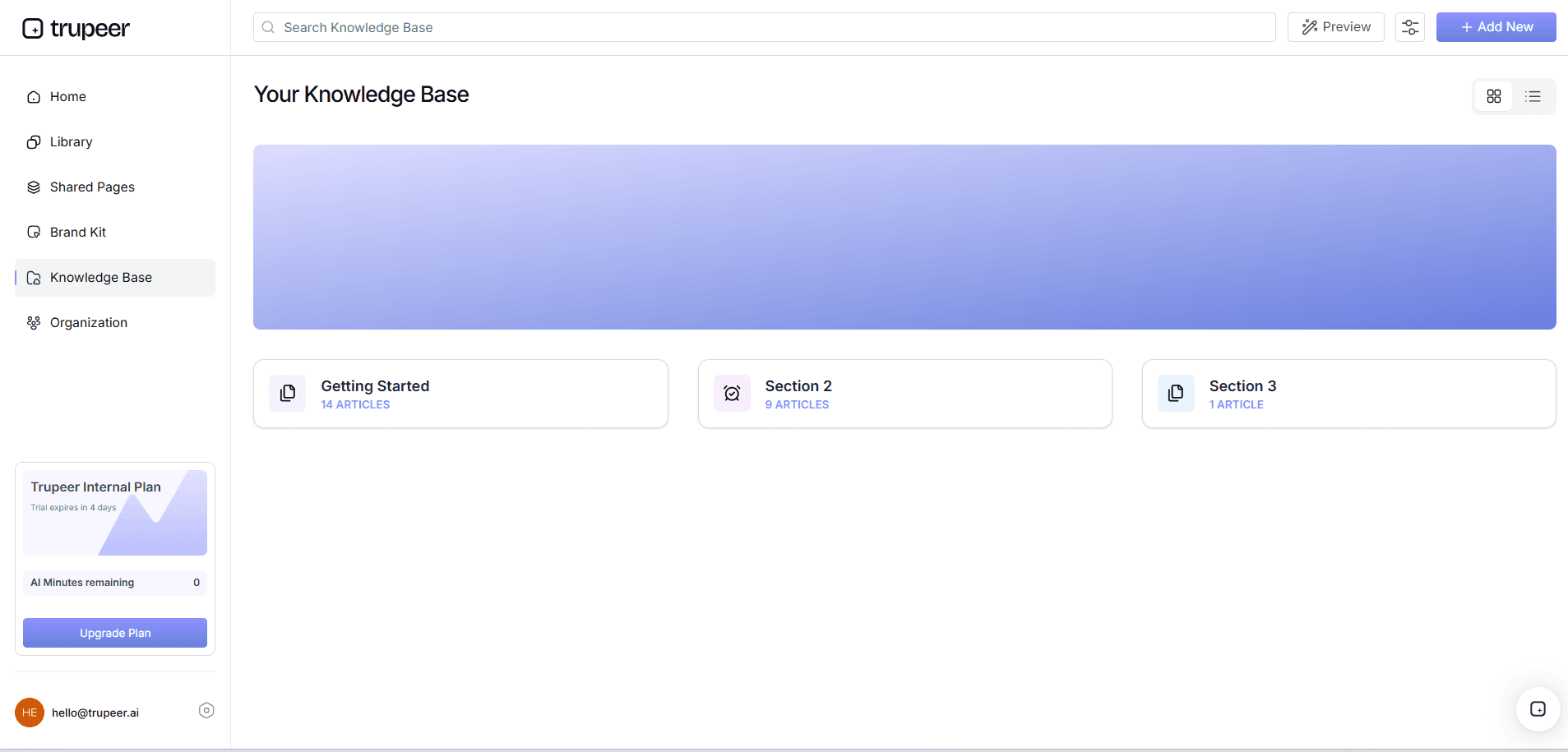
Passo 6: Exportar e distribuir
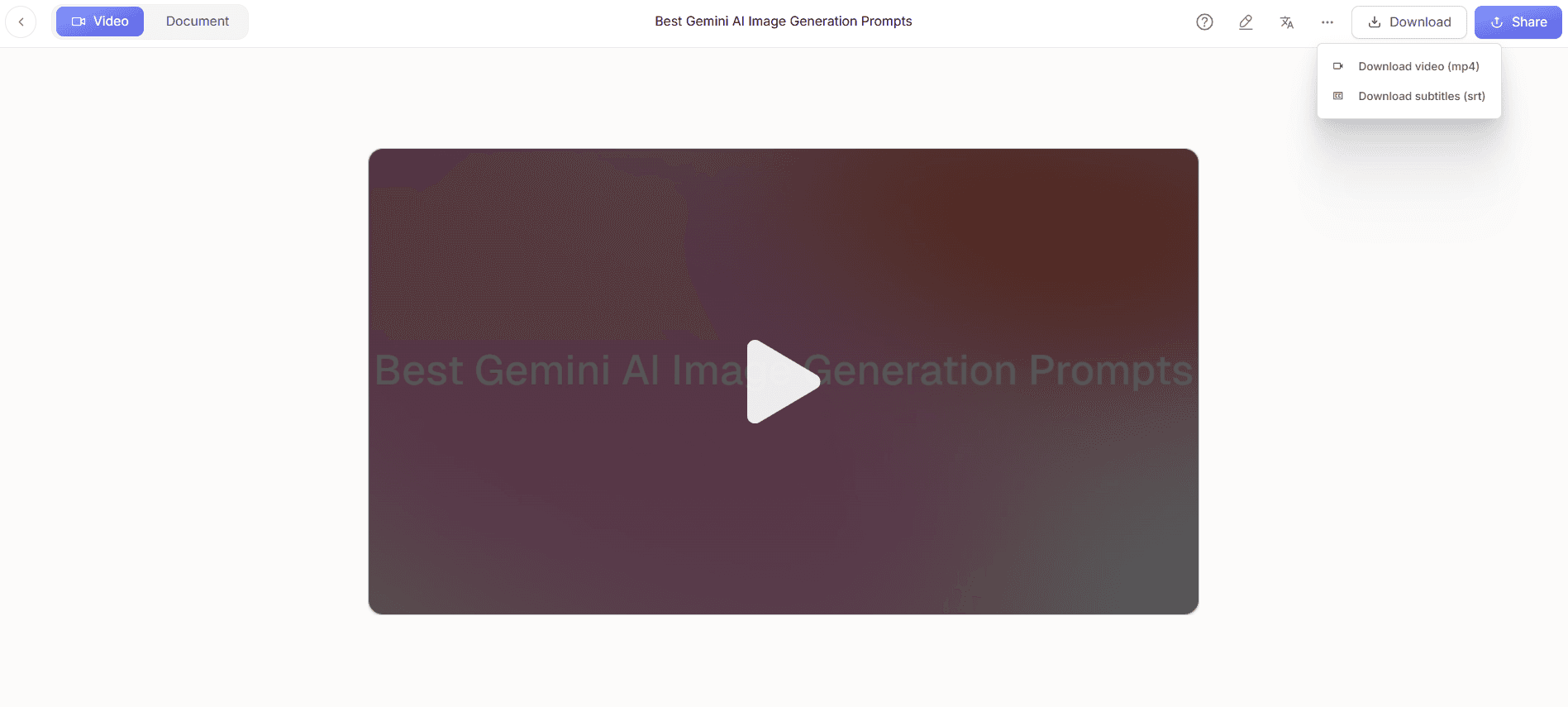
Por fim, exporte a sua documentação em vários formatos como MP4, HTML, PDF ou SCORM, consoante as suas necessidades. A plataforma da Trupeer permite-lhe escolher o formato que melhor se adequa à sua estratégia de distribuição. Depois de exportar, partilhe a documentação através dos seus canais internos, portais de clientes ou incorporando-a na sua aplicação. Esta flexibilidade garante que todas as partes interessadas, internas e externas, têm acesso à informação no formato que é mais útil para elas. Este passo conclui o processo, garantindo que a sua documentação está acessível e pronta para o envolvimento dos utilizadores.
Que dicas ajudam a reduzir a diferença na documentação?
Reduzir a diferença na documentação exige uma abordagem estratégica e atenção ao detalhe. Aqui estão algumas dicas práticas para ajudar a simplificar o processo e garantir documentação atempada em paralelo com os lançamentos de funcionalidades:
Envolver os autores cedo. Envolva autores técnicos no início do desenvolvimento da funcionalidade. As suas perspetivas podem identificar desafios potenciais de documentação logo no início, tornando o processo mais fluido.
Padronizar formatos de documentação. Use uma plataforma de documentação com suporte para multimédia para manter a consistência em todos os documentos, tornando as atualizações mais rápidas e eficientes.
Usar ferramentas colaborativas. Incentive a colaboração entre departamentos com ferramentas e plataformas partilhadas. Isto cria uma abordagem unificada à documentação e minimiza gargalos.
Implementar ciclos de feedback. Recolha regularmente feedback de utilizadores e equipas internas para identificar áreas de documentação que precisam de melhorias, garantindo qualidade e relevância.
Otimizar processos de revisão. Estabeleça protocolos de revisão claros para acelerar os tempos de aprovação e garantir a exatidão nos documentos publicados.
Usar IA para tarefas rotineiras. Automatize tarefas repetitivas de documentação com ferramentas de IA para libertar recursos humanos para trabalho mais complexo e estratégico.
Avaliar alternativas. Avalie regularmente alternativas ao Scribe para SOPs para garantir que está a utilizar as ferramentas mais eficientes disponíveis.
Perguntas frequentes
Como posso garantir que a minha documentação está sempre atualizada?
Utilize funcionalidades de documentação com atualização automática que sincronizam com as suas gravações. Isto garante que quaisquer alterações às funcionalidades são refletidas automaticamente na sua documentação. A plataforma da Trupeer foi concebida para manter a consistência e a exatidão, reduzindo a necessidade de atualizações manuais. Ao ligar a documentação às gravações, elimina o risco de informação desatualizada confundir os utilizadores. Esta abordagem poupa tempo e garante que o seu conteúdo se mantém relevante, reduzindo significativamente os esforços de manutenção.
Quais são as melhores práticas para reduzir a diferença na documentação?
O envolvimento precoce dos autores, a padronização de formatos e o uso de ferramentas colaborativas são práticas-chave. também, usar IA para tarefas rotineiras e implementar ciclos de feedback sólidos pode fazer uma diferença significativa. Estas estratégias garantem que a documentação está alinhada com o desenvolvimento do produto, minimizando atrasos e melhorando a qualidade. Ao adotar uma abordagem proativa, simplifica todo o processo de documentação, melhorando a eficiência da equipa e a satisfação do utilizador.
As ferramentas de IA podem realmente melhorar o processo de documentação?
Sim, as ferramentas de IA melhoram a eficiência e a exatidão da documentação. Automatizam tarefas repetitivas, geram conteúdo rapidamente e garantem consistência entre documentos. Ferramentas de IA como as disponibilizadas pela Trupeer conseguem lidar com grandes volumes de dados, tornando-se indispensáveis para equipas que procuram otimizar os seus fluxos de trabalho de documentação. Esta tecnologia permite que as equipas se foquem em tarefas de nível superior, como estratégia e envolvimento do utilizador, em vez de ficarem presas à criação rotineira de conteúdos.
O que devo ter em conta ao escolher uma plataforma de documentação?
Considere funcionalidades como facilidade de utilização, capacidades de integração e suporte para vários formatos de conteúdo. também, uma plataforma que ofereça colaboração em tempo real e atualizações orientadas por IA irá melhorar significativamente o seu processo de documentação. Avaliar opções de plataforma de tradução de vídeo também pode ser benéfico se o seu público for global. Estas considerações garantem que a sua plataforma de documentação consegue responder às suas necessidades atuais enquanto se mantém escalável para o crescimento futuro.
Reduzir a diferença na documentação tem um impacto mensurável na satisfação do utilizador?
Sem dúvida, reduzir a diferença na documentação melhora diretamente a satisfação do utilizador ao disponibilizar informação atempada, relevante e precisa. Os utilizadores valorizam ter acesso a orientações claras quando as novas funcionalidades são lançadas, o que melhora a experiência e reduz a frustração. Isto, por sua vez, conduz a taxas de adoção mais elevadas e a custos de suporte mais baixos, tornando-se um fator crítico na retenção e lealdade dos utilizadores. também, a documentação atempada reforça a reputação da sua marca pela fiabilidade e foco no utilizador, o que pode ser uma vantagem competitiva significativa.
Artigos relacionados