Trupeer Blog
Podsumuj
Most ERP programmes have a detailed project plan for configuration, data migration and testing. Far fewer have an equally detailed plan for the people who will use the system. Change management gets a line in the budget, a communications calendar and a training week before go-live. Then go-live arrives, users are unsure of their new tasks, workarounds appear, and the support desk is overwhelmed. The people plan should run alongside every stage of the software implementation process.
A change management plan for ERP implementation fixes that by treating the people side of the project with the same discipline as the technical side. This guide explains what an ERP change management plan should include, how to run it phase by phase alongside the project, how to plan the training content users will actually learn from, and how to measure whether the change is sticking. You can download a free change management plan template to build your own.
What is a change management plan for ERP implementation?
A change management plan for ERP implementation is a structured plan for helping people adopt a new ERP system and the new ways of working that come with it. It sets out who is affected, how they're affected, what they need to know and do, how they'll be communicated with, trained and supported, and how adoption will be measured. It runs alongside the technical project plan from the start of the programme to well after go-live.
Most plans draw on established models such as ADKAR or Kotter's eight steps. The model matters less than the execution: an engaged sponsor, a dedicated change lead, training content ready before go-live, managers enabled before their teams, and months of reinforcement afterwards. For the general principles, see the change management process.
Why does an ERP implementation need its own change management plan?
ERP changes how work is done, not just which screen people use. Processes, roles and approvals often change together.
It touches many teams at once, from finance and procurement to sales, operations and HR.
Standardisation means giving things up. Local workarounds and familiar reports may disappear.
Go-live is a hard date. People must be ready on day one, or the business slows down.
Adoption decides the return. If people don't use the system as designed, the benefits in the business case don't arrive.
What should a change management plan for ERP implementation include?

Component | What it covers |
|---|---|
Case for change | Why the ERP is being implemented and what it means for each group |
Sponsorship and governance | Executive sponsor, change lead, change network and decision rights |
Stakeholder and impact assessment | Who is affected, how much and what changes for them |
Communication plan | What is communicated, to whom, when and through which channels |
Training and content plan | Role-based training, guides, videos and support materials |
Manager and super user enablement | Preparing leaders and super users to support their teams |
Resistance management | How concerns are surfaced, heard and addressed |
Go-live and hypercare support | Floor support, help channels and issue tracking |
Reinforcement and measurement | Adoption metrics, feedback and continuous improvement |
Start from a change management plan template so nothing is missed.
The change management plan for ERP implementation, phase by phase

Phase 1: Mobilise and align
Confirm an executive sponsor who will stay engaged through go-live and beyond, appoint a dedicated change lead, and agree the business outcomes the programme must deliver. Map stakeholder groups and set up a change network of super users across teams and sites.
Phase 2: Assess impact during design
As processes are designed, assess the impact on each role: new process, changed process, new screens only or no change. This impact assessment drives communication, training and support. Capture how work is done today first, so the change is measured against reality; see SAP S/4HANA transformation: document as-is processes first.
Phase 3: Communicate early and often
Explain the case for change in terms each group cares about, and keep communicating as decisions are made. Use the channels people actually read, and give managers the messages to cascade. A communication plan for change management helps sequence the messages.
Phase 4: Build training content during build and test
Record and produce role-based training content while the system is being configured and tested, so it's ready well before end user training starts. The training content section below covers this in detail.
Phase 5: Enable managers and super users first
Train managers and super users before their teams, so they can answer questions, model the new way of working and coach others. See how to run a super user training program.
Phase 6: Train end users and prepare for go-live
Deliver role-based training close to go-live, with hands-on practice in a training environment. Make sure quick reference guides and help links are in place for day one.
Phase 7: Support go-live and hypercare
Put super users on the floor or on call, provide short help videos for common questions and track issues to find gaps in training and documentation.
Phase 8: Reinforce and sustain
Keep measuring adoption for months after go-live, recognise teams that adopt well, fix friction points and refresh training when the system or processes change.
How do you assess stakeholders and change impact?

Stakeholder group | Typical ERP impact | What they need |
|---|---|---|
Executives | New reporting and decision data | Clear business case, adoption metrics, sponsorship role |
Managers and approvers | New approvals, dashboards and team processes | Early briefing, manager guides, coaching tools |
Finance and procurement users | New transactions, controls and screens | Role-based training, SOPs, quick references |
Operations and supply chain | New planning, inventory and fulfilment steps | Hands-on practice, short task videos |
IT and support teams | New system, new support model | Knowledge transfer, runbooks, escalation paths |
Occasional users | Self-service tasks such as approvals or requests | Two-minute videos and simple guides |
Rate each group's impact as high, medium or low, and focus effort where impact and resistance risk are highest.
How do you plan training content for an ERP implementation?
Training content is where many ERP change plans fall short. It's often built too late, on generic material, and delivered once. A strong plan treats training content as a deliverable with its own scope, owners and schedule.
What training content do you need?
Role-based learning paths that cover only the tasks each role performs.
Short task videos, one task per video, recorded in your own configured system.
Step-by-step guides and SOPs for every key transaction, including exceptions.
Quick reference cards for daily tasks.
Manager guides for approvals, dashboards and coaching.
"What's changed" guides that compare the old way with the new.
FAQs collected during testing and hypercare.
For what to create in an SAP context, see SAP Fiori end user training materials.
When should training content be ready?

Project stage | Training content milestone |
|---|---|
Design | Training needs analysis and content plan by role |
Build | Record tasks in the configured system as they stabilise |
Test | Use test sessions to record and validate content; collect FAQs |
Before end user training | All role-based content reviewed, translated and published |
Go-live | Quick references and help links live; super users briefed |
Hypercare | New FAQs and fixes added weekly |
After go-live | Content updated after every release and process change |
How do you produce training content quickly?
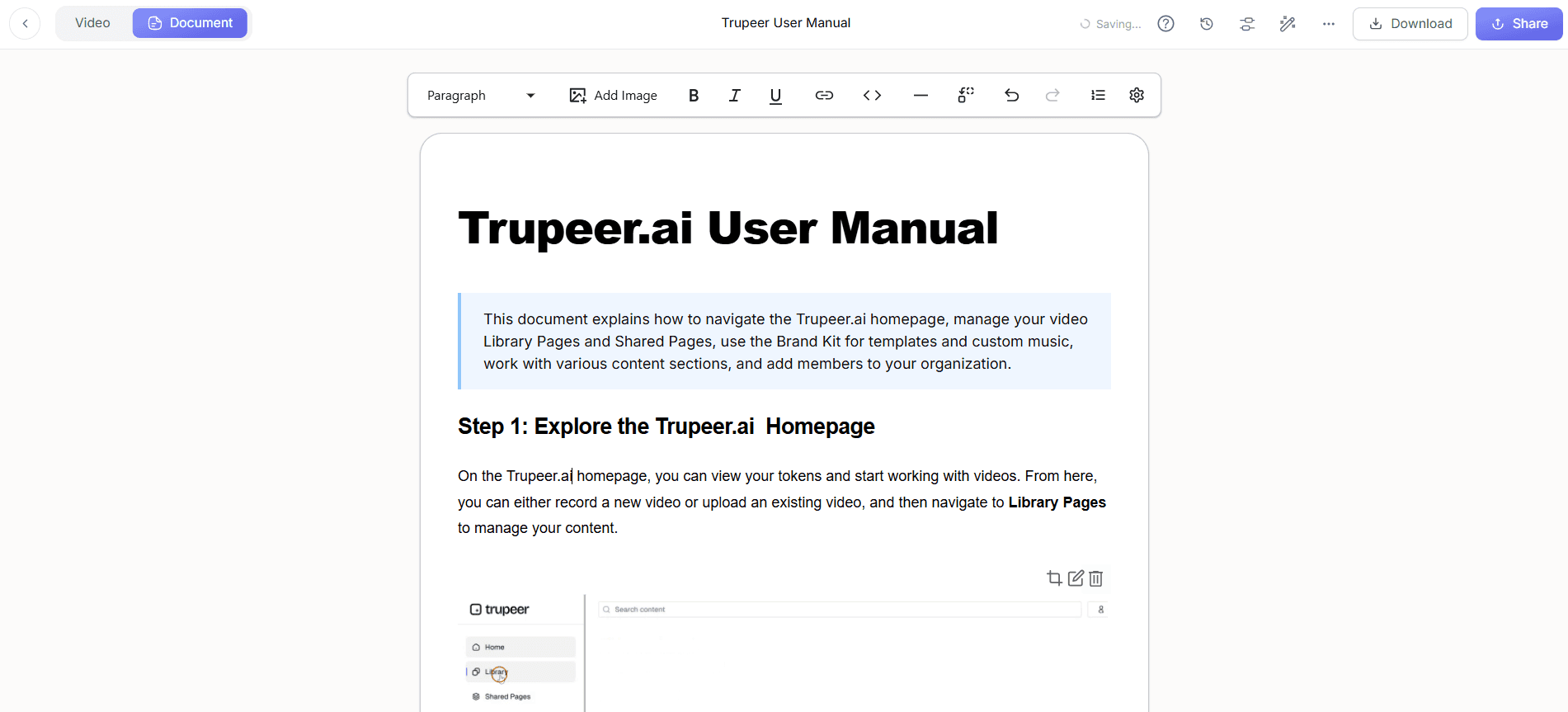
Have key users record each task in the training or quality system with Trupeer's AI screen recorder, narrating each step and the business rules behind it. Trupeer turns each recording into a step-by-step guide and a narrated video, so one recording produces both. Package the content by role, translate it for every country and publish it in one searchable knowledge base, linked from the ERP and the intranet.
How do you keep training content current?
ERP systems keep changing after go-live, through vendor releases and your own change requests. Give every guide an owner, review content when the system changes and update videos by editing the script rather than re-recording; see how to keep training documentation current after go-live.
How do you manage resistance to an ERP implementation?
Listen early: use surveys, focus groups and super users to surface concerns.
Explain what's in it for each group, not just for the company.
Involve users in design and testing, so they help shape the solution.
Address skills gaps directly with practice and support, since resistance often reflects uncertainty.
Equip managers to have honest conversations with their teams.
Act on feedback visibly, so people see their concerns lead to changes.
For a structured way to diagnose where people are stuck, see the ADKAR change management model.
How do you measure ERP change management success?

Training completion and proficiency by role.
System usage: logins, transactions and use of key features.
Process compliance: transactions following the new process, without workarounds.
Data quality in the new system.
Support tickets and repeat questions after go-live.
Time to proficiency for users and new hires.
Stakeholder sentiment from pulse surveys.
Agree targets before go-live and report them to the sponsor regularly.
Example: a change management plan for ERP implementation on one page

Here's how a one-page summary of a change management plan for ERP implementation might look for a mid-size company replacing its finance and procurement system. The details are illustrative.
Element | Summary |
|---|---|
Case for change | Faster close, one source of financial data, fewer manual reconciliations |
Sponsor and lead | CFO as sponsor; a full-time change lead from finance operations |
Most affected groups | AP and AR clerks, buyers, approvers, finance controllers |
Change network | One super user per team and site, trained during build |
Communication | Monthly programme update, manager briefings before each milestone, go-live countdown |
Training content | Role-based videos and guides for every key transaction, recorded in the test system, published before end user training |
Go-live support | Super users on the floor for two weeks, daily issue review, FAQ updates |
Measures | Training completion, transactions processed in the new system, support tickets, close timeline |
A summary like this keeps the sponsor, project team and business aligned on what the people side of the programme will deliver.
Common ERP change management mistakes
Starting change management late, after design decisions are made.
Treating training as a single event a week before go-live.
Using generic training content instead of your configured system.
Training end users before managers, so managers can't help their teams.
Ending support at go-live, when most questions are still to come.
Measuring training attendance instead of adoption and proficiency.
ERP change management plan checklist
An executive sponsor and dedicated change lead are in place.
Stakeholder groups and impacts are mapped by role.
A communication plan covers the run-up, go-live and hypercare.
A training content plan has owners and milestones.
Managers and super users are trained before end users.
Role-based content is published before end user training.
Go-live and hypercare support is staffed.
Adoption metrics and targets are agreed.
Content is updated after every release.
For a full view of how ERP programmes go wrong, see why digital transformations fail.
Build your ERP change management plan with Trupeer
People adopt an ERP when they know exactly how to do their jobs in it. Trupeer turns recordings of your configured system into role-based guides, training videos and a searchable knowledge base, ready before go-live and easy to keep current. See how Trupeer supports change management, or start free with Trupeer.
Frequently Asked Questions
What is a change management plan for ERP implementation?
It's a structured plan for helping people adopt a new ERP system, covering stakeholders, impact, communication, training, manager enablement, resistance, go-live support and adoption measurement.
When should ERP change management start?
At the start of the programme, alongside mobilisation, so impact assessment and communication shape design rather than react to it.
What should an ERP training plan include?
Role-based learning paths, short task videos, step-by-step guides and SOPs, quick references, manager guides, "what's changed" guides and FAQs, with owners and milestones tied to the project plan.
Who should own ERP change management?
A dedicated change lead, supported by an engaged executive sponsor, managers and a network of super users.
How do you reduce resistance to a new ERP?
Listen early, explain what's in it for each group, involve users in design and testing, close skills gaps, equip managers and act on feedback visibly.
How long should change support continue after go-live?
Well beyond hypercare. Plan reinforcement and measurement for several months, and keep training content current with every release.
How do you measure ERP adoption?
Track training completion, system usage, process compliance, data quality, support tickets, time to proficiency and stakeholder sentiment.
Is there a template for an ERP change management plan?
Yes. Start from Trupeer's free change management plan template and adapt it to your programme's phases and stakeholders.
Powiązane blogi