Trupeer Blog
Imagine you're the lead of a presales team tasked with crafting compelling demo videos. Every click, every pause, and every point of engagement can determine whether your prospect moves forward with your solution. Yet, without the right data, you're flying blind. This is where video heatmaps become invaluable. They offer a visual representation of viewer engagement, highlighting the sections of your demo that captured attention and those that didn’t. By analyzing these heatmaps, your team can pinpoint exactly where viewers drop off or rewind and where they stay glued to the screen.
With make product demo video insights, you can refine each element of your presentation. A staggering 60% of viewers might skip through sections they find irrelevant, underlining the importance of targeted content. Your ability to adapt and respond to these insights can directly impact the conversion rate of your demos, potentially increasing it by up to 30%. By focusing on what works and eliminating what doesn't, you'll create more effective and efficient demo content.
Whether you’re a seasoned professional or new to demo content creation, understanding and using video heatmaps will give you a competitive edge. These tools help ensure that every second of your video counts, maximizing engagement and driving results. As you read on, you'll learn why video heatmaps are essential and how to use them using Trupeer's advanced features.
Why does optimizing demo content with video heatmaps matter?
For presales professionals, crafting the perfect demo is an art and a science. It's not enough to merely showcase a product; you must engage your audience throughout the presentation. This is where video heatmaps come into play. By offering detailed insights into viewer behavior, these tools let you see exactly which parts of your demo resonate with your audience and which parts fall flat. The stakes are high. A poorly optimized demo can result in lost opportunities, while a well-crafted one can be the tipping point in closing a sale.
Engagement metrics gleaned from video heatmaps are vital for refining your pre sales workflow. These insights enable you to tailor your demos to better meet the needs and preferences of your audience. For instance, if you notice that viewers consistently rewind a section where you explain a complex feature, it's a cue to clarify or expand that portion. Conversely, if viewers skip certain segments, you may need to rethink how those parts are presented or whether they're necessary at all.
Incorporating video heatmaps into your demo strategy can significantly boost your team's efficiency. Rather than relying on guesswork, you have concrete data to guide your decisions. This leads to more focused and impactful demos, reducing the time spent on content revisions and increasing your chances of success. For sales teams, this means a more simplified process and a better alignment with client needs, ultimately driving business growth.
What are the benefits of optimizing demo content with video heatmaps?
Video heatmaps provide a wealth of data that can transform your approach to demo content.
Enhanced Engagement. By understanding which parts of your demo captivate viewers, you can create more engaging content. This leads to higher viewer retention and a better chance of conversion.
Improved Targeting. Heatmaps allow you to tailor your presentations to specific audience segments, ensuring that your content resonates with the right people. This targeted approach increases the effectiveness of your demos.
Data-Driven Decisions. With AI video editing insights, you can make informed decisions about what to include or omit in your demos, optimizing them for maximum impact.
simplified Revisions. Instead of extensive trial and error, use heatmap data to make precise adjustments. This reduces the time and resources spent on revising demo content.
Increased Conversion Rates. When demos are tailored to viewer interests and behaviors, conversion rates can rise significantly. In some cases, this can lead to a 30% increase in successful outcomes.
Efficient Resource Allocation. By focusing on high-impact content, you can allocate resources more effectively, improving the overall efficiency of your presales operations with the help of an AI-powered video tool.
Which Trupeer features help you optimize demo content with video heatmaps?
Trupeer offers a suite of features that make it easier to analyze and enhance your demo content using video heatmaps.
Viewer Engagement Analytics, Drop-off, and Heatmaps
Trupeer's viewer engagement analytics provide detailed insights into how your audience interacts with your demo videos. The platform's heatmaps visually display data on which sections are most and least engaging, helping you identify patterns in viewer behavior. This allows you to optimize your content by focusing on parts that retain attention and improve sections where viewers lose interest. The analytics are presented in a user-friendly format, allowing for quick interpretation and action.
AI Screen Recording with Auto-Zoom and Click Detection
With Trupeer's AI screen recording, you can create high-quality demos that automatically emphasize key areas through auto-zoom and click detection. This feature ensures that viewers are guided through the content with minimal distraction. The precision of this tool helps maintain viewer focus on crucial elements, which is essential for effective engagement. The simplicity of this process simplifies the demo creation, making it faster to produce compelling content.
Automatic Filler-Word Removal
Trupeer's automatic filler-word removal cleans up your demo audio, eliminating distractions like "um" and "ah." This results in a more polished and professional presentation. By focusing the viewer's attention on the content rather than the delivery, this feature enhances the overall effectiveness of your demos. It's a small change that makes a significant difference in viewer perception and engagement.
Auto-updating Documentation Tied to the Underlying Recording
Integrated with Trupeer's AI documentation platform, auto-updating documentation ensures that any changes made to your demo content are automatically reflected in the accompanying documentation. This reduces the risk of outdated materials being circulated, maintaining consistency and accuracy in your communication. The smooth integration of content and documentation ensures that your team and clients are always on the same page.
AI-Searchable Knowledge Base with Timestamp Deep-Links
Trupeer's AI-searchable knowledge base indexes every recording with timestamp-level deep links. This allows teams to quickly locate and reference specific sections of a demo, facilitating faster and more informed decision-making. By making content easily accessible, Trupeer enhances collaboration and knowledge sharing across teams, which can lead to more successful sales outcomes.
How do you optimize demo content with video heatmaps step by step with Trupeer?
Step 1: Capture Your Demo
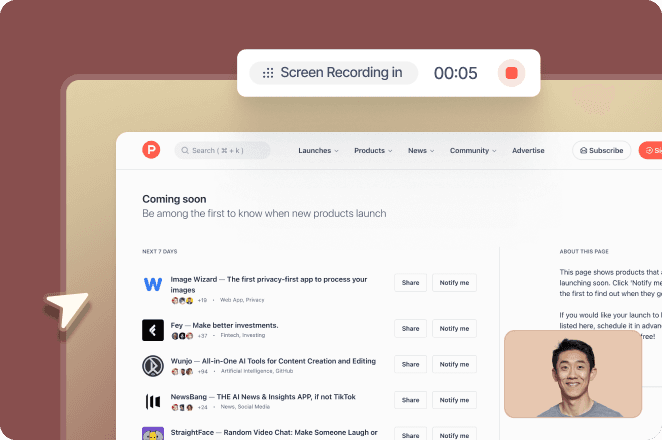
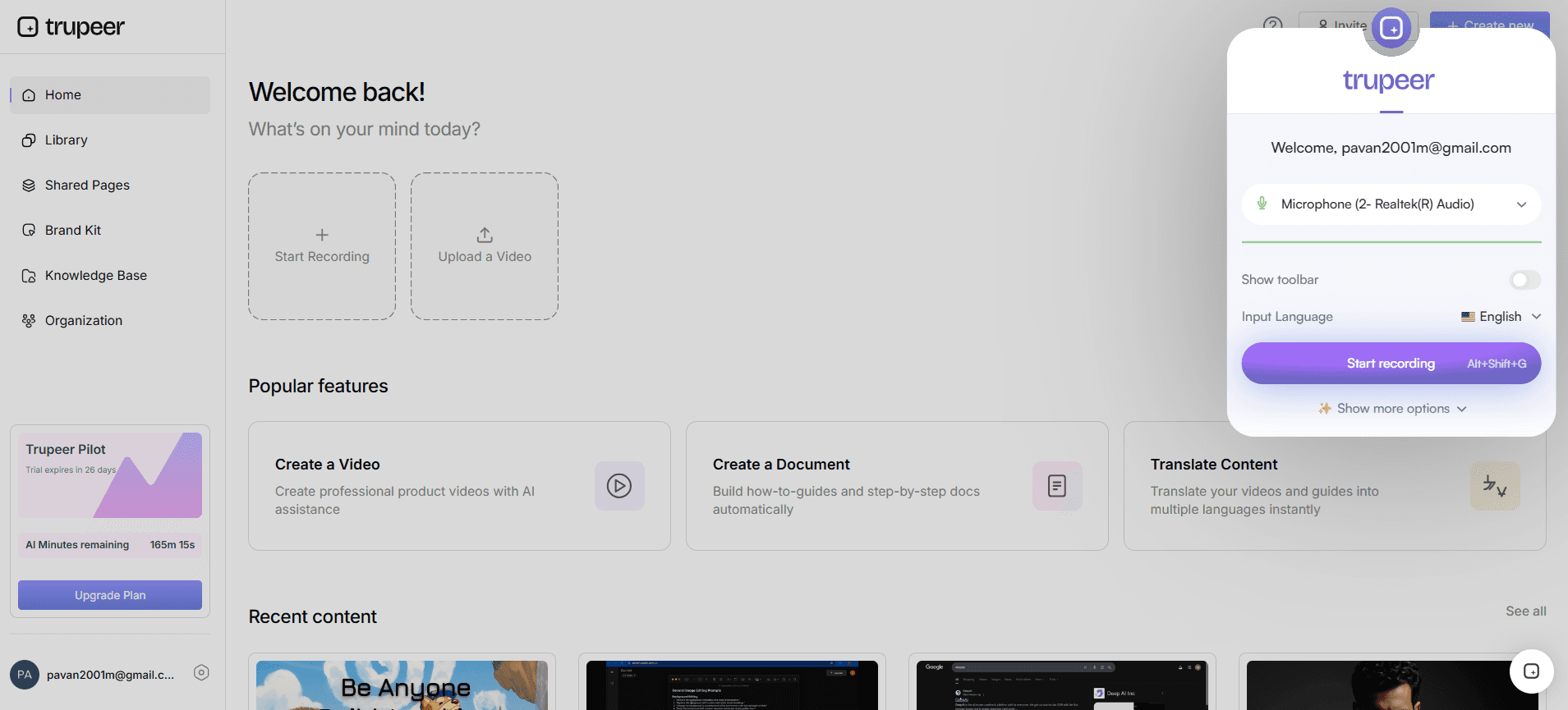
Begin by using Trupeer's AI screen recording with auto-zoom and click detection. This feature allows you to create dynamic demos without manually adjusting the focus. As you record, Trupeer automatically highlights key areas, ensuring viewer attention. Launch the browser-based recorder, select the screen area, and click start. The recording will capture clicks and zoom in on essential elements, creating a visually engaging demo. This process takes only a few minutes, and there's no need for software installation, making it accessible from any device. If you encounter any issues, the desktop app offers additional functionality and stability.
Step 2: Edit and Enhance Your Recording
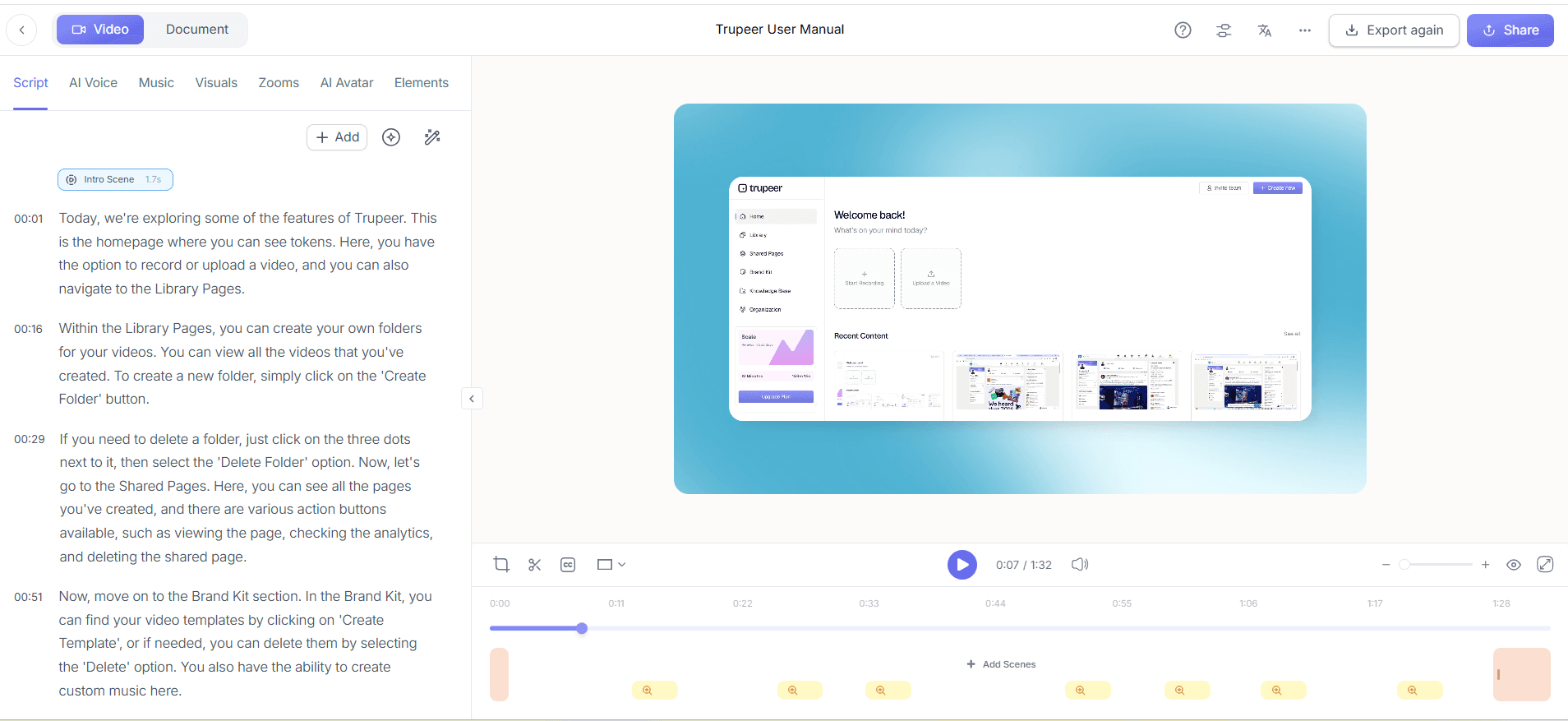
Once your recording is complete, enhance it using Trupeer's AI-driven editing tools. Begin with the automatic filler-word removal to polish your audio. Navigate to the editing dashboard, select your video, and apply the filler-word removal feature. Trupeer will automatically clean up unnecessary pauses and verbal distractions. Next, use the AI voiceover in 65+ natural voices if you need to change the narration. This can be done by selecting the voiceover option and choosing your preferred voice and tone. These enhancements ensure your demo is clear and professional, taking just a few minutes to apply.
Step 3: Analyze Viewer Engagement
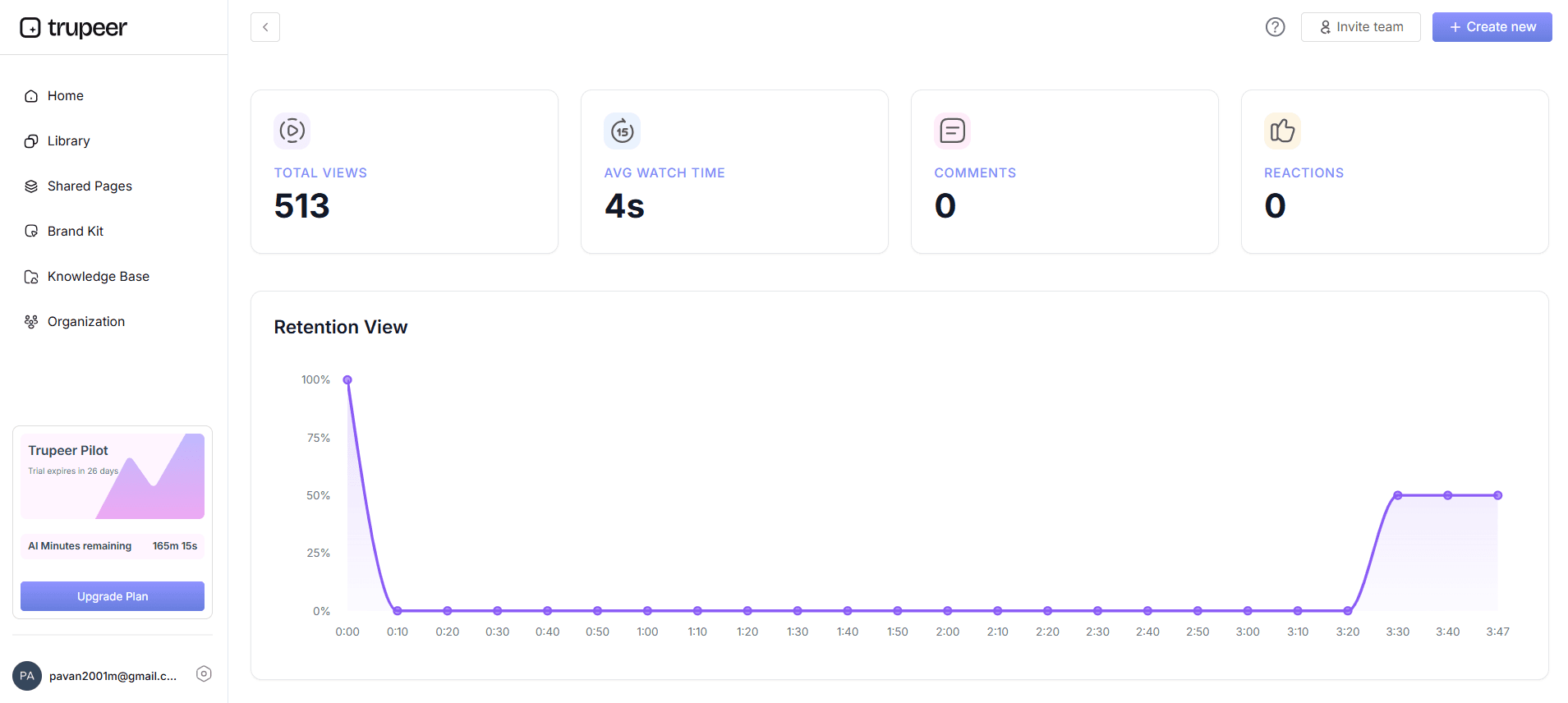
After your demo is live, Trupeer provides viewer engagement analytics, including heatmaps. Access the analytics dashboard to view how users interact with your video. Heatmaps will show areas of high engagement and where viewers drop off. This data is crucial for understanding your audience's preferences. Look for patterns indicating which sections need improvement or further emphasis. If you notice a consistent drop-off point, consider revisiting that section in your next iteration. Trupeer updates these analytics in real-time, allowing you to make data-driven decisions quickly.
Step 4: Update Documentation Automatically
Trupeer's auto-updating documentation tied to your recording ensures your demo materials remain current. As you incorporate feedback and make changes to your demo, Trupeer automatically updates any linked documentation. Access the documentation section, link your demo, and enable auto-updates. This feature saves time and ensures consistency across all client-facing materials. It's especially useful when dealing with complex products that frequently change. By keeping documentation aligned with your demos, you prevent discrepancies and maintain credibility.
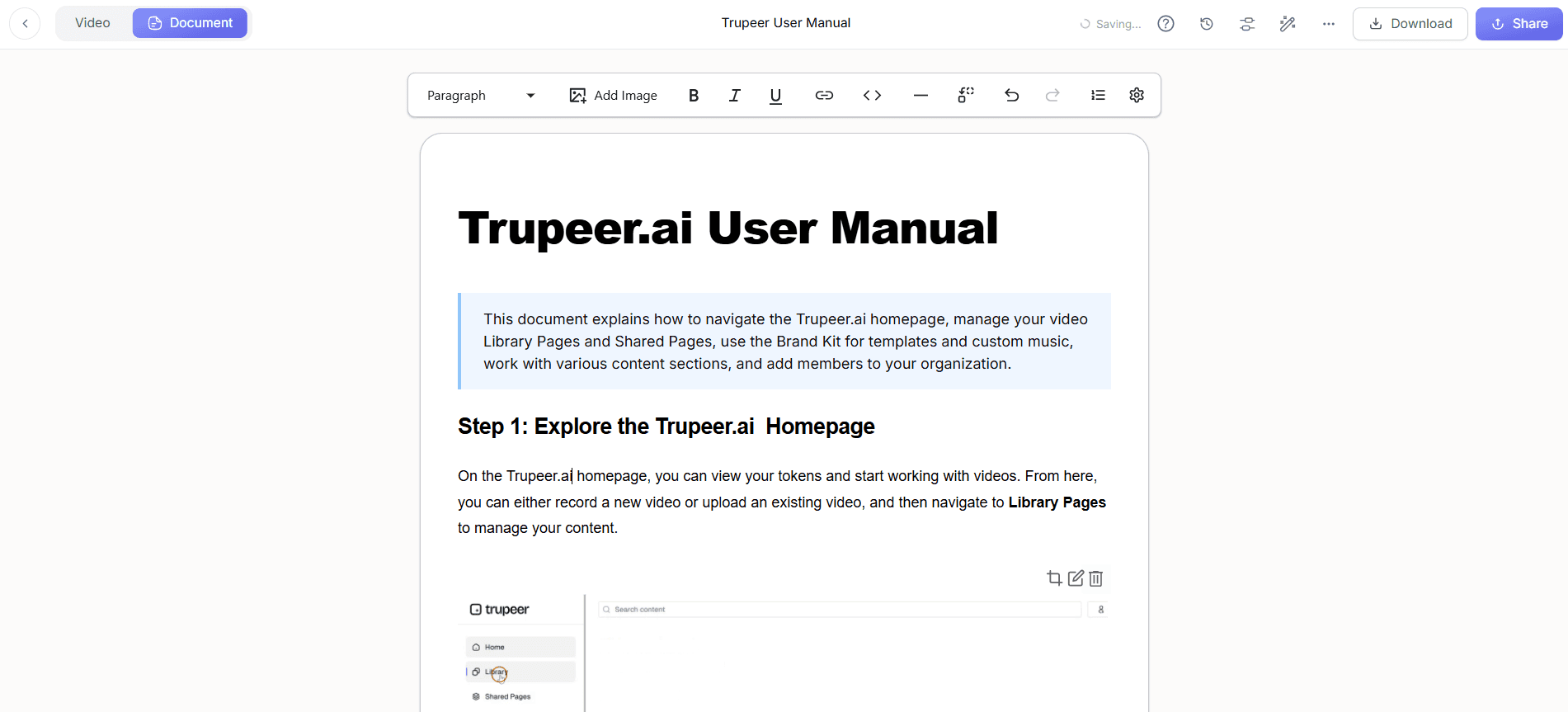
Step 5: use AI-Searchable Knowledge Base
Integrate your demo content into Trupeer's AI-searchable knowledge base, making it easy for team members to find specific information. Upload your demo to the knowledge base, where Trupeer indexes it with timestamp-level deep links. This feature allows users to jump directly to relevant sections, enhancing collaboration and efficiency. use this tool to support both internal teams and clients by providing easy access to key demo segments. This approach reduces response time and improves the overall support experience. It’s a valuable asset for training and onboarding new team members as well.
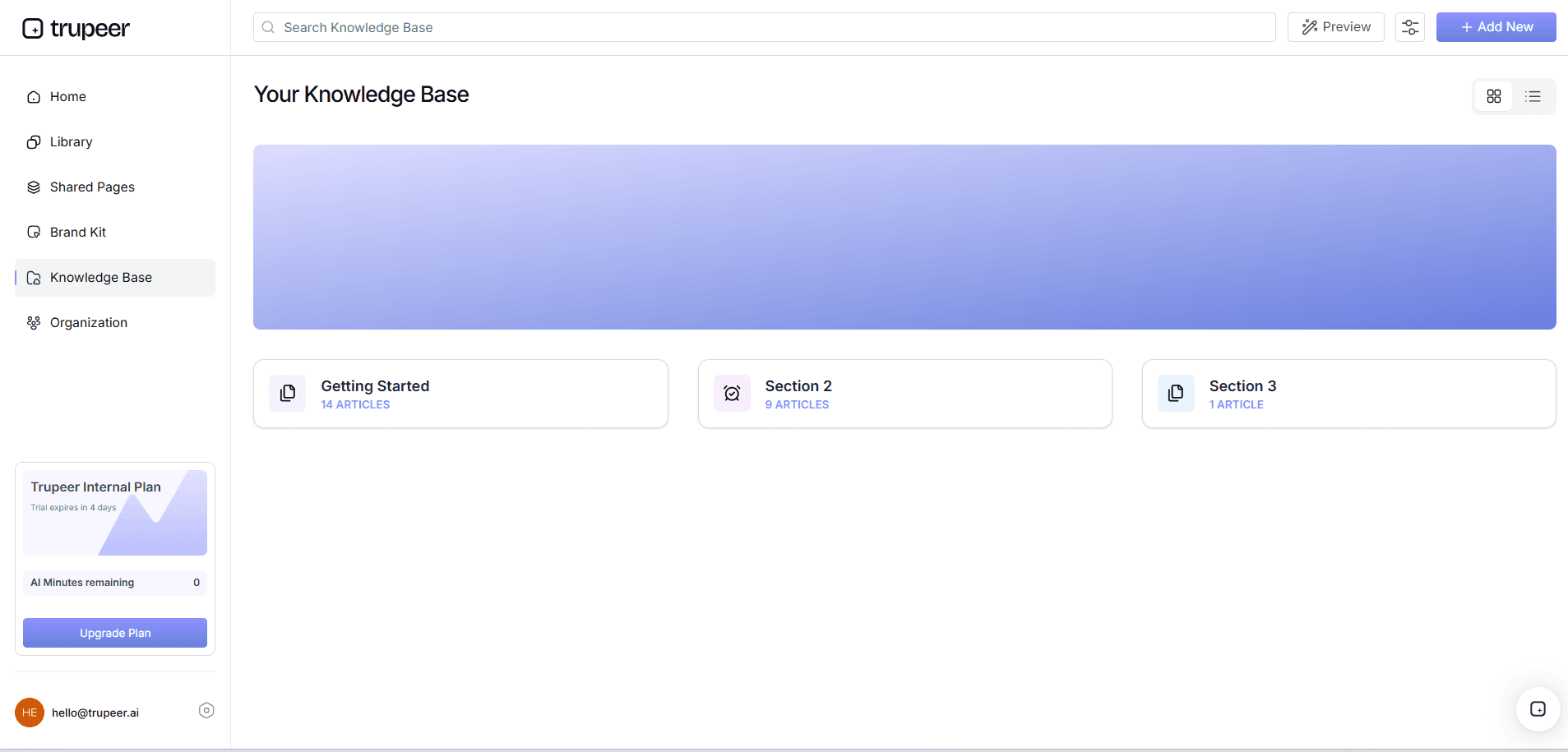
Step 6: Distribute and Gather Feedback
Finally, distribute your demo using Trupeer's shared pages and client-facing portals. This feature allows secure sharing with stakeholders while collecting feedback. Set up a portal, upload your demo, and enable feedback options. As clients view your demo, they can leave comments and suggestions, which you can review in the portal's dashboard. Gathering feedback is crucial for continuous improvement. It provides insights into client preferences and areas needing refinement. Trupeer facilitates this process, ensuring you keep improving your demo content based on real-world input. Teams weighing tools often start with a Loom alternatives comparison before standardizing on a workflow.
What tips help you optimize demo content with video heatmaps?
Optimizing your demo content with video heatmaps requires a strategic approach. These tips can guide your efforts in refining and enhancing your demos for maximum impact.
Focus on High-Engagement Areas. Use video heatmaps to identify and emphasize content that captures viewer interest. This ensures your demos maintain engagement throughout.
Minimize Low-Impact Sections. If heatmaps reveal sections where viewers drop off, consider revising or removing these parts. simplifying content keeps viewers focused.
Iterative Improvements. Regularly review heatmap data to continuously refine your demos. This approach ensures your content evolves with audience preferences.
use AI Tools. Employ a product demo video recording editing tool to automate and enhance editing processes, saving time and improving quality.
Standardize Presentation Style. Consistency in style and format enhances professionalism. Use a create your own custom AI avatar video tool for a unified look across demos.
Incorporate Feedback. Use feedback gathered from shared portals to inform future demo iterations, ensuring they meet audience needs.
Benchmark Against Competitors. Analyze demos using a Scribe alternative comparison to identify strengths and areas for improvement.
Frequently asked questions
How can video heatmaps improve my demo content?
Video heatmaps enhance your demo content by providing visual insights into viewer engagement. They show which sections of your demo captivate the audience and which parts they skip or ignore. By analyzing this data, you can refine your content to highlight engaging segments and revise or remove less effective parts. This leads to more focused and impactful demos, increasing viewer retention and conversion rates. Heatmaps offer a data-driven approach to optimizing your presentations, ensuring each demo is tailored to audience preferences and needs.
What is the best way to analyze video heatmap data?
The best way to analyze video heatmap data is to identify patterns in viewer engagement. Look for consistent drop-off points or areas where viewers frequently rewind or pause. These insights indicate sections that may need revision or further emphasis. Consider segmenting your analysis by audience type to tailor your demos to specific groups. Use this data in conjunction with feedback from viewers to make informed decisions about content adjustments. Regularly reviewing heatmap data helps ensure your demos remain relevant and engaging, boosting their overall effectiveness.
Why should I use Trupeer for demo video optimization?
Trupeer offers comprehensive tools for demo video optimization, including AI-driven editing and viewer engagement analytics. Its AI screen recording with auto-zoom ensures high-quality captures, while automatic filler-word removal polishes the audio. Trupeer's AI video translation capabilities allow for easy localization, broadening your reach. The platform also provides detailed heatmaps and analytics to guide your content improvements. By integrating these features, Trupeer helps you create demos that are engaging, professional, and tailored to your audience, ultimately enhancing your sales process.
Can I integrate Trupeer with other tools I use?
Yes, Trupeer is designed to integrate smoothly with other tools you may use in your workflow. This includes integrations for custom avatars and AI voiceovers, ensuring your demo content is versatile and adaptable. The platform's compatibility with various formats allows for easy sharing and distribution across different platforms. By integrating Trupeer with your existing tools, you can simplify processes, enhance collaboration, and maintain consistency in your demos. This interoperability ensures that Trupeer complements your current setup, enhancing its functionality without disrupting established workflows.
Does Trupeer offer support for non-English demos?
Yes, Trupeer supports non-English demos through its AI translation and dubbing features. The platform can translate your content into over 40 languages, complete with lip-sync, ensuring your demos are accessible to a global audience. This capability is invaluable for businesses looking to expand their reach and cater to diverse markets. Trupeer's translation tools maintain the quality and intent of your original content, providing accurate and engaging localized versions. By using Trupeer's language support, you can effectively communicate with a broader audience, enhancing your global presence.
Gerelateerde blogs