Verwenden Sie diese Vorlage
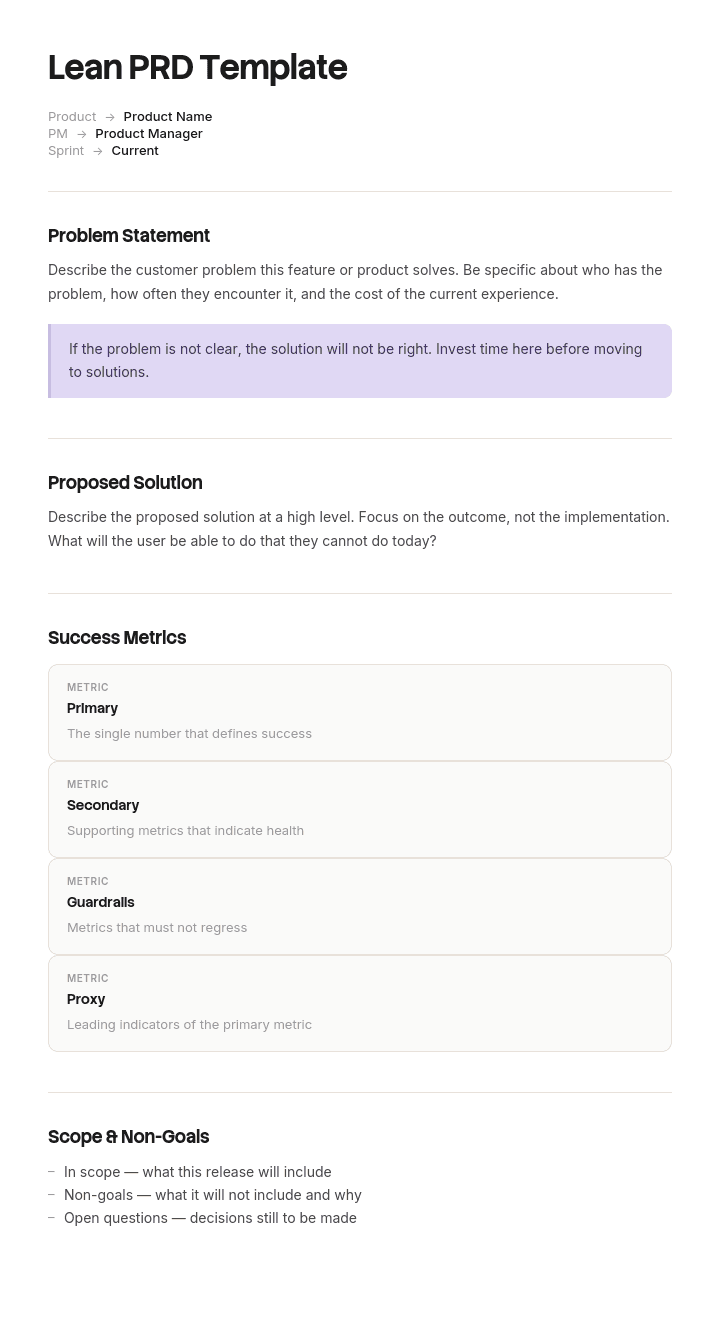
Moderne Produktteams bewegen sich schnell – und brauchen PRDs, die dazu passen. Mit Trupeer können Sie Stunden beim Schreiben von Produktspezifikationen sparen, indem Sie mit einer kostenlosen Lean-PRD-Vorlage starten, sie mit Ihren Brand Guidelines anpassen und Lean-PRDs in Video-Durchläufe umwandeln, die funktionsübergreifende Teams schnell ausrichten.
Was ist eine Lean-PRD – und wie unterscheidet sie sich von einer PRD?
Ein Product Requirements Document legt fest, was gebaut wird, für wen, und was dafür erfüllt sein muss, damit es als „fertig“ gilt. Eine Lean-PRD macht dasselbe – nur in ein oder zwei Seiten statt zehn – für ein Team, das nah genug am Problem ist, um mit den Details vertraut zu werden.
Die übliche Erklärung lautet, dass eine Lean-PRD kürzer ist. Das ist jedoch nur das Symptom und nicht die Definition – und wenn man ihr hinterherjagt, entsteht ein schlechtes Dokument. Denn man kann eine PRD genauso gut kürzen, indem man die Teile entfernt, die wichtig waren, wie indem man die entfernt, die es nicht waren.
Die hilfreiche Definition geht um Autorität. Eine PRD ist eine Reihe von Vorgaben, die auf ein Team gesetzt werden. Eine Lean-PRD setzt die kleinste Anzahl an Vorgaben, die dennoch das richtige Ergebnis liefert, und sagt explizit, wo das Team stattdessen entscheidet. Sie ist kurz, weil der Großteil dessen, was eine konventionelle PRD füllt, sich am Ende als Spezifikation herausstellt, zu der niemand eine Meinung hatte.
Eine PRD ist eine Liste von Entscheidungen, die Sie im Team treffen
Lesen Sie jede Anforderung in einer PRD und fragen Sie: Was macht sie? Jede einzelne nimmt der Person, die sie sonst beim Erstellen getroffen hätte, eine Entscheidung ab.
Einige dieser Entscheidungen sind notwendig. Wenn der Import einen geschlossenen Laptop überstehen muss, weil Dateien zwanzig Minuten brauchen, um verarbeitet zu werden, muss das das Team wissen – und es ist nicht ihre Entscheidung.
Die meisten sind es nicht. Spaltenreihenfolge auf einem Mapping-Screen, die Formulierung einer Fehlermeldung, ob Validierung vor oder nach dem Upload läuft: Diese landen in PRDs, weil die Vorlage dafür einen Abschnitt hat und ein leerer Abschnitt wie Nachlässigkeit wirkt. Jede Vorgabe ist entweder etwas, dem das Team ohne Frage folgt – wodurch Sie das Produkt möglicherweise verschlechtern – oder etwas, das das Team verhandelt, wodurch es Tage kostet.
Darum stellt eine Lean-PRD jeder Zeile genau eine Frage, bevor sie hineinkommt. Wenn das Team sich für eine der beiden Optionen entschieden hätte: Würde ich dann genauso zufrieden sein? Wenn ja, schreiben Sie es nicht. Schreiben Sie stattdessen, dass es ihre Entscheidung ist. Diese Frage macht das Dokument kurz – und die Kürze ist eher ein Nebeneffekt als das Ziel.
So passen Sie diese Vorlage in Trupeer an
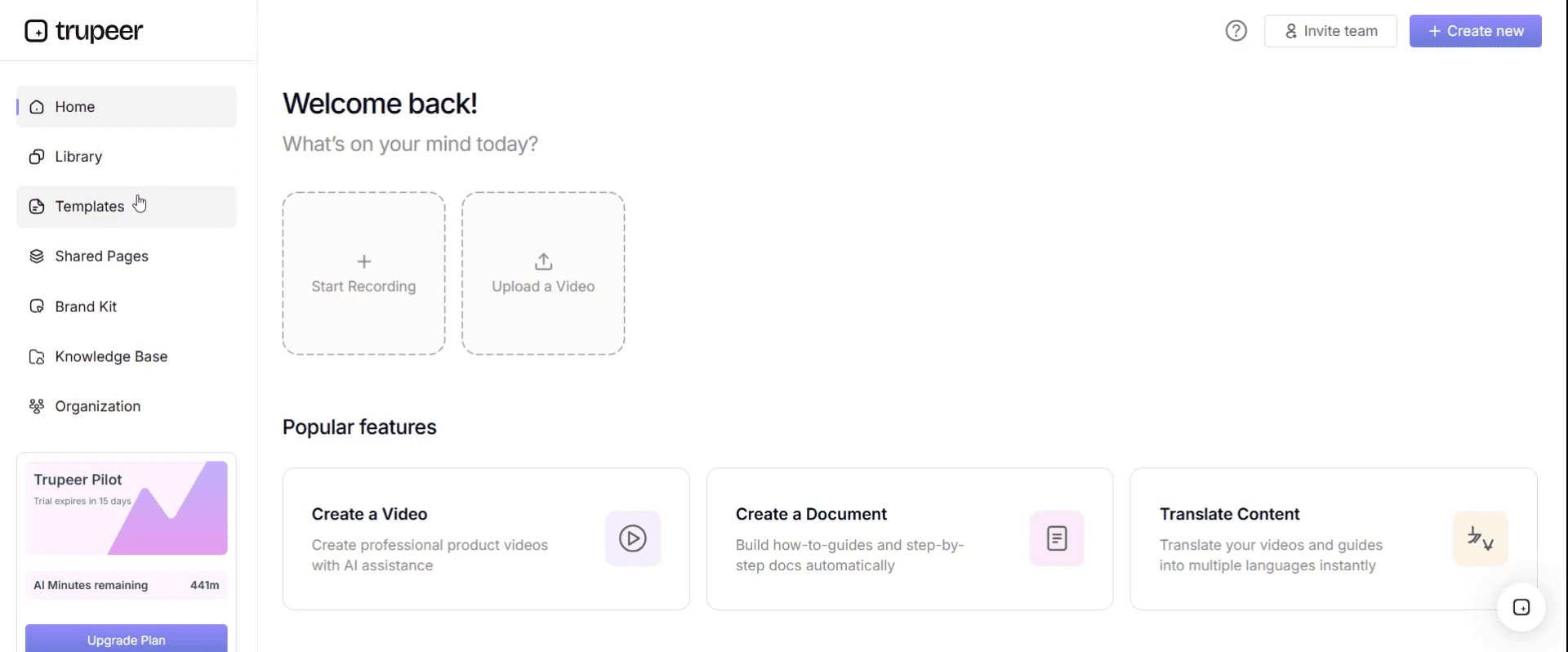
Schritt 1: Öffnen Sie den Bereich „Vorlagen“
Gehen Sie im Hauptmenü zum Bereich „Vorlagen“.
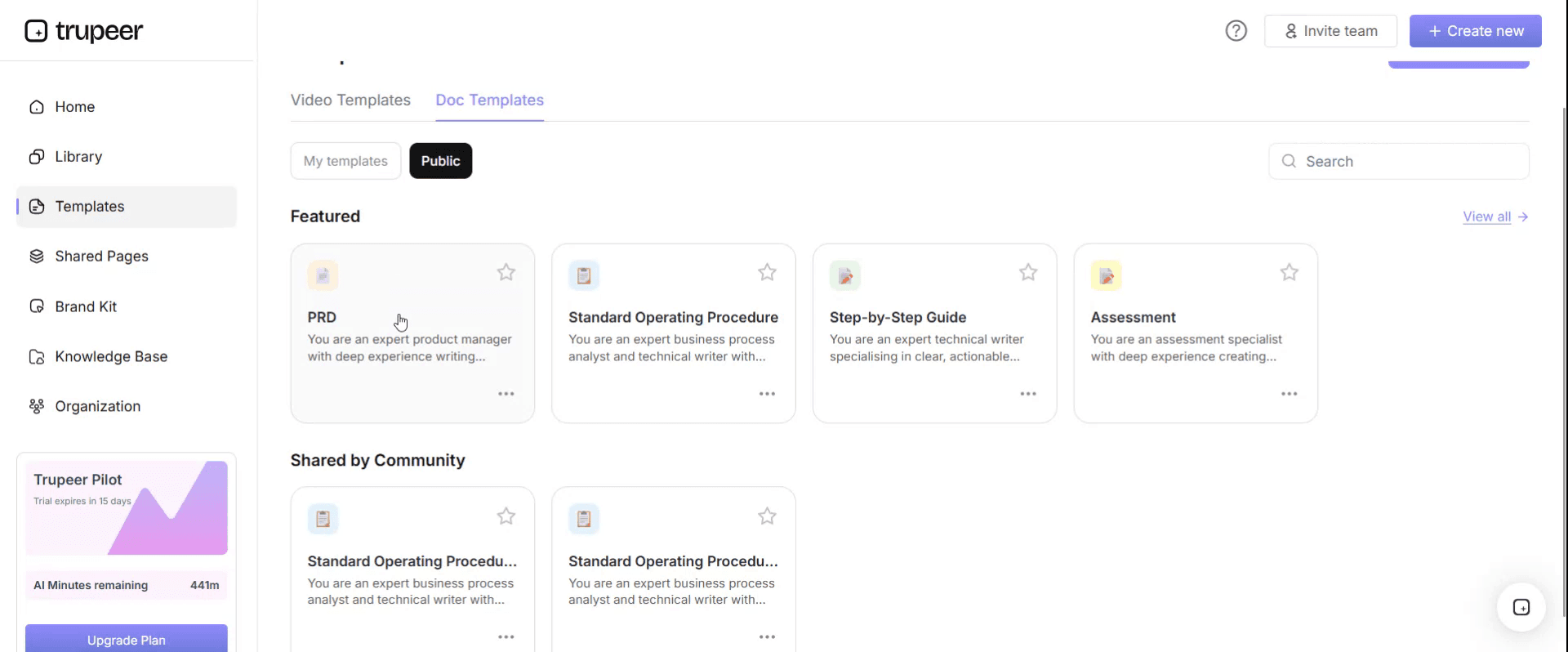
Schritt 2: Wählen und öffnen Sie eine Vorlage
Klicken Sie auf eine beliebige Vorlage, mit der Sie arbeiten möchten, um sie zu öffnen.
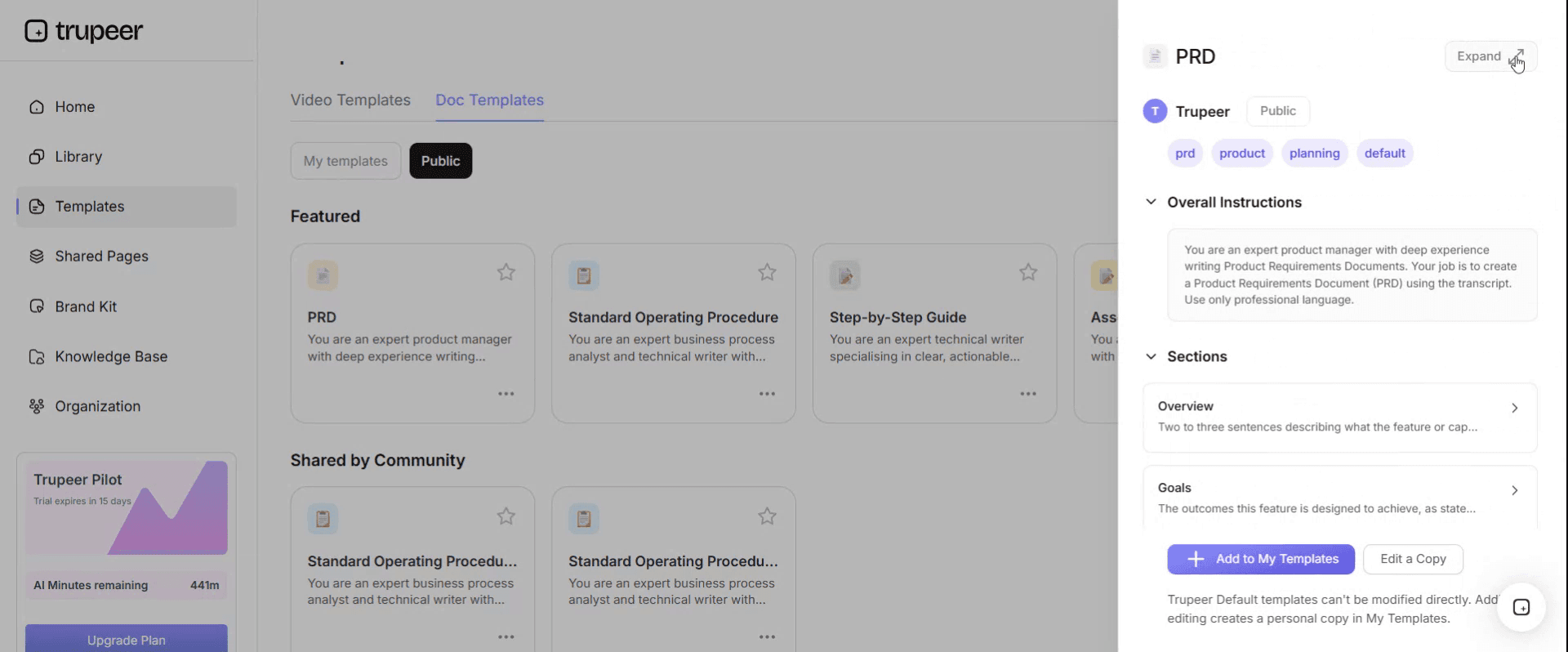
Schritt 3: Erweitern Sie die Vorlagenansicht
Falls nötig, erweitern Sie die Vorlagenansicht, um das vollständige Layout und die Details klar zu sehen.
Schritt 4: Bearbeiten Sie die Vorlage
Klicken Sie auf „Bearbeiten“, um mit der Anpassung der ausgewählten Vorlage zu beginnen.
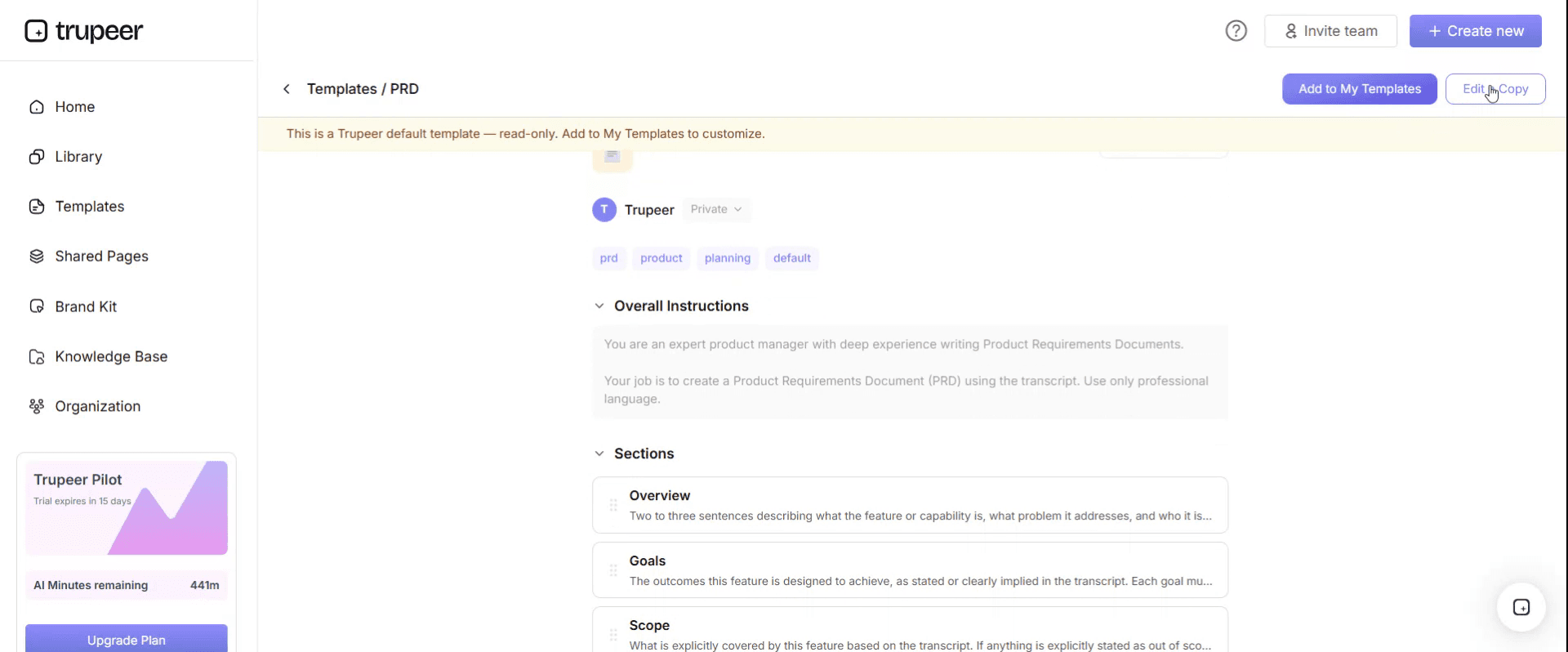
Im Editor können Sie:
Neue Abschnitte hinzufügen
Formatierungsregeln definieren oder aktualisieren
Ein Logo hinzufügen und Position sowie zugehörige Einstellungen anpassen
Schritt 5: Speichern Sie Ihre angepasste Vorlage
Nachdem Sie alle notwendigen Änderungen vorgenommen haben, klicken Sie auf „Speichern“, um die aktualisierte Vorlage als Ihre eigene zu sichern.
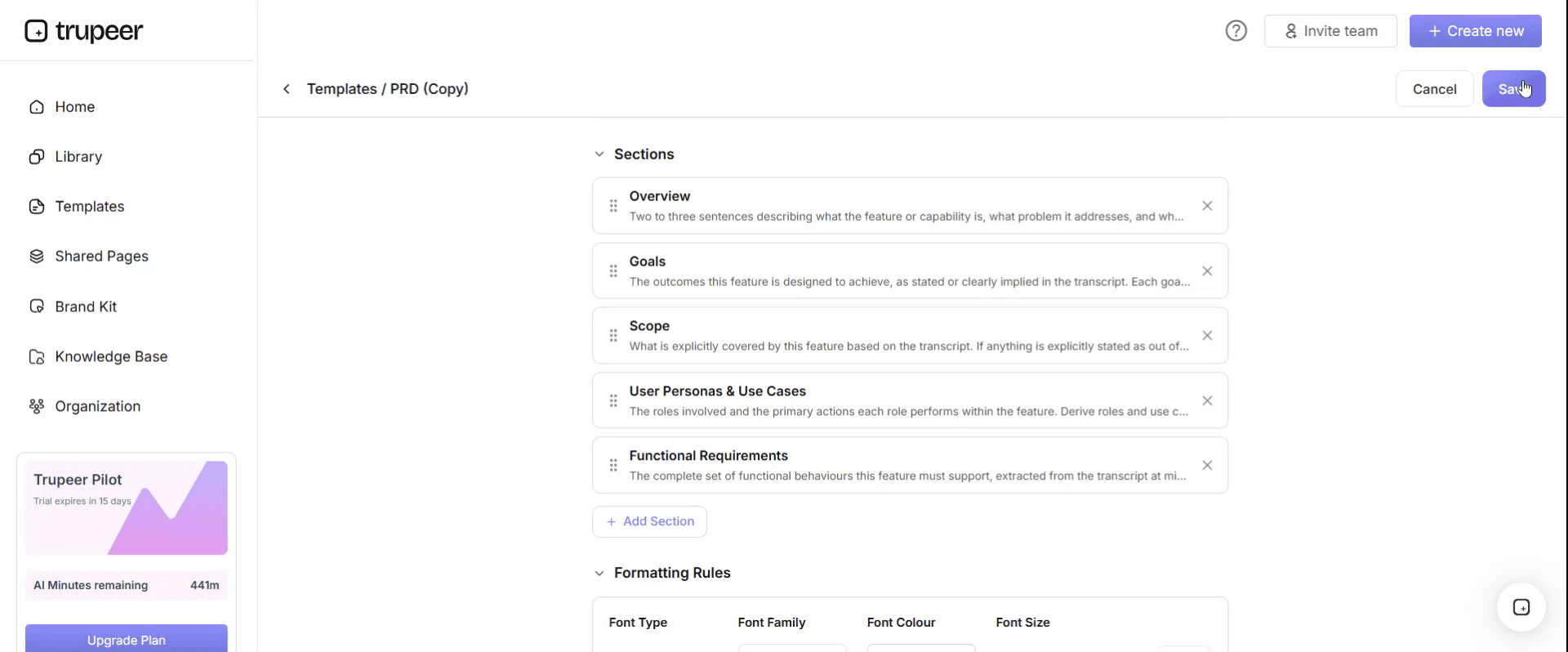
Schritt 6: Vorschau ansehen und die Vorlage feinjustieren
Wenn Sie sehen möchten, wie Ihre angepasste Vorlage aussieht, öffnen Sie die Vorschau.
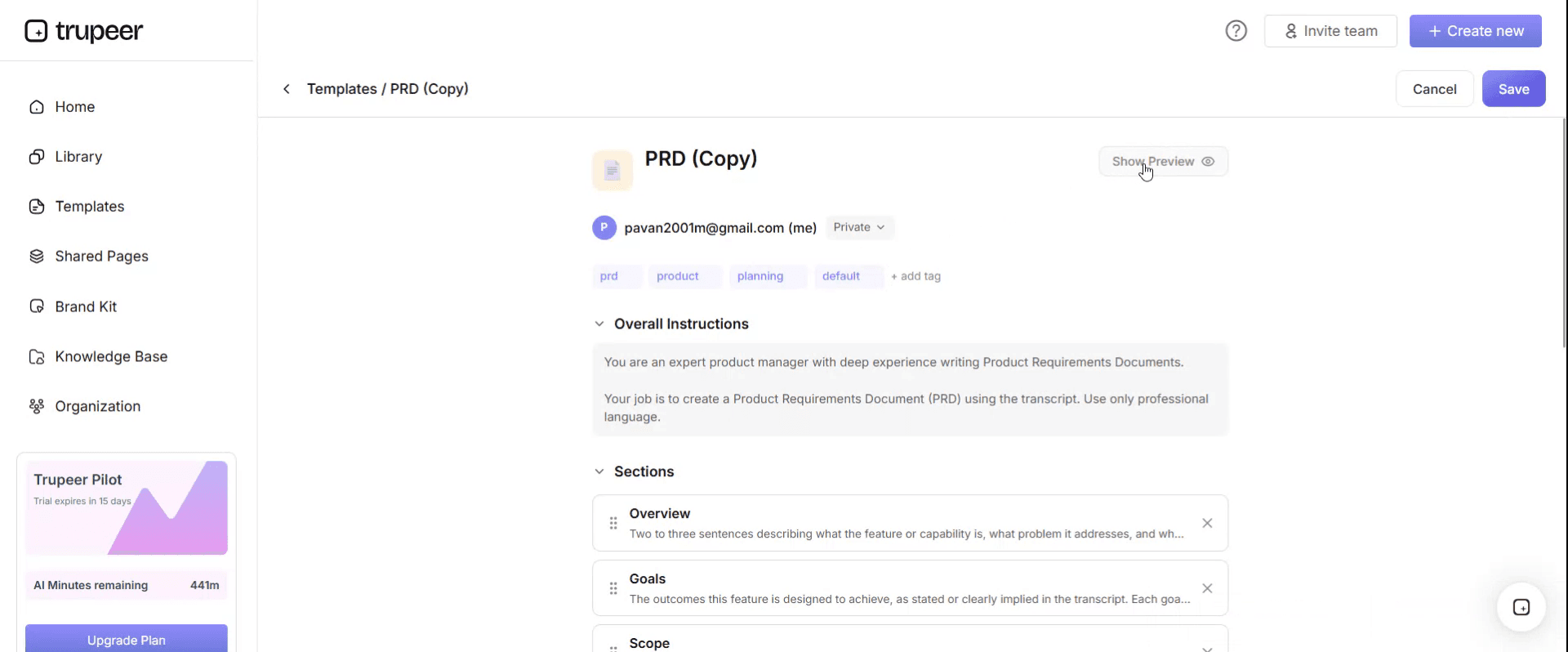
Ausgehend vom Vorschau-Bildschirm können Sie bei Bedarf weiterhin direkt Anpassungen vornehmen – damit die Vorlage genau so erscheint, wie Sie es möchten.
Mit einer Lean-PRD-Vorlage können Sie:
Stunden beim Schreiben sparen: Überspringen Sie das 20-seitige Format zugunsten einer fokussierten Lean-Struktur mit einer Seite.
Teams schneller ausrichten: Integrierte Abschnitte für Problem und Hypothese sorgen für Produktklarheit.
Im Brand bleiben: Nutzen Sie Ihr Logo, Ihre Schriftarten und Farben – mit Trupeer's Brand Kit.
Schnell iterieren: Aktualisieren Sie die PRD und generieren Sie das Video neu, während sich die Spezifikation weiterentwickelt.
Über Teams hinweg standardisieren: Verwenden Sie dieselbe Vorlage für jede Produktinitiative.
Globale Produktteams erreichen: Übersetzen Sie Lean-PRDs in 65+ Sprachen mit nur einem Klick.
So markieren Sie jede Anforderung als „vorgegeben“ oder „Team-Entscheidung“
Zwei Tags, in jeder Zeile, ohne Ausnahmen.
Vorgegeben. Es muss so sein – und hier ist der Grund. Der Grund ist nicht optional, und er ist der Teil, der die Vorgabe überlebensfähig macht. Eine Vorgabe mit Grund lässt sich sinnvoll in Frage stellen, wenn sich die Umstände ändern. Eine Vorgabe ohne Grund wird zur Legende, die drei Jahre später niemand anzufassen wagt.
Team-Entscheidung. Ich habe das Ergebnis beschrieben. Wie Sie dorthin kommen, ist Ihre Sache. Wenn Sie meine Meinung möchten, fragen Sie – und behandeln Sie sie als Meinung.
Das Verhältnis sagt Ihnen etwas. Erste Entwürfe sind stark vorgegeben, und wenn Sie jeder Zeile einen Grund hinzufügen, bricht der Großteil davon zusammen. Denn der ehrliche Grund ist oft: „Das stand in der Vorlage“.
Zwei Regeln halten die Tags ehrlich. Eine Vorgabe, die mit „Konsistenz mit dem Rest des Produkts“ begründet wird, sollte die konkrete Sache nennen, mit der sie konsistent ist. Und eine Zeile „Team-Entscheidung“ ist ein Versprechen: Wenn Sie während der Umsetzung eine Vorgabe überstimmen, haben Sie das Dokument gebrochen – dann wird die nächste nicht mehr geglaubt.
Die Akzeptanzzeile, die Delegation sicher macht
Sie können nur dann die „Wie“-Frage abgeben, wenn Sie exakt festgelegt haben, was genau gelten muss. Das ist der Trade-off – und die Akzeptanzzeile ist der Ort, an dem Sie dafür bezahlen.
Ein Satz, der beschreibt, was nach dem Versand wahr sein wird und jetzt noch nicht wahr ist. So formuliert, dass Sie und ein Engineer unabhängig voneinander zustimmen würden, ob es passiert ist. Kein Kennzahlenziel, das ein Business-Ergebnis ist und woanders hingehört. Keine Liste von Features – denn das ist genau das, was Sie nicht schreiben wollen.
Gut: Ein Kunde kann eine Datei mit bis zu fünfzigtausend Zeilen hochladen, seinen Laptop schließen und beim Zurückkommen feststellen, dass der Import korrekt abgeschlossen wurde.
Schlecht: Verbessern Sie das Bulk-Import-Erlebnis.
Die Akzeptanzzeile gehört ganz nach oben – vor dem Kontext und vor den Anforderungen. Wenn Sie keine schreiben können, sind Sie nicht bereit, das Dokument zu schreiben. Der ehrliche nächste Schritt ist dann ein Gespräch – statt eines Entwurfs.
Kostenlose Lean-PRD-Vorlage: die eineinhalb Seiten zum Kopieren
Kopieren Sie von hier.
Akzeptanzzeile. Ein Satz, wie oben.
Warum jetzt. Zwei oder drei Sätze. Was passiert gerade, sodass es sich lohnt, das in diesem Quartal zu tun – statt erst im nächsten Jahr. Dieser Abschnitt wird gekürzt und sollte nicht gekürzt werden. Denn er ist das, womit das Team die hundert kleinen Trade-offs trifft, die Sie nie sehen werden.
Für wen das ist. Die engste wahre Beschreibung des Nutzers – und ungefähr, wie viele es davon gibt. Eine Zahl an dieser Stelle verhindert eine Menge Over-Engineering.
Vorgegebene Anforderungen. Nummeriert. Jede besteht aus genau einem Satz plus einem Grund. Ziel: unter fünfzehn. Wenn Sie dreißig haben, sind die meisten davon verkleidete Team-Entscheidungen.
Team-Entscheidung. Eine kurze Liste, die die Bereiche benennt, die Sie ausdrücklich nicht spezifizieren. Das Benennen ist wichtig, weil ein nicht erwähnter Bereich wie ein Versehen wirkt – statt wie eine Delegation.
Nicht bauen. Die Dinge, um die Menschen gebeten haben, die aber außerhalb des Scopes liegen – konkret genug benannt, um strittig zu sein. Eine „Nicht bauen“-Liste, gegen die niemand etwas einwendet, ist keine Arbeit.
Offene Fragen. Mit Namen und Datum zu jeder Frage. Fragen ohne Verantwortlichen bleiben unbeantwortet, bis sie zu Blockern werden.
Woran wir es erkennen. Das Maß, das Sie nach dem Release ansehen werden – und wann. Eins oder zwei, kein Dashboard.
Kopieren Sie bis hierher. Wenn die ausgefüllte Version länger als zwei Seiten wird, schauen Sie zuerst in die Liste der vorgegebenen Punkte. Dort ist die Polsterung immer.
Beispiel für eine ausgefüllte Lean-PRD für eine Bulk-Import-Funktion
Akzeptanzzeile. Ein Kunde kann als Administrator bis zu fünfzigtausend Kundendatensätze aus einer CSV importieren, während des Imports seinen Browser schließen und beim Zurückkommen feststellen, dass der Import korrekt abgeschlossen wurde.
Warum jetzt. Drei unserer fünf größten Accounts migrieren in diesem Quartal von einem Wettbewerber – und jeder hat zwischen zwölf und vierzigtausend Datensätzen. Heute fügen sie entweder Batches mit fünfhundert Datensätzen ein oder schicken uns eine Datei, die wir manuell verarbeiten. Das hat unser Support-Team letzten Monat elf Tage gekostet.
Für wen das ist. Account-Administratoren während des Onboardings – ungefähr vierzig davon pro Quartal, die meisten werden das genau einmal machen.
Vorgegebene Anforderungen.
Der Import muss überstehen, dass der Browser geschlossen wird, weil Dateien dieser Größe zwanzig Minuten oder länger brauchen und Laptops in den Sleep-Modus gehen.
Zeilen, die die Validierung nicht bestehen, dürfen Zeilen, die bestehen, nicht blockieren. Denn aktuell kostet eine einzelne fehlerhafte Zeile einem Kunden den gesamten Lauf.
Der Kunde muss eine Datei mit den fehlgeschlagenen Zeilen herunterladen können – inklusive angehängtem Grund. Denn so können sie die Probleme beheben, ohne unsere Hilfe.
Die Duplikaterkennung muss auf der E-Mail-Adresse laufen und damit übereinstimmen, wie der Rest des Produkts einen Kunden identifiziert.
Kein Import darf beginnen, ohne dass eine Vorschau der ersten zehn gemappten Zeilen auf dem Bildschirm angezeigt wird. Denn das häufigste Support-Ticket ist eine falsch gemappte Spalte, die sich erst im Nachhinein herausstellt.
Team-Entscheidung. Layout des Mapping-Screens, Formulierung der Fehlermeldung, Fortschrittsanzeige, wo die Validierung läuft, Obergrenze der Dateigröße über fünfzigtausend Zeilen hinaus, ob Mappings zwischen Imports gemerkt werden.
Nicht bauen. Geplante oder wiederkehrende Imports. Import direkt aus Salesforce oder HubSpot. Bearbeiten von Datensätzen während des Imports. Alle drei wurden angefragt – und alle drei sind separate Arbeitspakete.
Offene Fragen. Was passiert mit einem laufenden Import, wenn die Sitzung des Kunden abläuft, Owner Priya, bis zum 14. März.
Woran wir es erkennen. Manuelle Imports, die vom Support bearbeitet werden, fallen bis zum Ende des Quartals unter einen pro Monat.
Fünf vorgegebene Anforderungen, sechs Bereiche ausdrücklich delegiert. Das ist eine Seite.
Die PRD, die fünf Sprints statt drei brauchte
Halbrook, ein B2B-Softwareunternehmen mit etwa neunzig Mitarbeitenden, hat die oben beschriebene Funktion gebaut. Der erste Versuch nutzte ihre Standardvorlage und lief auf neun Seiten mit einundvierzig nummerierten Anforderungen hinaus.
Darin wurden die Spaltenreihenfolge auf dem Mapping-Screen festgelegt, die Formulierungen von sechs Fehlermeldungen, eine Obergrenze von zehn Megabyte für Dateien, dass die Validierung clientseitig laufen muss, das Modal-Layout und dass der Fortschrittsbalken einen Prozentwert anzeigen muss.
Auf fünf Sprints geschätzt. Es wurden fünf.
Die Retrospektive zeigte den Unterschied. Sechs der einundvierzig Anforderungen wurden während des Builds neu verhandelt – jede kostete zwischen einem halben Tag und drei Tagen Hin-und-her. Der Grund: Jede Anforderung spezifizierte eine Umsetzung, für die das Team gute Gründe hatte, es anders zu machen.
Clientseitige Validierung war das Schlimmste davon. Das Team wusste, dass serverseitige Verarbeitung oberhalb einiger tausend Zeilen notwendig ist, und brachte das im ersten Sprint ein. Es dauerte neun Tage, bis das Dokument geändert war. Denn der PM war im Urlaub und niemand fühlte sich in der Lage, eine nummerierte Anforderung in einer unterschriebenen PRD zu überstimmen.
Als sie danach gefragt wurde, sagte die PM, sie habe bei fünf dieser sechs keine Meinung gehabt. Sie waren da, weil die Vorlage einen Abschnitt für die User Interface hatte und es leer zu lassen sich schlampig angefühlt hatte.
Die Anforderung, um die sie sich tatsächlich kümmerte – dass der Import übersteht, dass der Browser geschlossen wird – stand an Position vierunddreißig in der Liste und wurde als „nice-to-have“ gelesen. Sie wurde ohne sie ausgeliefert und zwei Monate später ungefähr mit einem Sprint zusätzlicher Kosten nachgereicht.
Die nächste Funktion nutzte das Format auf dieser Seite. Eineinhalb Seiten, elf vorgegebene Anforderungen, jeweils mit einem Grund, sechs Bereiche als Team-Entscheidung markiert, eine Akzeptanzzeile. Auf drei Sprints geschätzt und in drei geliefert – ohne dass eine Anforderung neu verhandelt wurde.
Eine Designentscheidung kam jedoch zurück zu ihr: vom Team als Team-Entscheidung markiert, die sich am Ende auf die Akzeptanzzeile auswirkte. Genau dieses Gespräch versucht das Format zu erzeugen.
So schreiben Sie eine Lean-PRD in unter einer Stunde
Schreiben Sie zuerst die Akzeptanzzeile und investieren Sie dafür unverhältnismäßig viel Zeit in diese eine Stunde. Alles, was danach kommt, ist leichter, sobald sie existiert – und wenn sie nicht kommt, ist das eine Information.
Schreiben Sie als Nächstes die „Nicht bauen“-Liste, während Sie noch im Kopf haben, worum Menschen gebeten haben. Später ist es viel schwerer, das zu formulieren, wenn Sie bereits an die Form des Ganzen gebunden sind.
Listen Sie dann jede Anforderung auf, die Ihnen einfällt – ohne zu taggen – für zehn Minuten. Filtern Sie dabei nicht.
Jetzt taggen Sie sie. Schreiben Sie für jede den Grund auf, warum es so sein muss. Alles, bei dem sich herausstellt, dass der Grund „so machen wir das normalerweise“ ist, oder das gar nicht erst auftaucht, wandert zur Team-Entscheidung. Dieser Schritt halbiert die Liste typischerweise.
Schreiben Sie dann „Warum jetzt“ und „Für wen das ist“ aus dem, was Sie bereits wissen. Zwei Minuten pro Punkt.
Zum Schluss lesen Sie die Liste der vorgegebenen Punkte so, als wären Sie der Engineer. Überall dort, wo Sie „Warum?“ fragen würden und das Dokument keine Antwort gibt, fügen Sie entweder den Grund hinzu oder streichen Sie die Zeile.
Häufige Fehler bei der Nutzung einer Lean-PRD-Vorlage
Fehler | So sieht es aus | So machen Sie es stattdessen |
|---|---|---|
Standardmäßig spezifizieren | Jeder Vorlagenabschnitt ist ausgefüllt | Fragen Sie, ob Sie in beiden Fällen gleichermaßen zufrieden wären |
Vorgaben ohne Gründe | Nummerierte Anforderungen, ohne Begründung | Fügen Sie den Grund hinzu oder verschieben Sie es zur Team-Entscheidung |
Das Wichtige vergraben | Die kritische Anforderung steht an Position vierunddreißig | Sie gehört in die Akzeptanzzeile |
Leere „Nicht bauen“-Liste | „Future considerations: none“ | Benennen Sie die Dinge, um die Menschen gebeten haben und die Sie abgelehnt haben |
Eine Team-Entscheidung überstimmen | PM lehnt eine Umsetzung während des Builds ab | Akzeptieren Sie es – oder geben Sie zu, dass das Tag falsch war, und sagen Sie es |
Lean für die falsche Arbeit verwenden | Regulierte, sicherheitskritische oder vertragliche Builds | Nutzen Sie eine vollständige Spezifikation mit Freigabe |
So behandeln, als wäre es ein Vertrag | Das Dokument ist unterschrieben und eingefroren | Versionieren Sie es und dokumentieren Sie, was sich geändert hat und warum |
Die letzten beiden Punkte lohnen sich, genauer zu betrachten. Wenn die Arbeit von einem Regulator gesteuert wird, von einem Safety Case, von einem Kundenvertrag mit festgelegten Deliverables oder von einer Verpflichtung zu Barrierefreiheit oder Datenschutz, dann ist eine Lean-PRD das falsche Instrument. Dafür braucht man eine vollständige Spezifikation, Nachvollziehbarkeit zur Verpflichtung und eine Prüfung durch die Person, die dafür verantwortlich ist. Die „Wie“-Frage zu delegieren ist genau das, was Sie nicht tun können, wenn das „Wie“ das ist, was auditiert wird.
Wie unterscheidet sich eine PRD von einer BRD, einer Spezifikation und einer User Story
Eine Business Requirements Document liegt über der PRD. Sie beschreibt ein Business-Problem und was eine Lösung kommerziell erreichen muss – normalerweise bevor überhaupt jemand entschieden hat, was gebaut werden soll. Wenn Sie nach einem Beispiel für ein Business Requirements Document suchen, ist das ein anderes Artefakt und gehört in eine andere Phase.
Eine technische Spezifikation liegt darunter. Sie beschreibt, wie das Produkt gebaut wird, und wird von Engineering geschrieben – nicht für Engineering. Eine Lean-PRD lässt bewusst den Großteil dieses Platzes leer. Genau das macht das Tag „Team-Entscheidung“.
Eine User Story ist kleiner als all diese Dokumente. Eine Story ist ein Ausschnitt der Arbeit. Eine PRD deckt einen Umfang an Arbeit ab, der viele Stories enthalten wird, und die Akzeptanzzeile ist das, wozu diese Stories gemeinsam beitragen sollen.
Ein Product Specification Document, das Organisationen oft führen, ist näher an einer Beschreibung dessen, was gebaut wurde, als an dem, was gebaut werden sollte. Es wird nach dem Release gepflegt, und die PRD nicht.
Lean-PRD-Vorlagen in Confluence, Notion und Google Docs
Confluence ist der häufigste Ort und die Standard-PRD-Vorlage ist konventionell: mit Abschnitten für Ziele, Hintergrund, Annahmen, User Stories, Anforderungen und offene Fragen. Das durch die Struktur oben zu ersetzen funktioniert gut, und die Seiten-Eigenschaften für Status und Owner lohnen sich, beizubehalten.
Notion passt besser, wenn Sie die vorgegebenen Anforderungen als Datenbank haben möchten. Dann wird das Tag zu einer Eigenschaft, auf die Sie filtern können, und das Verhältnis über ein Quartal hinweg ist sichtbar, ohne dass Sie zählen müssen.
Google Docs ist am schnellsten für ein Dokument, das diskutiert wird, weil die Argumentation in Kommentaren stattfindet. Die Schwäche ist, dass die Diskussion dann in gelösten Kommentaren lebt, die niemand liest. Kopieren Sie daher jede Entscheidung, die das Dokument geändert hat, in den Grund der Anforderung, bevor Sie den Thread auflösen.
Welche Variante Sie auch nutzen: Das Format ist viel weniger entscheidend als die Frage, ob die Tags eine Review-Session überstehen.
Kann ich eine Lean-PRD-Vorlage in Word, Excel oder PDF bekommen?
Word oder Google Docs passen für das Dokument selbst. Die Struktur oben wird direkt eingefügt – ohne Anpassung. Genau dort sollte sie auch leben, denn eine PRD ist Prosa mit einer Liste darin.
Excel eignet sich für die Liste der vorgegebenen Anforderungen, wenn Sie mehrere Features gleichzeitig ausführen und das Tag-Verhältnis über ein Team hinweg sehen möchten. Spalten für Feature, Anforderung, Tag, Grund und ob es während des Builds neu verhandelt wurde. Diese letzte Spalte ist das einzige PRD-Metrik, das ich je gesehen habe, das das Verhalten von jemandem verändert hat.
PDF eignet sich für die Version, die an eine Entscheidung angehängt oder außerhalb des Unternehmens geteilt wird. Behalten Sie die Arbeitsversion editierbar, denn der Abschnitt „Offene Fragen“ soll vor Ort beantwortet werden.
Sind KI-PRD-Generatoren es wert, für eine Lean-PRD genutzt zu werden?
Sie sind wirklich nützlich für die Teile, die eher „Erinnern“ als „Urteilen“ sind. Geben Sie einem guten Generator eine Beschreibung des Features, und er erstellt einen strukturierten Entwurf mit Abschnitten, an die Sie vielleicht nicht gedacht haben – ein vernünftiger Ausgangspunkt.
Was sie nicht können, ist das Tagging. Denn die Frage ist, ob Sie in beiden Fällen gleichermaßen zufrieden wären – und nur Sie wissen das. Wenn man sie einfach laufen lässt, erzeugt ein Generator ein selbstbewusst spezifiziertes Dokument. Das liegt daran, wie seine Trainingsdaten aussehen – und genau das ist der Fehler, über den diese Seite spricht.
Der praktische Nutzen ist, die lange Version zu generieren und sie dann mithilfe der Tag-Frage zu kürzen. Das ist schneller als von einer leeren Seite zu schreiben, und es hält das Urteilsvermögen dort, wo es hingehört.
So halten Sie die PRD mit dem verbunden, was ausgeliefert wurde
Eine PRD hört am Tag auf, an dem die Arbeit beginnt, gelesen zu werden – und wird danach nie aktualisiert. Das ist in Ordnung. Nicht in Ordnung ist, dass die Akzeptanzzeile dann niemanden außerhalb des Teams erreicht.
Die Personen, die sie brauchen, sind Support, der die Tickets bekommt, und Kunden, die wissen müssen, was sich geändert hat. Beide erhalten normalerweise einen Eintrag im Changelog mit genau einer Zeile – und keiner bekommt die Details zum „resumable import“, die einen Sprint gekostet haben.
Trupeer AI schließt diese Lücke günstig. Wer es gebaut hat, zeichnet das fertige Feature einmal auf, und Sie erhalten einen schriftlichen Durchlauf, ein Video für den Release Note sowie ein Dokument für Ihre Knowledge Base in Ihrer eigenen Markenwelt. Strukturen für die kundenseitige Version finden Sie in unseren Knowledge-Base-Artikel-Vorlagen.
Dokumentieren. Gebrandet. Übersetzen. Trupeer.
Für die interne Dokumentation dessen, was tatsächlich gebaut wurde, deckt die technische Dokumentation das ab, und die Einrichtungsanweisungen finden Sie in der Anleitung zur Einrichtung der Dokumentvorlage.
Häufig gestellte Fragen
Gibt es eine kostenlose Lean-PRD-Vorlage in Word?
Die Struktur oben wird direkt in Word oder Google Docs eingefügt und benötigt keine Neuformatierung. Es gibt keinen gesicherten Download – das bedeutet auch: kein Formular zwischen Ihnen und der Vorlage. Bewahren Sie Ihre ausgefüllte Version als „Hausformat“ des Teams auf. Denn der Wert entsteht daraus, dass jede PRD gleich aussieht – nicht aus den Abschnitten selbst.
Gibt es eine kostenlose Lean-PRD-Vorlage in PDF?
Exportieren Sie Ihre eigene, wenn das Dokument außerhalb des Teams geteilt wird oder an einen Entscheidungsdatensatz angehängt ist. Halten Sie sie editierbar, solange die offenen Fragen noch offen sind. Denn eine PRD, die eingefroren wurde, bevor die Fragen beantwortet sind, wird eher ignoriert als befolgt.
Gibt es eine kostenlose Lean-PRD-Vorlage in Excel?
Excel ist für das Anforderungen-Register über Features hinweg gedacht – nicht für eine einzelne PRD. Feature, Anforderung, vorgegeben oder Team-Entscheidung, der Grund und ob es während des Builds neu verhandelt wurde. Diese letzte Spalte quartalsweise zu prüfen ist der schnellste Weg, um herauszufinden, welche PMs zu stark spezifizieren.
Gibt es eine PRD-Vorlage für Google Docs?
Kopieren Sie die Struktur oben in ein Google Doc und speichern Sie es als Vorlage in Ihrem Team-Drive. Google Docs ist dafür speziell eine gute Wahl, weil die Diskussion in Kommentaren stattfindet – mit dem Hinweis, dass Entscheidungen aus einem Kommentar-Thread in den Grund der Anforderung geschrieben werden müssen, bevor der Thread aufgelöst wird.
Was ist die beste PRD-Vorlage?
Diejenige, die Ihre Engineers lesen, bevor sie anfangen – nicht während der Retrospektive. Die Struktur ist viel weniger entscheidend als die Frage, ob Anforderungen Gründe tragen und ob das Dokument sagt, wo das Team entscheidet. Eine Zehn-Abschnitt-Vorlage ohne Begründungsfeld erzeugt Dokumente, denen niemand vertraut – egal wie vollständig sie aussieht.
Wo finde ich ein Beispiel für ein Business Requirements Document in PDF?
Eine BRD ist ein anderes Dokument in einer früheren Phase. Sie beschreibt ein Business-Problem und was eine Lösung erreichen muss – normalerweise bevor die Produktentscheidung getroffen wird. Wenn Sie nach einer PRD suchen, obwohl Sie eine BRD brauchen, ist das häufig und führt zu Frust. Denn die PRD geht davon aus, dass die Build-Entscheidung bereits getroffen wurde.
Wie lang sollte eine Lean-PRD sein?
Eine bis zwei Seiten, mit weniger als fünfzehn vorgegebenen Anforderungen. Länger bedeutet meistens, dass die Spezifikation wieder eingeschlichen ist. Der Test ist, zu jeder vorgegebenen Zeile einen Grund hinzuzufügen. Alles, was das überlebt, ist das echte Dokument.
Wer sollte die Lean-PRD schreiben?
Der Product Manager – mit einer Akzeptanzzeile, die mit der Person abgestimmt ist, die für das Ergebnis verantwortlich ist. Die Liste der vorgegebenen Punkte sollte von einem Senior Engineer geprüft werden, bevor sie verteilt wird. Diese Prüfung ist der Ort, an dem die meisten unnötigen Vorgaben auffallen – und sie dauert etwa zwanzig Minuten.