Trupeer Blog
Zusammenfassen
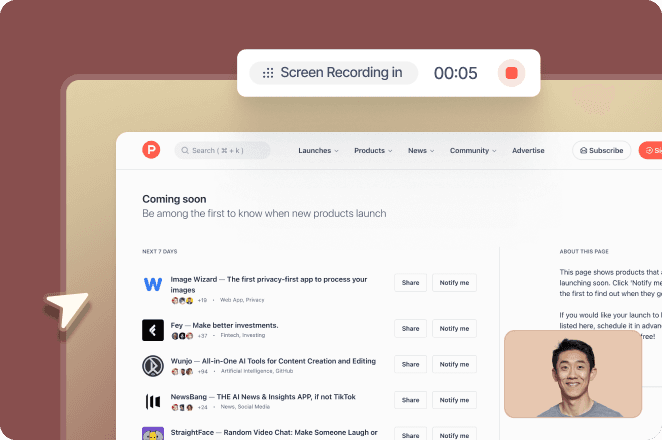
Imagine your team is in the final stages of an RFP process with a major client. You've spent weeks crafting a proposal that addresses every requirement, but there's no opportunity for a live demo. In this scenario, how do you prove your product's capabilities? Enter video evidence. By integrating video into your RFP response, you can showcase your product in action, providing the client with clear proof of its capabilities without needing a live presentation. This method is particularly effective when you're up against tight deadlines and complex RFP requirements. According to a recent survey,
80% of decision-makers prefer video over text for evaluating software solutions.
This preference highlights the importance of incorporating video into your RFP strategy.
Creating a compelling product proof video involves more than just recording your screen. It requires a strategic approach to highlight key features and benefits effectively. This is where tools like Trupeer.ai can make a significant difference, offering AI-driven features that enhance your video content. Whether you're demonstrating a software application or showcasing a unique feature, the right video evidence can differentiate your proposal from the competition. If you're looking to make a product demo video, incorporating this medium can be a big shift in securing client trust and ultimately winning the contract.
Why does video evidence in RFPs matter?
RFPs are a critical component of the sales process, often representing the final hurdle before closing a deal. For businesses, particularly those in the B2B SaaS space, the stakes are high. Clients use RFPs to evaluate potential vendors and make informed purchasing decisions. However, without a live demo, conveying the full value of your product becomes challenging. Video evidence steps in as a powerful tool to bridge this gap, allowing you to visually demonstrate product functionality and real-world applications.
For sales teams, the absence of a live demo can be a major obstacle. They rely on direct interaction to showcase product strengths and address client queries in real-time. Video evidence circumvents this limitation by offering a dynamic, engaging way to present your product. It allows stakeholders to visualize how your solution fits within their operations, making it easier for them to envision the benefits. In the pre-sales workflow, where competition is fierce, video evidence can be the deciding factor that tips the scales in your favor.
Also, video evidence facilitates better internal alignment. It ensures consistency in messaging and presentation across different departments, from sales to marketing. This uniformity not only strengthens your proposal but also enhances your brand's credibility. By investing in high-quality video content, you're demonstrating a commitment to transparency and customer satisfaction, which can significantly influence the client's decision-making process.
What are the benefits of video evidence in RFPs?
Using video evidence in RFPs offers numerous advantages that can enhance your proposal's impact. Here are some key benefits:
Enhanced Engagement. Videos capture attention more effectively than text, making your proposal more engaging and memorable. This can increase the chances of your proposal standing out in a crowded field.
Clearer Communication. Visual demonstrations can convey complex ideas more clearly than words alone. By using a product video creation approach, you can showcase product features in a way that text descriptions simply can't match.
Increased Retention. Viewers are more likely to remember content they've seen in a video compared to text. This can lead to better recall during stakeholder discussions and decision-making.
Improved Demonstration. Videos allow for a more comprehensive demonstration of product capabilities, highlighting features in real-time. This can be especially beneficial when presenting to technical audiences who require detailed information.
Broader Reach. Video content can be easily shared across platforms, reaching a wider audience. This can be particularly useful if your proposal needs to be reviewed by multiple stakeholders.
Cost-Effective Solution. Producing a video is often more cost-effective than organizing multiple live demos, especially when using an AI video platform to simplify the process.
Which Trupeer features help you create video evidence in RFPs?
Trupeer offers a suite of features tailored to help you create compelling video evidence for RFPs. These capabilities ensure your videos are not only polished but also effective in communicating your product's value.
AI screen recording with auto-zoom and click detection
This feature allows you to capture your product in action with precision. By automatically focusing on key interactions and detecting clicks, Trupeer ensures that your video highlights the most critical elements of your software. This capability is invaluable for demonstrating intricate workflows or detailed features that might be challenging to convey through text alone. The auto-zoom functionality ensures viewers don't miss important details, making your presentation more impactful.
Silent screen recording with automatic AI narration
Recording a silent demo while Trupeer's AI-generated voiceover provides narration can simplify the production process. This feature is particularly useful when you need to produce high-quality content quickly. The AI narration offers a professional touch, with customizable voices that can align with your brand's tone. This approach allows you to focus on capturing the visual aspects of your product while Trupeer handles the auditory component, ensuring a cohesive presentation. Teams weighing tools often start with a Loom alternatives comparison before standardizing on a workflow.
Automatic filler-word removal ("um", "ah", long pauses)
Trupeer's editing capabilities include automatic filler-word removal, which cleans up your recordings for a more polished final product. This feature is useful for maintaining a professional appearance, eliminating distractions that could detract from your message. By removing unnecessary pauses and filler words, your video remains focused and concise, which can help keep the viewer's attention throughout the presentation. This capability is particularly beneficial when creating multiple videos and maintaining a consistent level of quality is critical.
Auto chapters and segment detection
With auto chapters and segment detection, Trupeer can divide your video into logical sections, allowing clients to navigate through the content easily. This feature enhances the viewer experience, enabling them to jump to relevant parts quickly. For RFPs, where decision-makers may be pressed for time, this functionality ensures that they can find the information they need without having to sift through the entire video. This can enhance the overall effectiveness of your video knowledge base strategy.
AI translation into 40+ languages with lip-sync
For companies engaging with international clients, Trupeer's AI translation and lip-sync capabilities are invaluable. They allow you to translate your video content into over 40 languages, complete with synchronized lip movements. This ensures that your message is clear and accessible to non-English speaking audiences, broadening your proposal's reach. By offering localized content, you're demonstrating a commitment to meeting the needs of diverse clients, which can significantly improve your proposal's appeal.
How do you create video evidence for RFPs step by step with Trupeer?
How do you create video evidence for RFPs step by step with Trupeer?
Step 1: Capture Your Screen
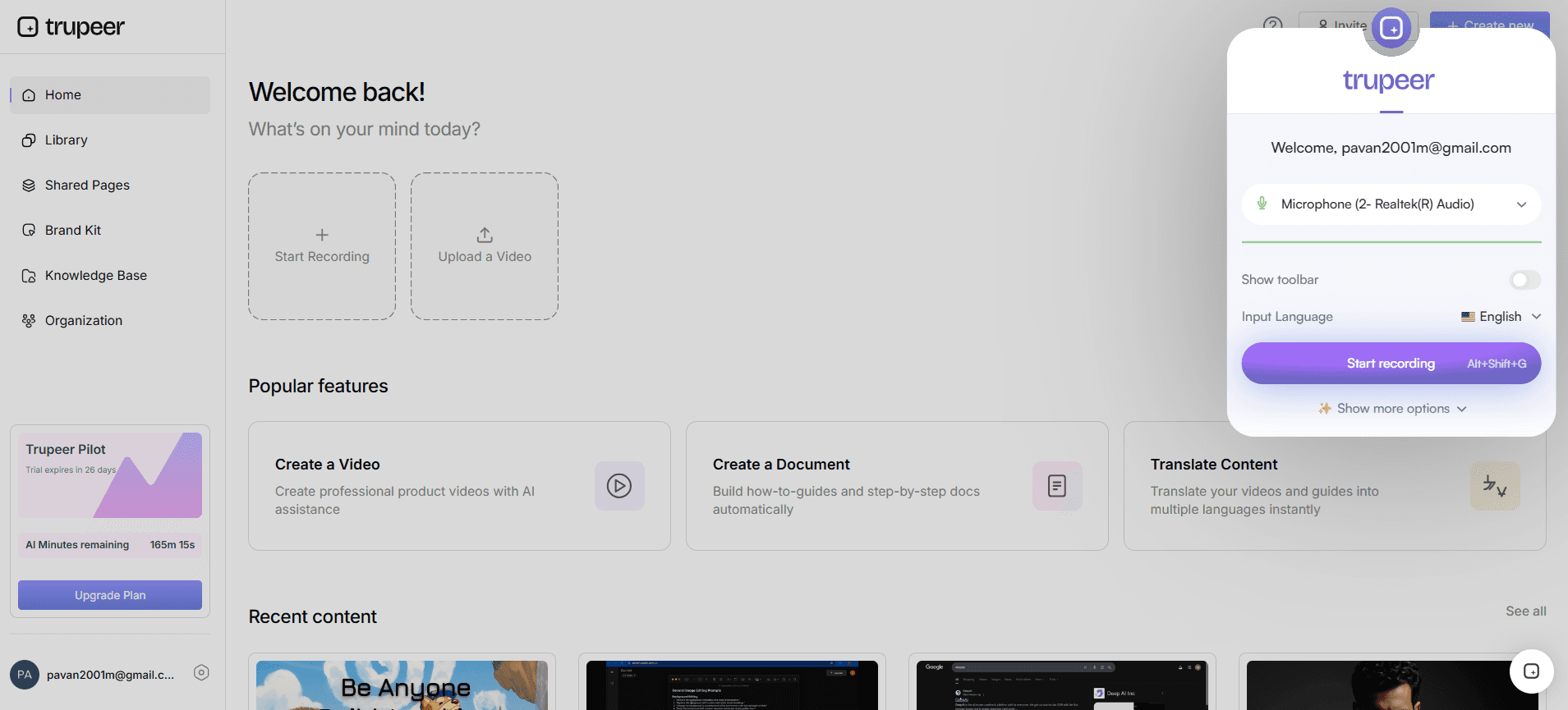
Begin by using Trupeer's AI screen recording with auto-zoom and click detection. Open the Trupeer application and select the screen recording option. This feature allows you to capture your software in action, automatically focusing on key interactions and detecting clicks. Start the recording by clicking the "Record" button. As you demonstrate your product, the auto-zoom functionality will ensure that crucial details are highlighted, providing a clear and engaging presentation for viewers. Once finished, stop the recording. The process typically takes the same length as your actual demonstration, plus a few minutes for setup.
Step 2: Add AI Narration
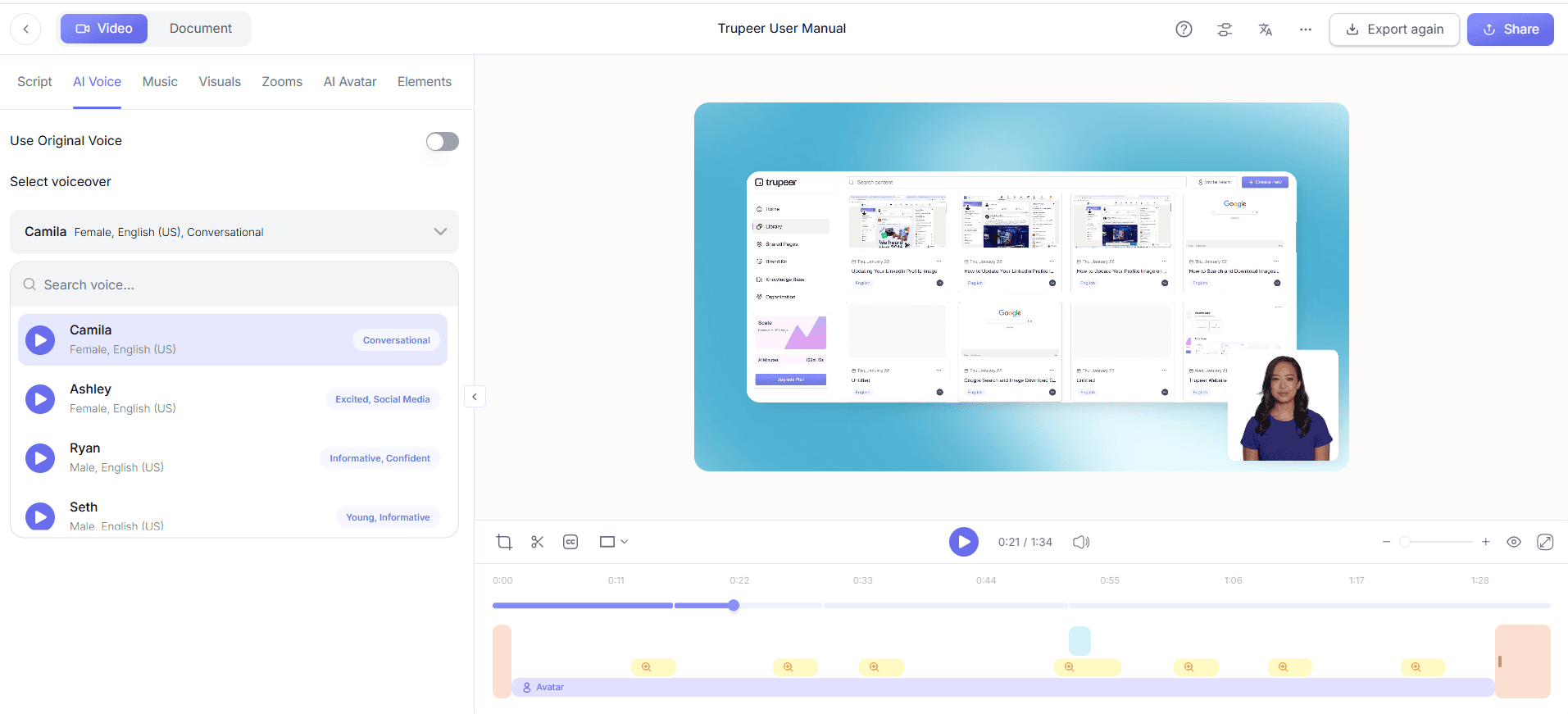
After capturing your video, enhance it with Trupeer's silent screen recording with automatic AI narration. Navigate to the editing section and select "Add Narration." Choose from over 65+ natural voices, adjusting the pace and tone to match your brand's voice. This feature provides a professional touch, delivering consistent and clear explanations of your product's features. The AI narration is automatically synchronized with your video, saving you time and ensuring that all key points are covered effectively. This step can be completed in under 15 minutes, depending on the length of your recording.
Step 3: Edit for Clarity
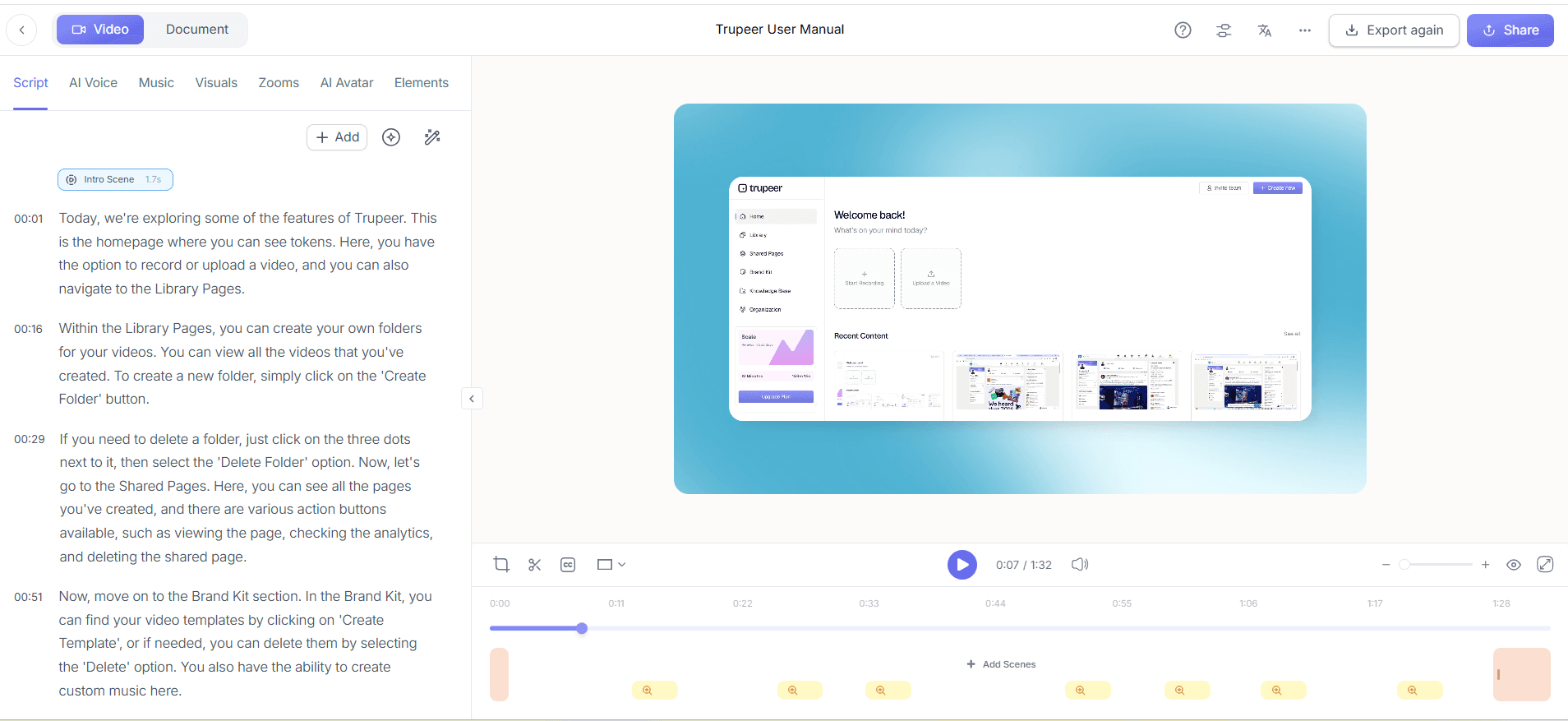
Next, use Trupeer's automatic filler-word removal to clean up your video. This feature is found under the "Edit" tab. Click "Remove Filler Words" and let the AI handle the rest. By eliminating ums, ahs, and long pauses, you maintain a polished and professional appearance. The process is quick, typically taking a few minutes, but the result is a concise video that holds the viewer's attention. This step is crucial for keeping your audience engaged and ensuring that your message is communicated clearly.
Step 4: Segment Your Video
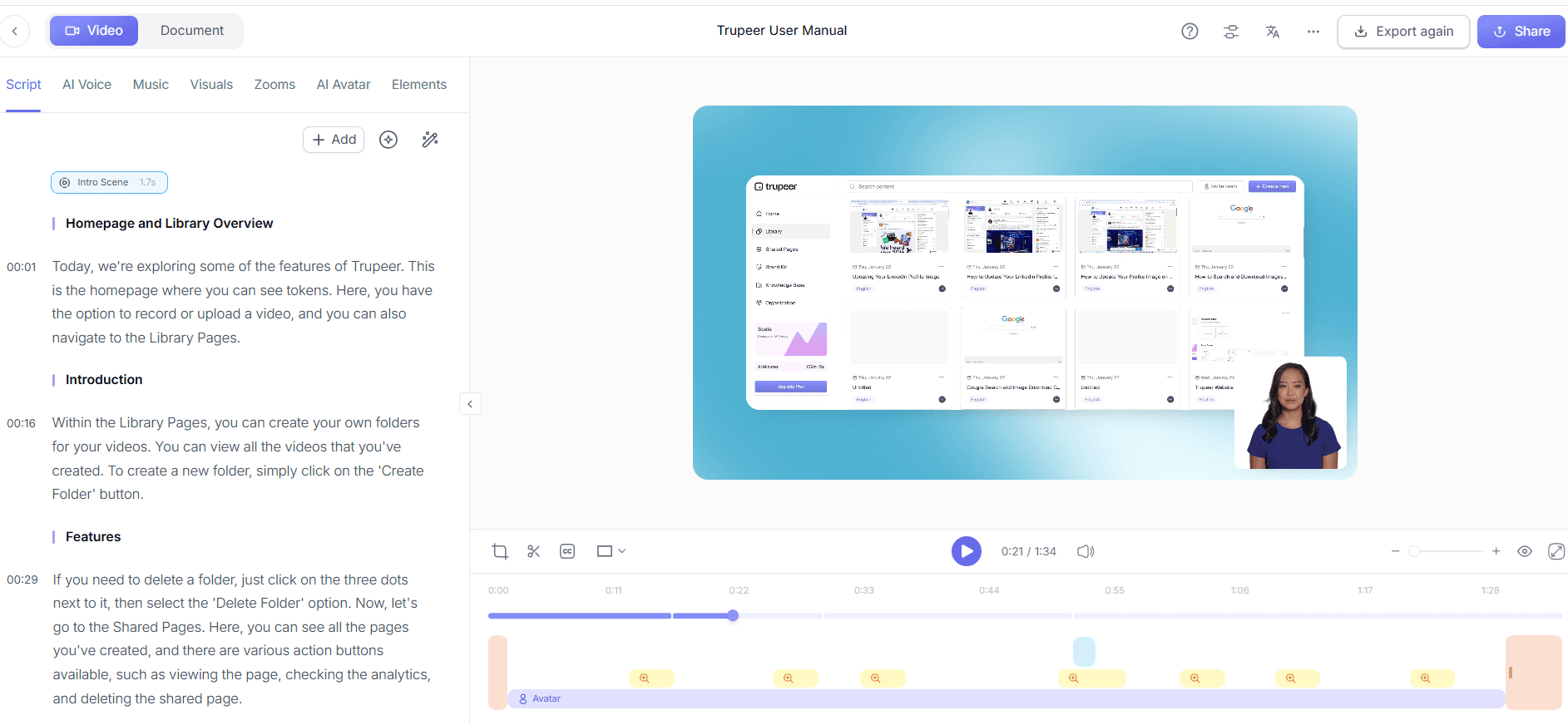
With Trupeer's auto chapters and segment detection, you can organize your video into easily navigable sections. Go to the "Chapters" option and click "Auto Detect." The software will analyze your video, identifying logical breaks and creating chapters. This feature is essential for RFPs, allowing decision-makers to quickly access the information they need. The segmentation process is automated and can usually be completed in under 10 minutes, making it a time-efficient method for enhancing viewer experience.
Step 5: Localize for Global Audiences
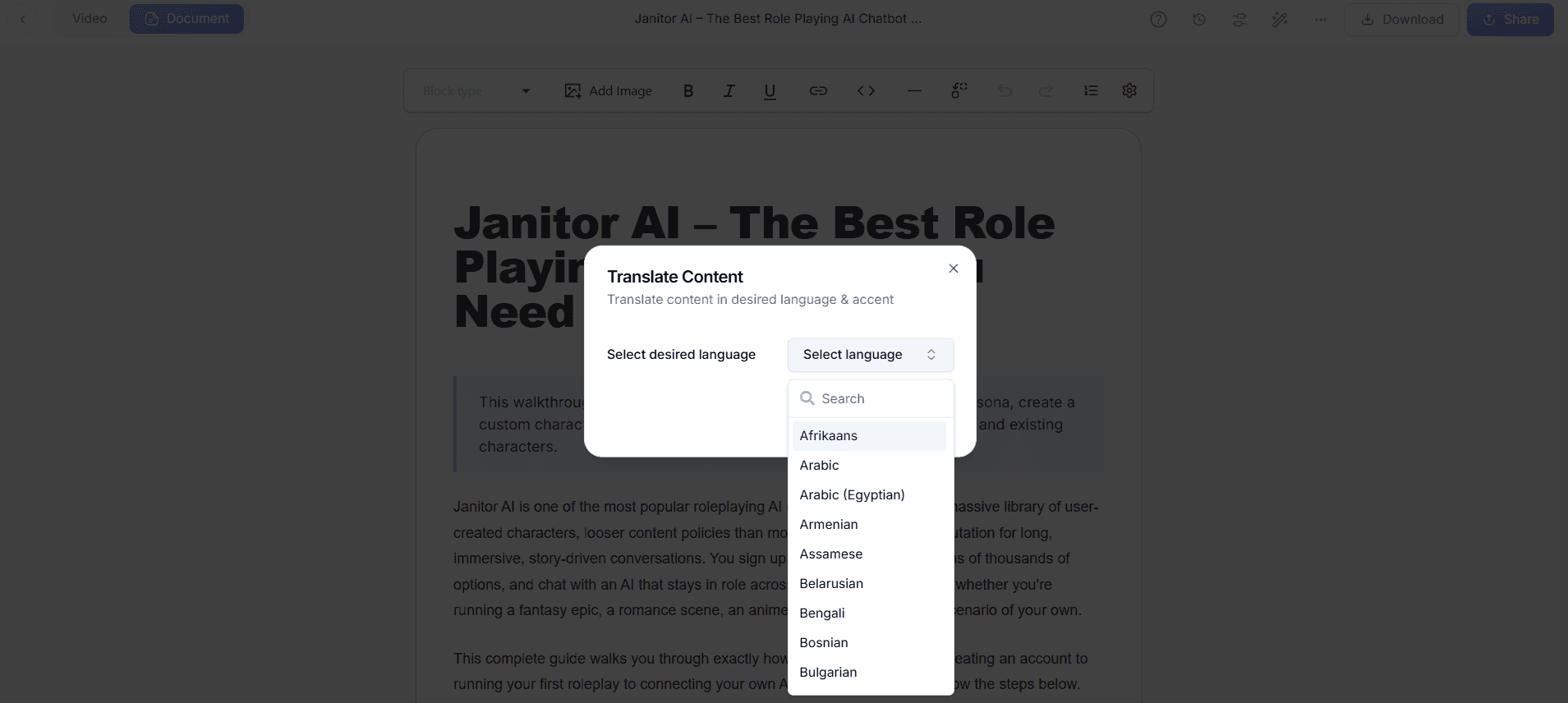
For international clients, use Trupeer's AI translation into 40+ languages with lip-sync. Select the "Translate" option from the menu, choose your target language, and click "Translate Video." The AI will handle both the translation and lip-sync, ensuring your video is accessible to a global audience. This step expands your proposal's reach and resonates with non-English speaking stakeholders. While the translation process might take 20-30 minutes depending on video length, the end result is a localized video that can significantly influence client decisions.
Step 6: Share and Monitor Engagement
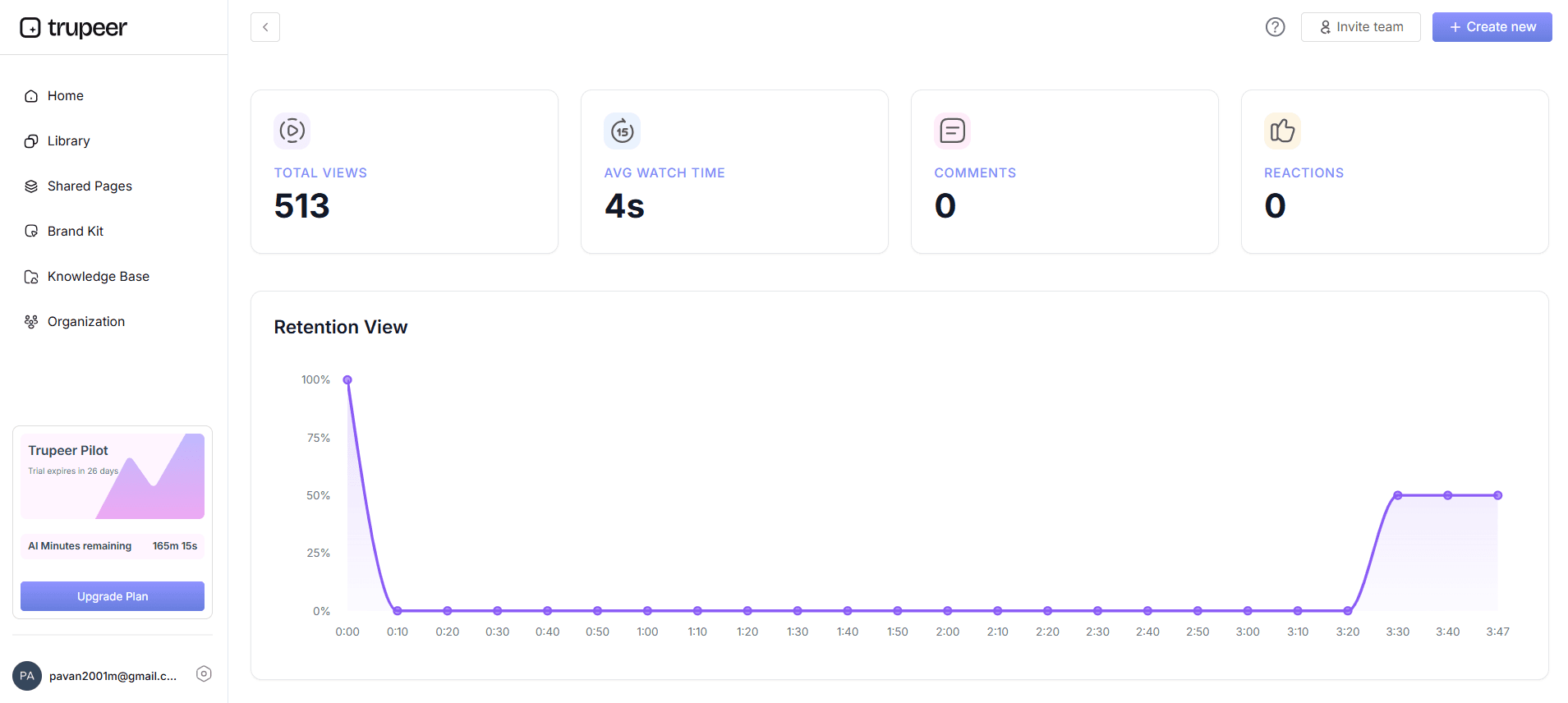
Finally, distribute your video using Trupeer's AI-searchable knowledge base. Upload your video to the platform and generate a shareable link. This link can be included in your RFP submission for easy access. Trupeer provides detailed viewer engagement analytics, allowing you to track who views your video, how long they watch, and where they drop off. This data is invaluable for refining your approach and understanding client interests. The entire process of uploading and sharing takes mere minutes, but the insights gained can be crucial for future proposals.
What tips help you create video evidence for RFPs?
Creating compelling video evidence for RFPs requires strategic planning and execution. These tips will help you maximize the impact of your video content and ensure it aligns with client expectations. Many teams pair this with a documentation platform that generates written guides from the same recording, so the pitch and the how-to stay in sync.
Plan Your Script. Outline your video content before recording to ensure you cover all necessary points. A clear script helps maintain focus and clarity.
Use Consistent Branding. Apply a consistent visual style using brand kits and templates. This reinforces your brand identity and professionalism.
Keep It Concise. Aim for a video length that balances thoroughness with brevity. Typically, 3-5 minutes is ideal for maintaining viewer engagement.
Focus on Key Features. Highlight the features most relevant to the client's needs. Tailor your demonstration to address specific RFP requirements.
Test Your Setup. Conduct a test recording to ensure audio and visual quality meet standards. This can prevent technical issues during the actual recording.
Include a Call to Action. End your video with a clear call to action, directing viewers on the next steps. This could be a contact point or a website visit.
Optimize for Sharing. Ensure your video is easy to share and accessible on various devices. Use a demo maker tool that supports diverse formats.
Frequently asked questions
How can video evidence improve RFP submissions?
Video evidence enhances RFP submissions by providing a dynamic and engaging way to demonstrate product capabilities. It allows potential clients to see the product in action, which can be more convincing than static text descriptions. Videos can effectively highlight complex features, making them easier to understand. also, video content can cater to different learning styles, ensuring that all stakeholders comprehend the product's value. By using video evidence, companies can differentiate their proposals, potentially increasing their chances of winning contracts.
What are the best practices for creating RFP video evidence?
Best practices for creating RFP video evidence include planning your content carefully, keeping videos concise yet informative, and focusing on features that align with client needs. Consistent branding through visual elements like logos and color schemes is also crucial. Use high-quality recording equipment and ensure your video is accessible across various platforms and devices. Incorporating feedback from trial runs can refine your approach, improving clarity and engagement. Finally, ensure your video ends with a call to action, guiding viewers on the next steps. When SOPs come into the same conversation, a Scribe alternatives comparison helps clarify the scope.
Why is AI narration useful in RFP videos?
AI narration is useful in RFP videos because it provides a professional and consistent voiceover that can enhance the overall quality of the video. It allows for precise alignment with the visual content, ensuring that key points are clearly communicated. AI narration can be customized to match your brand's tone, adding a personalized touch. It also saves time by automating the voiceover process, allowing teams to focus on other aspects of the video production. This efficiency can be vital in meeting tight RFP deadlines.
Can video localization expand RFP reach?
Yes, video localization can significantly expand the reach of RFPs by making content accessible to a global audience. By translating videos into multiple languages and synchronizing lip movements, companies can effectively communicate with non-English speaking stakeholders. This inclusivity demonstrates a commitment to accommodating diverse client needs and can enhance the proposal's appeal. Localized videos can also provide a competitive edge in international markets, potentially leading to increased contract opportunities.
Does Trupeer support AI video translation?
Yes, Trupeer supports AI video translation, offering features that translate your video content into over 40 languages with synchronized lip movements. This capability ensures that your message is clear and comprehensible to global audiences. The platform's video translation platform is designed to handle complex translations efficiently, maintaining the integrity of your original content. By using this feature, businesses can effectively reach international clients and expand their market presence.
Verwandte Blogbeiträge